
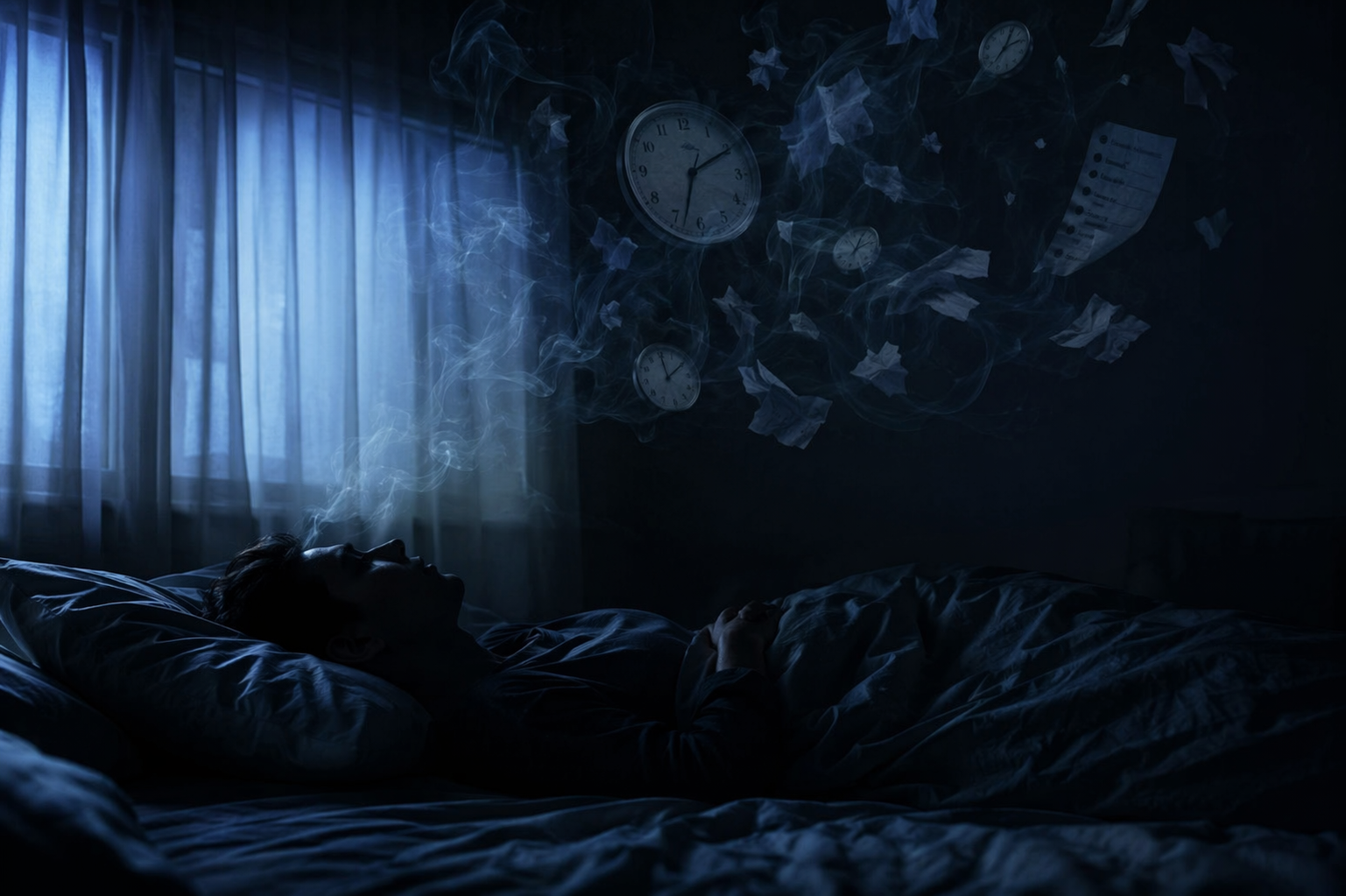
The first hotel night often fails in a very specific way. The bed is clean, the room is attractive, the sheets may even be better than the ones at home, and still sleep arrives in shallow pieces. A pipe ticks behind the wall. The thermostat glows too brightly. The hallway door seals badly enough to announce every late arrival. In a boutique hotel, where the room may have more personality than standardization, those small unfamiliar signals can matter more than the headboard, the minibar, or the linen count.
That reaction is not weakness or bad travel temperament. Sleep researchers call it the first-night effect: in a new place, part of the brain appears to stay more alert. Tamaki and colleagues showed that, during the first night in an unfamiliar sleep environment, slow-wave activity was reduced more in the left hemisphere than the right, and the left side responded more strongly to deviant sounds. The practical translation is simple enough: some part of you is still listening for trouble, even when the rest of you would like to be unconscious.[1]
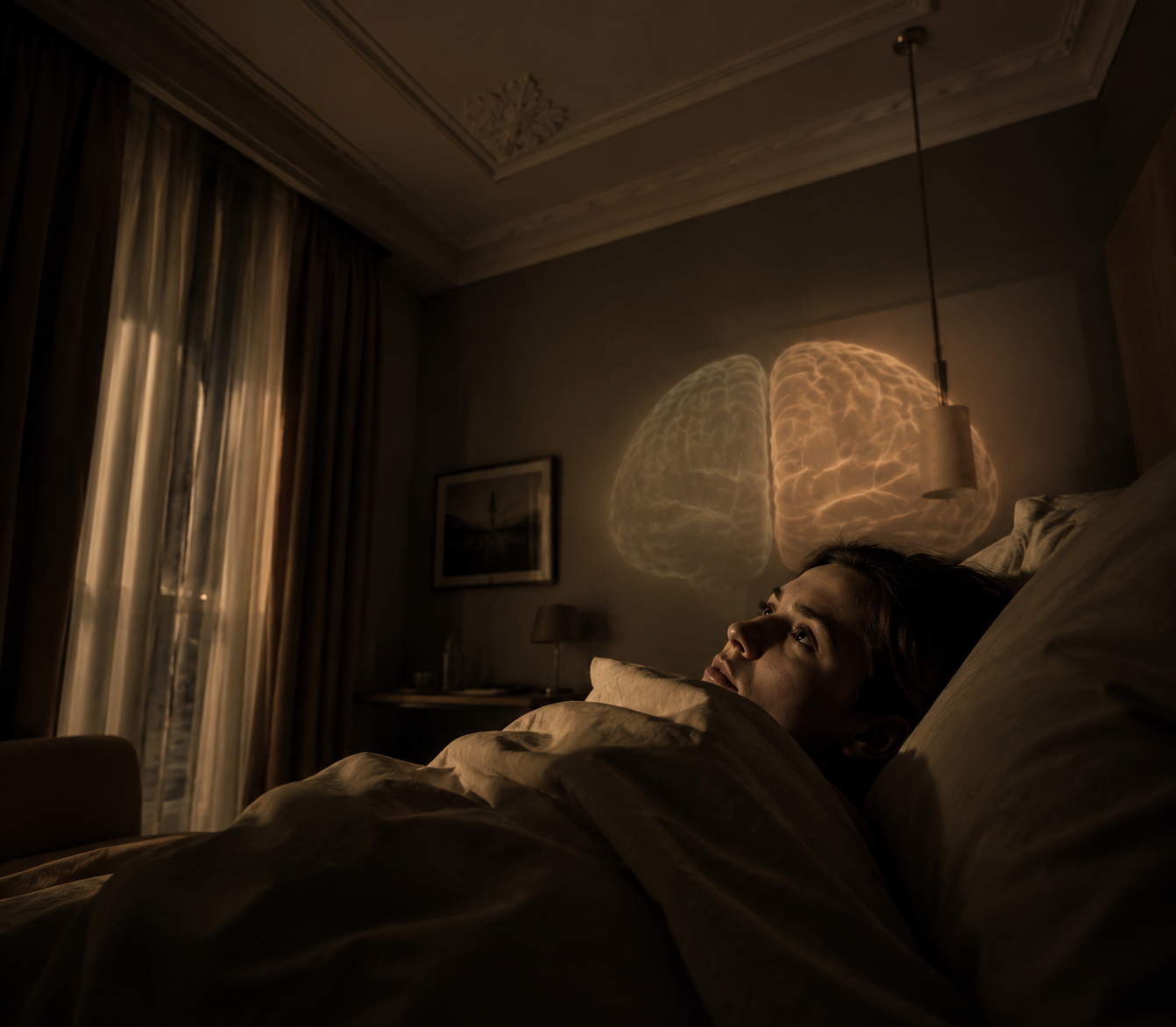
Why the first night feels different
The first-night effect makes more sense if a hotel room is treated less like a bed and more like an environment the nervous system has not yet certified. At home, the brain has already learned which refrigerator hums are harmless, which outdoor noises belong to the neighborhood, and how dark the room becomes after the last light is off. In a new room, those predictions are missing.
The Brown University work is useful because it gives a physical shape to a familiar complaint. The finding was not merely that people sleep worse when they are being studied in a lab. The researchers reported an interhemispheric asymmetry: the left hemisphere showed the more vigilant pattern during the first night, and that asymmetry faded on a later night.[1] A traveler lying awake beside a boutique hotel’s charming but noisy vintage radiator is not inventing the problem. The brain is doing an old protective job in a new setting.
This is where many hotel sleep tips go soft. They advise “relaxing” or “creating a ritual,” as though the issue were mainly mood. Mood matters, but the more useful question is mechanical: what signals make the room feel unfamiliar, uncertain, or physiologically irritating, and which of those can be changed before the brain spends the whole night monitoring them?
The problem is common, but not evenly distributed
Hotel sleep problems are not rare. In reporting on hotel sleep research, National Geographic cited Rebecca Robbins’ work finding that only about 1 in 3 travelers reported satisfactory sleep in hotels, and that pillow dissatisfaction alone made guests three times more likely to report poor sleep.[2] That pillow finding is more useful than a broad satisfaction score because it names a failure point a traveler can actually inspect, request, or replace.
A 2020 study of 505 travelers in China found that average sleep duration fell from 7.062 hours at home to 6.813 hours in hotels. The same study reported much higher odds of travel insomnia among business travelers, with an odds ratio of 16.99, and among morning chronotypes, with an odds ratio of 7.71. Higher hotel satisfaction was associated with lower odds of insomnia, with an odds ratio of 0.78.[3]
Those numbers should be handled with care. The sample was largely younger Chinese domestic travelers, so it should not be treated as a universal map of every U.S. leisure guest or every long-haul business traveler. Still, the pattern fits what frequent travelers already notice: the first night is not equally costly for everyone, and the trip purpose can change the stakes. A business traveler who has to present at 8:30 a.m. is not experiencing the same risk as someone with a slow vacation morning.
Morning types are not automatically protected
The chronotype finding deserves its own correction. Travel advice often assumes that night owls are the obvious vulnerable group because late schedules collide with early departures. Xiong and colleagues found elevated odds among morning chronotypes instead.[3] One plausible reading is that a morning type may have less tolerance for a delayed, noisy, or fragmented first night because their preferred sleep timing is more rigid. The study does not prove that mechanism, but it does warn against building hotel sleep plans around stereotypes.
Boutique hotels can help, but they do not get a free pass
There is no single universal definition of a boutique hotel, and the label does not guarantee a quiet room, a good mattress, or competent climate control. A small design-led property can be wonderful for sleep, or it can place a beautiful bed against an elevator shaft and call the exposed brick “character.”
The reason boutique hotels are worth discussing is not that they are categorically better. It is that their smaller scale and more personalized service sometimes make targeted adjustments more feasible. A front desk may know which rooms face the alley, which ones sit above the bar, and which floor avoids the ice machine. A boutique property may also be more willing to swap pillows, remove a scented diffuser, or place you away from a wedding block if you ask early enough.
That is the useful approach: not a belief that stylish hotels soothe the nervous system, but a sequence of interventions that reduce novelty before the left hemisphere decides it needs to stay on patrol.
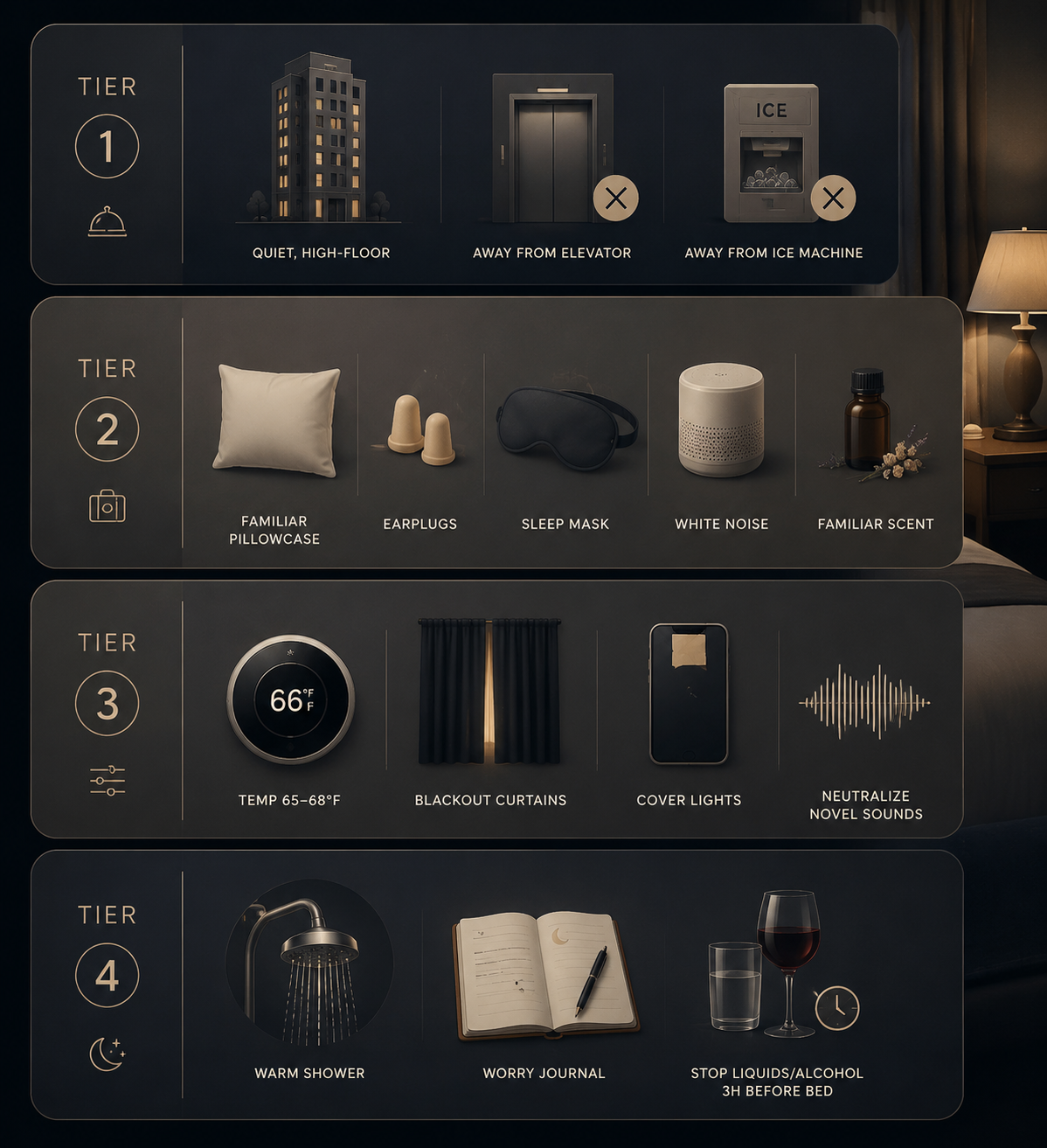
Start before arrival: choose the least eventful room
The best hotel sleep intervention happens before the key card exists. Once you are in the room at midnight, you can tape over lights and run white noise, but you cannot move the elevator, the rooftop lounge, the loading dock, or the traffic pattern outside the window. Pre-arrival room selection is the unglamorous tier that matters most.
| When to act | What to reduce | Most useful action |
|---|---|---|
| Before booking or before arrival | Room-placement risk | Request a quiet high-floor room away from elevators, ice machines, service areas, bars, and major street noise |
| When packing | Sensory novelty | Bring familiar scent, earplugs, sleep mask, sound masking, or a familiar pillowcase |
| After check-in | Light, temperature, and sound friction | Inspect the room before unpacking and fix the environment while staff can still help |
| Final hour before bed | Physiological and cognitive arousal | Keep the home routine, use a warm shower or worry journal if helpful, and avoid late alcohol or excess liquids |
Ask for quiet in physical terms, not as a vibe. “A quiet room” can mean different things to different people. “High floor, away from elevators, ice machines, stairwell doors, service closets, bars, event spaces, and street-facing rooms if possible” gives the hotel a sorting problem it can actually solve. Psychology Today, citing research by Mao and colleagues, noted that higher floors and less-urbanized neighborhoods were associated with better hotel sleep.[4]
The request does not need to be dramatic. It can be made in the booking notes and repeated politely the day before arrival: “I’m a light sleeper and have an early commitment. If possible, could I be placed in one of your quietest rooms, away from elevators and mechanical noise?” This is especially useful at smaller hotels because staff may actually know the building’s bad sleep zones. In a standardized tower, room numbering may tell you less. In a boutique property, the front desk may know that Room 214 is pretty but shares a wall with the lift machinery.
Pillows belong in the pre-arrival request too. Robbins’ pillow finding is a reminder that “comfortable bed” is too broad to be useful.[2] Ask whether the hotel has pillow options, especially if you know you need firm support, a low loft, or a non-feather option. If the hotel cannot answer that question before arrival, pack the smallest reliable substitute you can tolerate: a travel pillow, a familiar pillowcase, or even a folded layer that changes the height of a too-flat hotel pillow.
For travelers still choosing a hotel, room context matters more than lobby photography. A property above a restaurant, beside a nightlife corridor, or in a converted historic building may be lovely and still acoustically unpredictable. That does not make it a bad hotel. It makes it a hotel where the quiet-room request should happen before the best rooms are assigned.
Pack familiarity, not a portable spa
The goal of sensory tools is not to decorate the night. It is to give the vigilant brain fewer novel inputs to classify. A familiar pillowcase, a small familiar scent, earplugs, a sleep mask, and sound masking all work on the same basic problem: the room is new, so make part of the sleep environment known enough.
Robbins has recommended bringing familiar scents and keeping the home bedtime routine when sleeping in hotels.[5] Scent is easy to overdo, and many boutique hotels already lean too heavily on fragrance in the lobby or room. The useful version is subtle: the same hand cream you use at home, a clean T-shirt that smells like your laundry detergent, or a pillowcase from home. The signal should be familiar, not perfumed.
Sound needs two layers of thinking. First, block what you can. Sara Mednick has called earplugs essential in hotels because the brain attends to novel sounds during sleep.[6] Second, mask what remains. A steady fan setting, a white-noise app, or a small travel sound machine can make intermittent hallway noise less informative. The point is not that white noise is magic; it is that a continuous, predictable sound is often less threatening than isolated bangs, voices, and elevator chimes. If you want a deeper look at why steady noise can sometimes help sleep, the same principle appears in discussions of rain, pink noise, and other stable sound environments in sleep.
A sleep mask is the same kind of tool for light. Boutique rooms often fail here in small, annoying ways: a thermostat display, a router blink, a smoke detector flash, light leaking around decorative curtains, a bathroom night-light that cannot be fully disabled. A mask is not a substitute for blackout curtains, but it gives you control when the room’s design choices are more photogenic than practical.
Inspect the room before unpacking
The first ten minutes after check-in are not for admiring tile. They are for finding out whether the room is salvageable while there is still time to ask for another one. Put the bag down, leave the shoes on, and test the room like someone who will have to sleep in it.
- Stand still and listen before turning on the TV or unpacking: check for elevator rumble, bar music, hallway doors, mechanical hum, traffic, or neighboring-room noise.
- Close the blackout curtains fully and look for leaks around the edges, especially streetlights, signage, and sunrise-facing windows.
- Set the thermostat immediately rather than waiting until bedtime, because many hotel HVAC systems respond slowly.
- Find every blinking or glowing device: thermostat, alarm clock, router, TV standby light, phone, minibar panel, and bathroom sensor.
- Check the pillows before housekeeping closes or the front desk gets busy, especially if support is a known problem for your neck or airway.
Temperature is the easiest variable to change and one of the easiest to neglect until it is too late. The Sleep Foundation gives 60–67°F as a commonly recommended bedroom temperature range for sleep, while Robbins has pointed travelers toward roughly 65–68°F; the Sofitel sleep study used 19°C, or about 66°F, in its optimized rooms.[7][8][9] The practical convergence is not a sacred number. It is a starting zone: cool enough to support sleep, warm enough that you are not waking to pull up blankets at 3 a.m.
Hotel thermostats deserve suspicion. Some are motion-sensitive. Some display a number that has only a loose relationship to the actual room. Some historic boutique buildings have beautiful windows and uneven airflow. Set the room early, then check it again after dinner or after a shower. If the HVAC fan cycles loudly, decide before bed whether constant fan, auto mode, earplugs, or a room change is the least disruptive option.
Light control should be just as blunt. Robbins has suggested using gaffer’s tape for electronics lights.[5] In practice, painter’s tape, a folded washcloth, a Band-Aid, or a strategically placed menu can also work, as long as nothing hot or safety-related is covered. The target is not perfect cave darkness as an aesthetic. It is fewer small signals for the brain to recheck.
If the room has a heavy fragrance, ask whether the diffuser can be removed or the room aired out. The Sofitel study’s optimized room included scent neutralization along with darkness, temperature control, and sound neutralization.[9] That does not mean every traveler needs a scent-free room, but it does mean smell belongs on the environmental checklist. A novel fragrance can be pleasant at 6 p.m. and irritating at 2 a.m.
What the optimized-room studies can and cannot prove
One of the more interesting hotel sleep findings comes from Sofitel’s commissioned Art of Sleep study, which tested rooms optimized for complete darkness, 19°C temperature, sound neutralization, and scent neutralization. The reported results included a 13.7% improvement in sleep quality versus home, guests sleeping 65 minutes longer, and 64% falling asleep within 30 minutes.[9]
That is useful, but it should not be allowed to do too much. A hotel-commissioned study does not get to define the whole science of travel sleep. What it does show is narrower and still important: when a room is deliberately engineered around darkness, temperature, sound, and scent, hotel sleep can improve substantially. The implication for an ordinary traveler is not that a branded “sleep ritual” is required. It is that the controllable variables are real.
The Global Wellness Institute’s 2026 sleep trends discussion similarly emphasized that bedroom temperature, humidity, and air quality can affect sleep duration, fragmentation, and time in deeper stages.[10] Those variables are less romantic than hand-thrown ceramics on the bedside table, but they are closer to the machinery of sleep. In a hotel room, comfort starts to mean air, darkness, quiet, and predictability.
The final hour should look boringly familiar
By the last hour before bed, the best move is usually not to add a new wellness ceremony. It is to preserve the home routine closely enough that the brain recognizes the sequence. Wash face, brush teeth, read, stretch, set alarm, put phone away: whatever the normal order is, keep it recognizable. Travel already changed enough.
A warm shower can help because sleep onset is tied to thermoregulation. The useful sequence is warm shower, then a cool enough room, then bed. It should not become a long, overheated bath followed by a stuffy room and a fight with the thermostat. If you use the shower to cue sleep, set the climate first.
A worry journal is worthwhile for a different reason. Robbins has recommended it for travelers who carry next-day concerns into bed.[5] The hotel version is plain: write down the morning time, the meeting location, the family obligation, the transport plan, and anything that would otherwise keep asking for attention. The brain does not need an inspiring reflection. It needs proof that the open loops have been parked somewhere other than the pillow.
Alcohol and liquids are where travel often sabotages itself. Mednick has advised stopping liquids three hours before bed to reduce nighttime bathroom trips.[6] That window is especially relevant in hotels, where the route from bed to bathroom may involve unfamiliar switches, a bright vanity light, and a new round of alertness. Alcohol may feel like it solves sleep onset while making the night more fragmented; if the next day matters, treat the nightcap as a tradeoff rather than a sleep aid.
If you can still choose, choose for sleep
Travelers who have not booked yet have the strongest position. Choose the hotel and room category with the fewest obvious sleep liabilities. Look for clues in reviews, but read them mechanically. “Great nightlife nearby” may mean noise. “Historic charm” may mean thin windows or uneven climate control. “Cozy rooms” may mean limited airflow. “Steps from the elevator” is not a convenience if the elevator wall hums all night.
Then send the request early. A boutique hotel may be able to personalize well, but only if the quiet rooms have not already been assigned. Ask about room location, pillows, blackout curtains, HVAC control, and major event noise if you are traveling for a meeting, wedding, medical visit, or recovery day. The point is not to become a difficult guest. It is to move the sleep problem upstream, where staff still has options.
If you are already checked in, reduce the watch list
If the room is already assigned, the order changes. First decide whether the room has a deal-breaking problem: elevator wall, club noise, failed climate control, bad light leak, or a pillow situation that will clearly wreck your neck. If yes, ask for a move before unpacking. A polite request at 7 p.m. is far more likely to work than a desperate call at 1 a.m.
If you are staying, make the room less novel. Cool it early. Close and test the curtains. Cover the lights. Remove or dilute strong fragrance if possible. Put familiar scent or fabric near the pillow. Decide on earplugs, mask, and sound masking before turning off the lights, not after the hallway wakes you. Keep the final hour close to home routine, and write down tomorrow’s logistics if they are circling.
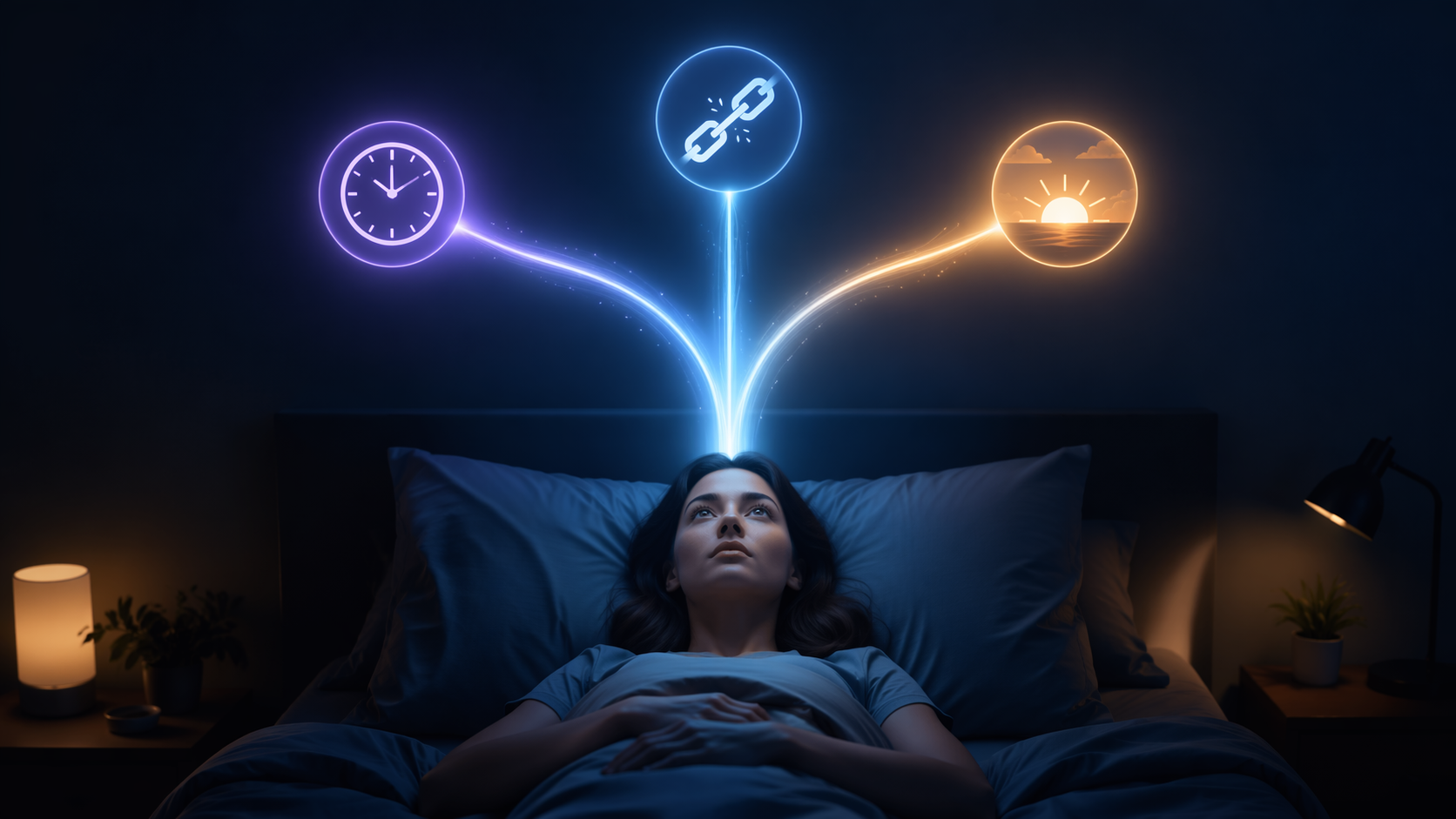
The first-night effect is real because the brain is protective, not because the traveler is fragile. The goal is not to defeat that system. It is to give it fewer unfamiliar signals to monitor: a quieter room, a known scent or fabric, a cooler and darker environment, fewer surprise noises, and a bedtime sequence that does not announce that everything has changed.
References
- The “first-night effect”: why it’s hard to sleep when you’re somewhere new, The Conversation
- The science of getting a good night’s sleep in hotels, National Geographic
- Effects of Environmental Change on Travelers’ Sleep Health, Frontiers in Psychology / PMC, 2020
- 5 Tips for Better Sleep in a Hotel Room, Psychology Today
- How to Sleep Better in a Hotel: Advice from Scientists, Frommer’s
- This is why you struggle to fall asleep in hotel beds, Condé Nast Traveller
- How to Get a Good Night’s Sleep in a Hotel, Sleep Foundation
- Rethinking sleep quality in hotels, International Journal of Hospitality Management, 2020
- Sofitel unveils new sleep rituals based on scientific study, Hotel Management Network
- Sleep Initiative Trends for 2026, Global Wellness Institute, 2026

Comments
Join the discussion with an anonymous comment.