
A bedtime movie is a compromise, and that is not automatically a failure. If Prime Video is what helps your brain stop replaying the day, the useful question is not whether a screen-free ritual would be purer. It is whether the movie you choose, and the way you watch it, makes sleep easier or keeps your nervous system politely awake for another two hours.
The short answer: the best Prime Video movies for relaxing sleep are slow, emotionally warm, predictable, and low in suspense. They can work as a cognitive off-ramp when they give your attention somewhere soft to go. They backfire when the screen is bright, the movie is too long or too gripping, or you start browsing for “just one more thing” after it ends.
That last part matters. Sutter Health warns that two or more hours of bright screen use in the evening can disrupt the melatonin surge needed for sleep onset, while the Sleep Health Foundation gives broader cautions about technology use close to bedtime.[1][2] So this is not an argument that movies are “good for sleep” in some blanket clinical sense. It is a harm-reduction guide for the person already on the couch, already holding the remote, who would like to make the choice less physiologically clumsy.
What Makes a Movie Sleep-Compatible
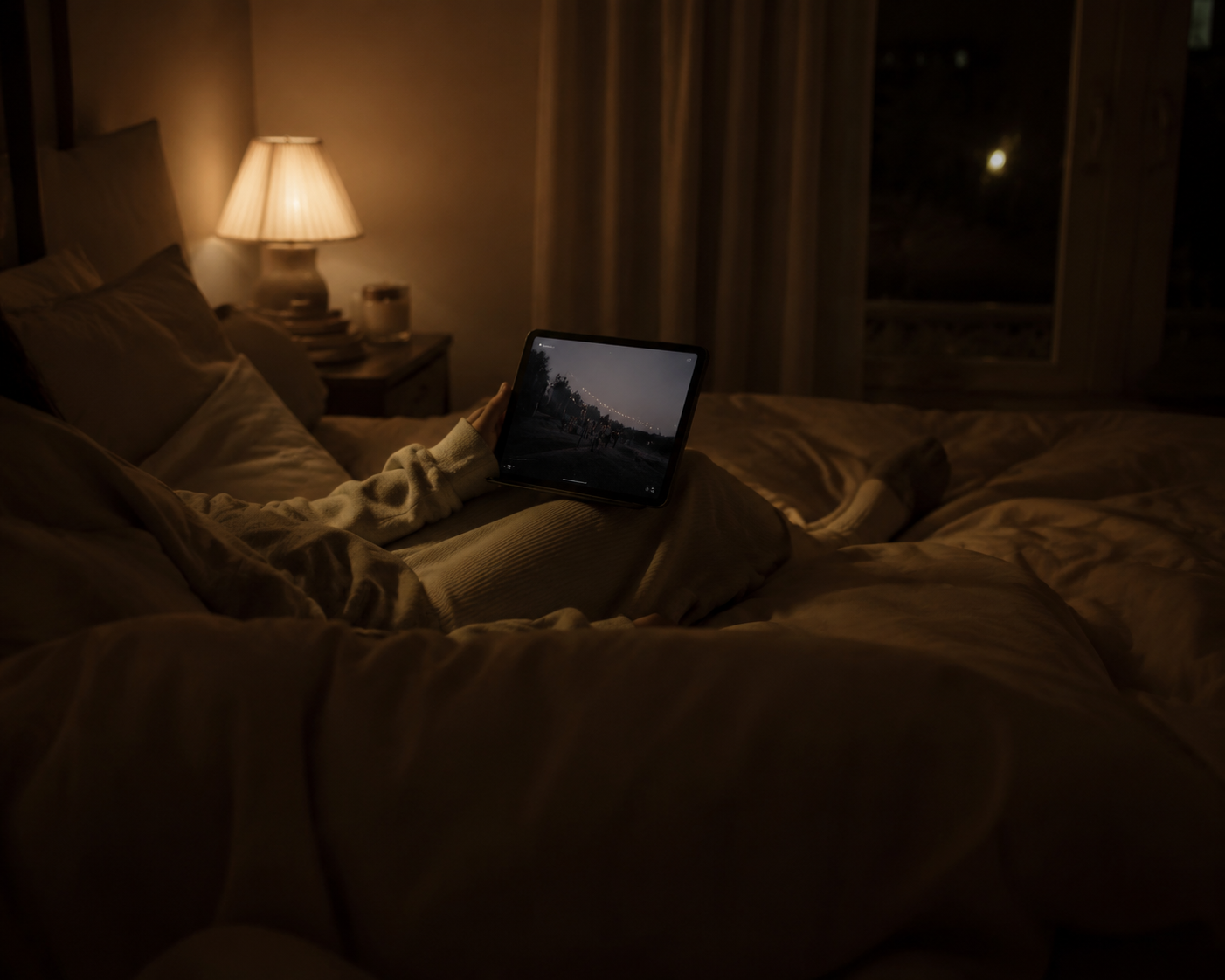
A sleep-compatible movie does not need to be boring. It needs to stop asking your brain to solve, anticipate, brace, or binge. The safest choices tend to have low stakes, familiar emotional arcs, soft pacing, gentle humor, and no cliffhanger momentum. The ideal bedtime film lets you drift in and out without punishment.
Rewatches often beat new discoveries for this reason. Novelty can keep attention alert; familiarity lets the body remain in charge. If you already know where a story lands, you are less likely to negotiate with yourself at midnight because the plot has become a problem that must be finished.
| Better before bed | Riskier before bed |
|---|---|
| Routine-driven stories | Mysteries built around reveals |
| Soft comedy or gentle romance | Horror, thrillers, and jump-scare pacing |
| Documentaries with predictable structure | Competitive finales or escalating stakes |
| Movies you have already seen | New releases you are excited to dissect |
| Warm sound design and steady dialogue | Loud action, shouting, or chase-heavy editing |
The Prime Video Picks That Best Fit the Job
Prime Video availability changes, so treat this as a curated snapshot rather than a permanent catalog promise. The films below were selected from Prime Video availability lists verified in June 2026, including Rotten Tomatoes and CNET roundups.[3][4] The point is not that a Rotten Tomatoes score measures sleep value; it does not. Scores and platform lists are useful here only as quality and availability context.
Paterson
If one Prime Video movie most clearly understands a wind-down rhythm, it is Paterson. Its structure is almost medicinally ordinary: work, walking, writing, small domestic exchanges, repetition with slight variation. It has a 96% Rotten Tomatoes score and appears in Prime Video availability coverage, but its bedtime usefulness comes from its tempo, not its acclaim.[3]
This is the kind of movie that gives attention a rail to run on without pushing adrenaline into the room. The emotional weather is mild. The stakes are human-sized. The poetry is present, but it does not demand that you sit upright and decode it. If you fall asleep before the ending, the movie has not failed you.
Lost in Translation
For a hazier late-night mood, Lost in Translation works because it is more atmosphere than machinery. The Tokyo setting glows, the conversations wander, and the central relationship unfolds without the usual rom-com engine hammering toward a big third-act rescue.
It is still emotionally textured, so it may not be the right pick if loneliness is the thing keeping you awake. But as a low-plot, soft-focus rewatch, it can occupy the mind without creating the restless feeling that you must keep tracking clues, twists, or consequences.
Jiro Dreams of Sushi
A documentary can be a better bedtime companion than a fictional plot if it has a clean structure and a calm voice. Jiro Dreams of Sushi has both. Its subject is mastery, repetition, craft, and routine; its shape is predictable enough that you are not waiting for a villain, a twist, or a chase.
The pleasure here is procedural. Rice, fish, hands, standards, repetition. That can be soothing in the same way a tidy kitchen video is soothing: someone is doing one thing carefully, in order, without asking you to panic.
Sleepless in Seattle
The title is rude to the mission, but Sleepless in Seattle is otherwise built for a gentler pre-bed mood. It is romantic, melodic, and emotionally legible. The movie does create anticipation, but not the harsh kind; its suspense is mostly whether two people will arrive at a feeling the audience already understands.
This is a good choice for someone who wants warmth rather than silence. It is not as meditative as Paterson, but it has the comfort of familiar emotional architecture: longing, charm, music, resolution.
The Holdovers
The bedtime appeal of The Holdovers is its atmosphere: 1970s New England, winter rooms, cranky adults, wounded students, gradual softening. It is a character dramedy rather than a puzzle box, which makes it easier to set down mentally when you are tired.
It may be too emotionally present for nights when you want pure cotton-ball viewing. But if your mind settles better with people than with abstraction, its warmth and slower dramatic movement make sense as a couch-to-bed bridge.
The Big Sick
The Big Sick has a 98% Rotten Tomatoes score and appears in Prime Video availability coverage, but again, that is not why it belongs here.[3] It belongs because much of its energy is dialogue-driven, humane, and funny without being frantic.
There is serious material in the story, so it is not the softest option on the list. For some viewers, though, the humor and emotional generosity make it a better wind-down than a weightless movie that leaves the brain searching for more stimulation afterward.
Quicker Picks for Different Kinds of Tired
Not every night needs a carefully chosen masterpiece. Some nights need something pleasant enough, low-friction enough, and available enough that you do not spend 40 minutes turning the Prime Video menu into a second job.
- The Idea of You: Light romance for nights when you want gloss, chemistry, and low decision fatigue.
- The Burial: A legal dramedy with enough shape to hold attention, but gentler than a tense courtroom thriller.
- A Million Miles Away: Inspirational biopic territory, best for viewers who find steadiness in effort, family, and forward motion.
- Catherine Called Birdy: A light historical comedy when you want livelier charm without tipping into late-night adrenaline.
A few beloved sleep-movie candidates are better left out of this Prime Video list if they are not included with your subscription. Amélie, My Neighbor Totoro, and The Princess Bride often come up in calming-film conversations, but available Prime Video listings did not support treating them as currently included Prime Video options as of June 2026.
Set the Screen Before You Press Play
The movie is only half the routine. The viewing setup decides whether this becomes a transition to bed or an extra block of bright, stimulating evening screen exposure. If you are going to watch, make the screen behave like it knows it is bedtime.
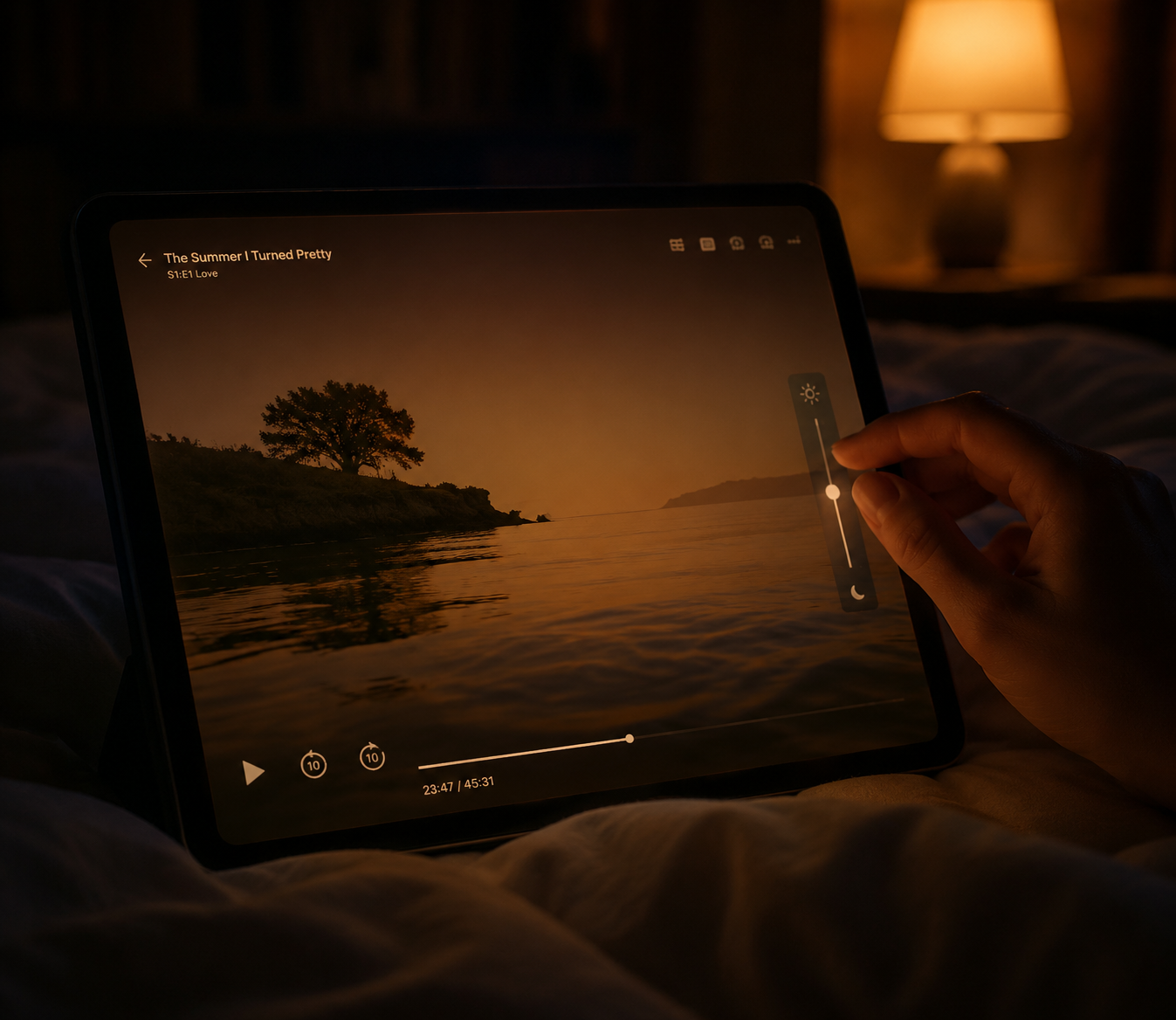
- Dim brightness to 30% or lower before the movie starts. Do not wait until your eyes feel tired.
- Turn on night mode or a blue-light filter on the device or TV display.
- Set a viewing timer so one film does not become a scroll, a trailer loop, or a second feature.
- Choose a familiar rewatch when you are already wired. Save the new, buzzy movie for an earlier evening.
- Do not browse after the movie. Decide the title first, press play, and let the app be done when the credits arrive.
- Add a five-minute screen-free buffer before bed: stretch, brush teeth slowly, read a physical book, or sit in low light.
These steps come from general sleep-hygiene logic, not from a controlled trial proving that a dimmed Prime Video rewatch improves sleep. That distinction is important. The evidence supports caution around bright evening screen use and technology near bedtime; the movie routine is a practical adaptation for people who are unlikely to replace every night’s viewing with herbal tea and perfect discipline.[1][2]
If you want to go one notch gentler, consider turning on audio descriptions near the end of a familiar film and letting yourself listen with your eyes closed. This is not a magic sleep intervention. It is simply a way to reduce visual input while keeping the comforting thread of the movie.
What to Avoid When Sleep Is the Goal
The wrong bedtime movie is usually easy to recognize after the damage is done: your heart rate is up, your jaw is tight, and you are suddenly very invested in whether someone survives a basement, a lawsuit, a betrayal, or a final round. Horror is the obvious offender, but high-arousal viewing is not limited to horror.
If scary movies are your usual late-night comfort category, read Horror movies that ruin your sleep the most, ranked by data before calling them relaxing. Some people genuinely enjoy fear as entertainment, but enjoyment is not the same thing as physiological downshifting.
Also be careful with “comfort” shows or movies that are secretly engineered for continuation. A cliffhanger, a competition format, or a mystery reveal can turn bedtime into a negotiation. For sleep, a movie with a soft landing is usually kinder than a series with an automatic next episode.
When a Calmer Movie Still Is Not Enough
If you regularly finish a gentle movie and still cannot fall asleep, the movie may not be the main issue. Some people are fighting a sleep-onset pattern, a stress rhythm, an inconsistent schedule, or a body that has learned to treat bedtime as the place where alertness begins.
For that, it may help to look beyond the movie list. Why You Can't Sleep Depends on Your Insomnia Pattern is a better next step if your difficulty has a recognizable shape. If you are considering supplements or non-screen alternatives, Which natural remedies for sleeplessness actually work? sorts the evidence more carefully than the usual bedtime folklore.
And if your concern is the mechanism of screen exposure itself, especially in a household where children’s sleep is part of the problem, How screen time disrupts children's sleep through three mechanisms goes deeper into why devices and bedtime can collide.
The Narrow, Useful Answer
The best bedtime movie is not the highest-rated film on Prime Video. It is the one that asks the least from your nervous system while giving your mind somewhere soft to land. For most tired adults, that means a low-arousal rewatch such as Paterson, a hazy mood piece such as Lost in Translation, a structured documentary such as Jiro Dreams of Sushi, or a warm character-driven film you already know will not keep you chasing the next beat.
Pick the film before you are exhausted. Lower the brightness. Turn on the blue-light filter. Set the timer. Then let the movie be the transition, not the whole night’s activity.
References
- Screens and Your Sleep: The Impact of Nighttime Use, Sutter Health.
- Technology and Sleep, Sleep Health Foundation.
- 100 Best Movies on Prime Video (June 2026), Rotten Tomatoes.
- Prime Video: The 17 Absolute Best Movies to Watch, CNET.
Comments
Join the discussion with an anonymous comment.