
The credits are rolling, the house has gone quiet, and your body is acting as if the threat on screen has followed you into the hallway. That is the exact point where horror movies, nightmares, and sleep quality collide: not because you made a ridiculous choice, but because your nervous system has been handed vivid threat material right before it is supposed to let go.
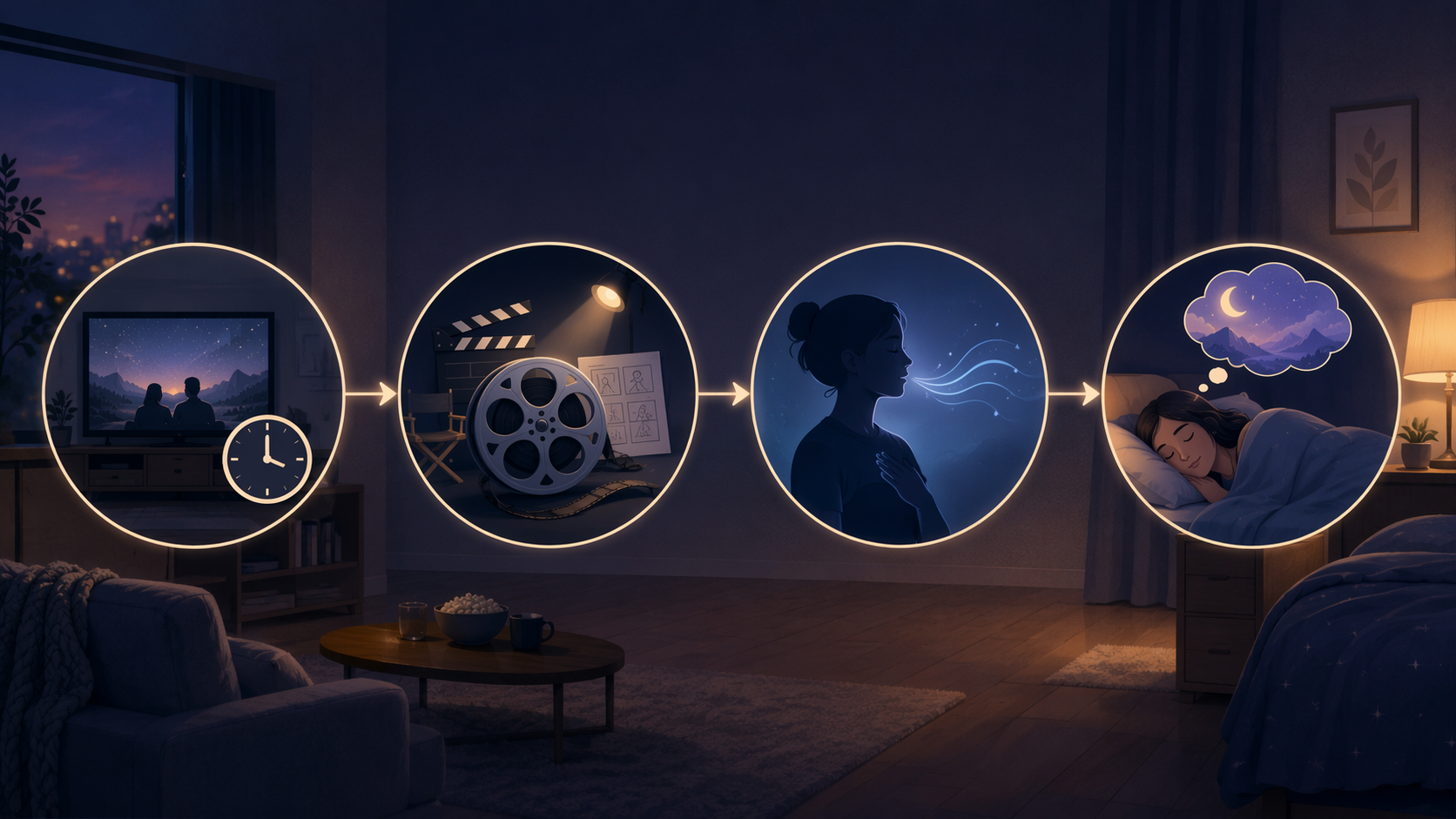
For tonight, do this in order. Do not start with a heroic attempt to “just sleep.” Give your brain a sequence.
- Turn on ordinary light and leave the movie environment. Change rooms if you can.
- Break the illusion: watch a behind-the-scenes clip, look up the actors, read a plot summary, or play bloopers from the film.
- Downshift the body: use box breathing, progressive muscle relaxation, or a guided relaxation track.
- Feed sleep something else: choose a pleasant, familiar, non-threatening pre-sleep routine before getting into bed.
- If you are wide awake after that, stay out of bed a little longer rather than turning the bed into the place where you rehearse the movie.
The best fix starts before the movie
The most useful advice is also the least glamorous: watch earlier. Dr. Michelle Mundt has advised scheduling horror earlier in the day and following it with pleasant activities to reduce the likelihood of nightmares.[1] That works because it changes the handoff. Instead of moving directly from threat imagery to a dark bedroom, you give the nervous system time and context before sleep.
That does not mean horror has to become a noon-only hobby. It does mean the viewing window matters. A late-night slasher followed by teeth brushing in silence gives the movie the last word. An earlier viewing followed by dinner, a walk, a funny show, a phone call, or light chores gives the brain competing material before bed.
| Viewing choice | What it changes |
|---|---|
| Watch earlier in the day | Leaves time for arousal and imagery to fade before sleep |
| Add a pleasant or neutral activity afterward | Replaces the horror-to-bed transition with safer emotional material |
| Avoid going straight from credits to bed | Prevents the bedroom from becoming the first quiet place where the movie replays |
| Choose intensity based on your own pattern | Keeps the routine honest if certain films predictably disrupt sleep |
The pleasant activity does not need to be spiritually pure or optimized. It just needs to be emotionally different from the film. A comfort sitcom, a low-stakes game, pet care, a shower, folding laundry with music, or reading something familiar can all work. The point is not to erase the movie; it is to stop the movie from being the final emotional event of the night.
Step one after viewing: make the movie look constructed
Once fear is already active, reassurance that “it was fake” can feel too thin. Cognitive reappraisal works better when it gives the brain evidence of construction. Dr. David Grabowski has pointed to reminders that the content is fictional, and horror-specific sleep guidance also recommends behind-the-scenes footage as a way to reduce lingering fear.[2][3]
This is not childish. It is editing the interpretation. A creature becomes an actor in makeup. The impossible hallway becomes a set. The terrifying sound becomes a design choice. The scene that felt like a threat becomes a sequence of lighting, timing, prosthetics, music, and performance.
- Watch a short making-of clip or effects breakdown.
- Look up the cast in normal interviews or red-carpet photos.
- Read the plot summary, especially if ambiguity is what keeps looping.
- Search for bloopers, deleted scenes, or commentary that exposes the production process.
Use the smallest dose that changes the feeling. Five minutes of behind-the-scenes material is often more useful than an hour of scrolling, because the goal is not distraction forever. The goal is to give the mind a more accurate label for what it just watched: crafted fiction, not current danger.
Step two: calm the body, not just the thoughts
Reappraisal helps with meaning. It does not automatically tell your pulse, shoulders, jaw, and breathing to stand down. That is why a post-horror routine needs a body step. If you skip straight from “it’s only a movie” to bed while your chest is still tight, the quiet can make every creak feel newly important.
Box breathing
Box breathing gives the body a rhythm to follow. Inhale for a count, hold, exhale for the same count, hold again, then repeat. Keep the count comfortable rather than impressive. If a four-count makes you strain, use three. The useful part is the steady pattern and the longer attention to exhale, not winning a breath-holding contest.
Progressive muscle relaxation
Progressive muscle relaxation is a good choice when the movie has left you physically braced. Work through the body in sections: feet, calves, thighs, hands, arms, shoulders, face. Gently tense each area, release, and notice the difference. The contrast matters. It teaches the body what “not guarding” feels like again.
Guided relaxation
Guided relaxation is better when your mind keeps grabbing the steering wheel. Choose something familiar and low-drama: a calm voice, a body scan, a simple visualization, or a sleep meditation you have used before. Do not audition six new tracks at midnight. Decision-making is not relaxing when you are already keyed up.
Pick one body method and give it a real attempt. Stacking every technique can turn into another performance. The sequence is reappraise first, then regulate. Once the movie feels more constructed and the body feels less mobilized, the next job is to choose what enters the sleep runway.
Step three: give dreams better raw material
The last thing before bed should not be an argument with the movie. It should be a deliberate shift toward something safe, warm, familiar, or even pleasantly boring. This is where a positive pre-sleep routine earns its place. You are not trying to guarantee dream content. You are shaping the material most available as you fall asleep.
Think of it as dream inoculation, but keep it simple. Read a few pages of a book that never punishes you for losing the plot. Revisit a favorite travel memory. Plan breakfast. Listen to a gentle podcast episode you already know. Picture a place that is visually specific and emotionally safe: a porch in daylight, a familiar kitchen, a beach walk, a friend’s living room.
The routine works best when it is specific enough to occupy the mind but not exciting enough to restart it. “Think happy thoughts” is too vague. “I am walking through the farmer’s market I like, starting at the flowers, then the bread stall, then the coffee stand” gives the mind a track to run on.
A repeatable horror-night protocol
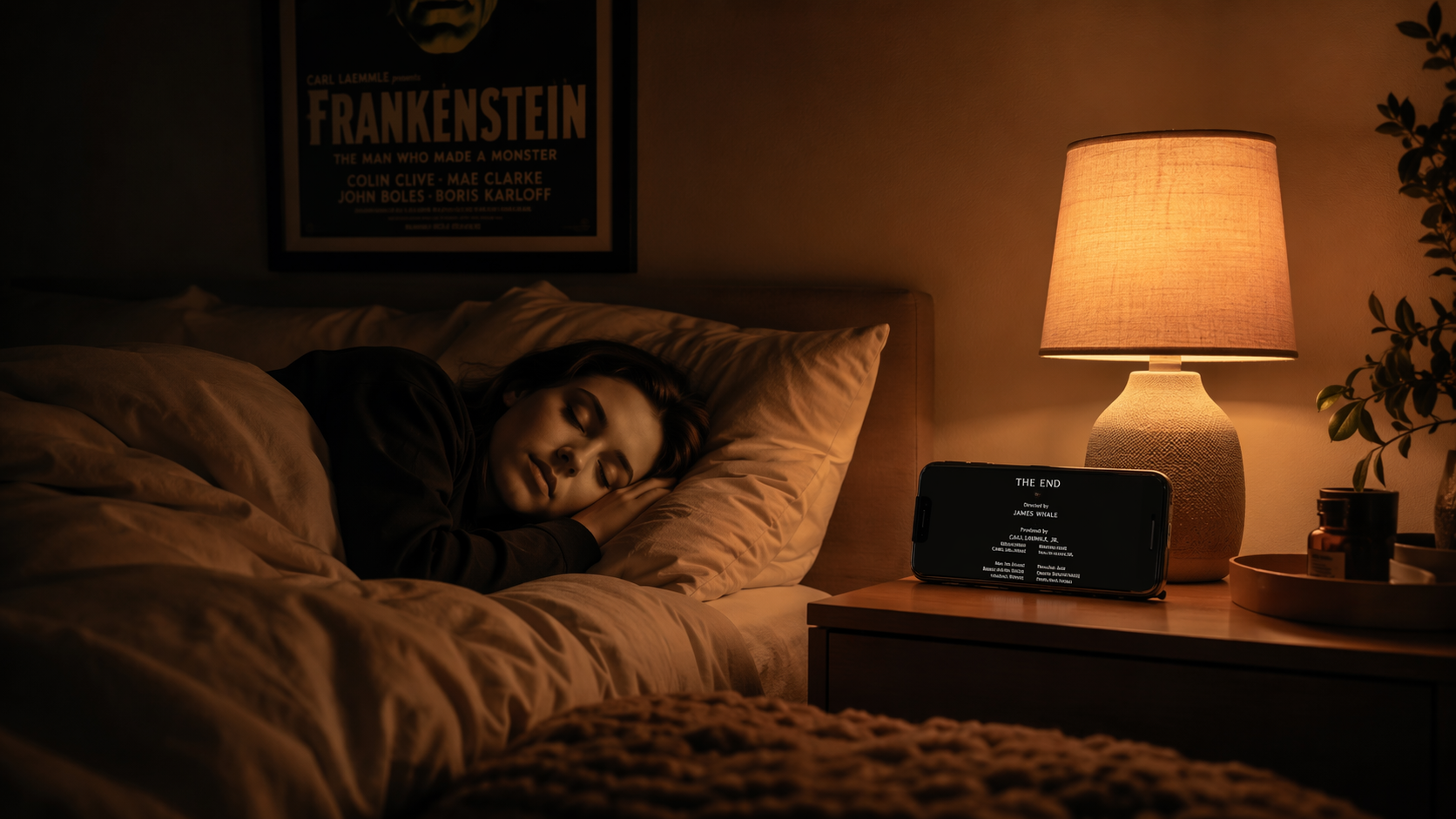
If horror regularly affects your sleep, make the routine automatic before the next movie. The plan should start when you choose the viewing time, not when you are already lying in bed listening for imaginary footsteps.
| When | What to do | Why it belongs there |
|---|---|---|
| Before | Choose an earlier viewing window when possible | Prevents the film from becoming the last emotional event before sleep |
| Before | Decide on the after-movie activity in advance | Removes midnight improvisation |
| During | Notice whether you are still enjoying the fear or tipping into distress | Helps you choose intensity honestly next time |
| After | Use reappraisal: behind-the-scenes, cast interviews, plot summary, bloopers | Breaks the sense that the threat is still present |
| After | Use one body-calming technique | Signals that the body no longer needs to stay mobilized |
| Bedtime | Move into pleasant, familiar mental material | Gives sleep a safer runway |
The order matters. A breathing exercise can help, but it has to work harder if you go straight from a terrifying final scene into a dark bedroom. A funny clip can help, but it may not be enough if your body is still braced. A pleasant visualization can help, but it lands better after you have already reminded the brain that the monster was makeup, editing, and sound design.
This is also why the routine should stay fairly short. The point is not to build a second evening around recovering from the first one. If your post-horror protocol regularly takes longer than the movie, the film may be too intense, too late, or both.
When the smart move is changing the movie, not adding more recovery
There is a difference between being deliciously rattled and being repeatedly wrecked. If horror predictably causes severe distress, repeated nightmares, panic-like arousal, or multiple nights of disrupted sleep, the better sleep strategy may be avoidance, a lower-intensity subgenre, earlier timing, or saving certain films for nights when sleep is less fragile.
That boundary does not insult horror fans. It protects the pleasure of the genre. A person who loves haunted-house films may still need to skip home-invasion stories. Someone who can watch monsters may not do well with realistic violence. Someone who sleeps fine after horror at 6 p.m. may lose the night after the same movie at 11 p.m.
Use your own pattern as evidence. If the sequence works, keep it. If you keep needing rescue at bedtime, move the scare earlier, lower the intensity, or choose different content. The goal is not to prove that a fictional threat cannot affect sleep. The goal is to stop giving it the last word of the night.
References
- CNN 2025 / UNC College of Arts and Sciences interview feature
- CNN interview with Dr. David Grabowski
- Dreams.co.uk guide
Comments
Join the discussion with an anonymous comment.