
If you are asking whether caregiver sleep deprivation is harming you or is “just exhaustion,” the short answer is: yes, chronic caregiver sleep loss can become a health exposure in its own right. The damage is not only the missing hours. It is the combination of shortened sleep, repeated awakenings, vigilance during the night, emotional strain, and the next day’s responsibility for another person’s safety.
That distinction matters because many caregivers learn to describe bodily alarm in ordinary language. “I’m fine” can mean four awakenings, checking whether a parent has wandered, listening for movement from another room, then managing medications in the morning. The body may still be upright and useful, but usefulness is not the same thing as recovery.
In a systematic review of adult caregiving and sleep, 76% of caregivers had poor sleep quality on the Pittsburgh Sleep Quality Index, compared with an estimated 20% to 40% in the general population. Objective actigraphy findings in the same review gave that complaint a shape: caregivers had about 4 to 30 nighttime awakenings, and wake after sleep onset often averaged more than 64 minutes.[1]
Among dementia caregivers, the pattern is especially clear. A JAMA Network Open systematic review and meta-analysis found that dementia caregivers lost about 2.5 to 3.5 hours of sleep per week compared with non-caregivers, and about 60% averaged less than 7 hours per night.[2] Those numbers are not a diagnosis by themselves, but they make one thing difficult to dismiss: caregiver sleep loss is common, measurable, and often sustained.
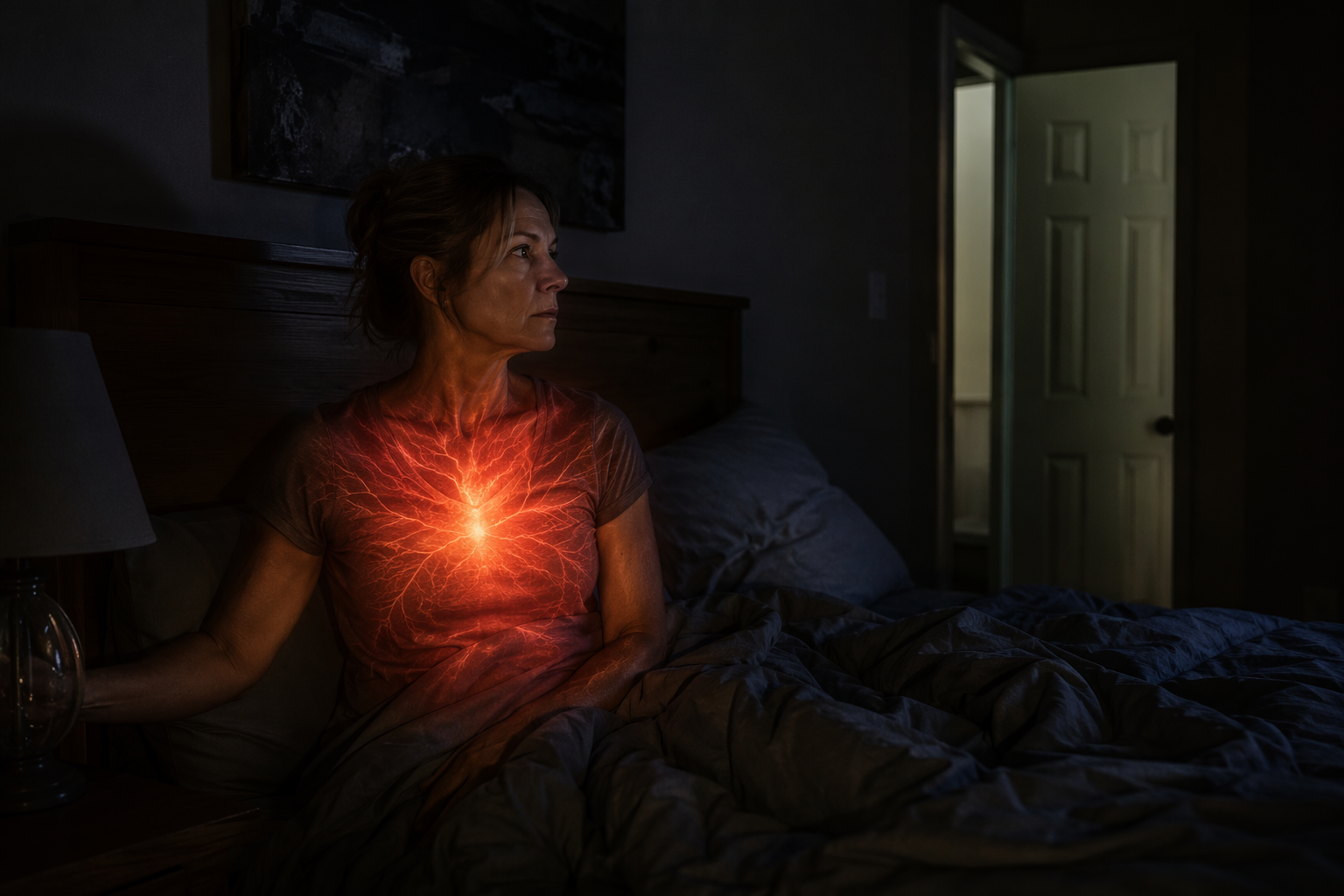
The problem is not only that sleep is short
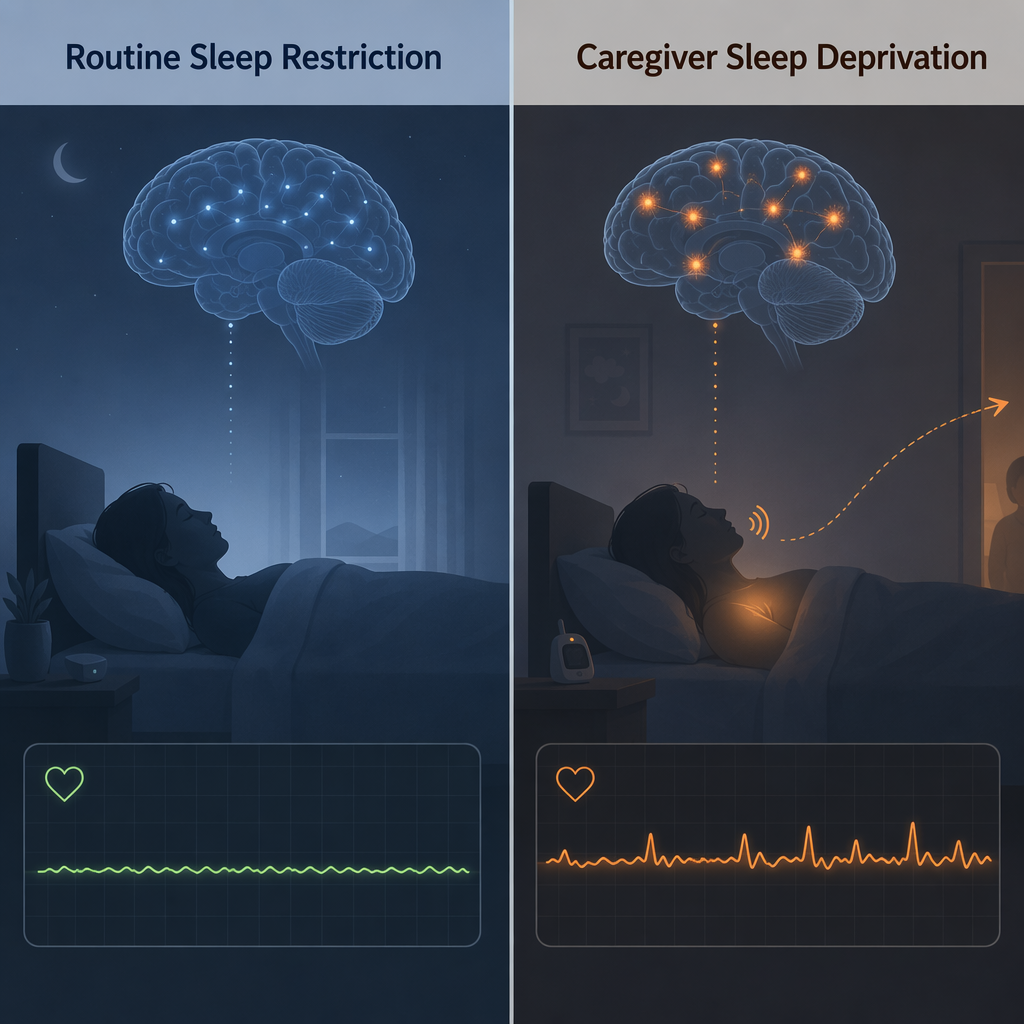
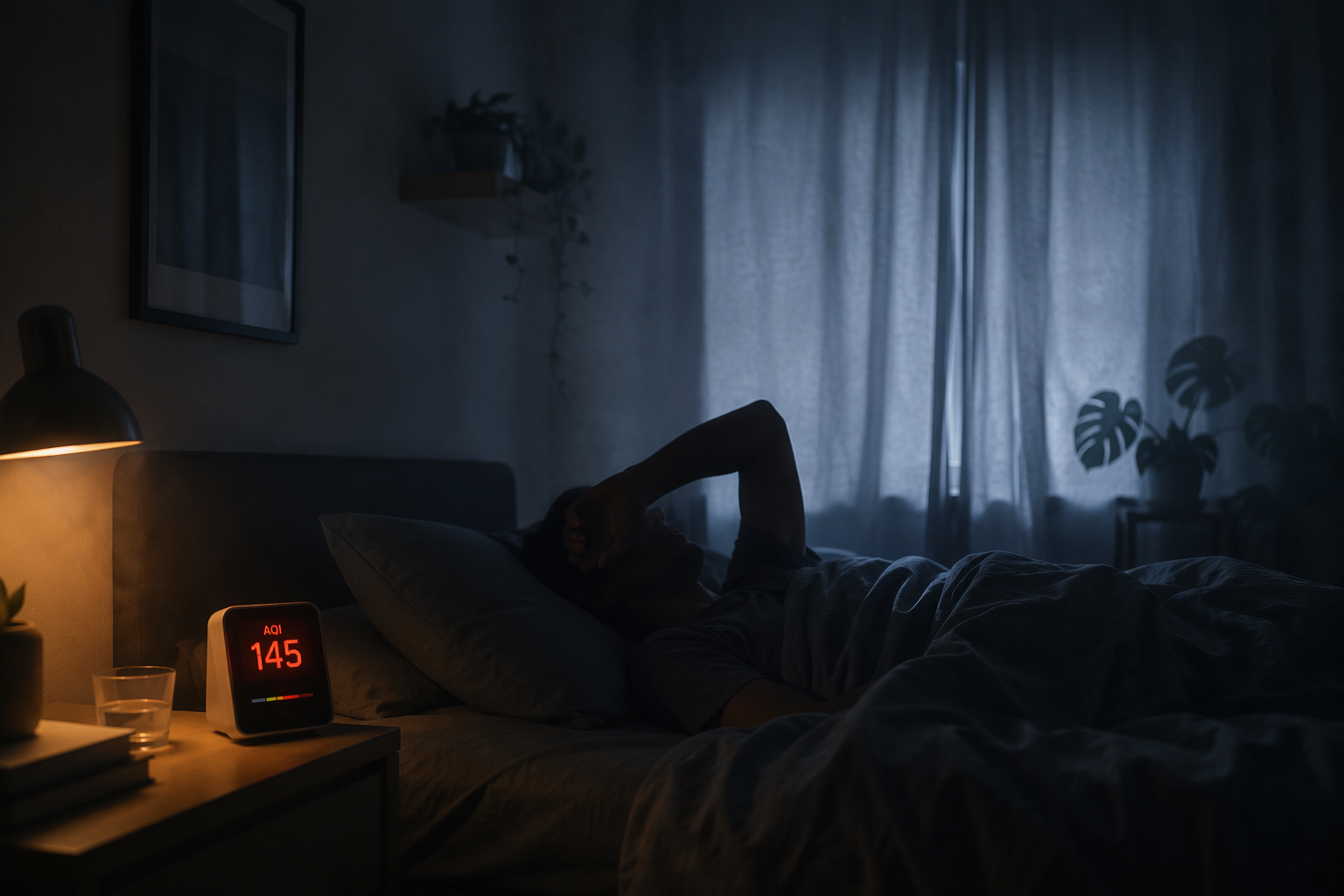
Routine sleep restriction is hard on the body. Caregiver sleep deprivation adds another layer: the person is trying to sleep while monitoring, anticipating, and recovering from care demands. A caregiver may be in bed for enough hours to look “not that bad” on paper, yet still sleep in a state of readiness.
This is where the gap between sleep duration and sleep burden becomes important. A caregiver may not only wake when someone calls out; they may also sleep lightly because they are listening for falls, wandering, breathing changes, pain, agitation, or the sound of a door. The night is not empty time. It is part of the care shift.
A 2025 scoping review of informal dementia caregivers described findings from Sakurai and colleagues in which caregivers showed elevated sympathetic nervous system activity during the first half of the sleep period even when standard polysomnography appeared normal.[3] That is a quietly important finding. It suggests that a caregiver’s body may remain more activated during sleep than a sleep-stage report alone would show.
The sympathetic nervous system is the branch involved in mobilization: heart rate, blood pressure, alertness, and readiness to respond. It is useful when there is danger or an immediate task. It is not meant to dominate the night. If a caregiver’s nervous system keeps checking the door even while the caregiver appears asleep, the body is not getting the same downshift that sleep is supposed to provide.
How fragmented nights become inflammation and cardiovascular strain
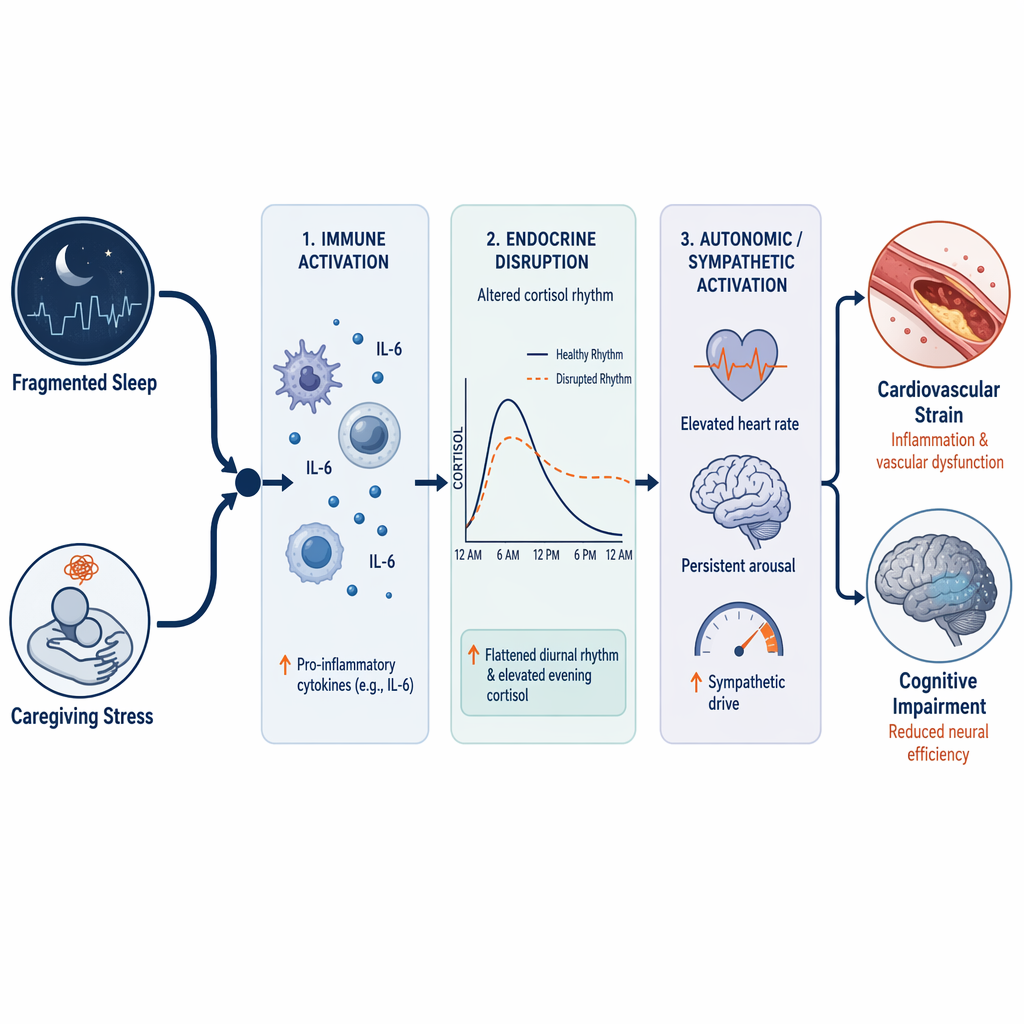
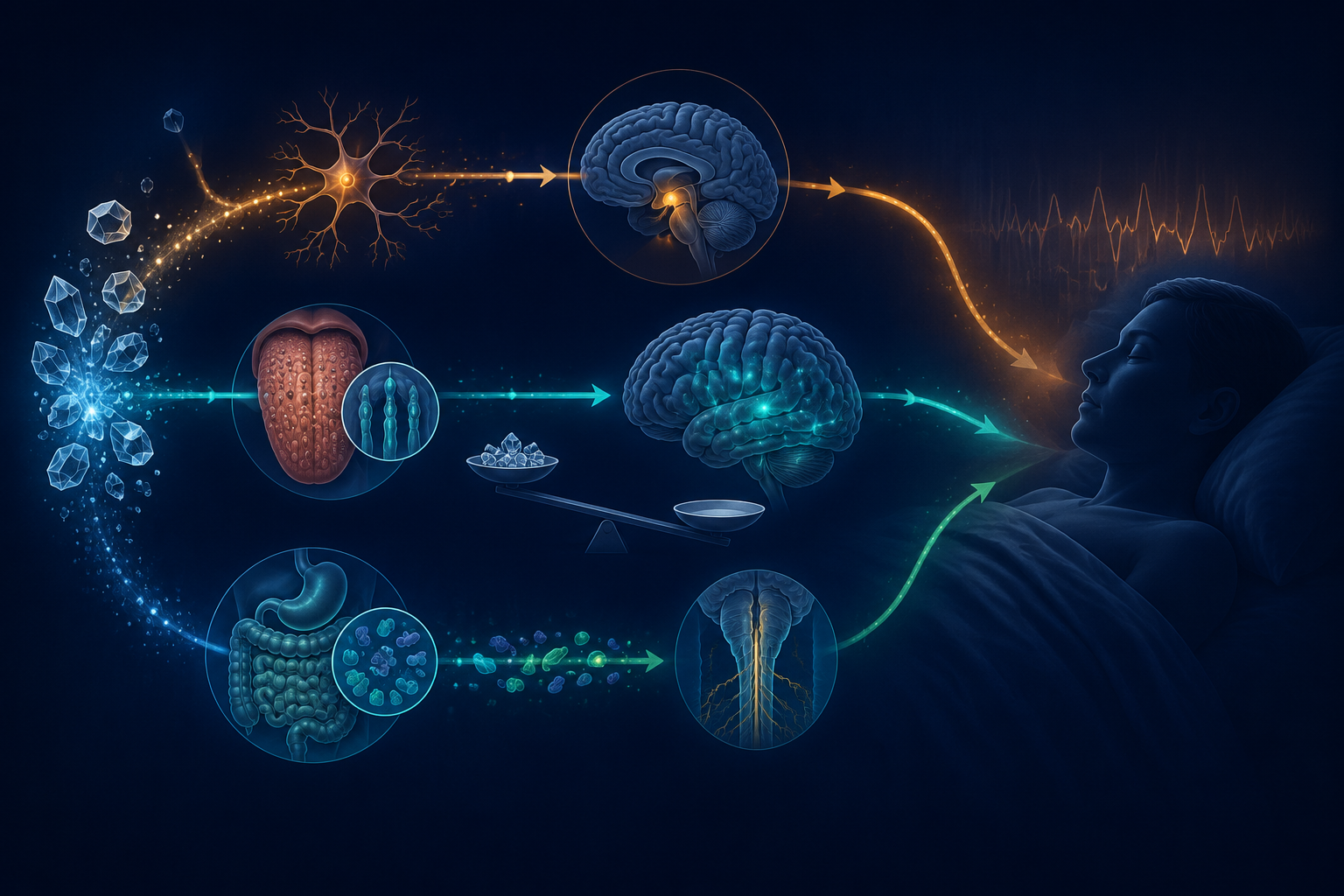
Sleep is one of the body’s main recovery periods for immune, endocrine, and autonomic regulation. When sleep is repeatedly fragmented, those systems lose a predictable window for settling. When the same person is also under chronic caregiving stress, the signal to stay mobilized becomes stronger.
The immune evidence is one of the clearest ways to see that this is more than ordinary tiredness. The 2025 scoping review reported elevated interleukin-6, pro-inflammatory cytokines, and C-reactive protein among caregivers in the included literature.[3] IL-6 and CRP are not feelings. They are markers associated with inflammatory activity. They do not prove that every exhausted caregiver is on a single path toward disease, but they do show that the body can register caregiving-related sleep disruption as biological stress.
The endocrine system shows a related pattern. Caregiver studies in the same scoping review documented altered cortisol rhythms.[3] Cortisol is often simplified as a “stress hormone,” but the timing matters as much as the amount. A healthy rhythm helps the body wake, mobilize, and later wind down. A disrupted rhythm can mean the body has trouble matching its internal signals to day and night.
The cardiovascular concern follows from that combined load. Fragmented sleep can raise sympathetic activity; chronic stress can keep that activity more persistent; inflammation can contribute to vascular strain. The adult caregiving sleep review cites findings linking caregiving with increased risk of coronary heart disease, stroke, and hypertension.[1] The safest reading is not that sleep loss alone causes every later cardiovascular outcome, but that caregiver sleep disruption sits inside a risk cluster that includes stress physiology, mood symptoms, activity changes, and existing health vulnerabilities.
The pathway in plain terms
| Nighttime pattern | Body system affected | What the evidence points to |
|---|---|---|
| Repeated awakenings and long wake periods after sleep begins | Sleep recovery | Caregivers often lose consolidated sleep even when they spend enough time in bed. |
| Sleeping while monitoring or anticipating care needs | Autonomic nervous system | Sympathetic activity may stay elevated during sleep in some caregivers. |
| Chronic stress layered onto sleep loss | Immune and endocrine systems | Studies report elevated inflammatory markers and altered cortisol rhythms. |
| Next-day care tasks after fragmented sleep | Cognition and vigilance | Attention, judgment, and error monitoring may be compromised. |
Why dementia caregiving shows the burden so clearly
The caregiver sleep literature is weighted heavily toward dementia caregiving, and that matters for interpretation. Dementia often changes the night itself: wandering, agitation, reversal of sleep-wake patterns, toileting needs, falls risk, and the caregiver’s fear that a lapse in attention could become dangerous. These demands make dementia caregiving a setting where sleep deprivation is easier to detect and harder to normalize away.
One Australian study reported that 94% of dementia caregivers were sleep-deprived.[4] That figure is striking, but it should not be treated as a global estimate for every caregiver in every country or condition. It came from one study in one setting, with a sample of about 100 participants.[4] Its value is that it shows how severe the problem can become when nighttime supervision and progressive cognitive illness converge.
Caregivers for people with cancer, stroke, heart failure, disability, or complex chronic illness may also experience serious sleep disruption. The evidence base is simply less evenly developed across those groups. A spouse sleeping beside a person in pain, an adult child waiting for an overnight emergency call, and a parent managing nighttime medical equipment may all be living with real sleep deprivation. The strongest research claims, however, currently come from dementia-heavy samples.
What happens to thinking, vigilance, and mood
The cognitive effects are where caregiver sleep loss becomes not only a private health problem but a care-safety problem. The 2025 scoping review describes cognitive consequences including impaired vigilance and possible medication-error risk among sleep-deprived informal dementia caregivers.[3] That does not mean every tired caregiver will make a dangerous mistake. It means the system often asks people to perform high-consequence tasks after nights that would impair almost anyone.
Medication management is a good example because it is ordinary and unforgiving. A caregiver may need to distinguish morning from evening doses, notice whether a pill bottle is emptier than expected, remember whether a dose was already given, and respond to symptoms that may or may not be side effects. After a night of broken sleep, the caregiver is not merely sleepy; attention, working memory, and error-checking may all be under strain.
Mood is more complicated than a one-way story. The adult caregiving sleep review and a 2024 scoping review on sleep and caregiver burden describe links among caregiver sleep, depression, anxiety, and burden.[1][5] Poor sleep can worsen mood symptoms; depression and anxiety can also make sleep lighter, shorter, or more restless. Caregiver distress may therefore become self-reinforcing: the night worsens the day, and the day makes the next night harder to enter.
This bidirectional pattern is important because it protects caregivers from a false choice. Brain fog does not have to be only grief, only depression, only stress, or only sleep debt. These states overlap. A person can be grieving and sleep-deprived; anxious and physiologically hyperaroused; depressed and repeatedly awakened by real care needs.
The mortality finding deserves attention, not exaggeration
One of the most widely cited caregiving findings is that strained caregivers had a 63% higher mortality risk than non-caregivers in an older JAMA study discussed in the caregiving literature.[1] It is an alarming number, and it should not be ignored. It also should not be used as if it were a current universal estimate for every caregiver.
The study is old, and caregiver populations, medical care, social supports, and measurement methods vary. Mortality is also not a direct measure of sleep deprivation alone. It can reflect age, baseline health, depression, isolation, care intensity, finances, access to help, and the physical work of caregiving. The responsible conclusion is narrower and still serious: high-strain caregiving has been linked with survival risk, and sleep deprivation is one plausible part of the physiological burden.
Why self-report and sleep trackers may not tell the same story
Caregiver studies often find stronger problems in self-reported sleep than in objective measures such as actigraphy or polysomnography. That discrepancy is not a reason to dismiss caregivers. It may mean that the instruments are measuring different parts of the experience.
A sleep tracker can estimate movement, sleep timing, and wake periods. A laboratory sleep study can measure sleep stages and breathing. Neither fully captures what it is like to sleep while responsible for someone who might get up, fall, call out, remove medical equipment, or become frightened. A caregiver’s report includes the burden of anticipation, not just the minutes awake.
At the same time, subjective distress can be intensified by anxiety, depression, grief, or burnout. Both things can be true: caregivers may accurately sense that their sleep is not restorative, and their perception of sleep may be shaped by the emotional load surrounding it. The strongest evidence comes when these lines point in the same direction: poor reported sleep, shortened duration, repeated awakenings, prolonged wake after sleep onset, and measurable stress biology.
What the evidence can and cannot say
The evidence is strong enough to reject the idea that caregiver sleep deprivation is merely an attitude problem or a normal inconvenience of devotion. Across systematic review, meta-analysis, actigraphy findings, and newer scoping reviews, caregivers—especially dementia caregivers—show poor sleep quality, shortened sleep, repeated awakenings, prolonged wake after sleep onset, sympathetic activation, inflammatory markers, cortisol disruption, mood symptoms, and cognitive strain.[1][2][3]
The evidence is not strong enough to assign one exact long-term risk number to every caregiver. Many physiological studies are small. Some findings have not been replicated at scale. Causal direction is difficult to isolate because sleep loss, chronic stress, shared lifestyle changes, age, illness, finances, and social support all move together. A caregiver’s cardiovascular risk, for example, may be affected by sleep deprivation, but also by reduced exercise, missed medical appointments, changed diet, loneliness, and preexisting disease.
That uncertainty should not become another way of minimizing the problem. A caregiver who is awake several times a night, sleeping less than they need, and waking into high-responsibility tasks is not simply “tired.” Their immune, endocrine, autonomic, cognitive, and emotional systems may all be carrying the cost.
The most calibrated judgment is this: caregiver sleep deprivation is a real condition-specific sleep problem, with the strongest evidence in dementia caregiving. Its physiological burden is plausible, measurable, and often hidden beneath competence. The exact size of long-term risk varies by study quality, care context, baseline health, and coexisting stressors, but interrupted sleep should not have to become catastrophic before it is treated as medically serious.
References
- How Adult Caregiving Impacts Sleep: a Systematic Review
- Sleep Duration and Sleep Quality in Caregivers of Patients With Dementia: A Systematic Review and Meta-Analysis, JAMA Network Open
- Negative Consequences of Sleep Deprivation Experienced by Informal Caregivers of People With Dementia: A Scoping Review, PubMed
- Disrupted sleep and associated factors in Australian dementia caregivers, BMC Geriatrics
- Sleep and Caregiver Burden Among Caregivers of Persons Living With Dementia: A Scoping Review


Comments
Join the discussion with an anonymous comment.