
Sleeping during a severe thunderstorm is a reasonable goal only when sheltering in place is the right safety choice. If local alerts shift toward a tornado warning, destructive wind threat, large hail risk, flash flooding, or any instruction to move to a safer location, sleep stops being the job. The job becomes staying reachable, keeping alerts audible, and getting to the safest available place.
If the storm is loud, close, and disruptive but you are already in an appropriate shelter, the usual advice often misses the point. “Use earplugs” helps only part of the sound problem. “Just relax” is not a plan for someone whose body is waiting for the next flash. The better question is simpler and more useful: which channel is waking you up?
First, Identify What Is Actually Waking You
Thunderstorms do not disturb sleep in one tidy way. One person wakes because thunder lands in the chest even through foam earplugs. Another wakes because lightning turns a dark bedroom into a camera flash. Someone else feels physically exposed in bed, even if the house is structurally safe. And many people are not waking to the storm itself so much as to the minutes before it: checking radar, imagining damage, waiting for the next alert.
| Disruption channel | What it feels like at night | Best first move |
|---|---|---|
| Sound | Low rumbles, sharp cracks, rain bursts, alert tones | Add steady broadband noise instead of relying on earplugs alone |
| Light | Lightning flashes feel more violent because the room is otherwise dark | Reduce contrast with a dim, steady light or block light consistently |
| Touch and body position | Restlessness, bracing, feeling uncontained | Use comfortable deep pressure if it is safe for your body |
| Anticipatory anxiety | Radar checking, doom-scrolling, waiting for the storm to worsen | Move forecast checks and safety decisions earlier in the evening |
That map matters because a tactic can be perfectly reasonable and still aimed at the wrong problem. Earplugs do not soften lightning. A sleep mask does not stop you from checking storm videos. A meditation track may be pleasant, but if you have not decided where your shoes, flashlight, medications, and phone charger are, your brain has a fair reason to stay on duty.
Use Sound Masking as the Base Layer
For most people trying to sleep during a severe thunderstorm, sound is the first layer to fix because thunder has two unpleasant traits: it is loud, and it is uneven. The suddenness matters. A bedroom that is silent between rumbles gives every crack of thunder more room to startle you.
Foam earplugs can still be useful, especially for rain noise, wind, and higher-frequency sharpness. But thunder includes low-frequency energy, and low sound travels through walls, windows, and imperfect seals better than people expect. That is why earplugs alone can feel like a betrayal: they reduce some noise, yet the rumble still gets through.
A steadier approach is to add broadband sound: white noise, pink noise, brown noise, a fan, an air purifier, or sleep earbuds designed for masking. The point is not to make the storm disappear. The point is to narrow the gap between the quiet room and the next thunderclap so the nervous system has less contrast to react to.
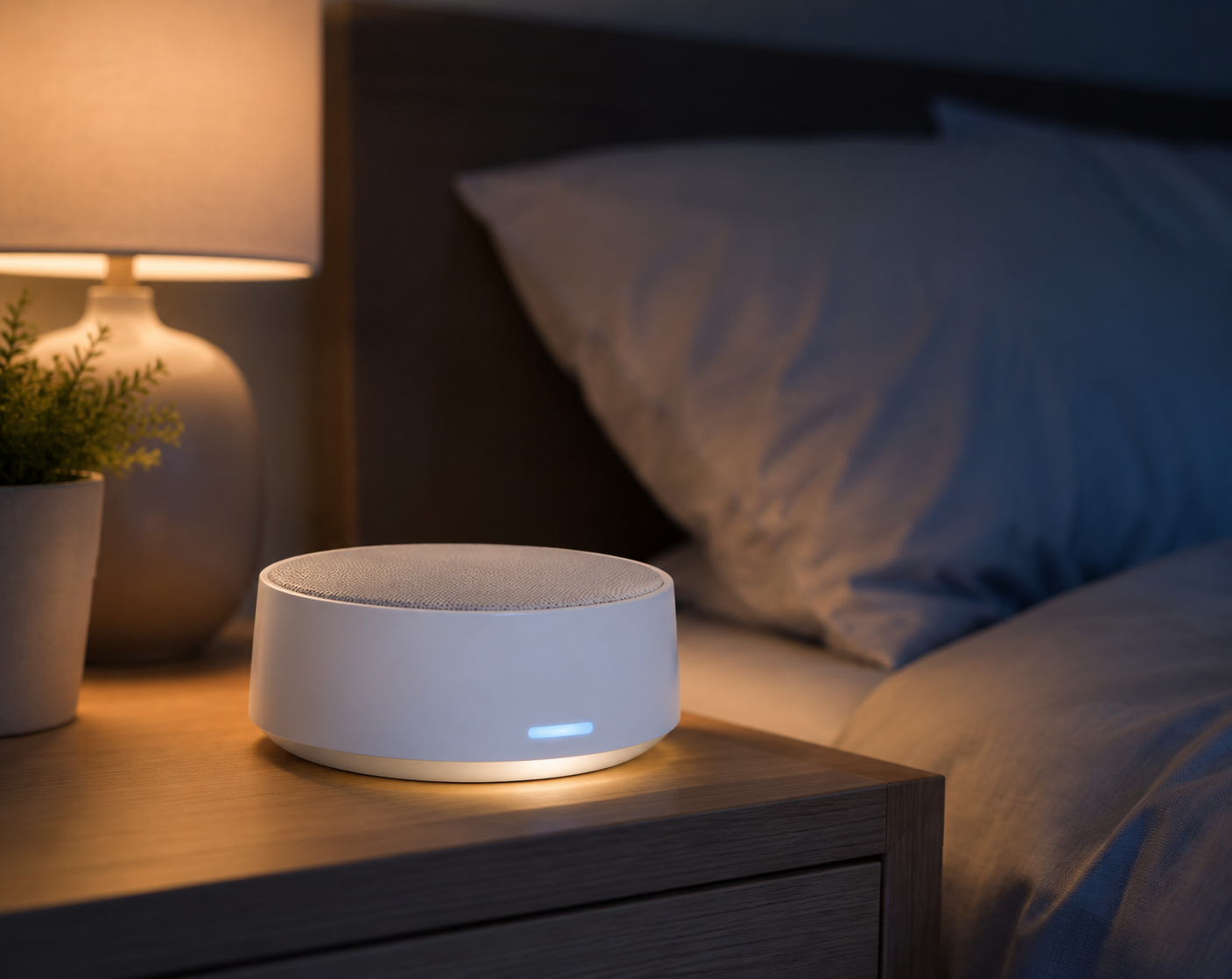
Set the masking sound before the storm peaks, not after you are already irritated and awake. Keep it steady. A playlist with dramatic changes, spoken meditation, or nature sounds that include their own thunder is doing extra work nobody asked for. If you use a phone, keep emergency alerts enabled and the volume high enough that safety notifications still cut through.
- Start with a fan, air purifier, white-noise machine, pink-noise track, or sleepbuds.
- Place the sound source between you and the noisiest window if possible.
- Use earplugs only if you can still receive required alerts or have another alert method nearby.
- Avoid headphones or volumes that isolate you from warnings during genuinely dangerous weather.
If you already tried white noise and it did nothing, adjust the sound before abandoning the method. Many people set it too softly, too far away, or choose a thin, hissy tone that does little against low rumble. A deeper pink or brown noise often feels less sharp than classic white noise, though comfort matters more than the label.
Treat Lightning as a Contrast Problem
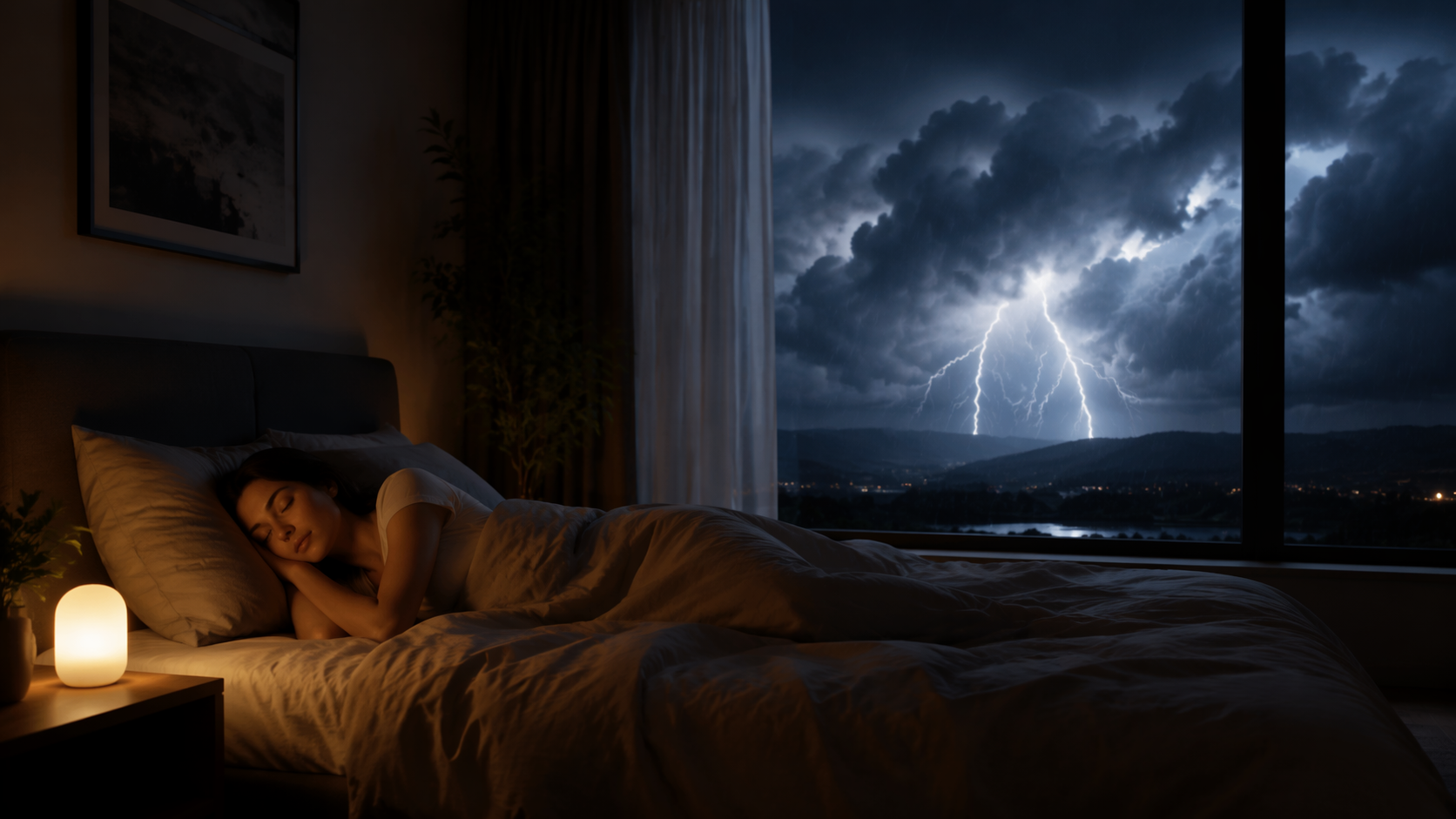
A pitch-black room is not always the best storm room. In ordinary sleep hygiene advice, darkness usually wins. During lightning, total darkness can make each flash feel more abrupt because the room jumps from black to bright and back again.
The fix is not necessarily a brighter room. It is a less dramatic room. Close curtains or blinds if they do not interfere with safety awareness. Turn your body away from the window. Add a very dim, warm nightlight in a corner or hallway so the next flash is not starting from complete darkness. A sleep mask can help if you tolerate it and if it does not make you feel trapped.
This is also where people overdo it. Bright overhead lights may reduce contrast, but they also tell the brain it is time to be awake. Aim for low and steady: enough ambient light to blunt the flash, not enough to turn your bedroom into a waiting room.
Add Deep Pressure Only If It Helps Your Body Settle
A weighted blanket will not soundproof a room or make a storm safe. Its role is narrower: deep pressure. For some sleepers, that steady pressure gives the body a stronger sense of containment, which can reduce the restless bracing that shows up during loud weather.
A 2024 brief review of weighted-blanket research reported improvements in sleep quality and anxiety-related outcomes, and discussed deep pressure touch as a possible pathway involving parasympathetic activation and increased pre-sleep salivary melatonin. The same review is not a blank check: it notes limits in the evidence base, including small sample sizes, limited randomized controlled trials, and reliance on subjective sleep measures in many studies.[1]
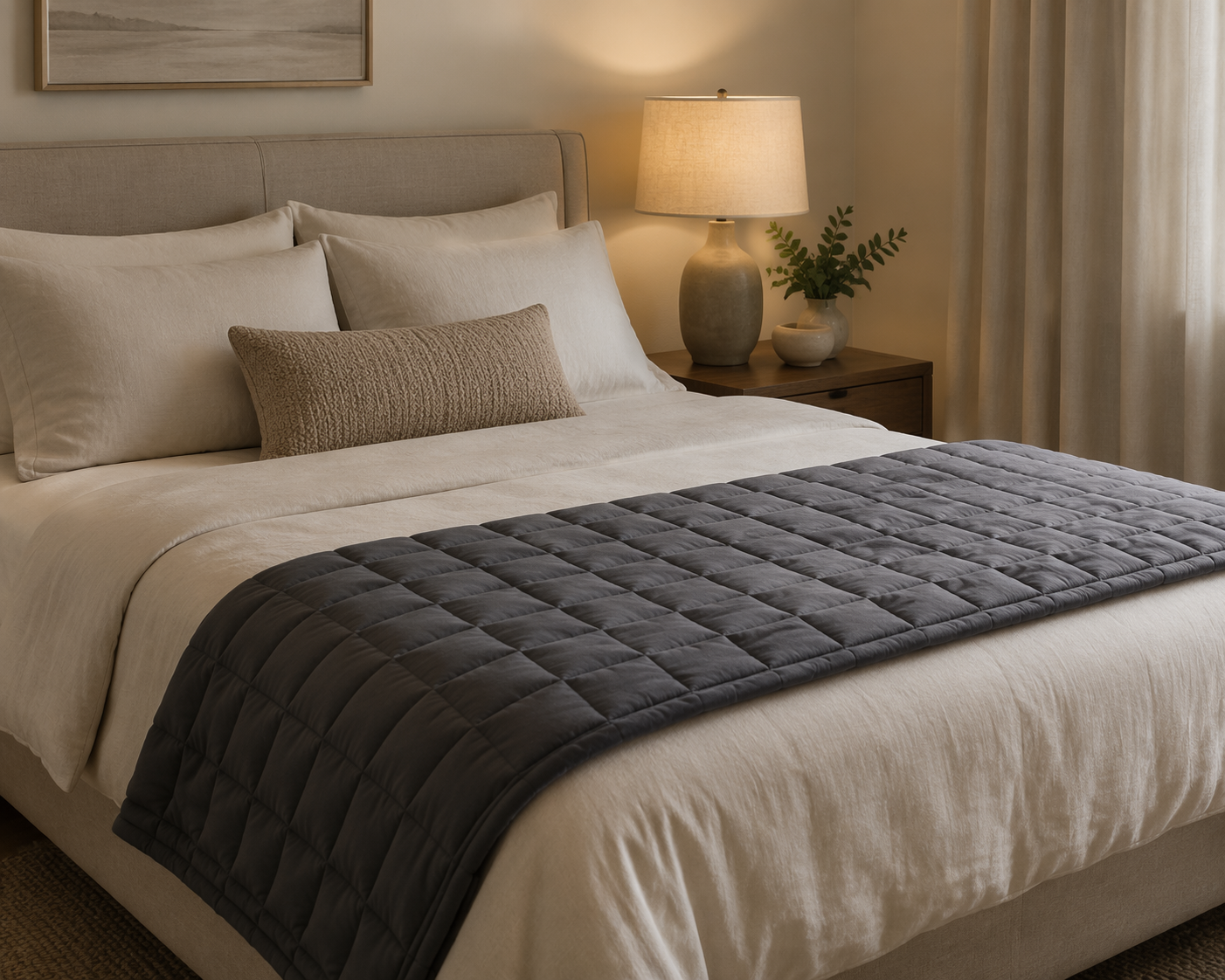
So use it as an optional layer, not a moral test of whether you are trying hard enough. Skip it if you feel overheated, restricted, short of breath, physically uncomfortable, or unable to get up quickly if an alert changes. People with sleep-disordered breathing, mobility limitations, respiratory issues, or medical concerns should be especially cautious and follow clinician guidance.
If you do use one, set it up before the storm intensifies. Wrestling a heavy blanket into place after a 2 a.m. thunderclap is not calming; it is laundry with adrenaline.
Move the Anxiety Work Earlier Than Bedtime
Storm anxiety is not solved by pretending the storm is not there. It usually gets worse when the brain has half-information: enough radar to imagine trouble, not enough planning to stand down. The National Weather Service’s storm stress and anxiety guidance emphasizes preparedness, knowing where to get reliable weather information, and having a safety plan before storms arrive.[2]
That means the sleep plan starts earlier in the evening. Check the forecast and local alerts before bed. Decide what conditions would make you get up. Put shoes, a flashlight, charged phone, medication, wallet, and any pet supplies where you can reach them. Choose the safest shelter area in advance. Then stop making yourself re-decide the same things every seven minutes.
Baylor College of Medicine’s 2025 guidance on pre-storm anxiety similarly points toward preparation, practical planning, and limiting excessive exposure to storm-related information when it starts feeding anxiety rather than helping action.[3] The Anxiety and Depression Association of America also recommends reducing anxiety around hurricane season through steps such as preparing supplies, making plans, and managing media exposure.[4]
The media part deserves blunt treatment. A forecast check is useful. An alert source is useful. A loop of damage clips, live chasers, comment threads, and radar refreshes after you already know your plan is usually not useful for sleep. It keeps the threat present without giving you a new decision to make.
- Before bed: check official local alerts and the expected timing of the storm.
- Set one reliable alert channel that can wake you if conditions worsen.
- Prepare the shelter route and essentials before you try to sleep.
- Choose a cutoff time for radar checking unless an alert changes.
- Avoid storm footage and commentary that does not change your next action.
This is the part many “calm down” scripts skip. Anxiety may be loud because it is asking for a plan. Once the plan exists, you can treat the remaining arousal more like a body state: lower the sound contrast, soften the light contrast, add comfort, and let the alert system carry the monitoring job.
A Tonight-Only Layering Order
Do not build a complicated ritual at midnight. Use the smallest stack that addresses your actual problem and still preserves safety.
- Confirm that sleeping is appropriate: no tornado warning, no instruction to move, no flood threat that requires active monitoring.
- Set one reliable alert source loud enough to wake you if the situation changes.
- Start broadband noise before the storm peaks; add earplugs only if alerts remain accessible.
- Reduce lightning contrast with curtains, body position, a dim warm nightlight, or a comfortable sleep mask.
- Use a weighted blanket or heavier bedding only if it feels calming, breathable, and easy to exit.
- Stop refreshing storm media once your plan and alert source are in place.
If tropical systems are the issue rather than short, high-intensity thunderstorms, the timing and alert problem changes; the sensory framework is similar, but the night may be longer and the uncertainty wider. The related guide to sleeping during a tropical storm handles that slower pattern. For the underlying physiology, see how severe weather disrupts sleep through four physiological pathways. If the anxiety itself is the main event, the deeper phase-by-phase discussion of hurricane anxiety and sleep may be more useful than another generic relaxation list.
When Not to Try to Sleep Through It
A sleep strategy should never compete with a safety instruction. If warnings escalate, move first and sleep later. Keep your phone charged and alerts active. If you need to be in an interior room, basement, or other designated shelter area, go there instead of negotiating with yourself from bed.
For a merely disruptive severe thunderstorm, layer the channels: steady sound, lower light contrast, optional deep pressure, and earlier preparation. For a storm that may require action, stay partially alert and let safety outrank sleep. That is not a failure of the plan. That is the plan knowing its boundary.
References
- The effect of weighted blankets on sleep and related disorders: a brief review, PMC, 2024.
- Storm Stress and Anxiety, National Weather Service.
- Navigating pre-storm anxiety, Baylor College of Medicine, 2025.
- Hurricane Season is Here: How to Reduce Your Anxiety, Anxiety and Depression Association of America.

Comments
Join the discussion with an anonymous comment.