
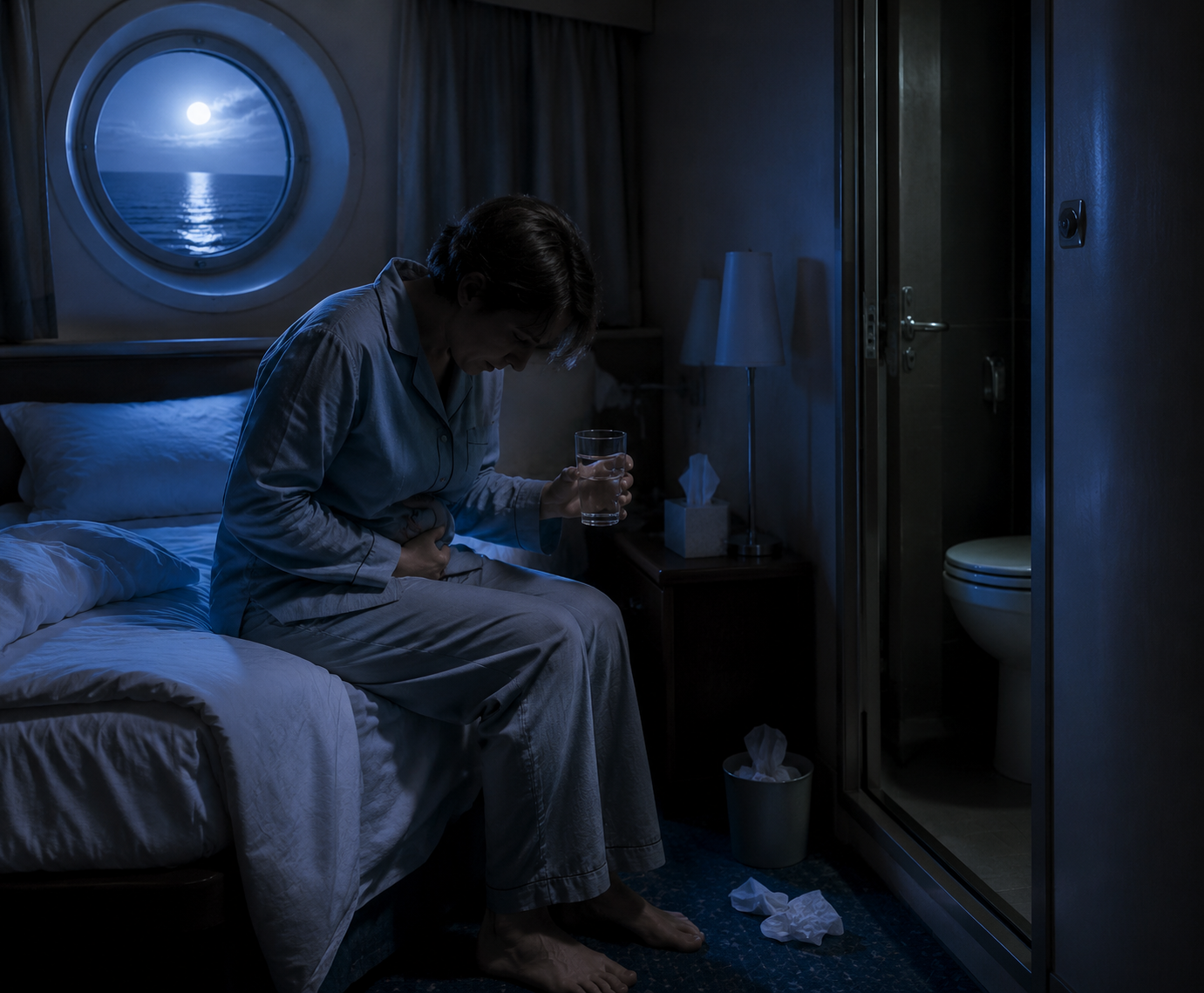
Norovirus does not merely interrupt sleep on a cruise. It can make sleep feel unsafe: you are exhausted, nauseated, confined to a small cabin, and half-listening for the next cramp that tells you to get up fast. Vomiting, diarrhea, stomach pain, and dehydration are all part of the usual norovirus picture, and in a cruise cabin those symptoms collide with a bed that may be only a few steps from the bathroom but still feel too far away at 3 a.m. [1]
Rest still matters. The CDC’s cruise health guidance explicitly includes getting plenty of rest as part of helping rebuild the immune system. That does not mean you should expect a clean, uninterrupted night during active illness. It means the goal changes: reduce avoidable awakenings, protect hydration, and make the cabin less stimulating while your body does the unglamorous work of recovery. [2]
Why sleep falls apart so quickly
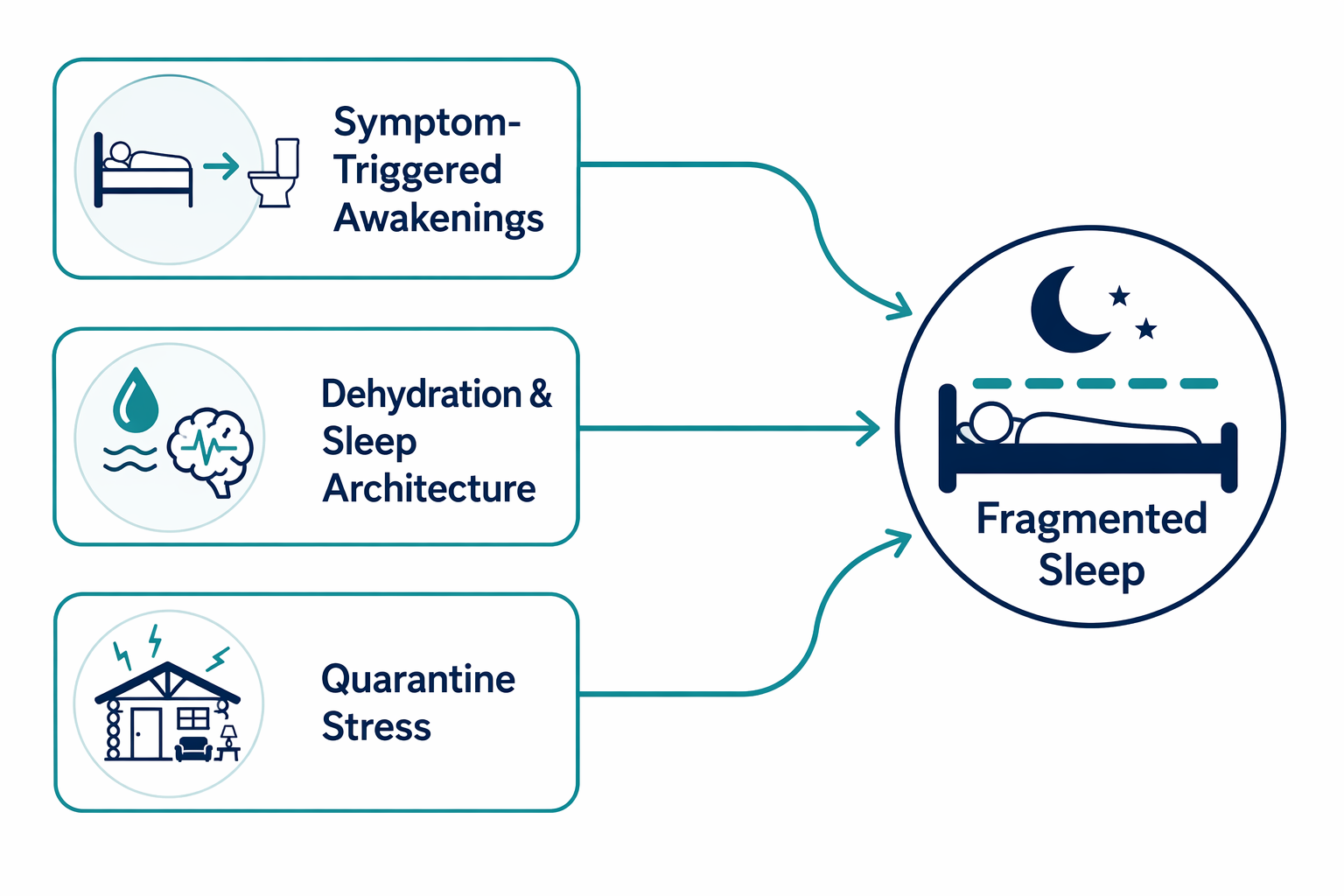
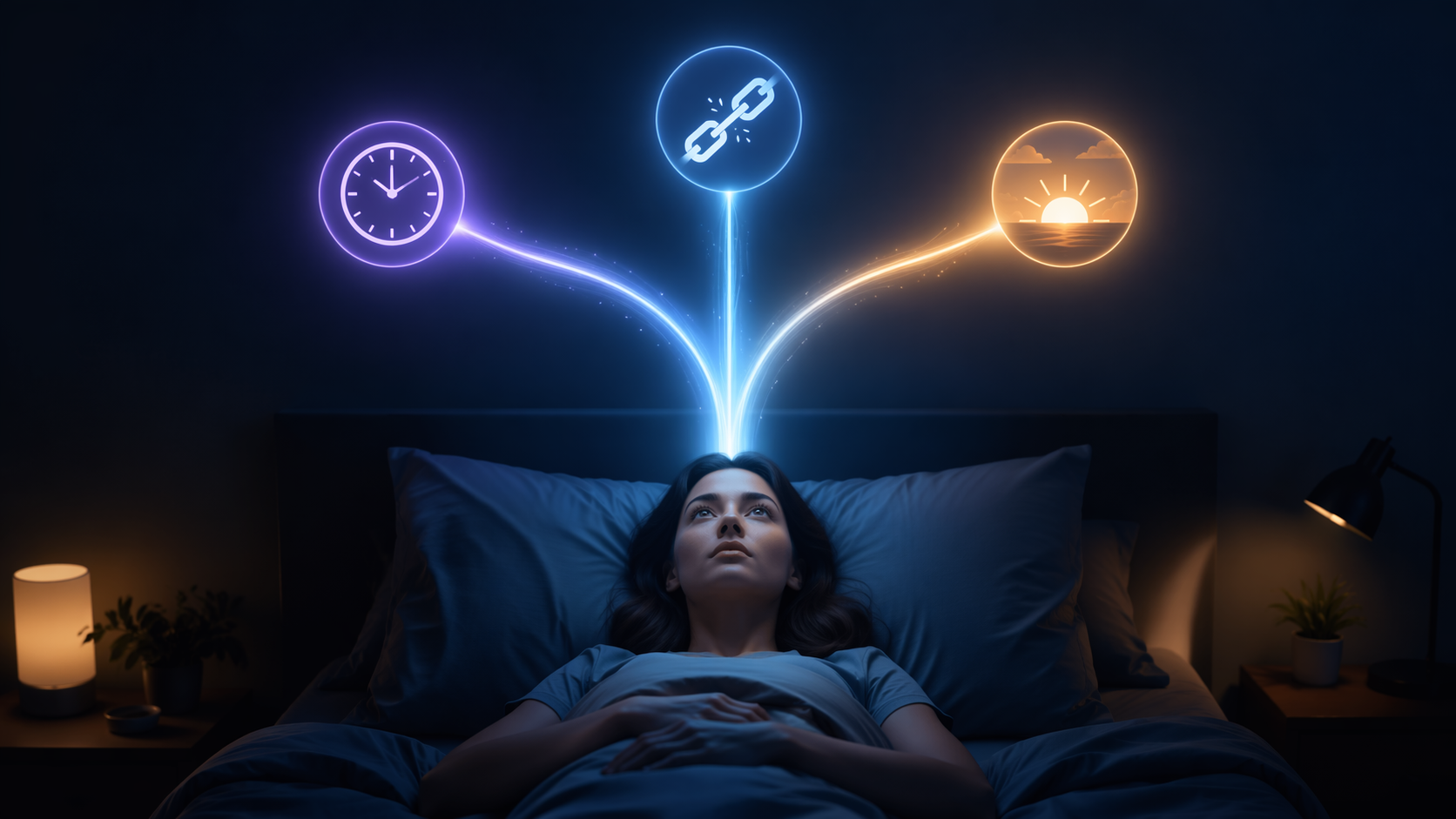
For a cruise passenger, norovirus-related sleep disturbance is usually not one problem. It is three problems stacked on top of each other: symptoms wake you, fluid loss makes sleep more fragile, and quarantine stress keeps the nervous system on alert.
| Pathway | What it feels like in the cabin | What can help most |
|---|---|---|
| Symptom-triggered awakenings | Sudden nausea, cramping, diarrhea, or vomiting breaks sleep before it can deepen. | Bathroom-ready setup, head elevation, side positioning, and accepting lighter sleep. |
| Dehydration and sleep fragmentation | Thirst, dry mouth, weakness, headache, or repeated urgency makes rest feel shallow. | Small frequent sips of oral rehydration solution instead of a large pre-bed fluid load. |
| Quarantine stress | The room feels too small, ship noises feel louder, and every body sensation gets monitored. | Light control, white noise, predictable routines, and fewer sensory surprises. |
The broader digestive-health literature supports the basic connection between gut illness and poor sleep, though it should not be stretched past what it proves. A 2025 NHANES analysis of 10,626 U.S. adults found that people with gastrointestinal disease had higher odds of trouble sleeping, with trouble sleeping reported at 38% versus 24%, and sleep disorders at 15% versus 8%. That is useful validation for anyone who has felt wiped out but unable to sleep during a stomach illness. It is not a norovirus-only study, and it does not tell us exactly what happens in a cruise cabin during an acute outbreak. [3]
The more revealing detail is not just “diarrhea wakes you.” In a 2019 BMC Gastroenterology study of 5,792 Korean adults, abdominal distension had the strongest independent association with sleep disturbance, with an adjusted odds ratio of 1.80 and a 95% confidence interval of 1.42 to 2.28. The study used Korean cohort sleep cutoffs, so it should be applied carefully to U.S. cruise passengers, but the finding fits the lived problem: bloating and cramping can keep you braced even when your eyes are closing. [4]
The first job is making awakenings safer and shorter
During active vomiting or diarrhea, the wrong goal is “sleep through it.” Your body may need to wake you. A lighter, more responsive sleep can be protective if it lets you get to the bathroom before a mess, avoid choking risk during nausea, or notice that symptoms are worsening.
Set up the cabin so an awakening takes fewer decisions. Keep the path to the bathroom clear. Move shoes, bags, wet towels, and charging cables out of the walkway. Put water or oral rehydration solution where you can reach it without standing. If you have a cabinmate, agree on a low-light plan before the next episode: which light gets turned on, who calls the medical center if needed, and where clean clothes or towels are.
Positioning is not a cure, and there are no cruise-cabin trials proving one pillow arrangement prevents norovirus awakenings. This is practical extrapolation from general GI-symptom sleep guidance. Still, it can make the next few hours less punishing.
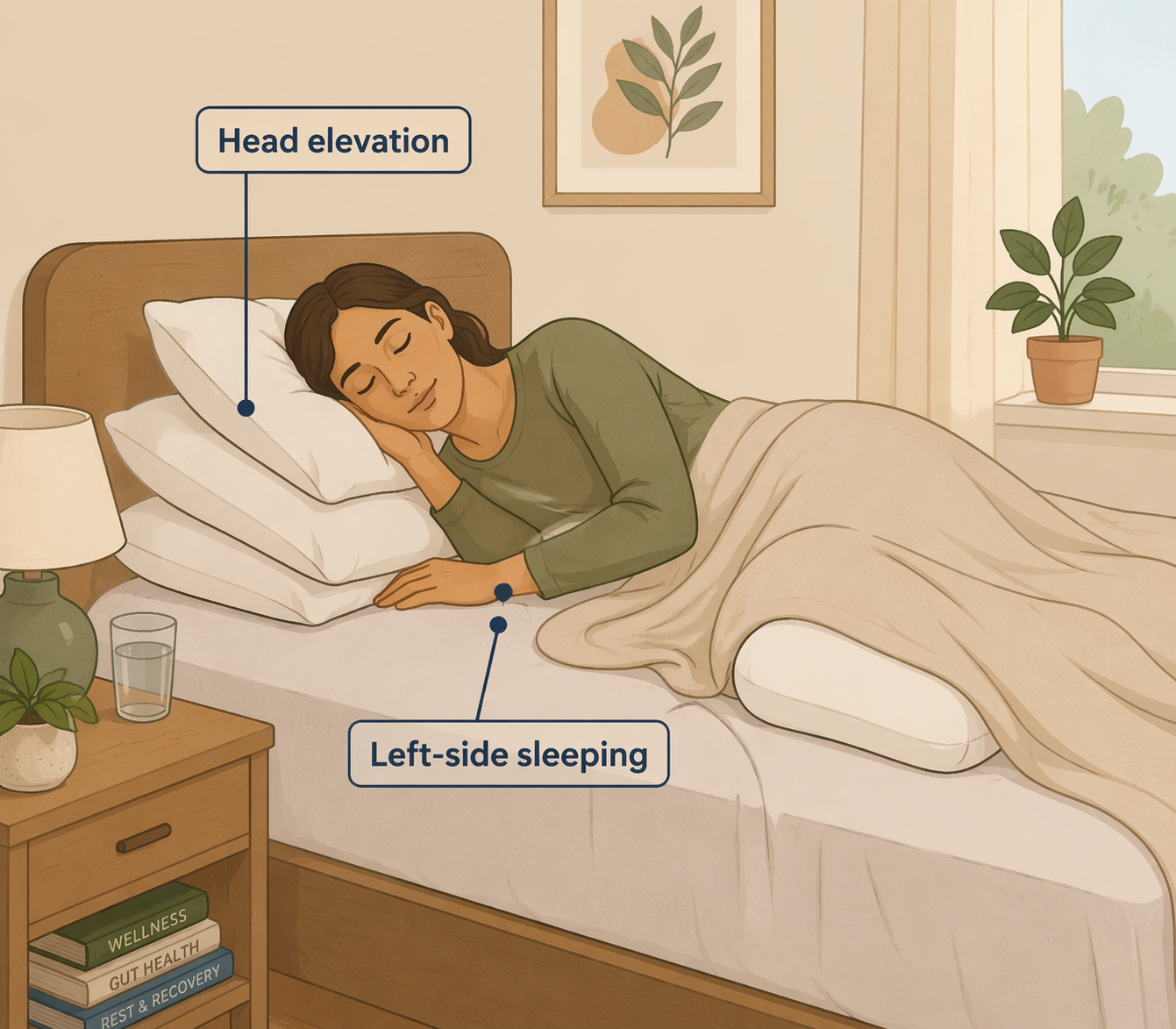
- Use extra pillows to elevate your head and upper torso, especially if nausea, reflux, or sour burps are keeping you alert.
- Try lying on your left side if it feels comfortable; many people find it gentler during digestive upset.
- Keep a towel, lined trash can, or emesis bag within arm’s reach if vomiting is active, so you are not negotiating a tiny room while dizzy.
- Sleep in loose layers rather than tight waistbands, because abdominal pressure can make bloating and cramping harder to ignore.
- Use the bathroom before attempting a longer rest period, even if you are not sure you need to go.
This is also where basic sleep hygiene fundamentals need to be adapted rather than followed rigidly. A normal bedtime routine might include dimming lights, avoiding screens, and keeping the bed mostly for sleep. During norovirus, the priority is simpler: make the next wake-up less chaotic, then let yourself return to rest without treating each interruption as a failure.
Hydration timing matters more than heroically drinking a lot
Vomiting and diarrhea can drain fluids fast. The sleep problem is that dehydration and rehydration can both wake you: too little fluid leaves you dry, weak, headachy, and restless; too much at once can worsen nausea or send you back to the bathroom just as you start to drift off.
For sleep, the better pattern is usually small, frequent sips of oral rehydration solution rather than large amounts of plain water right before bed. Think in terms of steady replacement, not catching up all at once. If you can only tolerate tiny sips, tiny sips still count. The cabin goal is to keep fluid coming in without creating a new cycle of urgency.
| If this is happening | Try this cabin adjustment |
|---|---|
| You feel thirsty but every drink worsens nausea | Take very small sips, pause, and repeat; avoid treating one large glass as the target. |
| You keep waking to urinate after trying to rehydrate | Shift more sipping earlier in the evening and taper the amount close to sleep. |
| Your mouth is dry when you wake | Keep oral rehydration solution reachable and sip before getting fully upright. |
| You feel too weak to keep track | Ask a cabinmate or crew member for help contacting the ship medical center. |
Be careful with claims about dehydration and “sleep architecture.” It is reasonable to expect fluid loss to make sleep more fragmented, and deep sleep is part of the recovery picture, but direct sleep-stage research during acute norovirus is sparse. What matters in the cabin is practical enough without overclaiming: prevent dehydration from becoming another reason your body cannot settle.
Quarantine stress makes normal ship sounds harder to ignore
Cabin isolation is necessary during contagious GI illness, but it is not emotionally neutral. The same room that felt cozy on embarkation day can feel airless when you are sick, waiting for symptoms to ease, and listening to hallway noise or plumbing sounds. Stress does not need to become panic to damage sleep; low-grade vigilance is enough.
Reduce unpredictability first. Decide what sound you want in the room before you try to sleep. The bathroom fan, cabin ventilation, a white-noise app, or low TV static can mask hallway voices, engine vibration, door slams, and the small mechanical noises that become enormous when you are nauseated and overtired. The same masking logic used for sleeping through a thunderstorm applies here: the point is not perfect silence, but fewer sudden changes.
If the ventilation sound helps, use it deliberately. If it irritates you or dries your mouth, switch to a quieter option. A fan or white-noise approach is useful only if it lowers arousal instead of adding another sensation to monitor.
Light deserves the same plain treatment. Use blackout curtains if you have them. Keep one dim, reachable light available for bathroom trips. Avoid blasting the room with overhead light every time symptoms wake you, because full brightness tells the brain the night is over even when your body still needs rest.
What not to spend your limited energy on
When you are actively sick, this is not the moment to investigate every outbreak headline, litigate the buffet, or build a supplement stack from patchy advice. Norovirus can spread in cruise settings, and public-health tracking matters, but the person on the bathroom floor needs a narrower plan: fluids, safe access to the bathroom, isolation compliance, and a cabin that allows some rest.
It can help to understand the illness as a multi-mechanism sleep disruption rather than a personal failure to relax. That same lens applies in other medical contexts, including illness-related sleep disruption during cancer treatment: symptoms, treatment effects, stress, and environment can all interfere at once. Norovirus is usually acute rather than long-running, but the sleep logic is similar. You get more relief by matching the adjustment to the mechanism than by telling yourself to calm down.
When sleep should stop being the main concern
Sleep strategies do not replace medical care. Contact the ship medical center if you have signs of severe dehydration, cannot keep fluids down for 24 hours, have bloody stool, or develop a high fever. Those are not “bad sleep” problems; they are medical boundaries. Cleveland Clinic’s norovirus guidance also emphasizes watching for dehydration, especially when vomiting and diarrhea are ongoing. [5]
Once vomiting and diarrhea have stopped, shift from emergency rest to recovery sleep. Aim to return toward 7 to 9 hours as symptoms resolve, and do not be surprised if sleep feels off for several days while appetite, hydration, and energy normalize. The night after norovirus is often better than the night during it, but it may not feel like your usual sleep yet.
During the active episode, the win may be modest: one shorter bathroom trip, one less jolt from hallway noise, one stretch of lighter sleep that still gives your body a break. On a cruise, in quarantine, that is not a small thing.
References
- About Norovirus, CDC.
- Tips for Healthy Cruising, CDC.
- Gastrointestinal Disorders Linked to Sleep Problems, GI and Hepatology News, September 2025.
- Association between digestive symptoms and sleep disturbance, BMC Gastroenterology, 2019.
- Norovirus Symptoms, Causes & Treatment, Cleveland Clinic.
Comments
Join the discussion with an anonymous comment.