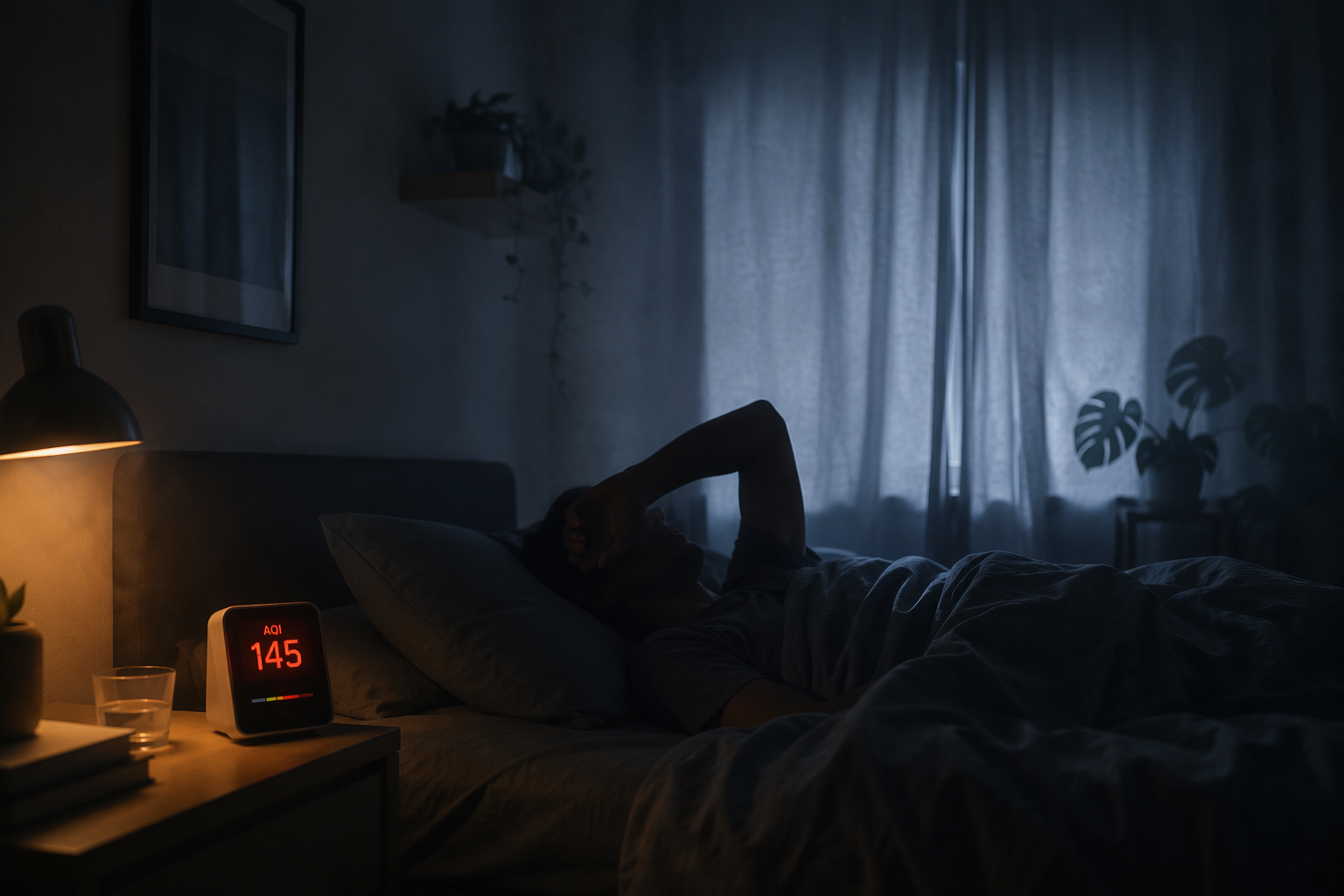
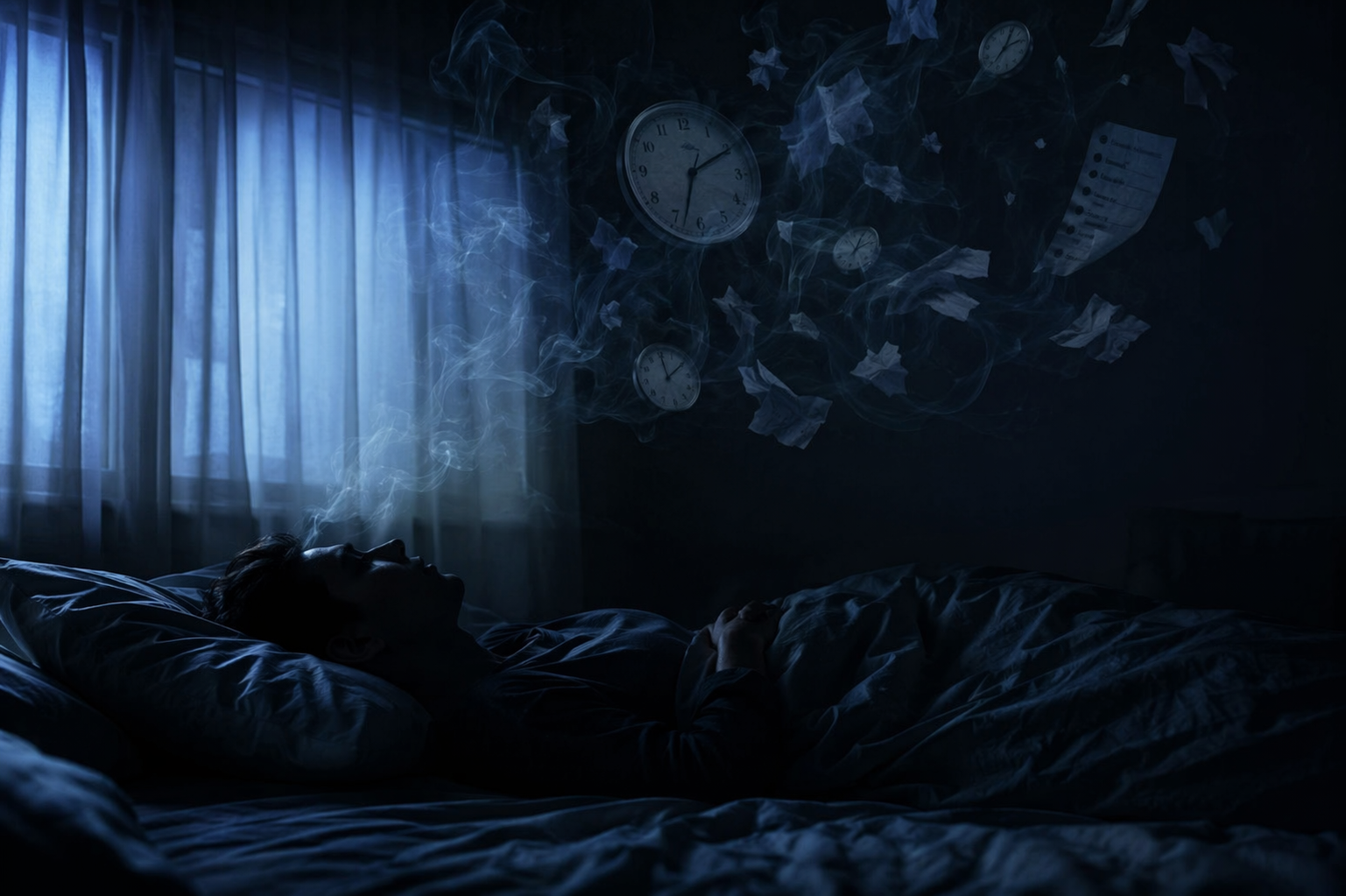
Sleep asks the body to do something dangerous: lower its guard. In a humanitarian crisis, that request can become biologically unreasonable. A person may be exhausted, lying still, and desperate for sleep, while the nervous system keeps treating the night as unfinished surveillance. An explosion, a burst of gunfire, an unsafe shelter, a missing mattress, or the knowledge that the next interruption may come without warning can all keep the body from crossing the threshold into restorative sleep.
That is the most direct answer to how humanitarian crisis affects sleep: it does not merely make people “stressed.” It keeps threat biology, environmental danger, and physical deprivation active at the exact moment when sleep requires safety, down-regulation, and continuity.
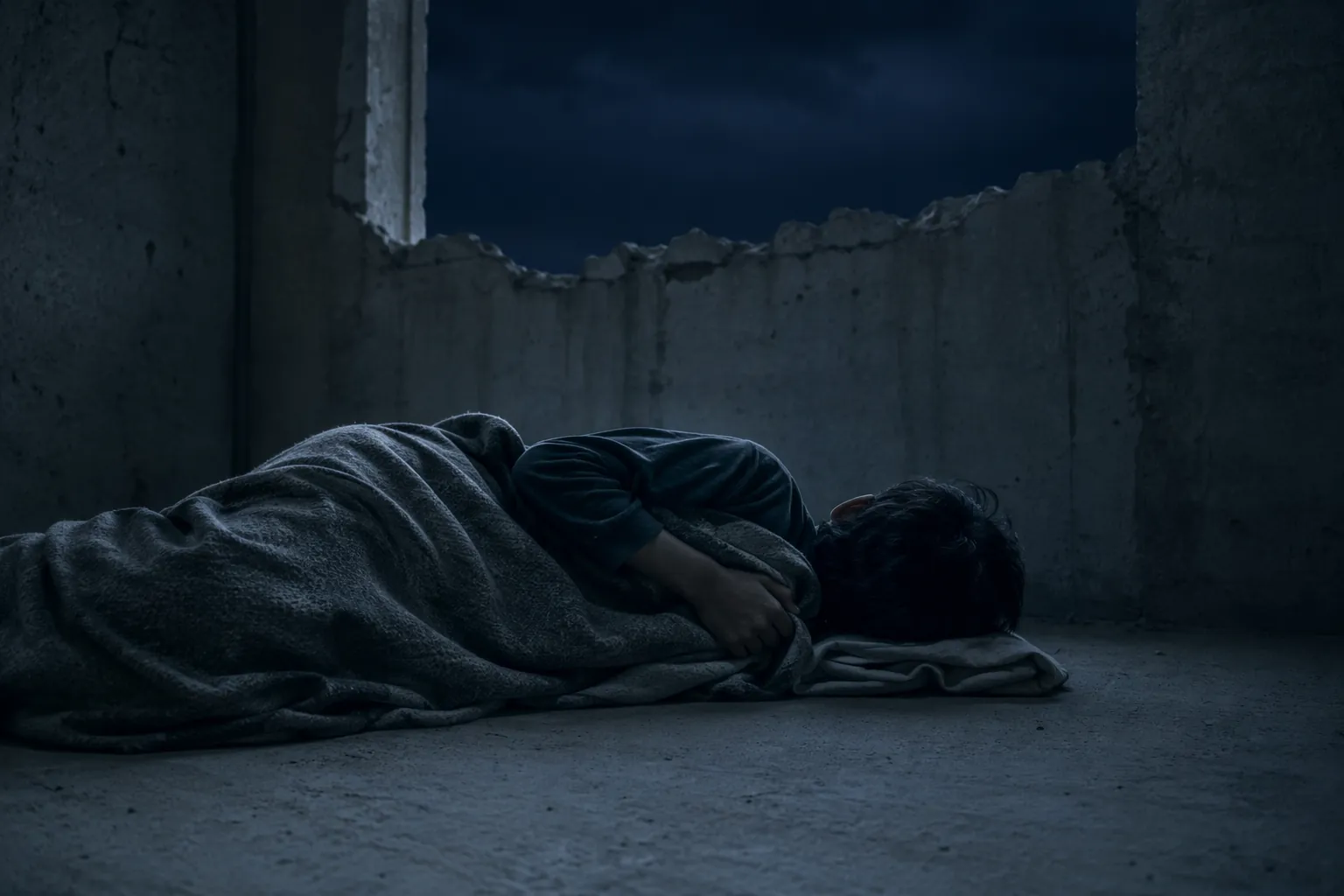
A 2026 cross-sectional study of 930 civilians in Gaza makes this unusually plain. More than 80% of respondents attributed sleep disruption directly to loud explosions, anxiety, or feeling unsafe; 47% reported frequent nighttime awakenings; 26.5% had used sleep aids in the previous month; and 53.8% reported using spiritual practices to cope. The same study found that having a mattress was associated with 34% lower odds of severe sleep disturbance, with an odds ratio of 0.66.[1]
That mattress finding deserves to sit beside the explosions and anxiety, not beneath them. It shows that sleep physiology is not floating above material life. A nervous system trying to stand down still has to inhabit a body pressed against a surface, exposed to temperature, crowding, pain, light, noise, and interruption.
There is one methodological limit worth keeping visible. The Gaza study used an expanded version of Pittsburgh Sleep Quality Index Item 5 rather than the full PSQI, so its composite sleep-disturbance scores should not be treated as directly interchangeable with standard PSQI scores from other studies.[1] That caveat does not make the findings weak; it keeps the comparison honest.
The scale is large, but the mechanism matters more
Gaza is not an isolated sleep story. A 2026 meta-analysis of 66 studies including 42,956 participants estimated pooled sleep adversity prevalence at 43.2% among refugee adults and 36.4% among refugee children.[2] A 2023 systematic review reported insomnia estimates among refugees ranging from 32.6% to 73.3%, compared with about 11.3% in the general population.[3]
Those numbers should not be flattened into one global rate. Different studies use different tools, populations, time windows, and definitions, which helps explain why the estimates vary. The more durable conclusion is narrower and stronger: sleep disruption is consistently elevated in displaced and crisis-affected populations, even though exact prevalence depends on how it is measured.
After the Haiti earthquake, an American Academy of Sleep Medicine report noted that 94% of survivors reported insomnia symptoms and 42% had clinically significant PTSD two years later.[4] Reporting on Ukraine has also described sleep as a persistent casualty of war, with data from Kurapov indicating that more than 80% of Ukraine’s population reported sleep problems since escalation.[5]
The prevalence is sobering, but it is not the center of the problem. The center is the way crisis conditions recruit the body’s own protective systems against sleep.
Pathway one: the threat system stays switched on
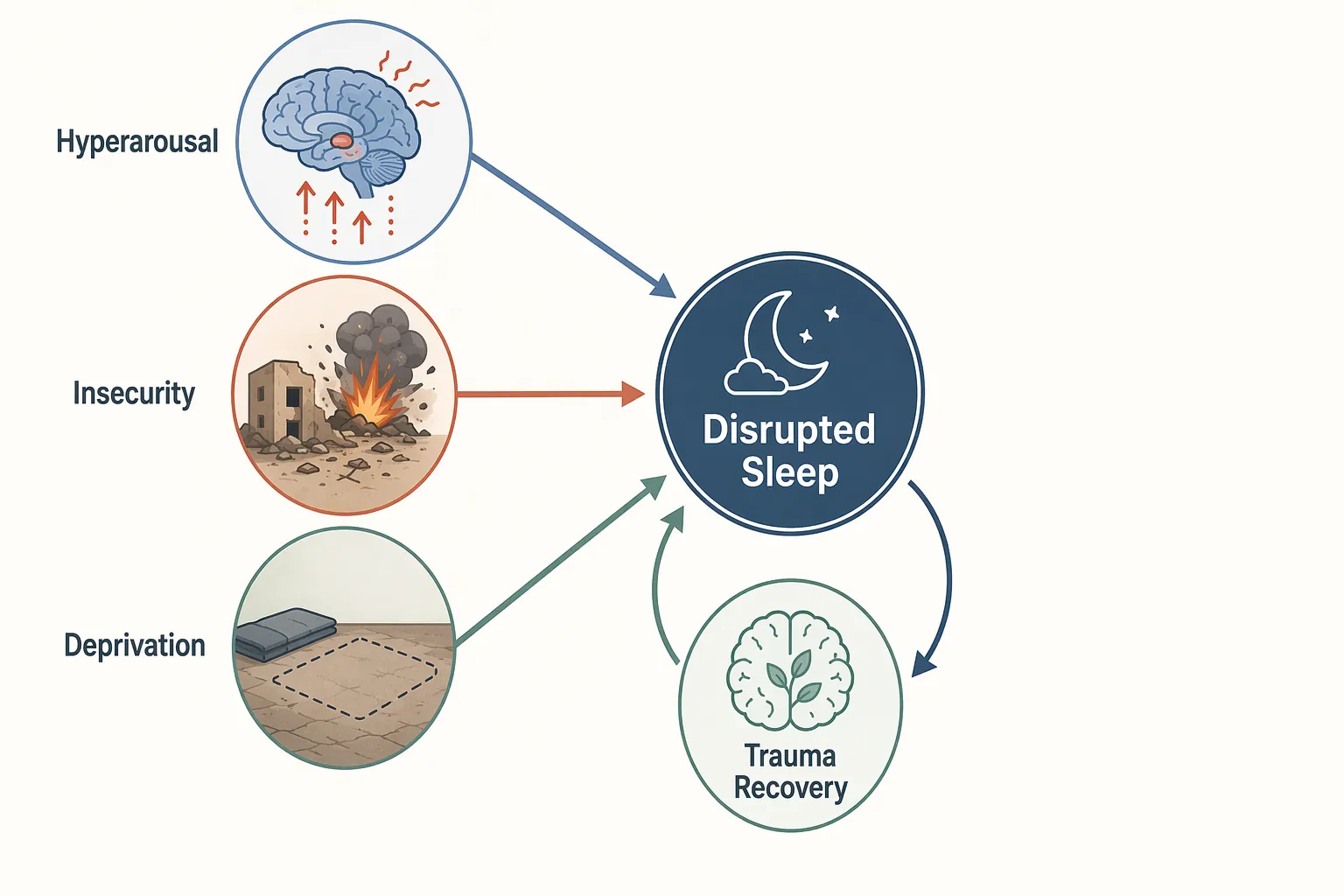
The first pathway runs through hyperarousal. When people are exposed to traumatic threat, the brain does not simply store the event as a bad memory. It can keep the hypothalamic-pituitary-adrenal axis—the HPA axis—more easily activated. That system helps coordinate the body’s stress response, including cortisol release, alertness, cardiovascular readiness, and scanning for danger.
This is useful when danger is immediate. It is costly when the body is trying to sleep. Sleep initiation depends on a shift away from vigilance: muscles loosen, sensory monitoring softens, breathing slows, and the brain stops demanding constant updates from the environment. Hyperarousal pushes in the opposite direction. It makes faint sounds more meaningful, makes darkness less neutral, and turns the first drift toward sleep into a moment the brain may interrupt.
Nighttime awakenings are part of this pattern. Waking once in the night is not unusual; waking repeatedly because the brain keeps checking whether the threat has returned is different. In the Gaza study, nearly half of participants reported frequent nighttime awakenings.[1] That number is not just a sleep-quality complaint. It points to sleep architecture being repeatedly punctured by a nervous system that has not accepted the night as safe.
Trauma also changes what happens after an awakening. In ordinary circumstances, a person may wake, turn over, and return to sleep with little memory of the interruption. Under threat, waking can restart orientation: Where am I? What was that sound? Is the shelter intact? Are the children still beside me? Once that sequence begins, the body is no longer merely awake; it is mobilized.
Pathway two: the environment keeps proving the body right
Hyperarousal is often written about as though it lives only inside the person. In humanitarian crises, the environment keeps validating it. Explosions, gunfire, aircraft, sirens, shouting, structural instability, and unsafe shelter are not symbolic stressors. They are cues that the nervous system can reasonably interpret as evidence that sleep is not yet permitted.
The Gaza data capture this braid of external threat and internal alarm. More than 80% of respondents linked sleep disruption to loud explosions, anxiety, or feeling unsafe.[1] Those are not three unrelated answers. Loud explosions enter the body as sensory threat. Anxiety keeps the prediction system active. Feeling unsafe prevents the basic surrender that sleep requires.
Unpredictability matters. A single loud noise can wake someone. Repeated unpredictable noise teaches the brain that quiet is not reliable. The absence of sound becomes a waiting period rather than a safety signal. That is one reason crisis-related insomnia cannot be reduced to poor bedtime habits. The person is not failing to relax; the environment is continuing to send threat cues.
Unsafe shelter adds another layer. Sleep is a state of reduced responsiveness. People need enough confidence in walls, doors, distance, privacy, and the people around them to tolerate that vulnerability. If a shelter is crowded, damaged, exposed, or socially unsafe, the body may remain partially on duty even when the person wants rest.
Pathway three: deprivation blocks down-regulation
The third pathway is sometimes mislabeled as comfort. A mattress, cover, space, warmth, and privacy are not luxuries added after sleep has already been solved. They are part of the physical conditions that allow the body to down-regulate and stay asleep.
A body lying on a hard or cold surface receives a steady stream of signals: pressure, pain, temperature shifts, muscle tension, numbness, and the need to reposition. Each signal can be minor on its own. Together, they raise the baseline level of bodily demand. When threat biology is already active, the extra physical discomfort can be enough to keep sleep shallow or broken.
This is why the mattress association in the Gaza study is so blunt. Having a mattress was linked with lower odds of severe sleep disturbance even in an active war setting where explosions, anxiety, and insecurity were widespread.[1] The finding does not mean a mattress can neutralize war. It means material sleep conditions still matter inside catastrophe, and they can affect risk independently enough to measure.
Covers and privacy work in the same physiological neighborhood. A cover helps regulate temperature and can give the body a boundary. Privacy reduces social monitoring. Space reduces accidental contact and the vigilance that comes from sleeping too close to strangers or extended family under crisis conditions. These are not aesthetic preferences. They are inputs into whether the nervous system can stop guarding the body.
The pathways compound instead of taking turns
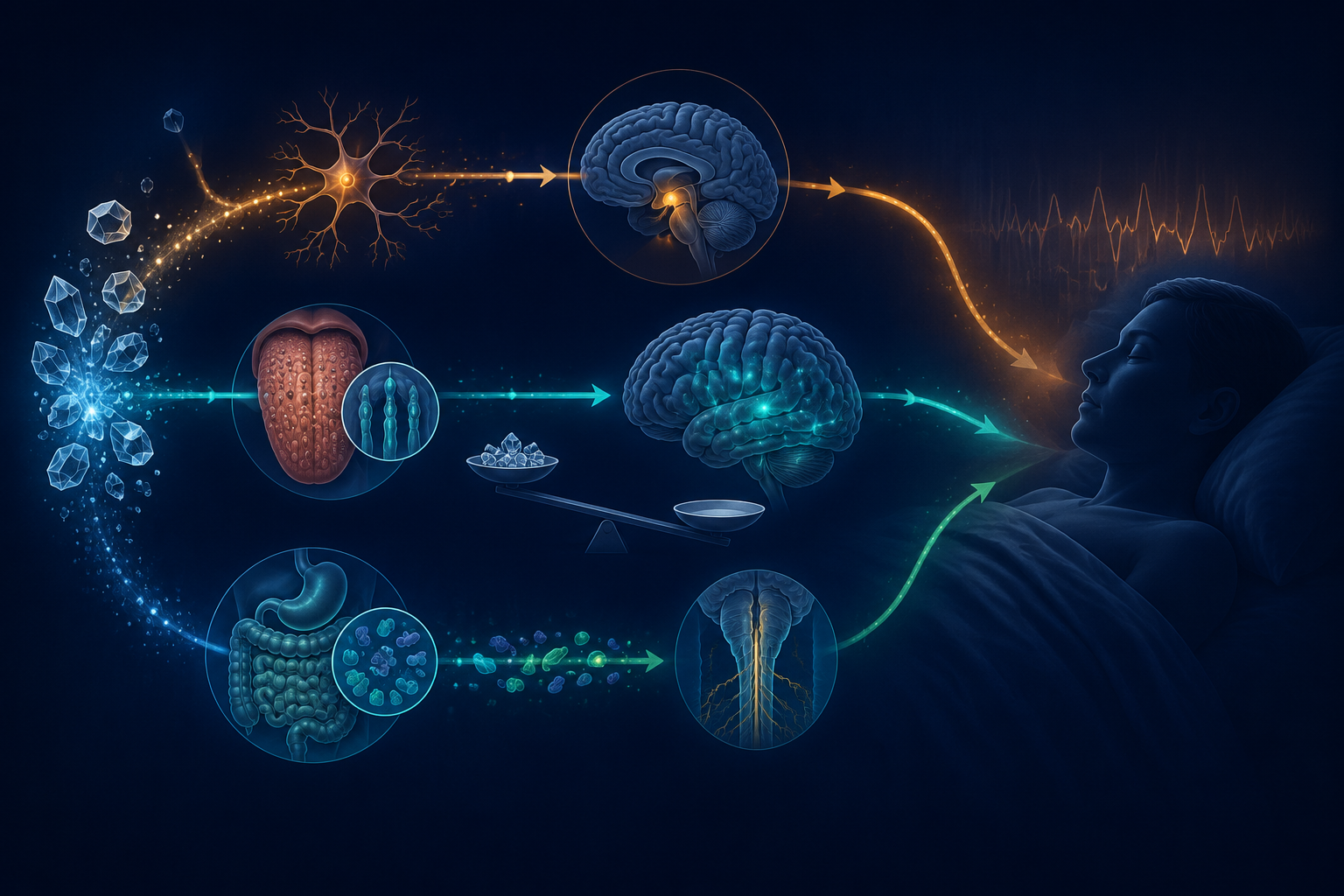
It would be cleaner to separate crisis sleep disruption into trauma, danger, and deprivation. In real bodies, they reinforce each other.
| Pathway | What it does to sleep | How it amplifies the others |
|---|---|---|
| Trauma-driven hyperarousal | Keeps the brain scanning for threat and makes sleep initiation harder | Turns ordinary sounds, body sensations, and shelter noise into possible danger cues |
| Environmental insecurity | Interrupts sleep and prevents the body from accepting vulnerability | Keeps the HPA-axis stress response more easily activated |
| Material deprivation | Adds pain, cold, crowding, exposure, and sensory discomfort | Prevents down-regulation even when the immediate threat is temporarily quiet |
A person who has survived bombardment may be more reactive to noise. If the shelter is unsafe, that reactivity is not irrational; it is continually reinforced. If the person is also lying without a mattress or cover, the body receives discomfort signals all night. The result is not one cause of insomnia. It is a stack of conditions that all point the nervous system away from sleep.
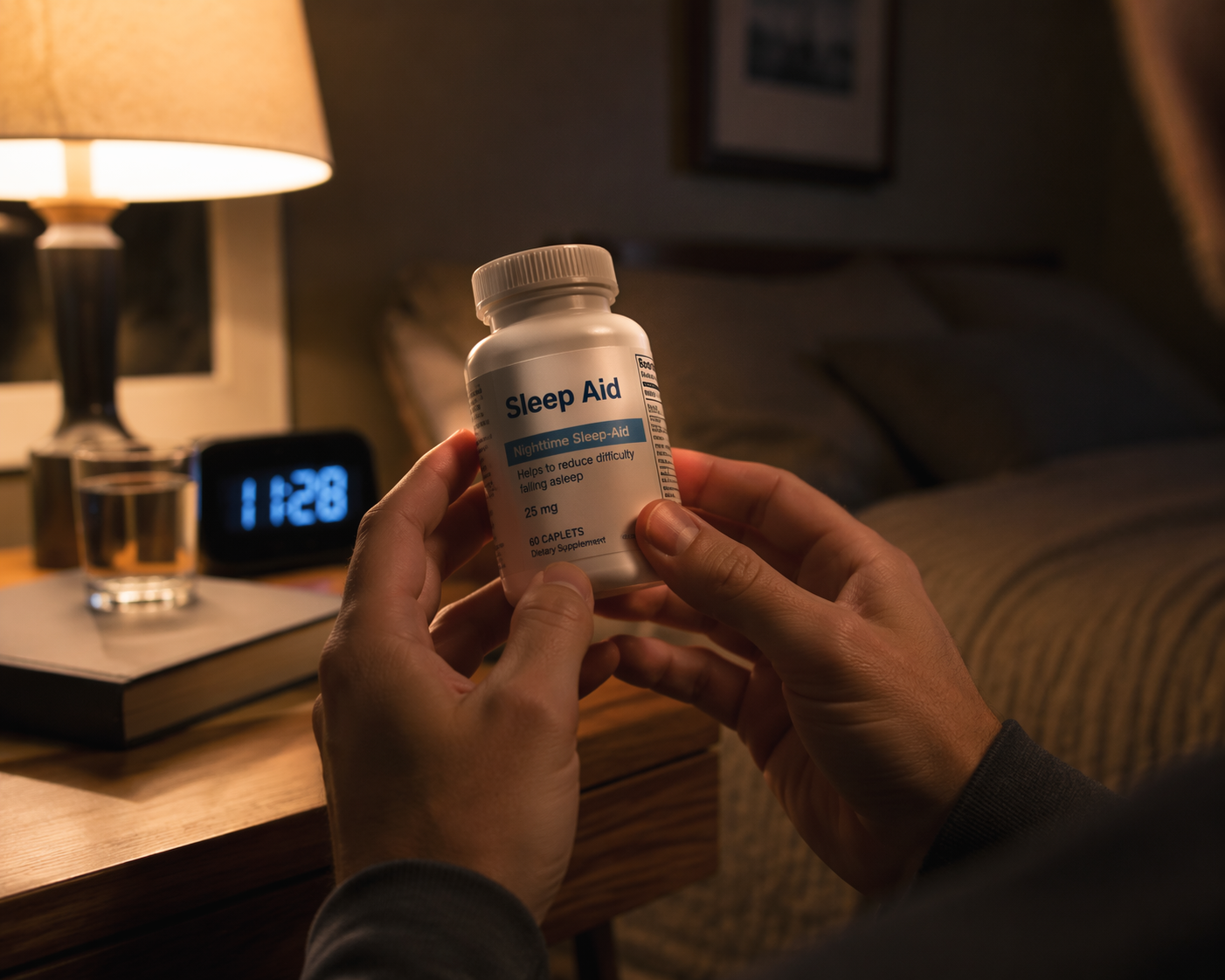
This also explains why sleep aids and coping practices appear in crisis data without solving the larger problem. In Gaza, 26.5% of respondents reported using sleep aids in the past month, and 53.8% reported spiritual practices as coping.[1] Those responses may matter to individuals. But a pill, prayer, breathing pattern, or ritual still meets the same environment: noise, insecurity, crowding, cold, grief, and the expectation of further threat.
Poor sleep then slows trauma recovery
Sleep is not only a victim of trauma. It is also one of the systems the brain uses to recover from it. Restorative sleep supports emotional regulation, memory processing, immune function, and the ability to distinguish present safety from past danger. When sleep is repeatedly fragmented, those recovery processes have less room to work.
The loop can become self-perpetuating. Trauma exposure increases hyperarousal. Hyperarousal disrupts sleep. Fragmented sleep weakens the next day’s emotional regulation and threat discrimination. That makes the nervous system more reactive the following night. In a still-dangerous environment, the cycle is not just psychological; it is being refreshed by real cues.
The Haiti earthquake findings show why sleep and trauma symptoms should not be handled as separate afterthoughts. Two years after the earthquake, 94% of survivors in the cited report had insomnia symptoms, and 42% had clinically significant PTSD.[4] The data do not prove that insomnia caused PTSD or that PTSD caused insomnia in every survivor. They do show that long after the initial disaster, sleep disruption and traumatic stress can remain deeply entangled.
War-zone reporting from Ukraine points in the same direction at a population level: when people remain under prolonged threat, sleep problems can become widespread rather than exceptional.[5] The body may survive on partial rest for a time. It does not do so without cost.
Why ordinary sleep advice becomes too small
Standard sleep advice assumes some control over the sleep environment: dim the room, keep a schedule, reduce noise, reserve the bed for sleep, avoid stimulation before bedtime. These recommendations are not foolish. They are simply undersized for a person trying to sleep through bombardment, displacement, overcrowding, grief, or unstable shelter.
The intervention evidence is also thinner than the evidence documenting the problem. The research base is stronger on prevalence and associations than on scalable, durable treatments for crisis-affected populations. That asymmetry matters. It should make sleep a more urgent humanitarian target, not a space for overconfident claims.
A serious sleep response would not begin by asking displaced people to be more resilient at bedtime. It would ask who can reduce nighttime noise, improve shelter safety, provide mattresses and covers, reduce crowding, protect privacy, identify people with severe insomnia or trauma symptoms, and integrate sleep into mental-health and protection work.
For readers looking at individual-scale versions of the same physiology, the mechanisms are familiar. Hypervigilance after an earthquake, flood anxiety at night, trauma-related insomnia after a crash, loneliness-related sleep fragmentation, and chronic trauma-linked arousal all draw on overlapping threat systems, even when the scale of danger is different. Restful Ground covers those narrower situations in guides to sleep after earthquake trauma, flash flood anxiety and sleep, car accident stress insomnia, loneliness and hypervigilant sleep, and trauma-related sleep struggles. The humanitarian setting is not just a larger version of private insomnia, though. It is the place where the environment itself keeps reactivating the mechanism.
Sleep belongs inside humanitarian recovery
Humanitarian frameworks often treat sleep as secondary because it sounds like comfort after survival. The physiology says otherwise. Sleep is part of the trauma-recovery system itself. When a crisis keeps people awake through hyperarousal, insecurity, and deprivation, it is not merely lowering quality of life. It is interfering with the body’s ability to recover from the crisis while the crisis is still happening.
Naming sleep as a standalone humanitarian concern does not mean separating it from shelter, safety, or trauma exposure. It means refusing to pretend that sleep can wait until those needs are solved. A mattress, a quieter night, a safer shelter, and fewer threat cues are not soft additions to emergency response. They are conditions under which the nervous system can finally stop proving it is still alive by staying awake.
References
- Sleep disturbances among civilians in active war zones: a cross-sectional study in Gaza. The Egyptian Journal of Neurology, Psychiatry and Neurosurgery, 2026.
- Sleep adversity in refugees and asylum seekers: A systematic review and meta-analysis. PLOS ONE, 2026.
- Sleep disturbances among refugees: A systematic review. 2023.
- Disturbed sleep linked to mental health problems in earthquake survivors. American Academy of Sleep Medicine.
- Sleep remains elusive for people stuck in war zones, from Gaza to Ukraine. The World, 2025.
Comments
Join the discussion with an anonymous comment.