
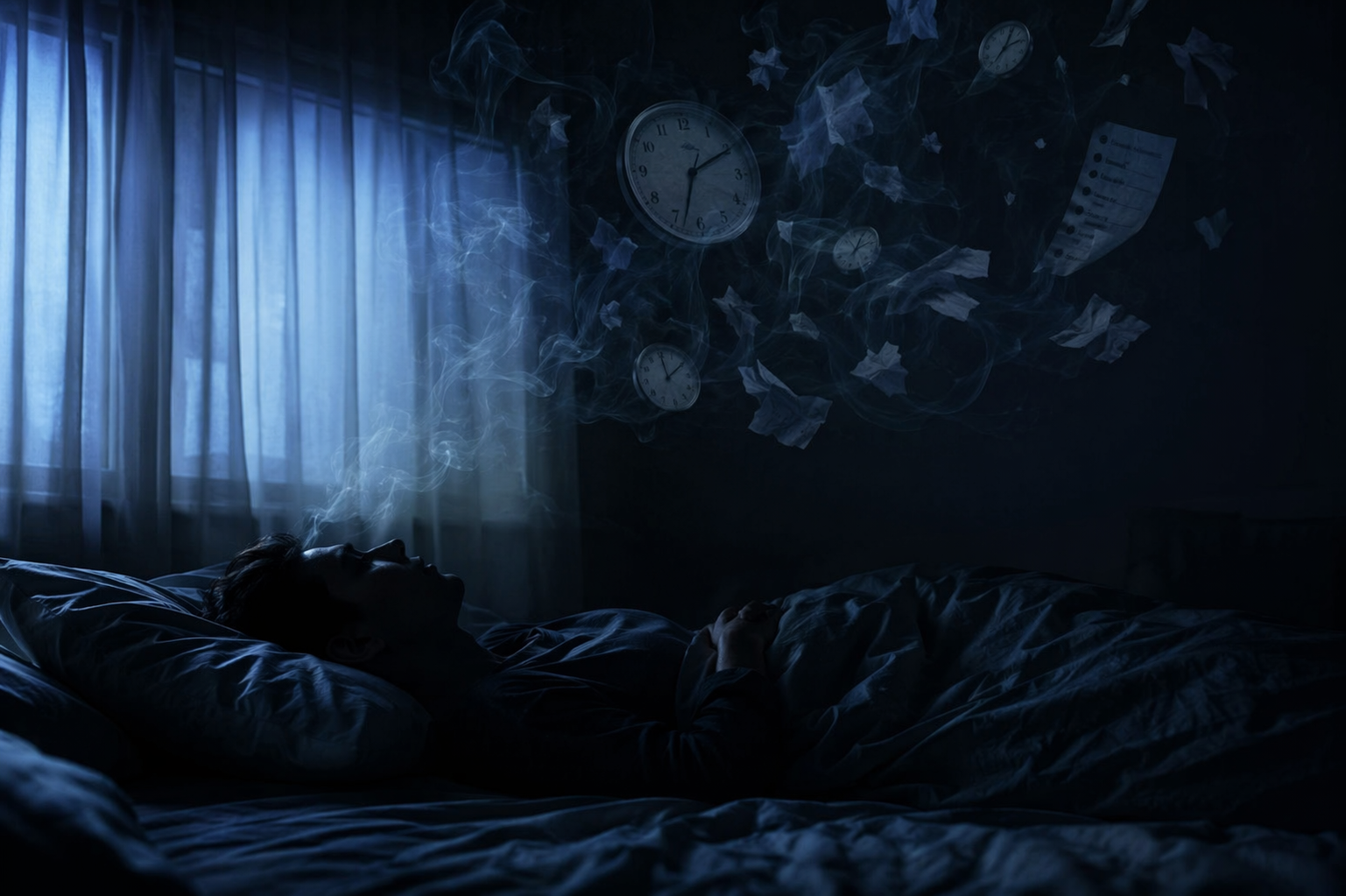
Thunderstorm anxiety can wreck sleep quality even after the usual fixes are already in place. The room is dark, the phone is off, the sound masking is on, and yet the body behaves as if sleep is still out of reach. That mismatch — drowsy but unable to sleep, safe but alarmed — is the clue that storm-related insomnia is not just ordinary worry in a louder outfit. One explanation from Amerisleep, citing NIH-linked studies, says low barometric pressure 12 to 24 hours before storms may increase melatonin while also contributing to tissue swelling and nerve irritation [1].
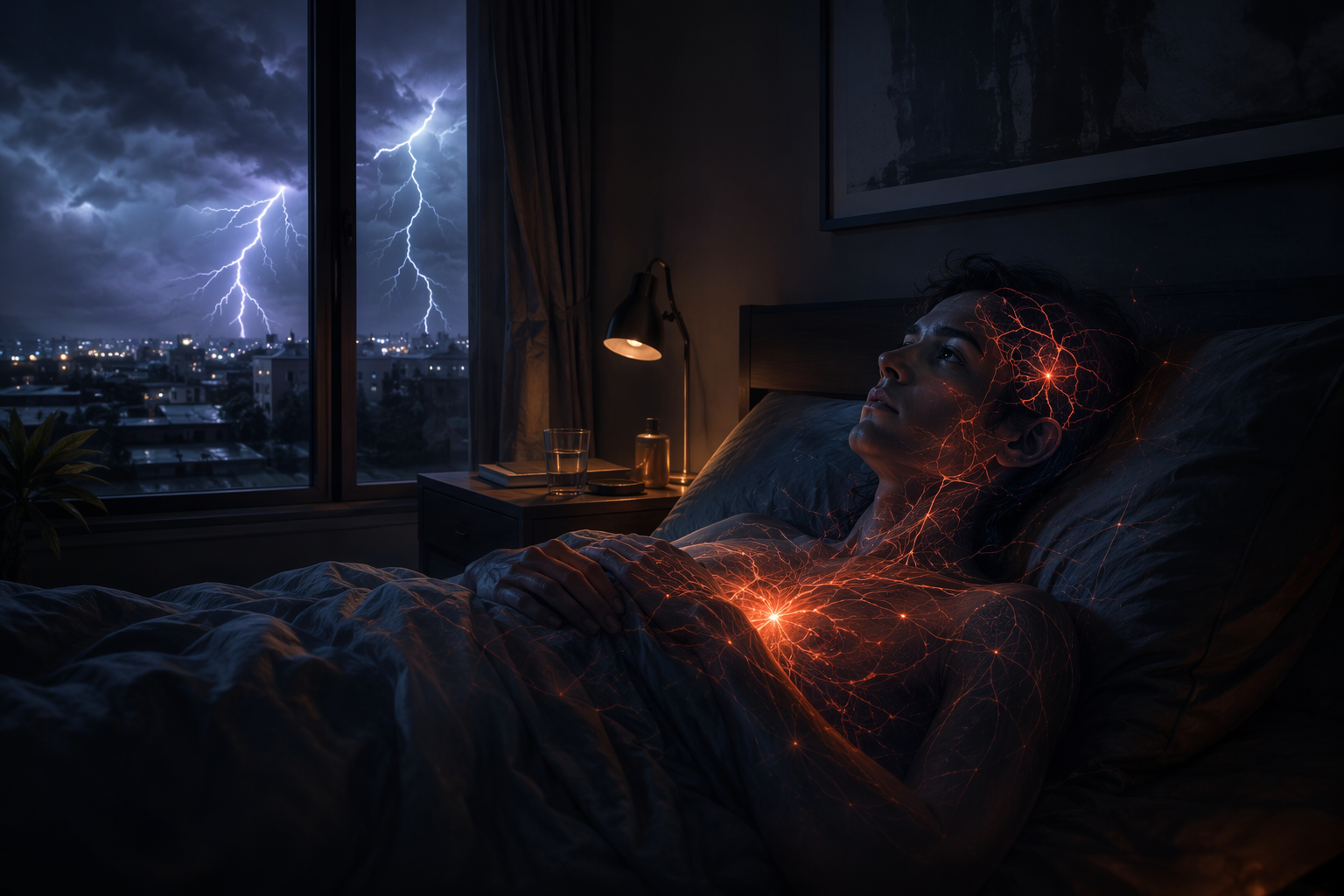
Why the body can feel sleepy and still not settle
That pressure-change idea matters because it explains a paradox many readers recognize immediately: the storm night can start with sleepiness, not panic. If low pressure nudges the body toward melatonin-driven drowsiness, the person may feel as though sleep should come easily. But if the same weather shift also leaves the body feeling physically irritated or unsettled, the result is a tired nervous system that never quite crosses the line into stable sleep [1].
That is why simple bedroom changes can help one part of the problem without solving the whole thing. A cooler room, blackout curtains, and reduced noise may blunt the sensory side of the storm. They do not, by themselves, explain why some people still wake up at the first clap of thunder or lie in bed feeling increasingly wired as the weather moves in.
When weather cues get treated like danger
The next mechanism is learned threat. UAB Medicine described storm anxiety as a state in which the brain's salience network and insula treat weather alerts, barometric shifts, and related sensory cues as if they were imminent danger signals [2]. That is not a character flaw or weakness of will. It is a threat-detection system doing what it has been trained to do.
Prior weather trauma matters here. A bad flood, a severe lightning scare, a tornado season, or even repeated nights of helpless waiting can sensitize the amygdala-hippocampal threat circuit so that the next storm arrives already labeled as unsafe. The brain is then reacting not only to what is happening now, but to what it has learned weather can mean. Some cases fit astraphobia, the specific phobia of thunder and lightning, but many do not; weather distress can sit anywhere from ordinary fear to a diagnosable phobia [4].
That range is worth keeping intact. Cleveland Clinic notes that about 8% of adults meet criteria for a specific phobia in a 12-month period, while a 2025 Thriveworks report found 32% of respondents describing extreme-weather anxiety [4][5]. Those numbers are not interchangeable. They simply show that weather fear can be common, can be mild or intense, and does not always mean the same clinical thing.
The loop that keeps the body awake after the storm quiets
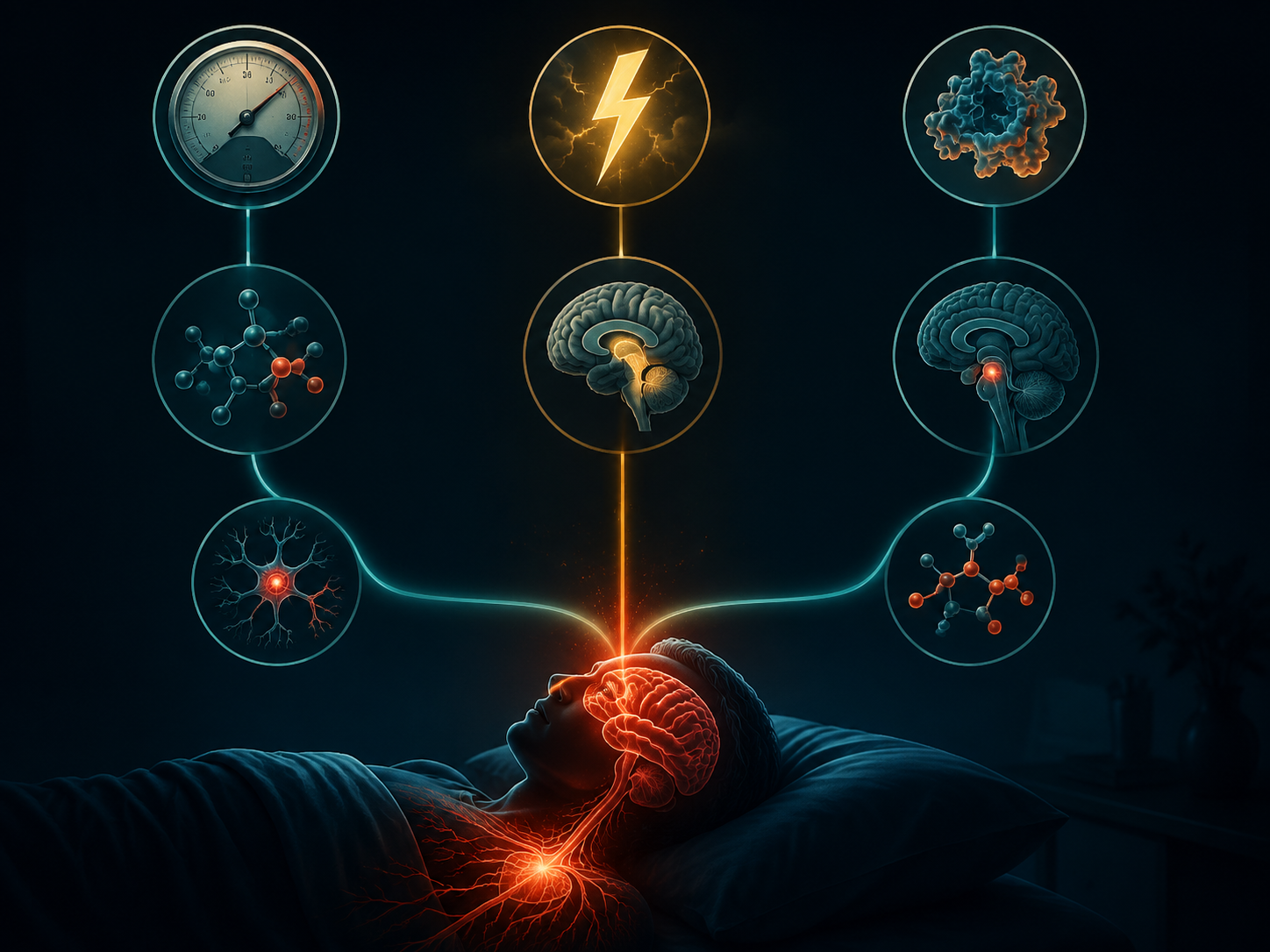
The deepest mechanism is the one most generic sleep advice misses: a feed-forward arousal loop. In Staner's review of sleep and anxiety disorders, corticotropin-releasing hormone from the hypothalamus activates the locus ceruleus, which drives norepinephrine release and keeps cortical arousal high [3]. Once that loop is engaged, the body is not simply "thinking about the storm." It is physiologically organized to stay alert.
That matters because arousal feeds itself. The storm cue activates the threat system; the threat system raises autonomic activation; the higher activation makes sleep harder; the failed sleep attempt then becomes more evidence that something is wrong, which can keep the loop going even after the thunder has moved on. Staner's review also reported that 24% to 36% of insomnia patients had a comorbid anxiety disorder, which is a reminder that hyperarousal and insomnia often travel together [3].
This is the point where "just relax" stops being useful advice. Relaxation can help if the problem is mainly environmental noise or ordinary pre-bed tension. It is much less effective when the brainstem and autonomic system are already locked into a wake-maintaining loop. That is also why a person can feel exhausted, recognize that the storm is no longer a real threat, and still remain unable to fall asleep.
Why generic sleep hygiene only goes so far
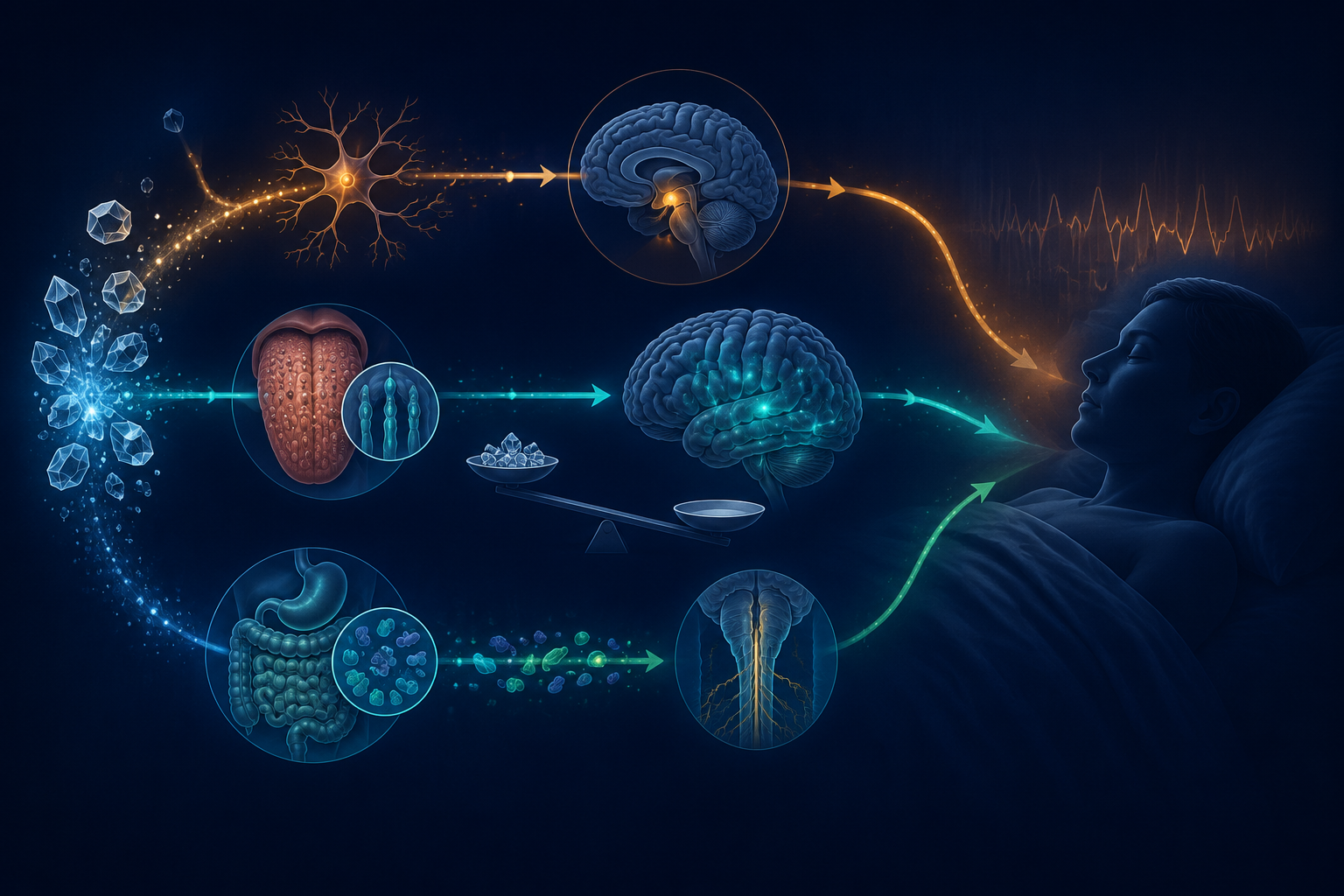
The useful way to think about storm-related insomnia is not as one problem, but as three overlapping ones. The pressure-related sensory pathway can sometimes be buffered by environmental adjustments. The conditioned threat pathway often needs cognitive and exposure-based work to stop the weather cue from automatically reading as danger. The arousal loop may call for insomnia-focused treatment, and sometimes medication when a clinician thinks it is warranted. No single bedtime routine covers all three at once.
That is why some people do every sensible thing they were told to do and still end up awake in the middle of the storm. The room may be optimized, but the brain is not responding to the room alone. It is responding to pressure change, learned alarm, and a physiology that keeps feeding wakefulness back into itself. For chronic cases, the more useful frame is not a thunder-specific checklist but a treatment match: environmental control for the sensory piece, CBT-style or exposure-based work for the learned fear piece, and clinical support when hyperarousal has become its own problem.
Once that map is clear, the question changes. It is no longer why one more tip failed. It is which pathway is still active, and what kind of intervention can actually reach it.
References
- Amerisleep — How Does Barometric Pressure Affect Sleep?
- UAB Heersink School of Medicine — Understanding and Managing Storm Anxiety During Tornado Season, April 2026
- Staner L — Sleep and Anxiety Disorders, 2003
- Cleveland Clinic — Astraphobia: Diagnosis, Causes & Treatment
- Thriveworks — 2025 Pulse on Mental Health Report, 2025

Comments
Join the discussion with an anonymous comment.