
Tourette syndrome and sleep problems often get framed too narrowly: tics are loud at bedtime, so sleep becomes difficult. That can be true, but it is not the whole story. Sleep disruption in Tourette syndrome appears to sit inside the same nervous-system instability that produces tics in the first place, which is why it deserves to be treated as part of the condition rather than as a minor lifestyle complaint.
The broadest estimate is striking: reviews report that up to 80% of people with Tourette syndrome experience sleep problems, including insomnia, parasomnias, restless sleep, sleep-related movements, and daytime sleepiness.[1] That number should not be confused with the more specific 32.16% period prevalence of clinically diagnosed insomnia reported in a specialist-care study of 5,877 people with Tourette syndrome or chronic tic disorder.[2] One number captures a wide field of reported sleep disturbance; the other captures diagnosed insomnia and insomnia-medication use in a particular health-care data set. Both point in the same direction, but they do not measure the same thing.
The Nighttime Problem Is Measurable
A person with Tourette syndrome may describe sleep as light, interrupted, or strangely active. Sleep studies give that experience some weight. Polysomnography findings reviewed by Blaty and DelRosso show that tics can persist across all sleep stages, including REM sleep. Tourette syndrome has also been associated with decreased total sleep time, lower sleep efficiency, and a higher arousal index.[1]
That matters because sleep complaints are often judged by whether someone looks asleep from the outside. A child may be in bed for nine hours but still wake repeatedly. An adult may fall asleep eventually but never feel as if the night consolidated. A bed partner may notice movements, vocalizations, or sudden partial arousals. These are not just bedtime manners with a diagnostic label attached; they are the kinds of sleep features that can be seen, scored, and separated into different sleep disorder patterns.
The common patterns include insomnia, parasomnias such as sleepwalking, night terrors, and confusional arousals, sleep-related movement disorders such as restless legs syndrome and periodic limb movement disorder, and excessive daytime sleepiness.[1][2] The categories matter because they lead to different next steps. A person lying awake with escalating premonitory urges needs a different plan from someone who falls asleep quickly but has periodic limb movements, or from a child with unsafe night terrors.
Why Tics and Sleep Can Break Together
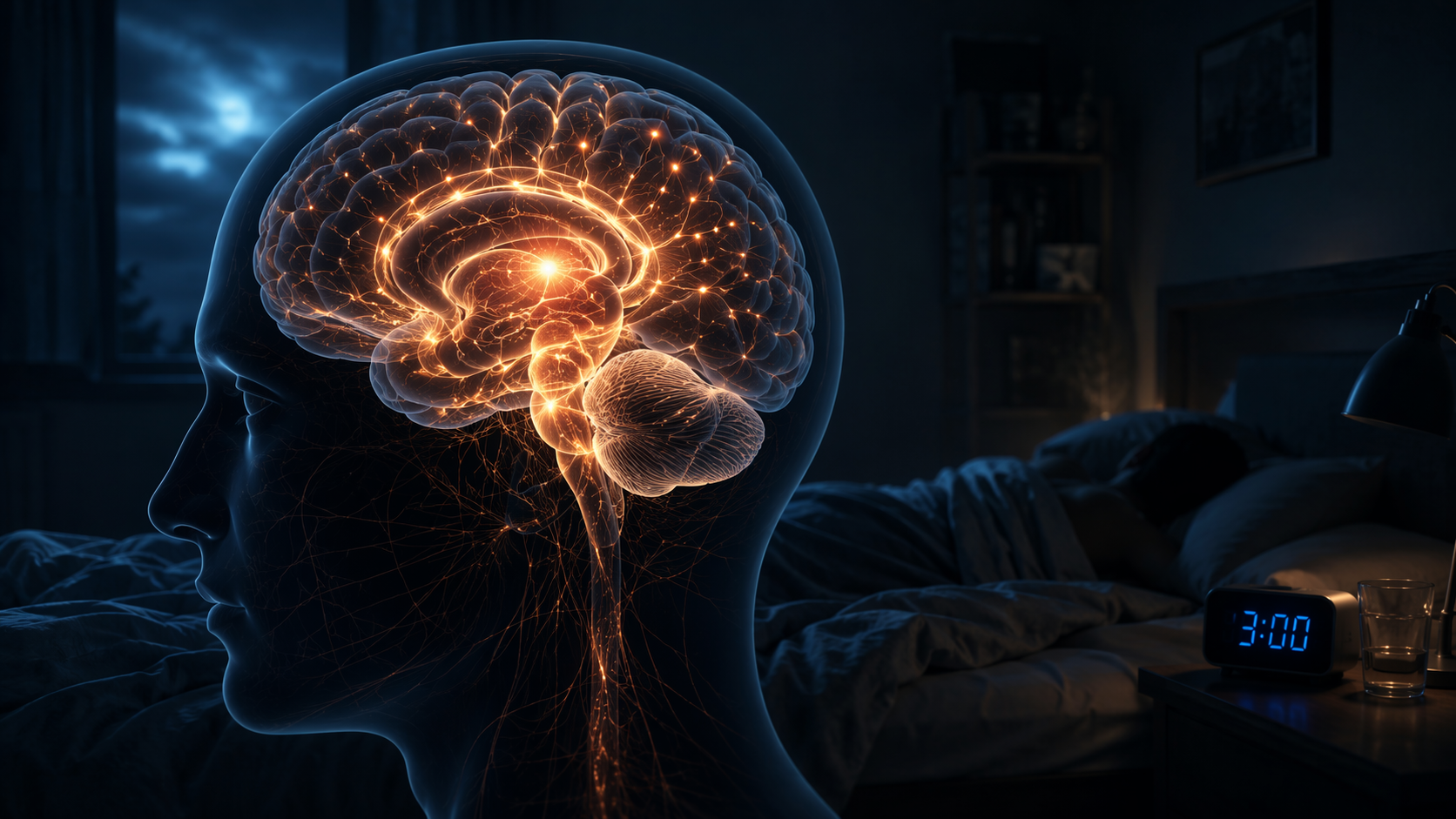
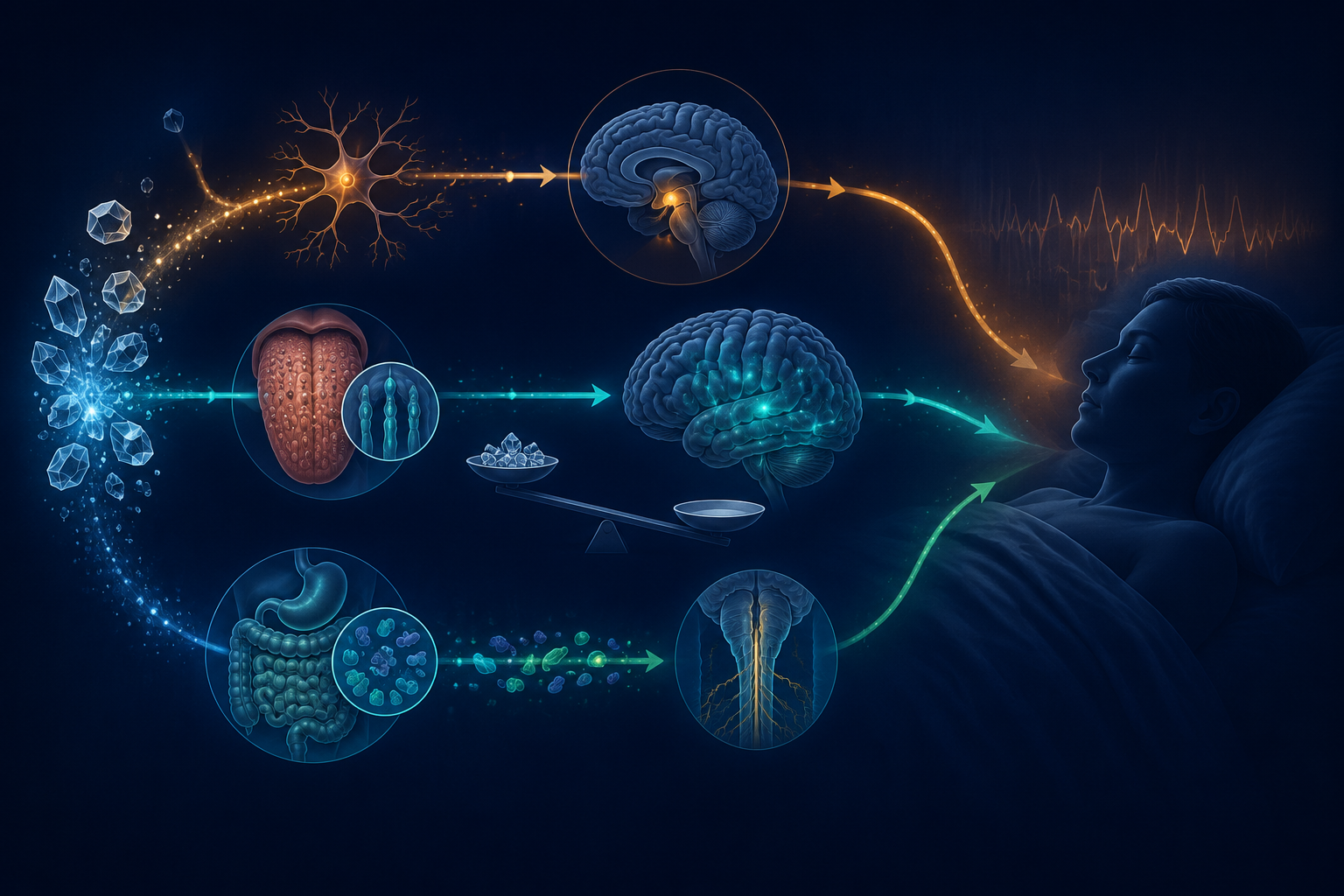
The most useful explanation starts with the cortico-striatal-thalamo-cortical pathway, often shortened to CSTC. These loops connect frontal cortical regions, the striatum, the thalamus, and back again. In Tourette syndrome, CSTC dysfunction is central to tic generation. The same circuits are also implicated in sleep-wake regulation, insomnia, and parasomnias, which gives a plausible biological bridge between daytime tics and nighttime disruption.[3]

This is where the experience of Tourette syndrome starts to make more sense. The brain has to do more than turn movement on and off. It also has to filter urges, suppress irrelevant signals, regulate arousal, move through sleep stages, and maintain circadian timing. When the same control loops are already strained during the day, it is not surprising that the night can become fragmented instead of restorative.
Dopamine adds another layer. Dopamine dysregulation is part of the tic model in Tourette syndrome, but dopamine also influences circadian clock gene expression in the striatum.[3] That does not mean dopamine alone explains every sleep problem in Tourette syndrome. It does mean that the system involved in movement urges and tic expression overlaps with the system that helps the body time sleep and wakefulness. For some people, the result may look like difficulty winding down, a delayed sleep pattern, or a brain that becomes more active just when the household expects quiet.
The histaminergic system is another relevant route. Histamine helps promote wakefulness, and abnormalities in histaminergic signaling have been described in Tourette syndrome.[3] This is not a license to treat Tourette syndrome sleep problems with sedating antihistamines on autopilot; sedation is not the same as healthy sleep architecture. But it helps explain why arousal itself may be dysregulated, not merely provoked by frustration, screen time, or poor discipline.
These mechanisms do not prove that every sleep symptom is caused directly by Tourette syndrome. They do support a more careful judgment: in many people, sleep disruption and tics are likely linked through shared circuitry, bidirectional effects, and comorbid conditions. A bad night can make tic control harder the next day. More severe evening tics can make the next night harder to start. The loop is clinical, not just theoretical.
Insomnia Is Only One Part of the Picture
Insomnia gets attention because it is easy to recognize: trouble falling asleep, staying asleep, or waking too early with daytime impairment. In Isomura and colleagues’ study, Tourette syndrome or chronic tic disorder was associated with a 6.7-fold increase in insomnia compared with the general population. In sibling-comparison models, the association weakened but remained elevated, with an adjusted odds ratio of 5.41, suggesting the link was not explained away by shared family or genetic factors.[2]
The same study has limits that should shape how the number is read. It identified insomnia diagnosed in specialist settings plus prescription insomnia medication use, so milder insomnia managed in primary care or handled at home may be missed.[2] That makes the 32.16% figure precise, but not necessarily exhaustive.
Parasomnias change the clinical question. A child who bolts upright confused, walks, cries, or seems terrified may not be choosing a nighttime battle. The problem may be partial arousal from sleep. In Tourette syndrome, parasomnias deserve attention because CSTC and arousal-system dysfunction can plausibly affect the transitions between sleep stages.[1][3] The household consequence is practical: safety planning, sleep regularity, and clinician review matter more than arguing with someone who is not fully awake.
Restless legs syndrome and periodic limb movement disorder point the plan in another direction. If the problem is an uncomfortable urge to move the legs at rest, worse in the evening, or repeated limb movements during sleep, the question is no longer just “How do we calm bedtime tics?” It becomes whether iron status, medications, or another sleep movement disorder is contributing. Iron supplementation belongs in the conversation only when low ferritin or a restless-legs/periodic-limb-movement pattern makes it relevant; it is not a general Tourette syndrome sleep supplement.
Comorbid ADHD and Anxiety Can Change the Risk
Tourette syndrome rarely arrives as a clean, isolated diagnosis. ADHD, anxiety, obsessive-compulsive symptoms, mood symptoms, learning differences, and medication effects can all alter the sleep picture. If these are ignored, sleep advice becomes both too generic and too confident.
ADHD is one of the clearest examples. In the Isomura study, Tourette syndrome or chronic tic disorder with ADHD increased the odds of insomnia to 11.49 times the general-population comparison.[2] That number does not prove ADHD causes insomnia in every person with Tourette syndrome. It does mean that when ADHD is present, sleep assessment should include stimulant timing, rebound symptoms, evening hyperactivity, delayed circadian rhythm, and the possibility that the person is mentally exhausted but physiologically under-ready for sleep.
Anxiety can push the night in a different direction. A Taiwanese population-based cohort study of 13,646 patients with Tourette syndrome found that comorbid anxiety amplified sleep disorder risk, with an adjusted hazard ratio of 2.33.[4] The study used broad ICD sleep-disorder codes, so it cannot tell a family exactly which subtype to expect. It does tell clinicians and caregivers not to treat anxious bedtime resistance as simple refusal. Anticipatory worry, sensory vigilance, fear of tics, and fear of not sleeping can all become part of the arousal loop.
This is also why “sleep hygiene” can sound insulting when delivered carelessly. A person with Tourette syndrome may already know that a dark room and regular bedtime are helpful. The unsolved problem is that their body may produce urges, movements, alerting signals, or anxious monitoring at exactly the time those routines are supposed to work. The right response is not to discard behavioral sleep treatment; it is to adapt it.
What to Do First: Make the Sleep Problem Specific
Before choosing a treatment, track the pattern for at least enough nights to see what repeats. The goal is not to create a perfect sleep diary; it is to stop treating every bad night as the same bad night.
| What to Track | Why It Matters |
|---|---|
| Bedtime, estimated sleep onset, awakenings, wake time | Separates insomnia from short sleep opportunity or irregular scheduling |
| Evening tic intensity and premonitory urges | Shows whether tics rise before bed, during awakenings, or after poor sleep |
| Leg discomfort, repeated kicking, or urge to move | Raises suspicion for restless legs syndrome or periodic limb movements |
| Night terrors, sleepwalking, confusion, or unsafe behaviors | Points toward parasomnias and safety planning |
| Daytime sleepiness, naps, school or work impairment | Shows whether the sleep problem is functionally significant |
| ADHD/anxiety symptoms and medication timing | Identifies comorbid drivers and treatment conflicts |
A clinician may ask about snoring, breathing pauses, seizure-like events, iron status, medication changes, caffeine, cannabis, alcohol, and other conditions. That may feel far from Tourette syndrome, but it prevents a common mistake: assuming every movement or awakening is a tic.
The Treatment Hierarchy Should Match the Evidence
There are no formal clinical guidelines specifically for sleep management in Tourette syndrome, and that absence matters.[1][3] It does not mean there is nothing to do. It means the plan should be layered, monitored, and honest about which pieces are well established for insomnia generally, which are plausible adaptations for Tourette syndrome, and which are still preliminary.
| Option | Best Use Case | Evidence Posture |
|---|---|---|
| Adapted sleep hygiene and CBT-I principles | Insomnia, irregular sleep timing, conditioned arousal around bed | Strong insomnia foundation generally; TS-specific adaptations are emerging |
| CBIT or habit-reversal thinking around bedtime | Evening tics or premonitory urges that delay sleep | Clinically plausible when tics are part of the bedtime barrier |
| ADHD and anxiety management | Comorbid symptoms, medication timing conflicts, bedtime worry | Essential when comorbidity changes sleep risk or treatment choice |
| Clinician-directed medications such as clonidine | Tics plus sleep-onset difficulty in selected patients | Requires individualized prescribing and monitoring |
| Melatonin | Circadian delay or sleep-onset timing problems | Commonly used, but controlled TS-specific trial evidence is lacking |
| Iron evaluation and supplementation | Low ferritin, restless legs syndrome, or periodic limb movement concerns | Targeted use, not a general sleep aid |
| Morning light therapy | Circadian timing problems or delayed rhythm patterns | Promising but preliminary |
Start With Structure, But Adapt It to Tics
Basic sleep hygiene still has a role: consistent wake time, reduced evening light exposure, a wind-down routine, a bedroom that is cool and low-stimulation, and avoiding long irregular naps. The adaptation is the important part. For someone with Tourette syndrome, the wind-down period may need to include a planned tic-release window, sensory adjustments, or a transition activity that does not demand total stillness before the body is ready.
If the bed has become the place where the person waits, suppresses, worries, and fails, CBT-I principles become more useful than a longer list of rules. Stimulus control, sleep scheduling, cognitive work around sleep fear, and reducing time spent awake in bed can all be adapted, but CBT-I for Tourette syndrome specifically remains an emerging approach rather than a settled protocol with published outcome data.[3]
For children, the caregiver’s job is not to negotiate forever at the edge of the bed. It is to build a routine predictable enough that fewer decisions happen when everyone is tired. For adults, the same principle applies without the parenting language: remove late-night bargaining with yourself. Decide earlier what happens if tics are high, if sleep does not come, or if anxiety spikes.
Use Tic-Specific Skills When Tics Are the Bedtime Barrier
Comprehensive Behavioral Intervention for Tics, including habit-reversal components, is not a sleep treatment by itself. Still, the thinking behind it can help when a particular tic pattern repeatedly blocks sleep. The useful questions are concrete: Which tic or urge becomes most disruptive at bedtime? Is suppression making the next burst stronger? Is there a competing response that can be used briefly without turning bedtime into therapy hour?
The aim is not to eliminate all tics before sleep. That standard can create more arousal. A better aim is to reduce the few tic-urge loops that keep restarting the night: the vocal tic that triggers embarrassment, the neck movement that becomes painful on the pillow, the checking ritual that extends lights-out. If the pattern is stable, it can be brought to a clinician trained in tic treatment and folded into the broader plan.
Treat ADHD and Anxiety as Sleep Variables
When ADHD is present, medication timing deserves careful review rather than reflexive blame. A stimulant taken too late can interfere with sleep onset; untreated ADHD can also make evenings chaotic, impulsive, and delayed. Rebound symptoms can appear right when the household expects the person to settle. The answer may be a timing adjustment, a different formulation, a nonstimulant option, or a behavioral evening structure, but that belongs in a prescribing conversation.
Anxiety needs the same seriousness. Bedtime reassurance can become endless if it accidentally trains the brain to seek one more check, one more promise, one more delay. Cognitive and behavioral anxiety treatment, predictable routines, and clinician-guided medication decisions may all be relevant. The key is that anxiety is not a character flaw layered on top of Tourette syndrome; it is often part of the same nighttime arousal burden.
Medication Can Help, But It Should Answer a Specific Problem
Clonidine is an alpha-2 agonist used in Tourette syndrome care and may help sleep onset in some patients, especially when tics, hyperarousal, or ADHD symptoms are part of the evening picture.[3] It can also cause side effects such as low blood pressure, morning grogginess, or daytime sedation, so it is not a casual sleep aid. The practical question is whether one medication can reasonably address the person’s tic and sleep profile without creating a worse daytime problem.
Other medications may be relevant depending on tic severity, psychiatric comorbidities, pain, restless legs symptoms, or another diagnosed sleep disorder. Medication review is especially important when sleep worsens after a dose change. The cause may be the medication, the condition being undertreated, rebound effects, or an unrelated sleep disorder that has finally become obvious.
Melatonin Is a Timing Tool, Not a Tourette Syndrome Cure
Melatonin is often attractive because it feels lower-risk than prescription sedation. Survey data in adults with persistent tic disorders found melatonin use in 27.1% of respondents.[5] That is an adoption number, not proof that melatonin is effective for Tourette syndrome sleep problems. Ricketts and colleagues note that controlled trials specifically in Tourette syndrome are lacking.[3]
Melatonin makes the most sense when the problem is sleep timing: a delayed rhythm, difficulty feeling sleepy at the desired hour, or a need to shift the body clock earlier. It is less logical when the main issue is sleepwalking, repeated limb movements, untreated anxiety, pain, breathing disturbance, or awakenings from another cause. Product reliability is another caution; supplement labels do not carry the same verification standards as prescription medications, so dose and contents can be less predictable than the bottle implies.
Morning Light Therapy Is Interesting, Not Settled
Circadian timing deserves more attention in Tourette syndrome because the striatum, dopamine, and clock-gene expression are part of the mechanistic bridge. Morning light is one way to shift circadian timing earlier. In a pilot study of adults with persistent tic disorders, morning light therapy produced an approximately 45-minute circadian phase advance and small statistically significant reductions in tic severity.[5]
That is promising, but it is not a universal protocol. Light timing, intensity, eye safety, bipolar-spectrum risk, migraine sensitivity, and sleep phase all matter. Used carelessly, bright light can shift the clock in the wrong direction or worsen sleep timing. Used thoughtfully, it may be one part of a circadian plan: consistent wake time, outdoor morning light when feasible, dimmer evenings, and reduced late-night alerting cues.
When to Seek Clinical Evaluation
Persistent sleep disruption in Tourette syndrome deserves clinical attention when it causes daytime sleepiness, school or work impairment, worsening tic control, mood deterioration, family exhaustion, or unsafe nighttime behavior. Evaluation is especially important when there are breathing pauses, loud snoring, unusual episodes with injury risk, possible seizures, severe restless legs symptoms, sudden medication-related changes, or a child whose sleep loss is affecting development or learning.
The most useful appointment starts with a pattern: sleep timing, tic timing, awakenings, movements, daytime consequences, comorbid ADHD or anxiety symptoms, and current medications. From there, the clinician can decide whether the next step is behavioral sleep treatment, tic-focused therapy, medication adjustment, iron studies, a sleep study, anxiety treatment, ADHD medication review, or a circadian intervention.
Sleep in Tourette syndrome is not a secondary lifestyle problem. It is common, measurable, and biologically plausible as part of the same network that affects tic control. Improving sleep may reduce tic severity and life impact, but the plan usually has to be layered: identify the sleep disorder pattern, account for ADHD and anxiety, build structured behavioral and circadian routines, use medications or supplements for specific indications, and escalate when the night is unsafe or the next day is being lost.
References
- Tourette disorder and sleep — Blaty & DelRosso, 2022.
- Insomnia in Tourette Syndrome and Chronic Tic Disorder — Isomura et al., 2022.
- Sleep Disturbance in Tourette's Disorder: Potential Underlying Mechanisms — Ricketts et al., 2023.
- Risk of Sleep Disorders among Patients with Tourette Syndrome: A Population-Based Cohort Study in Taiwan — Chung et al., 2025.
- Sleep and chronotype in adults with persistent tic disorders

Comments
Join the discussion with an anonymous comment.