
Delta-8 THC for sleep sits in an awkward place: it is sold in bedtime gummies, vape cartridges, tinctures, and “relax” products, and some adults do feel calmer or drowsier after using it. But that is not the same as being a proven insomnia treatment. As of July 2026, no placebo-controlled randomized clinical trial has tested delta-8 THC isolate for insomnia as the main sleep problem.
That distinction matters most at 2 a.m., when “my friend slept great after one gummy” can sound more useful than another lecture about screens, caffeine, and consistent wake times. The friend may be telling the truth about their own night. The product page may still be getting ahead of the evidence.
What delta-8 might be doing in the body
Delta-8 THC is a psychoactive cannabinoid. Like delta-9 THC, it interacts with CB1 receptors in the endocannabinoid system, though available receptor and user-report evidence suggests delta-8 is roughly 1.5 to 2 times weaker than delta-9 THC in potency-related effects.[1]
That mechanism makes a sleep-related effect plausible. A person who feels less anxious, less physically keyed up, or mildly intoxicated may find it easier to get into bed and stop monitoring the clock. But plausible is doing a lot of work here. Receptor activity does not tell us whether a nightly delta-8 gummy improves insomnia, whether it improves sleep architecture, whether it causes next-day impairment, or whether the effect holds up after weeks of use.
The cleaner way to say it is this: delta-8 may make some people feel sleepy or relaxed. It has not been shown, in the form people are buying, to treat insomnia.
Why user reports explain the market, not the medicine
The strongest everyday argument for delta-8 is not a trial; it is word of mouth. In a national survey of delta-8 users, 71% reported relaxation as an effect.[2] That number helps explain why sleep-aid marketing found delta-8 so quickly. Relaxation is exactly what many people with sleep trouble are trying to buy.
It does not prove that delta-8 treats insomnia. A survey can capture what people felt, what they hoped for, and what they remember. It usually cannot separate the drug effect from expectation, dose differences, product contamination, alcohol use, other sleep aids, changing stress, or the natural variability of insomnia from night to night.
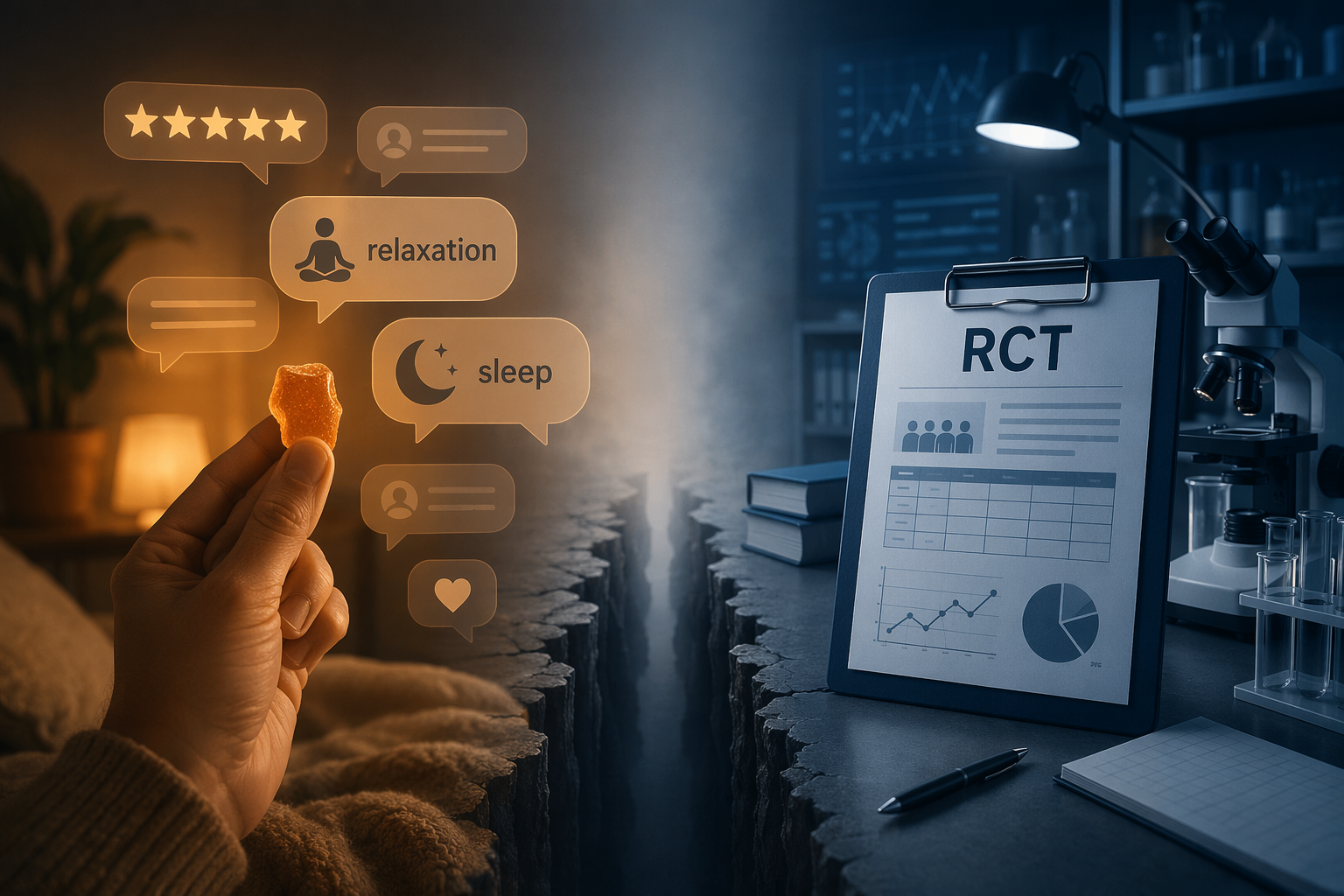
This is where sleep-product language tends to soften the claim just enough to sound responsible. “Supports relaxation.” “Helps you unwind.” “Part of your nighttime routine.” Those phrases may avoid saying “treats insomnia,” but they still encourage the buyer to use the product as a sleep intervention. If that is the use, the evidence standard should follow the use.
The best nearby trials are about cannabinoids, not delta-8 isolate
There are randomized trials in the neighborhood of this question, and they are worth taking seriously. They are also easy to overuse.
In Walsh et al. 2021, researchers tested ZTL-101, a mixed cannabinoid formulation containing THC, CBD, and CBN, in a randomized crossover trial for insomnia symptoms. Over 2 weeks, participants had improvements in Insomnia Severity Index scores and actigraphy-measured sleep efficiency compared with placebo.[3] That is more meaningful than a testimonial because it used a placebo comparison and measured sleep outcomes.
But it was not a delta-8 trial. The product was a specific mixed formulation, not a retail delta-8 isolate gummy, vape, or tincture. The improvement cannot be cleanly assigned to delta-8, because delta-8 was not the tested ingredient.
Ried et al. 2023 also points to sleep-related cannabinoid effects, but with the same boundary. In that crossover trial, medicinal cannabis was associated with a 30% increase in melatonin and a 21-minute improvement in light sleep.[4] Those findings are interesting because they suggest measurable biological and sleep-stage changes. They still do not answer the consumer question on a delta-8 package: will this delta-8 product reliably help my insomnia, at this dose, without unacceptable tradeoffs?
| Evidence type | What it can tell you | What it cannot tell you |
|---|---|---|
| User reports and surveys | Some users feel relaxation, drowsiness, or sleep benefit | Whether delta-8 works better than placebo for insomnia |
| Mechanism evidence | Delta-8 can plausibly affect arousal through CB1 receptor activity | Whether nightly use improves sleep outcomes that matter |
| Mixed-cannabinoid trials | Some cannabinoid formulations may affect insomnia symptoms or sleep measures | Whether delta-8 isolate is effective or safe as a sleep aid |
| Delta-8 product marketing | How sellers position the product | Clinical efficacy, manufacturing quality, or legal stability |
This is not nitpicking. Cannabinoid products differ by compound, dose, route, timing, and contaminants. A trial of a defined THC/CBD/CBN product cannot be converted into proof for a gas-station delta-8 gummy any more than a trial of one prescription sleep medication proves that every sedating supplement on the shelf works.
The safety gap is not a footnote
For a sleep aid, the risk side matters because the user is often taking it at night, at home, sometimes alone, and sometimes repeatedly. Delta-8 products are not FDA-approved for any medical use, and the FDA has warned that they may be marketed in ways that put public health at risk.[5]
The FDA consumer update reported 104 adverse event reports involving delta-8 THC products from December 2020 through February 2022; 55% involved medical intervention or hospital admission.[5] Poison control centers logged 2,362 delta-8 exposure cases from January 2021 through February 2022, and 41% involved pediatric patients, including one pediatric death.[5]
Those data have limits. Adverse-event reports and poison center calls are not the same as a population rate, and they can include mislabeled products or products with other cannabinoids and contaminants. They also likely miss many events that never get reported. For a consumer, the practical message is still hard to ignore: the harms are real enough to reach emergency systems, while the sleep benefit remains unproven.
Why manufacturing changes the calculation
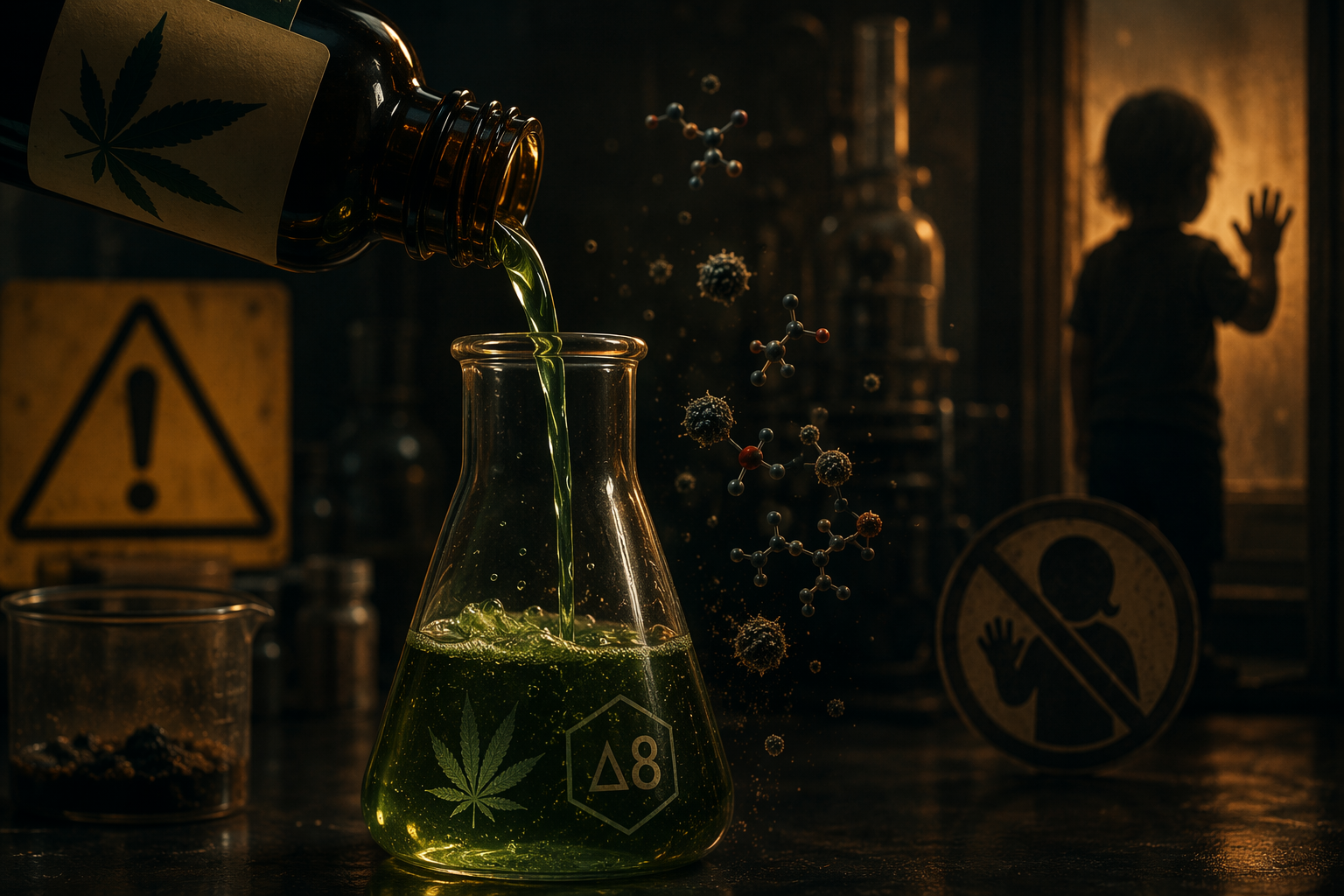
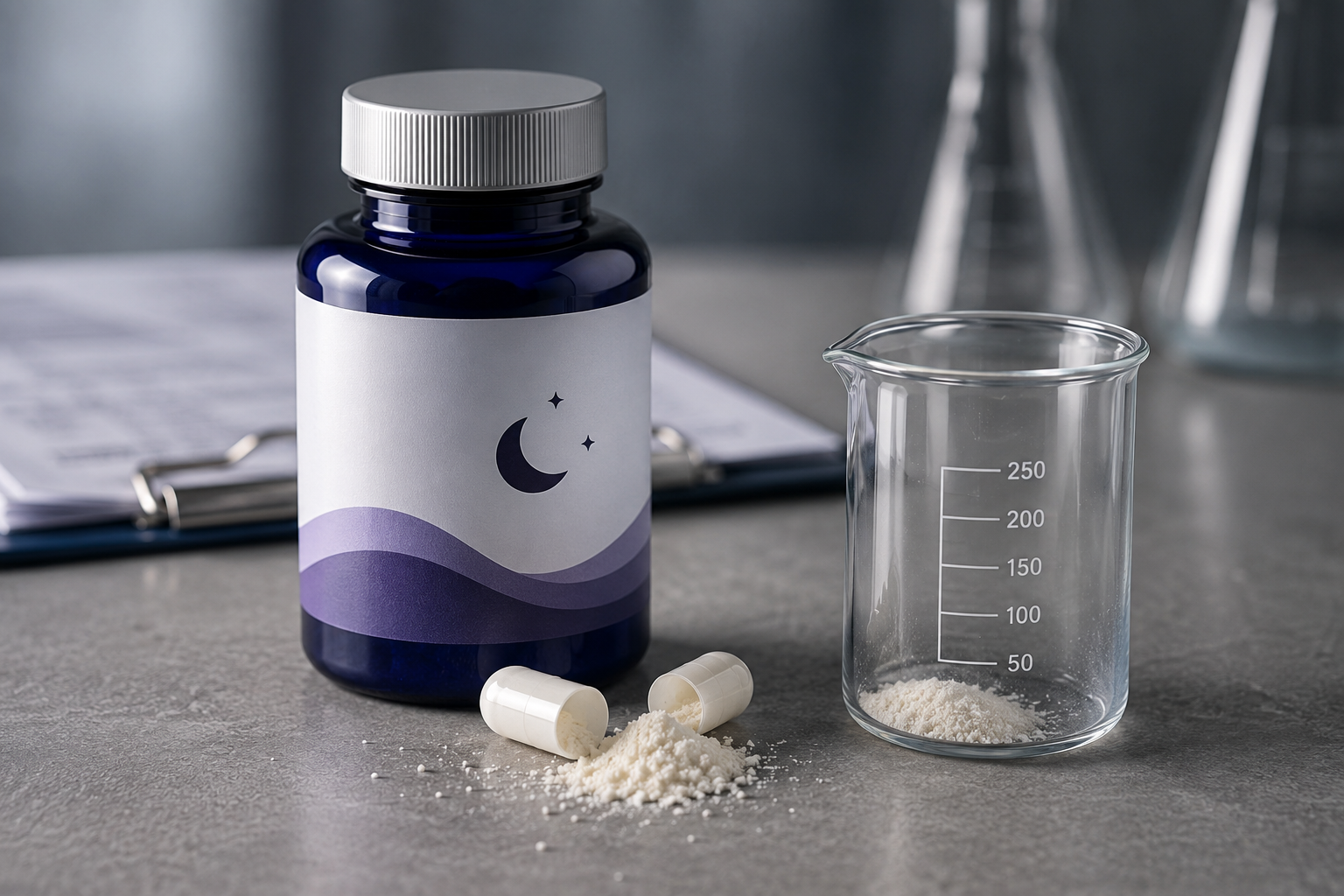
Most commercial delta-8 is not simply extracted in large amounts from hemp. It is commonly made by chemically converting CBD into delta-8 THC using acids and solvents. The FDA has said some delta-8 products have been found to contain heavy metals, residual solvents, and delta-9 THC levels far above what labeling claimed.[5]
That is a different problem from “does this ingredient make me sleepy?” A buyer may think they are evaluating one cannabinoid. In reality, they may be evaluating a manufacturing process they cannot see, a certificate of analysis they may not know how to read, and a label that may not match the contents.
This is especially important for gummies and other edible products that can look like ordinary candy. Child-resistant packaging and secure storage are not optional details if a household includes children, teens, pets, or visitors. The poison center numbers make that point more plainly than branding ever will.[5]
Nightly use can create its own sleep problem
A sleep aid that works for one difficult week can become a different decision if it turns into nightly use. The broader THC sleep literature suggests that sleep-promoting effects may diminish with chronic use. In the Kaul et al. review, slow-wave sleep increases were not persistent, and heavy users showed decreased total sleep time and increased sleep onset latency.[1]
Stopping after heavy use can also temporarily make sleep worse. The same review describes withdrawal-related insomnia and vivid dreams, with symptoms peaking around days 2 through 6 after abrupt cessation.[1] For someone who started delta-8 because they were already anxious about sleep, rebound insomnia can feel like proof that they “need” the product, even when it may be part of the cycle.
This does not mean every occasional user will develop tolerance or withdrawal. It does mean sleep should not be judged only by the first night. The questions are what happens after repeated use, what happens the next morning, and what happens when the person stops.
Legal availability is not the same as oversight
As of July 2026, delta-8 products are often sold under the federal hemp framework created by the 2018 Farm Bill, while state rules vary widely, including states where delta-8 is restricted or banned.[6] A federal definition change scheduled for November 12, 2026 is expected to make many currently sold intoxicating hemp-derived products non-compliant.[6]
For a sleep-aid shopper, that has two consequences. First, a product being easy to buy today does not mean it has been reviewed like a medicine. Second, the same bottle may sit inside a shifting legal category, which affects access, labeling practices, retail behavior, and the chance that a consumer misunderstands what they are buying.
How delta-8 compares with better-studied sleep options
The point is not that every over-the-counter sleep aid is wonderfully proven. Melatonin, diphenhydramine, and doxylamine each come with limits, side effects, and situations where they are the wrong tool. Even melatonin is often used casually in ways the evidence does not fully support; if you are considering it instead, start with how to use melatonin safely as an adult rather than treating gummies as harmless candy.
Still, regulated OTC sleep aids and behavioral insomnia treatments have a clearer evidence and labeling path than delta-8. If the problem is choosing an ingredient for a specific sleep pattern, a more useful next step is an evidence-based comparison such as which OTC sleep aid fits your sleep problem. If the larger issue is that you do not yet know why you are awake, use an insomnia pattern guide or adult self-triage for sleepless nights before adding a psychoactive product.
Home remedies and supplements deserve the same skepticism. A product can be natural, popular, and still poorly matched to the problem. The same evidence-checking approach used for home remedies for sleep applies here: ask what outcome was studied, in whom, at what dose, against what comparison, and for how long.
A practical decision on delta-8 THC for sleep
Most adults should not treat delta-8 THC as a proven sleep aid. The case for it rests mainly on subjective relaxation, plausible cannabinoid mechanisms, and nearby mixed-cannabinoid trials. The case against casual use is more concrete: no delta-8-isolate insomnia RCT, FDA adverse-event concerns, unregulated chemical conversion, possible contaminants or mislabeled THC levels, tolerance and withdrawal concerns, and unstable legality.
Anyone still considering it should at least avoid driving or safety-sensitive work after use, avoid combining it with alcohol or other sedatives unless a clinician has cleared that combination, keep it locked away from children and pets, and be cautious about repeated nightly use. People who are pregnant, trying to become pregnant, breastfeeding, younger than 21, have a history of substance use disorder, have significant anxiety or psychosis risk, take interacting medications, or need to pass drug testing have stronger reasons to avoid it.
The tired buyer deserves a better answer than “some people say it helps.” Delta-8 may make some people feel relaxed enough to sleep, but the strongest sleep claims are ahead of the evidence, while the safety, manufacturing, and legal uncertainties are already here.
References
- The Effects of Cannabinoids on Sleep, Neurotherapeutics, 2021, https://pmc.ncbi.nlm.nih.gov/articles/PMC8116407/
- Delta-8-THC: Delta-9-THC’s nicer younger sibling?, Journal of Cannabis Research, 2022, https://jcannabisresearch.biomedcentral.com/articles/10.1186/s42238-021-00115-8
- Treating insomnia symptoms with medicinal cannabis: a randomized, crossover trial of the efficacy of a cannabinoid medicine compared with placebo, Sleep, 2021, https://pmc.ncbi.nlm.nih.gov/articles/PMC8598183/
- Medicinal cannabis improves sleep in adults with insomnia: a randomised double-blind placebo-controlled crossover study, Journal of Sleep Research, 2023, https://onlinelibrary.wiley.com/doi/full/10.1111/jsr.13793
- 5 Things to Know about Delta-8 Tetrahydrocannabinol – Delta-8 THC, U.S. Food and Drug Administration, https://www.fda.gov/consumers/consumer-updates/5-things-know-about-delta-8-tetrahydrocannabinol-delta-8-thc
- Delta 8 THC Laws by State, Vape City USA, updated 2026, https://vapecityusa.com
Comments
Join the discussion with an anonymous comment.