
You survived the truck accident. The emergency is over. So it can feel deeply unfair when night becomes the part of recovery that still feels unsafe: the room is quiet, your body is tired, and sleep will not come.
This article is about sleep during recovery after a truck or serious car accident, not about sleep deprivation causing crashes. If you are weeks or months out from a collision and now dealing with insomnia, nightmares, jolting awake, or a bed that suddenly feels uncomfortable, the problem is physiologically plausible. Sleep Education, from the American Academy of Sleep Medicine, describes sleep difficulty after trauma as common and notes that delayed treatment can prolong post-traumatic stress recovery; it also reports that about half of people with PTSD recover within three months.[1]

That does not mean every sleepless night after a crash is PTSD, or that time alone fixes it. It means the body may still be responding to injury, threat, medication changes, and a disrupted schedule even after the visible danger has passed.
The four drivers that keep sleep from settling
Post-accident insomnia usually makes more sense when it is separated into drivers. They often overlap, but they do not respond to the same fix.
| Driver | What it can feel like at night | What it changes |
|---|---|---|
| Pain and injury | Neck, back, shoulder, head, or generalized pain wakes you or prevents a comfortable position | Deep sleep, sleep continuity, and the ability to relax muscles |
| Trauma and hyperarousal | You feel on alert, startle easily, replay the crash, or have nightmares | Sleep onset, nighttime awakenings, and the sense of safety in bed |
| Medication effects | Sleep feels lighter, more broken, unusually vivid, or different since starting or changing a drug | REM sleep, awakenings, breathing, alertness, or next-day sedation |
| Circadian disruption | Your days and nights drift after hospitalization, immobilization, naps, or reduced daylight | Melatonin timing, sleep pressure, and the body clock |
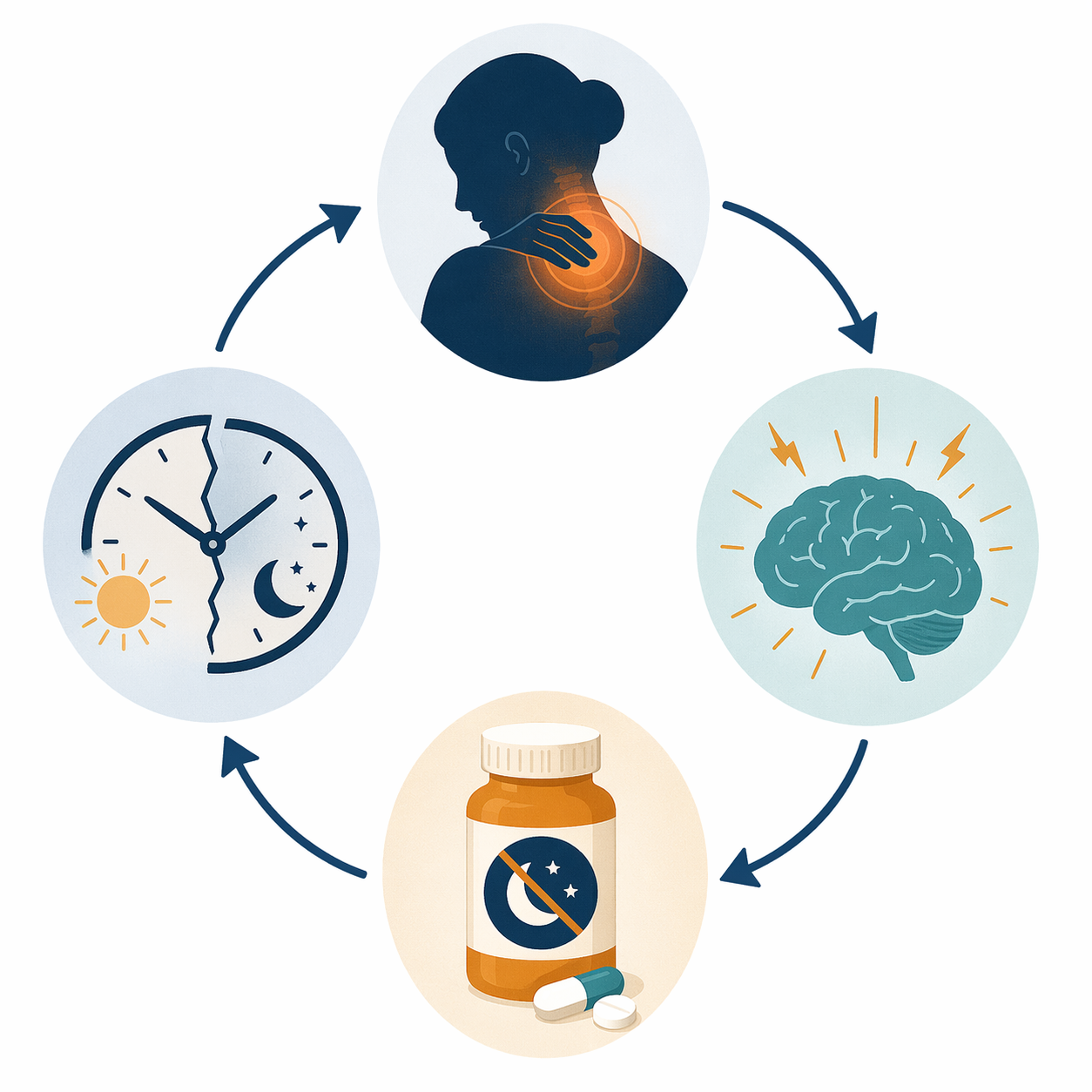
The distinction matters because “try to relax before bed” is too blunt for a person whose neck position triggers pain, whose nervous system is scanning for danger, whose medication is fragmenting sleep, or whose daytime recovery schedule has erased normal light and activity cues.
Pain can turn the bed into a problem
Truck accidents can produce injuries that are especially hostile to sleep: whiplash, back strain, shoulder injury, concussion symptoms, and soft-tissue pain. A legal blog is not a clinical guideline, but Marks & Harrison’s discussion of sleep problems after car accidents usefully names the same practical issue many injured people recognize: pain can cause frequent awakenings and make ordinary sleeping positions intolerable.[2]
Pain does not simply “bother” sleep. It can keep the sympathetic nervous system activated, make muscles guard, and interrupt the deeper stages of sleep that the body relies on during recovery. The result is a loop: pain wakes you, the lighter sleep leaves you more sensitive the next day, and the next night begins with more tension before you even lie down.
This is why the first useful question is often not “How do I become a better sleeper?” but “What exactly wakes me?” If the answer is a specific position, a flare of neck pain when rolling over, a headache that worsens flat, or back pain after several hours in bed, the sleep plan has to include the injury plan.
- Track whether awakenings follow a position change, pain flare, medication dose, nightmare, bathroom trip, or no clear trigger.
- Ask the treating clinician whether nighttime pain control is adequate or whether the timing of treatment leaves a gap overnight.
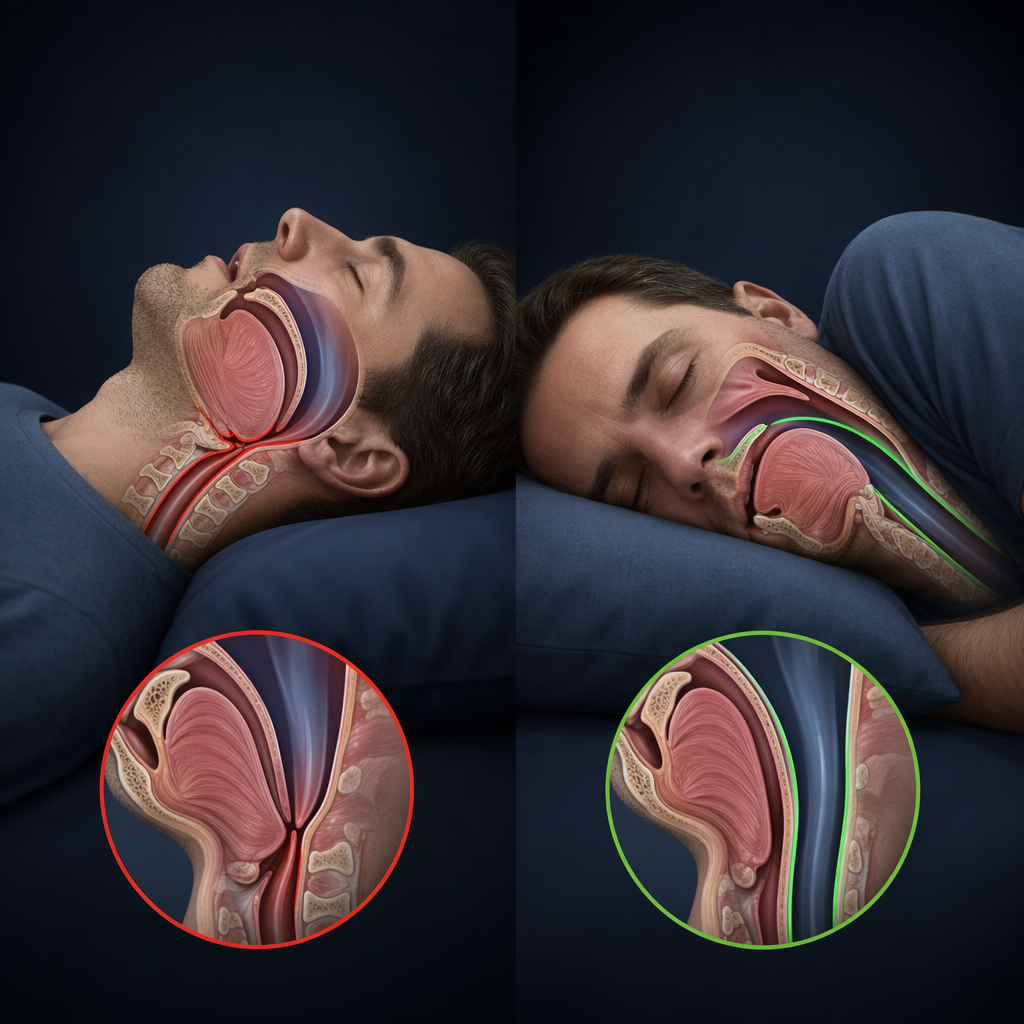
- For whiplash or neck pain, discuss pillow height and cervical alignment rather than adding random pillows until the position feels worse.
- For back pain, ask whether side-sleeping support, a pillow between the knees, or another position is appropriate for the specific injury.
Marks & Harrison specifically mentions side sleeping with supportive pillows and cervical contour support as positioning strategies for accident-related neck and back discomfort.[2] Those are not universal prescriptions; they are starting points to review against your injury, especially if you have concussion symptoms, nerve symptoms, spinal precautions, or medical instructions about movement.
The threat response may stay awake after you are safe
After a crash, the nervous system can act as if sleep is a risky state. This is not a character flaw. Sleep requires a degree of surrender: reduced scanning, reduced muscle readiness, reduced attention to the environment. Trauma pushes in the opposite direction.
Sleep Education describes hypervigilance, nightmares, and insomnia as part of trauma-related sleep disruption, and identifies cognitive behavioral therapy for insomnia, or CBT-I, as a treatment that can help people who remain stuck in insomnia patterns after trauma.[1]
Hyperarousal can be quiet. It may not look like panic. It may look like lying still while your body refuses to downshift, checking traffic sounds outside, startling at the furnace, needing the door positioned a certain way, or feeling more awake the closer bedtime gets. The brain has learned that vigilance helped you survive; now it needs help learning that constant nighttime monitoring is no longer useful.
Nightmares deserve separate attention. They are not just “bad dreams” if they are frequent, crash-related, or causing you to avoid sleep. Sleep Education notes that prazosin may help trauma-related nightmares, but this is a physician-discussion option, not an over-the-counter sleep aid and not something to start without medical guidance.[1]
What helps when the bed feels unsafe
For persistent insomnia, CBT-I is the most important treatment to know by name. It is not generic sleep hygiene. It is a structured therapy that changes the patterns that keep insomnia going: spending long frustrated hours awake in bed, losing confidence in sleep, shifting sleep times, and building more fear around the night.
Relaxation training can help when it is used as nervous-system practice rather than as a demand to “calm down right now.” Slow breathing, progressive muscle relaxation, or guided imagery may reduce the body’s threat readiness. If a technique makes you feel trapped, exposed, or more aware of pain, it is reasonable to stop and choose a different one with a clinician.
Sleep compression, often used within CBT-I, may also be considered with professional guidance. The idea is to reduce excessive time in bed so sleep becomes more consolidated, then gradually expand the sleep window. It can be powerful, but after an accident it should be balanced against pain, medications, driving restrictions, work demands, and daytime safety.
Medication changes can make sleep feel unfamiliar
A person recovering from a truck accident may be prescribed or advised to take pain medication, muscle relaxants, anti-inflammatory drugs, antidepressants, corticosteroids, or other treatments. Some medications can affect sleep architecture, alertness, REM sleep, breathing, dreams, or awakenings. The timing of doses can matter as much as the medication itself.
This is one of the most practical places to look when sleep changes suddenly. If insomnia, vivid dreams, heavy morning grogginess, or repeated awakenings began after a new prescription, a dose change, or a change in when you take the medication, bring that pattern to the prescriber. Do not stop prescribed medication abruptly unless a clinician tells you to; the safer move is to ask whether the drug, dose, timing, or combination could be contributing.
- Write down the medication name, dose, and time taken.
- Note the sleep problem that follows: trouble falling asleep, nightmares, waking after a few hours, breathing concerns, or morning sedation.
- Include nonprescription products, supplements, alcohol, cannabis, and caffeine, because combinations can change sleep and safety.
- Ask whether any adjustment should be made before adding another sleep medication.
Recovery routines can confuse the body clock
Hospital time, reduced mobility, daytime naps, missed work, pain-limited activity, and less daylight can all blur the signals that normally tell the body when to be awake and when to sleep. This is circadian disruption: the sleep system is not broken, but its timing cues have become weaker or inconsistent.
The repair is usually simple in concept and difficult in practice. Anchor wake time first. Get outdoor light in the morning if medically safe. Keep naps short enough that they do not consume the pressure needed for nighttime sleep. Dim the evening environment. Put meals, movement, therapy exercises, and rest periods on a pattern your body can predict.
This is not moral advice about discipline. It is signal repair. A recovering body may need more rest, but if rest is scattered across the day in long, irregular blocks, the night can become lighter and more fragmented.
How the cycle feeds itself
The hardest part of sleep during truck accident recovery is that the drivers rarely stay separate. Pain wakes you. Waking gives the mind time to replay the crash. The replay raises muscle tension. Tension increases pain. A daytime nap becomes necessary. The nap weakens nighttime sleep pressure. Then bedtime arrives with dread already attached to it.
That cycle can make a reasonable person feel as if their body has become unreliable. But the cycle also gives you places to intervene. You do not have to solve every part at once. A better pillow position may reduce pain awakenings. A medication review may remove one source of fragmentation. Morning light may make sleepiness arrive at a more predictable time. CBT-I may reduce the conditioned fear of the bed.
The useful standard is not perfect sleep. Early in recovery, the goal may be fewer awakenings, less fear of the night, safer medication timing, and enough consolidated rest to support healing.
What to do first
Start with the driver that has the clearest evidence in your own nights. A short sleep-and-symptom log for one week is often more useful than a month of vague guessing.
| If this is the pattern | Start here |
|---|---|
| You wake when rolling over, changing neck position, or lying flat | Review pain control, injury restrictions, pillow support, and sleep position with your clinician or physical therapist |
| You dread bedtime, feel on guard, or replay the crash | Ask about CBT-I, trauma-focused care, and relaxation training that does not intensify symptoms |
| Nightmares are frequent or keep you avoiding sleep | Discuss trauma-related nightmare treatment with a physician; prazosin is one option sleep medicine authorities identify for discussion |
| Sleep changed after starting or changing medication | Bring a medication-and-sleep timeline to the prescriber before adding more sedating products |
| You nap unpredictably and no longer feel sleepy at night | Stabilize wake time, morning light, nap timing, and evening dimming as medical recovery allows |
If more than one pattern fits, choose the one with the highest consequence first. Severe pain, breathing concerns, medication side effects, worsening nightmares, or unsafe daytime sleepiness should not wait behind a general bedtime routine.
When to get professional help
Seek professional assessment if sleep disruption persists beyond one month after the accident, if nightmares are frequent, if hypervigilance is worsening, if pain is preventing sleep, or if medication seems to be fragmenting rest. Sleep Education warns that waiting too long to treat trauma-related sleep problems can prolong overall recovery.[1]
A primary care clinician, sleep specialist, trauma-informed therapist, pain clinician, or physical therapist may each see a different part of the problem. The right starting point depends on what is most active: pain, fear, nightmares, medication effects, or schedule disruption. If you have thoughts of self-harm, feel unable to stay safe, or are too sleepy to drive or work safely, treat that as urgent and seek immediate help.
Not sleeping after a truck accident is not a failure of willpower. It is a signal that the recovery plan may need to include the night: the injured tissue, the threat response, the medication list, and the body clock. Addressing those drivers early gives sleep a better chance to become part of healing again.
References
- Sleeping after a trauma — Sleep Education / American Academy of Sleep Medicine
- Sleep Problems After a Car Accident — Marks & Harrison




Comments
Join the discussion with an anonymous comment.