
For parents facing ventilation therapy for sleep apnea in toddlers, the prescription usually shows up after adenotonsillectomy has not solved the obstruction, or when surgery is not the right option. In that moment, CPAP or BPAP can feel like a major shift, but it is a familiar one in pediatric sleep medicine: persistent OSA after adenotonsillectomy is common, with one review finding residual disease in 21% to 73% of children and higher rates in obesity and Down syndrome [1].
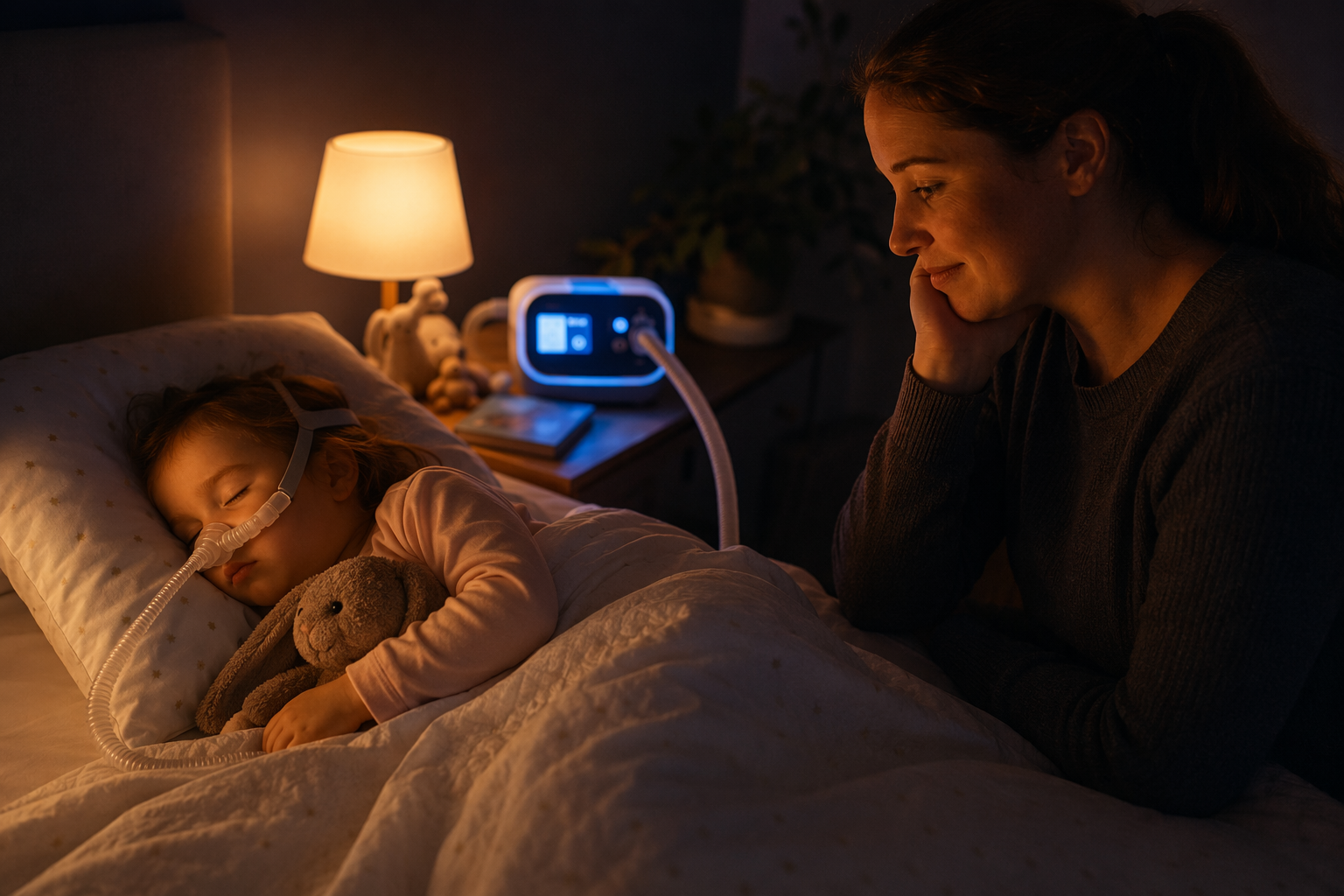
That is why PAP keeps coming up even for very young children. The European Respiratory Society notes that CPAP can be implemented at any age, including infancy, when it is needed [2]. For toddlers, the practical question is not whether PAP is "for kids" in some general sense; it is whether the interface, pressure, and bedtime routine can be made small, calm, and repeatable enough for the child to accept.
Getting the setup right
In toddlers, setup matters as much as the prescription. Clinicians usually start with a titration sleep study so the pressure is adjusted to the child instead of guessed from age alone. A nasal mask is usually the starting point because it is easier to fit a small face and fits better with how young children breathe during sleep. The interface has to be pediatric in the literal sense: small enough to seal without pressing hard on the bridge of the nose, light enough to stay on during turning, and realistic enough that the family can clean and replace it without a nightly battle.
Mask availability can be part of the problem too. Some products sold as pediatric are still sized for older children, so a family may be told that the smallest available option is not truly toddler-sized. That is one reason successful PAP in this age group often starts with the sleep team and the durable equipment provider working together instead of expecting parents to solve the fit on their own.
Teaching the mask before asking for sleep
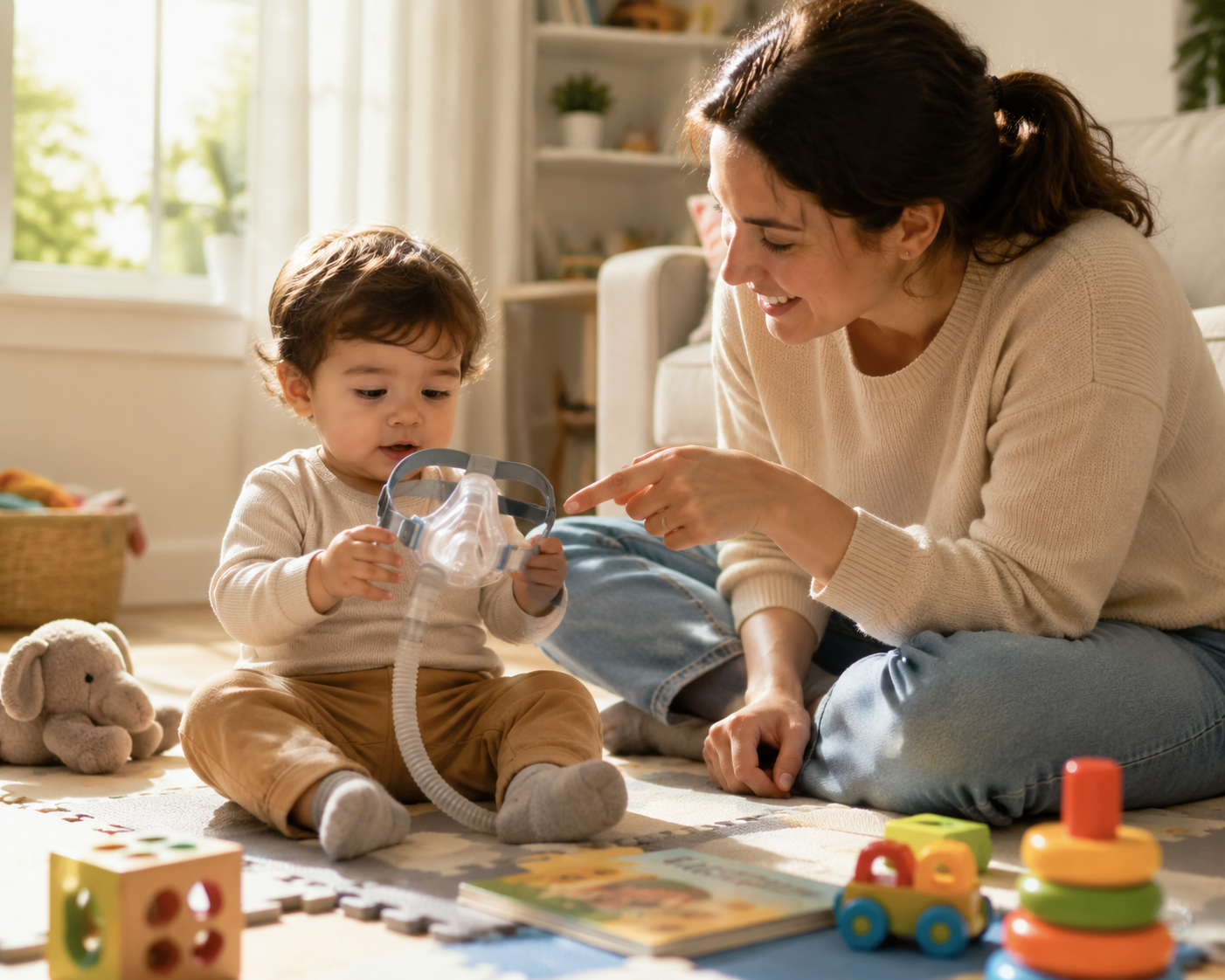
The first goal is not a perfect night. It is a child who can tolerate the mask without panicking. Structured desensitization is the part that turns PAP from an object into a routine: let the toddler handle the mask during play, then wear it for a few seconds, then a few minutes, then add the hose, then use it during a calm nap or bedtime story before expecting a full night.
- Start with the mask in daylight, not at bedtime.
- Use the same caregiver language and sequence each time.
- Praise calm contact with the mask more than hours worn.
- Bring problems back to the sleep team quickly instead of waiting weeks.
A structured approach matters because the evidence does not support the idea that toddlers are automatically the least successful age group. In a meta-analysis of 34 studies including 21,737 children, overall CPAP adherence in pediatric OSA was 46.56%, and the children who adhered were on average 1.85 years younger than those who did not [3]. In another study, infants younger than 6 months used PAP on 94.7% of nights compared with 83% in school-aged children, and behavioral issues were the most common barrier in both groups [4].
When CPAP is not the only version of PAP
BPAP may be chosen when a child does not settle on CPAP or needs a different pressure pattern. The point is not to force one machine on every toddler, but to find the form of airway support the child will actually use. In some families, that means the sleep team rethinks the interface or the pressure plan; in others, it means a different noninvasive option is considered when CPAP is clearly not the best fit.
What progress looks like
Success in a toddler is usually quieter than families expect. The child may still reach for the mask, nap lengths may stay uneven, and bedtime may take longer than it used to. What matters is whether the sleep team, caregiver, and child can keep the treatment adjustable enough to fit the developmental stage they are in. When PAP works in toddlers, it usually looks less like a dramatic fix than like a tolerable habit that gradually becomes ordinary.
References
- Persistent Obstructive Sleep Apnea in Children After Adenotonsillectomy - PubMed Central, 2021
- European Respiratory Society statement on paediatric continuous positive airway pressure therapy for sleep disordered breathing - European Respiratory Journal, 2022
- Factors associated with adherence to continuous positive airway pressure therapy in children with obstructive sleep apnea: a systematic review and meta-analysis - PubMed Central, 2023
- Positive airway pressure adherence in infants and school-aged children with obstructive sleep apnea - PubMed Central, 2021


Comments
Join the discussion with an anonymous comment.