
A frustrating thing can happen during wildfire smoke season: you use your CPAP, keep your usual bedtime, and still wake up congested, dry-mouthed, or more tired than you expected. For someone with obstructive sleep apnea, that is not just “bad sleep.” Smoke can add a physical load to an airway that is already prone to narrowing during sleep.
The clearest answer is this: wildfire smoke can plausibly make OSA worse, mainly because particulate pollution irritates and inflames the upper airway, increases nasal resistance, and can make breathing through the nose harder at night. CPAP still matters. In fact, it may matter more during smoke events. But the air entering the bedroom, the air reaching the mask, and the condition of the filters in the system become part of the treatment environment.
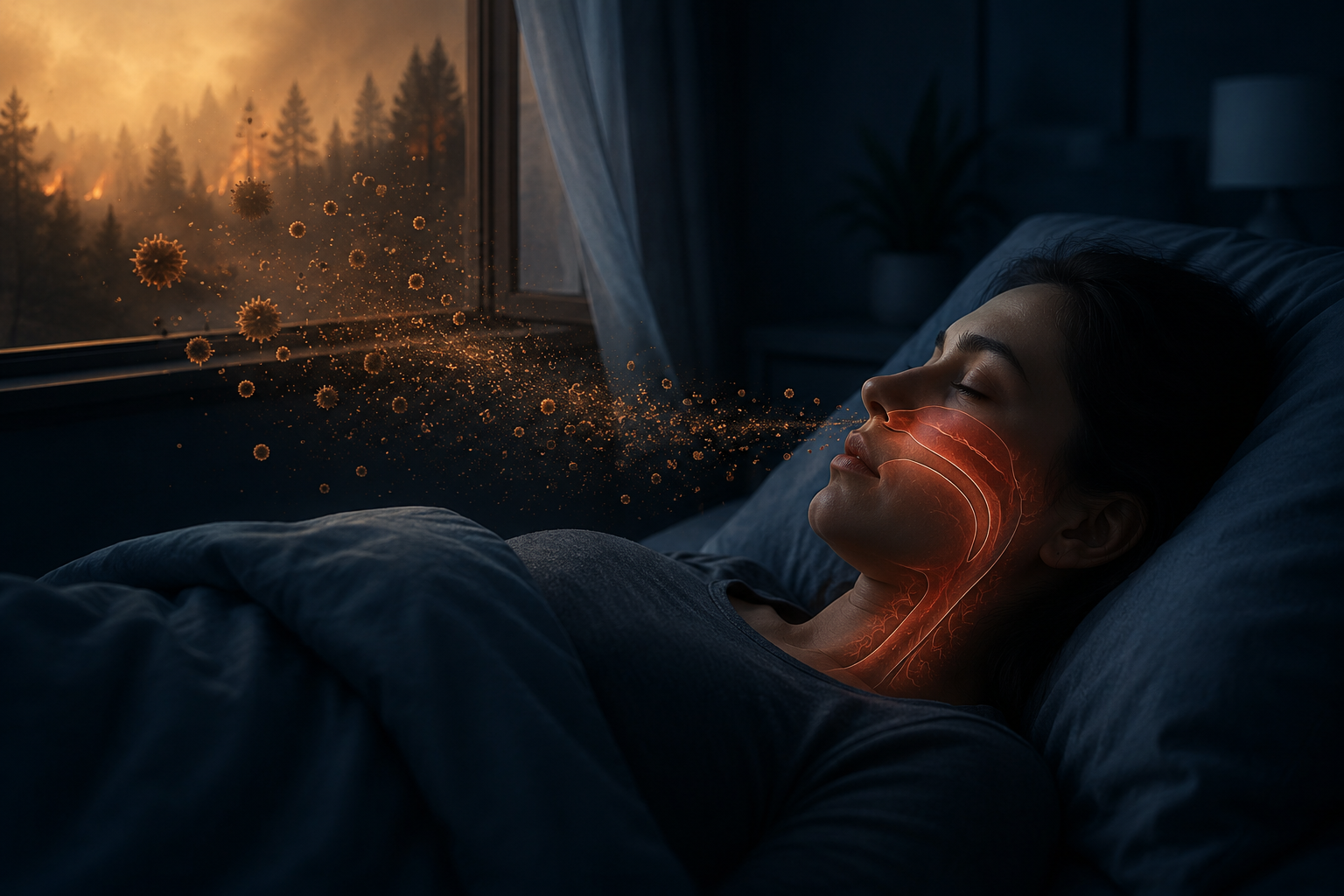
Smoke-Related Poor Sleep Is Not Always The Same As Worse OSA
Wildfire smoke can disturb sleep in several ways. People may sleep lightly because the air smells acrid, because windows have to stay closed, because the room feels warmer, or because the event itself is stressful. Wildfire survivors also show high rates of insomnia and nightmares in the literature, but those figures often come from people who experienced evacuation, threat, property loss, and trauma, not smoke exposure alone. A systematic review reported insomnia prevalence of 63% to 72.5% and nightmares of 33.3% to 46.5% among wildfire survivors, which is important but should not be treated as a clean measure of what particles alone do to sleep apnea [1].
For OSA, the narrower question is more mechanical: does smoke make the airway more likely to narrow, collapse, or trigger oxygen dips while the person is asleep? That is where particulate matter matters. Wildfire smoke contains fine particles that can penetrate indoor spaces and irritate the respiratory tract; broad medical guidance recognizes wildfire smoke as a respiratory and cardiovascular hazard, especially for people with underlying conditions [2]. The OSA-specific concern is that the same irritated airway must remain open repeatedly through the night.
The Particulate Pathway: From Inflamed Nose To Unstable Airway
OSA is often discussed as a throat problem, but the nose can decide how hard the rest of the airway has to work. When nasal passages swell, breathing through the nose becomes more effortful. That can promote mouth breathing, increase dryness, and raise the pressure swings needed to pull air in. In a sleeper whose upper airway already tends to collapse, extra resistance upstream can make the whole system less stable.
A 2025 review of particulate matter and upper-airway disease describes several mechanisms that are directly relevant here: particles can disrupt nasal mucociliary clearance, contribute to chronic nasal epithelial inflammation, promote edema, and increase nasal resistance [3]. None of those mechanisms requires a dramatic smoke scene outside the window. A bedroom can look calm while the sleeper is still breathing air that makes the nasal lining more swollen and less efficient at clearing irritants.
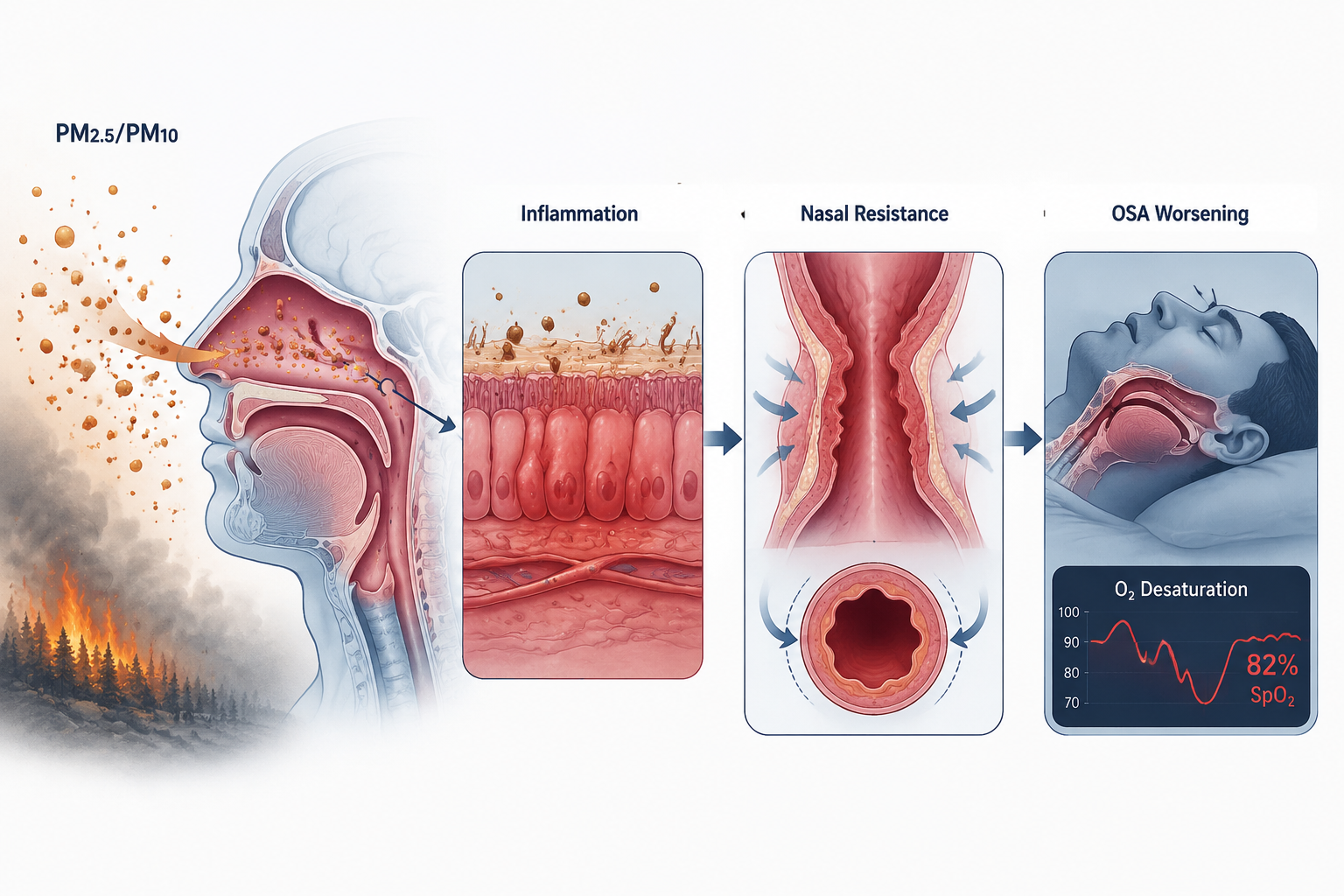
That pathway helps explain why some CPAP users notice more mask leaks or mouth breathing during smoke periods. If the nose is blocked, a nasal mask may feel less tolerable. If the mouth opens more often, pressure delivery can become less effective. If awakenings increase, the person may remove the mask earlier than usual. The problem is not that CPAP suddenly stops working; it is that the conditions around the therapy have changed.
This is also why generic sleep hygiene advice can miss the point. A dark room and a consistent bedtime are still useful, but they do not remove particles from the breathing zone, reduce nasal swelling, or fix a clogged CPAP filter. For an OSA sleeper during a smoke event, the key question is whether airflow through the nose and through the device remains reliable enough to prevent repeated obstruction and oxygen desaturation.
What The OSA Evidence Actually Shows
The strongest human data connecting particles and sleep-disordered breathing is not built entirely from wildfire events. Most studies examine ambient particulate pollution, including PM2.5 and PM10 from mixed sources. That distinction matters. Wildfire smoke particles may differ chemically from urban particulate matter, and a smoky week is not the same exposure pattern as living for years in a higher-pollution area.
Still, the signal is hard to ignore. In the Multi-Ethnic Study of Atherosclerosis, long-term PM2.5 exposure was associated with about 60% greater odds of sleep-disordered breathing [4]. This was a cross-sectional association, so it cannot prove that particles caused the breathing disorder. Socioeconomic factors, indoor air quality differences, regional patterns, and other unmeasured exposures could contribute. But the finding fits the airway-inflammation pathway rather than floating as a disconnected statistic.
A separate study across seven U.S. urban areas found that each 14.5 μg/m³ increase in PM10 corresponded to a 13% rise in the respiratory disturbance index [5]. The respiratory disturbance index is not just a complaint score; it reflects breathing disruptions during sleep. Again, this is ambient PM10 evidence, not a controlled wildfire-smoke trial. It supports a narrower conclusion: particulate exposure is associated with more sleep-disordered breathing, and wildfire smoke is one important real-world source of particulate exposure.
The practical reading is not “one smoky night causes sleep apnea.” OSA is usually shaped by anatomy, weight, age, alcohol or sedative exposure, nasal disease, sleep position, and other factors. Smoke is better understood as a compounding stressor. It can make a vulnerable airway more irritated and resistant, which can raise the chance that an already-diagnosed person has more events or that a borderline person notices symptoms more clearly.
Signs Smoke May Be Interfering With Your OSA Control
Not every rough night during wildfire season means your apnea has worsened. Heat, stress, noise, and schedule disruption can all fragment sleep. But people with OSA should pay attention when the symptoms point toward airflow rather than general restlessness.
- More nasal congestion at bedtime or on waking, especially if it pushes you from nasal breathing into mouth breathing.
- More mask leak, dry mouth, or waking with the mask removed unintentionally.
- A higher residual event estimate on your CPAP display or app, if your device reports that information.
- More morning headache, unusual daytime sleepiness, or concern about oxygen levels.
- A sudden need to sleep more upright or avoid positions that were previously manageable.
Those signs are worth tracking because they change the next decision. A single uncomfortable night may call for better room filtration and closer equipment checks. Repeated nights with worse residual events, oxygen concerns, or severe sleepiness belong in a conversation with a sleep clinician.
CPAP Still Helps, But The Air Around It Matters More During Smoke
CPAP works by holding the airway open with pressurized air. During smoke events, that makes the device both essential and more dependent on its environment. It is pulling bedroom air through an intake and filter, then delivering that air to a mask for hours. If indoor particle levels are high or the filter is overdue, the treatment setup is working under dirtier conditions than usual.
The Sleep Foundation notes that smoke pollution can affect sleep and specifically raises CPAP considerations during wildfire smoke exposure [6]. The strongest CPAP advice here is practical rather than trial-proven: reduce particles in the room, make sure the device filter is appropriate and clean, and avoid improvised modifications that the manufacturer or clinician has not approved.
Make The Bedroom The Cleanest Room
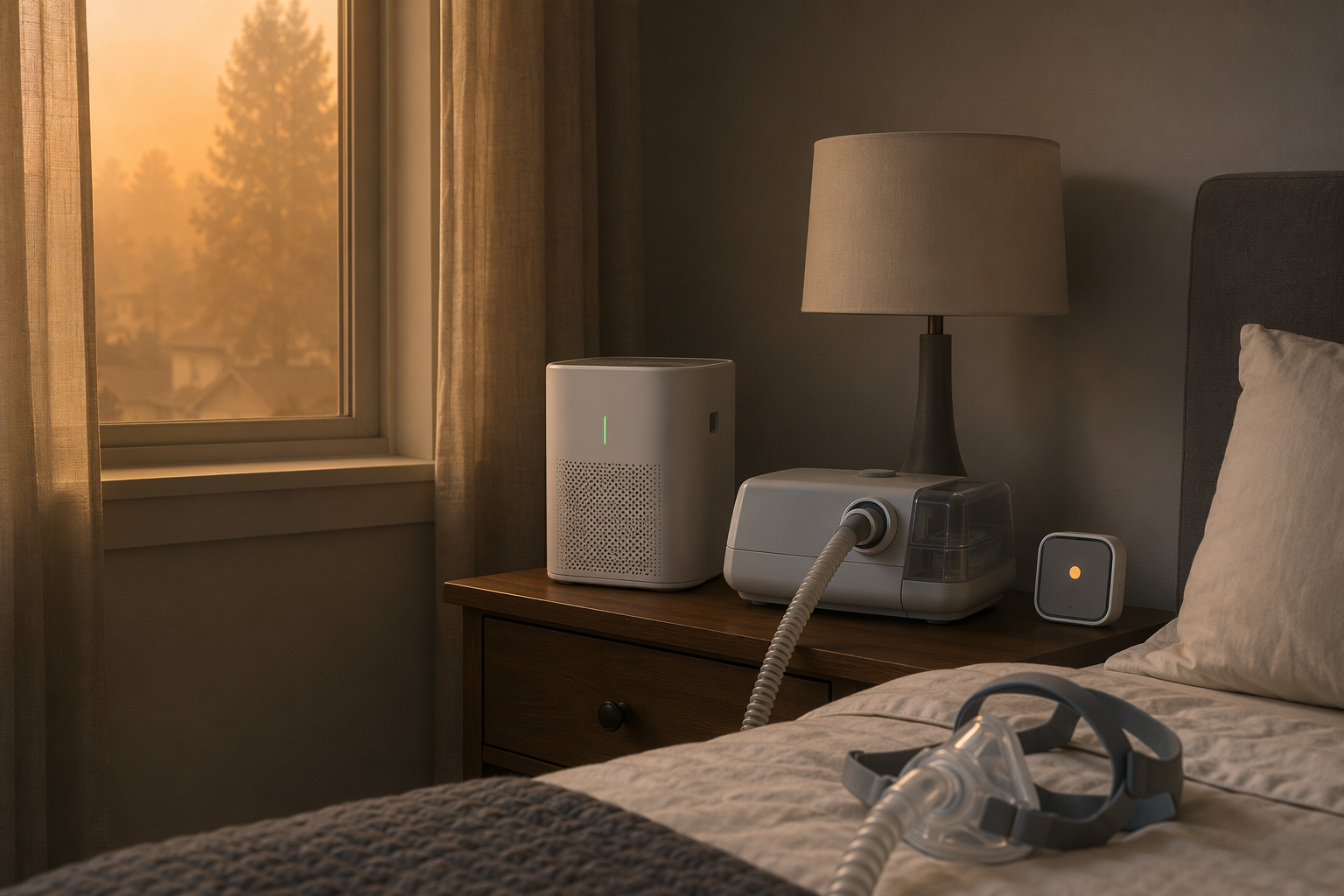
If you cannot clean the whole home’s air, prioritize the room where the CPAP runs. Keep windows closed during smoke periods, reduce obvious air leaks where possible, and run a true HEPA air purifier sized for the bedroom. Place it where it can circulate room air without blowing directly into the mask or onto the bed in a way that dries the airway further.
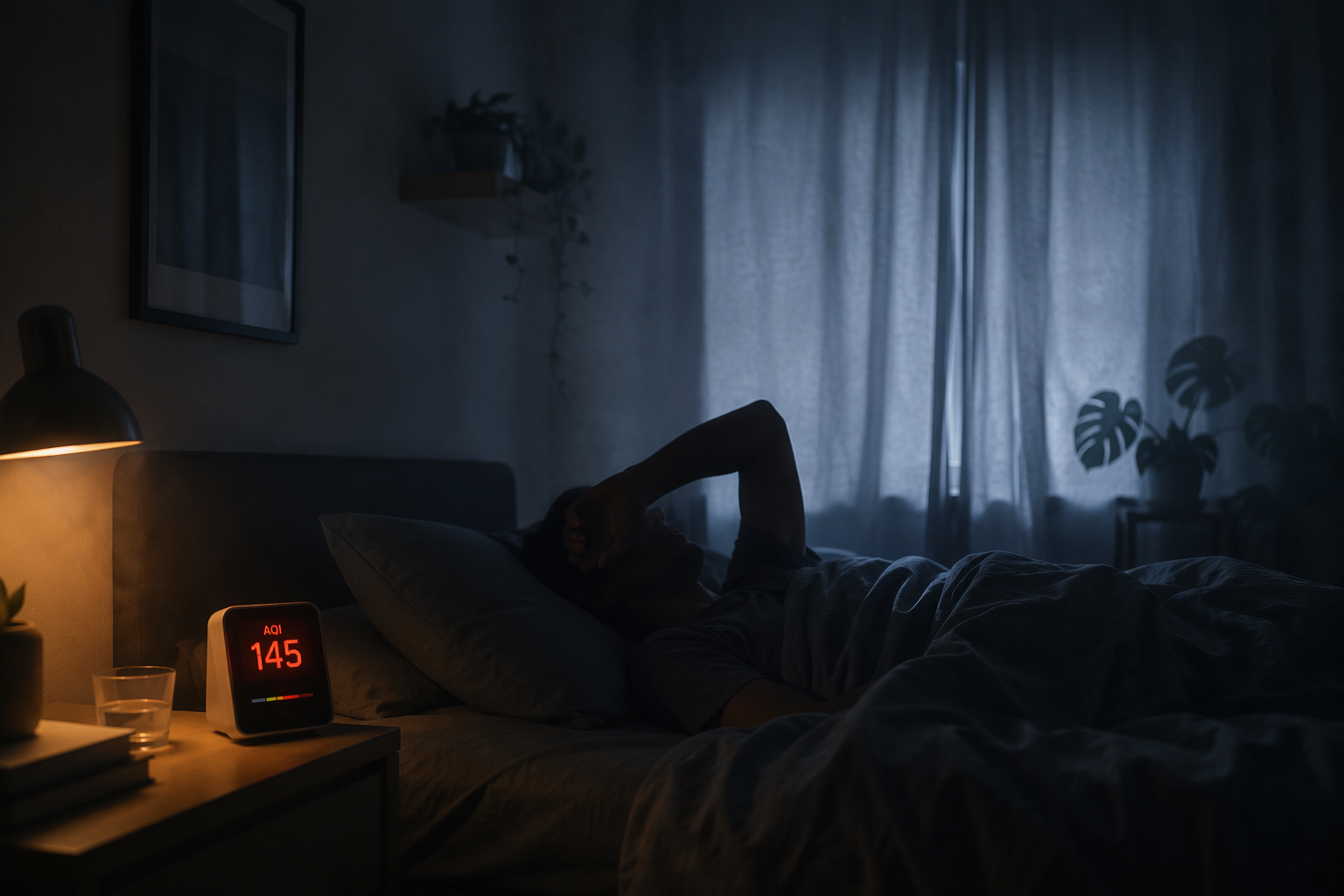
An indoor air quality monitor can be useful because outdoor alerts do not always predict the air beside your bed. Indoor levels depend on window sealing, HVAC filtration, purifier performance, cooking, cleaning products, and how often doors open. The number does not need to become a source of panic; it is a way to see whether your bedroom strategy is actually lowering the particle burden while you sleep.
Check CPAP Filters Before They Look Dramatic
During heavy smoke, CPAP filters can load faster than they do in cleaner months. A filter does not have to look black to be less efficient or more restrictive. Check the filter type your device uses, follow the manufacturer’s replacement schedule, and consider checking more often during smoke events. If your device uses both reusable and disposable filters, treat them differently according to the instructions rather than washing or reusing parts that are meant to be replaced.
Do not tape extra material over the air intake, add unapproved inline filters, or change pressure settings on your own because of smoke. Those changes can alter airflow, pressure delivery, or device performance. If you think smoke exposure is making your therapy ineffective, the safer move is to improve room air and ask the clinician or equipment supplier what your specific machine can safely use.
Watch The Data You Already Have
Many CPAP users already have useful clues: nightly usage hours, leak estimates, residual events, humidifier use, and subjective symptoms. During smoke periods, compare several nights rather than overreacting to one bad reading. A pattern of higher leak plus dry mouth points in a different direction than a pattern of adequate seal with persistent sleepiness.
| What changes during smoke | What it may suggest | What to do first |
|---|---|---|
| More congestion and mouth breathing | Higher nasal resistance or irritated upper airway | Improve bedroom filtration, use prescribed nasal treatments as directed, and review mask fit |
| More leak or dry mouth | Mask seal problems or mouth opening during sleep | Check cushion fit, humidification, and whether a different mask style needs clinician guidance |
| Higher residual events over several nights | Possible reduced OSA control | Check indoor air and filters, then contact a sleep clinician if the pattern persists |
| Morning headaches or oxygen concerns | Possible clinically important breathing disruption | Seek medical guidance promptly, especially if symptoms are new or worsening |
What To Do Tonight During A Smoke Event
The most useful smoke-night plan is physical and boring in the best way: cleaner bedroom air, maintained equipment, and a lower threshold for clinical help when OSA control appears to slip.
- Close windows before smoke levels rise indoors, not after the bedroom already smells smoky.
- Run a HEPA purifier in the bedroom long enough to clean the air before bedtime and keep it running overnight if tolerated.
- Check the CPAP intake filter and replace it according to the device instructions, especially if it is discolored, dusty, or overdue.
- Use the humidifier settings prescribed or recommended for your setup; overly dry airflow can make an irritated nose feel worse.
- Avoid unapproved device modifications, including homemade filters or blocked intakes.
- Track symptoms and device-reported trends across the smoke period, then escalate if the pattern is not resolving.
People with suspected but undiagnosed OSA should be especially careful not to explain away recurring symptoms as “just smoke.” Loud snoring, witnessed pauses in breathing, waking gasping, morning headaches, and persistent daytime sleepiness deserve evaluation even when wildfire season is making everything feel worse.
The Calibrated Bottom Line
Wildfire smoke is a meaningful compounding risk for obstructive sleep apnea, but the evidence should be read precisely. The strongest OSA data links ambient particulate exposure with sleep-disordered breathing, while mechanistic research explains why smoke particles could worsen nasal inflammation, resistance, airway collapsibility, apnea burden, and oxygen dips. That is enough to take smoke seriously without claiming that every smoky night directly worsens every person’s apnea.
For CPAP users, the response is not to abandon treatment or improvise with the machine. Keep using the prescribed therapy, make the bedroom air cleaner, check filters more carefully during high-particle periods, and ask for clinical help if congestion, leaks, residual events, oxygen concerns, or daytime impairment get worse.
References
- Wildfire exposure and sleep: A systematic review, PMC, 2021.
- How Bad Is Wildfire Smoke for Your Health?, Yale Medicine.
- Impact of Particulate Matter on Upper Airway Diseases, Journal of Rhinology, 2025.
- The Association of Ambient Air Pollution with Sleep Apnea: The Multi-Ethnic Study of Atherosclerosis, Annals of the American Thoracic Society, 2019.
- Associations of PM10 with sleep and sleep-disordered breathing in adults from seven U.S. urban areas, American Journal of Respiratory and Critical Care Medicine, 2010.
- Wildfire Smoke and Sleep, Sleep Foundation.

Comments
Join the discussion with an anonymous comment.