
If you have obstructive sleep apnea, stroke prevention is not a single switch that flips when a CPAP machine arrives. CPAP matters because it treats the nightly airway collapse that drives oxygen drops. But sleep apnea raises stroke risk through several partly independent pathways, and each pathway points to a different prevention target: oxygen stability, blood pressure control, rhythm screening, metabolic and inflammatory strain, and the brain’s ability to tolerate vascular stress.
The concern is legitimate. A meta-analysis of prospective studies found that people with obstructive sleep apnea were about twice as likely to have a stroke, and long-term cohort data from the Busselton Health Study reported a 3.7-fold higher stroke risk in people with severe OSA, defined as an apnea-hypopnea index of at least 30 events per hour.[1][2] Those numbers should not be used to panic anyone into thinking stroke is inevitable. They should change the conversation from “use CPAP and move on” to “which stroke pathways are still active, and what are we doing about each one?”
For someone who suspects sleep apnea but has not been diagnosed, the first prevention step is still getting the breathing problem measured. A home test or lab study does not prevent stroke by itself, but it identifies the severity of the nightly stress and whether treatment is actually indicated. If cost is the barrier, comparing a home sleep test with an in-lab sleep study is a practical place to start.
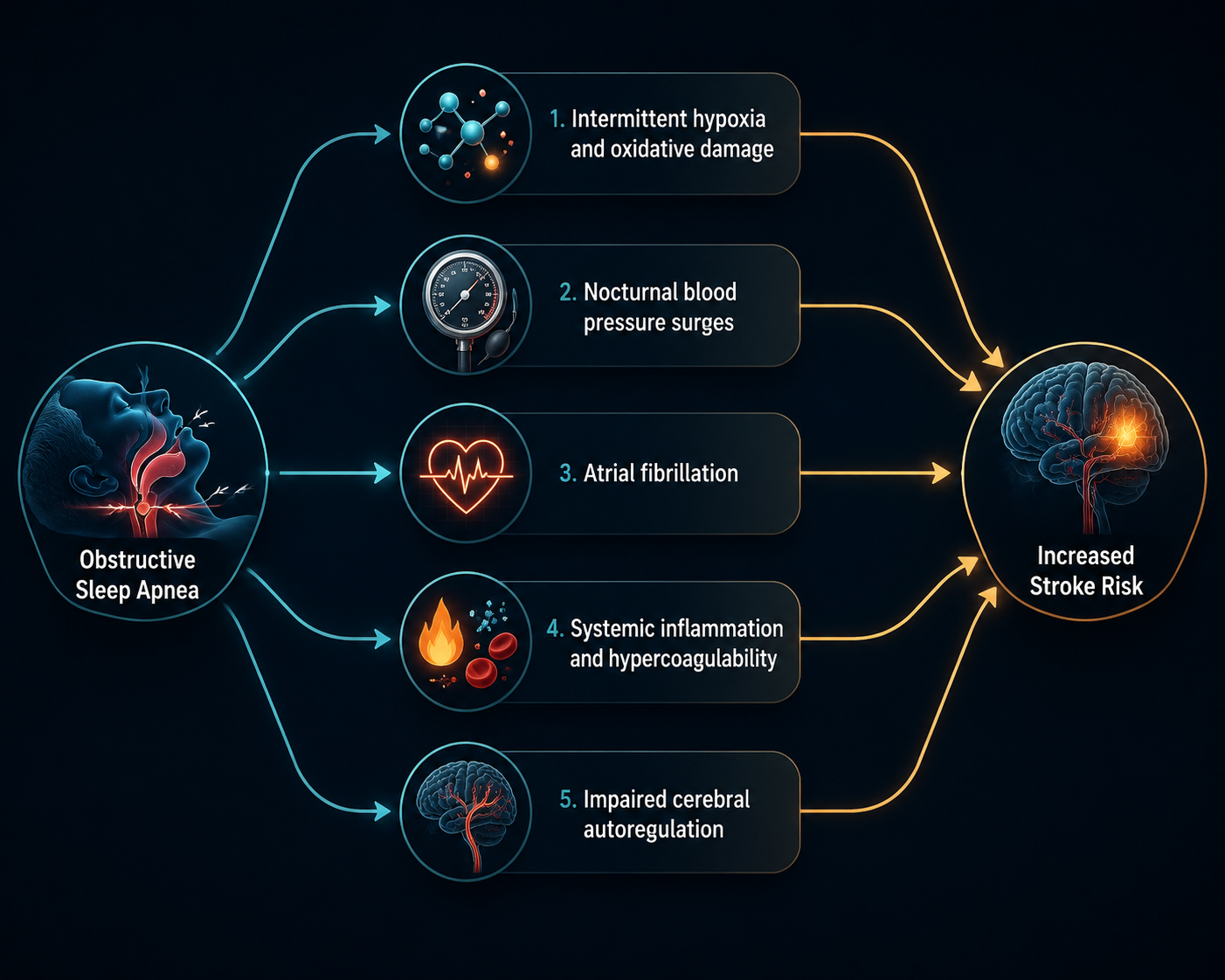
The Five Pathways That Make Sleep Apnea a Stroke Risk
The useful map is not complicated, but it is more specific than most clinic handouts. Obstructive sleep apnea can contribute to stroke through intermittent hypoxia, nocturnal blood pressure surges, atrial fibrillation, systemic inflammation with a more clot-prone circulation, and impaired cerebral autoregulation. CPAP sits at the center of that map, especially for oxygen drops and breathing-related pressure swings. It does not automatically replace blood pressure management, rhythm evaluation, weight treatment, exercise, diet, or follow-up when symptoms persist.
| Pathway | What happens during OSA | Prevention target to discuss |
|---|---|---|
| Intermittent hypoxia | Oxygen repeatedly falls and rebounds during sleep | Consistent effective OSA treatment, usually CPAP first |
| Nocturnal blood pressure surges | Airway obstruction triggers sympathetic activation and pressure spikes | Blood pressure monitoring, medication review, and CPAP adherence |
| Atrial fibrillation | OSA may contribute to electrical instability in the atria | Screening conversation with a clinician, especially if symptoms or risk factors exist |
| Inflammation and hypercoagulability | Metabolic and inflammatory strain may make vessels more vulnerable and blood more clot-prone | Weight management, exercise, diet, and treatment of cardiometabolic disease |
| Impaired cerebral autoregulation | Repeated oxygen and pressure instability may weaken the brain’s buffering capacity | Reducing nightly instability with reliable OSA treatment |
1. Intermittent Hypoxia: The Oxygen Problem CPAP Directly Treats
In obstructive sleep apnea, the airway repeatedly narrows or collapses during sleep. Oxygen can drop, breathing resumes, oxygen rises, and the cycle repeats. That repeated fall-and-rebound pattern is not the same as simply having a low oxygen number for a few minutes. It can promote oxidative stress, endothelial dysfunction, and vascular irritation, which are plausible links between untreated OSA and stroke risk.
This is where CPAP earns its place. By splinting the airway open, CPAP reduces obstructive events and the oxygen instability that follows them. If a patient is waking less, snoring less, and showing better device-reported residual event numbers, that is not cosmetic improvement. It means one major stroke-related pathway is being treated at the source.
The mistake is treating possession of the machine as the same thing as vascular protection. The SAVE trial, published in 2016, did not show a reduction in cardiovascular events including stroke among patients assigned to CPAP, but average CPAP use was only 3.3 hours per night.[3] That result should not be waved away, and it should not be twisted into “CPAP is useless.” It shows the uncomfortable middle ground: a therapy aimed at nightly physiology may not deliver its full vascular promise when it is used for only part of the night.
Observational data also complicate the picture in the other direction. In a five-year follow-up study, adherent CPAP users had lower mortality than nonadherent users.[4] Observational studies cannot prove the same thing as a randomized trial, because people who use CPAP consistently may differ from those who do not in other ways. Still, the pattern fits the biology: if the damaging exposure happens across sleep, then partial-night treatment is not the same intervention as all-night treatment.
2. Nocturnal Blood Pressure Surges: The Part You May Not See in Daytime Readings
A blocked airway does not just lower oxygen. It also provokes arousals and sympathetic nervous system activation. The body reacts as if it is under threat: heart rate and vascular tone shift, and blood pressure can surge during the night. For a brain supplied by small and aging blood vessels, repeated pressure shocks are not a trivial detail.
This is one reason a normal office blood pressure reading may not close the case. Some patients with OSA have abnormal nighttime patterns, morning hypertension, or pressure that looks controlled in the clinic but behaves differently across sleep. The practical move is not to self-adjust medication. It is to ask whether your blood pressure pattern has actually been evaluated in a way that matches the risk: home readings, morning readings, ambulatory monitoring when appropriate, and a clinician review of whether treatment is covering the hours when pressure rises.
CPAP and blood pressure management belong in the same conversation. If CPAP reduces obstructive events, it may reduce one trigger for nocturnal pressure surges. If hypertension remains active, the vascular pathway may still be doing damage. Readers who are already juggling both conditions may need a more detailed plan for treating high blood pressure when you have sleep apnea, because the timing and pattern of blood pressure matter as much as the label.
The sleep timing of stroke adds weight to this concern. SleepApnea.org reports that up to 25% of strokes occur during sleep, often described as wake-up strokes.[5] That statistic does not prove sleep apnea caused those strokes. It does make it harder to ignore nighttime physiology when the patient’s major vascular stressor is also happening at night.
3. Atrial Fibrillation: A Screening Conversation, Not a Guess
Atrial fibrillation deserves separate attention because it changes stroke prevention in a way sleep apnea treatment alone may not. AF can allow blood to pool and clot in the heart; a clot can then travel to the brain. Sleep apnea is not the only cause of AF, and not every person with OSA needs intensive rhythm testing. But the overlap is large enough that it should not be treated as a footnote.
IU Health, citing cardiologist Omar Batal, reports that about 50% of patients with atrial fibrillation have obstructive sleep apnea.[6] That figure is about overlap, not proof that one condition always causes the other. For a patient with OSA, especially one with palpitations, unexplained fatigue, prior TIA or stroke, resistant hypertension, older age, or known heart disease, it supports a direct question: should I be screened for atrial fibrillation, and what kind of monitoring makes sense for my situation?
The answer may be as simple as pulse checks and an ECG, or it may involve longer monitoring if symptoms are intermittent. That decision belongs with a clinician. The prevention point is narrower and stronger: if AF is present, stroke prevention may require rhythm-specific management. CPAP can still matter, but it is not a substitute for identifying an arrhythmia that has its own treatment pathway.
4. Inflammation, Clotting Tendency, and Metabolic Strain
The least satisfying advice in medicine is “lose weight, exercise, and eat better” when it is delivered as moral instruction. In sleep apnea stroke prevention, those behaviors matter because they act on vascular biology: insulin resistance, blood pressure, systemic inflammation, lipid burden, endothelial function, and in some patients the severity of airway collapse itself.
Weight is a good example of how the mechanisms overlap. NIH material reports that a 10% to 15% weight loss can reduce AHI by 25% to 50% in some people with obstructive sleep apnea.[7] That does not mean weight loss cures OSA for everyone, and it does not mean thin people are protected from sleep apnea or stroke. It means that, when excess weight is contributing to airway collapsibility and metabolic strain, weight treatment can reduce more than one pressure on the vascular system at once.
Exercise and diet should be framed the same way. Their sleep-apnea-specific stroke prevention evidence is not as clean as a single randomized trial showing fewer strokes in treated OSA patients. Much of the support is observational or indirect, running through better blood pressure, weight, glucose metabolism, inflammation, and cardiovascular fitness. That still matters. Stroke risk is built from stacked exposures, and removing metabolic strain from the stack is a vascular intervention, not a character test.
There is also a less common but important anatomical issue: patent foramen ovale, or PFO, a persistent opening between the heart’s upper chambers. SleepApnea.org reports that OSA patients are twice as likely to have a PFO, which can increase concern about paradoxical embolism in selected patients.[5] This is not a reason for every person with sleep apnea to demand a PFO workup. It is another example of why stroke prevention can become more individualized when sleep apnea coexists with cardiac or neurologic risk factors.
5. Cerebral Autoregulation: The Brain’s Buffer May Get Worn Down
The brain normally adjusts blood vessel tone to keep blood flow relatively stable despite changes in pressure, oxygen, and carbon dioxide. That buffering system is called cerebral autoregulation. In sleep apnea, the brain is repeatedly exposed to oxygen drops, carbon dioxide shifts, arousals, and blood pressure surges. Over time, that instability may make the cerebral circulation less able to absorb stress.
This pathway is less visible to patients than a CPAP usage report or a home blood pressure log. There is no simple consumer number that says “your autoregulation improved this week.” Its practical implication is still clear: nightly instability is not benign just because the person is asleep and unaware of it. Consistent OSA treatment is partly about giving the brain fewer oxygen and pressure shocks to buffer.
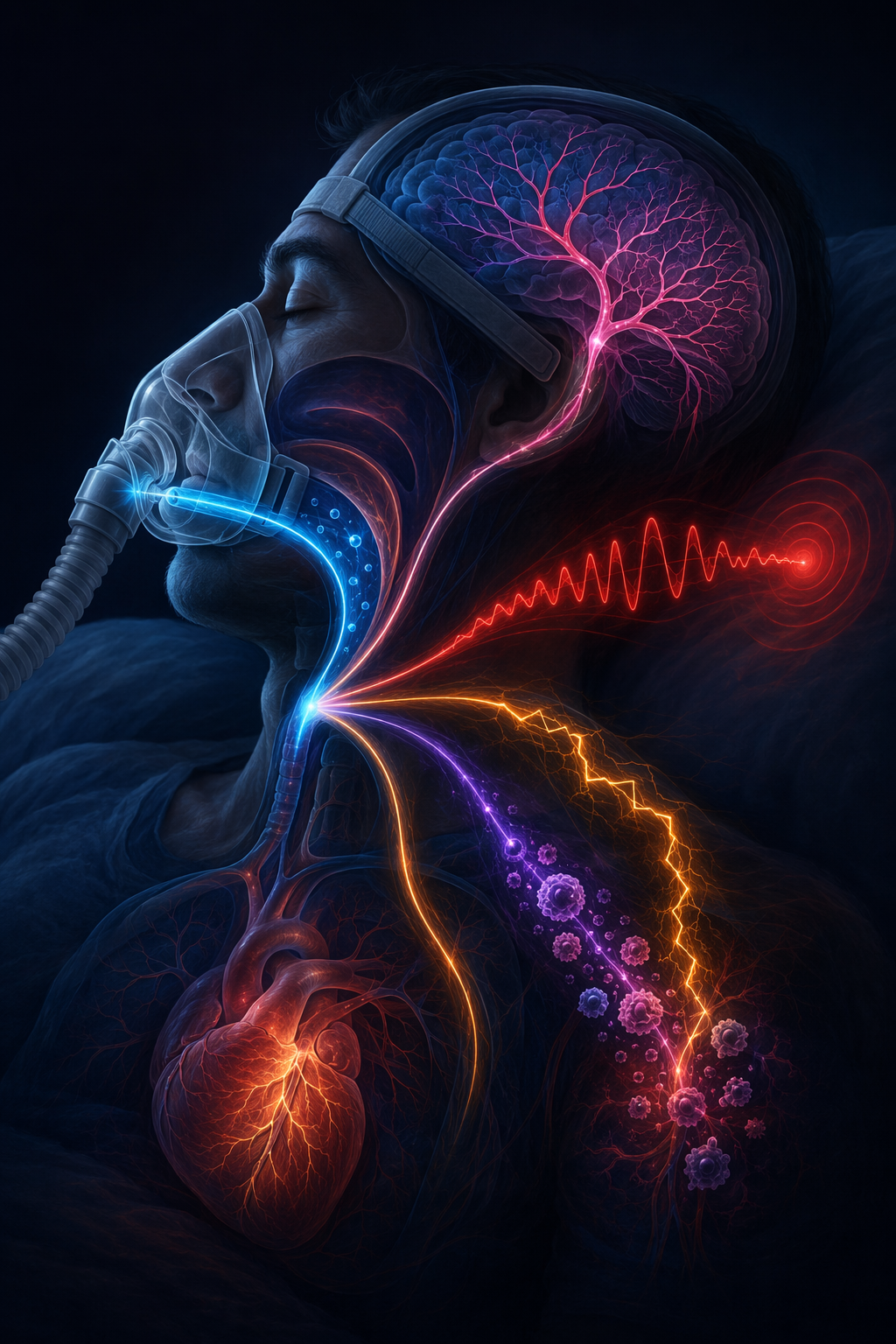
What CPAP Can Do, and Where the Plan Has to Broaden
A reasonable sleep apnea stroke prevention plan keeps CPAP central if CPAP is tolerated and effective. The first question is not “Do I own a machine?” but “Is the treatment controlling events across the night?” That means looking at hours used, mask leak, residual AHI, persistent sleepiness, morning headaches, oxygen concerns if measured, and whether the patient removes the mask after a few hours without realizing it.
If CPAP is not tolerated, the answer is not to quietly abandon treatment. Mask refitting, pressure adjustments, humidification, bilevel therapy in selected cases, oral appliance therapy for appropriate anatomy and severity, positional therapy, weight treatment, and surgical options may all come up. For patients specifically exploring hypoglossal nerve stimulation, a realistic look at Inspire sleep apnea therapy cost can be part of deciding whether that route is feasible. The important distinction is between changing treatment under supervision and drifting into undertreatment because the first device was miserable.
Guidelines also recognize the stroke-sleep connection from the other direction. The American Heart Association/American Stroke Association recommends sleep apnea screening for patients with ischemic stroke or transient ischemic attack.[8] That recommendation is aimed at people who have already had a cerebrovascular event, but it reinforces the same principle for prevention: breathing during sleep is part of vascular risk assessment, not a separate lifestyle inconvenience.
A Practical Hierarchy for the Next Clinic Visit
The strongest plan is layered, but it does not need to be chaotic. Bring the conversation back to the pathways that can actually be checked or treated.
- Verify that OSA treatment is effective across the night: review CPAP hours, residual events, leak, comfort problems, and whether another treatment is needed if CPAP cannot be used consistently.
- Look beyond office blood pressure: ask whether home readings, morning readings, or ambulatory monitoring would clarify nighttime or early-day hypertension patterns.
- Raise atrial fibrillation explicitly when risk factors or symptoms are present: palpitations, prior TIA or stroke, resistant hypertension, older age, or known cardiovascular disease should sharpen the screening conversation.
- Treat weight, exercise, and diet as vascular tools: the goal is to reduce apnea severity when possible and lower inflammatory, metabolic, and blood pressure strain.
- Do not let persistent symptoms sit unexplained: ongoing sleepiness, morning headaches, witnessed apneas, or poor device tolerance are reasons to revisit the treatment plan rather than assume “CPAP failed.”
None of this makes stroke risk disappear. It makes the prevention target more honest. Sleep apnea can stress the vascular system through oxygen instability, pressure surges, rhythm problems, inflammatory and clotting pathways, and impaired cerebral buffering. CPAP addresses a central part of that chain, especially when used consistently. The rest of the plan is not extra credit; it is how stroke prevention catches up with the biology.
References
- Obstructive sleep apnea and risk of stroke: a meta-analysis of prospective cohort studies. Li et al. 2014.
- Severe obstructive sleep apnea increases risk of stroke. American Academy of Sleep Medicine.
- CPAP for Prevention of Cardiovascular Events in Obstructive Sleep Apnea. New England Journal of Medicine. 2016.
- Cardiovascular mortality in obstructive sleep apnea in the elderly: role of long-term continuous positive airway pressure treatment. American Journal of Respiratory and Critical Care Medicine. 2009.
- Sleep Apnea and Stroke. SleepApnea.org.
- Sleep apnea and atrial fibrillation. IU Health.
- Weight loss impact on apnea-hypopnea index. National Institutes of Health.
- AHA/ASA primary and secondary stroke prevention guidelines. American Heart Association/American Stroke Association.

Comments
Join the discussion with an anonymous comment.