
The Rise of Sonic Sleep Aids: A Multi-Million Dollar Industry
The numbers are staggering. A 2025 perspective piece in the journal SLEEP reported that over 6 million people follow Spotify's most popular sleep playlist, and the meditation app Calm has surpassed 150 million downloads worldwide. In the United States, an estimated 15% of adults now incorporate a sleep app into their nightly routine. Across the Atlantic, a 2024 survey found that 39% of UK adults listen to music, podcasts, or radio at least occasionally to help them fall asleep.
This surge in popularity exists against a backdrop of widespread sleep dissatisfaction. Chronic insomnia affects roughly 10% of the general population in Western countries, with women being 1.5 to 2 times more likely to experience it. A 2020 US survey found that 14.5% of adults reported having trouble falling asleep on most days. When faced with these numbers, it is easy to see why millions turn to accessible, low-cost audio solutions rather than navigating the healthcare system.
The central tension of this article is straightforward: the commercial popularity of sonic sleep aids is immense, but the scientific evidence supporting them varies dramatically by type. Some interventions have credible data behind them. Others are essentially placebo wrapped in a subscription fee. Understanding the difference is critical for anyone trying to make an informed choice about their sleep health.
Colored Noise (White, Pink, Brown): What the Systematic Reviews Actually Found
White noise machines and their cousins — pink noise (often described as rain or waterfalls) and brown noise (deeper, like ocean waves) — are among the most popular sonic sleep aids on the market. But when researchers have gone looking for proof that they work, the results have been surprisingly weak.
Two independent systematic reviews have examined the question. The first, a 2021 review by Riedy et al. published in Sleep Medicine Reviews, analyzed 38 articles on continuous white noise and broadband noise. Using the GRADE criteria — a standard framework for rating quality of evidence — the review concluded that the quality of evidence for continuous noise improving sleep was very low. The authors noted significant heterogeneity in noise characteristics, sleep measurement methods, and study design, making it impossible to draw a general conclusion.
The second review, a 2022 study by Capezuti et al. in the Journal of Clinical Sleep Medicine, examined 34 studies involving 1,103 participants across three categories: white noise, pink noise, and multiaudio. The findings paint a mixed picture:
| Intervention | Studies with Positive Findings | Risk of Bias Score (lower is better) |
|---|---|---|
| White Noise (18 studies) | 6 studies (33%) | 2.38 / 0.69 |
| Pink Noise (11 studies) | 9 studies (81.9%) | 2.36 / 0.81 |
| Multiaudio (6 studies) | 4 studies (66.7%) | 1.67 / 0.82 |
At first glance, the 81.9% positive finding rate for pink noise looks impressive. However, the risk of bias scores tell a different story. Both white noise and pink noise studies had relatively high risk of bias scores, meaning the study designs were not rigorous enough to produce reliable conclusions. The multiaudio category had the lowest risk of bias but included only six studies.
The bottom line from both reviews is consistent: there is no strong evidence to support the general use of colored noise as a sleep aid. Some individuals may find it helpful, and no adverse effects have been reported with short-term use, but the data does not justify recommending it as a reliable intervention for the population at large.
Music for Sleep: Where the Evidence Is Strongest
Among all sonic sleep aids, music stands out as the intervention with the most consistent scientific support. The 2025 perspective piece in SLEEP found that music-based relaxation has demonstrated efficacy for improving perceived sleep quality. This is not a marginal finding — it represents a meaningful difference from the inconclusive results seen with colored noise.
Several mechanisms likely explain why music works. Slow-tempo instrumental music — typically 60 to 80 beats per minute — can entrain heart rate and breathing patterns toward a more relaxed state. Music also serves as a cognitive distraction, redirecting attention away from the racing thoughts and pre-sleep worry that characterize insomnia. This mechanism is particularly relevant given that difficulty falling asleep is often driven by hyperarousal rather than a lack of sleepiness.
However, the evidence comes with important caveats. The strongest data supports self-selected, slow-tempo instrumental music, not algorithmically generated playlists or music with lyrics. Personal preference matters significantly — a piece of music that one person finds relaxing may be distracting or irritating to another. The act of choosing one's own music may itself contribute to the relaxation response by giving the listener a sense of control over their sleep environment.
- Choose instrumental music with a slow, steady tempo (60–80 BPM).
- Select tracks you personally find relaxing — not what an algorithm recommends.
- Use a timer to avoid music playing all night, which could disrupt sleep architecture.
- Avoid music with lyrics or dramatic dynamic shifts that may trigger cognitive processing.
Narrated Stories and Sleepcasts: Popular but Under-Researched
Narrated sleep content — including the sleepcasts popularized by apps like Calm, bedtime stories for adults, and guided imagery recordings — has become a cultural phenomenon. The format is simple: a calm voice describes a relaxing scene or tells a gentle story, often with ambient sound effects in the background.
Despite their enormous popularity, the 2025 SLEEP perspective piece notes that empirical support for narrated content as a sleep aid remains limited. There is a plausible mechanism — cognitive distraction. Listening to a story occupies the brain's verbal processing centers, potentially reducing the cognitive arousal that keeps people awake. This is the same principle behind counting sheep, but with a more engaging delivery.
The lack of controlled studies matters. Without randomized trials comparing narrated content to a placebo or an active control, it is impossible to know whether the benefit comes from the content itself, the act of lying still and listening, or simply the passage of time. The popularity of these tools should not be mistaken for proof of efficacy.
Guided Meditation and Mindfulness at Bedtime: Promising but Under-Studied
Guided meditation for sleep occupies an interesting middle ground. The broader literature on mindfulness-based interventions for insomnia (MBTI) is reasonably strong — in-person mindfulness programs have shown benefits for sleep quality, particularly for individuals whose insomnia is linked to anxiety or rumination.
However, the 2025 SLEEP perspective piece notes a critical gap: app-delivered meditation has not been studied with the same rigor as in-person programs. A 10-minute guided meditation played through a smartphone speaker is a very different intervention from an 8-week mindfulness-based stress reduction course taught by a trained instructor. The dosage, the accountability, and the therapeutic relationship are all absent in the app format.
This does not mean app-based meditation is useless. It may be helpful for some people, and it carries minimal risk. But readers should be cautious about expecting the same results from a free app that clinical trials have shown for structured, in-person programs. The evidence is promising but not yet conclusive.
The Regulatory Gap: Wellness Tools vs. Medical Devices
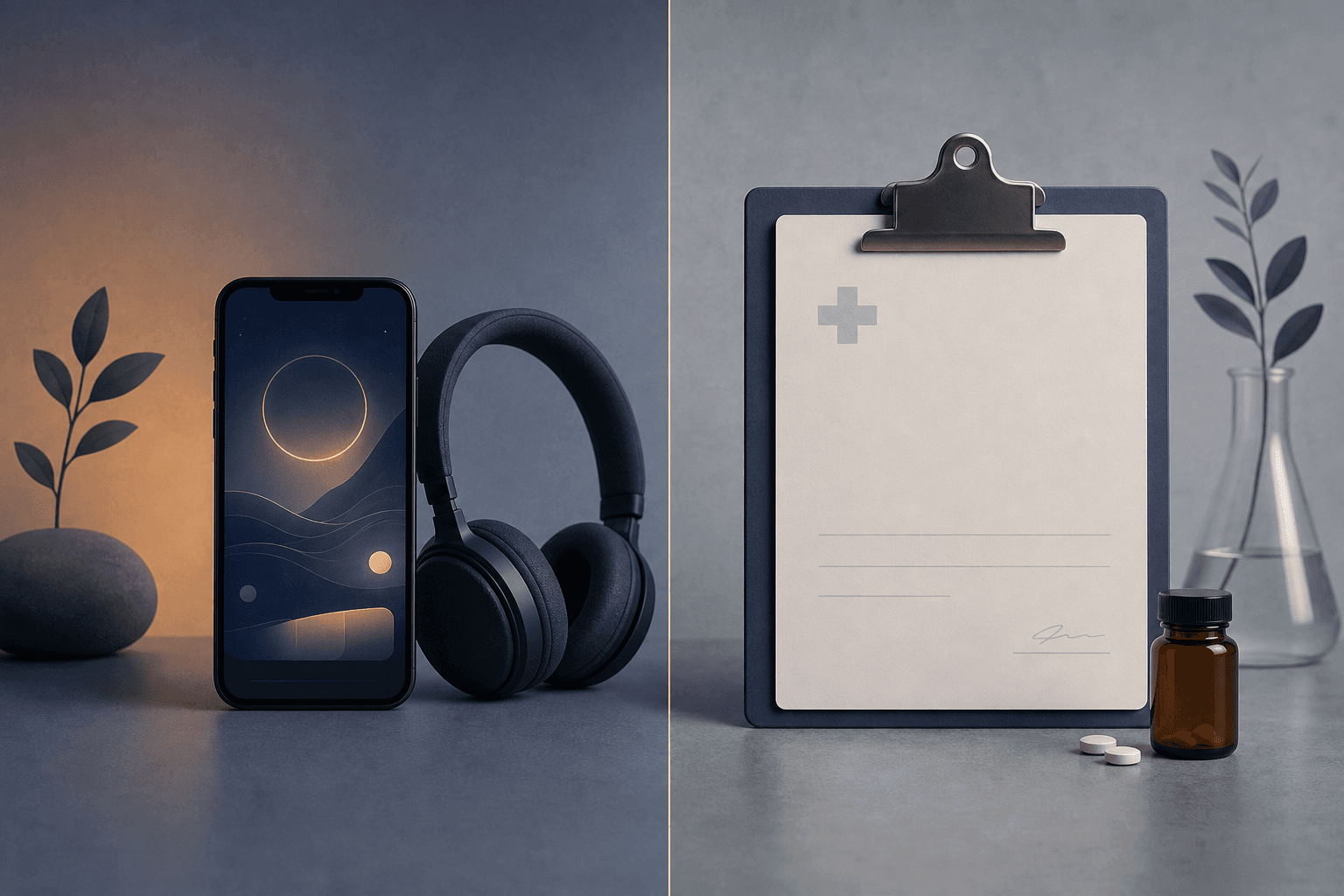
One of the most important facts about sonic sleep aids is what they are not: they are not medical devices. They are marketed as wellness products, which means they are not subject to FDA regulation for safety or efficacy. A white noise machine can claim to help you sleep without ever having to prove that it does.
This regulatory gap matters because it creates an uneven playing field. Evidence-based treatments for insomnia — particularly Cognitive Behavioral Therapy for Insomnia (CBT-I) — must go through rigorous clinical testing and are recommended as first-line treatment by the American College of Physicians and the American Academy of Sleep Medicine. Yet a 2023 analysis of primary care data found that fewer than 0.3% of patients identified with insomnia were referred for CBT-I.
The result is a market where heavily marketed, unregulated wellness tools thrive while evidence-based treatments remain underutilized. This is not an argument that sonic sleep aids are harmful — they are generally low-risk. But it is an argument for keeping perspective. A $5 white noise machine is not a substitute for a clinical evaluation, and a meditation app is not equivalent to CBT-I.
Potential Risks: Delayed Help-Seeking and Technology Dependency
While sonic sleep aids are generally safe in the short term, there are real risks associated with relying on them as a primary sleep strategy.
- Delayed professional evaluation: The most significant risk is that using a sonic sleep aid may delay the diagnosis of an underlying sleep disorder. If a person has undiagnosed sleep apnea, restless legs syndrome, or another clinical condition, no amount of pink noise will address the root cause. The time spent trying different apps and machines is time that could have been spent pursuing effective treatment.
- Conditioned arousal: Over time, the brain can learn to associate falling asleep with the presence of a specific sound. This creates a form of dependency — if the power goes out, the headphones die, or you travel without your device, sleep becomes difficult or impossible. This phenomenon is similar to conditioned arousal, a core concept in insomnia.
- Mismatch with sleep drive: Sonic sleep aids address the symptom (difficulty falling asleep) but not the cause. If the underlying issue is a mismatch between sleep drive and bedtime timing — what we call sleep drive mismatch — no audio intervention will fix it.
- Techno-solutionism: There is a cultural tendency to assume that every problem has a technological solution. Sleep is a biological process, not a software bug. Assuming that an app can solve a clinical sleep problem reflects a misunderstanding of how sleep works.
These risks do not mean sonic sleep aids are bad. They mean they should be used with awareness of their limitations. If a sonic aid helps you fall asleep faster and you have no other symptoms of a sleep disorder, there is no reason to stop using it. But if you have been relying on one for weeks or months without improvement, or if you have symptoms like loud snoring, gasping for air during sleep, or excessive daytime sleepiness, it is time to see a doctor.
Practical Guidance: What to Try, What to Skip, and When to See a Doctor
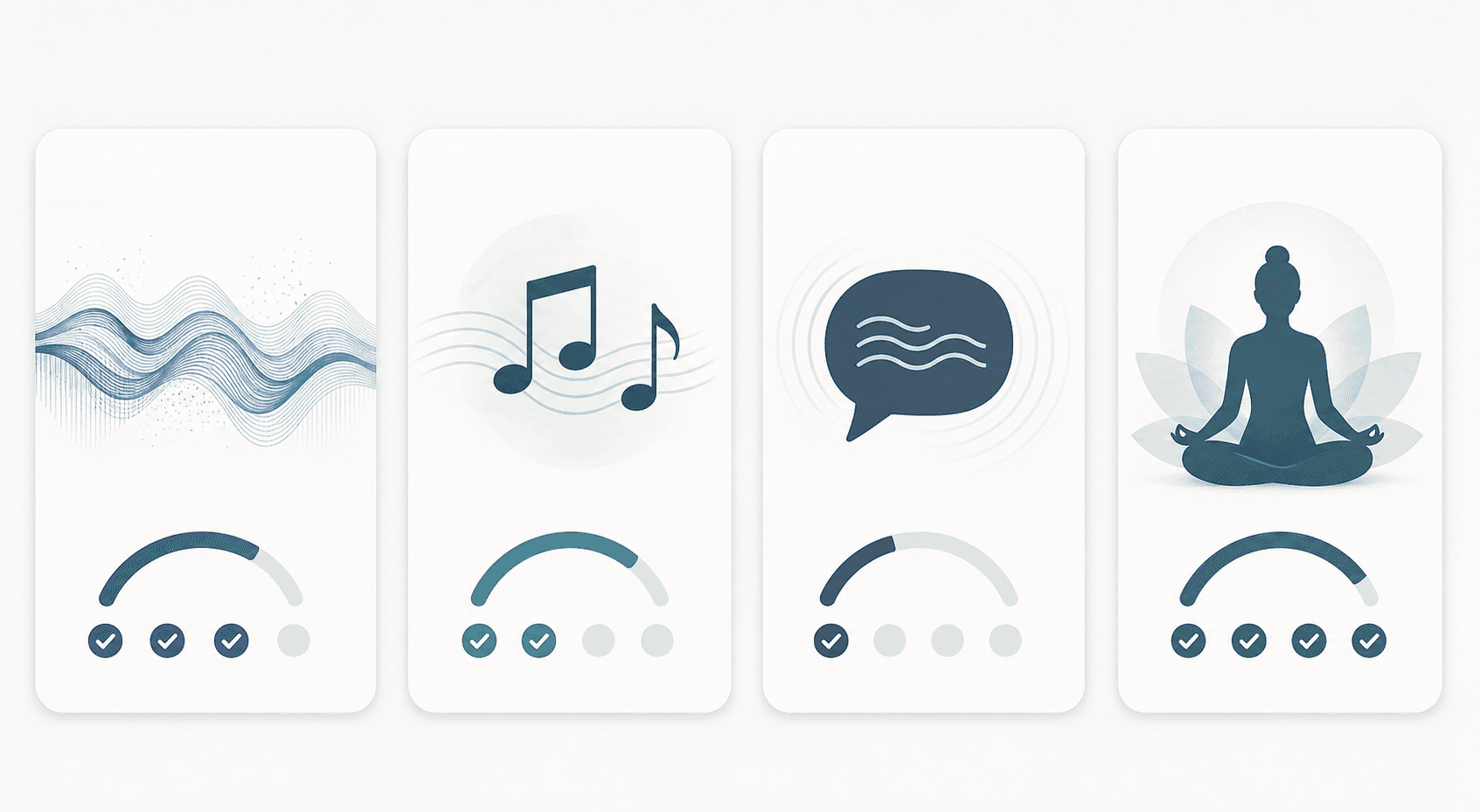
The evidence reviewed in this article points to a clear hierarchy of sonic sleep aids. The table below summarizes what the science says and what it means for your decision-making.
| Intervention | Evidence Level | Recommendation | When to Consider |
|---|---|---|---|
| Slow-tempo instrumental music | Moderate (RCT-supported) | Try it first | Stress-related sleep difficulties, general relaxation |
| Pink noise | Very low (inconclusive) | May try, but don't expect much | If you find it subjectively relaxing |
| White noise | Very low (inconclusive) | Low priority | Only if other options fail and you find it helpful |
| Guided meditation (app-based) | Limited (promising but under-studied) | Reasonable to try | Anxiety-related sleep issues, if in-person MBTI is not accessible |
| Narrated stories / sleepcasts | Limited (no controlled studies) | Personal preference only | Mild difficulty falling asleep, no other symptoms |
| Brown noise | Insufficient data | Not recommended | N/A — more data needed |
If you decide to try a sonic sleep aid, start with music. It has the strongest evidence base, is low-risk, and is easy to implement. Choose instrumental tracks with a slow tempo, use a timer, and pay attention to how your body responds. If music does not work, pink noise is a reasonable second option, but keep your expectations modest.
If you have been using any sonic sleep aid for more than two weeks without noticeable improvement, or if your sleep difficulties are accompanied by any of the following signs, it is time to seek professional evaluation:
- Loud, persistent snoring or gasping for air during sleep
- Excessive daytime sleepiness despite spending enough time in bed
- Difficulty staying asleep (waking up multiple times per night and struggling to get back to sleep)
- Symptoms lasting more than three months (chronic insomnia)
- Significant impact on mood, concentration, or daily functioning
For a more detailed decision framework that covers a wider range of interventions — including behavioral strategies, supplements, and when to seek clinical care — see our Decision-First Framework for What to Try When You Can't Sleep. And if you suspect your sleep difficulties may be related to an underlying condition, explore our Sleep Conditions directory for structured, evidence-based information on specific disorders.
Comments
Join the discussion with an anonymous comment.