
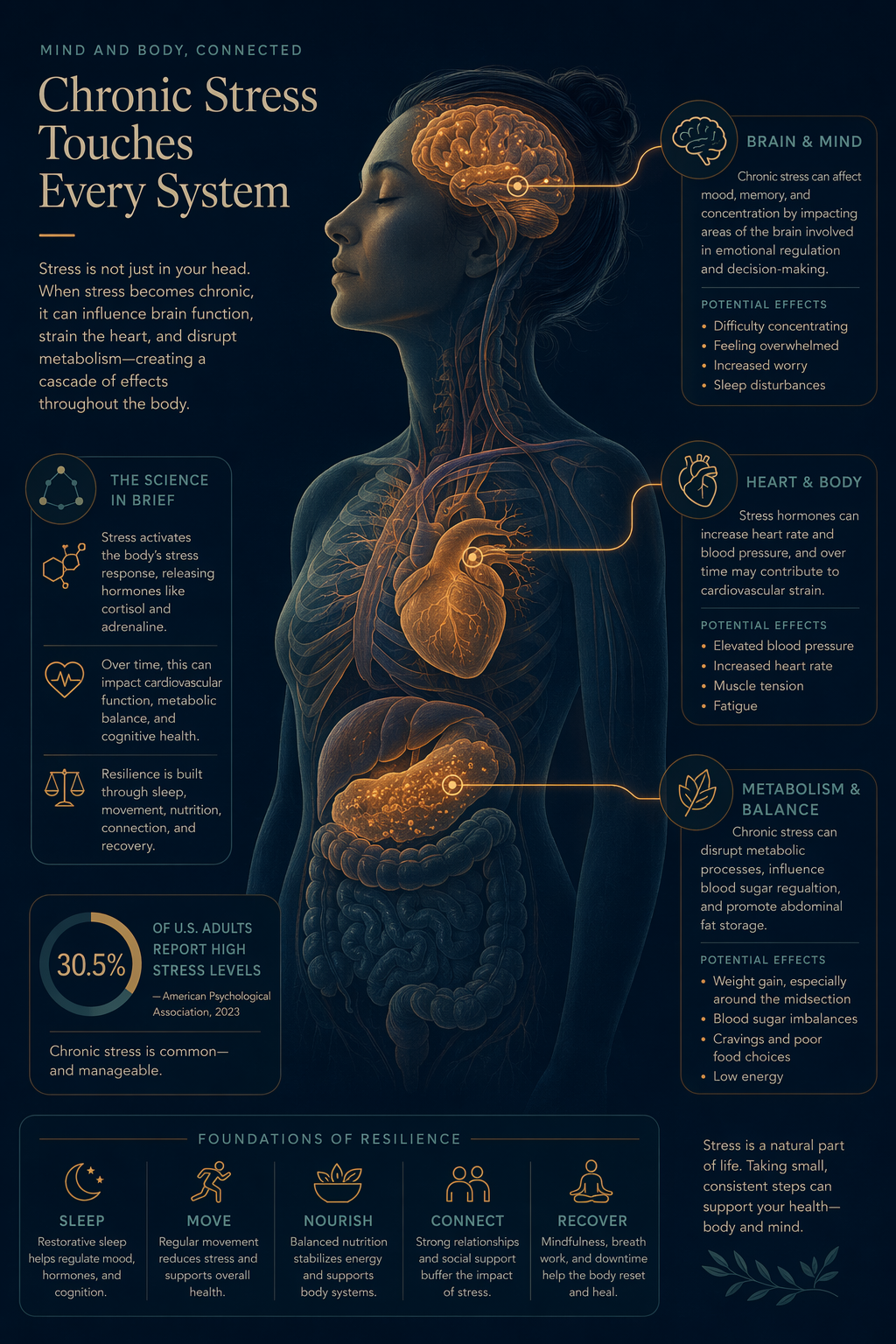

The '8 Hours' Trap: Why Duration Alone Isn't Enough
You track your sleep. You hit seven, sometimes eight hours a night. And yet, you wake up feeling like you barely slept at all. If this sounds familiar, you are not alone — and the problem may not be how long you sleep, but when.
According to the most recent data from the CDC's National Center for Health Statistics, published in April 2026, 30.5% of U.S. adults sleep less than seven hours per night. That leaves roughly 70% of adults who do get at least seven hours. Yet only 54.8% of adults report waking up feeling well-rested most days or every day. The gap between those two numbers — the people who log enough hours but still feel drained — is where the sleep regularity conversation begins.
For years, the public health message has been simple: get seven to nine hours. That advice is not wrong, but it is incomplete. Sleep duration is only one variable. The timing of that sleep — and how consistent that timing is from night to night — turns out to be an independent driver of how restorative your sleep actually is.
The idea that you can compensate for erratic timing by simply spending more time in bed is a trap. Your body's internal clock — the circadian system — does not reset based on total hours logged. It resets based on light exposure and consistent behavioral cues, especially your wake-up time. When your sleep schedule shifts by two hours on weekends, your body experiences something akin to jet lag, even if your total sleep hours remain the same.
What the National Sleep Foundation Consensus Panel Found
In 2023, the National Sleep Foundation convened a 12-member expert panel to answer a deceptively simple question: does the consistency of your sleep timing matter for your health and performance, independent of how much sleep you get? The panel's answer, published in Sleep Health: Journal of the National Sleep Foundation, was unambiguous.
The panel reached unanimous consensus that daily regularity in sleep timing is important for health (median appropriateness rating 9/9) and for performance (8/9).
The panel reviewed 54 studies on sleep timing variability. The results were striking: 50 of the 54 studies found adverse health or performance outcomes associated with irregular sleep timing. Not a single study found a benefit to irregular timing. The panel concluded that "consistency of sleep onset and offset timing is important for health, safety, and performance."
This was not a close call. The evidence was so one-sided that the panel's recommendation carries the highest possible appropriateness rating for health outcomes. For context, a 9/9 rating means the panel considered the intervention — maintaining consistent sleep timing — to be clearly appropriate for nearly all individuals in nearly all circumstances.
The Data Behind It: What Irregular Sleep Does to Your Body
The consensus panel's conclusion is compelling, but the specific numbers behind it make the case concrete. Here is what the research shows happens when your sleep timing varies from night to night.
Metabolic and Cardiovascular Risk
A landmark study by Huang et al., published in the Journal of the American College of Cardiology in 2020, quantified the risk. The researchers found that every one-hour increase in the standard deviation of sleep onset timing was associated with a 23% higher odds of metabolic syndrome and an 18% higher risk of cardiovascular disease. In plain terms: if your bedtime varies by an average of one hour across the week, your risk for these conditions climbs by roughly a fifth compared to someone with a consistent schedule.
Immediate Physiological Effects
The effects are not just long-term. A 2020 study by Faust et al. demonstrated that going to bed just 30 minutes later than usual increases resting heart rate throughout the sleep period and into the following day. Elevated resting heart rate is a marker of increased autonomic nervous system activation — essentially, your body remains in a state of heightened alert when it should be in recovery mode.
Disrupted Sleep Architecture
Irregular timing does not just affect how you feel the next day. It fundamentally alters the structure of your sleep. When your bedtime shifts, your body struggles to align the sleep period with the optimal circadian window for restorative deep sleep (NREM stage N3) and REM sleep. The result is a sleep period that may be long enough on paper but contains less of the biologically critical stages. For a deeper explanation of how these stages work, see our guide to sleep architecture and the NREM/REM cycle.
| Measure | Effect of 1-Hour Bedtime Variability | Source |
|---|---|---|
| Metabolic syndrome risk | 23% higher odds | Huang et al., JACC 2020 |
| Cardiovascular disease risk | 18% higher risk | Huang et al., JACC 2020 |
| Resting heart rate (night) | Elevated throughout sleep | Faust et al., 2020 |
| Resting heart rate (next day) | Remains elevated | Faust et al., 2020 |
| Deep sleep / REM | Reduced proportion | NSF consensus review of 54 studies |
Social Jetlag: The Most Common Cause of Irregular Sleep
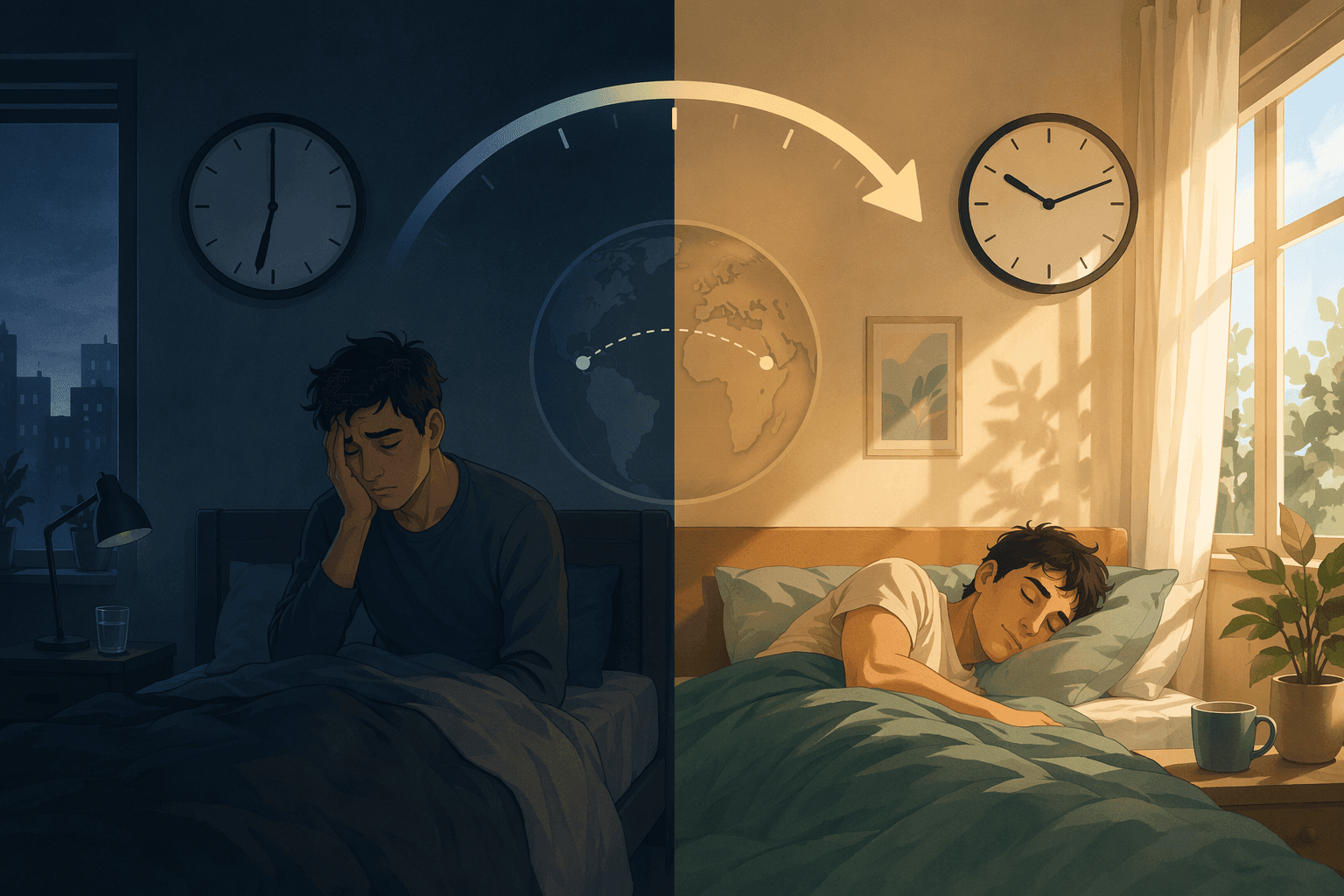
The most common driver of irregular sleep timing is not shift work or a sleep disorder. It is social jetlag — the mismatch between your body's internal clock and the schedule imposed by work, school, and social obligations.
Up to 70% of U.S. adults fail to attain sufficient sleep regularly, and the most common pattern is social jetlag: waking early for work or school on weekdays despite a natural tendency to sleep later, then sleeping in on weekends to compensate. This creates a cycle where your bedtime and wake time shift by two to three hours between Friday and Saturday night, effectively giving yourself jet lag twice a week.
Social jetlag is not the same as shift work disorder, which involves working during the body's natural sleep period and is a more extreme circadian disruption. For readers whose schedules involve night shifts or rotating shifts, see our dedicated guide to shift work disorder: symptoms, causes, and treatment.
Your chronotype — whether you are naturally a morning person, an evening person, or somewhere in between — determines how severely social jetlag affects you. Evening types ("night owls") are disproportionately affected because their natural sleep-window is later than society's schedule. If you are unsure of your chronotype, our chronotype guide can help you identify your natural tendencies and understand how they interact with your daily schedule.
The Catch-Up Sleep Nuance: When Weekend Sleeping In Helps
At this point, the message seems clear: keep a consistent schedule, no exceptions. But the research reveals an important nuance. When weekday sleep is severely restricted — specifically, less than six hours per night — a modest amount of weekend catch-up sleep can be beneficial.
The NSF consensus panel reviewed studies showing that when weekday sleep is less than six hours, one to two hours of weekend catch-up sleep reduces metabolic syndrome risk and lowers inflammation markers such as high-sensitivity C-reactive protein (hsCRP). This finding challenges the idea that strict consistency is always the optimal approach.
However, this is a harm-reduction strategy, not an optimal pattern. The data does not suggest that weekend catch-up sleep is equivalent to consistent nightly sleep. It suggests that when you are already in a deficit, a small recovery window can mitigate some of the damage. The key word is "modest": one to two hours, not sleeping until noon on Saturday.
For a deeper exploration of whether catch-up sleep actually works and how sleep debt accumulates and dissipates, see our companion article on sleep debt and recovery science.
Practical Strategies for Improving Regularity Without Perfectionism
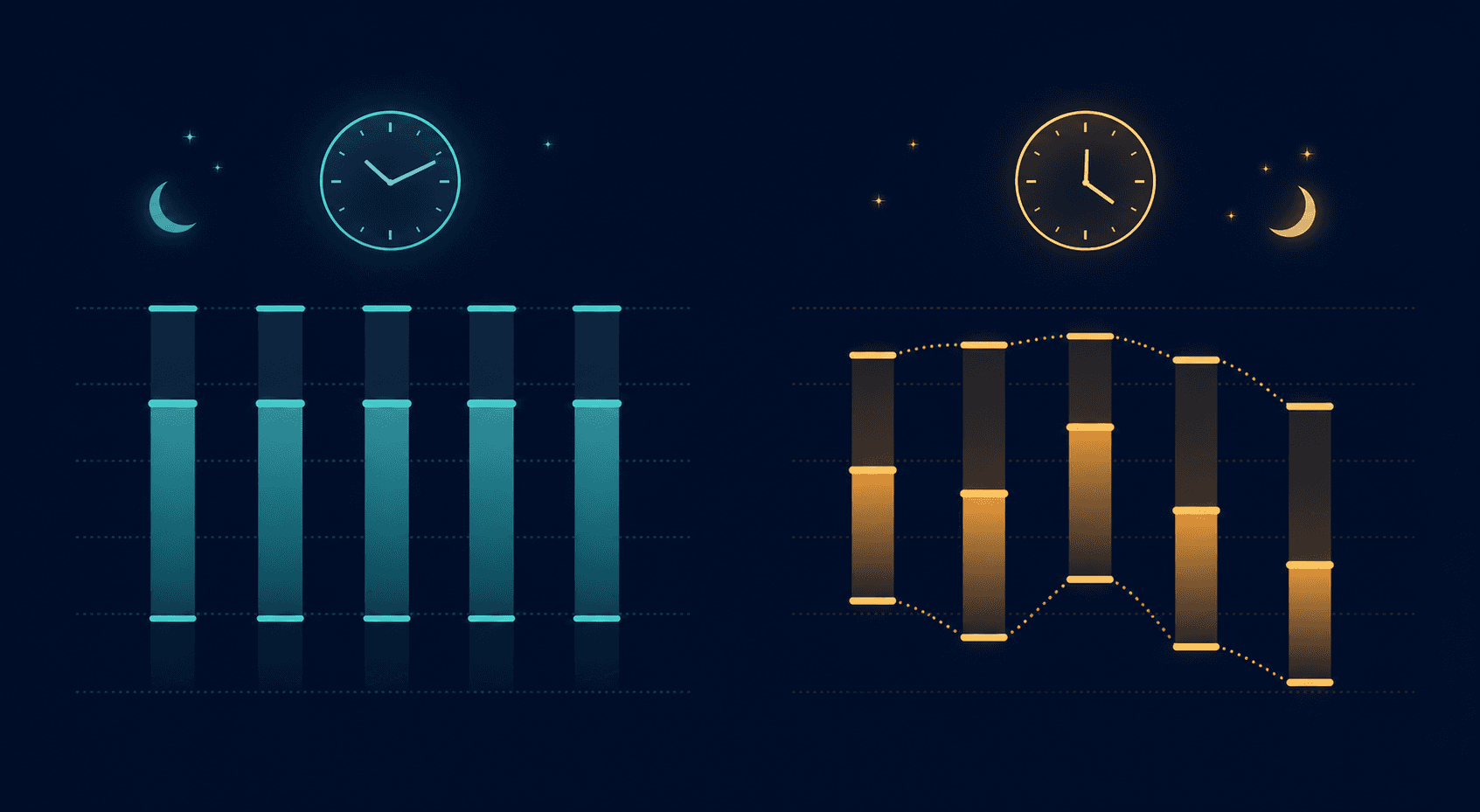
Improving sleep regularity does not require perfect adherence to a rigid schedule. Small, consistent adjustments produce meaningful results. The following strategies are ranked by impact and feasibility, based on the evidence reviewed by the NSF panel.
1. Anchor Your Wake Time
Your wake time is the single most controllable anchor for your circadian rhythm. Unlike bedtime, which can be influenced by how tired you feel, your wake time is a behavioral choice. Set a consistent wake time — including weekends — and stick to it within a 30-minute window. This is the single highest-impact change you can make.
2. Make Gradual Shifts
If your current schedule is highly irregular, do not attempt to fix it overnight. Shift your bedtime and wake time by no more than 15 to 30 minutes per day. Larger shifts trigger the same circadian disruption you are trying to avoid. Gradual adjustments allow your internal clock to track the change without resistance.
3. Use Morning Light Exposure
Light is the primary Zeitgeber (time-giver) for the circadian system. Exposure to bright light within 30 to 60 minutes of waking reinforces your wake time and helps your body predict when sleep should occur later that night. Morning light exposure is especially important for anchoring regularity when your bedtime is still in flux.
4. Build a Consistent Wind-Down Routine
A predictable pre-sleep routine signals to your body that the sleep window is approaching. This does not need to be elaborate. A 20- to 30-minute sequence of low-light activities — reading, light stretching, a warm shower — performed at the same time each night helps stabilize your sleep onset timing. For a full breakdown of evidence-based bedtime practices, see our sleep hygiene fundamentals guide.
5. Prioritize Regularity Over Duration
If you have to choose between getting eight hours of sleep at an irregular time versus seven hours at a consistent time, the evidence suggests the consistent seven hours is better for your health. This is the counterintuitive takeaway from the NSF consensus: regularity is not a secondary concern to duration. It is an independent factor that may, in some contexts, matter more.
| Strategy | Difficulty | Expected Impact | Time to Effect |
|---|---|---|---|
| Anchor wake time (within 30 min) | Low | High | 3–7 days |
| Gradual shifts (15–30 min/day) | Medium | High | 1–2 weeks |
| Morning light exposure | Low | Medium–High | Immediate |
| Consistent wind-down routine | Medium | Medium | 1–2 weeks |
| Prioritize regularity over duration | Variable | High | Ongoing |
For a broader framework on which sleep interventions to prioritize, see our evidence-based sleep improvement hierarchy, which positions regular timing as a top-tier intervention alongside stimulus control and circadian alignment.



Comments
Join the discussion with an anonymous comment.