
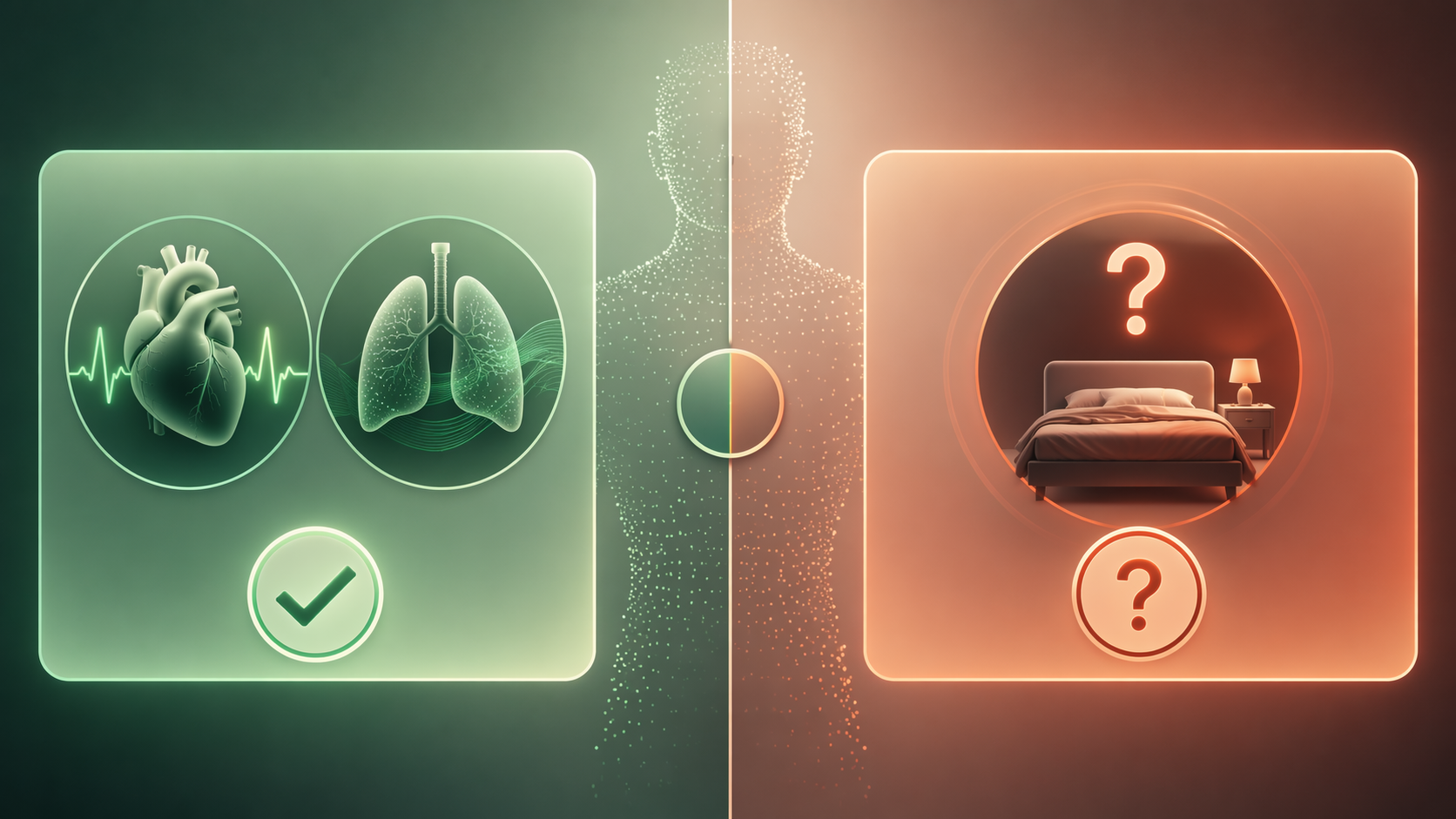
The short answer is split. The Sleep Number 360 Smart Bed’s SleepIQ tracking has credible evidence for all-night heart rate and breathing rate under controlled conditions, but the same validation study found much weaker wake detection: 48% wake specificity against polysomnography. That matters because the thing many tired people want from a bed is not just a smooth trend line. They want to know whether they were actually asleep.
In the main peer-reviewed validation study, SleepIQ’s heart rate and breathing rate estimates were close to PSG-derived values, with mean all-night differences under 1 beat per minute and under 1 breath per minute. Sleep/wake classification, however, reported 86% overall accuracy with sensitivity of 0.94 and specificity of 0.48, meaning the system was much better at recognizing sleep than recognizing wakefulness.[1]
So “accurate” needs a narrower question. Accurate for heart and breathing trends in a study room? Reasonably, based on the available data. Accurate enough to tell a quiet insomniac exactly how long they were awake at 3 a.m.? No. Accurate enough to diagnose a sleep disorder or replace a clinical sleep study? Also no.
What SleepIQ Is Actually Measuring
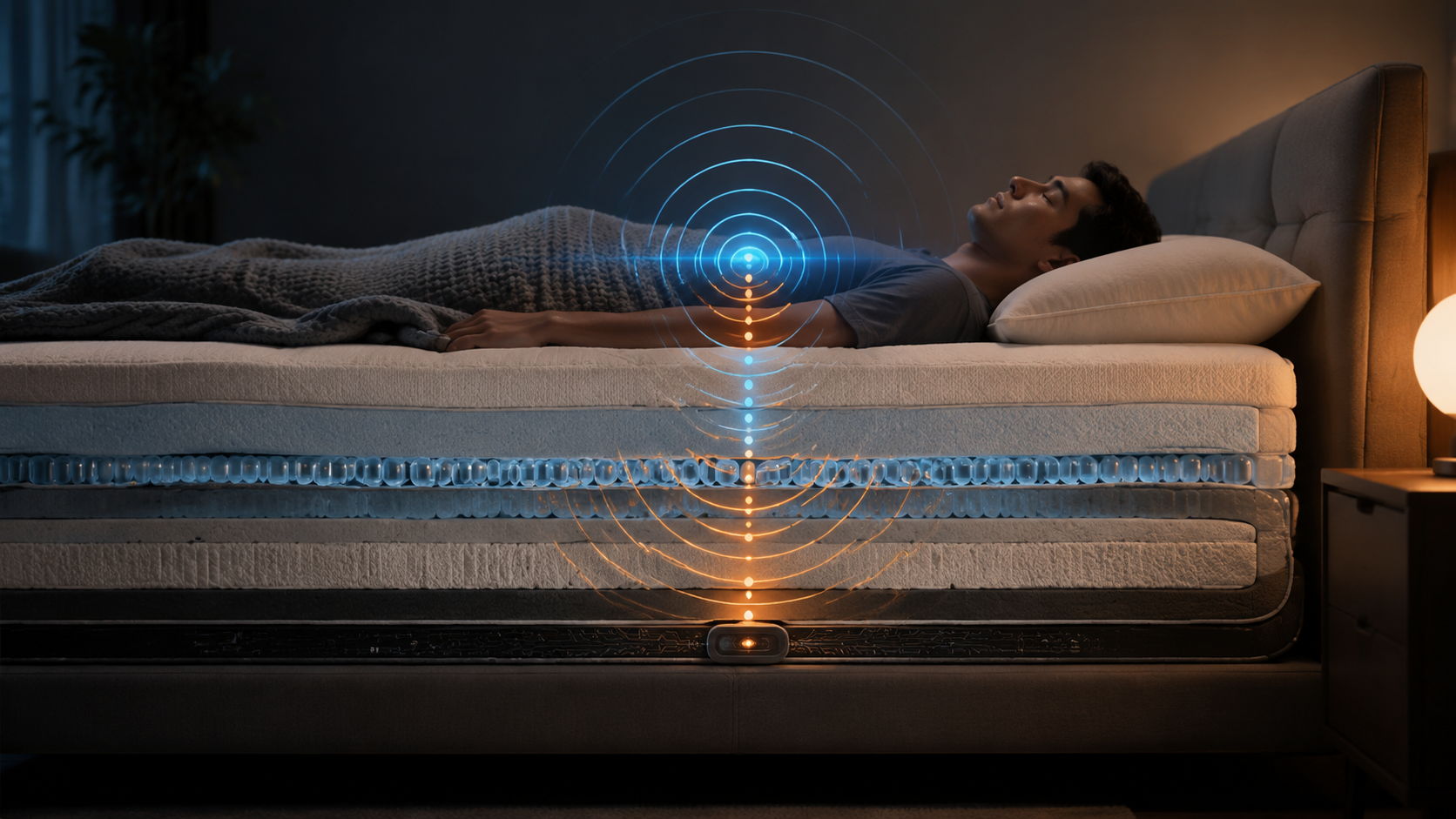
SleepIQ is not reading brain waves. It is not measuring the electrical activity that a sleep lab uses to score sleep stages. The Sleep Number system uses ballistocardiography, or BCG: tiny mechanical movements created when the heart beats and when breathing shifts the body. In Sleep Number’s design, those movements travel through the mattress and air chambers, where pressure changes can be sampled and interpreted.
The 2022 validation paper describes the bed’s sensor system as using the air bladder structure to capture BCG signals at 1,000 Hz, then processing those signals through algorithms that estimate heart rate, breathing rate, motion, and sleep/wake state. The authors also state that the sleep/wake model was trained on more than 1,000 hours of PSG-labeled data.[1]
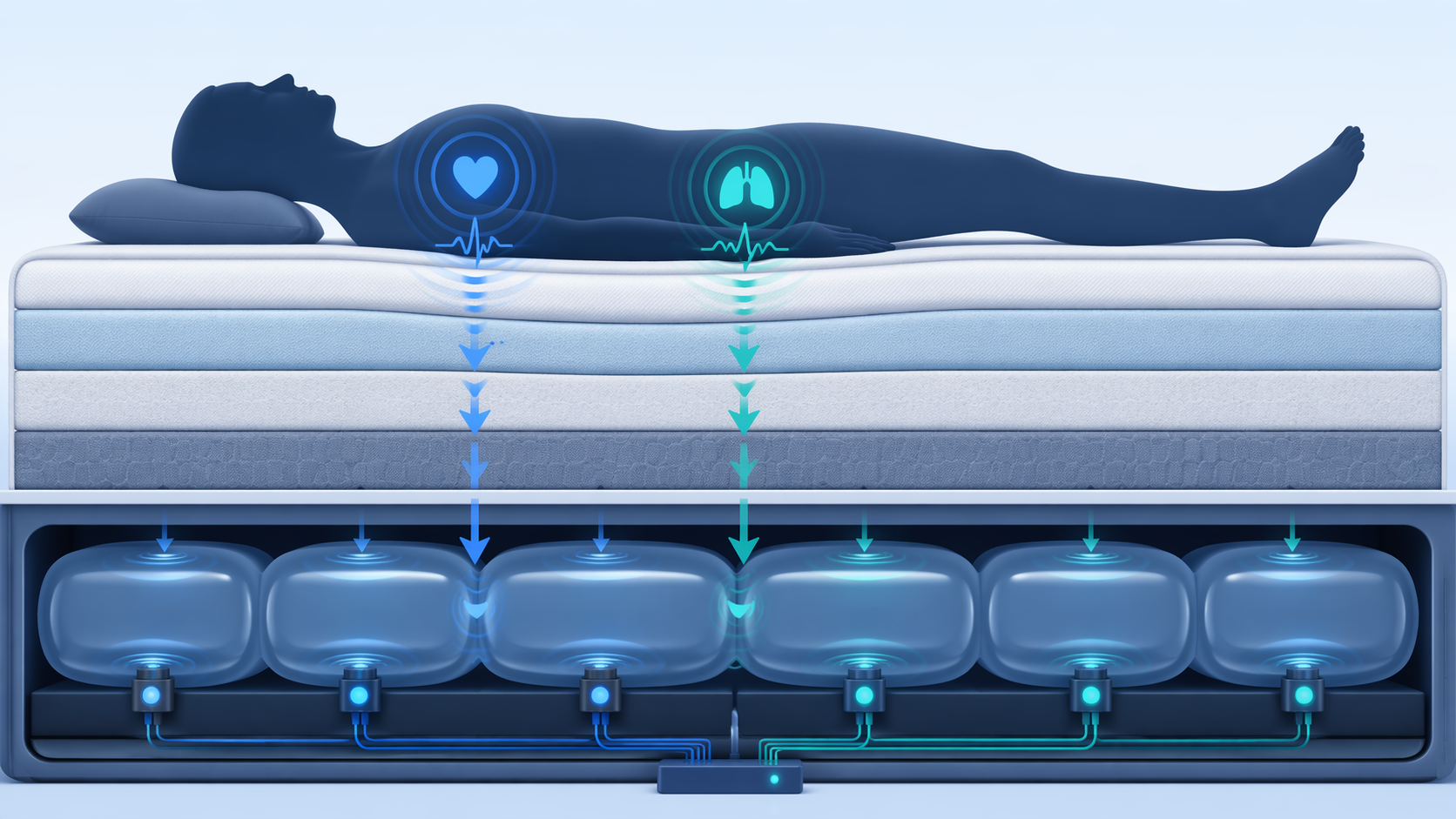
That mechanism is elegant. A bed can collect signals without asking the sleeper to charge a watch, wear a ring, stick electrodes on their skin, or remember to start a session. It also explains the ceiling of the method. A mattress can see movement and vital-sign patterns; it cannot directly see whether the brain has crossed from wake into sleep.
For a broader technical comparison of contactless systems, see this guide to contactless sleep tracker accuracy. The important point here is simpler: SleepIQ is making an inference from body signals, not performing a full polysomnographic sleep study.
The PSG Validation Study Carries Most of the Evidence
The best public evidence for SleepIQ accuracy is the 2022 study “Performance Evaluation of a Smart Bed Technology against Polysomnography.” It compared Sleep Number’s smart bed outputs with overnight PSG in 45 participants. The study was conducted by Sleep Number employees and funded by Sleep Number Corporation, which does not invalidate the measurements, but does limit how far a cautious reader should stretch the claims.[1]
The sample also matters. Participants were screened as healthy sleepers, with exclusion criteria including diagnosed sleep disorders and medications affecting sleep. The study used a single-night protocol. That is a reasonable way to test signal performance in a controlled setting, but it is not the same as proving the system performs equally well for people with insomnia, sleep apnea symptoms, high restlessness, higher BMI, bed-sharing, pets, unusual sleep schedules, or months of ordinary bedroom noise.[1]
| Outcome | Reported result against PSG | What it means for a user |
|---|---|---|
| Heart rate | Mean all-night difference under 1 bpm; epoch-by-epoch correlation r=0.81 | Credible for broad overnight heart rate tracking under study conditions |
| Breathing rate | Mean all-night difference under 1 brpm; epoch-by-epoch correlation r=0.71 | Credible for broad overnight breathing rate tracking under study conditions |
| Sleep/wake classification | Overall accuracy 0.86; sensitivity 0.94; specificity 0.48; Cohen’s kappa 0.47 | Good at calling sleep, weak at calling wake |
| Sleep stages | Not validated as light, deep, or REM staging | Do not treat SleepIQ as a sleep-stage device |
The heart and breathing results deserve credit. For all-night averages, the study reported correlations of r=0.94 for heart rate and r=0.96 for breathing rate versus PSG-derived values. On an epoch-by-epoch basis, where the task is harder because the system must track shorter windows, correlations were lower but still meaningful: r=0.81 for heart rate and r=0.71 for breathing rate.[1]
Sleep/wake accuracy is where the headline number becomes less reassuring. Overall accuracy of 86% sounds strong until the class imbalance is visible: most of a typical night is sleep, so a system can score well by identifying sleep epochs. Sensitivity of 0.94 means the bed identified PSG-scored sleep well. Specificity of 0.48 means that among epochs PSG scored as wake, the bed identified fewer than half as wake.[1]
That is not a small technical footnote. If someone lies awake quietly, breathing regularly, barely moving, the system may have too little evidence to separate wakefulness from sleep. The result can be inflated total sleep time, inflated sleep efficiency, and a calmer-looking night than the person experienced.
Why Quiet Wakefulness Is the Hard Part
A bed-based tracker has an obvious advantage over a wrist device: the sensor can be stable, contactless, and positioned beneath the sleeper all night. It also has an obvious blind spot: sleep is a brain state, while the mattress is mostly observing mechanical consequences of the body.
During consolidated sleep, that can be enough. Heart rate, breathing regularity, body motion, and long periods of stillness provide useful signals. During restless wakefulness, frequent movement may also be easy to identify as wake. The difficult case is the one many people care about most: lying still, eyes open or half-awake, trying not to wake a partner, breathing steadily because there is nothing else to do.
To a BCG system, that episode can resemble sleep. The heart is still beating. Breathing is still rhythmic. Motion may be low. Without EEG, eye movement, and muscle-tone channels, the model is estimating the probability of sleep from indirect signals. That is why the 48% wake specificity is more clinically relevant than the smoother 86% overall accuracy number.[1]
This is also where “clinically validated” needs careful reading. The phrase can mean that a device was compared with a clinical reference method for specific outcomes in a defined population. It does not automatically mean the device is clinically useful for every user, in every bedroom, for every sleep complaint.
SleepIQ Does Not Replace Sleep Staging
SleepIQ’s validation should not be confused with full sleep staging. The 2022 study evaluated sleep versus wake, heart rate, and breathing rate. It did not validate consumer-facing light sleep, deep sleep, or REM staging against PSG because the system does not directly measure the EEG, EOG, and EMG signals used to score those stages in a lab.[1]
That distinction is not just terminology. If a score tells a user they had a “restorative” night, the user may reasonably hear that as a statement about sleep architecture. But from the evidence available here, the stronger claim is about vital-sign trends and binary sleep/wake estimation, not direct measurement of REM cycles or deep sleep.
Readers who want the PSG comparison in more detail can use this related explanation of Sleep Number smart bed PSG validation. For mechanism detail, this separate guide explains Sleep Number BCG tracking accuracy.
The Study Bedroom Is Cleaner Than a Real Bedroom
The controlled-study result is the best place to start, but it is not the place to stop. Sleep Number’s own support materials tell users that accurate sleep data can be affected by real bedroom behavior and setup, including pets on the bed, reading in bed, partner movement, and an improper foundation.[2]
Those are not exotic edge cases. They are ordinary conditions under which a consumer sleep tracker has to work. A person may read for twenty minutes, stay still after waking, share the mattress with a partner, let a dog climb onto the bed, or sleep on a base that transmits motion differently than the test setup. Each one can make the signal less like the clean PSG comparison.
Independent consumer coverage has also warned that smart-bed claims can outrun what the evidence proves for individual users, especially when marketing language compresses vital-sign accuracy, sleep scoring, comfort automation, and health insight into one reassuring impression.[3]
Ownership problems can add another layer. Sleep Foundation’s discussion of Sleep Number bed complaints describes issues such as air leaks, foam degradation, and pump noise. Those reports are not validation studies of SleepIQ accuracy, so they should not be treated as proof that tracking fails. They do show why a real-world bed is a maintained mechanical system, not a fixed laboratory instrument.[4]
Wirecutter’s review is useful in the same limited way: it is mainly about mattress feel and value, not PSG accuracy. Its criticism that some Sleep Number models can feel less plush than buyers may expect is a reminder that a smart bed still has to function as a mattress first. If comfort changes how much someone moves, wakes, or avoids the bed, the tracking context changes too.[5]
What to Trust, and What Not to Overread
The most defensible use of SleepIQ is longitudinal self-tracking: watching broad patterns in resting heart rate, breathing rate, approximate sleep timing, and night-to-night changes under consistent conditions. If the same person uses the same bed in the same room, the trend may be more useful than any single-night score.
- Give more weight to multi-week heart rate and breathing rate patterns than to one unusual night.
- Treat exact minutes awake, sleep efficiency, and total sleep time as estimates, especially after quiet wakefulness.
- Do not treat SleepIQ as a sleep-stage device for REM, deep sleep, or clinical sleep architecture.
- Do not use the bed’s sleep score to confirm or rule out insomnia, sleep apnea, periodic limb movement disorder, or another sleep disorder.
- Look for disagreement between lived experience and the score; if the bed says “good night” after hours of remembered wakefulness, believe the limitation before believing the polish.
This is not a dismissal of the technology. Contactless vital-sign tracking through a mattress is a serious engineering achievement, and the PSG comparison gives SleepIQ more evidence than many casual sleep gadgets offer. The problem is the distance between a technically competent signal and the consumer interpretation of a confident nightly score.
If a Sleep Number 360 Smart Bed shows a gradual rise in nighttime heart rate or a sustained change in breathing rate, that may be worth noticing. If it says a person slept through a period they clearly remember spending awake, the validation data already explains why. The bed is more trustworthy as a trend tool for heart and breathing patterns than as an authority on exact wake minutes, restorative sleep, or medical decisions.
References
- Performance Evaluation of a Smart Bed Technology against Polysomnography, Sensors, 2022.
- Tips for Getting Accurate Sleep Data, Sleep Number Support.
- The Truth About Smart Beds: Separating Hype from Reality, Sleep Review.
- What Are the Problems With Sleep Number Beds?, Sleep Foundation.
- Sleep Number Mattress Review: An Honest Assessment, Wirecutter.

Comments
Join the discussion with an anonymous comment.