
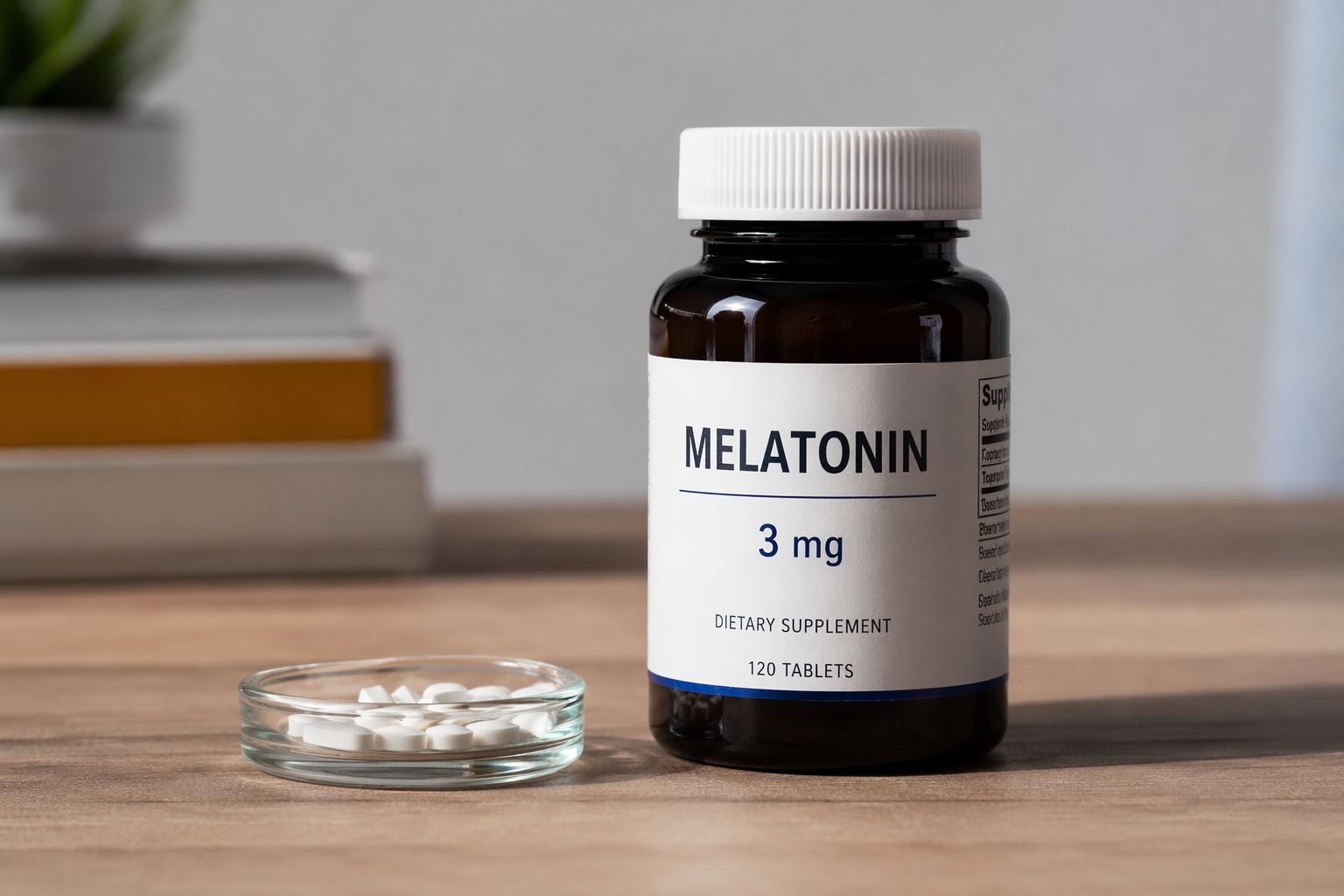
A bottle of melatonin can look wonderfully exact. The front says 3 mg, maybe 5 mg, maybe 10 mg. The label has tidy typography, a calm promise, and the kind of pharmacy-shelf confidence that makes a tired adult think the dose has already been checked by someone.
That is the first problem with a melatonin sleep aid in the United States: the number on the front of the bottle is often not a verified measurement. Melatonin is sold as a dietary supplement, not as a drug, so the FDA does not approve it for safety or effectiveness before it reaches stores, and it does not verify that each product contains the amount printed on the label before sale.[1][2]
This is not a technicality buried in supplement law. It is the difference between buying a product that has been checked against its stated dose and buying one whose accuracy depends largely on the manufacturer’s own controls unless it submits to credible outside testing.
The label problem is measurable
The cleanest way to see the gap is to look at independent testing. In a 2017 study published in the Journal of Clinical Sleep Medicine, researchers tested 31 commercial melatonin supplements. Seventy-one percent were outside 10% of the dose claimed on the label.[3]
That finding would already be enough to make the front label less reassuring. But the spread was worse than ordinary, harmless drift. The actual melatonin content ranged from 83% below the labeled amount to 478% above it.[3] A person who thought they were taking a modest dose could be taking far less than expected, or several times more than they intended.
The study also found lot-to-lot variability within the same product, reaching 465%.[3] That matters because it means a consumer could buy a bottle, have a predictable experience, buy the same product again, and receive a meaningfully different dose without any visible warning on the package.
The most disturbing result was not just too much or too little melatonin. Serotonin was detected in 26% of the tested products, and it was not listed on any label.[3] Serotonin is not a decorative contaminant. It is a biologically active neurotransmitter, and unlisted exposure is especially concerning for people taking medications that affect serotonin.
| What independent testing found | Why it matters |
|---|---|
| 71% of tested products were outside 10% of the label claim | The dose printed on most tested labels did not closely match the product |
| Melatonin content ranged from 83% below to 478% above the label | A stated dose could mean a much weaker or much stronger dose in practice |
| Lot-to-lot variability reached 465% | The same product could vary substantially between purchases |
| Serotonin appeared in 26% of products and was not disclosed | Consumers could be exposed to an unlisted active compound |
Gummies made the same weakness harder to ignore
The 2017 study was not a one-off warning from a strange corner of the supplement aisle. In 2023, a JAMA research letter tested 25 melatonin gummy products bought from major retailers. Only 3 of the 25 products were accurately labeled within 10% of their stated dose.[4]
The remaining products contained 74% to 347% of the labeled melatonin amount.[4] One product labeled as 5 mg contained 17.3 mg of melatonin, more than three times the amount a consumer would expect from reading the label.[4] That is not a rounding problem. It is a product-quality problem sitting inside a format that is easy to chew, sweet, and familiar to children.
Gummies deserve special caution because they combine two issues: dose uncertainty and candy-like access. The evidence does not show that every gummy is inaccurate, and it does not prove that gummies are inherently unsafe. It does show that the tested gummy market had poor label accuracy, and that is enough reason to treat the format differently from a plain tablet in a child-resistant medicine cabinet. Readers comparing forms can go deeper in this guide to melatonin gummies, capsules, and liquids.
The pediatric data is a consequence, not a scare tactic
Melatonin is often described as gentle, and many adult users experience it that way. But household access changes the safety picture. CDC researchers reported that pediatric melatonin exposures reported to poison control centers rose from about 8,000 in 2012 to about 52,000 in 2021, a 530% increase.[5]
Those poison-control numbers need careful reading. A call does not always mean a child was poisoned, hospitalized, or seriously harmed. Calls can include a child who found a bottle, a dosing mistake, an intentional administration, or a worried caregiver asking what to do. The dataset is not the same thing as a count of severe injuries.
Still, the trend is not trivial. In 2021, 15% of reported pediatric melatonin exposures resulted in hospitalization, and about 5% required critical care admission.[5] That is what happens when a sleep product becomes common at home, sometimes looks like candy, and may not contain the dose a caregiver thinks it contains.
The responsible conclusion is narrow: access and formulation matter, especially when product labels are not independently verified.
Regulation leaves the first check in the wrong place
The supplement framework helps explain why these findings keep appearing. Under the U.S. dietary supplement system, manufacturers are responsible for making sure their products are properly labeled and safe, but supplements do not go through the same premarket approval process as drugs.[1][2]
That arrangement asks consumers to behave as if the label has drug-like precision while the product is sold under supplement-level oversight. The mismatch is easy to miss because the bottle is sitting near pharmacy products, uses milligram dosing, and often makes a modest-sounding sleep promise. Nothing about the shelf presentation tells the buyer that the stated dose may not have been independently checked.
This is also why the usual advice to “start low” has a hidden flaw. Starting with a low labeled dose is sensible, but it only works if the label is close to true. A 1 mg or 3 mg product that has not been independently tested may not behave like the dose on the front panel.
This is separate from whether melatonin can be useful
The label-accuracy problem should not be confused with a blanket argument that melatonin never helps. Melatonin can be useful in particular sleep-timing problems, and clinicians commonly discuss it in contexts such as jet lag, delayed sleep-wake phase disorder, and circadian rhythm issues. The question here is more basic: if melatonin is the right tool, can you trust the tool you bought?
For readers still deciding whether melatonin fits their sleep problem, a general melatonin sleep aid guide for adults is the better next stop. If the issue is chronic insomnia rather than sleep timing, the evidence question is different, and this guide to when melatonin works for insomnia is more relevant.
The consumer standard: look for real third-party verification
A trustworthy melatonin product should not ask you to accept the front label on faith. The strongest practical signal is the USP Verified mark. USP says its verification program checks that a supplement contains the ingredients listed on the label in the declared potency and amounts, does not contain harmful levels of specified contaminants, will break down and release into the body within a specified time, and has been made according to FDA current good manufacturing practices.[6]
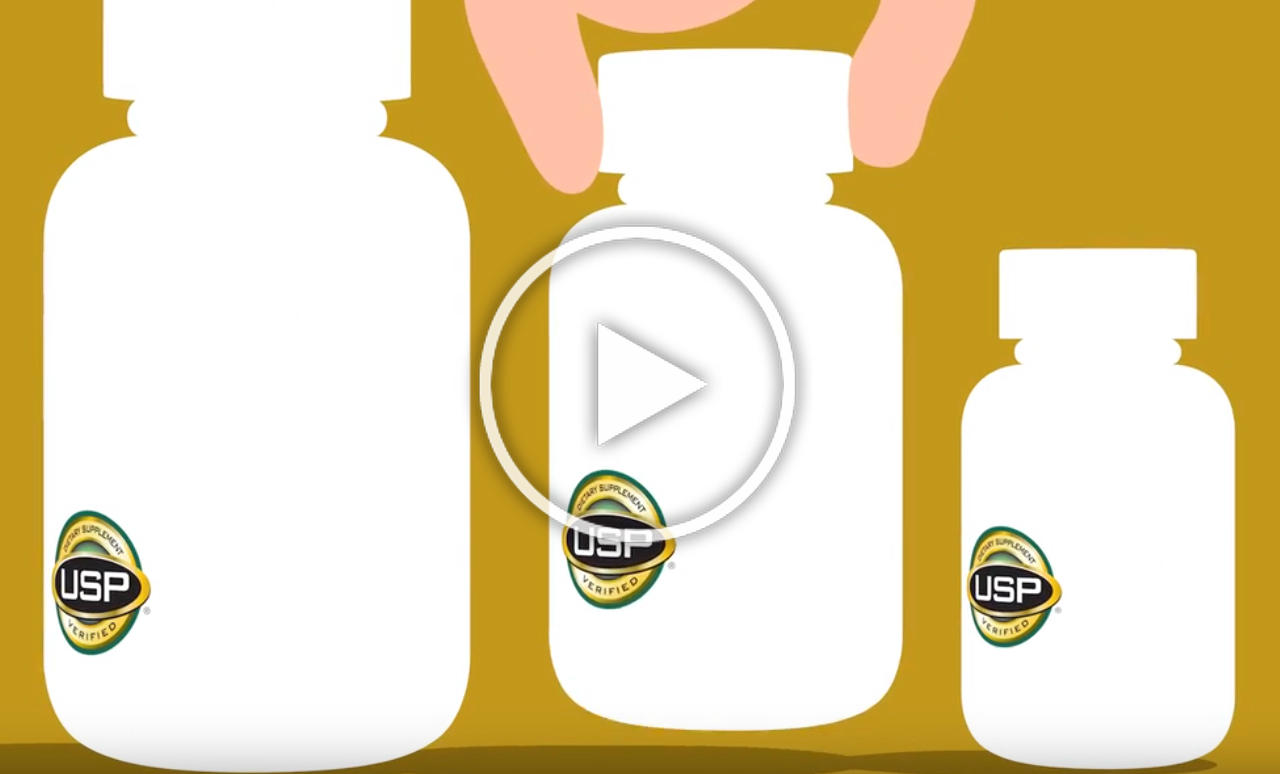
The USP mark is not a wellness badge or a design flourish. It means the product has submitted to an outside program with standards beyond the manufacturer’s own marketing. That does not make melatonin the right choice for every sleep problem, and it does not remove every possible risk. It does address the narrow problem that matters most here: whether the bottle contains what it says it contains.
NSF and ConsumerLab can also be useful, but they are not identical to USP. NSF is a strong certification body, especially familiar in sports supplement contexts. ConsumerLab independently tests products and publishes results through a subscription model. Those signals are better than an unverified label, but they should not be blurred into one generic “third-party tested” claim without checking what was tested, when, and whether the exact product on the shelf is covered.
A label that says “tested for quality” or “lab tested” is not the same as a recognizable independent certification. The useful question is not whether testing happened somewhere. It is whether an outside organization with published standards verified the finished product and allows the mark on that product.
What to check before buying
- Look for the USP Verified mark on the actual bottle, not just a vague quality claim.
- Use the lowest appropriate dose only after confirming the product is independently verified.
- Be more cautious with gummies, especially in homes with children.
- Store melatonin like medication, even if the package looks like a candy or vitamin product.
- Avoid assuming that a familiar retailer, calm label, or major brand name automatically proves dose accuracy.
For product-level comparisons, the broader guide to the best melatonin for adults focuses on label accuracy and certification. Readers specifically choosing gummies may also want the guide to safer sleep gummies.
A better label is one someone else has checked
Melatonin’s reputation is softer than the system selling it. The product may be appropriate for some adults. It may be the wrong tool for others. But none of that excuses a bottle that states a precise dose while leaving the buyer to hope the contents match.
The practical standard is simple enough to use in a store aisle: do not rely on the front label alone. Prefer USP-verified products when available. Treat NSF and ConsumerLab information as useful but different forms of evidence. Be especially careful with gummies and children. And use melatonin only when it fits the sleep problem, not as a nightly default just because the bottle looks gentle.
References
- Melatonin, StatPearls, NCBI Bookshelf.
- Melatonin, Mayo Clinic.
- Melatonin Natural Health Products and Supplements: Presence of Serotonin and Significant Variability of Melatonin Content, Journal of Clinical Sleep Medicine, 2017.
- Accuracy of Melatonin Content in Melatonin Gummies, JAMA, 2023.
- Pediatric Melatonin Ingestions — United States, 2012–2021, CDC Morbidity and Mortality Weekly Report, June 2022.
- USP Verified Dietary Supplements, United States Pharmacopeia.


Comments
Join the discussion with an anonymous comment.