
If the diarrhea has eased but you still feel wrung out, that does not mean you are imagining the worst part of recovery. The CDC lists fatigue among cyclosporiasis symptoms and states plainly that it “may continue after the gastrointestinal symptoms have stopped.”[1] That sentence matters because it separates fatigue from a casual afterthought. In some people, the gut symptoms are the visible illness, while the drained, unrefreshing recovery period is what keeps disrupting work, sleep, and ordinary daily rhythm.
The 2026 multistate outbreak has made this question more common, not more mysterious. Johns Hopkins Medicine reported that more than 30 states were affected as of July 17, 2026.[2] But the useful explanation is not in the outbreak map. It is in the biology of a parasite that stays in the small intestine yet can still make the whole body feel ill.
The gut is the starting point, not the whole story
Cyclospora cayetanensis infects the small intestinal epithelium. Reviews of the parasite describe injury in that mucosal surface, including villous changes that can interfere with absorption, while also emphasizing that Cyclospora is not known for spreading beyond the intestinal mucosa.[3] That distinction is important. Cyclosporiasis is not African sleeping sickness, and it should not be explained as though the parasite is directly invading sleep-regulating regions of the brain.
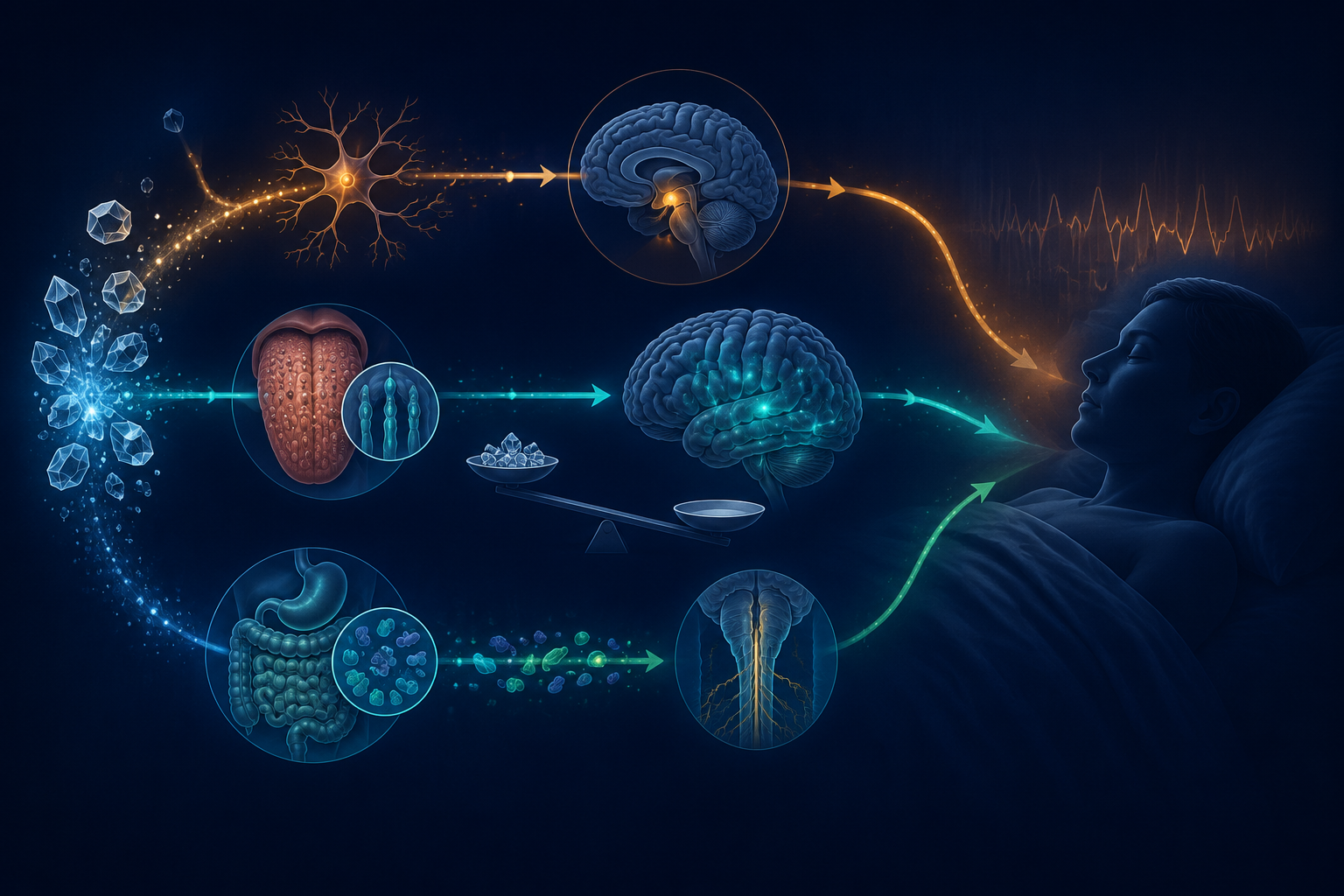
A gut-limited infection can still produce body-wide symptoms because the immune system is not local in its effects. When epithelial cells are damaged and immune cells respond, the intestine becomes a source of inflammatory signaling. Those signals do not need the parasite to enter the nervous system in order to change appetite, energy, temperature regulation, alertness, and sleep stability.
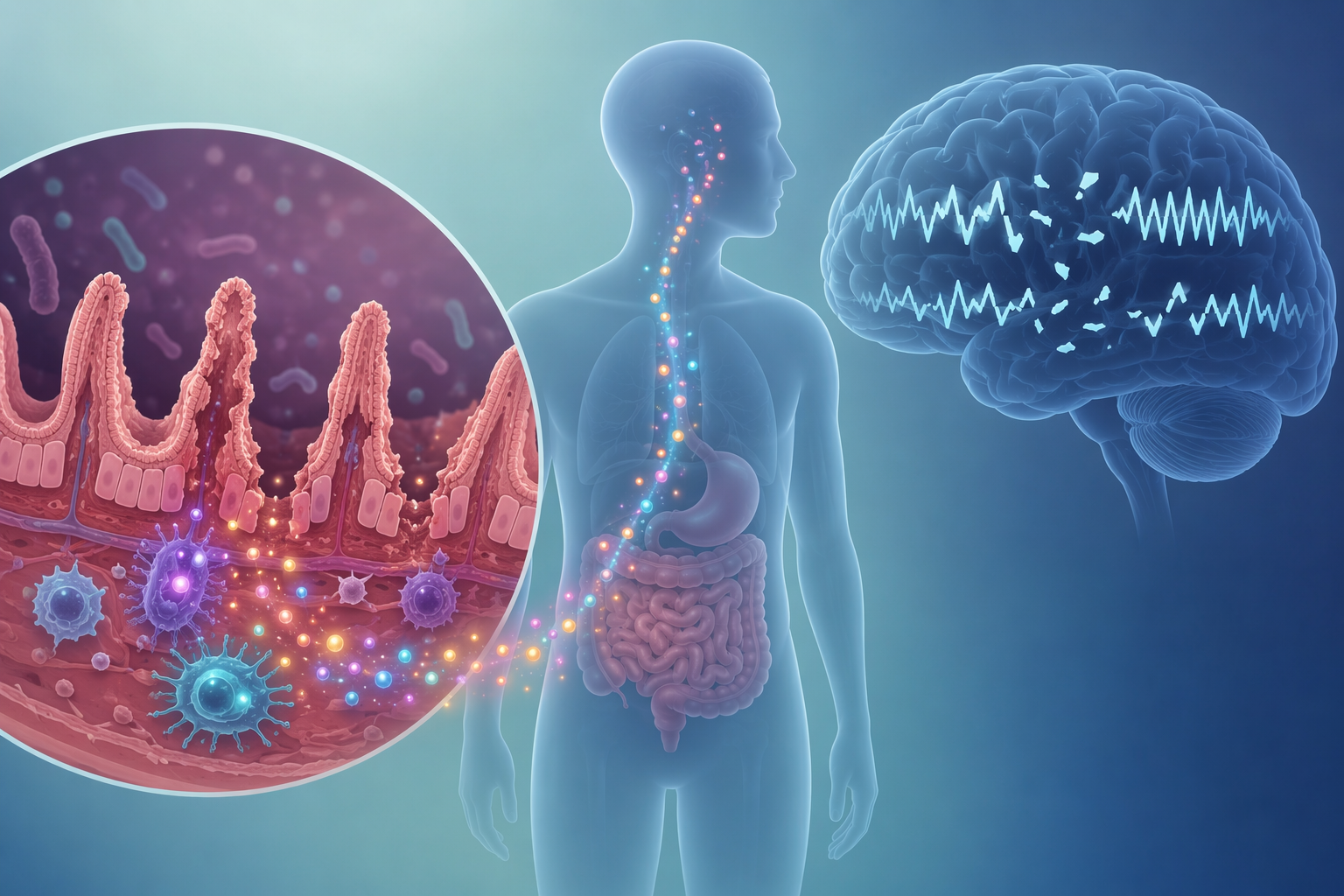
How cyclosporiasis causes fatigue and sleep disruption
The most defensible bridge between Cyclospora infection and disturbed sleep is the cytokine pathway. During infection, immune cells release pro-inflammatory cytokines, including interleukin-1 beta, tumor necrosis factor alpha, and interleukin-6. Sleep-immunity research links IL-1β and TNF-α in particular to changes in non-REM sleep, REM sleep, and sleep-wake regulation across infectious and inflammatory states.[4]
That does not mean cytokines are simply “bad for sleep.” They are part of how the body coordinates recovery. In controlled sleep-immunity models, inflammatory signaling can increase sleep pressure, especially non-REM sleep pressure, while also making sleep less stable. The result can feel contradictory: you are exhausted enough to lie down early, but your sleep breaks apart, you wake repeatedly, or you come out of the night feeling as if no full repair cycle ever happened.[4]
This is where fatigue and sleepiness need to be separated. Sleepiness is the tendency to fall asleep. Fatigue is a broader loss of usable energy: heavy limbs, low stamina, poor concentration, and the sense that ordinary tasks cost too much. Cyclosporiasis can create both, but they do not always move together. A person may spend enough hours in bed and still feel unrestored if inflammation is fragmenting sleep architecture or if malabsorption and fluid losses have left the body under-resourced.
| What you may notice | What it may reflect |
|---|---|
| Needing to lie down but not actually sleeping much | High sleep pressure mixed with unstable sleep-wake transitions |
| Waking often or sleeping in short blocks | Fragmented non-REM sleep during inflammatory signaling |
| Dream sleep feeling reduced or nights feeling oddly flat | Possible REM suppression seen in infection-related sleep disruption models |
| Feeling weak after the diarrhea improves | Recovery from intestinal injury, fluid shifts, electrolyte depletion, and ongoing immune signaling |
Why sleep can stay broken after the bathroom symptoms improve
Diarrhea stopping is a major improvement, but it is not the same as full physiologic recovery. The small intestine may still be repairing its absorptive surface. During the acute illness, watery diarrhea, reduced intake, and malabsorption can leave a person short on fluid, electrolytes, and usable calories. Those are ordinary biological reasons for low energy; they do not require a dramatic explanation.
The more sleep-specific issue is that immune signaling can outlast the most obvious gastrointestinal phase. If cytokine activity remains elevated while the intestine settles down, sleep may continue to look like recovery sleep without feeling restorative: more time resting, less confidence that sleep is consolidated, and more daytime fatigue. Poor sleep then feeds back into immune regulation, because sleep and host defense influence each other in both directions.[4]
This bidirectional loop is one reason “the infection is treated” and “the person feels normal again” should not be treated as the same milestone. TMP-SMX is the standard antimicrobial treatment for cyclosporiasis in appropriate patients, but clearing the organism does not guarantee that sleep architecture, hydration status, appetite, and stamina all reset overnight.[1]
What the evidence can and cannot say
There is a solid reason to connect cyclosporiasis with fatigue, and the CDC’s clinical symptom page gives that connection directly.[1] There is also a solid reason to connect inflammatory cytokines with altered sleep continuity and REM/NREM regulation.[4] What does not yet exist is the more specific study many patients would want: a human polysomnography study showing exactly how Cyclospora changes sleep stages before, during, and after treatment.
So the cleanest wording is also the most honest: Cyclospora does not need to invade the brain to disrupt sleep. The better-supported explanation is immune-mediated. The parasite injures the intestinal lining, the immune response releases inflammatory signals, and those signals can influence the hypothalamus, brainstem, and other sleep-regulating systems that determine whether sleep stays consolidated.
Cyclospora-specific evidence for post-acute consequences is limited, but not absent. A published case report described post-infectious irritable bowel syndrome after cyclosporiasis, which is useful as a precedent that symptoms can extend beyond the acute infection in at least some patients.[5] A case report should not be inflated into a prediction for everyone. It simply keeps the door open for a careful post-infectious explanation when a person’s symptoms do not stop neatly on the day the diarrhea improves.
A practical way to read your symptoms
For sleep, the key observation is not only how many hours you are in bed. It is whether sleep is continuous, whether awakenings are clustered, whether you wake feeling physically restored, and whether daytime fatigue is improving alongside appetite and hydration. Someone can be sleeping longer than usual and still be in a non-restorative recovery pattern.
- Fatigue after cyclosporiasis can be real even after diarrhea improves; the CDC explicitly acknowledges this pattern.
- The likely sleep mechanism is immune signaling, especially cytokines such as IL-1β, TNF-α, and IL-6, rather than direct parasite invasion of the brain.
- Low energy can also reflect intestinal recovery, reduced intake, malabsorption, dehydration, and electrolyte depletion.
- Persistent, worsening, or unusual symptoms deserve clinical follow-up, especially if fatigue is severe, hydration is difficult, or gastrointestinal symptoms return.
That is the boundary of the current evidence. Cyclosporiasis can plausibly leave someone exhausted and sleeping in fragments through an immune-mediated recovery state in which cytokine signaling, disturbed sleep architecture, and depleted energy reserves overlap. It does not require a theory of brain invasion or vague toxins to make the fatigue make sense.
References
- Signs and Symptoms of Cyclosporiasis, Centers for Disease Control and Prevention.
- Cyclosporiasis Outbreak, Johns Hopkins Medicine, July 17, 2026.
- Cyclospora cayetanensis: A Review, Focusing on the Outbreaks of Cyclosporiasis in the Last Decade, Pathogens, 2021.
- The Bidirectional Relationship between Sleep and Immunity against Infections, Journal of Immunology Research, 2015.
- Postinfectious irritable bowel syndrome after Cyclospora infection, PubMed.
Comments
Join the discussion with an anonymous comment.