
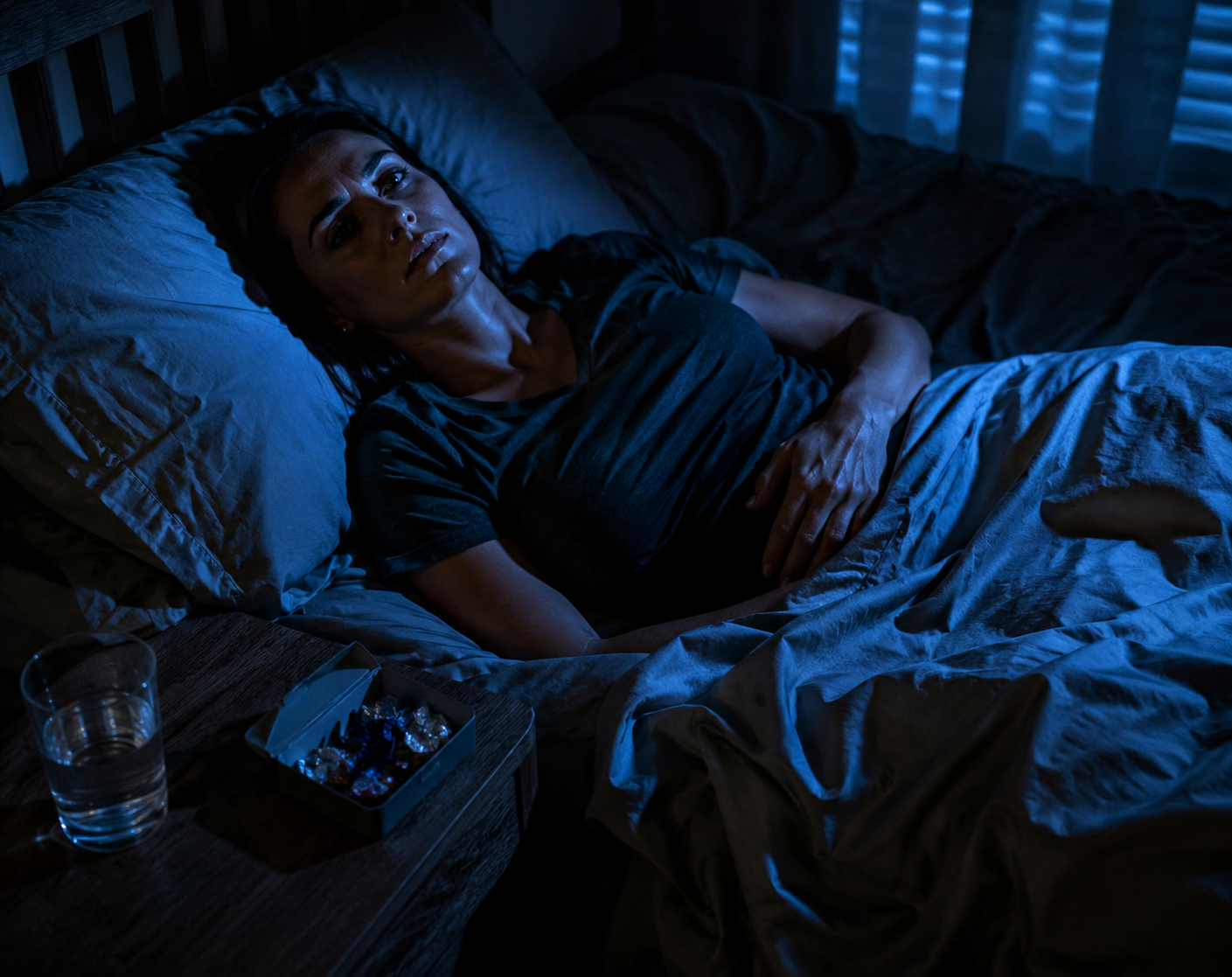
Yes: digestive problems from sugar-free candy can disrupt sleep, especially when the candy, gum, mints, or keto snacks are eaten in the few hours before lying down. The usual problem is not that a sweet taste magically causes insomnia. It is more ordinary and more useful to identify: gas pressure, bloating, cramps, diarrhea, or urgency arriving right when the body is supposed to be settling.
That timing matters. Cleveland Clinic advises waiting at least 2 hours after eating before lying down to reduce gas buildup, and it specifically flags chewing gum and hard candies with sugar alcohols as things to avoid at night if gas is a problem.[1] For someone who eats sugar-free candy after dinner and then lies down soon afterward, the digestive side effects can land directly in the sleep-onset window.
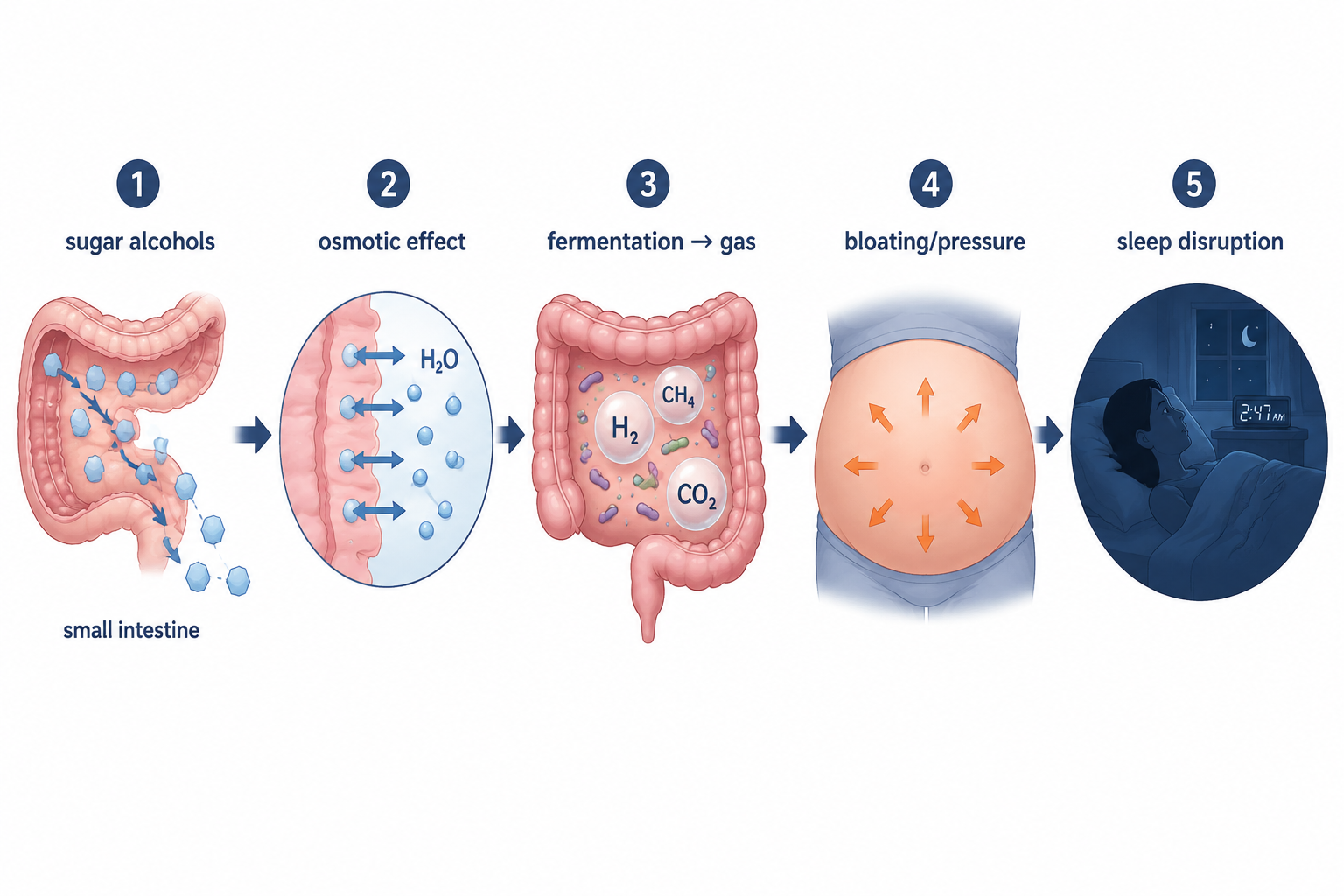
The Path From Sugar-Free Candy to a Restless Night
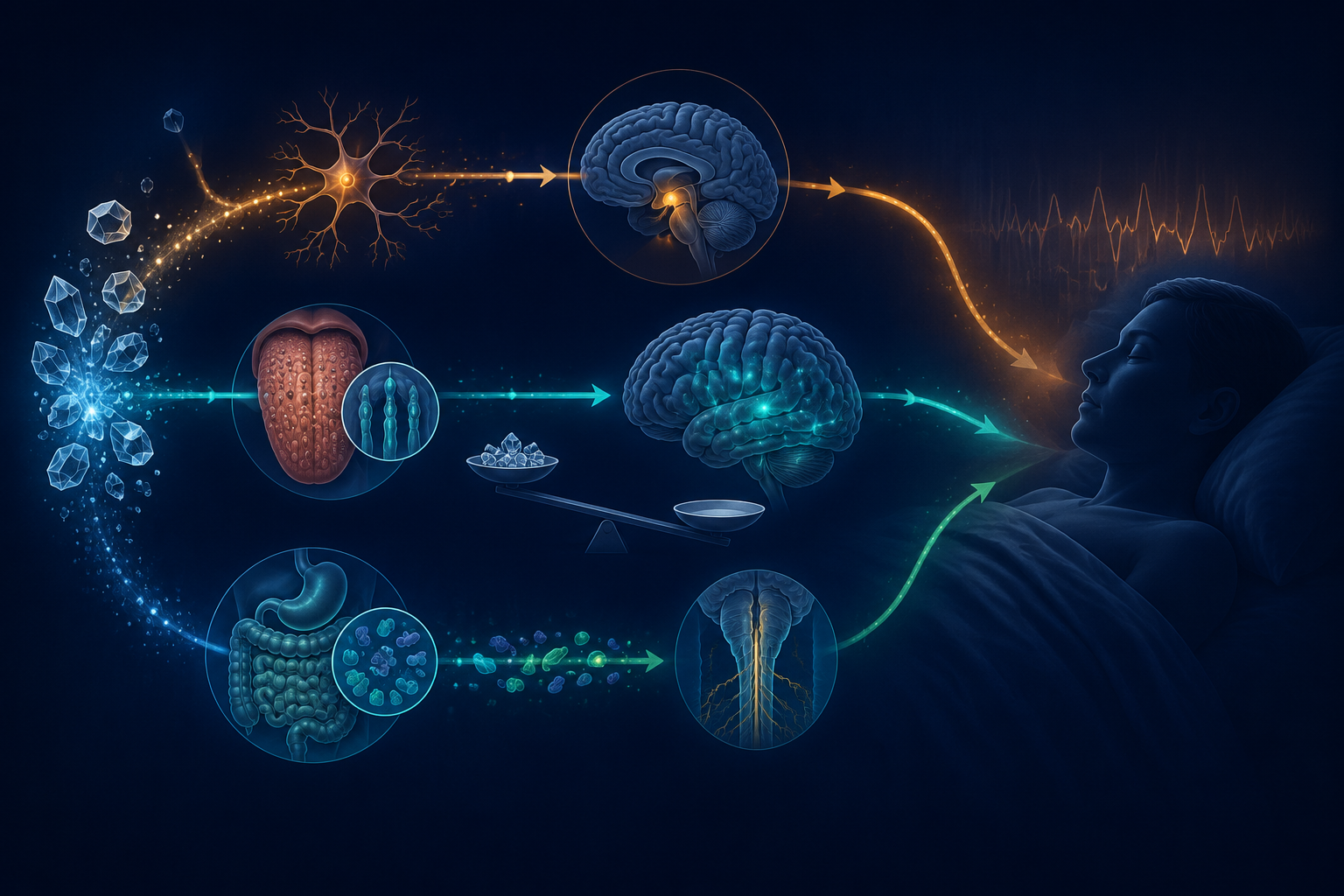
Many sugar-free candies rely on sugar alcohols: ingredients such as sorbitol, xylitol, maltitol, erythritol, and related sweeteners. They are not absorbed in the small intestine as completely as ordinary sugar. What remains in the gut can pull water into the intestine and then move on to the colon, where bacteria ferment it and produce gases such as hydrogen, methane, and carbon dioxide.[2]
That sequence explains why the symptoms often feel mechanical rather than mysterious. Water drawn into the intestine can loosen stools. Fermentation can create gas. Gas adds pressure. Pressure stretches the abdomen. The result may be bloating, loud intestinal movement, cramps, or a sudden need to get to the bathroom.
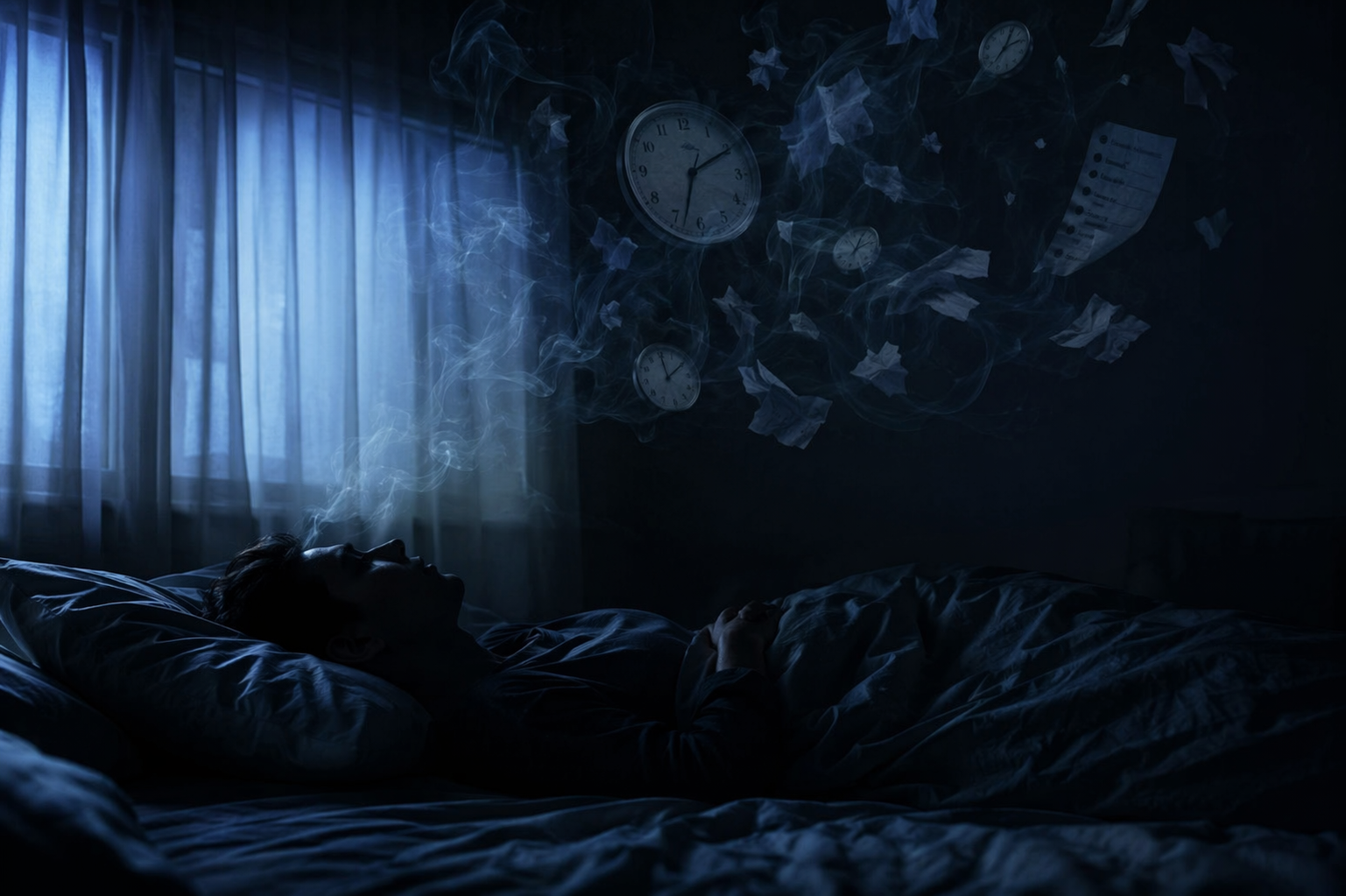
None of those symptoms has to be dramatic to interfere with sleep. Sleep onset depends on a body that can stop monitoring discomfort. A swollen, noisy, urgent gut keeps asking for attention. If the symptoms peak after lights-out, the person in bed is not simply “thinking too much.” They may be waiting for a cramp to pass, holding still because movement worsens pressure, or getting up repeatedly because diarrhea or urgency will not let them ignore it.
Dose Turns a Sensible Snack Into a Sleep Problem
The dose thresholds are one reason sugar-free candy can be confusing. A few pieces may do nothing. A larger handful, a long evening of mints, or a pack of gum may be enough to cross a personal threshold.
Sorbitol is the clearest example. In a CDC investigation of dietetic candies, the report noted that 10 grams of sorbitol may cause bloating and flatulence, while 20 grams may cause abdominal cramps and diarrhea in many adults.[3] A later Canadian Family Physician case discussion described sorbitol as an often-forgotten cause of osmotic diarrhea, and Health.com summarized that a single pack of sugar-free gum can deliver about 20 to 22.5 grams of sorbitol.[4][5]
Those numbers make the bedtime pattern easier to audit. The question is not only “Did I eat sugar-free candy?” It is “How much sorbitol or another sugar alcohol did I eat, and did that amount overlap with the hours when I was trying to fall asleep?” A person who tolerates one or two pieces in the afternoon may still have trouble after a larger evening portion.
Xylitol has its own tolerance pattern. A scientific review reported that diarrhea in unaccustomed users may occur at about 0.3 grams per kilogram of body weight, while adaptation can occur over weeks; the same review also notes wide variation, with some people tolerating much larger daily amounts without symptoms.[2] That adaptation point matters because it explains why one person can use xylitol products routinely while another gets cramps after what looks like a normal serving.
| What to check | Why it matters for sleep |
|---|---|
| The specific sweetener on the label | Sorbitol, xylitol, maltitol, and related sugar alcohols differ in tolerance and digestive effects. |
| Total amount eaten across the evening | Small repeated portions can add up before symptoms appear. |
| Time between eating and lying down | The 2-hour window before bed is more likely to put gas, pressure, or urgency into the sleep-onset period. |
| The symptom that appears first | Bloating, cramps, diarrhea, and urgency point more directly to digestion than to a vague insomnia trigger. |
Why Lying Down Can Make the Same Gut Reaction Feel Worse
The same digestive reaction can feel more manageable at 4 p.m. than at 11 p.m. During the day, a person walks, sits upright, changes position, and can use the bathroom without the added frustration of losing sleep. At night, lying down changes the experience. Gas can collect in ways that feel more noticeable, abdominal pressure has fewer distractions, and every bathroom trip restarts the process of settling back to sleep.
Cleveland Clinic’s practical gas guidance makes this connection plainly enough: late eating and lying down can contribute to gas discomfort, and waiting at least 2 hours before lying down is one of its suggested steps.[1] That does not mean every evening snack is a problem. It does mean that a sugar-alcohol-heavy snack is poorly timed if it predictably causes fermentation, bloating, or diarrhea during the hours reserved for sleep.
Bathroom urgency deserves special attention because it breaks sleep in a different way from ordinary discomfort. Gas may keep someone awake. Diarrhea or urgent stooling makes them get up. After that, the body may be more alert: lights go on, the heart rate rises, the person checks the time, and the night becomes a series of attempts to restart sleep after a digestive interruption.
GI Symptoms Are Not Minor Sleep Distractions
The sleep connection is not only a matter of common sense. A 2025 Scientific Reports study of healthcare workers found that gastrointestinal symptoms were significantly associated with insomnia; the adjusted odds ratio was 1.07 per unit increase on the Gastrointestinal Symptom Rating Scale.[6] The symptoms assessed included problems such as bloating, pain, and diarrhea—the same kinds of symptoms sugar alcohols can provoke in sensitive people.
That study does not prove that sugar-free candy causes insomnia. It supports a narrower and more practical point: when GI symptoms are present, insomnia symptoms are more likely to be present too. Combined with the known digestive effects of sugar alcohols, the sleep complaint becomes credible without needing to claim that every sugar-free product is a sleep disruptor.
Why One Person Reacts and Another Does Not
Individual tolerance varies enough that two people can eat the same candy and have completely different nights. Body weight, usual intake, total dose, gut transit, and the mix of bacteria in the colon can all change how much gas or diarrhea follows a sugar alcohol serving.
The microbiome piece is especially useful when someone says, “This never used to happen to me.” UC Davis Health reported a 2024 Cell study finding that antibiotic use combined with a high-fat diet reduced Clostridia bacteria that help break down sorbitol, creating acquired sorbitol intolerance in the study model.[7] That finding should not be stretched into a universal explanation for every new reaction, but it gives a plausible reason tolerance can change rather than stay fixed for life.
There is also the habit effect. The xylitol review describes adaptation over weeks in some users, which means an unaccustomed person may react at a lower dose than someone who regularly consumes xylitol.[2] Adaptation is not a promise that symptoms will vanish. It is a reminder that “safe for most people” and “comfortable for my gut tonight” are not identical claims.
What About Artificial Sweeteners and Insomnia Claims?
Some discussions of sugar-free products jump quickly from sweeteners to brain chemistry and insomnia. The evidence there is much less direct for a person eating candy at night. A 2016 Cell Metabolism study, reported by Sleep Review, found that sucralose promoted insomnia-like effects in fruit flies and mice through a starvation-like neuronal pathway.[8] That is interesting biology, but it is not a human trial showing that sugar-free candy causes insomnia through the brain.
For the bedtime candy pattern, the digestive pathway is the stronger explanation to test first. If the night includes bloating, cramps, gas, diarrhea, or urgent bathroom trips after sugar-free candy, the gut does not need to be treated as a side issue. It may be the thing keeping sleep from happening.
A Secondary Caution About Xylitol and Erythritol
There are also emerging cardiovascular concerns around some sugar alcohols, especially xylitol and erythritol, including Cleveland Clinic discussion of heightened platelet reactivity in observational research.[1] That is worth knowing, particularly for people with cardiovascular risk, but it is not the main sleep mechanism here. The immediate nighttime issue is still digestive: sugar alcohols can create gas, water shifts, cramps, diarrhea, and urgency.
How to Test Whether Sugar-Free Candy Is the Culprit
A useful test is specific, not punitive. For several nights, move sugar-free candy, gum, mints, or keto sweets earlier in the day, or skip them after dinner. Keep the rest of the evening as ordinary as possible. If bloating, cramps, diarrhea, or bathroom trips fade and sleep becomes easier, the pattern is meaningful.
- Check the label for sorbitol, xylitol, maltitol, erythritol, isomalt, lactitol, or “sugar alcohols.”
- Count the whole evening, not just one serving, because gum, mints, and candy can accumulate.
- Avoid testing new sugar-free snacks in the 2 hours before lying down.
- Separate digestive awakenings from other sleep problems by noting whether gas, cramping, diarrhea, or urgency comes first.
- If symptoms are severe, persistent, bloody, unexplained, or associated with weight loss or dehydration, treat that as a medical issue rather than a candy experiment.
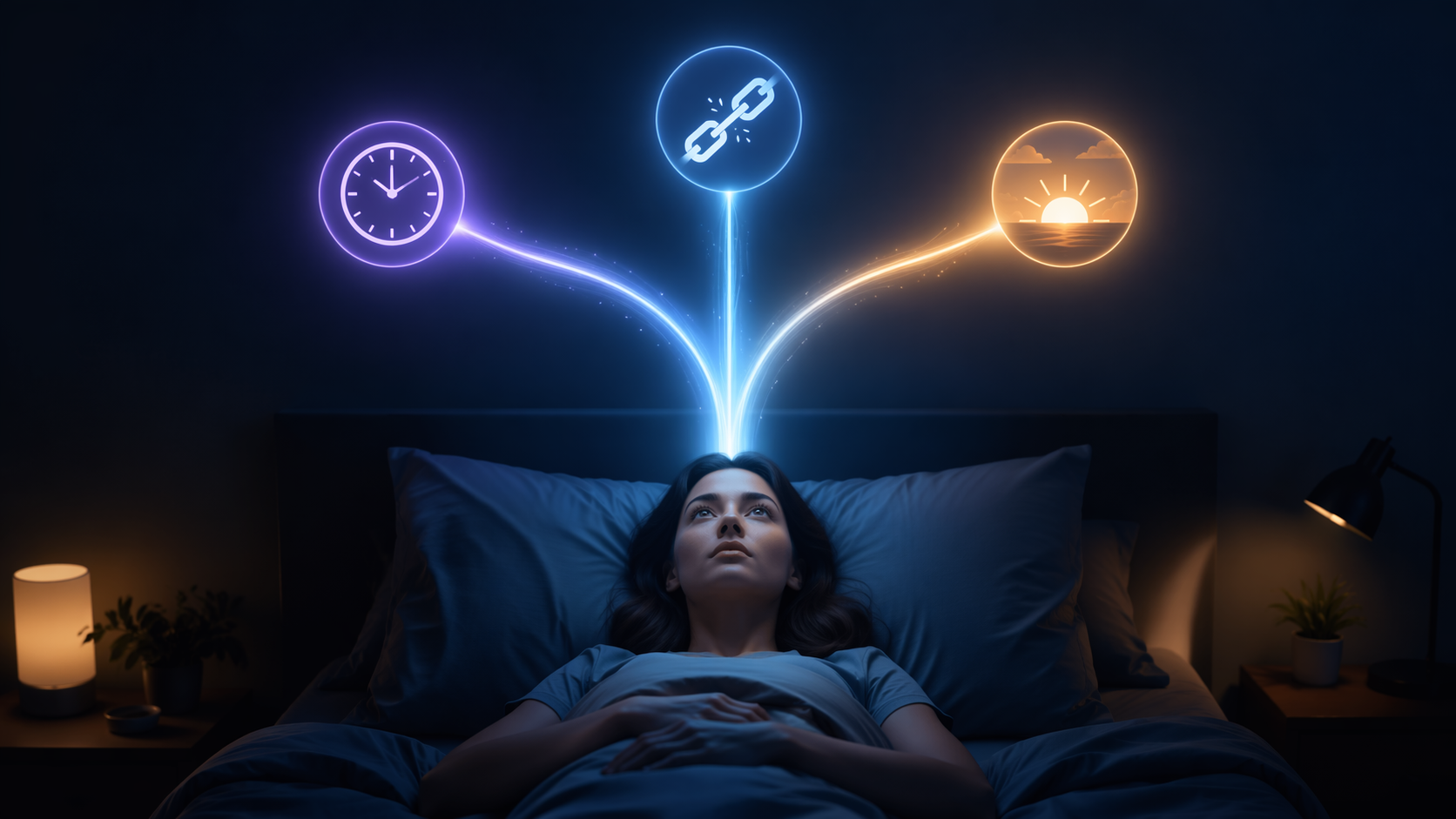
Sugar-free candy is not automatically a sleep problem. For many people, a small amount is uneventful. But if the same product repeatedly leads to gas, bloating, cramping, diarrhea, or urgency near bedtime, the mechanism is credible enough to test timing, portion size, and the specific sugar alcohol before assuming the night was random insomnia.
References
- Dangers of Sugar Alcohols — Cleveland Clinic Health Essentials.
- Gastrointestinal Disturbances Associated with the Consumption of Sugar Alcohols with Special Consideration of Xylitol: Scientific Review — PMC, 2016.
- Outbreak of Diarrhea Linked to Dietetic Candies — New Hampshire — CDC MMWR.
- Sorbitol: Often forgotten cause of osmotic diarrhea — Canadian Family Physician, 2019.
- How Long Does Diarrhea Caused by Sorbitol Last? — Health.com.
- Association between gastrointestinal symptoms and insomnia among healthcare workers — Nature Scientific Reports, 2025.
- Do sugar-free candy and gum give you gas? Researchers think they know why — UC Davis Health, 2024.
- Research Sheds Light on Artificial Sweeteners’ Impact in Brain, Including How They Promote Insomnia — Sleep Review.
Comments
Join the discussion with an anonymous comment.