
If you have already done the respectable sleep things—dark room, regular bedtime, less evening caffeine—and still wake up repeatedly during wildfire smoke or a bad smog week, the problem may not be your discipline. The air quality index and sleep problems are connected in ways that are more concrete than “pollution feels stressful.” Outdoor pollution can make sleep lighter and more fragmented by irritating the airway you breathe through all night and, more tentatively, by provoking inflammatory changes in systems that help regulate sleep and wakefulness.
AQI is an imperfect stand-in for what actually reaches your pillow. It does not know whether your windows are open, whether your home leaks outdoor air, whether you use filtration, or whether your bedroom sits near a busy road. Still, it is the public signal most people have during smoke and smog events, and the research is strong enough to take seriously: higher pollution exposure is repeatedly associated with poorer sleep.
One large Beijing cohort followed 31,582 college freshmen and found that a one-standard-deviation increase in AQI—77.5 points—was associated with 41 fewer minutes of sleep per night.[1] In a rural China study of 27,417 adults, long-term PM2.5 exposure was associated with 15% higher odds of poor sleep quality per interquartile-range increase, while NO2 was associated with 14% higher odds.[2] A systematic review published in 2020 found that 21 of 22 studies across 17 countries reported a positive association between air pollution exposure and poor sleep health.[3]
Those numbers should not be pasted directly onto every U.S. bedroom. Many of the largest cohort data come from China, where pollution levels can be substantially higher than typical U.S. averages. But the direction of the evidence matters. This is not just a Beijing problem, and it is not just a subjective complaint from people who dislike hazy days.
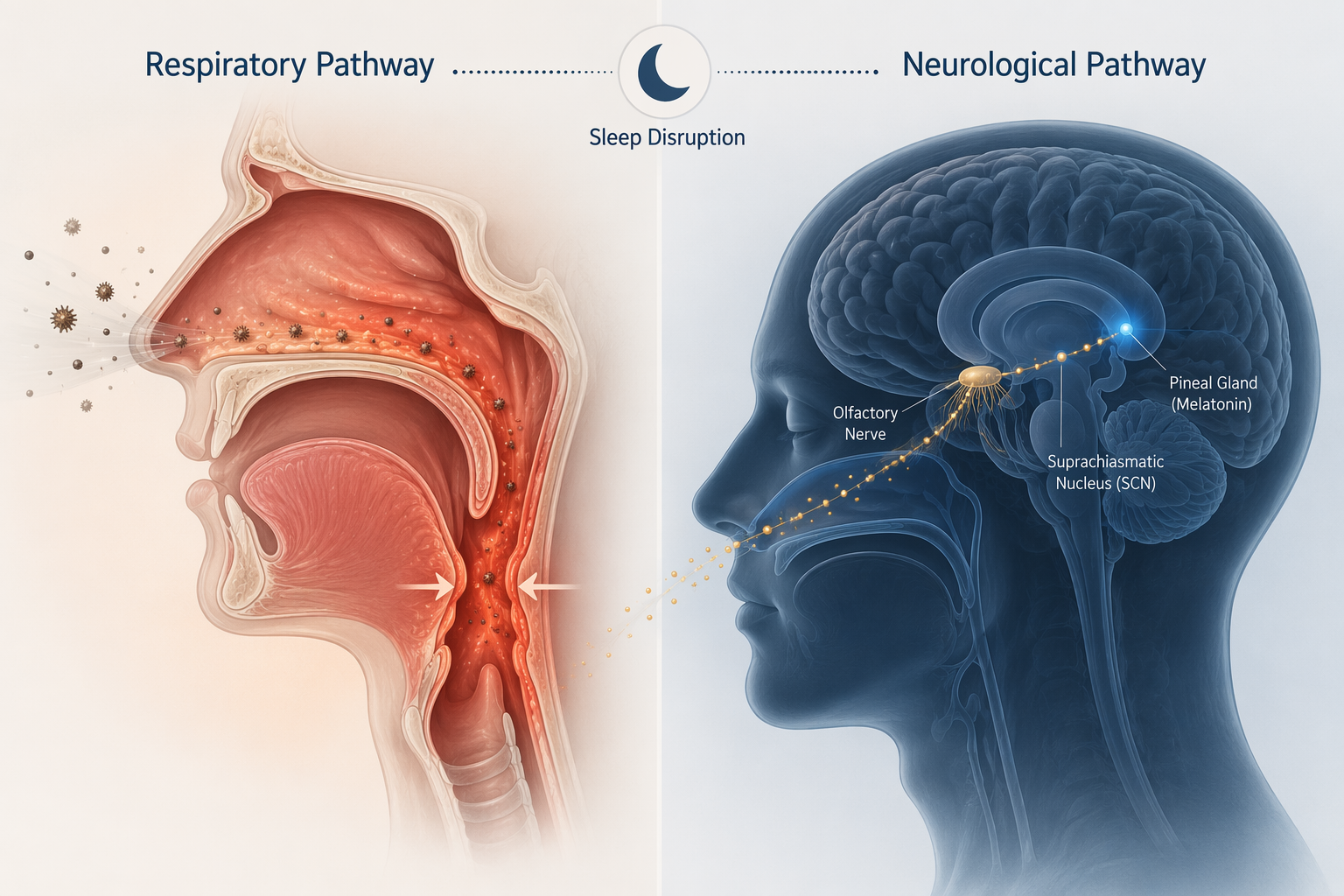
The first route is the airway
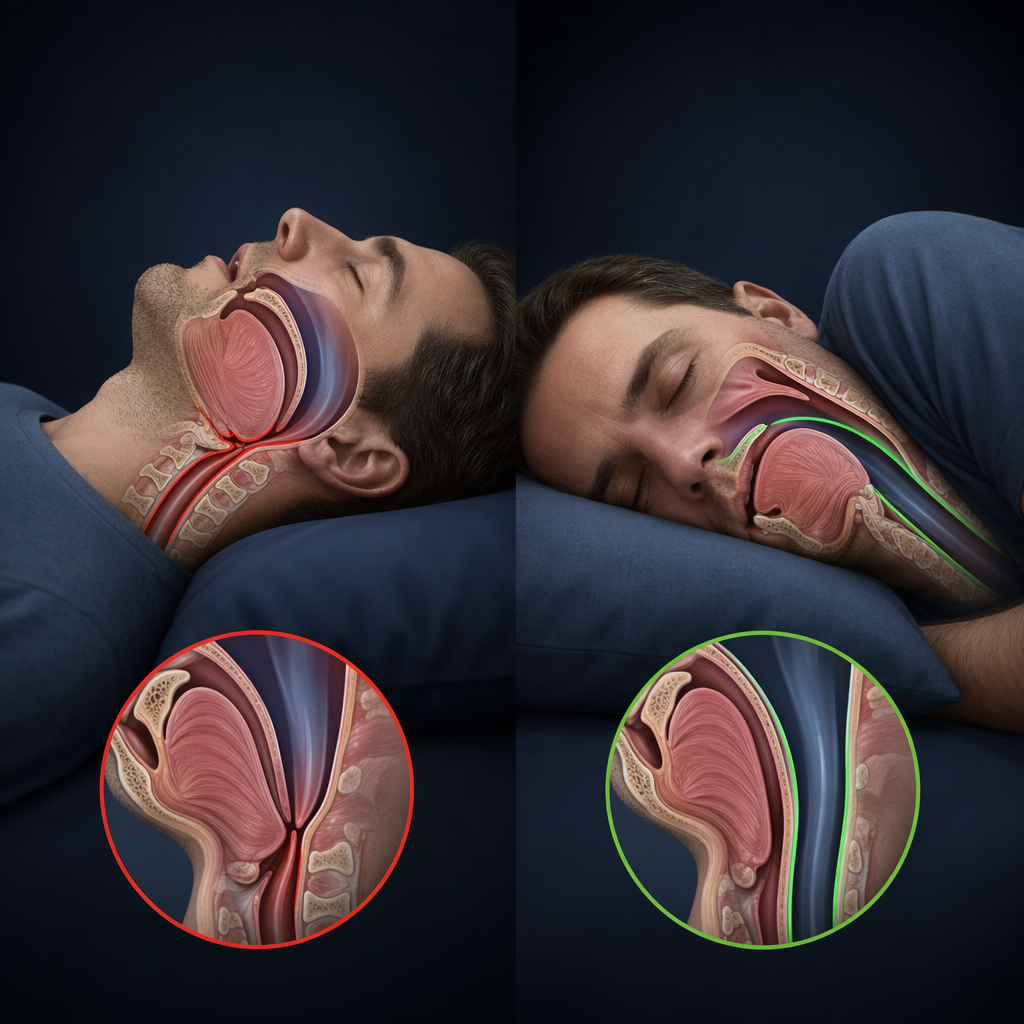
The most immediately believable pathway runs through the nose, throat, and upper airway. Fine particulate matter and nitrogen dioxide can irritate respiratory tissue. When that tissue becomes inflamed or swollen, the passage for air narrows. At night, when muscle tone naturally drops and you are lying down for hours, a slightly narrower airway can become a much more noticeable airway.
That does not have to mean you wake up coughing. It can look like congestion that seems worse after midnight, heavier breathing, louder snoring, dry mouth, morning headache, or the dull feeling that you technically slept but did not recover. The sleep disruption may happen in small arousals that are too brief to remember. Your brain shifts out of deeper sleep to restore breathing, then lets you fall back again. Repeat that enough times and a full night on the clock can feel thin.
This is where air pollution overlaps with sleep-disordered breathing. The Liu review describes respiratory inflammation and oxidative stress as plausible pathways connecting pollution exposure with sleep health, while noting that toxicological mechanisms remain inconclusive in human studies.[3] That last clause matters. The airway pathway is biologically plausible and clinically recognizable, but the exact contribution of pollution in any one sleeper depends on baseline anatomy, allergies, asthma, weight, age, local exposure, and whether obstructive sleep apnea is already present.
For someone who already snores or has borderline apnea symptoms, a bad AQI week can act less like a mysterious new disease and more like an added load on a system that was already close to unstable. The pollutant does not need to “cause” apnea from scratch to worsen the night. It may increase nasal resistance, aggravate inflammation, and make breathing events easier to trigger.
That distinction is useful because it changes what to do with the information. If sleep falls apart only during smoke events and improves when the air clears, indoor exposure reduction may be a reasonable environmental lever. If there is habitual loud snoring, witnessed pauses in breathing, gasping, or severe daytime sleepiness, the issue should not be filed under “bad air” alone. That is a reason to look at a sleeping problem versus insomnia triage framework or seek evaluation for sleep apnea.
It is also why quick internet fixes can be risky. Anything that makes it harder to breathe through the mouth during sleep, including mouth taping, deserves special caution in people with possible sleep-disordered breathing. If pollution is making airway resistance worse, the answer is not to force a narrower breathing route; it is to identify the breathing problem.
The second route may not feel like breathing trouble
The more interesting pathway is also the one that needs more careful language. Some particles, especially ultrafine particles, may affect sleep through the nervous system rather than only through the airway. Animal and in-vitro evidence reviewed in the sleep-pollution literature suggests that ultrafine particles can travel along the olfactory nerve from the nasal cavity toward the brain, where they may contribute to neuroinflammatory changes in regions involved in sleep-wake regulation.[3]
This is one possible explanation for the person who says, “I was not coughing, but I slept strangely.” Sleep is not a simple off switch. It is regulated by networks that coordinate arousal, circadian timing, breathing, temperature, and neurotransmitters. If pollution-related inflammation alters those networks, sleep could become more fragile even when the nose and throat are not shouting for attention.
The serotonin piece is a good example of the line between plausible and proven. The Liu review discusses toxicological evidence suggesting that air pollution may reduce serotonin levels in sleep-regulating brain regions, but it also states that plausible toxicological mechanisms remain inconclusive in human studies.[3] So the careful conclusion is not “AQI directly damages your sleep center.” It is that neurological inflammation is a plausible pathway supported by experimental evidence, while the exact size of that effect in ordinary human bedrooms is still being worked out.
That restraint does not make the mechanism irrelevant. It makes it more useful. Respiratory irritation explains a lot of bad-air sleep complaints, especially congestion, snoring, and apnea-like fragmentation. A nervous-system pathway helps explain why pollution might also degrade sleep quality in people who do not notice obvious airway symptoms. The two routes can operate together, and they do not need to produce the same sensation.
Dose matters, but dose is not just the number on the app
The Beijing freshman study is valuable because it showed a dose-response pattern: as AQI rose, sleep duration fell.[1] Dose-response evidence is not magic proof of causation, but it is harder to dismiss than a one-time comparison between “polluted” and “clean” places. It suggests the body is responding to gradations of exposure, not merely to living in one kind of city.
Still, AQI is not personal exposure. It is a public index built from pollutant monitoring, not a sensor clipped to your pillowcase. Residential estimates can misclassify exposure because people move through different microenvironments, buildings filter outdoor air differently, and indoor sources also matter. The systematic review highlights exposure measurement as one reason the evidence varies across studies.[3]
Season also complicates the story. Some studies find stronger sleep effects in summer, others in winter, and that does not have to be a contradiction. In one setting, summer may mean more ozone chemistry, open windows, heat, and wildfire smoke. In another, winter may mean stagnant air, heating emissions, and more time indoors with poor ventilation. A single seasonal rule would be cleaner than the evidence allows.
Vulnerability also differs. In Yu et al., female participants showed a larger sleep decrement from the same AQI increase than male participants: 0.86 hours compared with 0.59 hours, a 46% larger reduction.[1] That finding should not be stretched into a universal rule about women and pollution. It is a reminder that age, sex, airway anatomy, hormones, underlying disease, housing, and activity patterns may change how much a given AQI number means for sleep.
What a bad-air night can look like
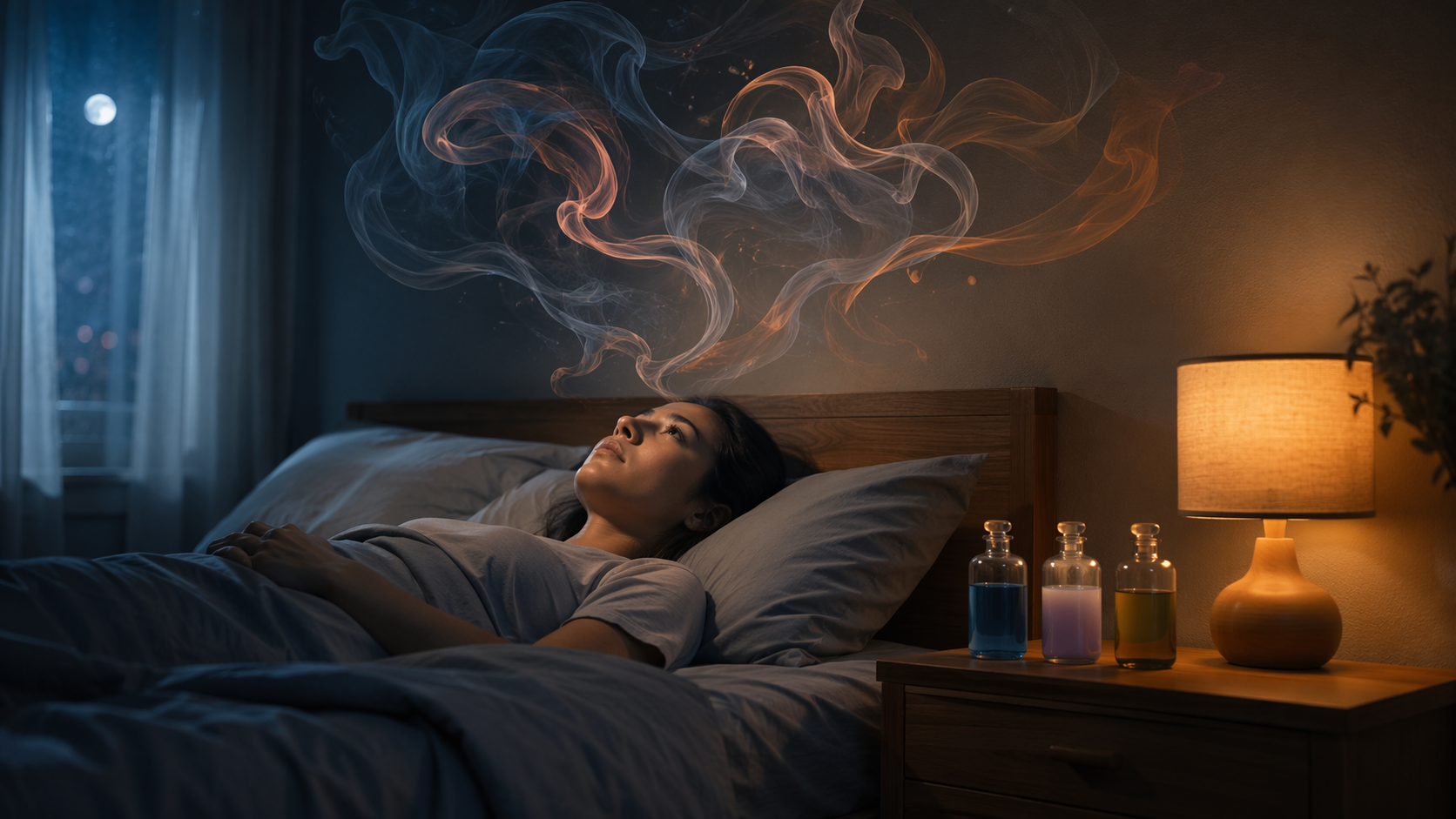
Poor sleep from elevated AQI will not announce itself the same way in everyone. One person notices a blocked nose and snoring. Another falls asleep normally but wakes at 3 a.m. with no clear reason. Someone with mild sleep apnea may feel unusually wrecked after a night that looked long enough on a tracker. Someone with insomnia may find that pollution is one more arousal cue layered onto an already sensitive system.
| Nighttime pattern | More likely pathway to consider | Why it matters |
|---|---|---|
| Congestion, dry mouth, louder snoring, morning headache | Upper-airway inflammation and narrowing | Pollution may be worsening breathing stability during sleep. |
| Repeated brief awakenings without obvious coughing | Airway micro-arousals or sleep-wake regulation effects | The disruption may be real even if it is hard to describe. |
| Gasping, witnessed pauses, severe daytime sleepiness | Possible sleep-disordered breathing | AQI may aggravate the problem, but clinical evaluation matters. |
| Bad sleep mainly during smoke or smog episodes | Environmental exposure load | Indoor exposure reduction may help as part of a broader sleep plan. |
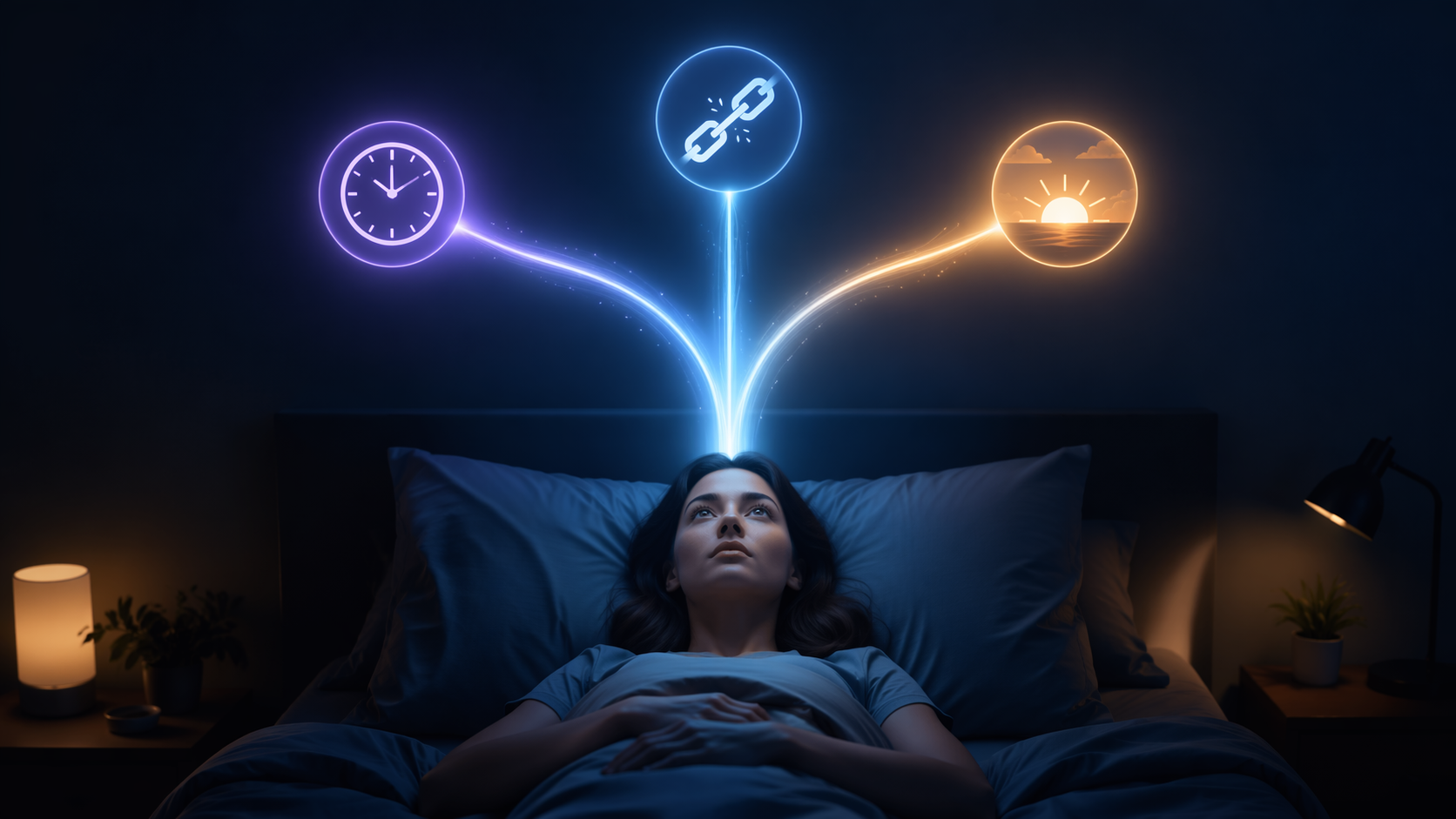
This is also the point where sleep hygiene advice can become unfair if it is used as a scolding tool. A consistent bedtime cannot fully cancel irritated airways or inflammatory exposure. Good routines still matter, but they are not proof that the bedroom environment is harmless. If you want to place air quality inside a broader routine, it belongs alongside light, temperature, noise, and timing—not as a moral test of whether you “really tried” sleep hygiene.
For persistent insomnia, though, cleaner air is not a substitute for evidence-based treatment. If the main pattern is chronic difficulty falling asleep, long periods awake in bed, or escalating fear of not sleeping even when air quality is good, the more relevant tool may be CBT-I. Air quality management can remove one burden from the system; it does not retrain the insomnia loop by itself.
How to read AQI without turning it into panic
The practical use of AQI is pattern recognition. If your sleep worsens on high-AQI days and improves when the air clears, that pattern is worth respecting. It is especially worth respecting during wildfire smoke events, temperature inversions, or urban pollution episodes when fine particles and nitrogen dioxide can rise enough to affect people who do not usually think of themselves as sensitive.
The wrong use of AQI is to treat every point increase as a precise prediction of how many minutes you will lose. Yu et al.’s 41-minute estimate came from a specific population, place, time, and exposure distribution.[1] Chen et al.’s odds ratios came from long-term exposure estimates in rural China.[2] The systematic review supports a broad association across countries, not a personal calculator for tonight’s sleep.[3]
A reasonable response is modest and environmental: check AQI during vulnerable seasons, close windows when outdoor air is poor, reduce indoor particle sources, and use filtration if you have it. Those steps are not glamorous, and they do not need to be sold as a miracle. Their job is to lower the load on the airway and, possibly, on inflammatory pathways that make sleep less stable.
The evidence supports a sober conclusion: elevated AQI can worsen sleep at levels relevant to many U.S. readers, especially during smoke or smog events. The biology is not one vague “toxin” story. It is at least two plausible routes—respiratory inflammation that narrows the airway, and neuroinflammatory effects that may disturb sleep-wake regulation. The first is easier to see in the body; the second is plausible but less settled in humans. Neither makes pollution the only explanation for bad sleep, and neither makes basic sleep care irrelevant.
References
- The Association between Air Pollution and Sleep Duration: A Cohort Study of Freshmen at a University in Beijing, China. PMC. 2019.
- Is long-term exposure to air pollution associated with poor sleep quality in rural China?. PMC. 2019.
- Air pollution exposure and adverse sleep health across the life course: A systematic review. PMC. 2020.
Comments
Join the discussion with an anonymous comment.