
The Tired-But-Wired Paradox: Why You Can't Sleep When You're Exhausted
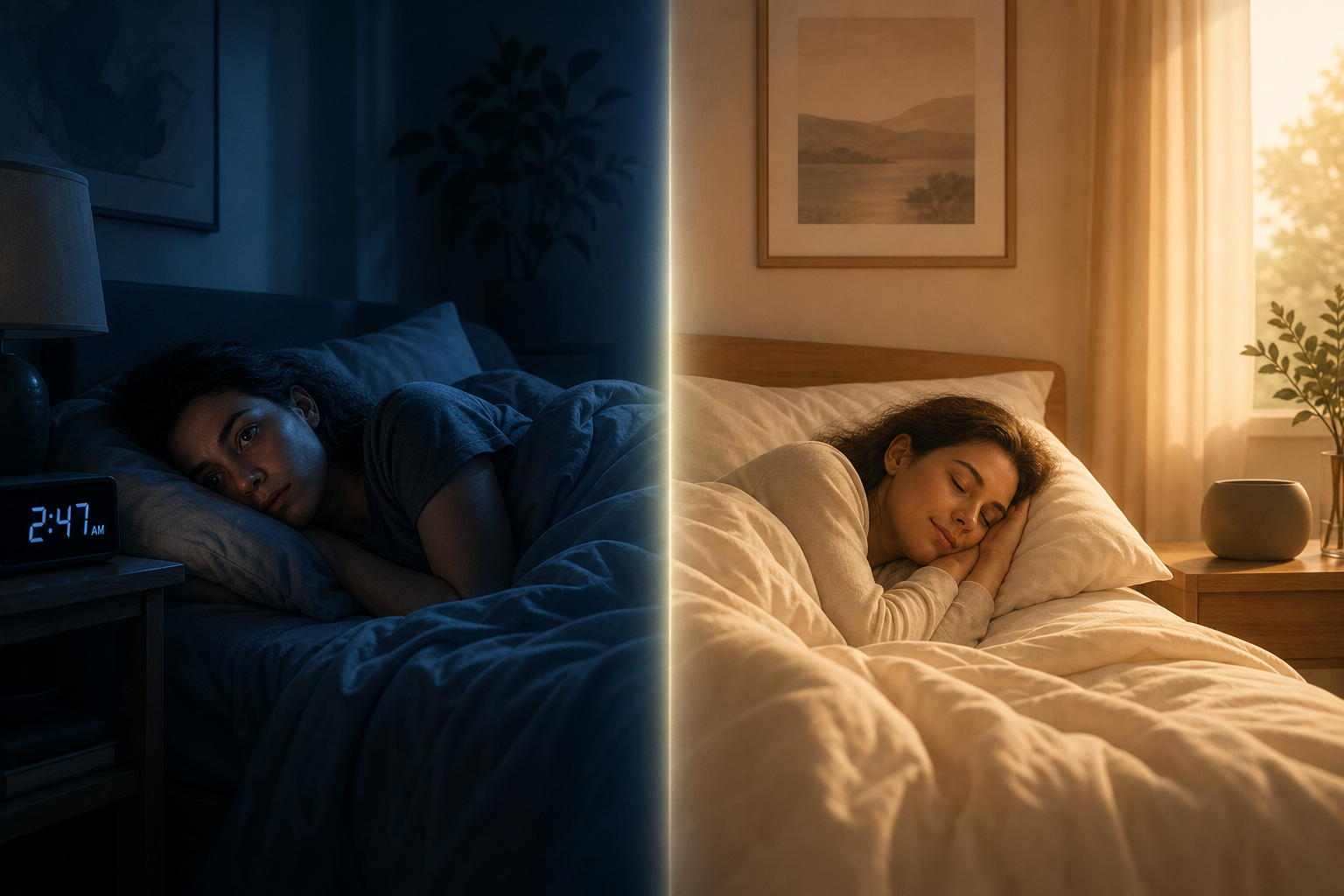
You drag through the day with heavy eyelids, counting the hours until your head hits the pillow. Then bedtime arrives — and you're wide awake. This isn't a failure of willpower or a sign that you're "bad at sleeping." It's a physiological paradox rooted in how your brain regulates rest.
According to the CDC's 2024 National Health Interview Survey, 30.5% of U.S. adults sleep fewer than 7 hours per night, and 15.4% report trouble falling asleep most days or every day. Yet many of those same individuals feel profoundly tired during daylight hours. The disconnect is real, measurable, and — most importantly — fixable.
The core issue isn't that you aren't tired enough. It's that your body's two sleep-regulating systems — the sleep drive and the circadian rhythm — have fallen out of alignment. When they work together, you feel sleepy at the right time and wake up refreshed. When they don't, you experience the exhausting sensation of being tired but unable to sleep.
The Two-System Model: Sleep Drive vs. Circadian Rhythm
Sleep is not controlled by a single on-off switch. It emerges from the interaction of two distinct biological systems, as explained by the Sleep Foundation's overview of sleep regulation.
System 1: The Homeostatic Sleep Drive (Adenosine)
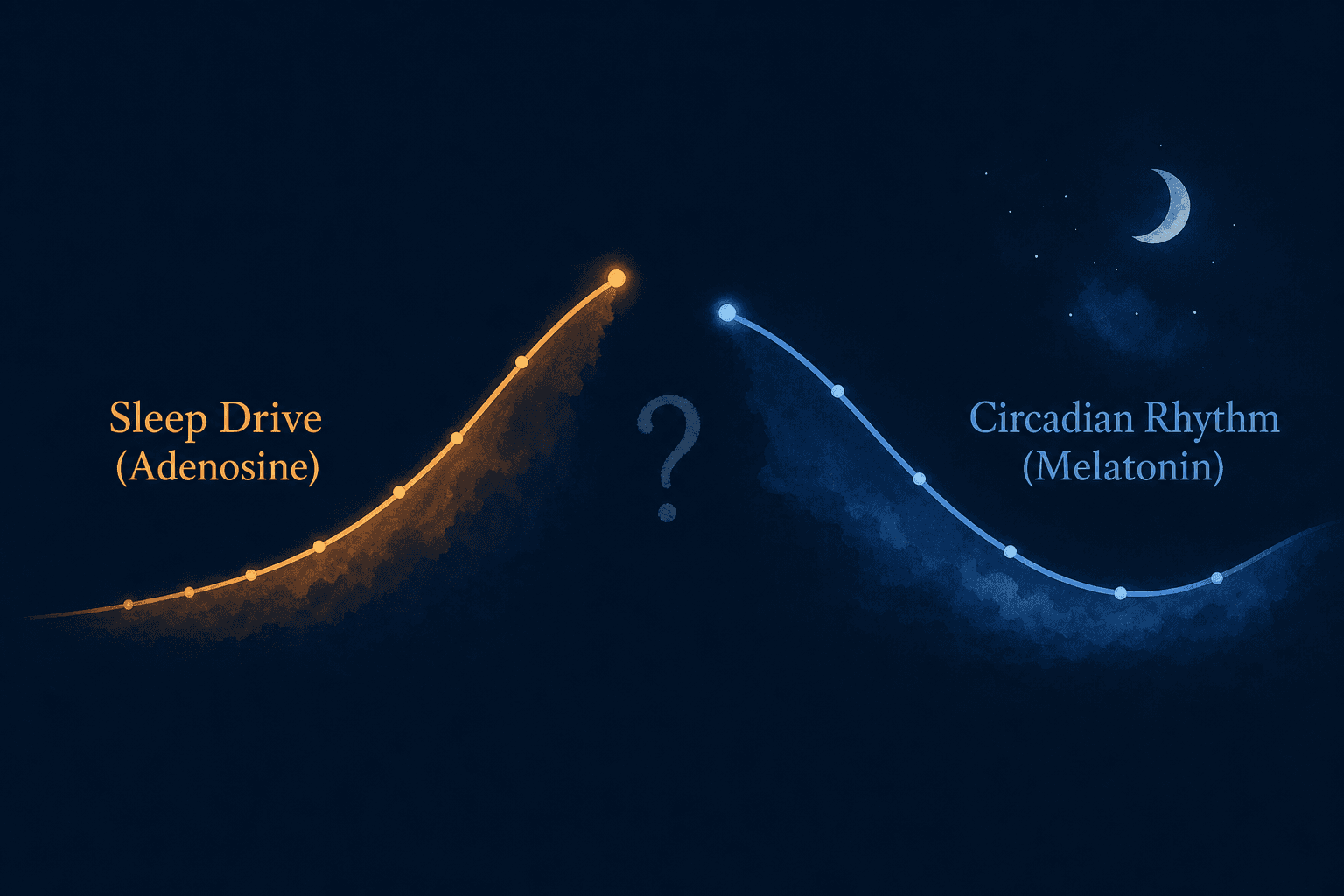
From the moment you wake up, a chemical called adenosine begins accumulating in your brain. The longer you stay awake, the more adenosine builds up, creating an increasing pressure to sleep — this is your sleep drive. It peaks just before bedtime, then dissipates as you sleep, resetting the cycle for the next day.
Think of it like a hunger signal for sleep. The longer you go without eating, the hungrier you get. Similarly, the longer you stay awake, the stronger your urge to sleep becomes.
System 2: The Circadian Rhythm (The Body Clock)
Your circadian rhythm is a roughly 24-hour internal clock, governed by the suprachiasmatic nucleus (SCN) in the brain. It doesn't track how long you've been awake — it tracks time of day. The SCN uses light signals from your eyes to synchronize your body with the external day-night cycle. In the evening, as light fades, the SCN signals the pineal gland to release melatonin, which helps trigger sleep. In the morning, light exposure suppresses melatonin and promotes alertness.
When They Fall Out of Sync
Normally, these two systems work in concert. Your sleep drive builds throughout the day, and your circadian rhythm promotes wakefulness during daylight hours and sleepiness at night. At bedtime, both systems should be aligned: high sleep drive plus a circadian signal for sleep equals falling asleep easily.
But when they fall out of sync, you can feel exhausted (high sleep drive) yet unable to sleep (circadian system still promoting wakefulness). This mismatch is the biological basis of the "tired but wired" experience. It's not in your head — it's in the timing of your internal systems.
Common Causes of the Sleep Drive–Circadian Mismatch
Several everyday behaviors and conditions can disrupt the alignment between your sleep drive and circadian rhythm. The table below summarizes the most common culprits, their mechanisms, and the supporting data.
| Cause | Mechanism | Supporting Data |
|---|---|---|
| Daytime napping (>30 minutes) | Reduces adenosine accumulation, lowering sleep drive at bedtime | Healthline reports that long naps and late-afternoon naps increase sleep onset latency |
| Late-day caffeine consumption | Blocks adenosine receptors, artificially suppressing sleep drive | Even 200 mg of caffeine (about 16 oz brewed coffee) 16 hours before bed may impact sleep; 400 mg within 6 hours significantly reduces sleep quality (Healthline) |
| Evening blue light exposure | Suppresses melatonin production, delaying the circadian signal for sleep | Blue light from screens inhibits melatonin release, making it harder to fall asleep (Sleep Foundation, Healthline) |
| Irregular sleep schedule | Confuses the SCN, weakening the circadian rhythm's timing signal | Consistent wake times are a cornerstone of circadian regulation (Sleep Foundation) |
| Delayed Sleep Phase Syndrome (DSPS) | Circadian rhythm is shifted later, causing a mismatch between internal clock and desired bedtime | DSPS affects 7–16% of adolescents and young adults, and about 1% of adults (Stanford Health Care data, cited by Healthline) |
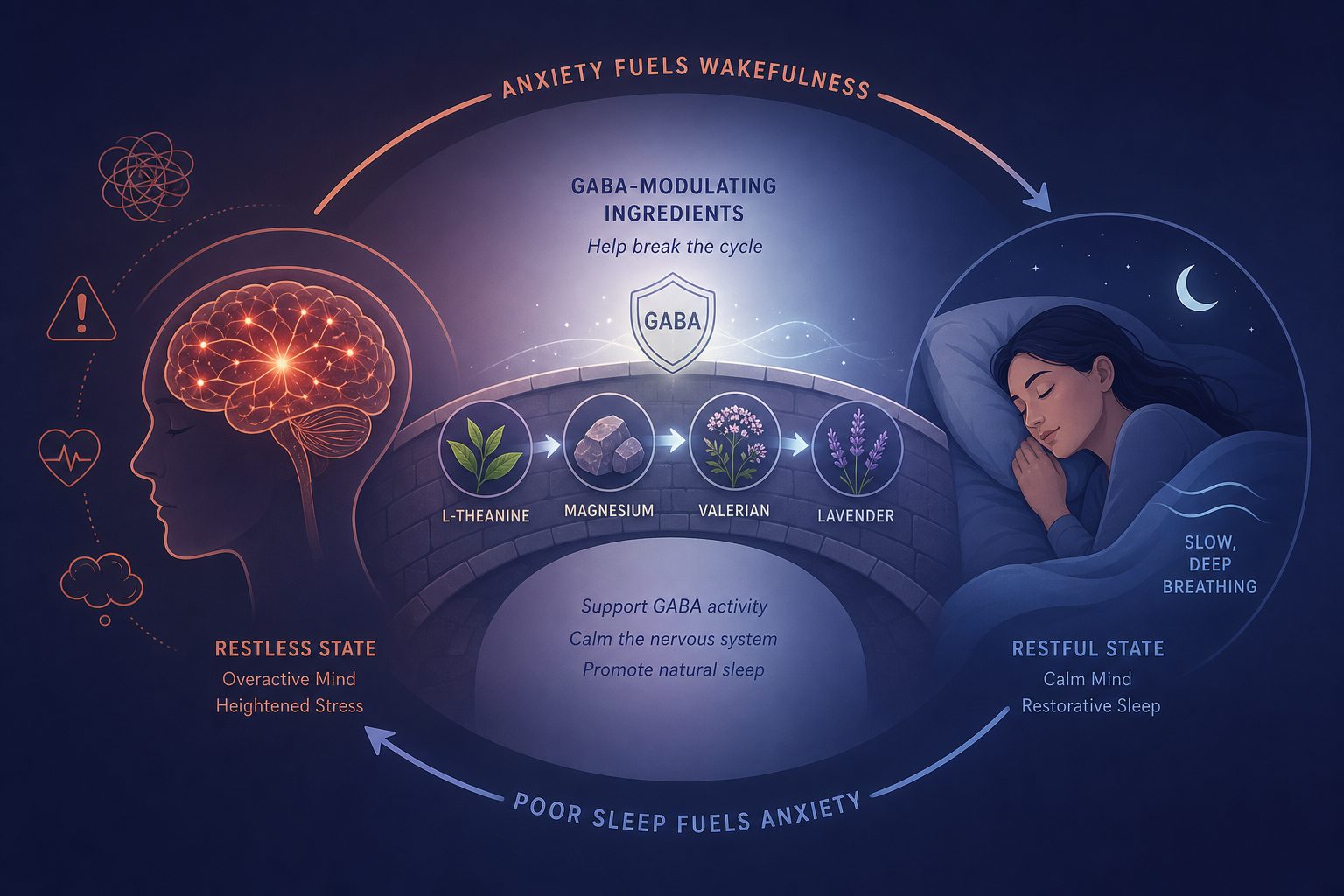
It's also worth noting that stress and anxiety play a role for many people. The Sleep Foundation reports that 54% of adults say stress and anxiety are the top reasons they have trouble falling asleep. However, for the purposes of this article, we're focusing on the circadian and sleep-drive mechanisms — the physiological mismatch that can occur even in the absence of significant anxiety.
Targeted Behavioral Resets to Realign Your Sleep Systems
The good news is that the sleep drive–circadian mismatch is highly responsive to behavioral changes. These interventions target the specific causes listed above, helping to realign your two sleep systems. The table below outlines the most effective resets, their mechanisms, and the expected time to effect.
| Intervention | Mechanism | How to Implement | Expected Time to Effect |
|---|---|---|---|
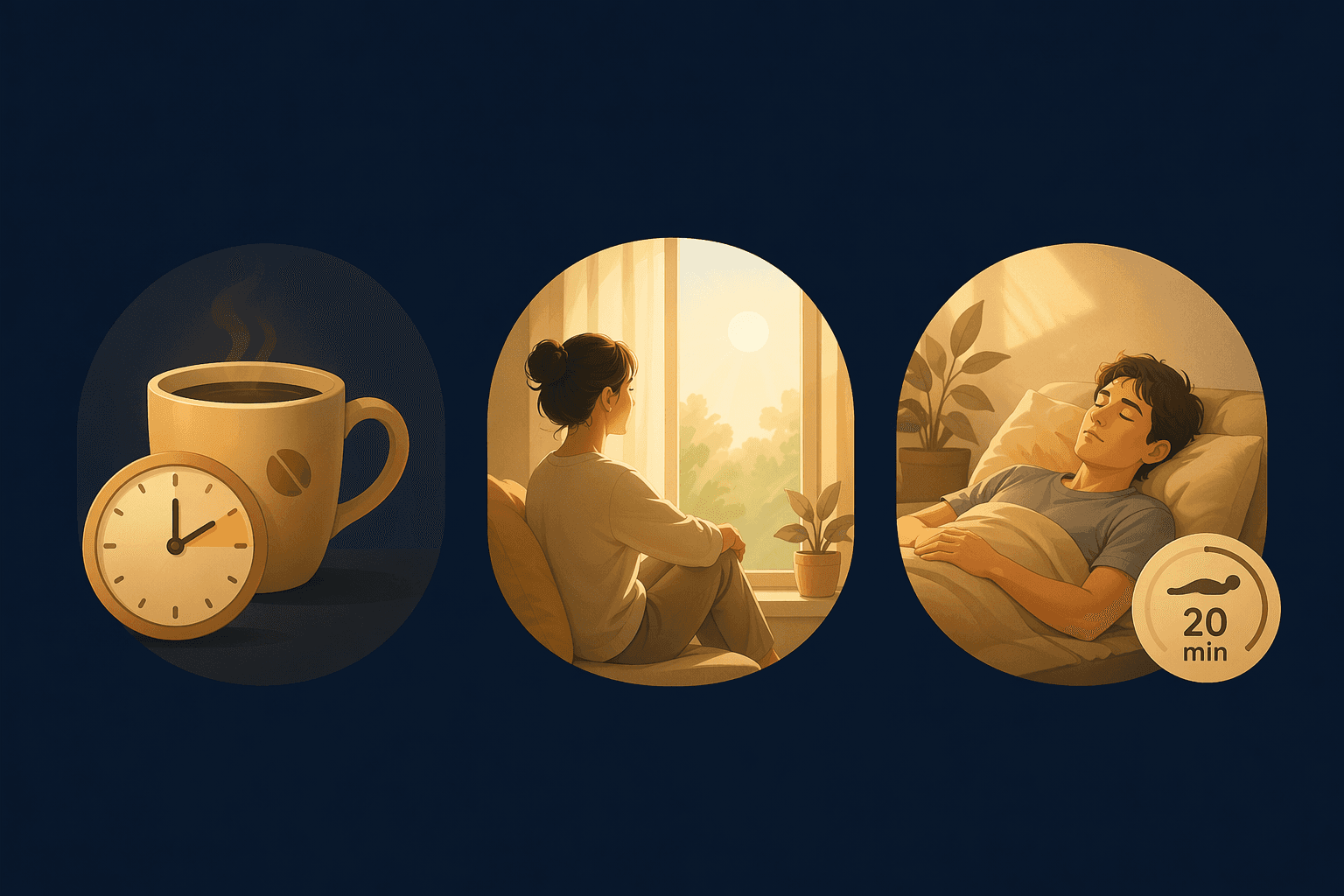
| Caffeine cut-off | Allows adenosine to accumulate naturally, restoring sleep drive | Stop all caffeine 4–6 hours before bedtime. For sensitive individuals, consider a 6–8 hour cut-off (Sleep Foundation). | 1–2 nights |
| Nap optimization | Prevents premature dissipation of sleep drive | Limit naps to 20–30 minutes, and take them early in the day (before 3 PM). (Healthline, Sleep Foundation) | 1–2 nights |
| Morning light exposure | Anchors the circadian rhythm, strengthening the evening melatonin signal | Get at least 30 minutes of sunlight exposure within an hour of waking. (Sleep Foundation) | 2–4 days |
| Consistent wake time | Stabilizes the SCN, improving circadian timing | Wake up at the same time every day, including weekends. This is the single most powerful circadian anchor. | 3–7 days |
| Evening screen reduction | Removes blue light suppression of melatonin | Avoid screens for 60–90 minutes before bed, or use blue-light blocking settings. (Sleep Foundation, Healthline) | 1–2 nights |
For a more comprehensive framework on building a sleep-friendly routine, including stimulus control and wind-down protocols, see our Sleep Hygiene Fundamentals and an Evidence-Based Bedtime Routine guide.
When the Mismatch Signals a Deeper Sleep Disorder
While the tired-but-wired state is often caused by the behavioral factors above, it can also be a symptom of an underlying sleep disorder that requires clinical evaluation. If you've consistently applied the behavioral resets for 2–4 weeks without improvement, consider whether one of these conditions might be at play.
- Delayed Sleep Phase Syndrome (DSPS): Your natural circadian rhythm is shifted later than the social norm. You may feel most alert late at night and struggle to wake up in the morning. DSPS affects 7–16% of young adults and about 1% of the general adult population (Healthline).
- Sleep Apnea: Characterized by repeated pauses in breathing during sleep. Common red flags include loud snoring, gasping or choking sounds, morning headaches, and excessive daytime sleepiness despite spending enough time in bed.
- Restless Legs Syndrome (RLS): An uncontrollable urge to move the legs, often accompanied by uncomfortable sensations, that worsens in the evening and can make falling asleep extremely difficult.
- Chronic Insomnia: If the tired-but-wired pattern persists for three months or longer, occurring at least three nights per week, it meets the diagnostic criteria for chronic insomnia. The first-line treatment is Cognitive Behavioral Therapy for Insomnia (CBT-I), not medication.
For a complete directory of sleep conditions and their first-line treatments, visit our Sleep Conditions index.
Key Takeaways and Next Steps
The experience of being exhausted all day but lying awake at night is not a personal failing. It is a treatable physiological mismatch between your sleep drive (adenosine accumulation) and your circadian rhythm (melatonin timing). The most impactful steps you can take are:
- Cut caffeine 4–6 hours before bedtime to allow adenosine to build naturally.
- Limit naps to 20–30 minutes, taken early in the day.
- Get at least 30 minutes of morning light exposure within an hour of waking.
- Maintain a consistent wake time seven days a week — this is your most powerful circadian anchor.
- Reduce evening screen time to prevent blue-light suppression of melatonin.
If you've tried these strategies for several weeks without relief, consult a healthcare provider to rule out an underlying sleep disorder. For a complete routine-building framework, including stimulus control and relaxation techniques, explore our Sleep Hygiene Fundamentals guide.

Comments
Join the discussion with an anonymous comment.