
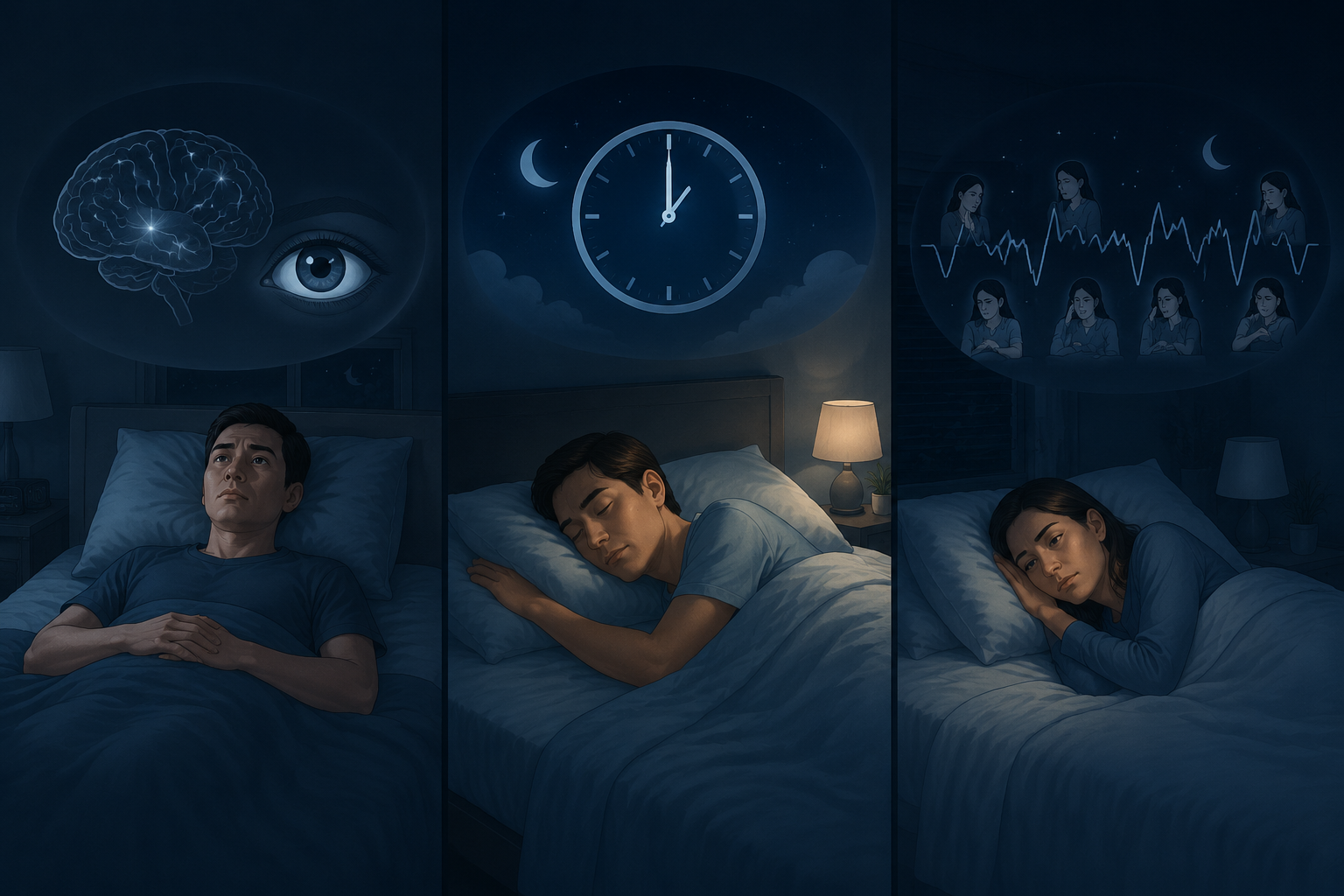
The unsettling part of brain aneurysm recovery and sleep is that it can fail in opposite directions: you cannot fall asleep, you sleep 12 hours and still wake exhausted, or you wake so often that the night never really becomes rest. Those three patterns - insomnia, hypersomnia, and sleep fragmentation - have all been described after subarachnoid hemorrhage.[1]

Three ways sleep breaks
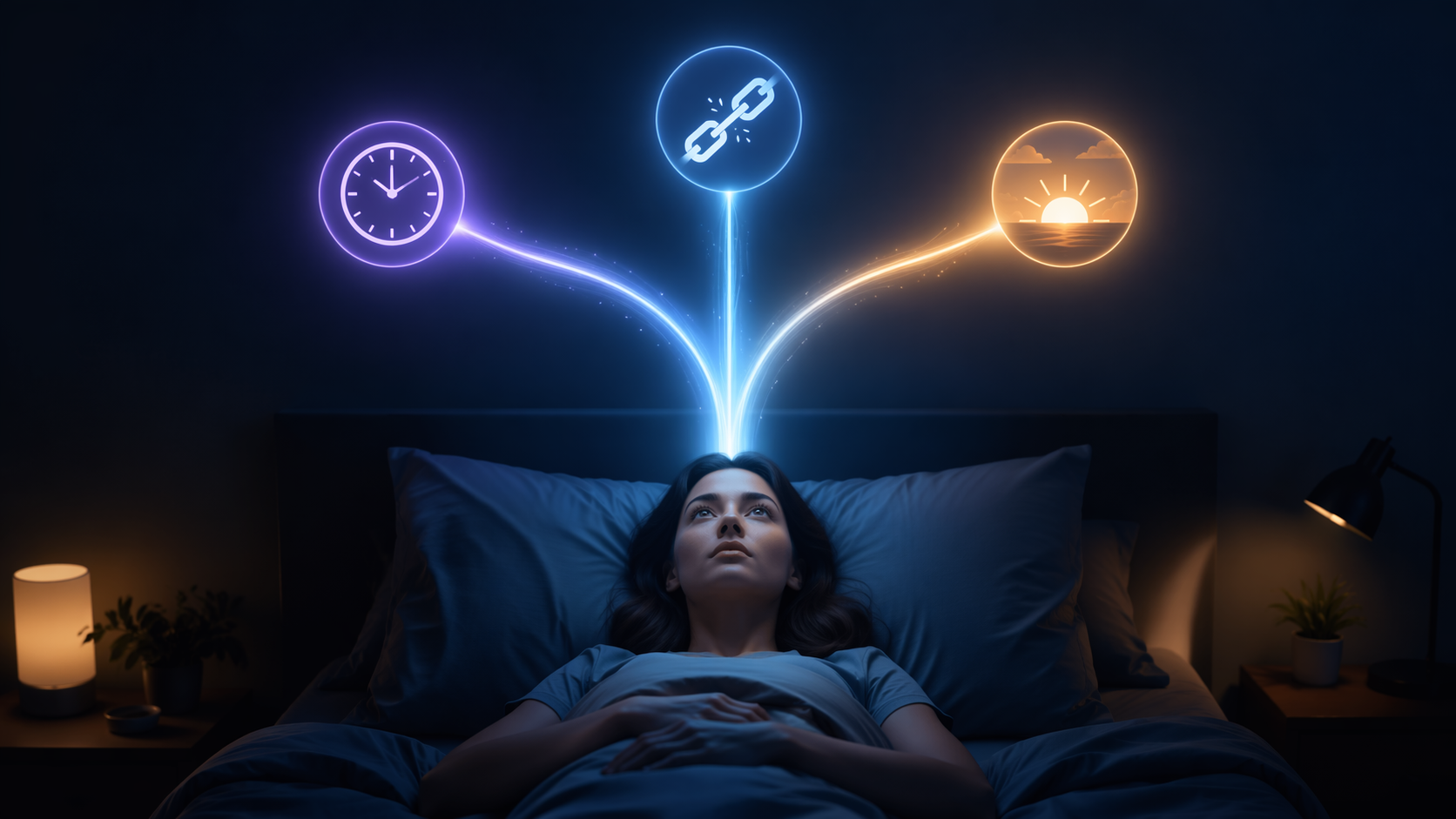
This is not one problem with one fix. Some survivors are stuck in hyperarousal and cannot drift off. Some sleep long but never feel restored. Some technically sleep, but only in scraps. The surface complaint is the same - exhaustion - yet the night is behaving differently underneath.
| Pattern | What it feels like | Why it matters |
|---|---|---|
| Insomnia | Long sleep latency, repeated awakenings, or a night spent clock-watching | Often points to disrupted sleep regulation, pain, anxiety, or medication timing rather than simple bad habits |
| Hypersomnia | Sleeping 12+ hours and still waking depleted | Can reflect the brain's recovery burden, not laziness or poor effort |
| Sleep fragmentation | Dozens of brief wake-ups or very light sleep | Total hours can look acceptable while recovery never consolidates |
That pattern shift is not rare in brain injury recovery. In brain injury populations, sleep disorders are about three times more common than in the general population, and nearly 60% of people with TBI report long-term sleep difficulty.[3] The best evidence is strongest for ruptured aneurysm survivors, so elective or unruptured aneurysms need a little more caution when you apply it, but the direction is still hard to miss: a survivor can look functionally intact and still be sleeping like an injured nervous system.
Fatigue changes the plan
Western et al. found clinically significant fatigue in 50-70% of aneurysmal subarachnoid hemorrhage survivors even years after hemorrhage, and only 10.3% of previously employed patients returned to full pre-hemorrhage workload.[2] Fatigue severity was linked with failure to return to work, which is a useful reminder that 'tired' after aSAH can mean lost cognitive capacity, not just lower stamina.

The more useful split is mental fatigue versus physical fatigue. In the itemized analysis, survivors rated low motivation, mental fatigue, and sensitivity to stress as the most disabling problems, while exercise-induced fatigue was rated least bothersome.[2] That is why the person who can walk farther but cannot answer email is not being inconsistent; the body may be doing better than the brain.
- Mental fatigue calls for pacing, fewer context switches, shorter cognitive sprints, and routines that reduce the amount of decision-making recovery has to spend on ordinary tasks.
- Physical fatigue is the heaviness that follows exertion. It still deserves careful activity progression, but it should not be treated as the whole explanation when the real limitation is mental drain.
- Depression and anxiety can add weight to both sleep and fatigue, yet fatigue can persist independently of depression in many fatigued aSAH patients, so mood treatment and fatigue treatment are not the same conversation.[2]
What to change first
The first move is to name the dominant pattern. If the problem is insomnia, a steadier wake time usually matters more than trying to force an earlier bedtime. If the pattern is hypersomnia, long daytime naps can protect you short term but also keep nighttime sleep from consolidating. If fragmentation is the problem, the goal is to reduce interruptions and look for treatable causes instead of assuming the answer is more time in bed.
- Keep the wake time steady, even after a bad night, so the body clock has something predictable to follow.
- Use short naps when needed, but watch for late-day sleep that pushes the next night later.
- Make the bedroom dark, cool, and low-stimulation; keep the pre-bed routine boring rather than elaborate.
- If a strategy makes next-day attention worse, it is not helping recovery yet, even if it sounds like good sleep hygiene.
If the problem feels more like your body clock is off than pure inability to sleep, melatonin may be worth discussing as a timing tool, not a sedative; see When Melatonin Actually Works for Insomnia.
Medications and sleep aids
Some sleep disruption is medication-related as well as neurological. If levetiracetam is part of your regimen, bring timing, sleep pattern, and next-day cognition to the clinician who prescribed it before changing anything on your own; the question is whether the drug is compounding the problem, not whether you can out-will it.
OTC sleep aids containing diphenhydramine are a bad trade in brain recovery because they can worsen memory and new learning.[3] If you want the broader safety view for anticholinergic sleep aids, see Which Sleep Aids Are Safe for People Over 65?.
If you are still trying to decide whether the dominant problem is insomnia, hypersomnia, or fragmented sleep, the broader How to Choose the Right Sleep Aid for Your Sleep Problem guide can help you map the symptom to the kind of help that fits it best.
The safest frame is simple: identify the sleep pattern, separate mental fatigue from physical fatigue, review medications and OTC products with a clinician, and choose options that protect cognitive recovery first. Sleep after a brain aneurysm is not random; it starts to make sense when every kind of tiredness is no longer treated as the same problem.
Comments
Join the discussion with an anonymous comment.