
A frustrating kind of recovery problem shows up when the obvious boxes are already checked. Training is planned. Protein is high enough. Rest days exist. The wearable says the night was long enough. Yet the next session feels strangely flat, soreness hangs around, and the body acts as if it did not get the memo.
That mismatch is where the link between recovery and sleep quality becomes more useful than the usual command to “sleep more.” Total sleep time matters, but physical recovery depends heavily on what kind of sleep filled those hours. For muscle repair, fuel restoration, and inflammatory control, the load-bearing stage is deep NREM sleep, also called slow-wave sleep.
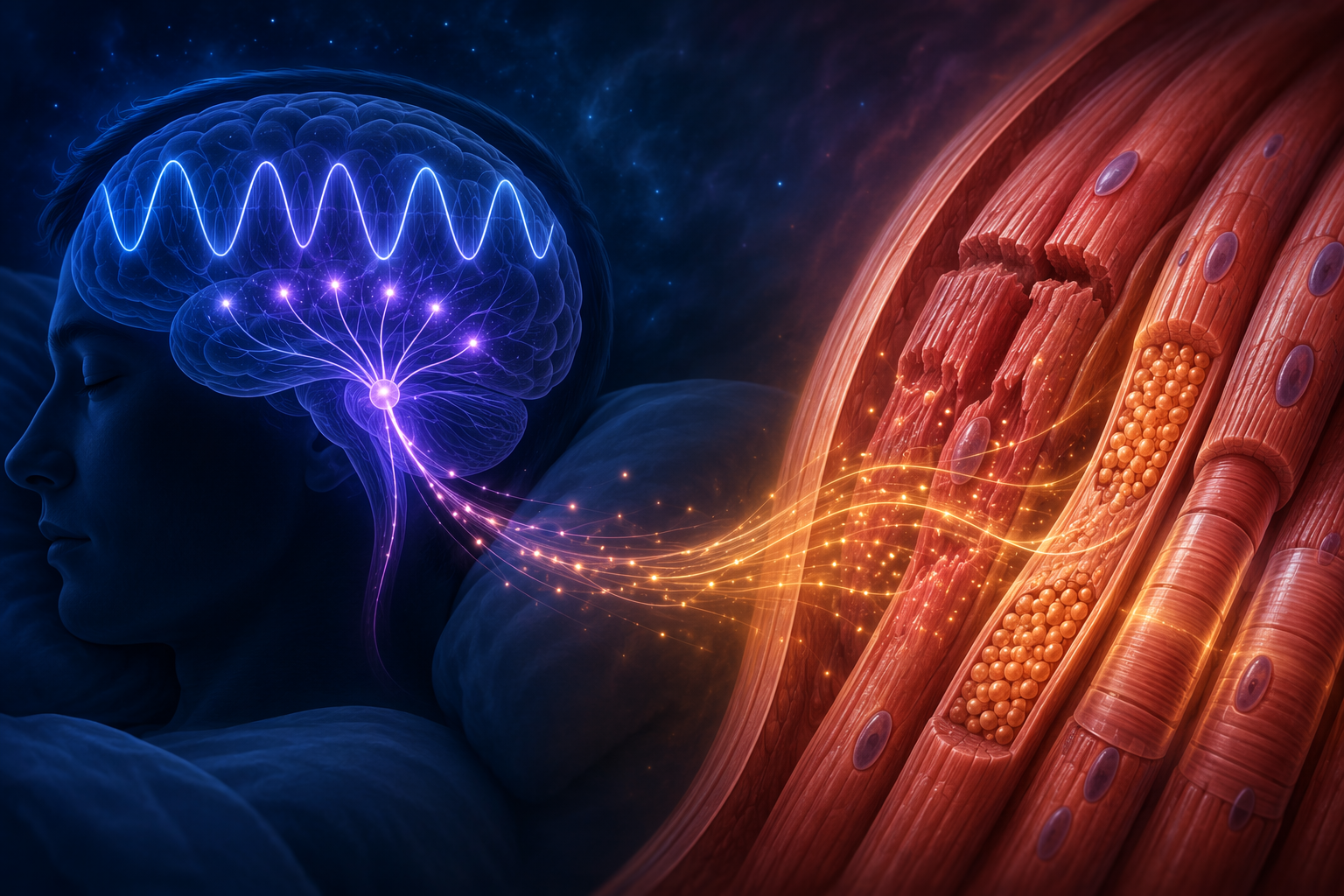
The biology is more specific than “the body heals while you sleep.” During deep NREM sleep, hypothalamic growth hormone-releasing hormone neurons help stimulate growth hormone release. That hormone signal is tied to muscle protein synthesis, glycogen resynthesis, and regulation of inflammatory activity. If deep sleep is repeatedly shortened or fractured, the repair environment can weaken even when bedtime looked responsible from the outside.
The Circuit That Makes Sleep Feel Less Passive
The most useful recent development is not another recovery score. It is a 2025 UC Berkeley study in Cell, reported by UC Berkeley News, that identified a growth hormone-releasing hormone pathway linked to the locus coeruleus, a brainstem region involved in arousal, and described a feedback system in which sleep promotes growth hormone release while growth hormone helps regulate sleep depth.[1]
The caveat belongs near the mechanism, not hidden after the advice: the work was conducted in mice. Mouse circuitry can clarify the map, but it does not automatically become a human bedtime protocol. Still, the finding matters because it gives a plausible biological explanation for something lifters, runners, and field-sport athletes notice before they can explain it: recovery is not just time spent unconscious. It is a regulated state.
In that model, deep sleep is not merely a quiet period in which repair happens elsewhere. The sleeping brain is helping set the hormonal conditions for repair, and the hormone signal feeds back into the sleep-depth system itself. That bidirectional loop is the part that changes the conversation. It suggests that poor sleep quality can damage recovery in two ways at once: by reducing the deep sleep that helps trigger growth hormone release, and by disturbing the feedback that supports sleep depth.
This is also why two nights with the same duration can feel different. One night may include consolidated slow-wave sleep early in the night. Another may be broken by alcohol, stress, late stimulation, pain, heat, noise, or repeated awakenings. The clock can record both as “seven hours,” while the recovery biology sees two different nights.
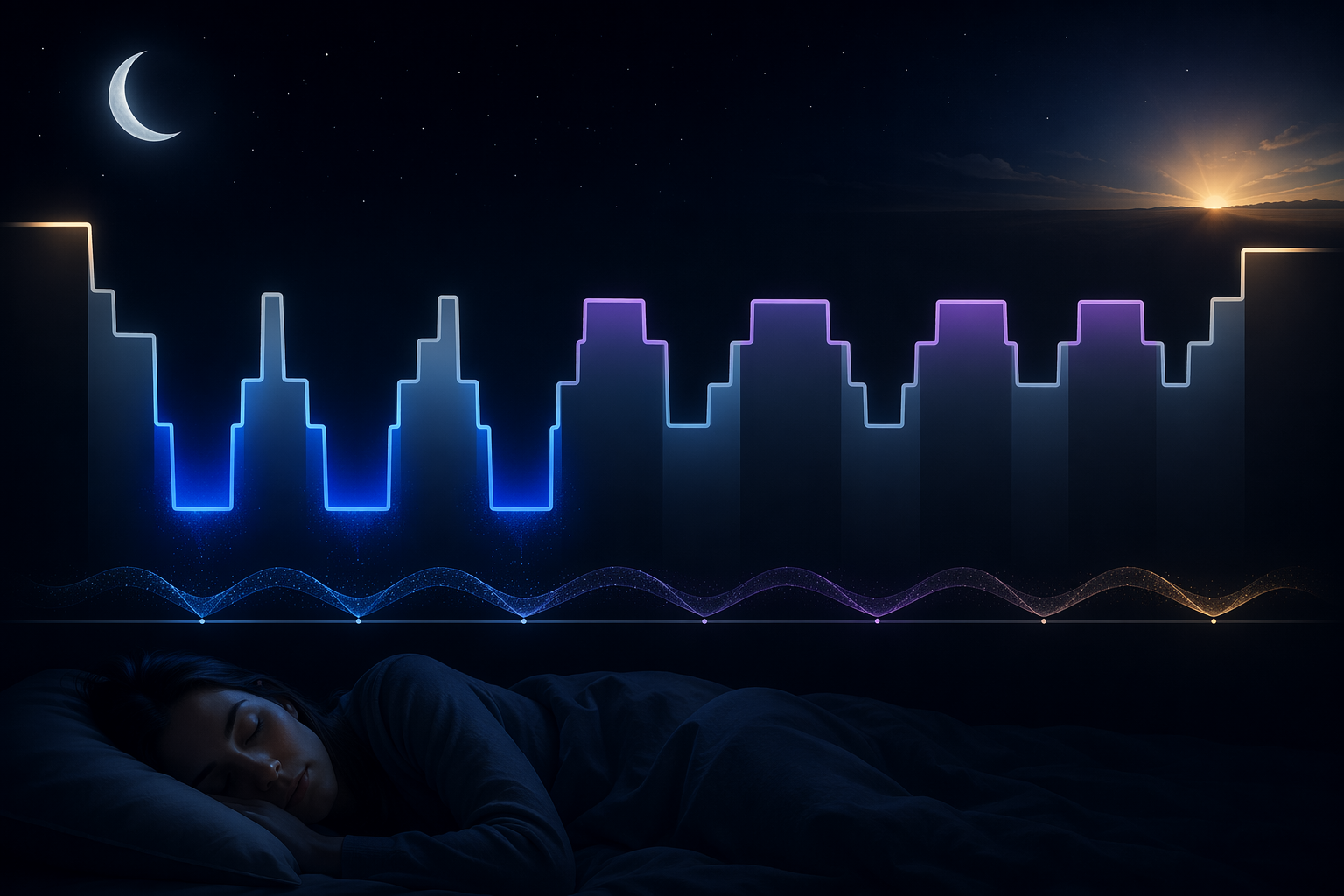
For readers who want the stage-by-stage background, the useful starting point is how NREM and REM sleep architecture works. The short version for recovery is that deep NREM sleep is not evenly distributed across the night. It tends to be more prominent earlier, which is one reason fragmented first-half sleep can be especially costly.
From Brain Signal To Muscle Repair
Growth hormone gets talked about badly in gym culture because the conversation often jumps straight to enhancement, shortcuts, or vague “anabolic” language. In normal physiology, its role is less theatrical and more important. It helps coordinate tissue repair, substrate use, and adaptation after stress. Training creates the signal for remodeling; sleep helps provide the internal conditions in which remodeling can proceed.
After resistance training, muscle fibers do not simply “grow” because protein was eaten. Mechanical tension, amino acid availability, insulin dynamics, inflammatory signaling, and sleep-linked hormonal patterns all interact. Deep sleep matters because it is one of the recurring windows when growth hormone release is naturally supported. That does not make sleep a replacement for training or nutrition. It makes it part of the same system.
The downstream effects are practical. Muscle protein synthesis is the process that repairs and builds contractile tissue after training. Glycogen resynthesis restores stored carbohydrate in muscle, which matters for repeated hard sessions, intervals, sport practice, and higher-volume lifting. Inflammation regulation helps the body move from the necessary early stress response toward resolution instead of letting soreness, stiffness, and sensitivity linger.
This is the difference between recovery as a mood and recovery as a set of biological jobs. Feeling motivated is useful. A clean spreadsheet is useful. Neither one refills muscle glycogen or coordinates tissue repair by itself.
What Happens When Sleep Quality Breaks
Sleep loss does not just make exercise feel harder. In a 2011 study by Skein and colleagues, a 30-hour sleep deprivation protocol reduced pre-exercise muscle glycogen from 310 to 209 mmol·kg⁻¹ dry weight, alongside changes in stress physiology relevant to performance and recovery.[2]
That finding is a useful pressure test for the mechanism. Glycogen is not a vibe. It is stored fuel. If sleep disruption is severe enough to alter fuel availability before exercise, then poor recovery after bad sleep is not merely a perception problem. The system that should restore readiness is being asked to work with a weaker hormonal and metabolic setup.
The inflammatory side follows the same logic. Training creates controlled damage and immune activity. Sleep helps regulate the immune cascade that follows. When sleep becomes fragmented, that regulation can become noisier, and the felt result may be soreness that outlasts the session that caused it, tenderness that spreads, or a general sense that easy work is costing too much. For a broader look at the immune side of sleep, see how sleep supports the immune system.
There is a longer consequence here than one disappointing workout. If hard training keeps arriving before repair catches up, movement quality can degrade and tissues may be loaded while they are less prepared. Sleep is not the only variable in injury risk, but stalled recovery is one path by which a manageable training block can turn brittle. That connection is covered more directly in sleep and sports injury risk.
Athlete Data Shows The Extreme, Not The Whole Story
Elite-athlete sleep research is useful, but it should not hijack the recovery conversation. Most people reading this are not managing transcontinental travel, media schedules, and daily competition pressure. Still, the extreme end shows how common sleep strain can be even among people whose bodies are their work.
A review discussing athlete sleep reported that Leeder and colleagues found elite athletes averaged about 6.5 hours of sleep, and Doherty and colleagues reported that 64% to 65% of 338 elite athletes self-reported poor sleep on the Pittsburgh Sleep Quality Index.[3]
Those numbers should not be read as proof that every serious exerciser sleeps poorly. They do show that high discipline around training does not automatically create high-quality sleep. Recovery can be treated as a performance value while the actual sleep architecture doing much of the work remains underprotected.
Protect Slow-Wave Sleep Before Chasing Recovery Hacks
The first practical move is not exotic. Protect the conditions that let deep NREM sleep consolidate, especially in the first part of the night. That means treating late-night disruption as a recovery variable, not just a lifestyle preference.
- Keep the sleep window consistent enough that the brain can predict when deep sleep should occur.
- Avoid turning the first half of the night into a series of awakenings from alcohol, heavy late meals, overheating, noise, or bright light exposure.
- Place very intense evening training carefully if it leaves the nervous system too activated to sleep deeply.
- Take pain and lingering soreness seriously, because discomfort can fragment the same sleep needed to resolve it.
- Use caffeine timing as a recovery decision, not only as a productivity decision.
None of this is glamorous. It is also where many recovery plans quietly fail. A person can buy better supplements and still keep interrupting the slow-wave sleep that supports the growth hormone pulse they were hoping to amplify.
If the immediate question is how to increase deep sleep, the evidence is more uneven than social media makes it sound. Some levers are sensible because they reduce fragmentation; others are marketed as if they can force a specific sleep stage. The better standard is whether an intervention improves sleep continuity and next-day function without creating new problems. For a closer evidence review, see natural ways to support deep sleep.
Pre-Sleep Protein Is Plausible, But Not Magic
Nutrition does have a place in this story, especially for people training hard enough that overnight amino acid availability may matter. Snijders and colleagues reported that roughly 30 grams of pre-sleep protein increased nocturnal muscle protein synthesis by 22% in the study context described.[4]
That is worth knowing, and it fits the mechanism: deep sleep supplies a hormonal repair environment, while dietary protein supplies amino acids. But the caveat is real. This is a specific finding from a single study context, not a universal rule that everyone needs a shake before bed or that more protein will rescue poor sleep architecture.
The practical version is restrained. If total daily protein is already appropriate and a small pre-sleep protein serving does not worsen digestion, reflux, sleep onset, or calorie targets, it may be a reasonable lever. If it makes sleep lighter or more interrupted, it is working against the larger recovery system it was meant to support.
This is also where blood-flow restriction training, growth hormone, and sleep recovery conversations can get tangled. For readers exploring that angle, BFR training and sleep recovery is a more focused continuation. The same rule applies: a stronger recovery signal is only useful if the underlying sleep environment can support adaptation.
Use Trackers To Ask Better Questions
Sleep tracking has moved from niche curiosity to mainstream health behavior. ResMed’s 2026 Global Sleep Survey, covering 30,000 people in 13 countries, reported that wearable sleep tracking rose from 16% to 53% in one year, while sleep remained a top health priority even as quality stayed difficult for many people to achieve.[5]
That surge is not automatically good or bad. The useful question is what the data changes. If a tracker makes someone notice that late alcohol, hot rooms, or inconsistent bedtimes coincide with lower deep sleep and worse training readiness, it has done something useful. If it turns every morning into a moral judgment about a proprietary score, it may add stress without improving the recovery biology.
Consumer devices estimate sleep stages; they do not directly measure the full neuroendocrine circuit. Their deep-sleep number should be treated as a trend signal, not a lab-grade verdict. The better use is pattern recognition across weeks: what repeatedly precedes better sleep continuity, fewer awakenings, and better training readiness?
If the dashboard makes REM sleep look like the hero and deep sleep like just another colored bar, it is worth learning what those labels actually mean. The distinction is covered in deep sleep vs. REM tracker meaning. For physical recovery, REM still matters for the whole organism, but the muscle-repair and growth-hormone conversation leans heavily toward NREM slow-wave sleep.
When Recovery Feels Stuck
When training feels flat despite adequate programming and nutrition, the sleep question should become more specific. Not “Did I spend enough time in bed?” but “Was my deep sleep protected well enough for the repair system to run?”
| What you notice | What to examine first |
|---|---|
| Soreness lingers longer than expected | Fragmented sleep, pain-related awakenings, late alcohol, or heavy late meals |
| Intervals or high-volume sessions feel unusually flat | Sleep loss or disruption that may be limiting glycogen restoration |
| Recovery score looks fine but the body feels under-recovered | Whether the score is hiding awakenings, stress, or reduced deep-sleep trends |
| Protein intake is high but adaptation feels slow | Whether sleep architecture is supporting the hormonal repair environment |
| Aches become more persistent | Whether poor sleep and inflammation are reinforcing each other |
Pain adds another loop worth respecting. Discomfort can fragment sleep; fragmented sleep can make the nervous system more sensitive; heightened sensitivity can make training feel harsher than the workload alone would predict. That cycle is explored more fully in the chronic pain and sleep cycle.
The calibrated answer is simple, but not simplistic. High-quality sleep, especially consolidated deep NREM sleep, is a necessary part of physical recovery biology. It supports the growth hormone-linked repair environment that helps muscle protein synthesis, glycogen restoration, and inflammatory regulation proceed. Improving it can support recovery, but no single supplement, protein dose, or tracker score substitutes for the architecture of the night itself.
References
- Sleep strengthens muscle and bone by boosting growth hormone levels, UC Berkeley researchers discover how, UC Berkeley News, September 8, 2025.
- Intermittent-sprint performance and muscle glycogen after 30 h of sleep deprivation, Medicine & Science in Sports & Exercise, 2011.
- Sleep and the athlete: narrative review and 2021 expert consensus recommendations, British Journal of Sports Medicine, 2021.
- The Impact of Pre-sleep Protein Ingestion on the Skeletal Muscle Adaptive Response to Exercise in Humans: An Update, Frontiers in Nutrition, 2019.
- ResMed’s 2026 Global Sleep Survey, ResMed Newsroom, 2026.





Comments
Join the discussion with an anonymous comment.