
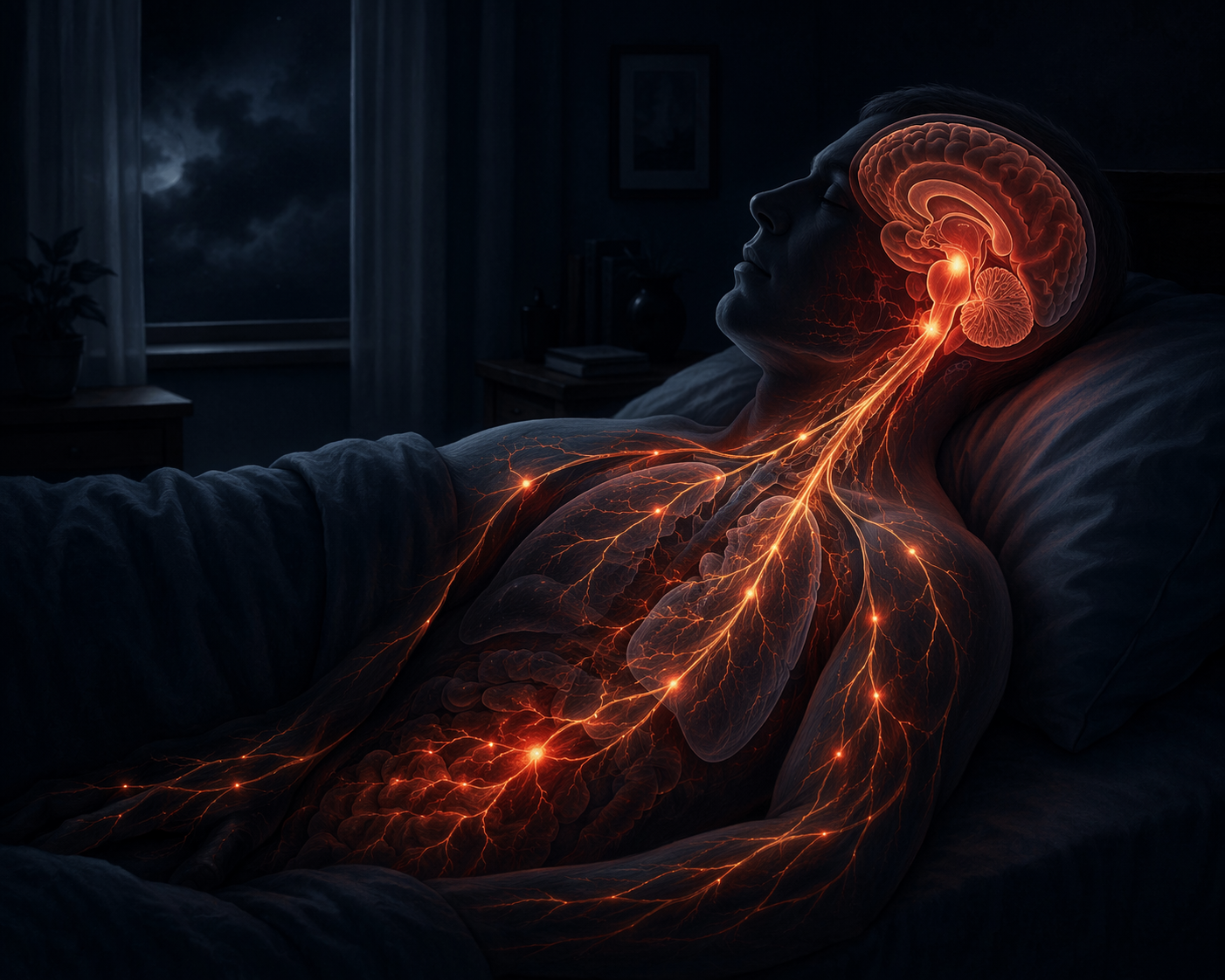
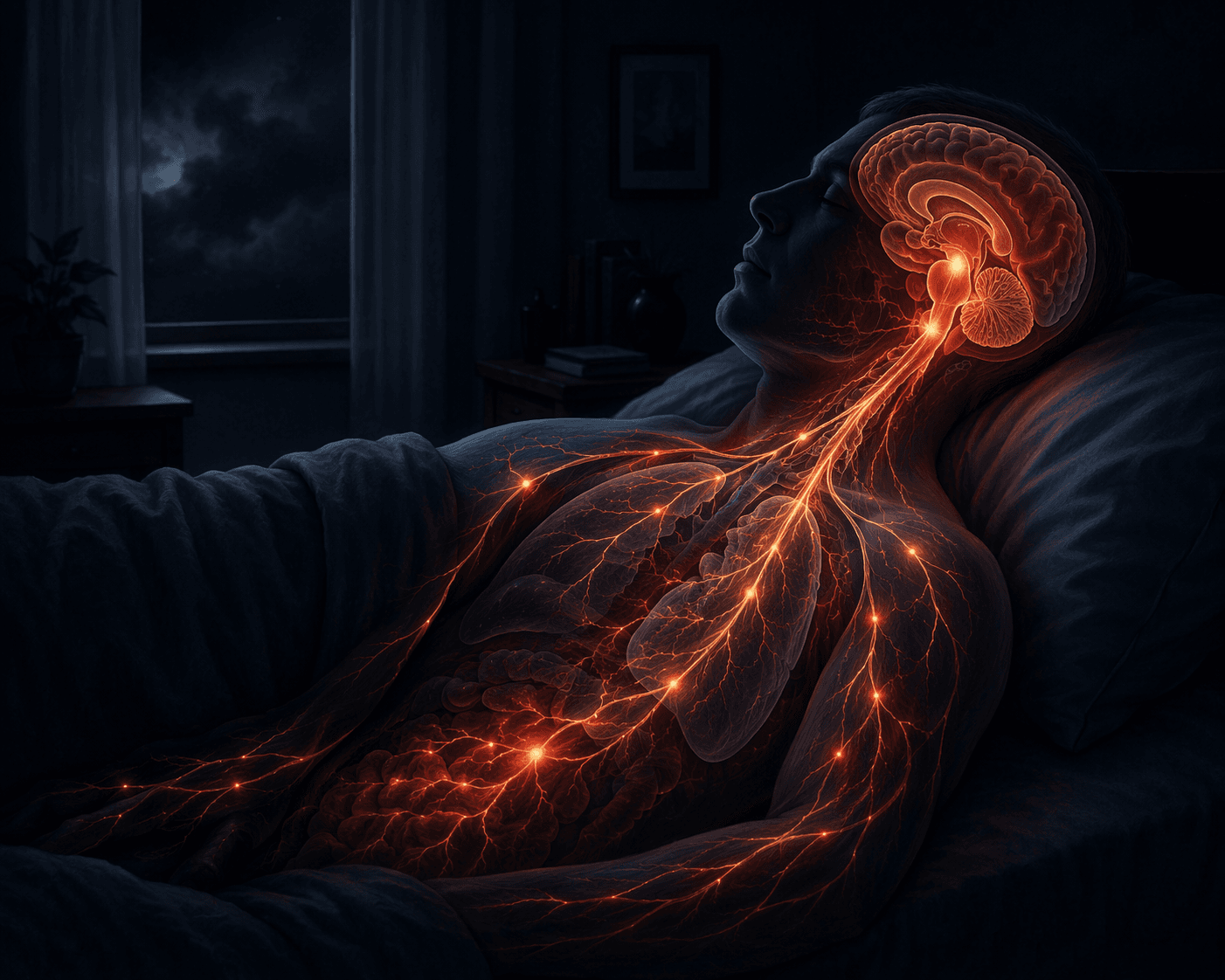
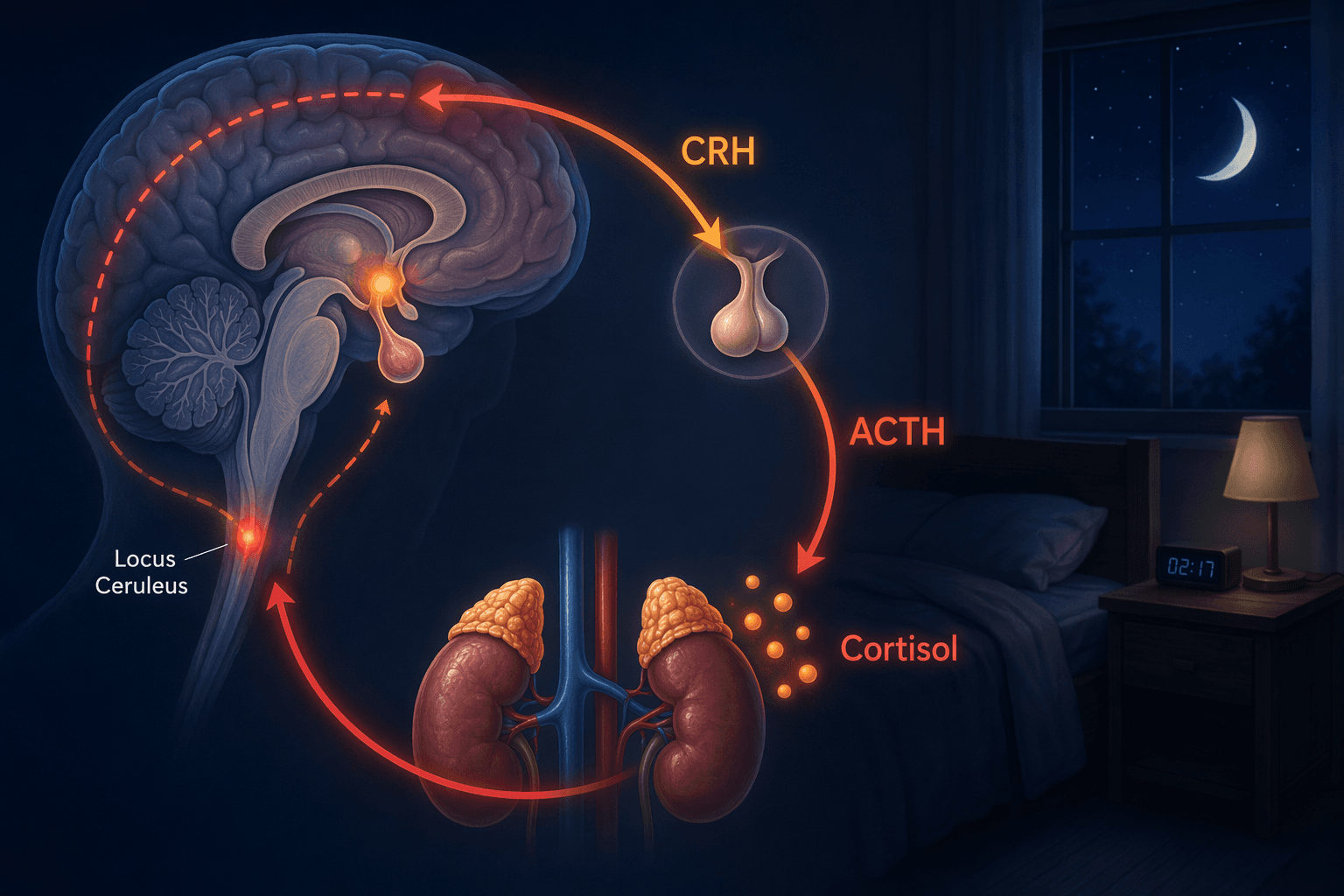
At the hour when the body is supposed to hand off the shift, anxiety while sleeping keeps it on duty. The problem is not only racing thoughts; it is a nervous system that has failed to downshift. A foundational review described the core pattern this way: the usual nighttime drop in CRH, HPA-axis output, and locus ceruleus activity does not occur cleanly, so cortisol and autonomic arousal stay high when they should be falling [1].
What stays switched on when sleep should start
CRH from the hypothalamus drives ACTH from the pituitary, which drives cortisol from the adrenals. In normal sleep onset, that cascade should ease. In anxiety while sleeping, the brake does not hold, and the locus ceruleus keeps signaling alertness through the autonomic nervous system. That leaves the body closer to a watch state than a rest state, which is why the experience often feels physical before it feels verbal [1].
How the stress signal changes the night
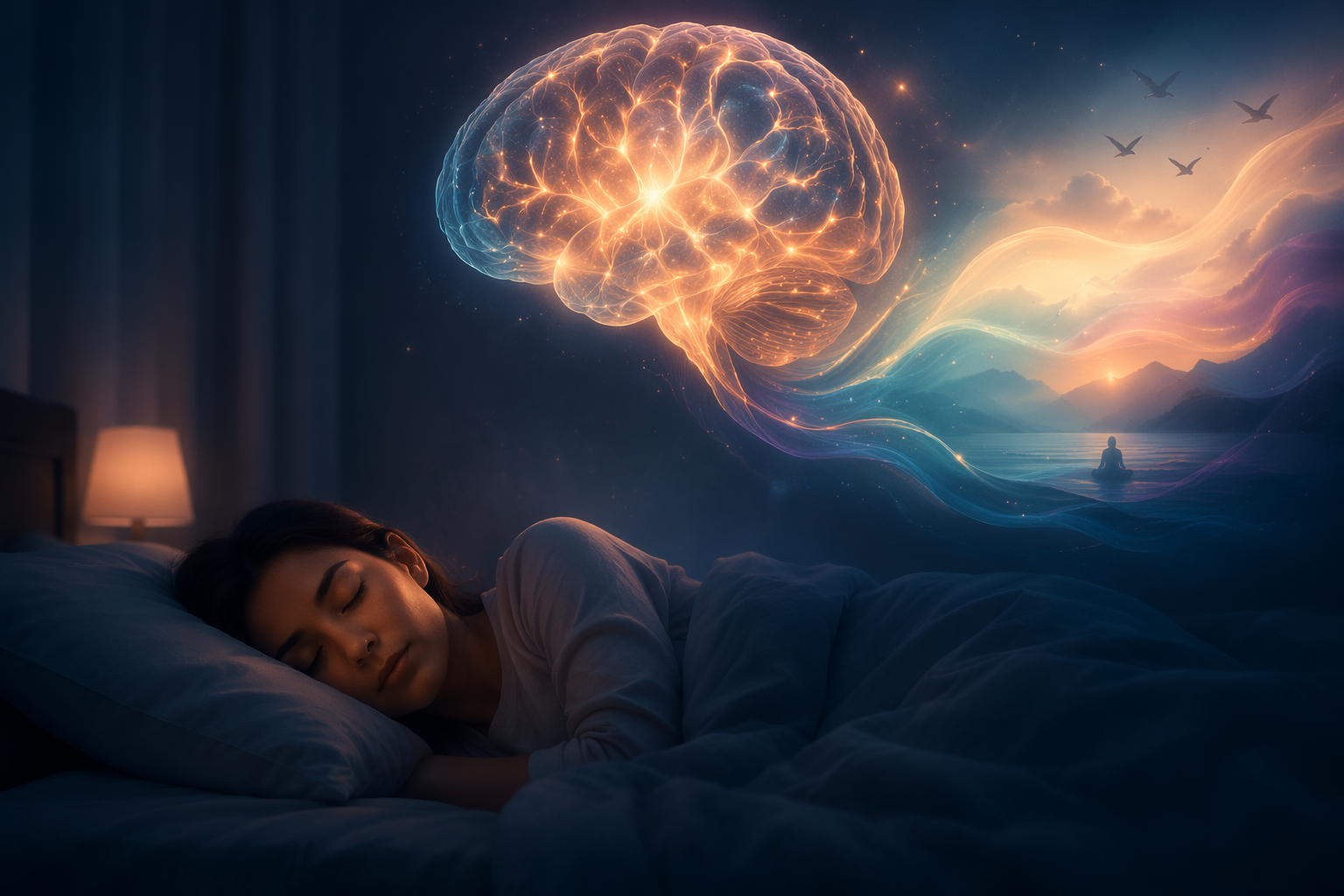
Sleep Foundation's summary of the sleep-anxiety literature translates that chemistry into architecture: less slow-wave sleep, more fragmentation, REM disruption, and less time in restorative sleep among more anxious sleepers [2].
- Slow-wave sleep is reduced, so the deepest part of the night is thinner.
- Sleep fragments more easily, so awakenings become part of the pattern.
- REM becomes less stable, so the night loses another layer of normal cycling.
The important part is not just that the night feels lighter. The brain never settles fully into the sequence it needs for sleep to restore the system, so morning does not arrive with the same physiologic reset.
Why one bad night pushes on the next one
Once sleep is broken, the next day often carries more threat sensitivity, more body tension, and a shorter fuse. That matters because anxiety disorders are common enough to show up in routine care; Cleveland Clinic notes they affect about 40 million Americans [3].
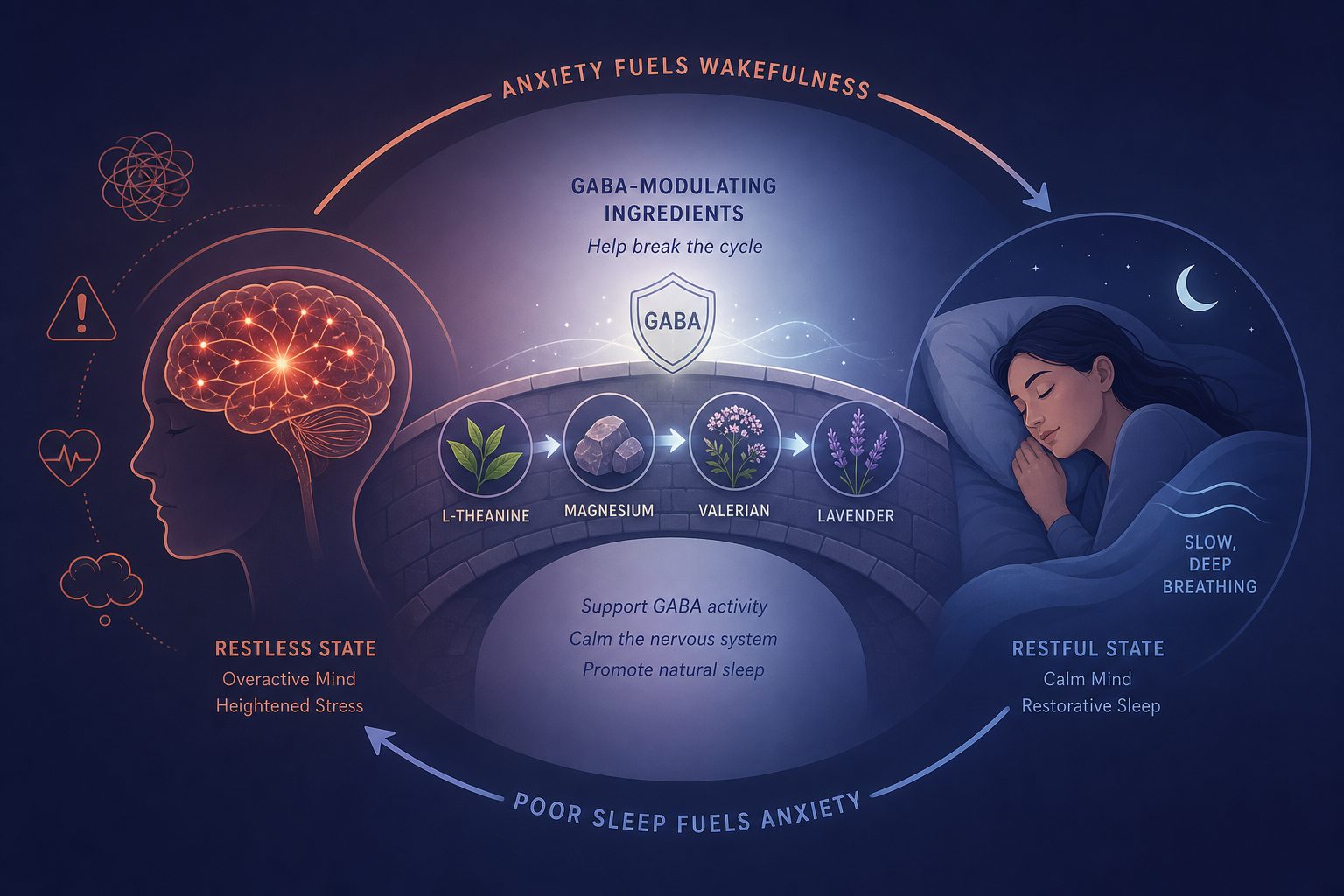
The loop runs in both directions. Stanford Medicine's 2025 summary highlighted the sleep-mental health connection and cited older research, including a 2006 study in which insomnia was associated with a 17-fold higher later risk of anxiety; the exact multiplier depends on the study and population, but the directional point holds [4].
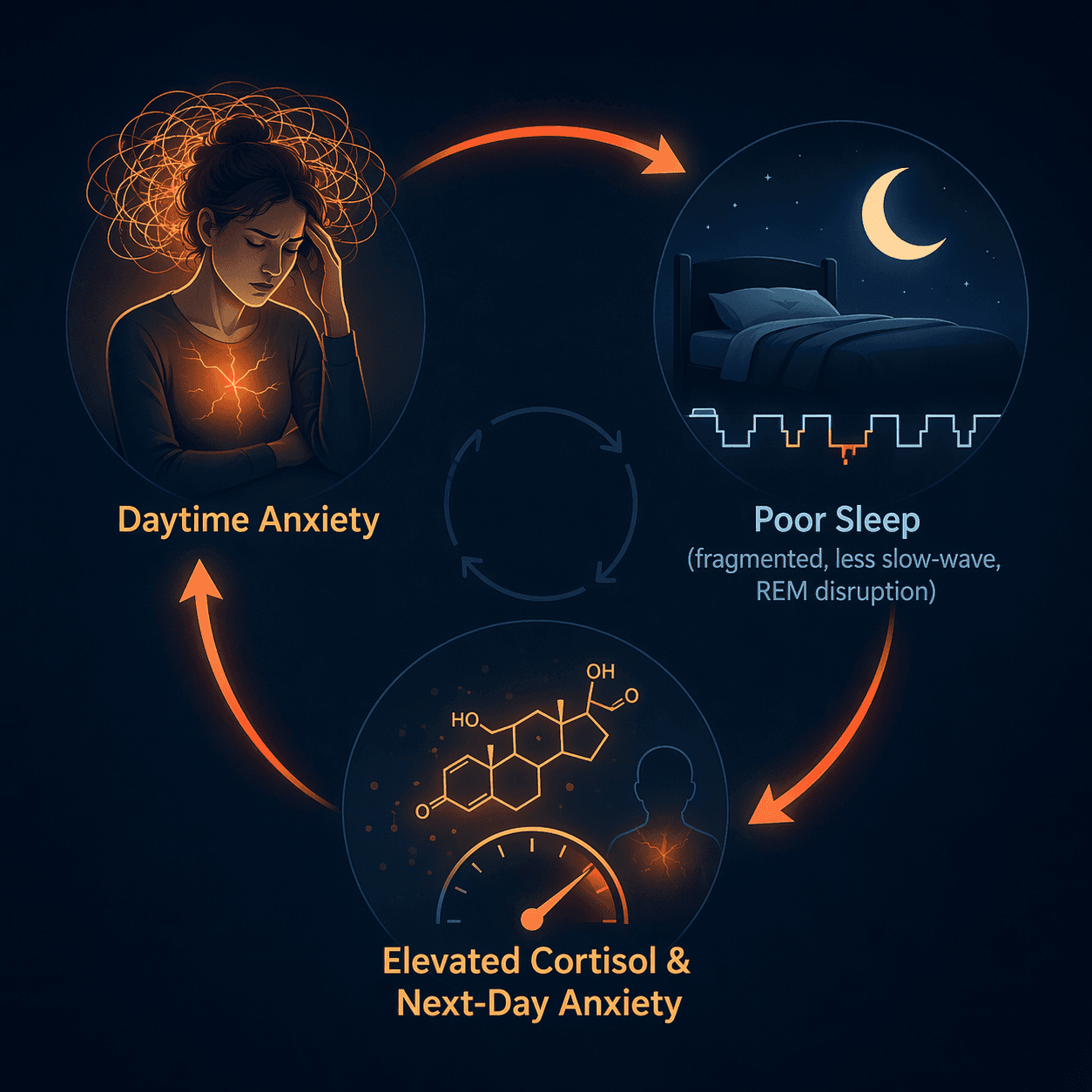
So poor sleep does not just follow anxiety; it can feed the next day’s anxiety, which then raises arousal again at night. That is why the pattern can feel self-sealing.
Why generic sleep advice misses the target
This is also why a simple wind-down routine often helps less than people hope. If the arousal system is already primed, reassurance and good intentions rarely overpower it on command. Some people also make the problem worse by monitoring sleep too closely, turning bedtime into a performance review instead of a cue to disengage.
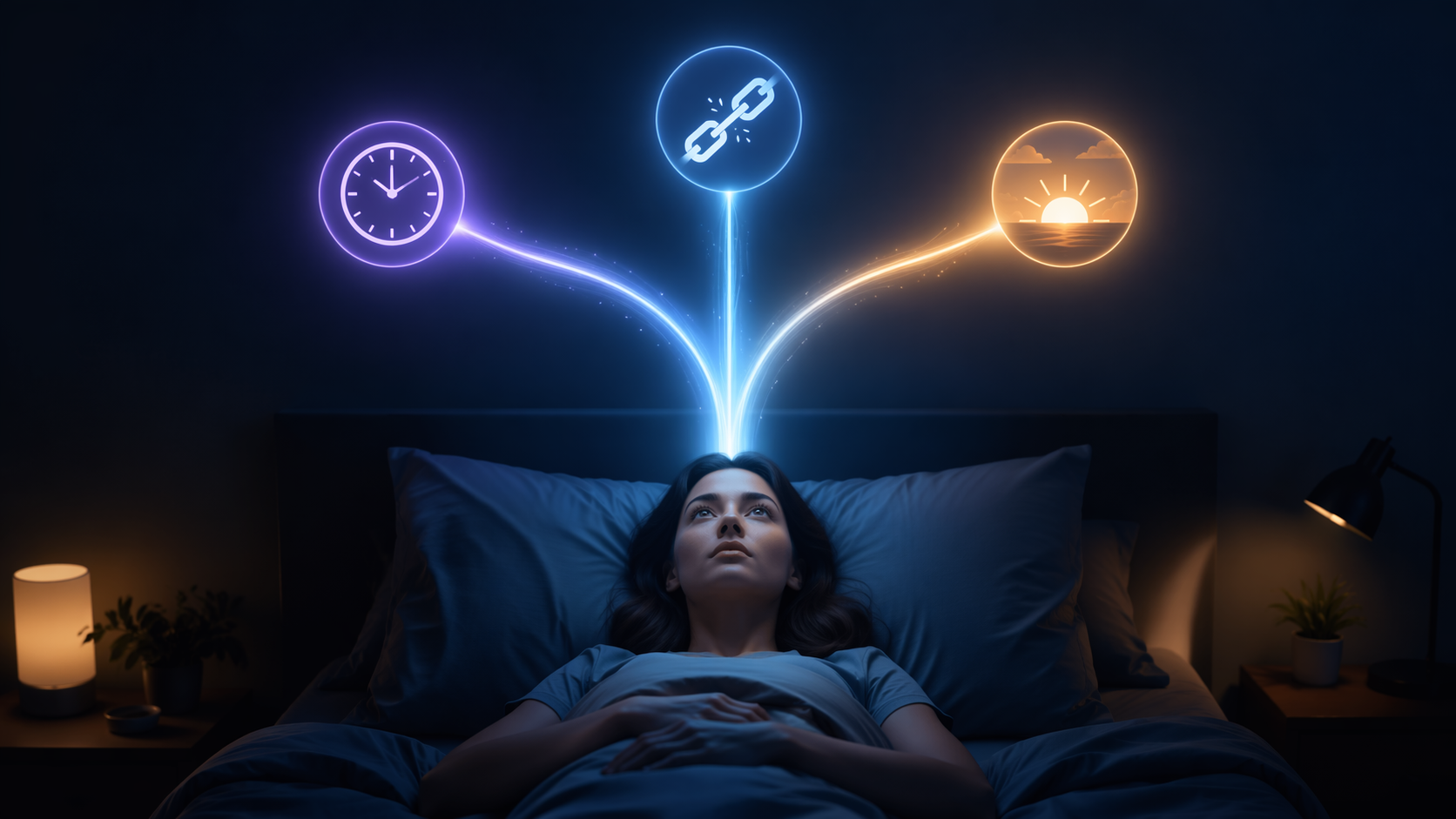
The more clinically useful conversation is about treatments that change the arousal system itself. The CBT-I framework for chronic insomnia is built for that kind of problem because it targets the conditioned alertness, not just the calendar of bedtime habits. When anxiety while sleeping is understood as a neurobiological state, not a character flaw, the next useful conversation is about treatments that address arousal itself, especially CBT-I rather than reassurance alone.
References
- Sleep and anxiety disorders — Dialogues in Clinical Neuroscience, 2003
- Anxiety and Sleep — Sleep Foundation
- Sleep Anxiety — Cleveland Clinic
- Sleep-Mental Health Connection: What Science Says — Stanford Medicine, August 2025
Comments
Join the discussion with an anonymous comment.