
For a CPAP user, hurricane preparedness is not only about stress or a bad night of sleep. The problem starts when the power flickers, the bedroom outlet goes dead, and the machine that usually keeps an airway open becomes one more appliance waiting on the grid. One bad night is hard enough. Several nights without PAP therapy can bring back snoring, daytime sleepiness, and the kind of exhausted decision-making nobody needs during cleanup or evacuation.
The best evidence on this specific problem comes from a survey of positive airway pressure users after Hurricane Irma. Kwasnik and colleagues identified 651 patients who had been adherent to PAP therapy before the storm; 117 responded. Among those respondents, 67% reported that they could not use their device after the hurricane, with an average interruption of 4.3 days. Symptoms returned quickly: 64% reported snoring again, and 42% reported daytime sleepiness. [1]
That does not prove every CPAP user in every hurricane will lose therapy for that long. The study had an 18% response rate, and it relied on people remembering what happened after a specific storm. Still, it is hard to wave away the central point: these were not people casually ignoring treatment. They had already been using PAP successfully, and the storm still broke the routine. [1]
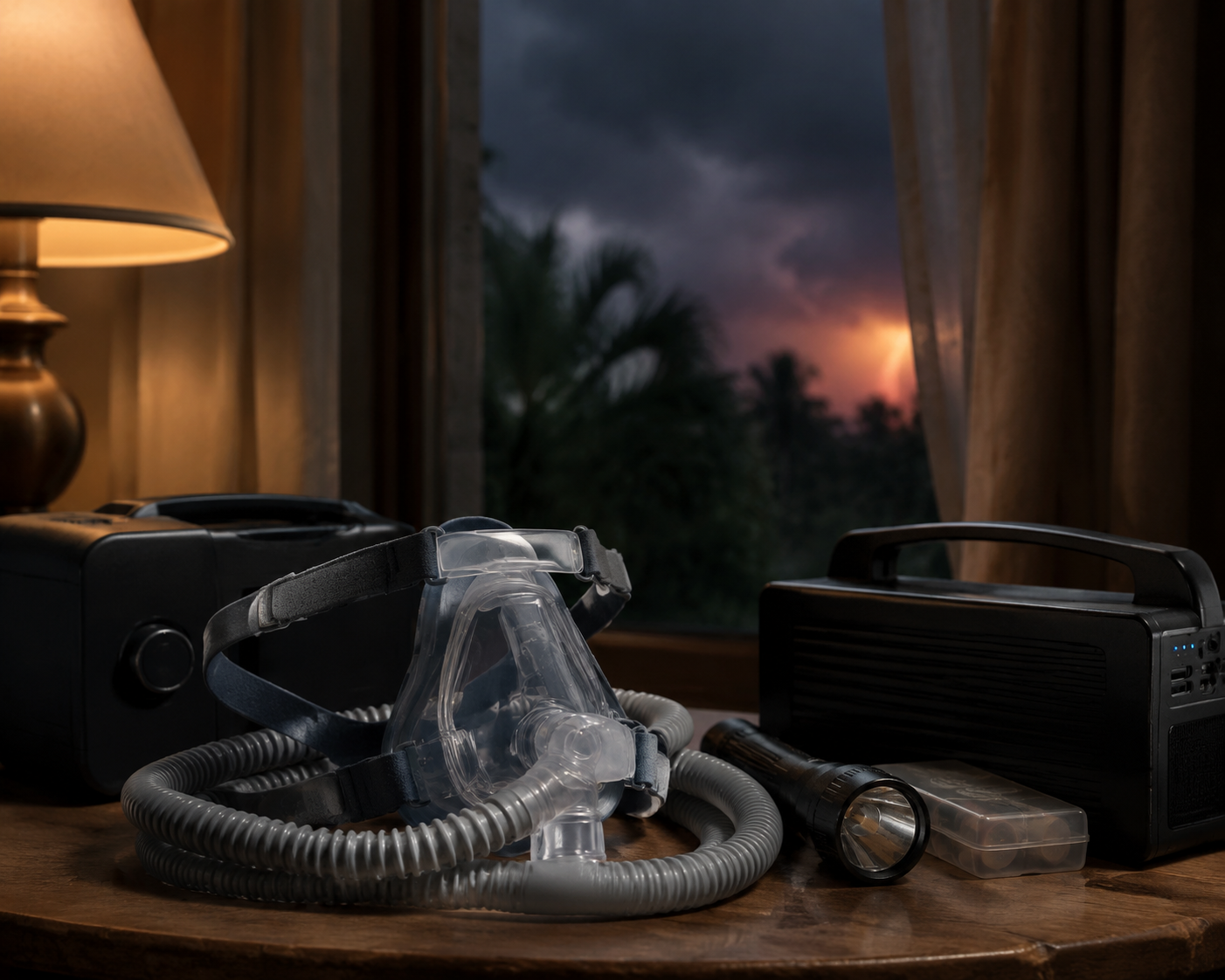
The failure point is usually practical, not personal
After Irma, power loss was the dominant reason patients could not keep using PAP, but it was not the only one. Some patients also described being overwhelmed or not prioritizing PAP during evacuation and storm recovery. [1] That matters because a CPAP plan that stops at “buy a battery” misses the messier part: leaving home, sleeping somewhere unfamiliar, keeping track of supplies, and trying to make medical decisions while everyone else is looking for gas, ice, Wi-Fi, or a working refrigerator.
General hurricane advice is still important: follow local evacuation orders, prepare emergency supplies, and plan for communication and shelter. The Red Cross also treats sleep as part of managing disaster stress, not as a luxury. [2] For someone with obstructive sleep apnea, that point becomes more concrete. Sleep is tied to a device, and the device needs power, parts, and a place to run.
Build the power plan in nights, not gadget promises
Battery listings can make backup power sound cleaner than it is. A 100 Wh CPAP battery may provide roughly 1 to 2 nights of therapy with humidification off, while a 160 Wh or larger option may cover 2 or more nights, but those are rough benchmarks rather than guarantees. [3] Your machine model, pressure setting, mask leak, use of a humidifier, heated tubing, inverter losses, and battery age can all change the result.
The better question is not “What battery should I buy?” It is “How many nights of therapy do I need if the power fails, and what settings will I use to stretch that power?” For many users, the biggest conservation move is turning off the humidifier and heated tubing. That may make therapy less comfortable, especially in dry indoor air, but comfort and runtime pull against each other when the battery is finite.
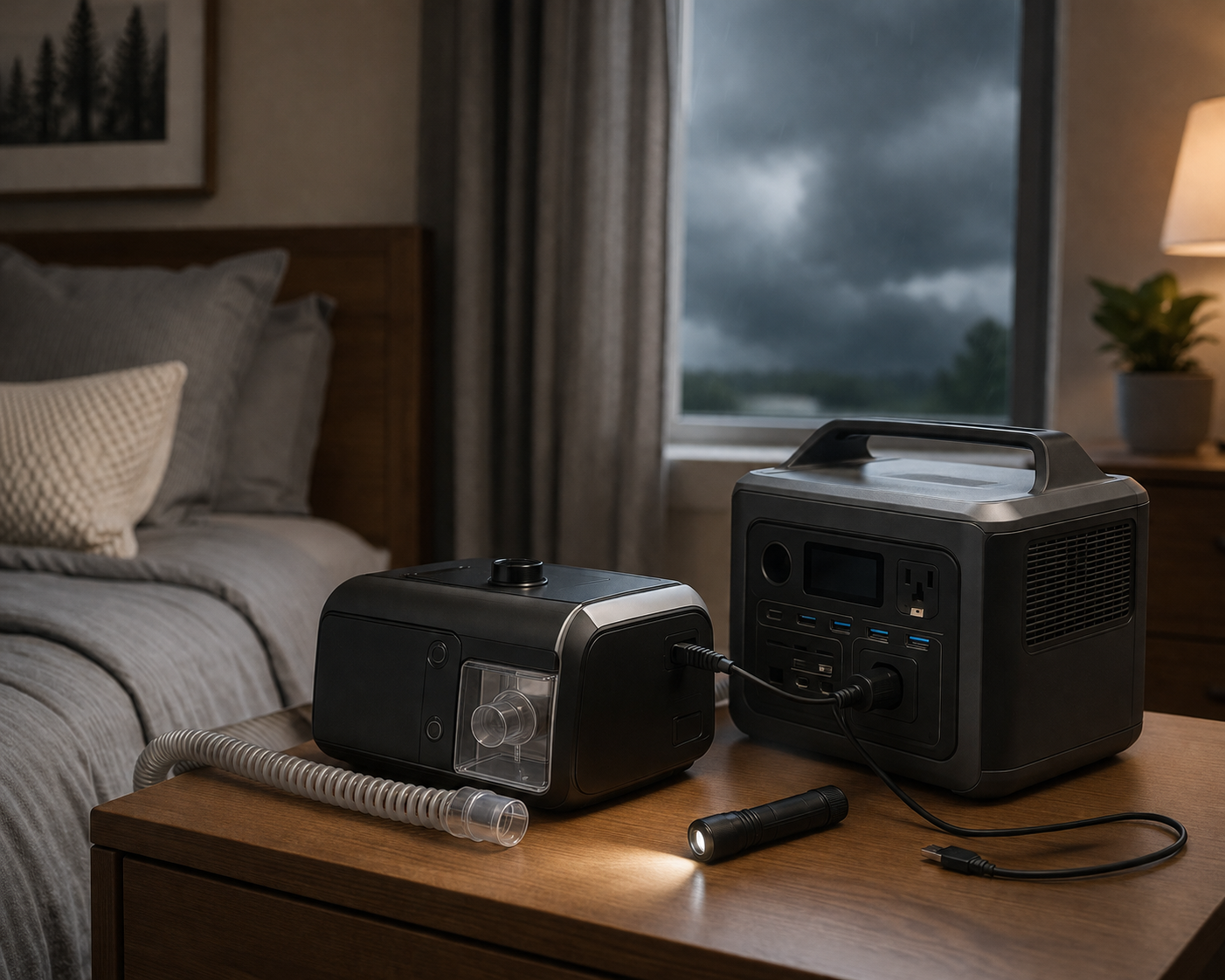
Before the season gets busy, look up your own CPAP or APAP power requirements in the device manual or manufacturer specifications. If your setup supports DC power, compare that option with AC inverter use, because conversion can waste energy. If you already own a battery, test it for a full night on your storm settings before you need it. A battery that looks fine on a shelf can be a nasty surprise at 2 a.m.
- Charge every CPAP battery, power station, and phone power bank before landfall.
- Pack the correct CPAP power cord, DC adapter if used, and any manufacturer-approved battery cable.
- Turn off humidification and heated tubing when conserving power, unless your clinician has told you not to.
- Run a home test using the exact battery and settings you expect to use during an outage.
- Think in nights of therapy: one night at home, one night displaced, one night waiting for power crews.
If you use supplemental oxygen, a ventilator mode, or a more complex PAP setup, do not treat consumer battery estimates as enough. That situation needs device-specific planning with your medical equipment provider or clinician before storm season.
Evacuation changes the CPAP problem
At home, the CPAP machine has a little ecosystem around it: outlet, nightstand, distilled water if you use humidification, mask wipes or cleaning supplies, extra cushion, extension cord, and a familiar place to set everything down. Evacuation strips that ecosystem apart. The machine may be remembered, while the mask stays hanging by the bed. The battery may make it into the car, while the charging cable sits in a drawer.
The American Sleep Apnea Association’s disaster guidance emphasizes preparing PAP equipment, power options, and medical information ahead of time rather than trying to reconstruct them during a disruption. [4] That is the right frame. Evacuation packing is not just luggage; it is treatment continuity.
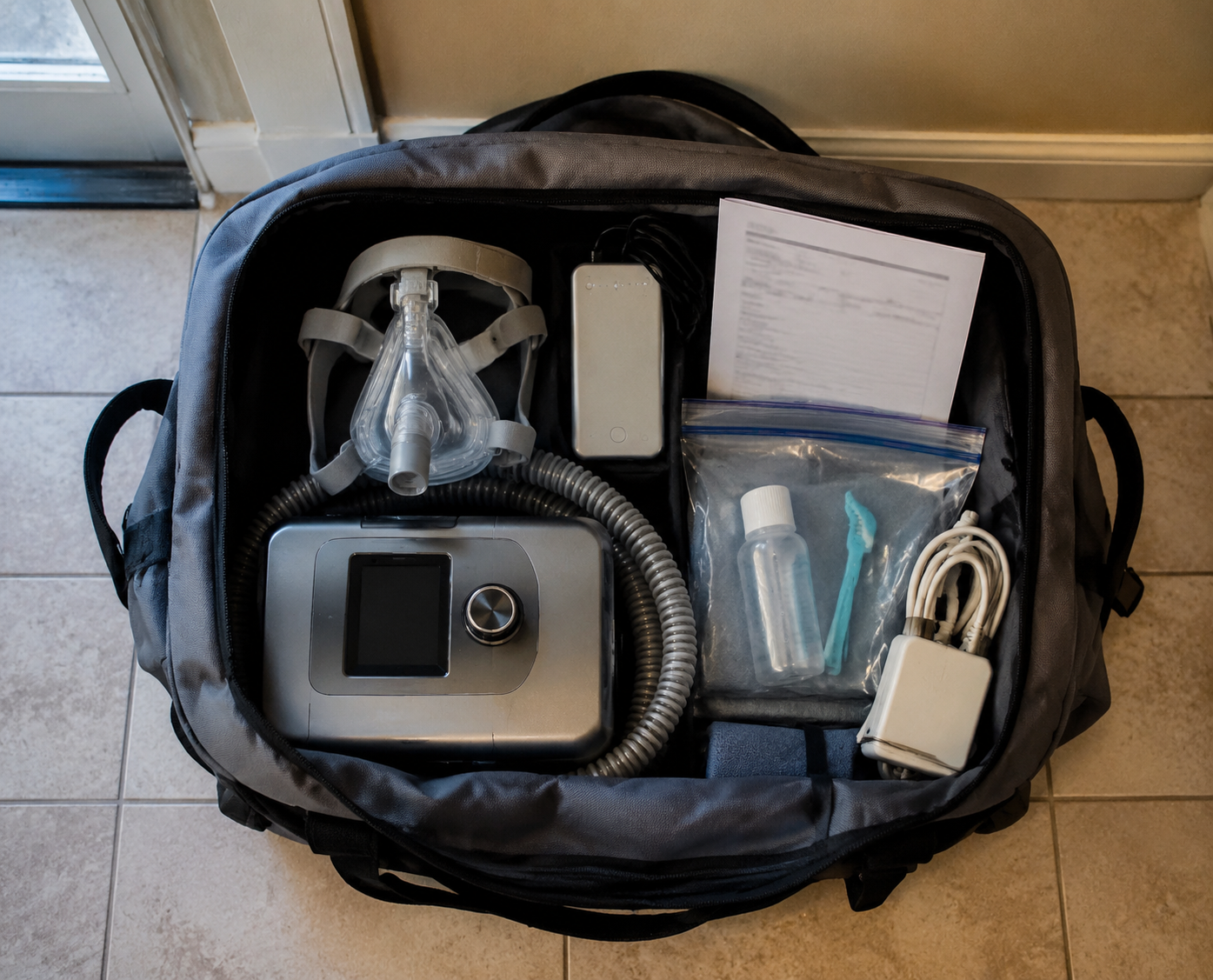
| Pack this | Why it matters during evacuation |
|---|---|
| CPAP/APAP machine | The main device should travel in a carry bag, not loose in a trunk where it can be damaged or buried. |
| Mask, headgear, and tubing | A machine without the interface is just a box. Pack the pieces together. |
| Power cord, battery cable, and charger | Many failures are cord failures. Keep the full power chain with the device. |
| Backup mask cushion or nasal pillows if available | A torn cushion or missing pillow can stop therapy even when power is available. |
| Prescription, device settings, and provider contact | Paper and digital copies help if equipment is lost, damaged, or questioned at a shelter or hotel. |
| Simple cleaning supplies | Displacement can make full cleaning difficult, but basic maintenance keeps the setup usable. |
| Extension cord or small power strip where allowed | Hotel and shelter outlets are rarely placed with CPAP users in mind. |
Keep the prescription and settings in two places: one printed copy in the CPAP bag and one photo or file on your phone. If a caregiver may be the person packing or speaking for you, make sure they know where those copies are. This is not overdoing it; it is how a plan survives a rushed departure.
Shelters, hotels, and relatives’ homes
If you expect to evacuate to a shelter, ask ahead when possible whether there are policies for medical devices and power access. Do not assume an outlet will be beside your cot. If you stay in a hotel, check the bed area before unpacking everything else: find the outlet, test it, and decide where the machine can sit without the hose pulling on the mask. At a relative’s home, ask for an outlet near the bed before the house fills up with people and chargers.
A small extension cord can solve a real problem, but only if the place you are staying allows it and it can be used safely. Keep cords out of walkways, avoid overloaded strips, and do not run equipment where water intrusion is possible.
Stress belongs in the plan because it changes what people actually do
Disaster stress does not have to be dramatic to interfere with CPAP use. It can look like deciding the machine is too much trouble for one night, staying awake listening for roof noise, falling asleep in a chair, or leaving the mask in the car because the house is crowded. In the Irma survey, non-power barriers included feeling overwhelmed and not prioritizing PAP during evacuation. [1]
This is where a short written plan earns its keep. When the forecast is still changing and stores are still open, decide who packs the CPAP bag, who charges the battery, where the prescription copy lives, and what the fallback will be if power is lost. The point is not to remove stress. It is to keep stress from making every decision from scratch.
- Put a reminder on your phone to switch the battery to charge mode before the storm arrives.
- Tape or tag the CPAP power cord so it does not get confused with other electronics.
- Store the mask and tubing inside the CPAP travel bag, not near it.
- Tell one other person in the household that the CPAP bag leaves with you.
- Choose the sleeping location early if you evacuate, before everyone is tired.
If PAP is unavailable, use temporary harm reduction
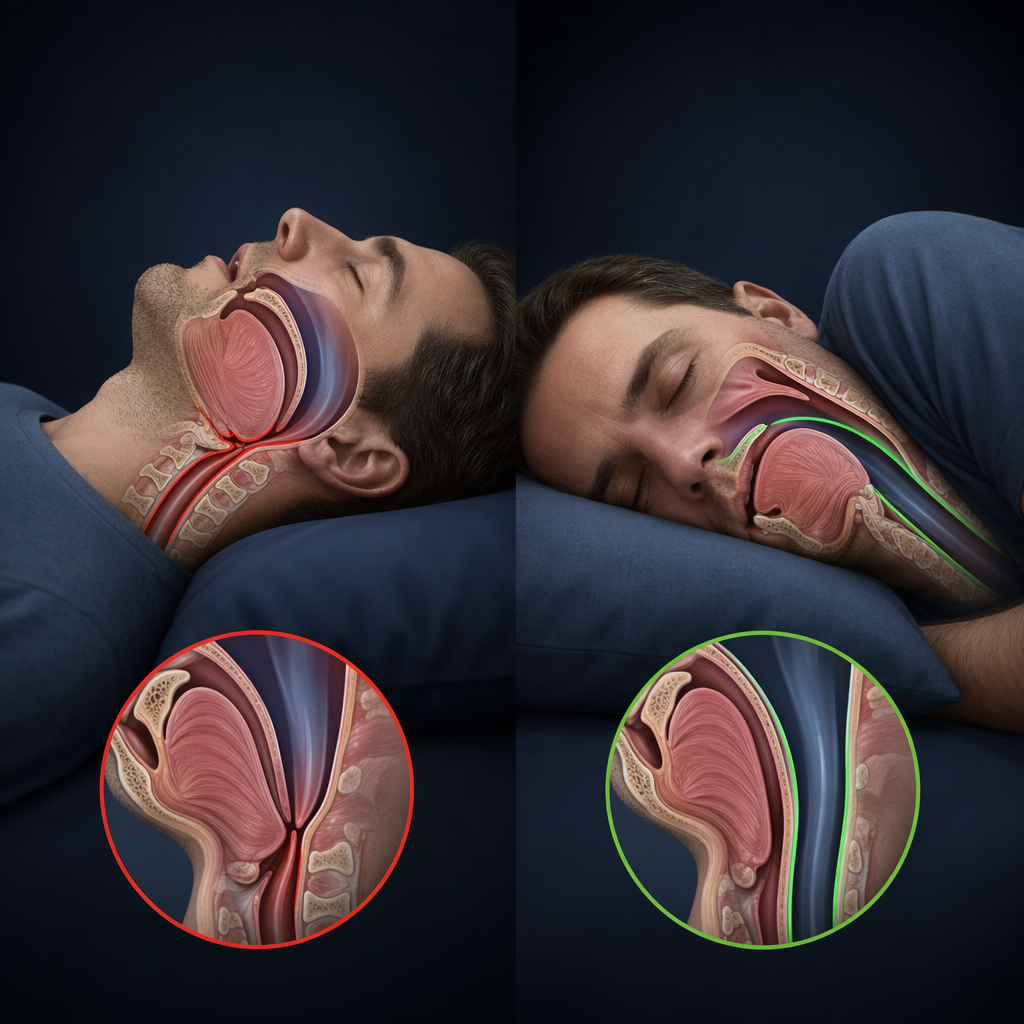
Side-sleeping, avoiding alcohol, and using nasal dilator strips are not equivalent to PAP therapy. They are temporary fallback choices for times when the machine cannot be used. They may reduce some obstruction or make breathing easier for some people, but they should not be treated as a replacement for prescribed treatment.
If you already know that sleeping on your back makes your apnea or snoring worse, pack what helps you stay on your side. If alcohol is part of your usual wind-down routine, skip it during an outage or evacuation; it can make airway collapse and fragmented sleep harder to manage. If nasal congestion often interferes with your mask use, pack the nonprescription supplies you normally tolerate, and ask your clinician or pharmacist about safe options before storm season if you are unsure.
People with severe sleep apnea, significant heart or lung disease, or a history of dangerous sleepiness should be especially cautious about going without PAP. If your therapy is interrupted and you develop concerning symptoms, contact a clinician or seek urgent care based on the severity of the situation.
A compact CPAP hurricane plan
The Irma data make one thing plain enough: previously adherent PAP users can still lose therapy when a storm turns treatment into logistics. [1] A workable plan does not need to be fancy. It needs to cover the parts most likely to fail.
- Know your device power needs and test your battery with humidifier and heated tubing off.
- Charge backup power before landfall and keep the correct cables with the machine.
- Pack the CPAP, mask, tubing, cleaning basics, prescription, settings, and provider contact in one grab-and-go bag.
- Keep duplicate prescription and settings information in both paper and phone-accessible form.
- Plan where the machine will run if you evacuate: shelter, hotel, relative’s home, or vehicle charging option.
- Use side-sleeping, alcohol avoidance, and nasal strips only as temporary fallback measures if PAP is unavailable.
A backup battery is valuable, but it is only one piece. The real plan is power, equipment, documents, evacuation, and a limited fallback if therapy stops anyway. That is what reduces the odds that a hurricane turns one disrupted night into several nights without treatment.
References
- A survey of positive airway pressure therapy preparedness and outcomes following Hurricane Irma. Journal of Clinical Sleep Medicine, 2020.
- Hurricane Safety. American Red Cross.
- CPAP Hurricane Preparedness Plan. CPAP.com.
- How to Manage Your Sleep During a Disaster. SleepHealth.org.

Comments
Join the discussion with an anonymous comment.