
The oddest part of norovirus recovery is often the timing. The vomiting slows. The bathroom trips become less urgent. You can keep fluids down. Then night arrives and your body behaves as if the illness still has unfinished business: hot flashes, shallow sleep, vivid feverish dreams, thirst, cramps, 3 a.m. urination, and a morning that feels borrowed rather than restorative.
That mismatch is one reason the phrase “norovirus outbreak disrupts sleep and recovery” has become more than a search query in summer 2026. CDC NoroSTAT data show 1,287 reported norovirus outbreaks through June 2026, while Virus Watcher has described an atypical summer wave affecting more than 12 states, including Utah, Texas, Ohio, and North Carolina.[1][2] That does not make this season an unprecedented catastrophe: the seasonal total remains within the historical interquartile range tracked by CDC.[1] The unusual part is the summer attention, and the practical consequence is familiar: more people are trying to understand why a stomach bug that often peaks quickly can leave sleep ragged for much longer.
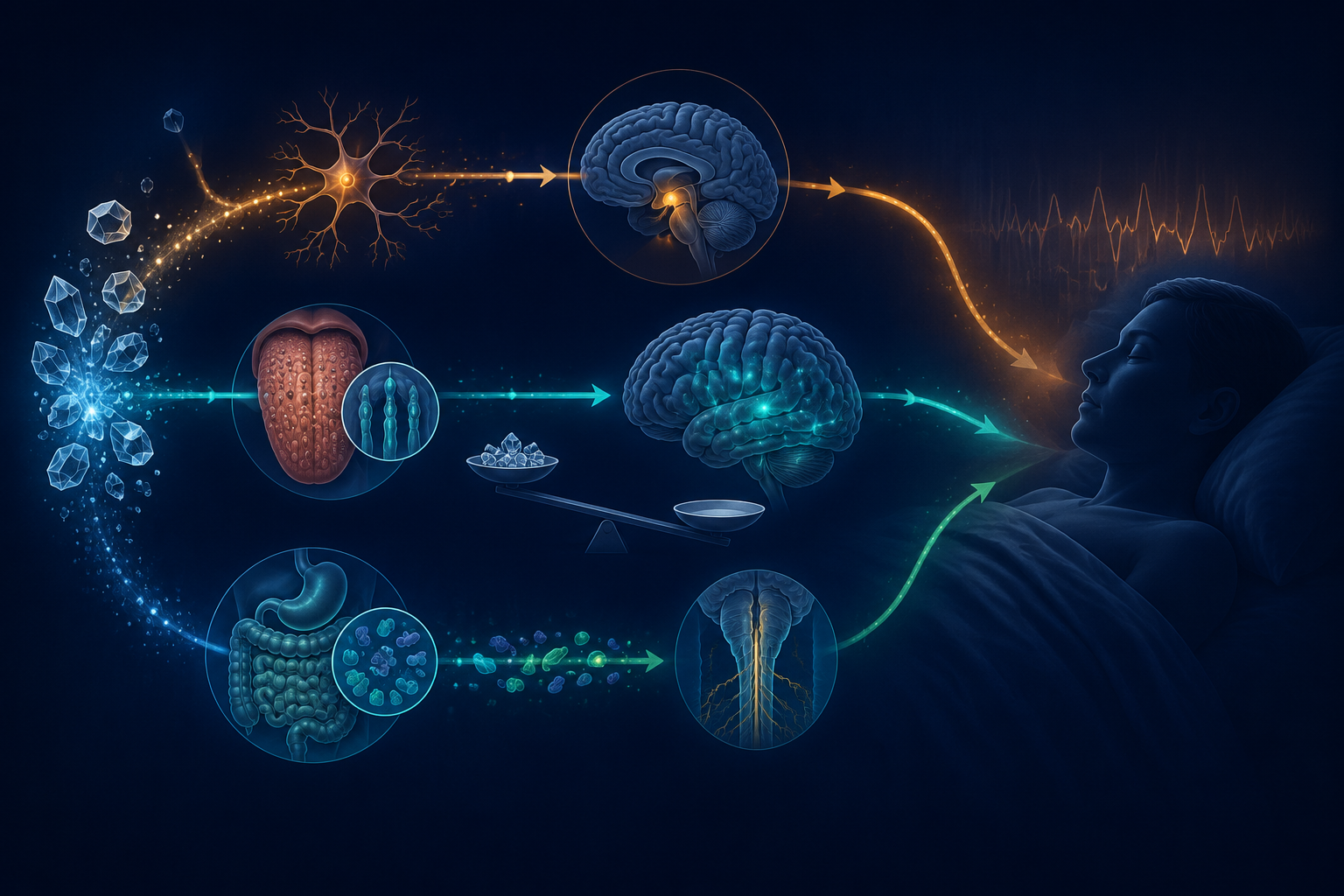
Norovirus is best known for acute gastroenteritis — vomiting, diarrhea, nausea, stomach pain, and sometimes fever or body aches — with symptoms often lasting 1 to 3 days.[3] Sleep disruption does not require a separate mystery diagnosis. The virus can disturb sleep through several overlapping routes: fever changes sleep architecture, fluid loss fragments the night, immune cytokines deliberately reshape sleep stages, and the gut microbiome may remain unstable after the worst gastrointestinal symptoms have passed.
If you need immediate positioning, hydration, and night-by-night tactics, the practical companion is How to Actually Sleep When a Stomach Bug Hits. This article is the slower answer: what is happening under the hood when the stomach calms down but sleep still feels wrong.
The short infection can leave a longer sleep tail
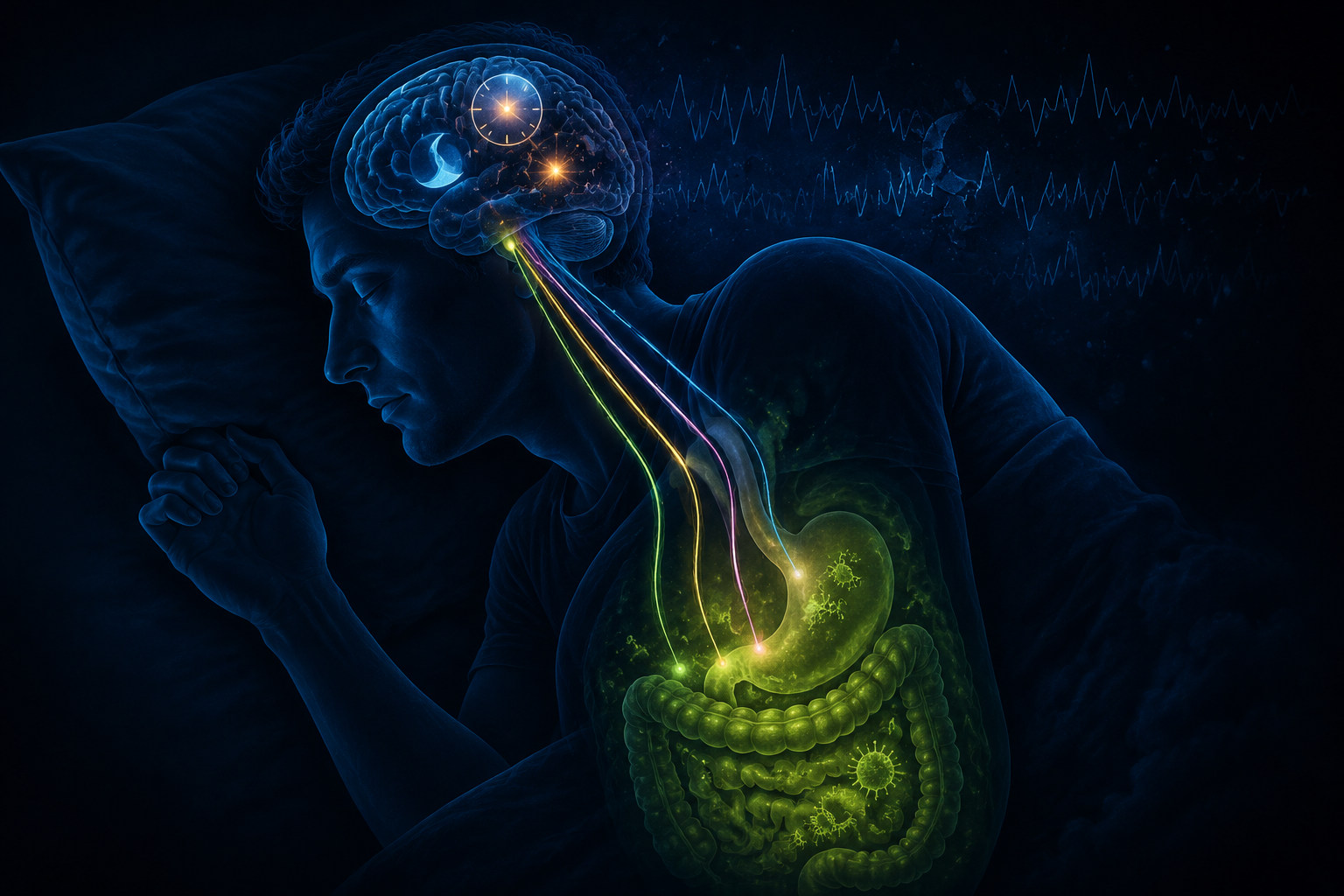
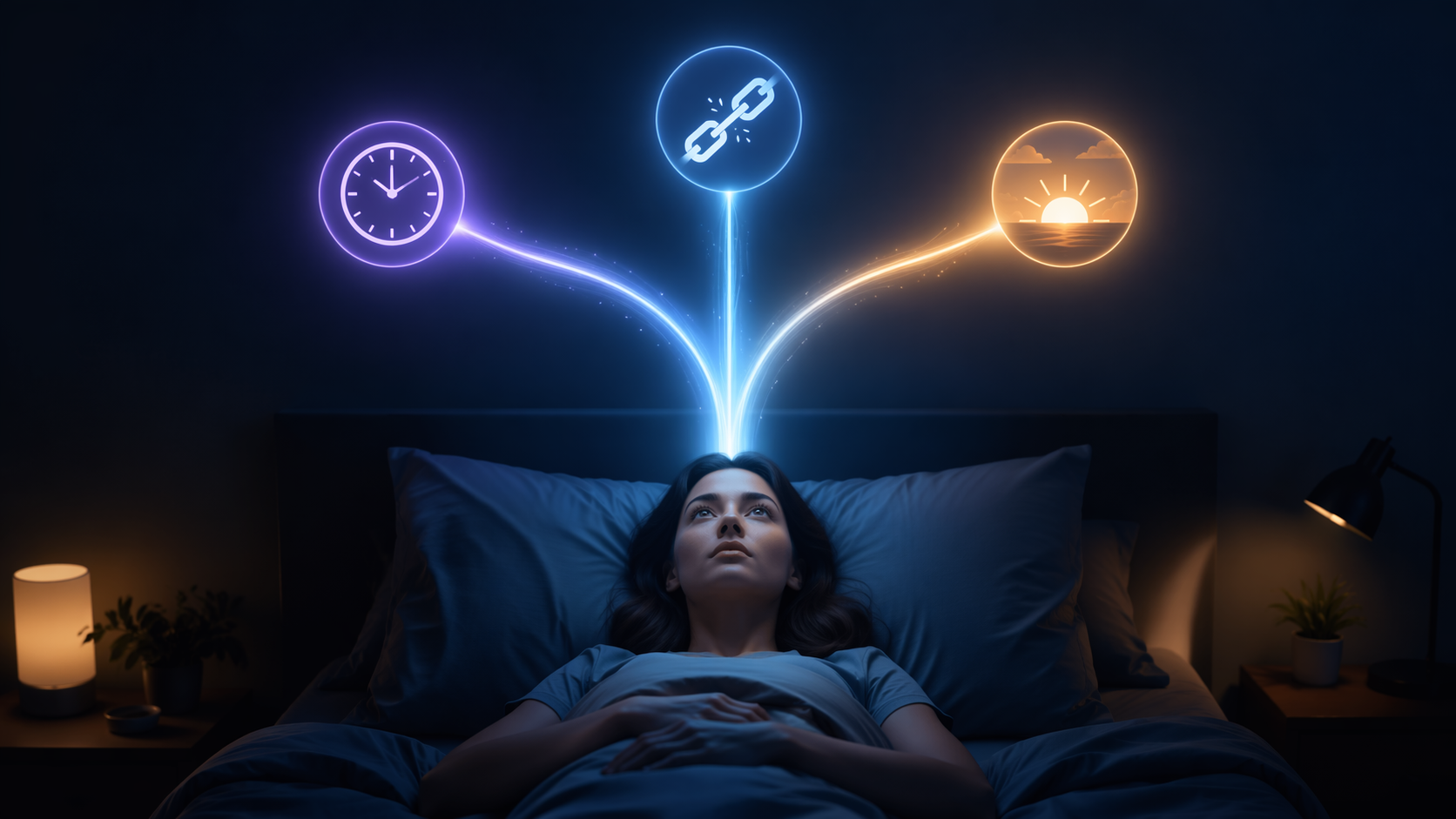
A 24- to 72-hour illness can still disturb sleep for days because sleep is not controlled only by whether the virus is actively making you vomit. Sleep depends on body temperature, hydration, electrolyte balance, immune signaling, circadian timing, and gut-brain communication. Norovirus presses on all of those systems at once.
| Pathway | When it tends to matter most | How it can feel at night |
|---|---|---|
| Fever and thermoregulation | Acute illness and early recovery | Hot, vivid, restless sleep; fewer refreshing REM-heavy periods |
| Fluid loss and rehydration | During vomiting/diarrhea and the first nights after | Thirst, bathroom waking, cramps, difficulty cooling down |
| Cytokine immune signaling | Acute phase, sometimes lingering into post-viral fatigue | Heavy but unrefreshing sleep, fragmented dreams, daytime exhaustion |
| Gut microbiome disruption | Recovery days to weeks | Unstable sleep timing, light sleep, inconsistent energy |
The important point is not that everyone gets all four pathways with the same intensity. A healthy adult with one night of vomiting may mostly notice thirst and early-morning waking. Someone with fever, repeated diarrhea, poor intake, or a more vulnerable baseline may feel the immune and gut-brain aftereffects more strongly. The pathways compound, which is why “I’m no longer actively sick” and “I’m sleeping normally again” do not always arrive on the same day.
Fever pushes sleep away from normal REM cycling
Fever is not just a higher number on a thermometer. It changes the body’s sleep priorities. During infection, immune signaling can favor deeper non-REM sleep, especially slow-wave sleep, while REM sleep tends to be suppressed.[4] That tradeoff may be useful for immune function and heat generation, but it can make the night feel strange: heavy, vivid, sweaty, and not quite restorative.
REM sleep is strongly associated with emotional processing, memory integration, and the dream-rich part of sleep. When fever compresses or fragments REM, a person may still spend hours in bed and wake feeling as if sleep did not do its usual cleanup work. The familiar “fever dream” experience is not proof of a specific sleep-stage pattern in any one person, but it fits the broader physiology: infection changes the architecture of the night, not just the comfort level of the body.
Norovirus does not need to produce a high fever to cause this effect. Even mild fever, chills, body aches, and temperature swings can interrupt the core temperature drop that usually helps sleep begin and stay stable. The body is trying to run an immune program; the sleeper is trying to pass through predictable cycles. Those goals do not always line up cleanly.
Dehydration breaks sleep into pieces
Vomiting and diarrhea make norovirus a direct fluid-loss illness. CDC describes norovirus as causing vomiting and diarrhea that can lead to dehydration, and Mayo Clinic lists signs such as dry mouth, decreased urination, dizziness, and fatigue among dehydration concerns.[3][5] At night, dehydration is not a vague wellness problem. It interferes with the physical conditions sleep depends on.
- Thermoregulation gets harder: sleep onset normally depends partly on a coordinated drop in core body temperature. Dehydration can make temperature regulation feel rougher, especially after fever or sweating.
- Rehydration can wake you: once you can drink again, late-evening fluids may turn into nighttime urination. That is not a failure; it is often the cost of catching up.
- Electrolyte shifts can trigger arousals: cramps, twitching, or a restless heavy-limbed feeling can pull the brain out of deeper sleep.
- Thirst becomes a sleep cue in reverse: dry mouth and a racing, wired feeling can keep the body checking for water instead of settling.
This is why the first recovery nights can feel unfair. Drinking enough may cause more waking before it improves sleep. Drinking too little may preserve dehydration and make sleep lighter. The aim is not to avoid all waking; it is to move the body back toward stable fluid and electrolyte balance without worsening nausea.
The immune system also edits the night
The most useful explanation for post-norovirus sleep disruption sits in the immune response. Human norovirus infection has been shown to trigger an acute serum cytokine response involving IL-1β, IL-6, TNF-α, and IL-10.[6] These are not decorative immune markers. In the broader sleep-immunology literature, cytokines help regulate sleep architecture, including the balance between deeper non-REM sleep and REM sleep.[4][7]
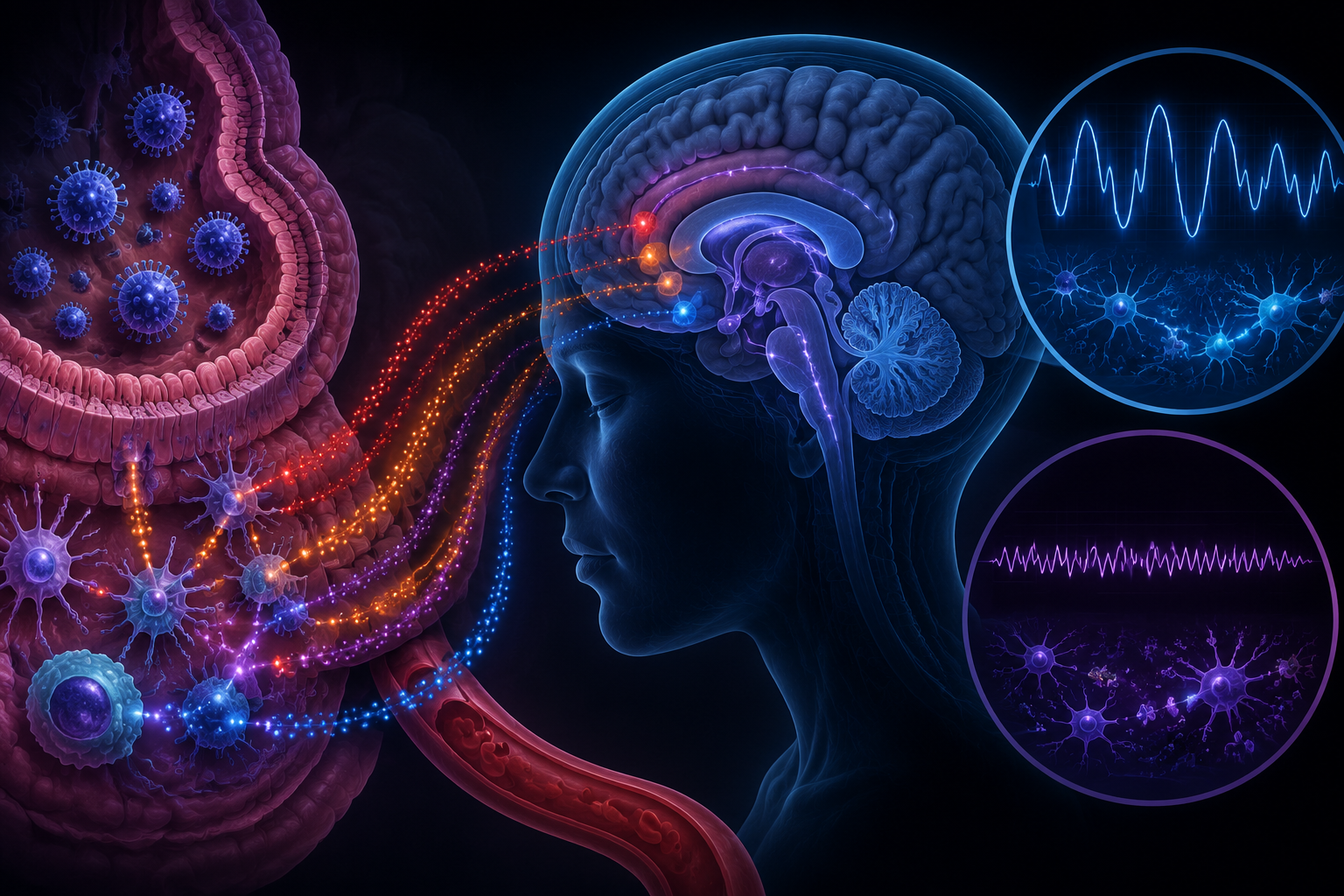
Here the evidence needs careful handling. The norovirus cytokine profile is documented. The sleep-regulating role of those cytokines is also supported by broader immune-sleep research. What is not yet available is a clean norovirus-specific sleep study that measures cytokines and sleep architecture in the same patients across the illness and recovery window. So the strongest statement is a mechanistic one: norovirus activates molecules known to influence sleep, making cytokine-mediated sleep disruption a well-supported inference rather than a direct norovirus sleep finding.
That inference matters because it explains why the sleep problem can feel different from ordinary inconvenience. IL-1β and TNF-α are associated with increases in non-REM sleep pressure during immune activation, while inflammatory signaling can suppress or fragment REM.[4][7] IL-6 is often discussed in relation to inflammation, fatigue, and circadian signaling. IL-10 is anti-inflammatory, but persistence or dysregulation of immune signals after a viral infection may still be part of the post-viral symptom picture described in reviews of post-viral fatigue and sleep disturbance.[7]
This immune-driven sleep can feel paradoxical. You may sleep more heavily in patches and still wake unrefreshed. You may feel sedated in the afternoon but alert at 3 a.m. You may stop vomiting and still feel as if your sleep switch has been rewired. Those sensations do not prove a complication, but they are biologically coherent after an acute infection.
Why a gut virus can disturb the sleep clock
Norovirus is not flu in the stomach by another name. Its center of action is the gastrointestinal tract, which makes the gut-brain axis more than a fashionable explanation. The enteric nervous system, immune cells in the gut, microbial metabolites, and vagal signaling all help communicate bodily state to brain regions involved in sleep and circadian regulation.
A human study of norovirus infection found disruption of gut microbiota composition lasting 2 to 4 weeks.[8] That does not mean every person’s sleep will be impaired for exactly that long. Age, baseline microbiome diversity, severity of illness, diet, medications, and rehydration all likely shape recovery. But it gives a plausible timeline for the person whose bowels are calmer while sleep timing still feels unstable.
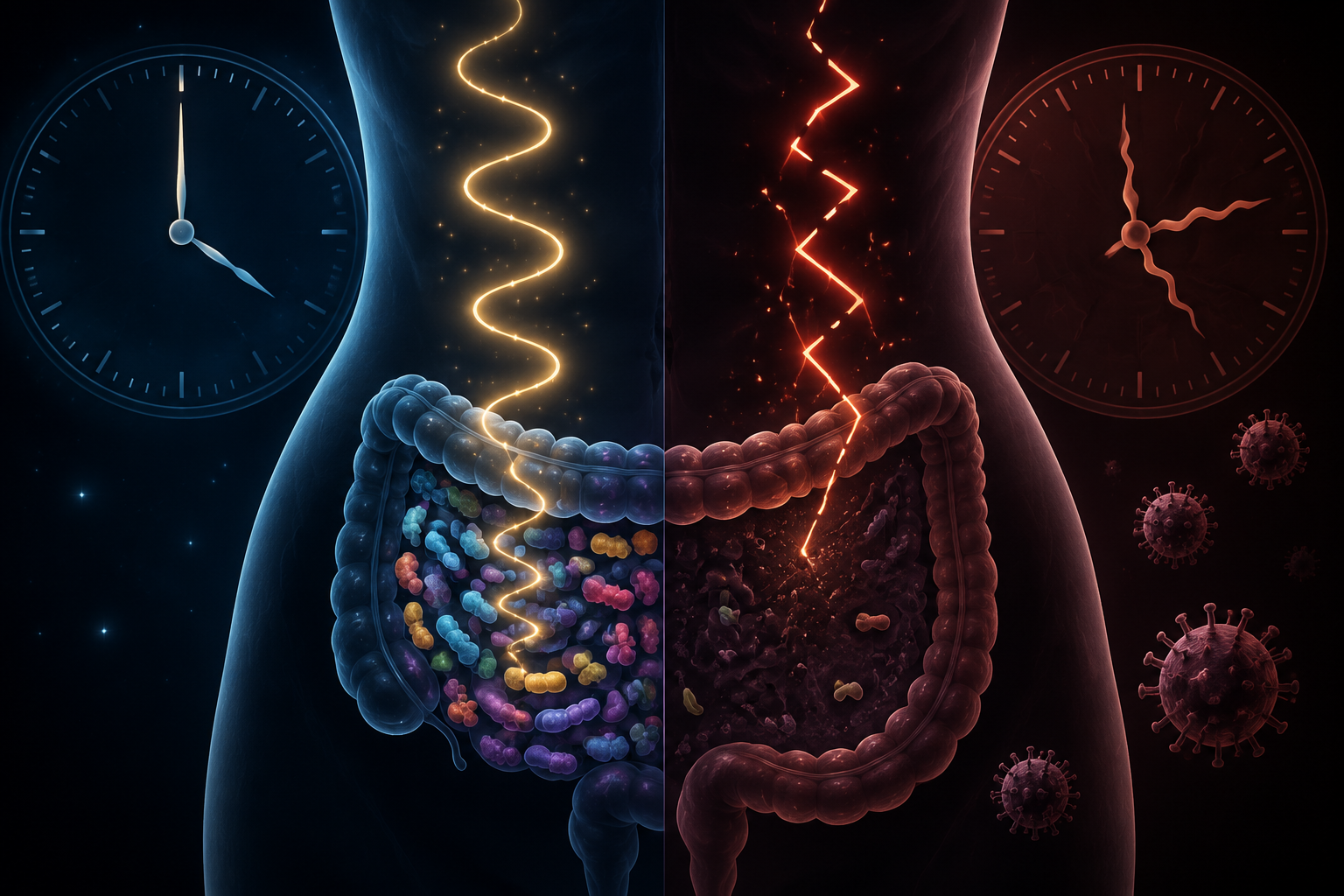
The microbiome does not “make” sleep in a simple one-way sense. It participates in a larger timing system. After norovirus, the gut may be dealing with inflammation, altered motility, reduced intake, bland recovery foods, and microbial shifts all at once. That can change hunger timing, bathroom timing, body temperature cues, and comfort in bed. Sleep then becomes easier to disrupt even after the virus itself is no longer dominating the day.
This is also where post-infectious insomnia can become self-reinforcing. A few nights of cramps, urgent bathroom trips, or nausea can teach the brain that bed is a monitoring station. If that pattern persists beyond the expected recovery window, the related guide Can Food Poisoning Cause Chronic Insomnia? may be useful because it covers gut-driven sleep disruption after gastrointestinal illness more broadly.
The 48 hours after symptoms stop still matter
CDC advises people with norovirus to stay home while sick and for 2 days after symptoms stop, because they can still spread the virus during that period.[9] For sleep recovery, that same window is often when the body is only beginning to normalize: fluids are being replaced, fever is fading, immune signaling is settling, and the gut is trying to resume predictable rhythms.
This overlap is easy to underestimate in households. Someone feels “well enough,” changes sheets, handles food, checks on a child, and tries to return to normal chores. If another household member becomes infected, the original patient may lose the quiet recovery window to caregiving, cleaning, anxiety, or re-exposure. The sleep cost is not only biological; it is logistical.
Norovirus also exposes one stubborn prevention myth. Alcohol-based hand sanitizers do not work reliably against norovirus; CDC emphasizes washing hands with soap and water for at least 20 seconds, especially after using the bathroom, changing diapers, and before preparing or eating food.[3] That detail belongs in a sleep article because reinfection and household spread can extend the entire recovery burden.
When broken sleep is expected, and when it needs care
A few rough nights after norovirus are not surprising. Fever can suppress REM. Dehydration can fragment sleep. Cytokines can shift the body toward illness-mode sleep. The microbiome may need longer than the stomach symptoms to restabilize. Post-viral fatigue resources commonly describe unrefreshing sleep as part of the recovery picture after viral illness.[7][10][11]
The narrower and safer expectation is this: sleep should generally trend better as hydration, food intake, temperature, and bowel patterns normalize. It may not improve in a straight line. One better night can be followed by one restless night, especially if you overcorrect with late fluids, return to work too fast, or eat in a way your gut is not ready for.
- Seek medical advice promptly if you cannot keep fluids down, have signs of dehydration, feel faint or confused, have blood in stool or vomit, or symptoms worsen instead of easing.
- Get guidance if severe diarrhea, fever, or vomiting persists beyond the usual acute window, or if an infant, older adult, pregnant person, or immunocompromised person is affected.
- If sleep remains significantly disrupted after the gastrointestinal illness has resolved and basic recovery has resumed, consider whether post-viral fatigue, anxiety-conditioned insomnia, medication effects, or another condition is now part of the picture.
- If the main question becomes how long it takes to repay several bad nights, the sleep-debt guide How Many Nights to Recover Sleep Debt? can help separate illness recovery from ordinary accumulated sleep loss.
The useful takeaway is not that norovirus secretly causes a separate sleep disorder in most people. It is that broken sleep after norovirus is often explainable by known body systems doing messy recovery work at the same time. Once the illness passes, sleep usually follows — but dehydration, worsening symptoms, or sleep disruption that keeps stretching beyond the expected recovery period should move the problem out of self-explanation and into clinical care.
References
- CDC NoroSTAT Data, CDC
- Virus Watcher Summer 2026 Norovirus, Virus Watcher
- CDC About Norovirus, CDC
- Sleep & Immunity, Sleep Foundation
- Mayo Clinic Norovirus, Mayo Clinic
- Human Norovirus Cytokine Response, PMC
- Post-Viral Pain, Fatigue, and Sleep Disturbance, PMC
- Gut Microbiota Disruption After Norovirus, PMC
- CDC Norovirus Outbreaks, CDC
- Post-Viral Fatigue, Healthline
- Post-Viral Fatigue: A Guide to Management, NHS
Comments
Join the discussion with an anonymous comment.