
If you have already done the ordinary things — dimmed the room, put the phone away, kept the bedroom quiet, tried to relax — and you are still waking at 2 a.m. or surfacing from sleep feeling as if you never went under, the problem may not be effort. In one 2021 study of adults with cancer, 69.3% had poor sleep quality by Pittsburgh Sleep Quality Index criteria, and the mean sleep duration was 5.57 hours per night.[1] That number does not prove every sleepless night has the same cause. It does something more useful: it gives weight to what many patients report quietly, often after they have been handed advice that would make sense for a healthy person who stays up too late.
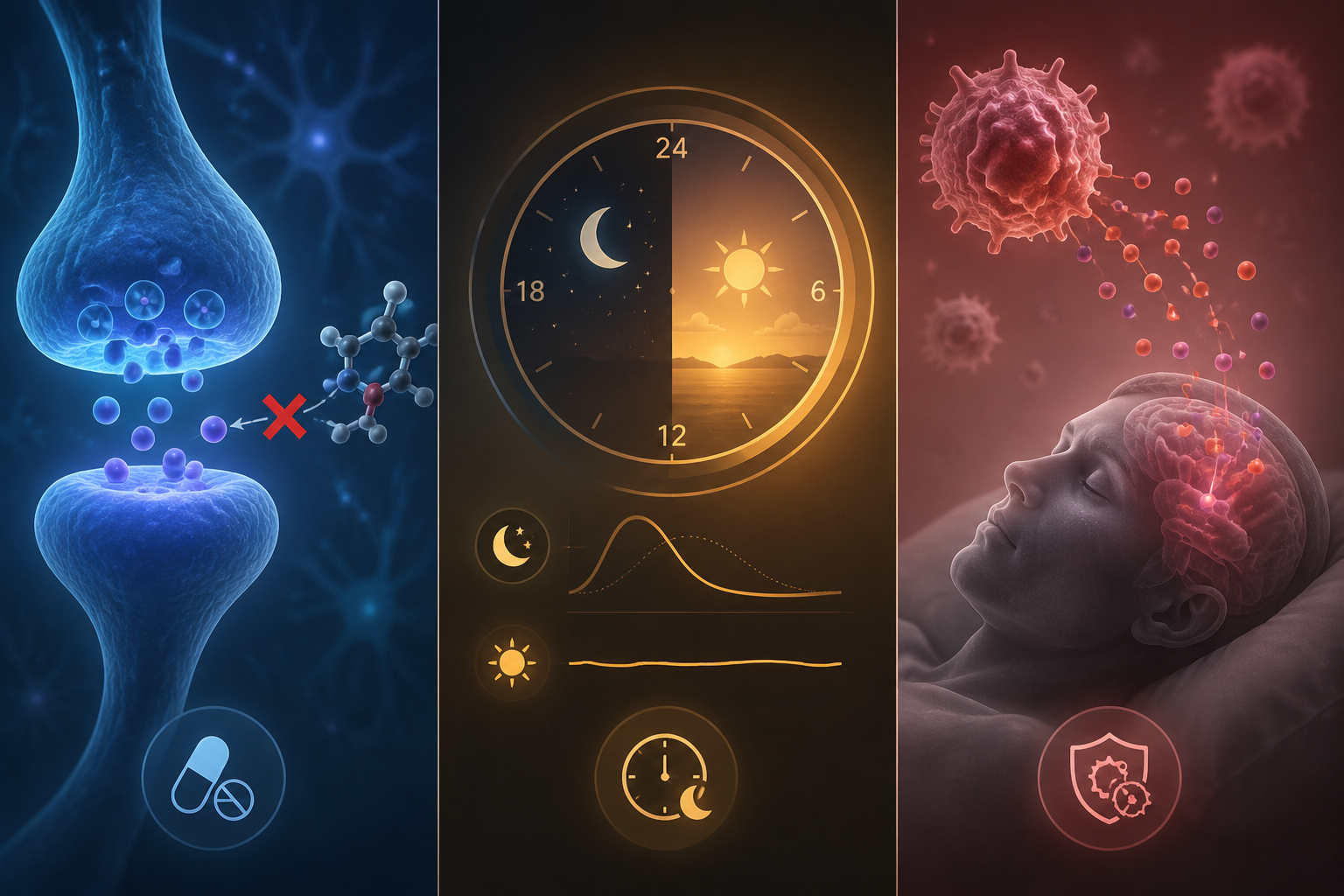
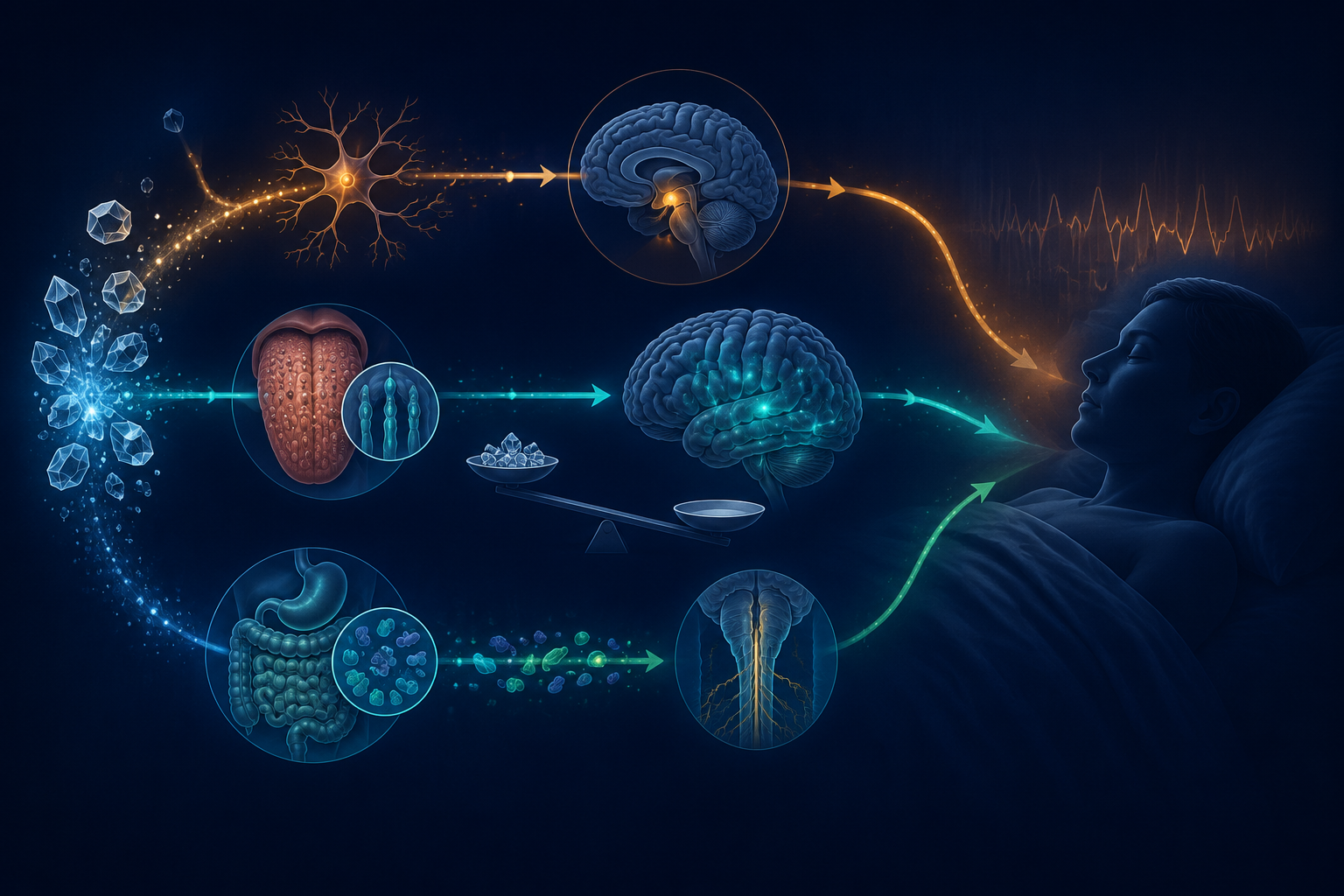
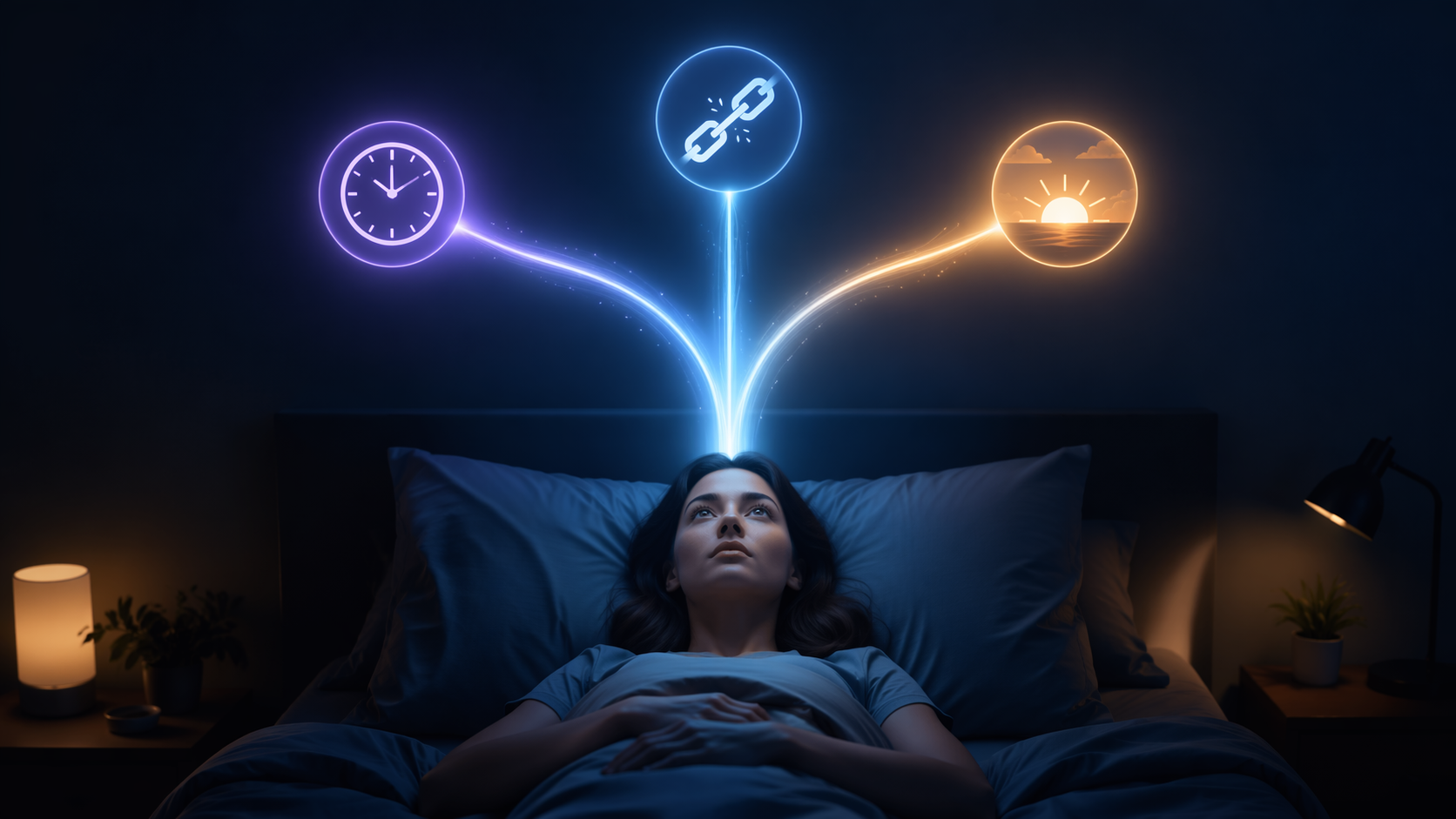
The phrase “cancer treatment disrupts sleep” can sound too broad to be helpful, because it compresses several different biological problems into one complaint. Chemotherapy can affect sleep-regulating neurotransmitter systems. Corticosteroids can push the body toward alertness when it is supposed to wind down. Treatment and survivorship can disturb circadian signals such as cortisol and melatonin. Inflammatory cytokines can change the architecture of sleep itself. These pathways can overlap, which is one reason a tidy bedtime routine may help at the edges without touching the main driver.
The same complaint can come from different biology
“I can’t sleep” is a plain sentence. In cancer care, it may be carrying several mechanisms at once. A person taking a steroid with chemotherapy may feel wired and unable to fall asleep. Another may fall asleep but wake repeatedly because pain, hot flashes, nausea, or treatment-related discomfort keep pulling the body back to the surface. Someone else may sleep for what looks like enough hours and still feel unrefreshed because the balance of sleep stages has shifted.
That distinction matters because generic sleep hygiene assumes the main obstacle is behavior or environment: too much light, too much stimulation, inconsistent timing, caffeine too late. Those can absolutely matter. But cancer treatment can also change the internal conditions under which sleep is built. When the chemistry is altered, the clock signal is blunted, or immune signaling is elevated, “try to relax” is not a sufficient explanation and not a fair measure of whether someone is trying hard enough.
| Possible driver | What it can look like | Why generic advice may fall short |
|---|---|---|
| Medication and neurotransmitter effects | Trouble falling asleep, feeling activated, lighter or fragmented sleep | The trigger may be tied to a treatment drug, dose schedule, or supportive medication |
| Circadian rhythm disruption | Sleepiness and alertness appearing at the wrong times, weak day-night rhythm, persistent fatigue | The body clock may not be sending strong enough timing signals for routine alone to correct |
| Inflammatory cytokine signaling | Non-restorative sleep, altered sleep stages, fatigue that does not match time in bed | The immune system may be changing sleep architecture, not just sleep opportunity |
Medication effects are often the easiest pathway to recognize
The most concrete sleep disruption is often the one patients can place on a calendar: sleep worsens after an infusion, after a medication change, or on the days a steroid is added. MD Anderson describes chemotherapy as one cancer treatment that can affect sleep partly through effects on neurotransmitters that help regulate the sleep-wake cycle.[2] That does not mean every chemotherapy drug causes insomnia in the same way, or that neurotransmitters are the only reason sleep changes during chemotherapy. It means the complaint belongs in the biology of treatment, not only in the psychology of worry.
Corticosteroids are the more familiar culprit. They are commonly used in cancer care for reasons that can include reducing inflammation, preventing nausea, or supporting parts of a treatment plan. They can also interfere with sleep. Dana-Farber advises patients taking steroids to ask whether the medication can be taken earlier in the day, because steroids may cause insomnia.[3] Cancer Research UK similarly notes that steroids can affect sleep and advises taking them earlier in the day if possible.[4] The National Cancer Institute also identifies steroids and some hormone therapies among cancer-related treatments that can contribute to sleep problems.[5]
That is mechanism-matched advice: if a medication is stimulating wakefulness, the question becomes whether timing, dose schedule, or an alternative supportive plan can be adjusted safely. It is not a reason to stop or reschedule medication on your own. Steroids, anti-nausea drugs, pain medicines, hormone therapies, and cancer-directed treatments are doing specific jobs, and changing them without the oncology team can create real harm. But it is a reason to bring a precise observation: “On steroid days I cannot fall asleep until early morning,” or “The second night after infusion is consistently worse than the first.”
The point is not that every sleep problem can be fixed by moving a pill to breakfast. Some cannot. The point is that medication timing is one of the few places where the pathway may be visible enough for the care team to test a safer adjustment.
Cancer treatment can weaken the body clock signal
Circadian rhythm disruption is harder to feel directly. People usually do not say, “My cortisol rhythm is flattened.” They say they are tired all day, oddly alert at night, waking too early, or unable to find a stable sleep pattern after treatment. The body clock is not just a preference for morning or evening. It is a timing system that coordinates hormones, temperature, alertness, digestion, and sleep pressure across roughly a 24-hour cycle.
A 2024 comprehensive review of circadian disruption in cancer survivorship reported evidence of altered circadian markers across groups that included breast, lung, colorectal, and ovarian cancer survivors, including flattened cortisol rhythms and suppressed melatonin.[6] A healthy cortisol rhythm typically rises toward the morning and declines across the day. Melatonin normally rises in the evening as darkness signals the brain that night is coming. Flattening one signal and suppressing the other does not simply make bedtime less pleasant; it can blur the difference between day physiology and night physiology.
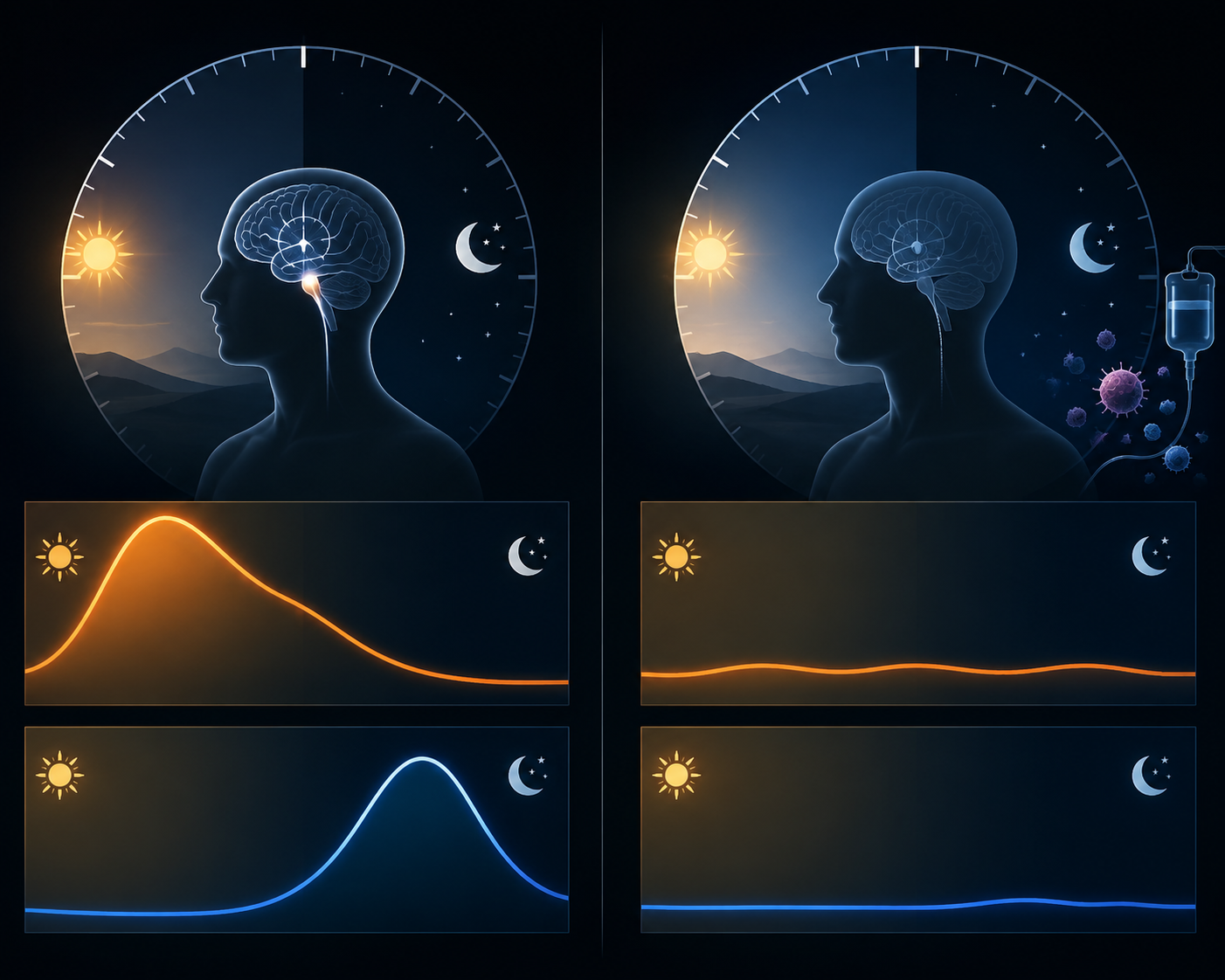
This is where ordinary advice can sound reasonable and still be incomplete. Keeping a consistent wake time, getting daylight, dimming evening light, and avoiding late-night stimulation are still useful because they feed timing cues back to the circadian system. But if treatment has weakened the hormonal rhythm itself, the patient may need more than a reminder to keep a schedule. The practical conversation may need to include treatment timing, daytime light exposure, symptom control, activity pacing, and whether a sleep specialist should help distinguish insomnia from a circadian rhythm disorder.
Circadian disruption also helps explain why some patients feel dismissed by advice that focuses only on bedtime. A body clock is trained across the whole day. Morning light, naps, meal timing, inactivity, hospital routines, pain flares, infusion schedules, and nighttime awakenings can all become part of the signal pattern. For readers who want a deeper sleep-science explanation of shifted timing, Restful Ground’s guide to delayed sleep phase syndrome is useful context, even though cancer-related circadian disruption is not the same condition.
Inflammation can change sleep architecture, not just sleep duration
The inflammatory pathway is the one most likely to be missing from everyday counseling, yet it explains a frustrating pattern: sleeping more does not always mean sleeping well. Liu and Ancoli-Israel describe how pro-inflammatory cytokines, including interleukin-1, tumor necrosis factor, and interleukin-6, are involved in sleep regulation and can alter sleep architecture.[7] In experimental and clinical sleep literature, IL-1 and TNF are associated with increased non-rapid eye movement sleep pressure, while inflammatory signaling can suppress rapid eye movement sleep.[7]
Sleep architecture is the structure inside the night: how much time is spent in lighter non-REM sleep, deeper non-REM sleep, REM sleep, and wakefulness after sleep begins. A person does not feel those categories as lab labels. They feel the consequence: sleep that is shallow, broken, oddly heavy, dream-poor, or non-restorative. Cancer and cancer treatment can both interact with inflammatory signaling, and those signals can reach the brain systems that help organize sleep.[7]
This does not mean inflammation is the sole cause of cancer-related insomnia. It also does not mean a patient can infer cytokine levels from one bad night. The useful conclusion is narrower and stronger: severe sleep disruption during cancer treatment can be partly biological even when a person has a dark room, good intentions, and no obvious late-night trigger. If inflammatory symptoms, pain, feverish feelings, treatment reactions, or profound fatigue cluster with sleep disruption, those details are worth bringing into the conversation rather than separating “sleep” from the rest of the treatment experience.
Stress can be real without being the whole explanation
No serious discussion of cancer and sleep should pretend fear, uncertainty, scan results, finances, caregiving, and body changes are minor. Anxiety can keep the nervous system alert, and insomnia can then feed anxiety back the next day. That loop deserves care; Restful Ground’s anxiety and insomnia article covers that bidirectional pattern in more detail.
But stress should not become the explanation that absorbs everything else. If a patient reports that sleep changed sharply after starting a medication, worsens predictably after steroid dosing, or remains disturbed even when distress is lower, the care team needs that timeline. Psychological distress and biological disruption can coexist. Treating one does not prove the other was imaginary.
What this changes in the conversation with your care team
Understanding the pathway is not a home treatment plan. It is a way to ask better questions. A useful sleep note for an oncology visit does not need to be elegant. It needs to connect sleep timing, treatment timing, symptoms, and consequences.
- If sleep worsens on steroid days, ask whether the timing can be adjusted safely or whether the current schedule is medically necessary.
- If sleep feels shifted later and later, or daytime alertness is weak, ask whether circadian rhythm disruption may be contributing and whether morning light, activity timing, or specialist input is appropriate.
- If sleep is long but unrefreshing, fragmented, or paired with inflammatory symptoms, pain, feverishness, or profound fatigue, describe the whole cluster rather than reporting sleep as a separate problem.
- If anxiety is prominent, ask for support without letting anxiety become the only explanation for treatment-linked sleep changes.
- If insomnia is chronic, ask whether CBT-I, a sleep medicine referral, or evaluation for another sleep disorder fits your situation.
CBT-I remains an important guardrail here. It is the first-line behavioral treatment for chronic insomnia, and it can be helpful even when cancer treatment is part of the story. But CBT-I is not the same as a generic sleep hygiene handout. It is a structured treatment that works with sleep drive, conditioning, wake time consistency, and the learned fear of the bed. Restful Ground’s article on how CBT-I treats insomnia gives a fuller explanation of that approach.
Medication can also have a role in some cancer-care situations, but that decision belongs with clinicians who can weigh interactions, fall risk, breathing risk, delirium risk, pain control, nausea control, and the goals of treatment. The mechanism map helps prevent two mistakes: assuming every sleep problem needs a sedative, and assuming every sleep problem can be solved without medical review.
Why sleep hygiene may still matter, just not as the whole answer
Basic sleep hygiene is not useless. A dark room, regular wake time, limited late caffeine, careful napping, and reduced evening light can lower avoidable friction. For some people, especially when treatment symptoms are mild or temporary, those routines may be enough to make sleep more stable. Restful Ground’s sleep hygiene fundamentals are a reasonable place to check whether the basics are working for or against you.
The problem is the way sleep hygiene is sometimes handed over as if it settles the matter. A person whose melatonin signal is suppressed, whose cortisol rhythm is flattened, whose steroid dose is activating, or whose inflammatory signaling is altering sleep stages has not failed because lavender tea did not fix the night. The basics can support treatment; they cannot substitute for identifying the driver.
A sharper way to name the problem
When sleep disruption persists during or after cancer treatment, the most useful next sentence is often more specific than “I have insomnia.” It may be, “I cannot sleep after steroid dosing,” “My sleep-wake rhythm has drifted and I cannot reset it,” “I sleep but do not feel restored,” or “Pain, hot flashes, nausea, and fatigue are all moving with the bad nights.” Those descriptions give oncology and sleep-care teams more to work with.
Cancer treatment can disrupt sleep through medication and neurotransmitter effects, circadian desynchronization, and inflammatory cytokine signaling. Knowing that does not replace medical care, and it does not promise a single fix. It does explain why persistent, severe sleep disruption is not a character flaw or a relaxation failure. If ordinary advice has not touched the problem, the next conversation can be more precise: medication timing, circadian support, inflammation-related symptoms, CBT-I, and sleep specialist referral are different doors, and the right one depends on what is actually driving the night.
References
- Sleep Quality and Related Factors in Patients with Cancer, PMC, 2021, https://pmc.ncbi.nlm.nih.gov/articles/PMC8609120/
- Sleep, cancer and cancer treatment: Understanding the link, MD Anderson Cancer Center, 2026, https://www.mdanderson.org/cancerwise/sleep-cancer-and-cancer-treatment-understanding-the-link.h00-158832801.html
- Tips for Managing Insomnia During Cancer Treatment, Dana-Farber Cancer Institute, https://www.dana-farber.org/health-library/tips-for-managing-insomnia-during-cancer-treatment
- Difficulty sleeping, Cancer Research UK, https://www.cancerresearchuk.org/about-cancer/coping/physically/difficulty-sleeping
- Sleep Problems, National Cancer Institute, https://www.cancer.gov/about-cancer/treatment/side-effects/sleep-problems
- Circadian Rhythm Disruption in Cancer Survivorship: A Comprehensive Review, PMC, 2024, https://pmc.ncbi.nlm.nih.gov/articles/PMC11513439/
- Sleep Disturbances in Cancer, PMC, https://pmc.ncbi.nlm.nih.gov/articles/PMC3021374/
Comments
Join the discussion with an anonymous comment.