
The frightening part is not always the diarrhea by itself. It is waking up repeatedly, never quite knowing why, then moving through the next day with the drained, heavy feeling that makes normal tasks feel unreasonable. When loose stools, poor sleep, and fatigue arrive together, they can be connected. The better answer, though, is not a neat line where diarrhea causes poor sleep and poor sleep causes fatigue every time. The evidence fits a loop: gut disturbance fragments sleep, poor sleep can make the gut more reactive, and both can pull energy down.
One reason this loop is easy to miss is that the awakenings may not feel gastrointestinal. In an actigraphy study of people with IBS, Patel and colleagues found that participants with IBS averaged 12.1 waking episodes per night, compared with 9.3 in controls. Yet only 2.4% of the IBS group attributed their sleep disruptions to GI symptoms.[1] That gap matters. A person can be objectively waking more often while not consciously thinking, “My bowel symptoms woke me.”
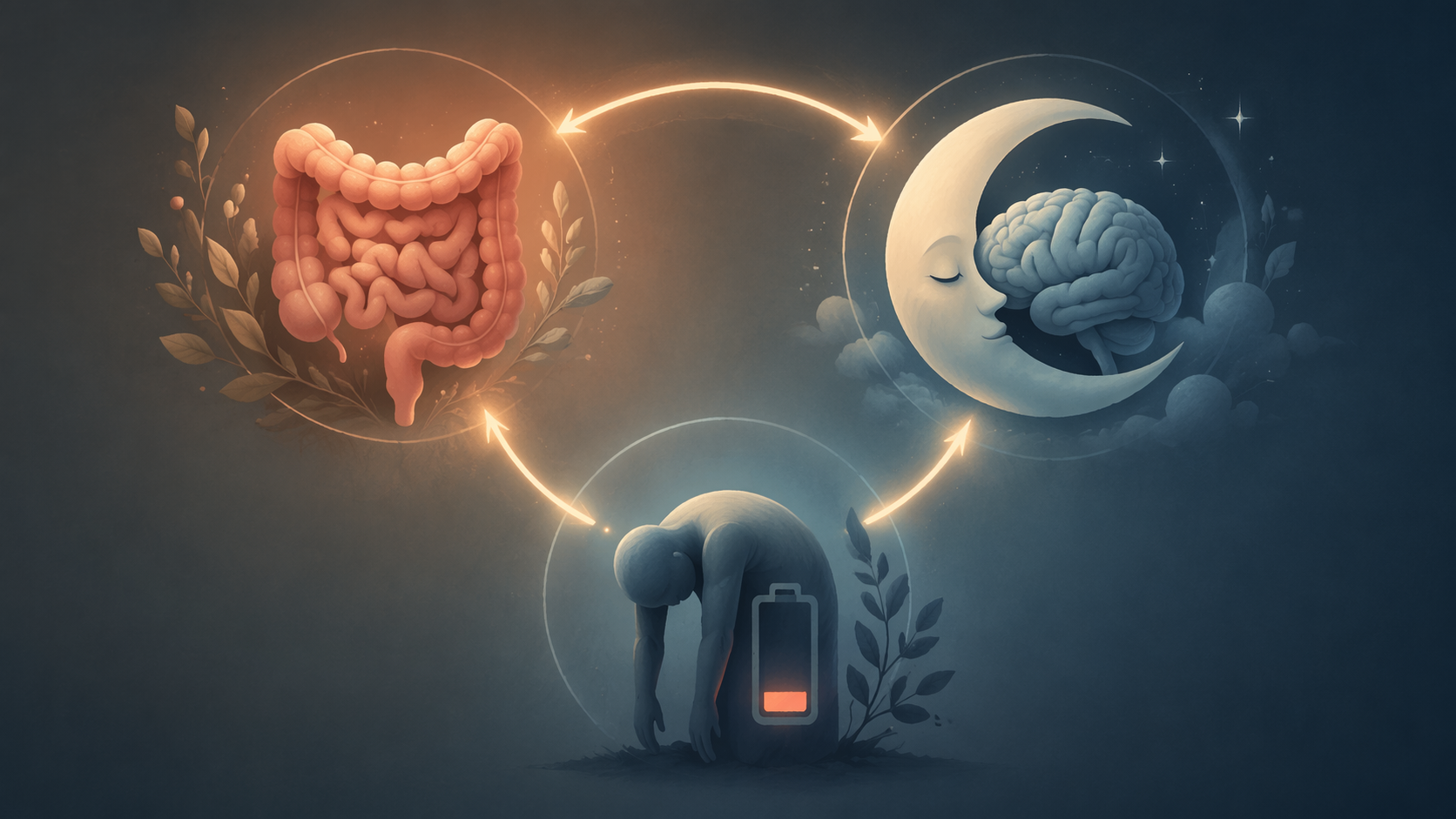
The Gut-Sleep-Fatigue Triangle
The simplest useful model has three sides. Diarrhea and bowel urgency can break sleep. Poor sleep can change gut sensitivity, inflammation, and microbial patterns. Fatigue can then come from both directions: less restorative sleep and the physiological load of an irritated gut.
Most of the stronger data comes from IBS and IBD research, not from every short episode of diarrhea in the general population. That distinction is important. A one-night stomach bug, a reaction to sugar-free candy, or a brief bout of food poisoning does not automatically mean someone has a chronic gut-sleep disorder. But if the pattern keeps repeating, the IBS and IBD literature gives a credible map for why these symptoms so often travel together.
| Part of the loop | What may happen | Why it matters the next day |
|---|---|---|
| Diarrhea to sleep | Urgency, cramping, secretory activity, or low-grade discomfort can increase awakenings. | Sleep becomes lighter and less continuous, even when awakenings are not remembered as bowel-related. |
| Sleep to gut | Sleep loss can affect microbial composition, gut barrier function, and inflammatory signaling. | The gut may become more sensitive and reactive, making diarrhea harder to settle. |
| Both to fatigue | Fragmented sleep and active gut symptoms both tax the body. | Daytime energy drops, and fatigue can persist even when the person technically spent enough hours in bed. |
How Diarrhea Can Break Sleep Without Announcing Itself
Some diarrhea-related sleep disruption is obvious: urgent trips to the bathroom, abdominal pain, nausea, gas, or the uneasy half-sleep of waiting for the next cramp. Nocturnal diarrhea is especially disruptive because it directly interrupts the sleep period instead of staying confined to daytime.
But the Patel finding points to a quieter version. If people with IBS are waking more often by actigraphy yet rarely labeling those awakenings as GI-related, the body may be registering discomfort, motility changes, stress arousal, or visceral sensitivity before the conscious mind has a clear explanation.[1] That does not prove every awakening in IBS is caused by bowel activity. It does suggest that relying only on remembered bathroom trips can undercount the sleep cost of gut symptoms.
This is where many people get misread. They may say, “I didn’t sleep,” while someone else asks whether they were actually up all night in the bathroom. If the answer is no, the sleep problem gets treated as separate. In reality, the night may have been repeatedly fragmented by sensations too subtle or too brief to form a tidy memory.
For a closer look at this direction of the loop, the site’s article on why diarrhea makes sleep worse goes deeper into urgency, dehydration, cramping, and nighttime bathroom trips.
How Poor Sleep Can Keep the Gut Reactive
The reverse direction is just as important. Poor sleep is not only the consequence of bowel symptoms; it can become one of the conditions that keeps the bowel unsettled.
In a meta-analysis of 36 studies with 63,620 participants, Wang and colleagues found that sleep disorders affected 37.6% of patients with IBS, with an odds ratio of 2.618 compared with controls.[2] That number does not say sleep loss causes IBS, and it does not mean every person with diarrhea has IBS. It does show that sleep disturbance is common enough in IBS that it should not be treated as a side complaint.
Mechanistically, sleep disruption can push on systems the gut also depends on: circadian timing, immune signaling, gut barrier integrity, and the microbiome. When sleep becomes irregular, the body’s timing cues become noisier. Digestion is not separate from those clocks. Motility, secretion, appetite, pain sensitivity, and inflammatory activity all run on rhythms that can be disturbed when sleep is fragmented or shifted.
Smith and colleagues reported that gut microbiome diversity was positively correlated with sleep efficiency and total sleep time, and negatively correlated with wake after sleep onset. Their study also connected sleep deprivation with microbial shifts, including reduced Lactobacillus and Bifidobacterium and an increased Firmicutes/Bacteroidetes ratio.[3] These findings are not proof that changing the microbiome will directly fix sleep or diarrhea. They do show that sleep and gut ecology move together in ways worth taking seriously.
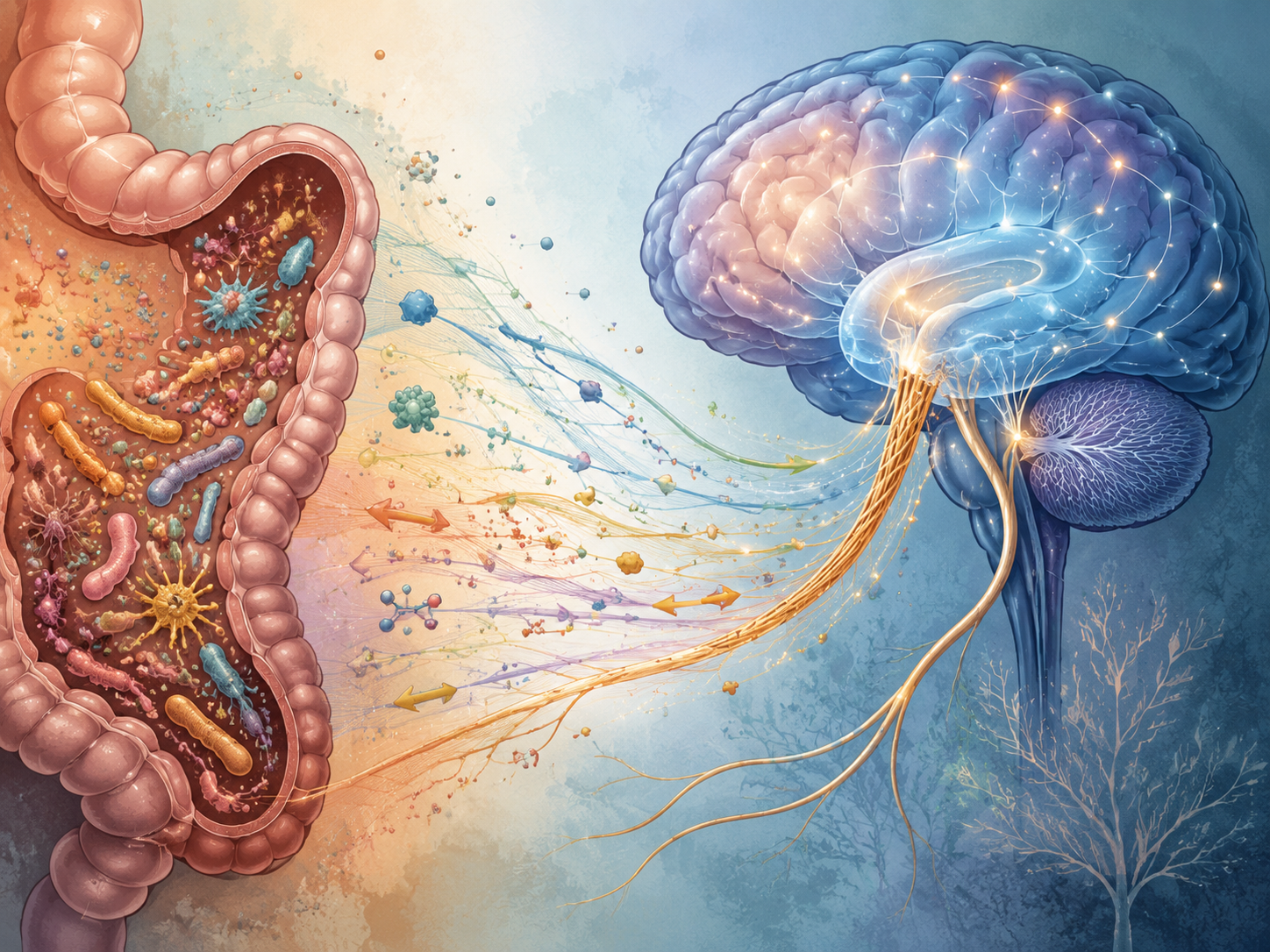
This is also why a bad night can be followed by a more irritable gut the next day. The explanation does not have to be psychological in the dismissive sense. Sleep loss can increase pro-inflammatory signaling, including IL-6 and TNF-alpha, and may increase intestinal permeability, which gives the immune system more to react to. In a gut already prone to urgency or loose stools, that extra reactivity can matter.
Why Fatigue Can Feel Larger Than the Bathroom Symptoms
Fatigue is often the symptom that makes people worry something larger is wrong. That worry is understandable. Fatigue is not the same as ordinary sleepiness, and it is not a character flaw. It can come from broken sleep, dehydration, reduced food intake, inflammation, pain, anxiety about symptoms, and the sheer effort of monitoring the body all day.
The scale of fatigue in IBS research is hard to brush aside. Fowler and colleagues found in a systematic review that 55% of IBS patients experienced fatigue, with Fatigue Impact Scale scores of 68.4 plus or minus 32.9 compared with 15.5 plus or minus 11.6 in controls.[4] That does not mean fatigue always comes from IBS, or that IBS is always the explanation. It does mean fatigue is common in the same clinical territory where bowel symptoms and sleep disruption are also common.
The nighttime diarrhea contrast in IBD sharpens the point. Schreiner and colleagues, as discussed in Fowler’s review, found that IBD patients with fatigue had significantly more nocturnal diarrhea than those without fatigue: 23.3% versus 7.5%.[4] That is not a universal rule for all diarrhea. It is a reminder that when bowel symptoms invade the sleep window, fatigue is not surprising.
There is also a practical consequence. If fatigue is treated only as a sleep-duration problem, the gut driver can be missed. If diarrhea is treated only as a bathroom problem, the sleep debt can be missed. And if both are treated separately, the person living inside the loop may keep being told that each symptom is too mild to explain how bad they feel.
The Shared Biology Is Messy, Not Mysterious
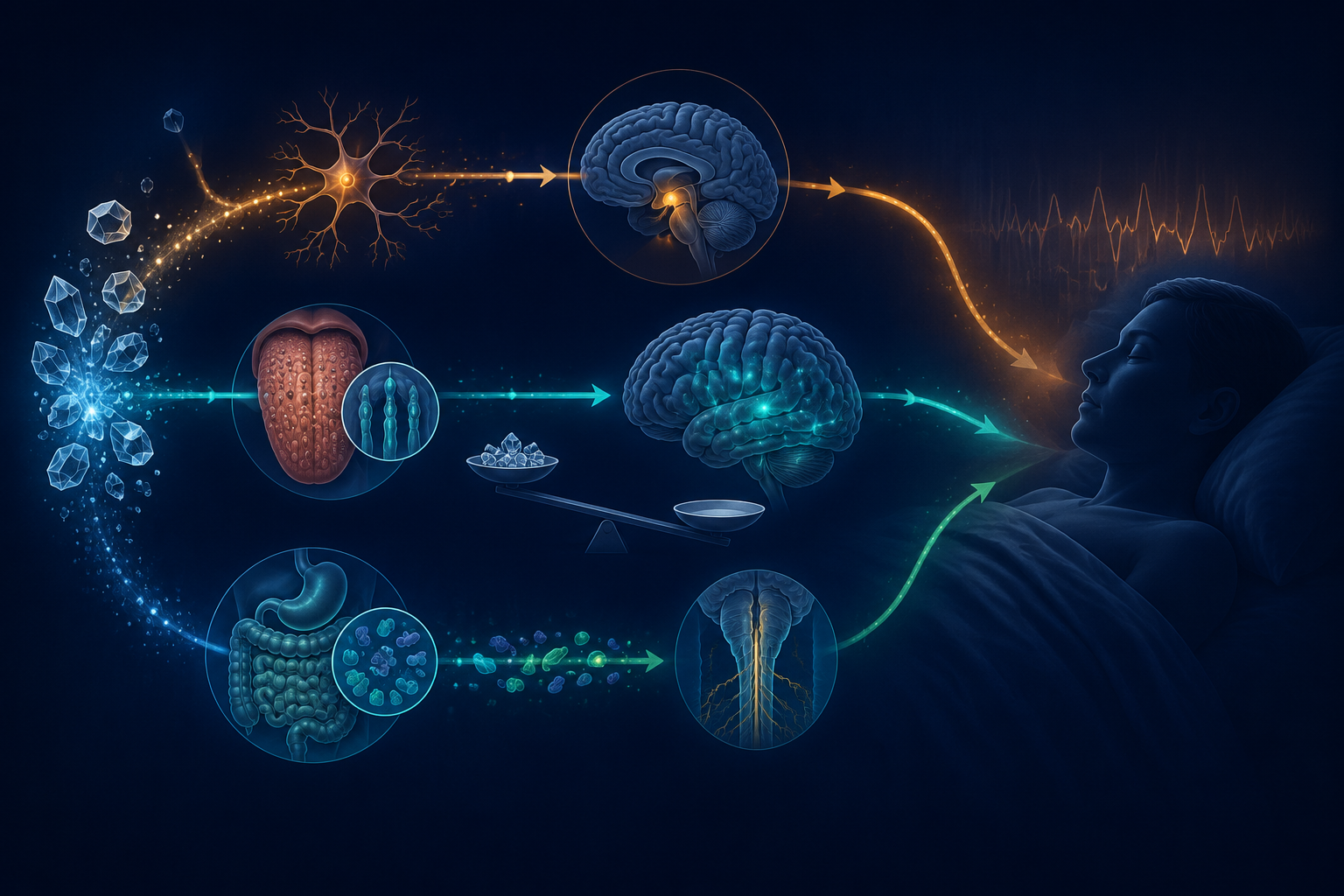
The gut-brain axis is sometimes described so vaguely that it stops being useful. Here, it helps to name the traffic. The gut, immune system, nervous system, microbiome, and circadian system exchange signals constantly. When diarrhea, poor sleep, and fatigue appear together, several of those signals may be disturbed at once.
- Circadian disruption: Irregular sleep timing and repeated awakenings can blur the body’s day-night cues, which may affect motility, secretion, appetite, and inflammatory rhythms.
- Microbiome dysbiosis: Sleep and gut microbial patterns are correlated, including links between microbiome diversity, sleep efficiency, total sleep time, and wake after sleep onset.[3]
- Inflammation: Gut inflammation and sleep loss can both increase immune signaling, which may contribute to pain sensitivity, bowel urgency, and fatigue.
- Intestinal permeability: Poor sleep and inflammation may affect the gut barrier, giving immune pathways more exposure to gut-derived signals.
- Neurotransmitter and metabolite signaling: Serotonin, GABA, short-chain fatty acids, and lipopolysaccharide signaling are all part of the communication network between gut microbes, the immune system, and the nervous system.
Serotonin is a useful example because most of the body’s serotonin is produced in the gut, yet serotonin also belongs to the broader conversation about mood, arousal, pain, and sleep-wake regulation. GABA, short-chain fatty acids, and lipopolysaccharide are different kinds of signals, but they point to the same larger lesson: the gut and sleep systems are not two sealed rooms.
The caution is just as important as the mechanism. Correlation between microbial diversity and sleep quality does not prove that the microbiome caused the sleep problem, or that sleep caused the microbiome pattern. In real bodies, both may be reacting to diet, inflammation, stress physiology, medications, infection, timing of meals, or an underlying GI condition. The loop is credible because multiple pathways overlap, not because one study proves a single master cause.
Short-Term Triggers Can Start the Same Pattern
A person does not need a formal IBS or IBD diagnosis to experience the triangle for a few days. Acute infection, food poisoning, alcohol, certain medications, artificial sweeteners, and sugar alcohols in sugar-free candy can all provoke loose stools. Once diarrhea begins, sleep can become lighter because of urgency, abdominal discomfort, thirst, nausea, or anxiety about whether another episode is coming.
Viral gastroenteritis is a common example of an acute trigger. The site’s article on why norovirus disrupts sleep and delays recovery focuses on that infection-related version of the pattern. For longer symptoms after an acute illness, food poisoning and chronic insomnia is a more relevant branch, especially when post-infectious IBS is part of the concern.
Dietary triggers can be more subtle because they may look like isolated “bad nights.” Some artificial sweeteners and sugar alcohols can affect the gut, and the sleep disruption may follow indirectly through bloating, gas, urgency, or repeated awakenings. The articles on artificial sweeteners and sleep quality and sugar-free candy disrupting sleep are useful when symptoms seem to follow specific foods.
Where to Interrupt the Loop
The goal is not to guess the single original cause too early. In a loop, the safest opening is often the part you can change without creating new problems: hydration, symptom tracking, sleep timing, light exposure, and medical evaluation when symptoms persist or look inflammatory.
Stabilize the diarrhea side first when symptoms are active
During active diarrhea, dehydration and electrolyte loss can make fatigue worse and can also make sleep more restless. Fluids, oral rehydration when appropriate, and avoiding obvious personal triggers are not glamorous interventions, but they reduce the body’s overnight workload. If diarrhea is waking you, the sleep plan cannot succeed while the gut is still repeatedly forcing arousal.
Track timing rather than collecting an endless food list. Note when diarrhea occurs, whether it wakes you, what dinner and evening snacks looked like, medication changes, alcohol, caffeine, illness exposure, and whether fatigue follows a night of awakenings or appears independently. A few days of pattern can be more useful than a vague memory of “everything upsets my stomach.”
Protect the sleep window instead of only adding more hours
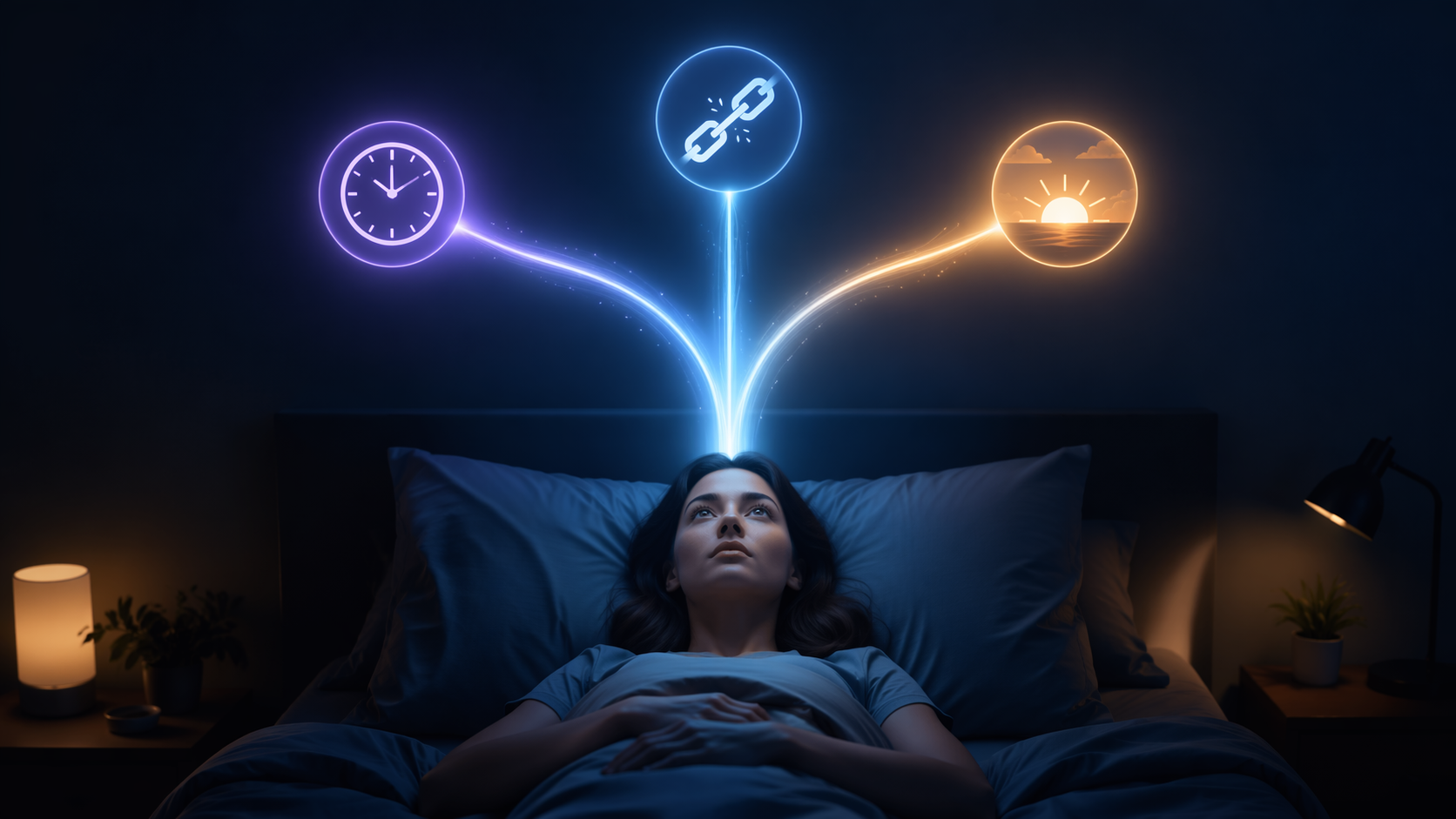
When sleep is fragmented, going to bed earlier can help some people, but it can also create more time awake in bed. The more dependable starting point is a stable wake time, bright light earlier in the day, dimmer light before bed, and a wind-down period that does not keep the nervous system on alert. These are not cures for diarrhea. They are ways to reduce the sleep-side pressure that can keep the gut reactive.
If the basics are the weak point, start with sleep hygiene fundamentals and an evidence-based bedtime routine. The useful parts here are not decorative relaxation tips; they are timing cues that make sleep more consolidated and reduce the number of opportunities for gut sensations to become full awakenings.
Consider CBT-I when insomnia becomes its own engine
Sometimes diarrhea starts the problem, but insomnia keeps going after the gut calms down. That is when sleep can become its own engine: more time awake in bed, more monitoring, more fear of another bad night, and a nervous system that treats bedtime as a threat. Cognitive behavioral therapy for insomnia, or CBT-I, is designed for that pattern. It does not diagnose or treat the bowel condition itself, but improving insomnia can reduce one major amplifier in the triangle.
For readers who are past simple sleep hygiene and into persistent insomnia, CBT-I explained is the more relevant next step.
Know when the pattern needs medical evaluation
Persistent diarrhea, nighttime diarrhea, blood in stool, unexplained weight loss, fever, severe abdominal pain, signs of dehydration, symptoms after travel or suspected infection, or fatigue that is intense or worsening deserve clinical attention. So does a recurring pattern that looks like IBS, IBD, malabsorption, medication side effects, thyroid disease, anemia, or another condition that cannot be sorted out by sleep habits alone.
This is not because every person with loose stools and poor sleep has a serious disease. It is because some causes of diarrhea are medical, and some causes of fatigue need labs, history, and examination. A loop can be real and still have a treatable underlying driver.
The More Useful Question
No study proves a universal three-step chain in all adults where diarrhea always causes poor sleep and then always causes fatigue. The evidence is narrower than that, and much of it comes from IBS and IBD populations. The actigraphy, meta-analysis, fatigue, nocturnal diarrhea, inflammation, and microbiome findings point to something more useful than a one-way chain: a bidirectional triangle.
So if diarrhea, poor sleep, and fatigue are appearing together, do not ask too soon which one is the single cause. Ask where the loop is easiest and safest to interrupt: settle active diarrhea and hydration, protect the sleep window, reduce nighttime awakenings where possible, and get evaluated when symptoms persist or carry warning signs. That approach takes the whole pattern seriously without pretending the science is more certain than it is.
References
- Characterizing Sleep in Adults with Irritable Bowel Syndrome, PMC, 2016, https://pmc.ncbi.nlm.nih.gov/articles/PMC5020700/
- Sleep disorders in patients with irritable bowel syndrome: A systematic review and meta-analysis, PMC, 2018, https://pmc.ncbi.nlm.nih.gov/articles/PMC5985632/
- Gut microbiome diversity is associated with sleep physiology in humans, PMC, 2019, https://pmc.ncbi.nlm.nih.gov/articles/PMC6779243/
- Fatigue in irritable bowel syndrome: A systematic review, PMC, 2025, https://pmc.ncbi.nlm.nih.gov/articles/PMC12534578/
Comments
Join the discussion with an anonymous comment.