
Start with the bed, because the highest-value sleep safety changes for epilepsy are closest to the body: fall distance, pillow firmness, bedding weight, breathing space, and sleep position. Monitoring can help, but it should not be the first thing purchased while the mattress is still high, the floor is hard, and the pillow is soft enough to cover the nose and mouth during a seizure.
A safer bedroom is built in layers. The first layer is the sleeping surface. The next is the landing zone around it. Then come room layout, temperature, sleep-position support, and response planning for nights when a caregiver may need time to wake, enter the room, and help.
Lower the Bed Before Adding Anything Else
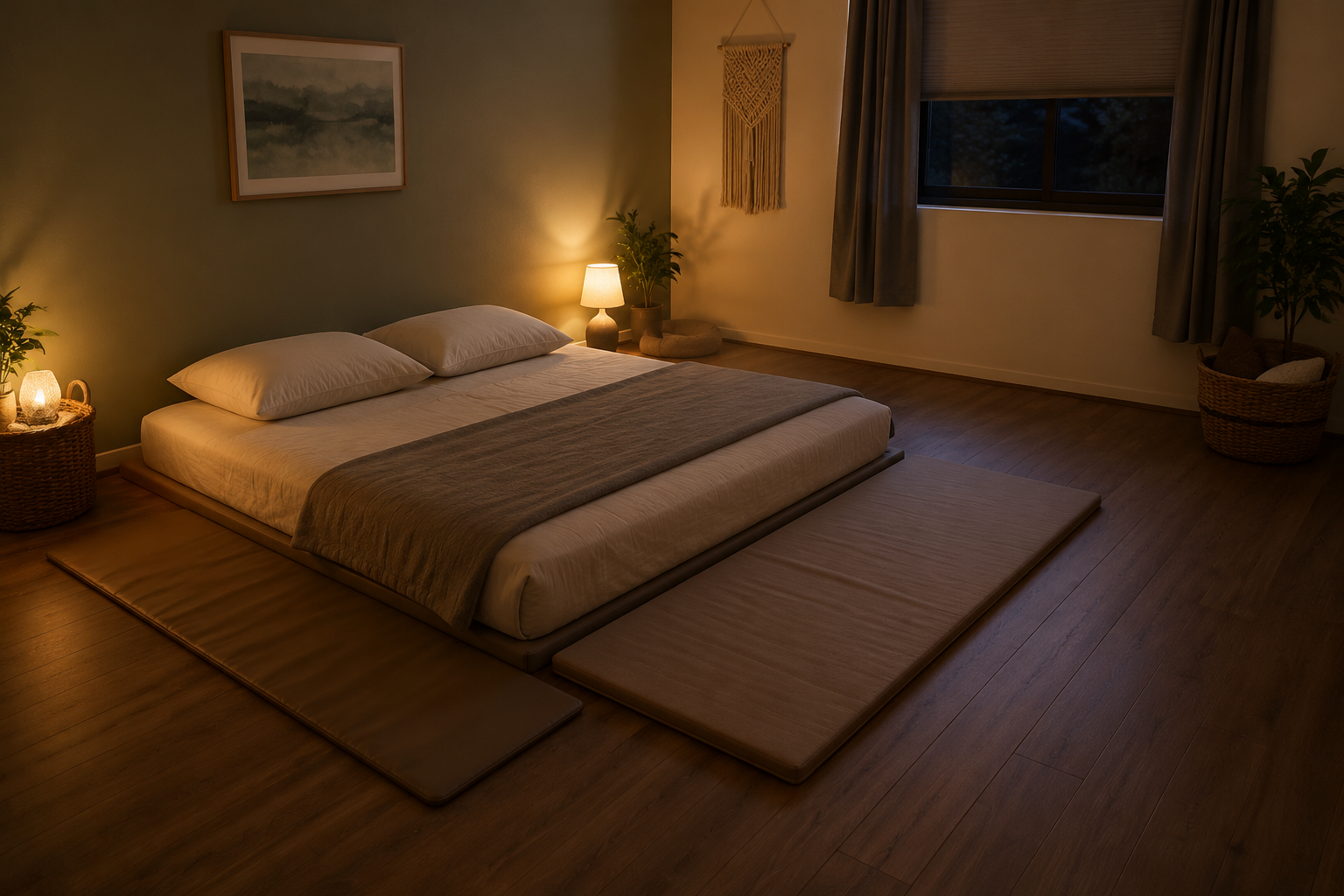
If a seizure happens in bed, the simplest injury question is how far the sleeper can fall. Mass General recommends placing the mattress on the floor or using a low-profile bed frame for people with nocturnal seizures, specifically to reduce injury from falls out of bed.[1] The Lennox-Gastaut Syndrome Foundation gives similar practical advice, pairing low beds with padded flooring.[2]
That does not mean every bedroom has to look like a hospital room. A low platform bed, a firm mattress directly on a clean floor, or a stable low-profile frame can all reduce fall distance. What matters is that the bed cannot tip, slide, or trap the sleeper between the mattress and a wall.
- Use the lowest safe sleeping surface the person can get in and out of without creating a separate mobility hazard.
- Leave enough space around the mattress so the sleeper is not wedged between the bed and a hard wall, radiator, nightstand, or dresser.
- Avoid raised bed rails unless a clinician has recommended a specific setup; rails can introduce entrapment or impact risks if chosen casually.
- If the mattress sits on the floor, check ventilation and cleanliness so the fix does not create moisture, dust, or mold problems.
For a child, a low bed also has to survive ordinary movement: climbing in, turning, reaching for a toy, and getting up half-awake. For an adult, the same change should respect dignity and routine. A setup that is safer but impossible to live with will not stay in place.
Change the Pillow, Then Reconsider the Bedding
The pillow deserves attention before many more technical ideas. Epilepsy Foundation Australia warns that soft pillows can pose a suffocation risk during seizures and recommends firm foam pillows or safety pillows with ventilation holes.[3] This is a concrete change: remove the soft, sink-in pillow and replace it with something firmer and more breathable.
A pillow is close to the airway for hours. During a seizure, the sleeper may not be able to reposition their face, move bedding away, or call for help. A pillow that feels pleasantly soft at bedtime can become a hazard if the face presses into it and stays there.
| Bedroom Item | Safer Direction | Reason |
|---|---|---|
| Pillow | Firm foam pillow or ventilated safety pillow | Reduces the chance that the face sinks into soft material |
| Comforter or duvet | Lighter bedding that is easier to move | Heavy bedding can be harder to clear from the face or body |
| Loose extra pillows | Keep off the bed unless needed for a specific positioning plan | Extra soft objects add surfaces that can obstruct breathing |
| Stuffed toys or decorative cushions | Remove from the sleep area | They add clutter near the face without improving safety |
Epilepsy Foundation Australia also advises avoiding heavy duvets and large comforters.[3] The practical test is not whether the bedding looks safe when neatly made. It is whether a person who is confused, recovering, or unable to coordinate movement could still breathe and cool down under it.
For warmth, think in thinner layers rather than one heavy cover. If a caregiver checks the person overnight, the bedding should be easy to see, lift, and rearrange without wrestling with weight or bulk.
Make the Landing Zone Forgiving
Once the bed is lower, widen the safety radius. A padded mat beside the bed, a rug with a non-slip backing, or foam flooring can soften a fall. The LGS Foundation specifically includes padded flooring in its seizure safety guidance.[2]
The floor should be soft enough to matter and stable enough not to cause a trip. A loose rug that bunches at the edge of the bed is not a safety upgrade. A mat that slides across hardwood can create a new problem for the person getting up during the night.
- Move sharp-cornered nightstands away from the bed.
- Keep lamps, cords, chargers, and water glasses out of the fall path.
- Anchor unstable furniture that could tip if grabbed during confusion after a seizure.
- Keep a clear route from the door to the bed so a caregiver can enter quickly.
- Use soft lighting that helps nighttime checks without fully waking the room.
This is also where aesthetics matter more than safety brochures admit. A room can be uncluttered without feeling stripped. Soft-edged furniture, warm lighting, and a low bed can still look like a bedroom someone wants to sleep in.
Support Side-Sleeping Without Creating a Trap
Several epilepsy safety sources converge on the same direction: side-sleeping is preferred over stomach sleeping because it better resembles the recovery position and may reduce airway risk during or after a seizure.[1][2][4] Cleveland Clinic also notes that 58% to 70% of SUDEP cases occur during sleep, which is why sleep position and overnight response planning deserve more than a passing mention.[4]
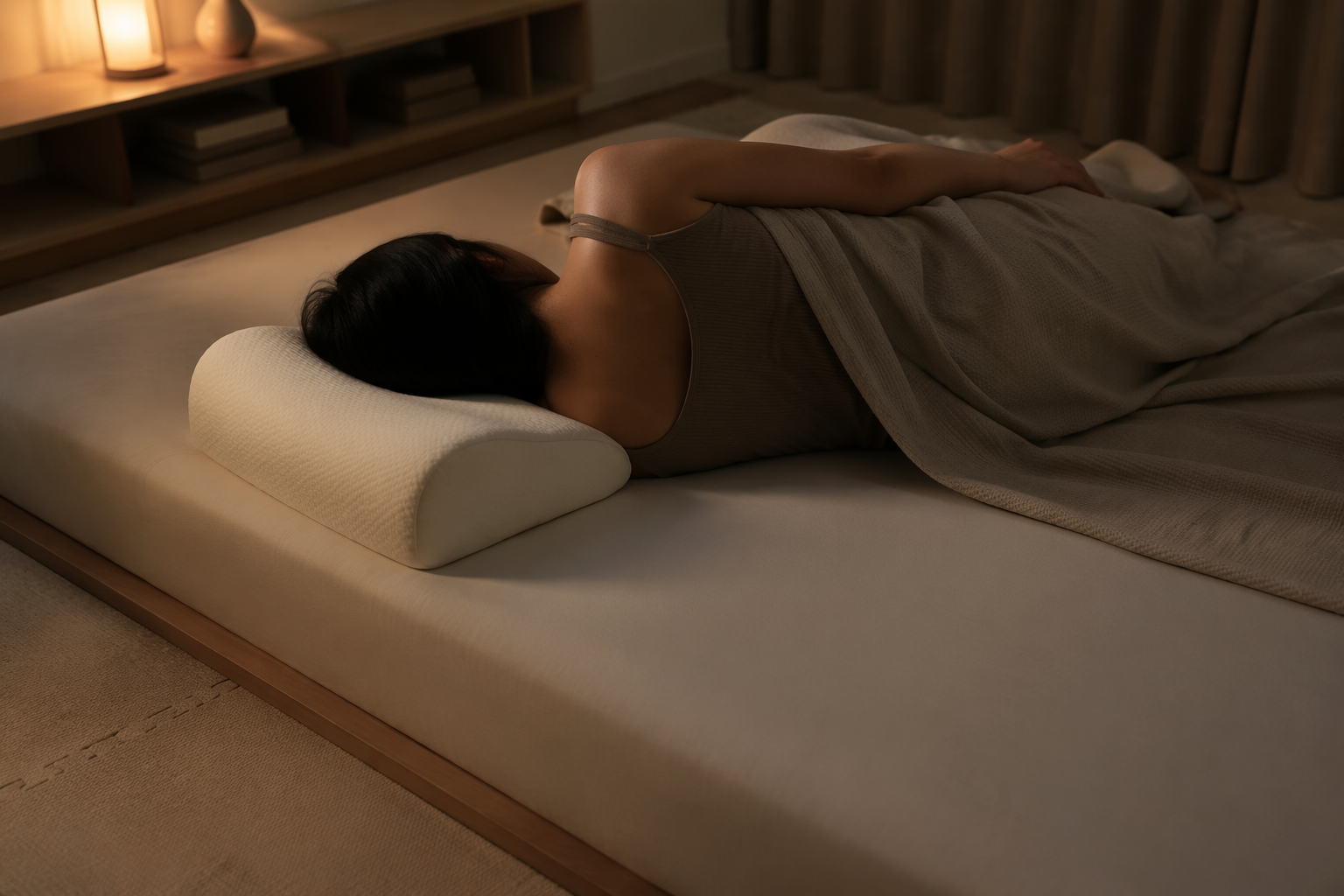
The goal is not to bind someone into position. It is to make the safer position easier to keep. A firm pillow, a body pillow placed to discourage rolling onto the stomach, or a carefully chosen side-sleeping support may help some sleepers. Avoid anything that pins the person, blocks escape from the bed, or adds loose soft material near the face.
Side-sleeping support is especially worth discussing with a neurologist or epilepsy nurse if the person has frequent generalized tonic-clonic seizures, wakes face-down, has limited mobility, or shares the bed with another person. The bedroom change should match the person’s actual seizure pattern, not an imagined average patient.
Nighttime risk is not limited to the moment of falling asleep. Epilepsy Society UK notes that seizures are most common during non-rapid eye movement sleep stages 2 and 3, which occur repeatedly during the night.[5] That supports keeping the whole setup safe until morning, not only during the first hour after bedtime.
Keep the Room Cool, but Treat Temperature as a Supporting Layer
A cooler bedroom is a reasonable safety layer, especially for people whose seizures are affected by overheating or poor sleep. Lampsy Health and the LGS Foundation advise keeping the bedroom around 60-65°F, or 16-18°C, because overheating can lower the seizure threshold.[2][6]
This recommendation is useful because it is low-cost and easy to test: lighter bedding, breathable sleepwear, a fan that does not blow directly into the face, safe ventilation, and a thermostat setting that prevents the room from becoming stuffy. It should not be treated as having the same evidence weight as lowering fall distance or removing suffocation hazards.
Temperature also connects back to bedding. A heavy comforter can work against both goals at once: it adds weight near the body and may increase overheating. If the room is cool enough, the bed can often use lighter layers.
Take Snoring, Gasping, and Breathing Pauses Seriously
Some nighttime safety problems are not solved by moving furniture. Cleveland Clinic discusses a single-institution study in which obstructive sleep apnea was found in 62.6% of adults with epilepsy who underwent sleep studies, and higher sleep apnea severity correlated with higher rSUDEP-7 scores.[4] That does not prove sleep apnea causes SUDEP, and it does not mean a bedroom gadget can manage SUDEP risk.
It does mean that loud snoring, witnessed pauses in breathing, gasping, morning headaches, unusual daytime sleepiness, or a bed partner’s concern should lead to clinical evaluation. If obstructive sleep apnea is present, treatment belongs in the medical plan alongside seizure management, medication adherence, and neurologist supervision.
Add Monitoring After the Physical Hazards Are Reduced
Monitoring is valuable when it gives another person a chance to respond. It is especially relevant for people who sleep alone, because sleeping alone without monitoring is described as a recognized risk factor in nocturnal seizure guidance.[7] But a device should not be asked to compensate for a high bed, soft pillow, heavy bedding, and hard furniture.
The main categories are not equal. Some seizure detection devices are designed to detect convulsive movements and alert a caregiver. The LGS Foundation and Lampsy Health discuss options such as Embrace2 and NightWatch+ for nighttime seizure monitoring.[2][6] NightWatch+ has clinical trial data, while many consumer sleep trackers are built for sleep staging, movement trends, heart rate estimates, or wellness feedback rather than seizure detection.
That distinction matters. A general wearable, ring, watch, or under-mattress tracker may help someone understand sleep patterns, restlessness, or possible breathing-related sleep concerns, but it should not be treated as a substitute for a seizure detection device, emergency plan, or clinical care. Readers comparing monitoring form factors can use under-mattress sleep tracker guidance or broader sleep tracker form-factor comparisons for comfort and placement questions, while keeping the seizure-safety standard separate.
| Monitoring Option | What It May Help With | Main Caution |
|---|---|---|
| Seizure detection wearable | Alerting a caregiver to possible convulsive seizure activity | Performance varies by device, seizure type, and evidence base |
| Video or audio monitor | Letting a nearby caregiver hear or see concerning activity | Requires someone available to respond |
| Bed sensor or under-mattress tracker | Tracking movement, sleep patterns, or possible sleep disruption | Not a substitute for seizure detection unless specifically designed and validated for that use |
| General consumer sleep tracker | Wellness-level sleep trend information | Should not be relied on as epilepsy sleep safety equipment |
A useful monitoring plan answers plain questions: Who receives the alert? Will that person wake up? Can they reach the room quickly? Do they know when to place the person on their side, when not to restrain movement, when to time the seizure, and when to call emergency services? The device is only one piece of the response chain.
A Practical Order for Changing the Room
If everything cannot be changed at once, start with the objects closest to the sleeper’s body and airway. Then move outward.
- Lower the bed or mattress so any fall is shorter.
- Replace soft pillows with a firm foam or ventilated safety pillow.
- Remove heavy duvets, large comforters, loose cushions, and unnecessary soft objects.
- Pad the landing zone and clear hard or sharp furniture away from the bed.
- Make side-sleeping easier without restraining the sleeper or adding suffocation hazards.
- Keep the bedroom cool enough to reduce overheating.
- Add monitoring that matches the person’s seizure pattern, sleeping arrangement, and caregiver response plan.
None of these changes guarantees safety or eliminates SUDEP risk. They reduce specific hazards: a shorter fall, less soft material near the airway, fewer hard edges, less overheating, a better default sleep position, and faster awareness when someone needs help. Medication adherence, seizure control, and neurologist supervision remain part of the broader safety plan.
The room does not need to become clinical to become safer. A low bed, firm pillow, lighter bedding, padded floor, clear layout, cooler air, side-sleeping support, and appropriately chosen monitoring create a layered nighttime setup that adults and caregivers can put in place without medical training.
References
- Nocturnal Seizures - Mass General Hospital - https://www.massgeneral.org/neurology/treatments-and-services/epilepsy/nocturnal-seizures
- Seizure Safety - LGS Foundation - https://www.lgsfoundation.org/seizure-safety/
- Bedroom - Epilepsy Foundation Australia - https://epilepsyfoundation.org.au/managing-epilepsy/health-and-wellbeing/safety-at-home/bedroom/
- Epilepsy and Obstructive Sleep Apnea: Assessing the Risk of SUDEP - Cleveland Clinic ConsultQD - https://consultqd.clevelandclinic.org/epilepsy-and-obstructive-sleep-apnea-assessing-the-risk-of-sudep
- Sleep and epilepsy - Epilepsy Society - https://epilepsysociety.org.uk/about-epilepsy/epileptic-seizures/seizure-triggers/sleep-epilepsy
- Epilepsy and Sleep: Everything You Need to Know to Stay Safe at Night - Lampsy Health - https://www.lampsyhealth.com/blog/epilepsy-and-sleep-everything-you-need-to-know-to-stay-safe-at-night
- Understanding Nocturnal Seizures - MyEpilepsyTeam - https://www.myepilepsyteam.com/resources/understanding-nocturnal-seizures


Comments
Join the discussion with an anonymous comment.