
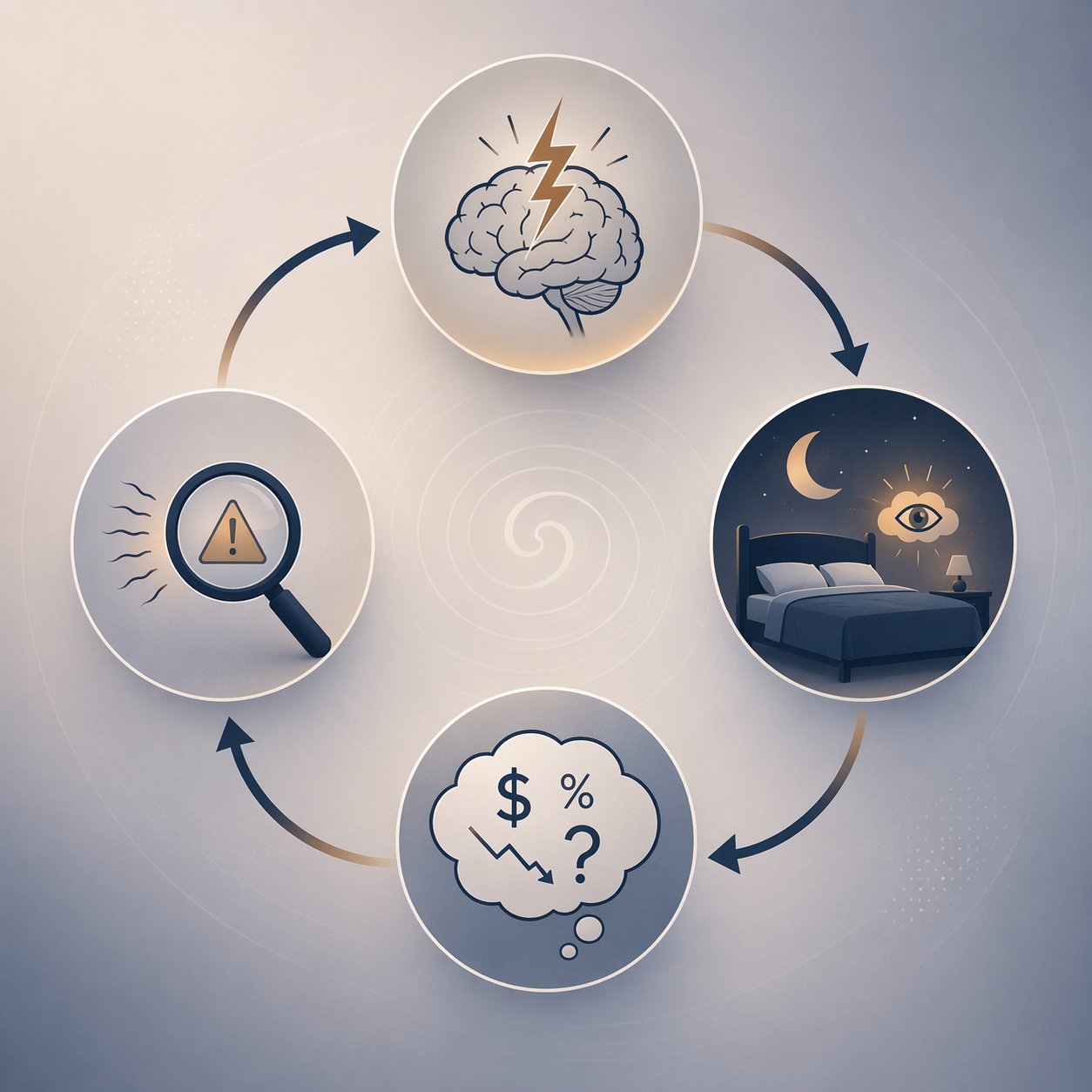
At 2:17 a.m., the mind can look busy and the body can look trapped: a clenched jaw, one more check of the balance, one more pass through Social Security headlines, one more private calculation about healthcare costs and how long the money has to last. The problem is not that the person has failed to be rational. It is that retirement has started to behave like an unresolved threat, and the nervous system is doing what nervous systems do when a threat does not go away: keep watch instead of sleep.

Why the worry has real weight
Gen X is not inventing this fear out of thin air. In a 2026 retirement outlook covered by PLANADVISER, 28% of Gen Xers ages 55-60 said they were extremely or very concerned about having enough retirement income, about twice the Boomer rate [1]. Nationwide also reported that 89% of Gen Xers said rising costs are making retirement harder, and 40% had already cut discretionary spending [2].
- The old pension cushion is much thinner for Gen X than it was for Boomers, so more of the retirement burden sits on personal savings, healthcare bills, and whatever Social Security ultimately pays.
- Social Security's trust fund is projected to be depleted in 2033; at that point, only 77% of scheduled benefits would be payable under current law [4].
- West Health says 11% of adults ages 50-64 are "cost desperate," unable to afford needed care or medications, which helps explain why healthcare anxiety is not abstract in midlife [5].
That pressure shows up at bedtime too. The Better Sleep Council found that body pain (42%) and worrying about money (40%) were nearly tied as Gen X's top sleep impediments [3].
What the body does with unfinished money fear
Financial uncertainty does not stay abstract for long. It tends to push the body toward hyperarousal: more vigilance, more scanning, more rapid re-entry into problem-solving mode. In sleep terms, that means slower sleep onset, lighter sleep, more awakenings, and the kind of early-morning waking that makes 4:12 feel like a bad verdict. The cortisol bridge here comes from general sleep neuroscience, not from a study that measured cortisol in Gen X retirement worriers specifically; the retirement-specific evidence is behavioral, not biomarker-based.
That is why the midlife insomnia literature matters. In a prospective Wisconsin cohort, early morning awakenings at age 50 predicted earlier retirement overall (HR 1.22) and retirement due to poor health or disability (HR 1.59); having 3-4 insomnia symptoms predicted retirement due to poor health at nearly double the rate (HR 1.90) [6]. Depression explained part of the association, about 49.5%, but not all of it, and early morning awakening still carried independent weight [6]. The sample was mostly White, married, non-smoking, and college educated, so it is a warning signal rather than a universal law [6].
Why the spreadsheet is better at noon than at midnight
Daytime planning can reduce uncertainty. In bed, it often does the opposite. Retirement math at night rarely ends with closure; it ends with more scenarios, more comparisons, more scanning for what was missed. Once the brain starts treating the bed as a review room, the room itself becomes a cue for alertness. Sleep loss then makes the next day's planning worse by weakening attention, working memory, and emotional control, which makes the next night more fertile for the same loop.
What breaks the cycle
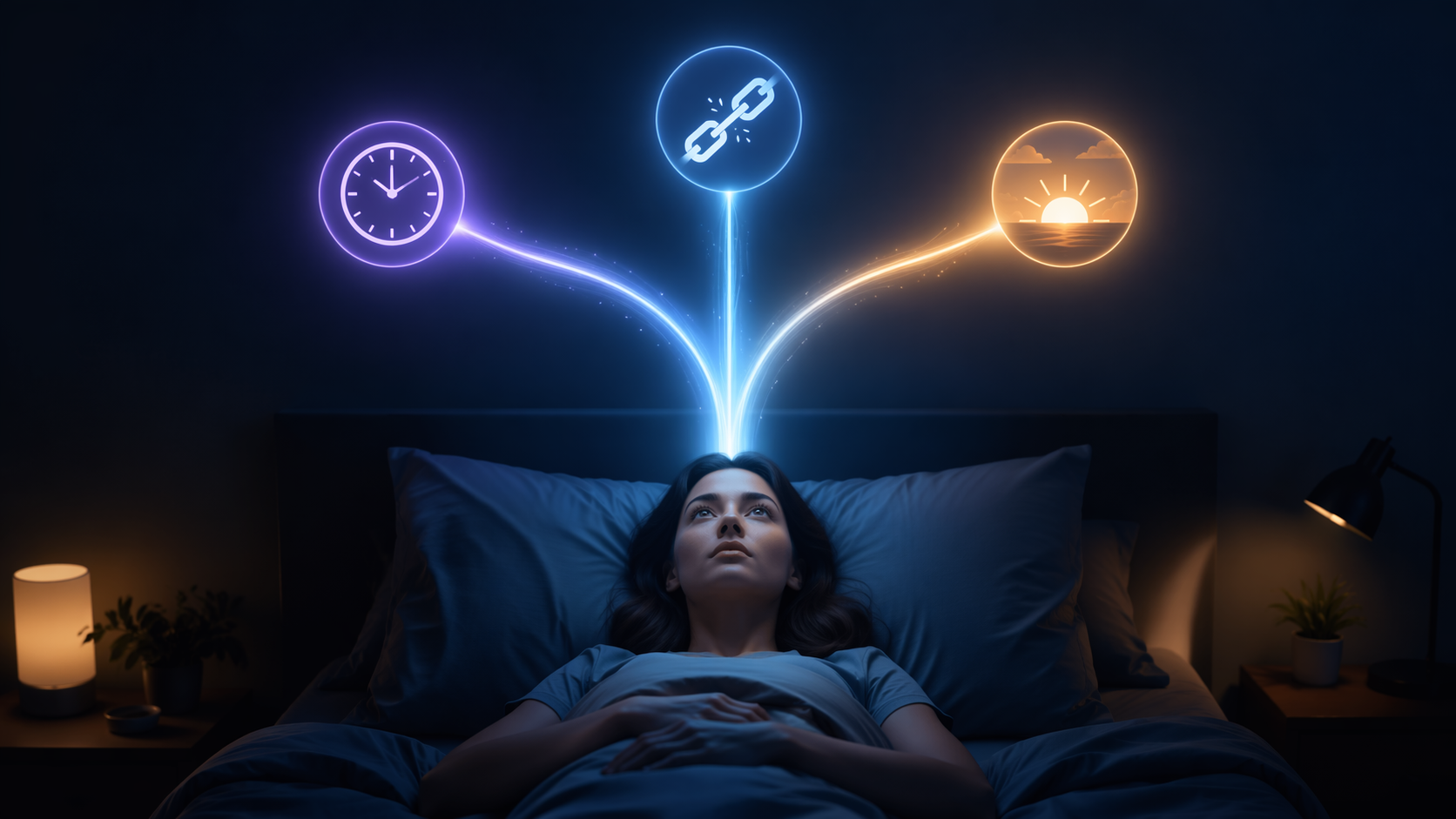
The evidence-based way to interrupt chronic insomnia is CBT-I, not a longer bedside debate with your balance sheet. If you want the mechanics, see What Actually Cures Insomnia? CBT-I Explained. The parts that matter most here are stimulus control, a fixed wake time, and scheduled worry time.
- Stimulus control: leave the bed when you are awake and rehearsing money problems, and return only when sleepiness comes back.
- Fixed wake time: get up at the same time every day so the sleep system stops drifting around the retirement panic.
- Scheduled worry time: move retirement review into daylight, with a stop time, so the brain does not learn that 2 a.m. is the right hour for financial triage.
Basic sleep hygiene can support the routine, but it usually does not retrain the bed itself. The goal is narrower and more practical than "solve retirement": stop making the bed the place where retirement fear teaches the brain to stay awake.
References
- Gen X Retirement Anxiety Soars as Income Needs Persist — PLANADVISER, 2026
- Gen X grapples with retirement anxiety as savings lag — Nationwide
- Generational Stress and Sleep — Better Sleep Council
- 2025 Social Security Trustees Report — Social Security Administration
- This Is Generation X's Biggest Retirement Worry: Money. It's Not Money. — West Health
- Insomnia symptoms and retirement outcomes — PubMed Central, 2017




Comments
Join the discussion with an anonymous comment.