
When sleep falls apart during cancer treatment, the first question is often unfairly small: “Am I doing something wrong at night?” Usually the better question is more specific: what changed in the treatment calendar? Infusion day, steroid day, a new radiation field, hormone blockade, a higher pain medication dose, or worsening nighttime symptoms can each disturb sleep through a different route.
Sleep problems are common enough during cancer care that they should not be treated as a minor complaint. The National Cancer Institute describes sleep problems as common in people with cancer, and the American Cancer Society notes that studies have reported sleep problems in about 30% to 75% of people with cancer, compared with about 15% of the general population; higher estimates, including an upper-bound figure near 88%, come from specific patient groups rather than every cancer population.[1][2]
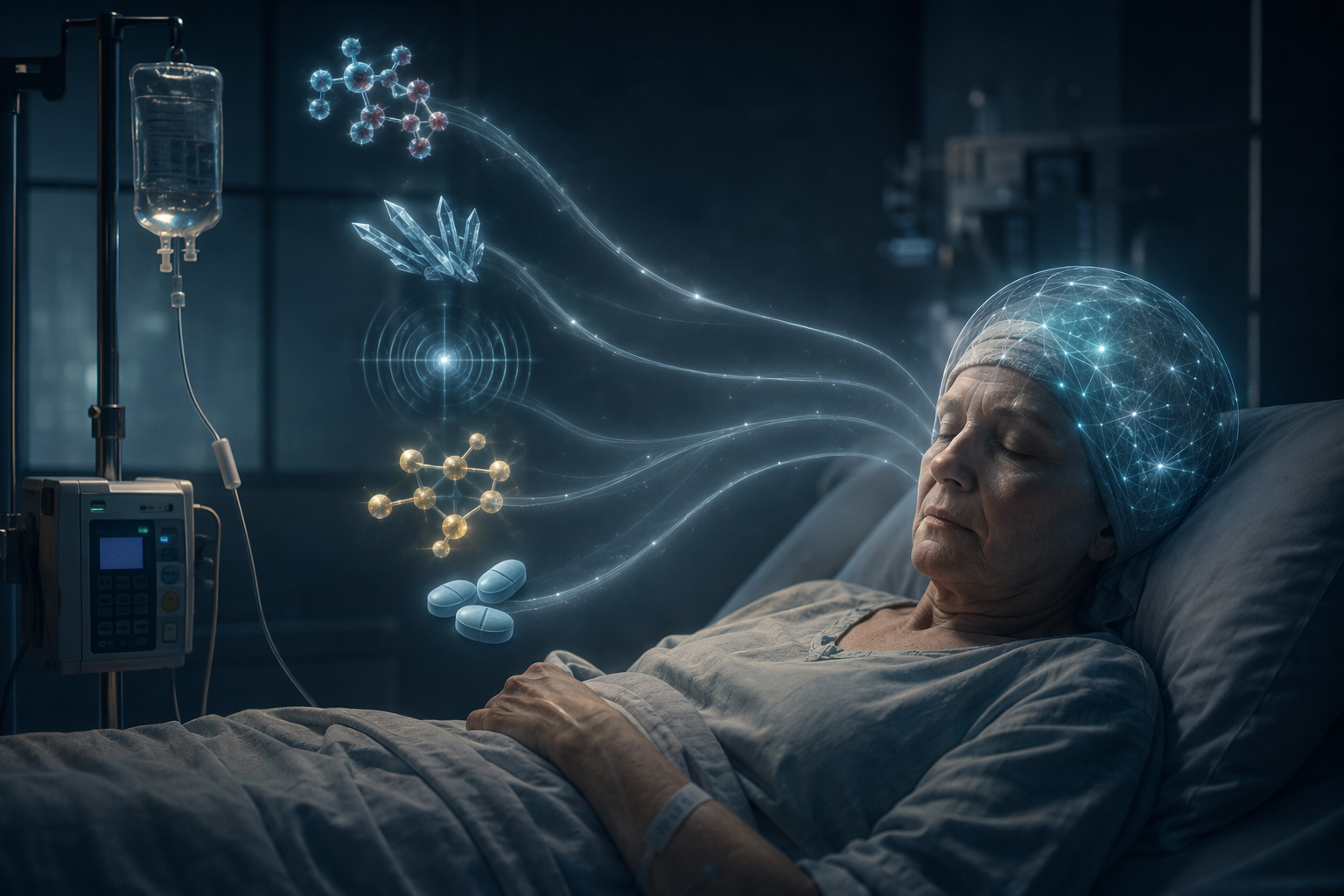
That range matters because “cancer treatment effects on sleep” is not one problem. One person is awake because dexamethasone has pushed the body into daytime physiology at bedtime. Another is waking drenched from hormone-related hot flashes. Another is sleeping more hours but never reaching restorative sleep after chemotherapy. Another is dozing all afternoon after cranial radiation and then lying awake at 2 a.m. The useful work is matching the pattern to the likely mechanism, then bringing that pattern to the oncology team before changing anything.
Start With the Treatment Calendar, Not the Pillow
A bedroom routine can still help, but it is rarely enough when the trigger is prescribed as part of cancer care. The most useful sleep diary for this situation includes treatment timing beside sleep timing: chemotherapy date, steroid dose and time, radiation site, hormone therapy schedule, pain medication timing, nighttime urination, hot flashes, naps, and any breathing changes noticed by a bed partner.
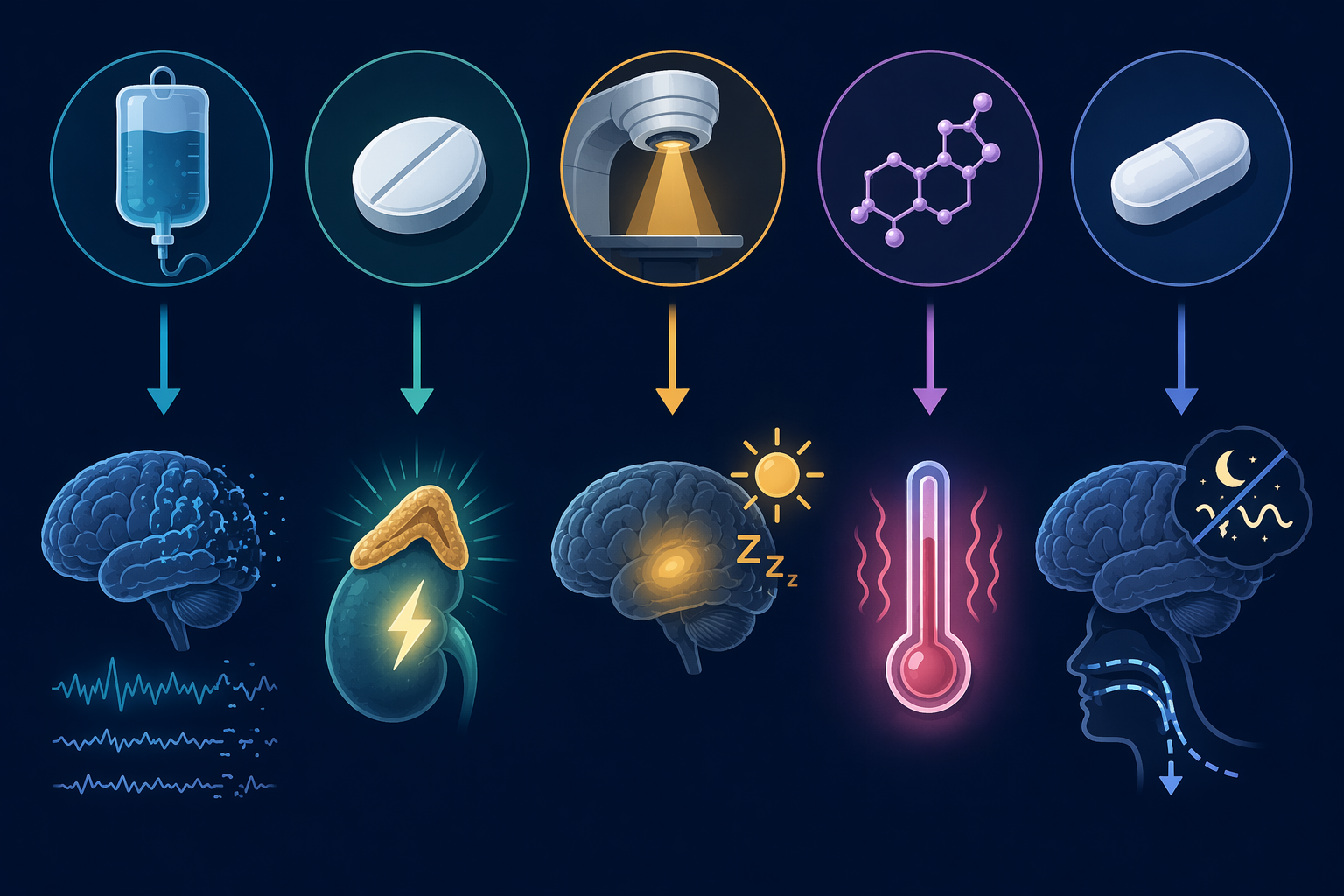
| Treatment or symptom cluster | Sleep pattern to notice | Likely mechanism | What to discuss with the oncology team |
|---|---|---|---|
| Chemotherapy | Tired but wired, lighter sleep, frequent awakenings around treatment cycles | Inflammatory cytokine activity and changes in sleep architecture | Cycle timing, nausea or pain control, fatigue plan, and whether insomnia needs CBT-I or medication review |
| Corticosteroids such as dexamethasone or prednisone | Alertness at night, racing energy, early-cycle insomnia | HPA-axis activation and cortisol-like stimulation | Whether dosing can be scheduled earlier; do not change dose or timing without approval |
| Hormone therapy | Hot flashes, night sweats, abrupt awakenings | Vasomotor symptoms from estrogen or androgen suppression | Non-hormonal symptom treatments, cooling strategies, and medication review |
| Radiation therapy | Daytime drowsiness after cranial radiation, or repeated urination after pelvic radiation | Site-dependent effects: somnolence syndrome or nocturia-driven sleep fragmentation | Radiation field, symptom timing, bladder symptoms, and daytime nap pattern |
| Opioids for cancer pain | Sedation without restorative sleep, vivid sleep disruption, snoring pauses or irregular breathing | REM suppression and higher central sleep apnea risk, especially with long-acting opioids | Pain control, dose timing, breathing symptoms, and whether sleep-disordered breathing should be evaluated |
Chemotherapy Can Make Sleep Lighter Even When the Body Is Exhausted
The “tired but wired” feeling after chemotherapy is not just a failure to relax. Chemotherapy can activate inflammatory pathways that affect the brain and sleep regulation. Research on fatigue and sleep in cancer describes increases in cytokines and related inflammatory markers, including IL-1, TNF, and VEGF, which are associated with disrupted sleep architecture.[3][4]
Sleep architecture is the part patients rarely see but often feel. Instead of moving smoothly through lighter sleep, deep sleep, and REM sleep, the night can tilt toward more stage 1 and stage 2 sleep and less deep and REM sleep.[3][4] The person may be in bed for a long time and still wake as if the night never did its repair work.
That distinction changes the conversation. If insomnia reliably worsens after infusion, it is worth documenting the day of treatment, anti-nausea medications, steroid premedication, pain flares, and nap pattern rather than simply reporting “bad sleep.” The oncology team may be able to adjust supportive medications, treat nausea or pain earlier, or refer for cognitive behavioral therapy for insomnia when the pattern is persistent. The patient should not try to counteract chemotherapy-related sleeplessness with supplements or medication changes without review, because interactions and side effects can matter during treatment.
Steroids Are Often the Cleanest Clue
Corticosteroids are given for good reasons in cancer care: to prevent nausea, reduce inflammation, manage allergic reactions, treat swelling, or support a specific regimen. They can also make sleep feel almost mechanically impossible. Steroids activate the hypothalamic-pituitary-adrenal axis, the same broad stress-response system that helps keep the body alert during the day. At night, that alerting signal can feel like a switched-on body inside an exhausted person.
This is why timing matters more here than another lecture about screens. Cancer sleep guidance commonly advises taking prescribed steroids in the morning when possible, because earlier dosing can reduce insomnia severity; the National Cancer Institute and American Cancer Society both emphasize discussing medication timing with the care team.[1][2]
The safety boundary is firm: do not skip, split, taper, or move steroid doses on your own. In some regimens, the timing is tied to chemotherapy protection, nausea prevention, brain swelling control, or immune-related side effect management. The practical step is to bring a precise pattern: “On steroid days I fall asleep at 3 a.m.; on non-steroid days I fall asleep closer to 11 p.m.” That gives the team something usable.
Hormone Therapy Often Wakes People Through Heat, Not Anxiety
Tamoxifen, aromatase inhibitors, and androgen deprivation therapy can disturb sleep by changing sex-hormone signaling. The most recognizable pathway is vasomotor symptoms: hot flashes and night sweats that jolt the body awake, sometimes many times a night. The American Cancer Society includes hot flashes and sweating among cancer-related causes of sleep problems.[2]
This pattern deserves to be named correctly. A person who wakes soaked and overheated is not simply “anxious at night,” even if anxiety arrives afterward. Cooling the room, using breathable layers, keeping a change of sleepwear nearby, and avoiding personal triggers can reduce the cleanup burden, but moderate or severe symptoms often need a clinician conversation. Non-hormonal medication options and behavioral strategies may be available, and they should be chosen with the cancer type and treatment plan in mind.
Radiation Sleep Problems Depend on the Field
Radiation is sometimes discussed as if it causes one kind of fatigue. For sleep, the field matters. Cranial irradiation can be associated with somnolence syndrome, a pattern of marked daytime sleepiness that may appear after treatment and can disrupt the normal day-night rhythm. Pelvic radiation can disturb sleep differently, by irritating urinary or bowel pathways and sending the person to the bathroom repeatedly overnight.[5]
Those two paths call for different notes. After cranial radiation, the team needs to know whether the patient is sleeping much of the day, struggling with headaches, or becoming hard to keep awake. After pelvic radiation, the useful details are how often urination wakes the person, whether there is burning or urgency, whether fluids cluster late in the day, and whether bowel symptoms are also interrupting sleep. Same word — radiation — but not the same sleep problem.
Opioids Can Sedate the Body While Disturbing Sleep Quality
Pain itself is one of the most direct sleep thieves in cancer care, and adequate pain control is not optional. But opioids are not sleep medicines, even when they cause drowsiness. Reviews of sleep disturbance in cancer describe opioid-related changes including REM suppression and concern for sleep-disordered breathing.[4]
The breathing piece deserves particular respect in people using long-acting opioids for cancer pain. Central sleep apnea is different from ordinary insomnia: breathing drive becomes unstable during sleep, and the person may have pauses, irregular breathing, morning headaches, confusion, or heavy daytime sleepiness. A caregiver’s observation can be valuable here. The answer is not to endure pain or abruptly reduce medication; it is to tell the oncology or palliative care team what is happening so pain control and breathing safety can be evaluated together.
Targeted Therapy and Immunotherapy: Watch the Pattern, but Avoid Overconfidence
Newer targeted therapies and immunotherapies can affect sleep indirectly through rash, itching, diarrhea, fever, thyroid changes, pain, inflammation, or immune-related side effects. The evidence is not as cleanly mapped for every drug as it is for steroids or vasomotor symptoms, so the safest approach is pattern recognition rather than self-diagnosis: what started after the new drug, what symptom wakes you, and what time of night it happens.
Fatigue Is Not the Same as Sleepiness
Cancer-related fatigue can feel like sleepiness, but it is broader and more stubborn: physical heaviness, cognitive slowing, low stamina, emotional depletion, and poor recovery after rest can all sit together. In one Iranian hospital study of 149 cancer patients, poorer sleep quality was moderately to strongly correlated with greater cancer-related fatigue severity, with a reported correlation of R=0.63.[6] That finding fits the everyday experience of treatment, but it should not be treated as proof that every fatigue episode is caused by insomnia.
The distinction affects what you report. Sleepiness means you are likely to doze if given the chance. Fatigue may mean you cannot climb the stairs, think clearly, or tolerate conversation even after a long night in bed. A person can have both. A person can also spend ten hours in bed and still have fragmented, shallow, non-restorative sleep.
Protecting the Circadian Signal
Cancer treatment can blur the body’s timing signals: clinic days start early, naps expand, meals shift, steroids stimulate, light exposure drops, and symptoms take over the night. Circadian rhythm is not a decorative wellness concept here. In a 2000 study of 200 patients with metastatic colorectal cancer, Mormont and colleagues reported that patients with more robust rest-activity rhythms had about five times higher 2-year survival than those with disrupted rhythms; that finding is compelling but should not be generalized to all cancers or used to claim that sleep correction improves survival by itself.[7]
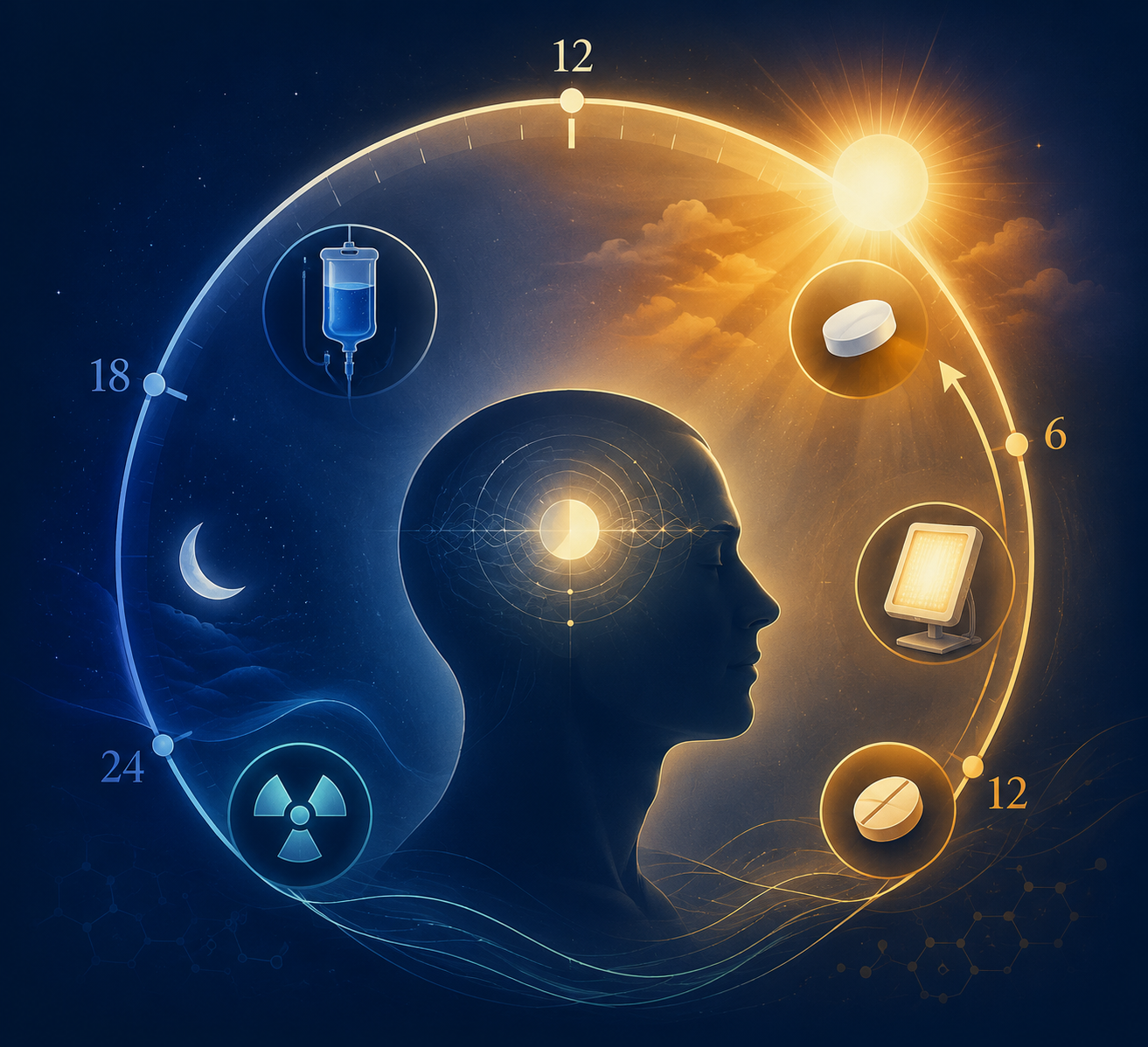
The practical goal is to keep the day-night signal as legible as treatment allows. Morning outdoor light or a clinician-approved bright light plan can help some people. The American Academy of Sleep Medicine reported that morning bright light therapy improved sleep efficiency to clinically normal levels in fatigued cancer survivors in a randomized trial.[8] That does not make light therapy a cure-all, and it may be inappropriate for some eye conditions, medication sensitivities, bipolar disorder risk, or treatment situations, so it belongs in the clinician conversation.
Melatonin is sometimes useful when the main issue is circadian timing, but it is not a universal answer to chemotherapy inflammation, steroid activation, hot flashes, nocturia, pain, or sleep apnea. If the question is whether melatonin fits the pattern, it helps to separate circadian-delay insomnia from treatment-driven awakenings; this guide to when melatonin actually works for insomnia explains that distinction in more detail.
What to Bring to the Oncology Team
The most helpful report is not a perfect sleep diary. It is a treatment-linked pattern that lets the team see what changed and what consequence followed.
- Treatment timing: infusion dates, steroid days, radiation schedule, hormone therapy start date, and recent medication changes.
- Sleep pattern: time to bed, time to sleep, number and cause of awakenings, early-morning waking, naps, and whether sleep feels restorative.
- Fatigue versus sleepiness: whether you are dozing unintentionally, or mainly exhausted without relief from rest.
- Night symptoms: hot flashes, night sweats, pain, nausea, itching, diarrhea, urinary urgency, or shortness of breath.
- Pain medication and breathing: opioid dose timing, long-acting medications, loud snoring, pauses, irregular breathing, morning headaches, or unusual confusion.
- Safety concerns: falls, daytime driving risk, missed medications, severe distress, or thoughts of self-harm.
Generic sleep hygiene can still support recovery: a steady wake time, less late caffeine, a cooler room, and a calmer wind-down are not useless. They are just incomplete when the real driver is a steroid schedule, inflammatory sleep fragmentation, vasomotor symptoms, nocturia, pain, or breathing instability. During cancer treatment, progress usually starts when the sleep intervention is matched to the treatment mechanism.
References
- Sleep Problems in People with Cancer, National Cancer Institute
- What are Sleep Problems?, American Cancer Society
- Fatigue and sleep in cancer patients, PMC
- Sleep Disturbances in Cancer, PMC
- Sleep Disorders in Cancer Radiation Therapy: Little Understood, Often Detected, and Important, Oncology Nurse Advisor
- Sleep Quality and Cancer-Related Fatigue, PMC
- Marker Rhythms of Circadian System Function: A Study of Patients with Metastatic Colorectal Cancer and Good Performance Status, Clinical Cancer Research, 2000
- Bright light therapy improves sleep in people treated for cancer, American Academy of Sleep Medicine
Comments
Join the discussion with an anonymous comment.