
If your sleep changed after a grandparent scam, the first thing to know is plain and important: this can be a psychological injury, not a personal failure. Many older adults who were steady sleepers before a scam find themselves awake at 2 a.m., replaying the phone call, the voice, the request for secrecy, the transfer of money, or the moment they realized someone had used love against them. HelpGuide’s senior fraud guidance names insomnia, depression, and anxiety among the possible consequences after scam-related financial losses.[1]
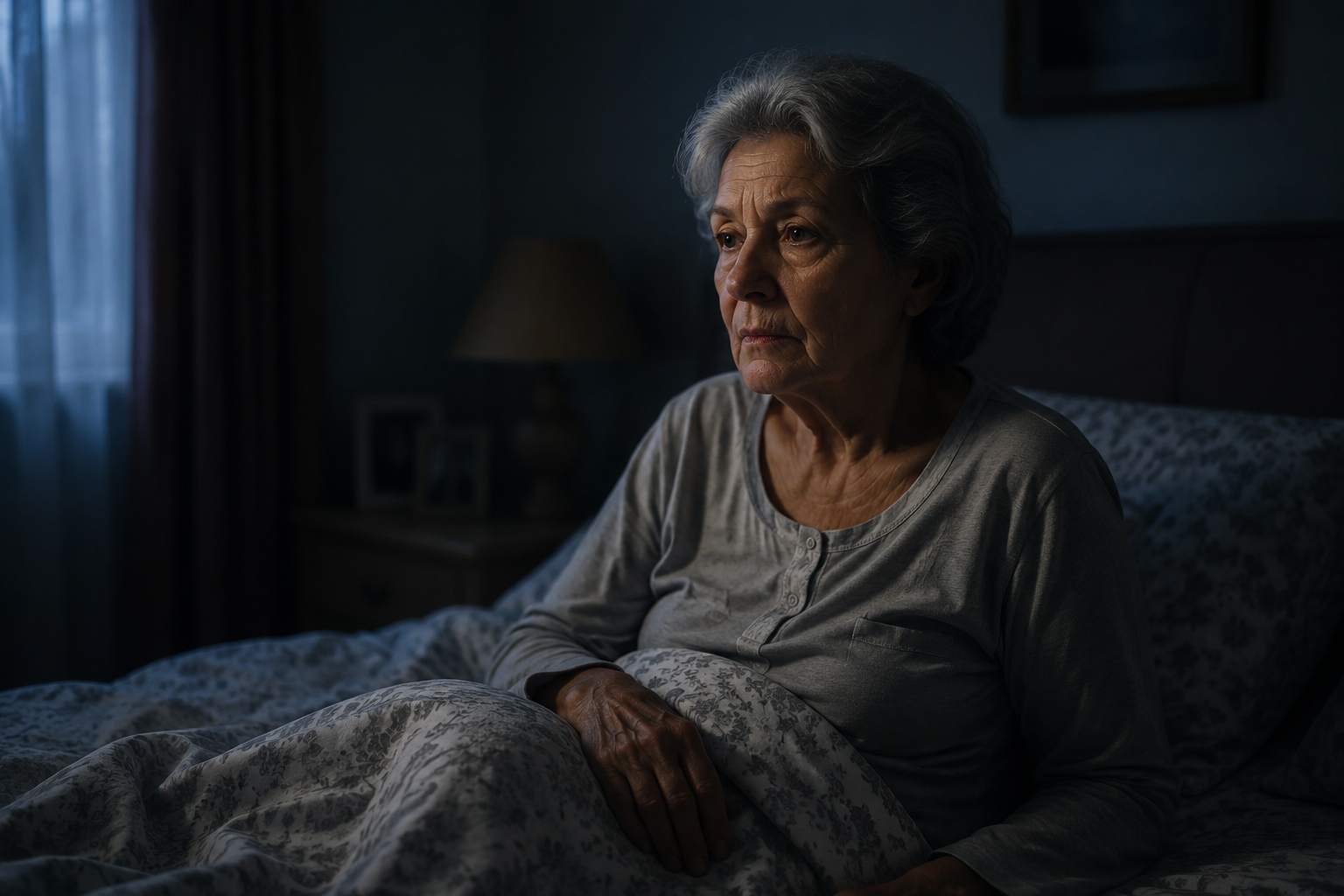
That matters because grandparent scam sleep anxiety often feels shameful in a way ordinary money stress does not. The mind does not simply calculate what was lost. It goes back to the moment of trust: “I thought it was my grandchild.” “I should have checked.” “Why did I keep it secret?” Those thoughts can become louder at night, when the day’s tasks stop and there is no new information to gather.
A family member may be tempted to correct the story quickly: “You should have called us.” That may be true as a prevention lesson, but it is rarely useful as bedtime medicine. The person already knows the ending. What sleep needs now is less accusation, more safety, and a plan that respects how the scam worked.
Why This Scam Gets Into the Bedroom
A grandparent scam is not just a financial trick. The Federal Communications Commission describes versions in which scammers impersonate a grandchild in trouble, sometimes using more sophisticated tools such as voice cloning, and pressure the older adult to act urgently.[2] The instruction that often does the most damage is not technical at all: do not tell mom and dad.[2]
That command cuts off the very support system that might have slowed the scam down. It also teaches the nervous system a dangerous bedtime lesson: when something terrible happens, keep it inside. For a grandparent, the secrecy is not random. It is attached to the protective bond with a child or grandchild. The scammer borrows the voice of family emergency, then leaves the real family outside the room.
This is not rare enough to dismiss as one unlucky mistake. HelpGuide cites the FBI’s Internet Crime Complaint Center 2025 report in estimating that Americans age 60 and older lost $7.7 billion to elder fraud in 2025.[1] The National Council on Aging lists the grandparent scam as the top financial scam targeting seniors and reports that one in 18 older adults is targeted by scams, with more than 88,000 older victims reporting $3.1 billion in losses in 2022.[3]
Those numbers are not here to make your own loss seem smaller or larger. They are here to correct the lonely feeling that you were somehow the only careful person this could happen to. Scam scripts are built to rush, isolate, and overwhelm judgment before ordinary checking can occur.
The Nighttime Loop: Shame, Replay, Hypervigilance
After a scam, insomnia often follows a loop. The person gets into bed. The bedroom is quiet. The mind begins reviewing the call as if one more review could find the exact point where everything might have changed. Shame adds heat to the memory. Hypervigilance keeps watch: What if they call again? What if the bank cannot help? What if my family thinks I am no longer capable?
This kind of wakefulness is different from a normal bad night. It is problem-solving without a solvable task. The body is tired, but the brain behaves as if staying awake is protective. In sleep medicine, we often see this after frightening or humiliating events: the bed becomes paired with alertness, and then the person begins to fear the bed itself.
A 2025 qualitative study of 25 scam victims found temporary insomnia lasting one to two months after scams and post-traumatic stress symptoms lasting one to two years.[4] The study was not specifically about grandparent scams, and its sample was small, so it should not be stretched into a universal prediction. But one finding is especially useful for older adults who feel their reaction is “too much” for the amount lost: psychological distress did not neatly track with the size of the financial loss.[4]
That finding fits what families often miss. A smaller loss can still feel devastating if it involved impersonation, secrecy, fear for a grandchild, or a sudden loss of confidence. The injury may be financial, emotional, relational, or all three.
The sleep-and-exploitation connection is recognized but still under-studied. A 2022 scoping review found only three studies examining sleep and financial exploitation and proposed a framework in which sleep disturbance may affect executive function and vulnerability, while acknowledging that causality is not established.[5] In other words, the science is not finished, but it is already clear enough to stop treating post-scam insomnia as mere embarrassment.
Start by Naming the Sleep Pattern
Before trying to fix sleep, identify what is actually happening. Scam-related sleep trouble usually shows up in one or more of these patterns:
- Trouble falling asleep because the call replays as soon as the lights go out.
- Waking in the middle of the night and checking accounts, phones, email, or messages.
- Early-morning waking with dread, shame, or a feeling of being unsafe.
- Nightmares or half-awake images connected to the scam, the grandchild, police, banks, or being trapped.
- Avoiding sleep because bedtime has become the time when the mind attacks.
This distinction matters because treatment changes depending on whether the main problem is falling asleep, staying asleep, or waking too early. If you need a fuller way to separate those patterns, trouble falling asleep vs. staying asleep explains why the difference changes the approach.
| If the night looks like this | The first target |
|---|---|
| You lie down and immediately replay the scam call | Move replay into a planned daytime worry period |
| You wake and start checking accounts or messages | Protect the bed from investigation and problem-solving |
| You feel ashamed and avoid telling anyone | Break secrecy with one safe person or a confidential group |
| You feel constantly on guard | Reduce hypervigilance before bed and seek trauma-informed help if it persists |
Use CBT-I, But Adapt It to the Scam
Cognitive behavioral therapy for insomnia, or CBT-I, is widely described as a first-line treatment for chronic insomnia, and Sleep Foundation notes that it can be effective for older adults.[6] For scam-induced insomnia, the techniques are most helpful when they are not treated as a neat worksheet problem. The mind is not racing because it forgot how to relax. It is racing because something frightening and humiliating happened, and the brain is trying to prevent it from happening again.
If you want a broader explanation of the treatment, CBT-I for sleep anxiety covers the core approach. The adjustments below focus on the parts that matter most after a grandparent scam.
Put the Replay on the Daytime Calendar
Scheduled worry time is not pretending the scam is unimportant. It is giving the mind a reliable appointment so it does not use the bed as a courtroom. Choose a regular daytime window, preferably not close to bedtime. During that time, write down the worries that keep returning: money, family reaction, future scams, bank follow-up, police reports, passwords, embarrassment.

Then divide the page into two columns: “needs action” and “painful but not actionable tonight.” A bank call belongs in the first column. The thought “I cannot believe I answered” belongs in the second. That second column is not dismissed. It is named as distress, not assigned to midnight.
At night, when the replay begins, use a consistent phrase: “This belongs to tomorrow’s worry time.” Keep it boring. Do not argue with the thought for 40 minutes. The goal is not to win a debate with shame; the goal is to stop giving shame the bed as its office. For more on nighttime rumination, see how to stop a racing mind at night.
Keep Investigation Out of Bed
Stimulus control is one of the central CBT-I tools. In simple terms, it protects the bed as a cue for sleep rather than a cue for worry, checking, calling, scrolling, or searching. Sleep Foundation describes stimulus control as part of CBT-I, including getting out of bed when unable to sleep rather than remaining awake and frustrated.[6]
After a scam, this needs one extra rule: no scam work in bed. Do not check bank balances from the pillow. Do not reread texts under the covers. Do not search scam articles at 3 a.m. If you are awake and activated, get up, sit somewhere dim and quiet, and do something low-stimulation until sleepiness returns. If an important task comes to mind, write a brief note for the daytime list.
This is not avoidance. It is containment. The bank, police report, family conversation, and fraud alert all deserve attention. They do not deserve your bed.
Reframe the Event Without Excusing the Scammer
Cognitive reframing can sound too gentle if it is presented as “think positive.” That is not what is needed here. A better reframing is more exact: the scam succeeded because it exploited love, urgency, secrecy, and fear. That does not make the scam acceptable. It places responsibility where it belongs.
- Instead of “I was foolish,” try “I was pressured during a false family emergency.”
- Instead of “I cannot trust myself anymore,” try “I need new checking steps for urgent calls.”
- Instead of “My family will think less of me,” try “Secrecy helped the scammer; telling one safe person helps me recover.”
- Instead of “I should have known,” try “The script was designed to stop me from pausing.”
The purpose is not to erase regret. Regret can help build safeguards. Shame, by contrast, keeps the older adult alone at night, trying to punish the past into changing.
Sleep Hygiene Helps Only When It Lowers Alertness
Good sleep habits still matter, but they are not enough when the main driver is fear and replay. A cool room and a regular bedtime will not undo the command to keep a secret. For that reason, ordinary sleep hygiene should serve one purpose here: lowering evening alertness.
- Set a cutoff time for scam-related tasks, including calls, forms, account checks, and online searching.
- Keep phones and financial documents away from the bed if they trigger checking.
- Use a short wind-down routine that is familiar rather than ambitious: wash up, prepare tomorrow’s clothes, read something neutral, lights out.
- If evening news or scam stories increase vigilance, move them earlier or skip them while sleep is fragile.
For a fuller explanation of why habits alone often fail when insomnia is driven by conditioned arousal, see the limits of sleep hygiene. If anxiety is the main evening fuel, what to do when anxiety keeps you up at night may be a useful companion.
Break the Secrecy Carefully
The scammer’s instruction to keep quiet can linger long after the call ends. Sleep recovery often begins when secrecy is broken in a way that feels safe. That does not mean announcing every detail to everyone at once. It may mean telling one adult child, one trusted friend, one clergy member, one clinician, or one peer group: “I was scammed, and now I am not sleeping.”
Adult children can help most by resisting the lecture. The first response should be practical and protective: “I am glad you told me. We can handle the next steps together.” Questions can wait until the older adult is not flooded with shame.
Peer support deserves a place beside formal sleep treatment because it addresses the exact wound scammers create. AARP Fraud Watch Network offers free, confidential Fraud Victim Support Groups led by trained facilitators.[7] For someone who has been carrying the secret alone, hearing other competent adults describe similar reactions can soften the nightly belief that the scam revealed something uniquely defective about them.
Support also makes CBT-I easier to use. A person who is still hiding the scam may sit with a worry worksheet and feel accused by it. A person who has one safe witness may be able to use the same worksheet as a boundary: this is when I think about it, this is where I write it down, and this is when I return to sleep.
When Sleep Trouble Needs More Help
Some people settle gradually once the immediate financial steps are complete and the secret is no longer sealed inside. Others do not. The Balcombe study’s finding that temporary insomnia lasted one to two months while post-traumatic stress symptoms could persist one to two years is a useful caution: if the body continues to behave as though the scam is still happening, waiting silently is not the only option.[4]
Consider professional help if insomnia lasts beyond one to two months, if nightmares or flashbacks continue, if you avoid phones, mail, banks, or family conversations because they trigger panic, or if daytime function is slipping. A primary care clinician, a licensed mental health professional, or a CBT-I provider can help sort insomnia, anxiety, depression, trauma symptoms, medication effects, and medical contributors.
The health effects of fraud can extend beyond sleep for some people. RUSH University reported research in which older male fraud victims had elevated blood pressure that persisted up to 11 years after being scammed; the finding was significant in older men but not in women.[8] That does not mean every scam victim will develop long-term physical effects. It does mean the aftermath deserves medical seriousness, especially when sleep, blood pressure, mood, appetite, or daily functioning change.
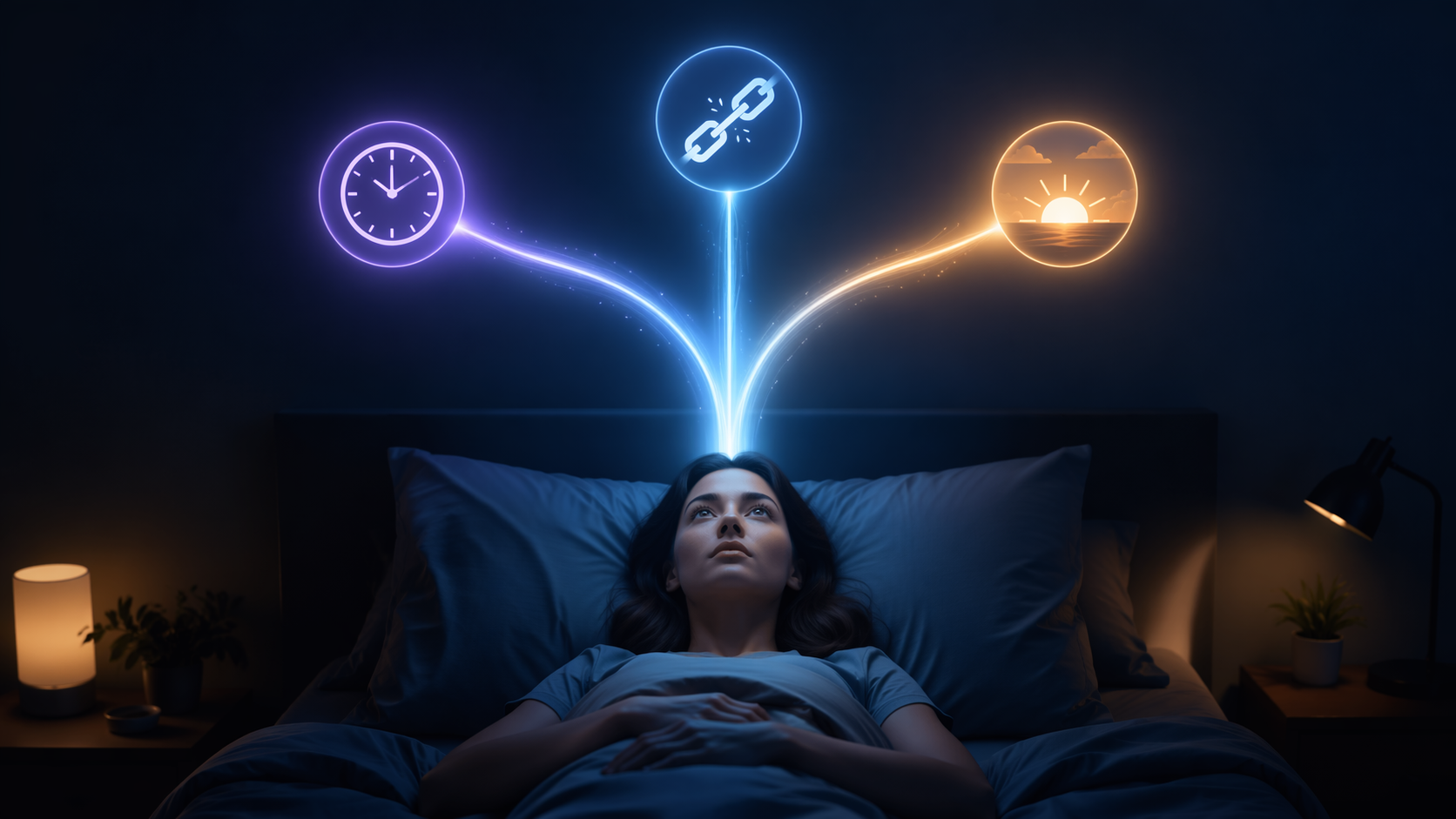
Sleep can recover after a grandparent scam. Recovery usually begins when the night is no longer asked to hold the whole injury alone: the replay is moved into daylight, the bed is protected from investigation, the story is reframed without self-blame, and at least one trustworthy human being is allowed back into the room.
References
- Elder Scams and Senior Fraud Abuse, HelpGuide.org, May 2026.
- Grandparent Scams Get More Sophisticated, Federal Communications Commission.
- The Top 5 Financial Scams Targeting Seniors, National Council on Aging.
- The Mental Health Impacts of Internet Scams, PMC, 2025.
- Scoping Review, Armendariz et al., PMC, 2022.
- CBT-I for Insomnia, Sleep Foundation.
- AARP Fraud Watch Network, AARP.
- Can Being Scammed Have Long-Term Effects on Your Health?, RUSH University.
Comments
Join the discussion with an anonymous comment.