
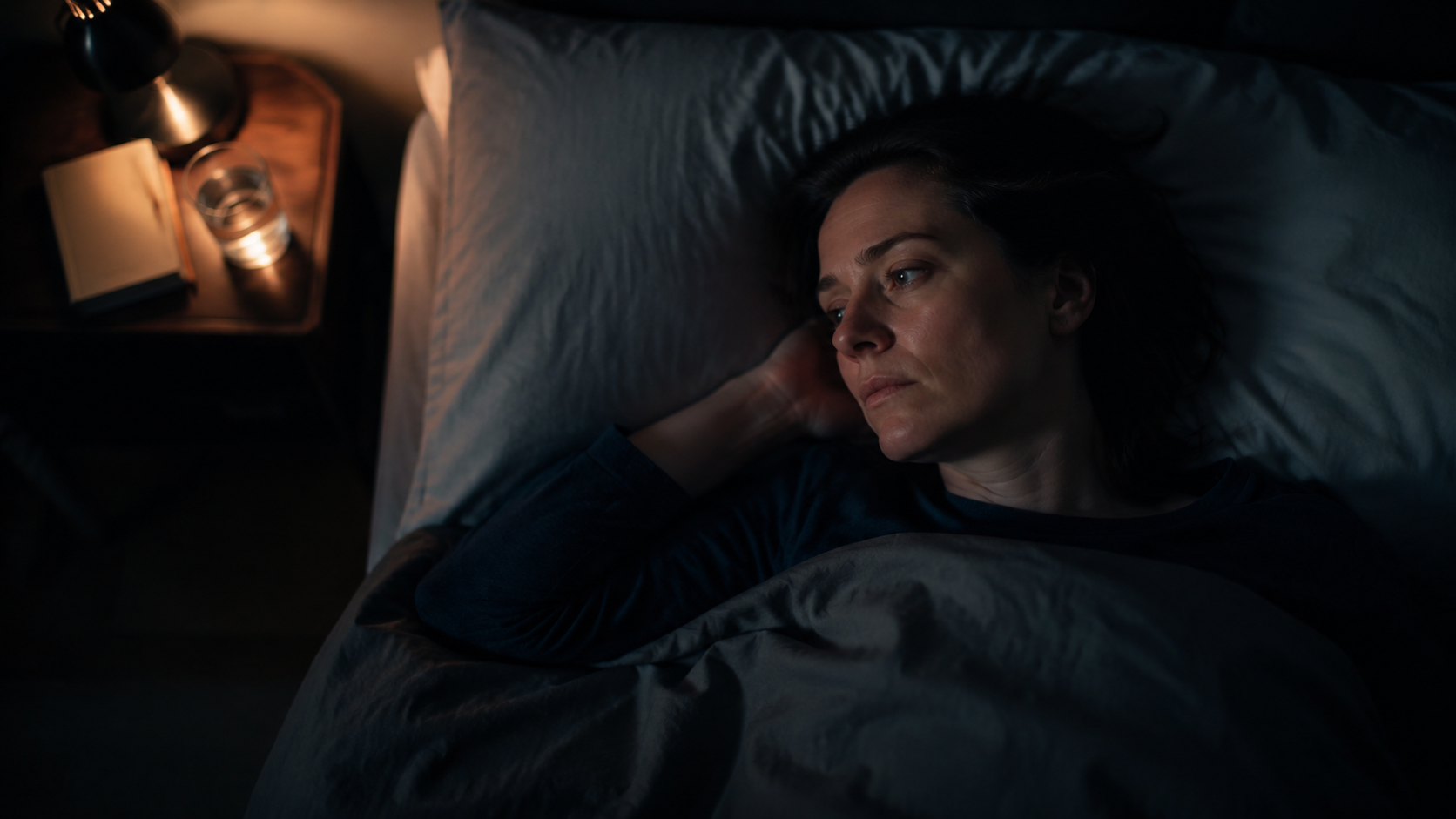
After a death, sleep can become the place where the body keeps looking for what the mind already knows is gone. The room is quiet, but the nervous system is not. Memories arrive with less resistance. Longing feels physical. A person may fall asleep from exhaustion and then wake at 3:40 a.m. with the same scene replaying, as if the night has made it sharper.
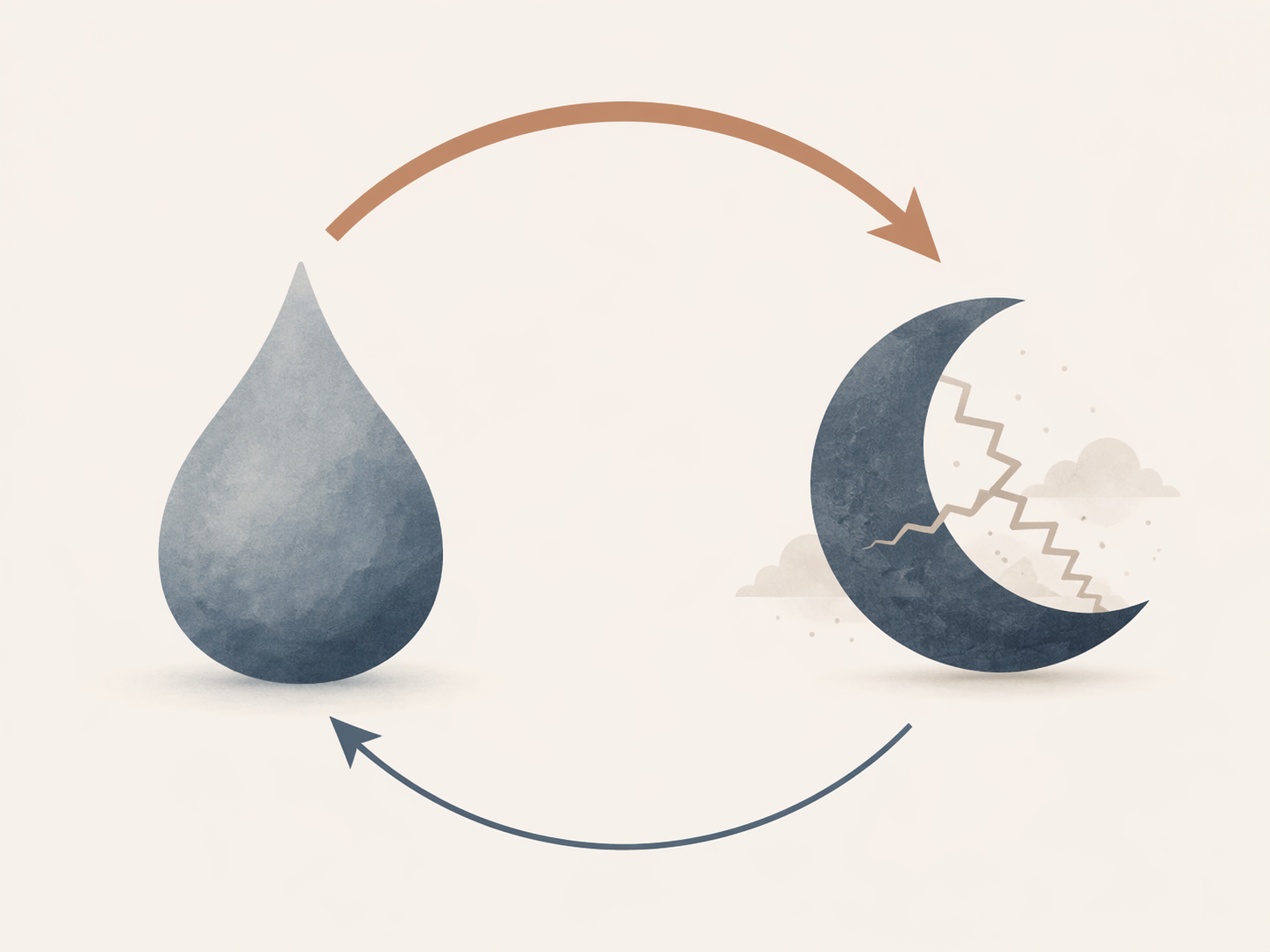
That does not mean grief is being done wrong. Grief and sleep problems often travel together, especially early after bereavement. But sleep is not only a passive casualty of loss. The most useful evidence now points to a loop: grief disrupts sleep, and poor sleep may make grief feel worse the next day. In a 2026 ecological momentary assessment study of 46 adults after traumatic loss, poorer sleep quality predicted higher grief severity and lower positive affect the following day, with the strongest association in the morning; grief severity did not consistently predict the next night's sleep. The finding is important, but still preliminary: the sample was small, and the effect did not remain significant in a stricter sensitivity analysis requiring at least 50% sleep data.[1]
The loop is real, but it is not perfectly even
It is easy to understand the first half of the loop. Bereavement can delay sleep, break sleep into pieces, and make early-morning waking more likely. Many bereaved people describe the bed as the first place where the day's structure falls away and the loss has full access.
The second half is the part that changes what a person might do next. If a poor night makes the next morning's grief more intense, then insomnia is not merely a background symptom to tolerate until grief improves. It becomes one of the few parts of the experience that can be worked with directly, without pretending that better sleep removes the loss.
This distinction matters because reassurance can be both true and insufficient. Sleep disruption after bereavement is common. Sleep Foundation's summary reports that more than 80% of bereaved people experience sleep problems, and that widows in one cited study tended to return toward baseline sleep over about 7 to 10 months.[2] For many adults in the first year after a loss, the nights gradually become less jagged. But common does not mean harmless, and waiting is not the only available strategy.
Why grief keeps the body awake
Grief is not only a thought process. It recruits threat, attachment, memory, and physiology. After a major loss, the body may behave as if something urgent is still unresolved. Stress systems stay activated. The ordinary descent into sleep becomes harder because sleep requires a degree of safety that the bereaved nervous system may not yet feel.
One useful way to understand this is the 3P model of insomnia: predisposing factors make someone vulnerable, a precipitating event starts the sleep problem, and perpetuating factors keep it going after the original shock has changed. In bereavement, the death itself can be the precipitating event. The perpetuating factors may be more subtle: staying in bed awake for hours, sleeping irregularly because exhaustion takes over, relying on alcohol or sedating medication, avoiding the bedroom, or using the night as the only private space to revisit the relationship.[3]
None of those responses deserves moral judgment. They are attempts to survive a changed life. The clinical problem is that they can teach the sleep system the wrong lesson: bed becomes associated with vigilance, rehearsal, dread, or chemical sedation rather than with sleep itself.
The night can make memory feel less processed, not more
Sleep normally helps emotional material change form. During healthy sleep, especially sleep that includes sufficient continuity and REM-related processing, the brain can revisit emotionally charged memories without the same daytime level of physiological alarm. That does not erase painful memory. It can make memory more bearable to carry.
When sleep is fragmented, that processing may be interrupted. A person wakes before the emotional work has had time to settle. The dream, image, or thought that surfaced in the night can feel raw rather than integrated. This is one reason a morning after broken sleep can feel disproportionately cruel: the loss has not changed overnight, but the brain's capacity to regulate it has.
Another way to put it is that sleep loss narrows the distance between feeling and being overwhelmed by feeling. The prefrontal systems that usually help modulate amygdala-driven threat and alarm are more strained after poor sleep. For someone grieving, that can mean less room between the first reminder and the full-body wave that follows.
When sleep problems move from expected to persistent
The first weeks and months after a death are not a clean diagnostic laboratory. Appetite, concentration, energy, dreams, and sleep timing may all be disturbed. A person may sleep too little, sleep at odd hours, or sleep heavily and still wake exhausted. That early disruption can be part of acute grief.
The concern rises when insomnia becomes persistent: difficulty falling asleep or staying asleep continues for months, daytime functioning deteriorates, dread of the night grows, or sleep medications and avoidance become the only way to get through. At that point, the question is no longer whether grief is normal. It is whether a treatable insomnia pattern has attached itself to grief.
Clinical grief territory also needs precision. Prolonged grief disorder is not the same as being devastated, lonely, or still missing someone intensely. Estimates vary partly because criteria differ: some summaries cite about 7% to 10% of bereaved people, while other ICD-11-based work has reported lower ranges around 3% to 5%.[2][3] The useful point for sleep is narrower: persistent insomnia can coexist with prolonged grief, but it can also deserve treatment before anyone concludes that grief itself has become disordered.
Why knocking yourself out is not the same as restoring sleep
The appeal of a pill after bereavement is obvious. If the night is the worst part of the day, unconsciousness can sound merciful. But sedation and recovered sleep are not identical. The question is not only whether something produces hours with eyes closed; it is whether the sleep system is relearning stability.
O'Connor's discussion of grief-related insomnia highlights a study in which diazepam underperformed placebo in bereaved adults. The point is not that medication is never appropriate in any circumstance; medication decisions belong with a clinician who knows the person's risks. The point is that sedative-hypnotics can be a poor default answer when the actual problem is a disrupted sleep-regulation system.[3]
Medication can also become one of the perpetuating factors in the 3P model. If the body learns that sleep only happens through sedation, confidence in natural sleep weakens. If the person spends longer and longer in bed waiting for the pill, the bed may remain paired with fear and monitoring. If medication blunts arousal without rebuilding timing, sleep pressure, and bed-sleep association, the original insomnia pattern may remain intact.
The treatment target is insomnia, not grief performance
Cognitive behavioral therapy for insomnia, or CBT-I, is the direction that best fits this problem. It does not ask the bereaved person to stop grieving. It treats the learned and physiological components of insomnia: irregular sleep timing, too much awake time in bed, reduced sleep drive, conditioned arousal, and the fear that another bad night will make tomorrow unmanageable.
In grief, that distinction is ethically important. A treatment that implies 'sleep better so you can move on' misunderstands the task. A better framing is: sleep better so the nervous system has more capacity to carry what is still painful.
The treatment relevance is not just theoretical. In a 2020 study of people receiving treatment for complicated grief, 91% reported sleep disturbance on the QIDS-4, 46% reported grief-related sleep trouble at least three times per week, and average PSQI scores were 9.44, nearly double the common cutoff of 5. More importantly, sleep quality during weeks 4 to 8 of treatment predicted endpoint grief severity and quality of life independent of baseline grief severity.[4]
That does not prove that improving sleep alone will resolve complicated grief. It does suggest that sleep quality during treatment is not a side note. If sleep remains badly disrupted, grief treatment may be asking an exhausted brain to do work it is less able to do.
What CBT-I usually changes
CBT-I is often misunderstood as sleep hygiene with a more serious name. Sleep hygiene may help at the margins, but grief-related insomnia usually needs more than avoiding late caffeine or buying a calmer lamp. CBT-I works closer to the machinery of insomnia.
- It reduces awake time in bed so the brain relearns that bed is a cue for sleep, not a place for hours of monitoring.
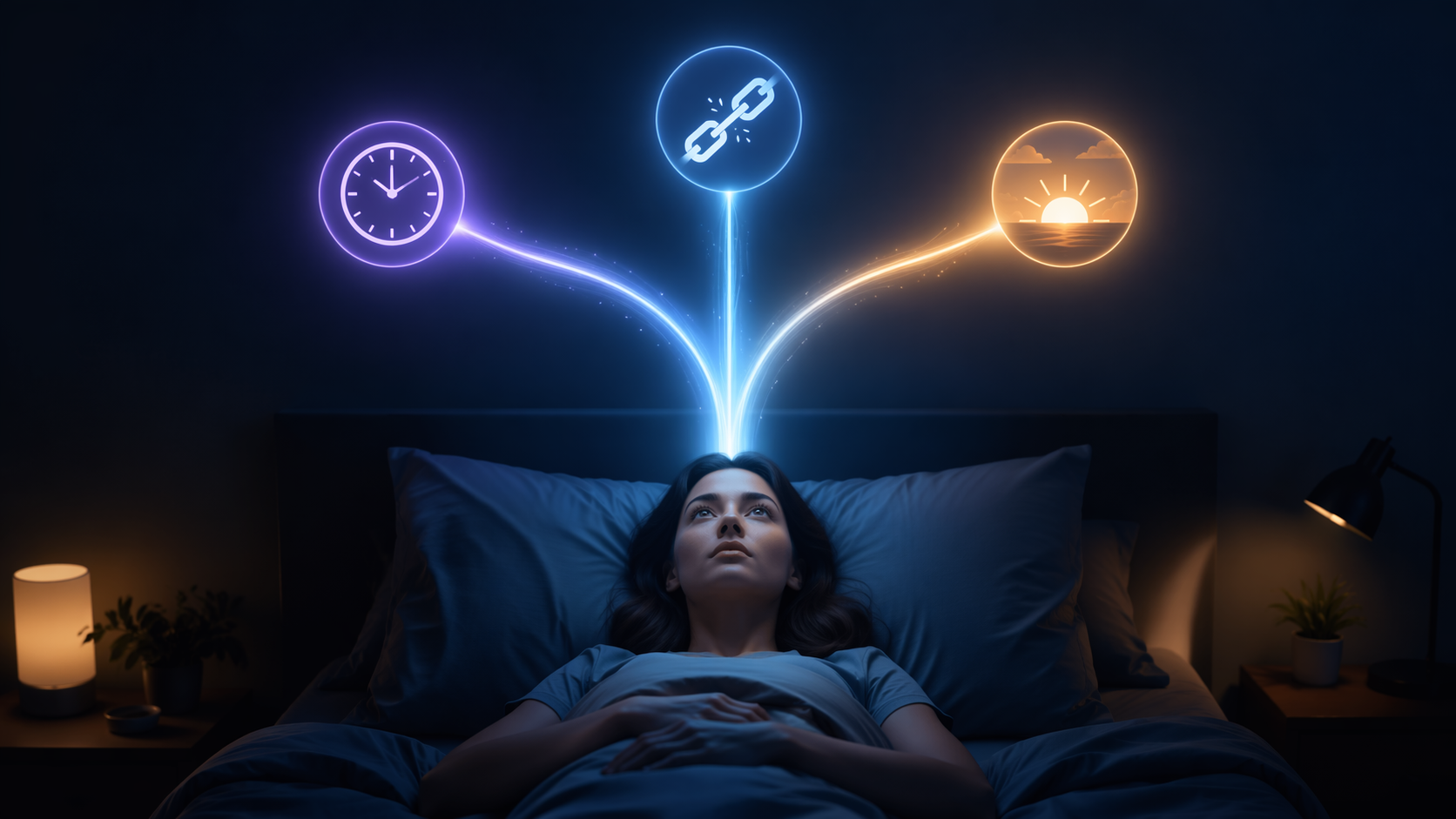
- It stabilizes wake time, because circadian rhythm recovers more reliably from a consistent morning anchor than from chasing sleep whenever exhaustion appears.
- It builds sleep pressure by matching time in bed more closely to actual sleep ability, then gradually expanding as sleep consolidates.
- It addresses catastrophic sleep thoughts, such as the belief that one bad night guarantees emotional collapse the next day.
- It creates a plan for night waking, so the person is not improvising alone in the most vulnerable hour.
Some of this can sound severe on paper, especially sleep restriction, which is better understood as sleep consolidation. For a bereaved person already depleted, it should be handled carefully and preferably with a trained clinician. The goal is not discipline for its own sake. The goal is to stop the night from repeatedly rehearsing wakefulness.
What to do if you are in the first year after a loss
If the loss is recent, the first task is not to panic about the fact that sleep changed. A disrupted night does not mean you are grieving incorrectly, becoming permanently ill, or failing to accept reality. It means the sleep system is responding to a major rupture.
Still, it is worth intervening gently before insomnia hardens. The most useful early moves are the ones that protect sleep regulation without demanding emotional neatness.
- Keep a stable wake time most days, even after a poor night.
- If you are awake in bed for a long stretch, leave the bed for something quiet and low-light until sleepiness returns.
- Set aside a daytime or early-evening period for grief-related tasks, calls, writing, or remembering, so the bed is not the only place grief gets attention.
- Avoid making alcohol, cannabis, or sedating medication the main sleep strategy without medical guidance.
- If nightmares, panic, trauma symptoms, suicidal thoughts, or severe functional impairment are present, seek professional help promptly rather than treating it as ordinary insomnia.
These steps do not require pretending the bedroom is emotionally neutral. It may not be. They are ways of preventing the sleep system from learning that the entire night is a threat.
If sleep is still deteriorating after months
By 6 to 12 months, many adults have some movement back toward baseline sleep, though not necessarily full ease. If insomnia is still strong, worsening, or driving daytime impairment, it is reasonable to ask specifically for insomnia treatment rather than only general reassurance about grief.
That may mean looking for a clinician trained in CBT-I, asking a primary care clinician for a referral, or working with a grief therapist who understands sleep treatment well enough to coordinate care. If prolonged grief disorder, major depression, post-traumatic stress symptoms, or substance use are also present, sleep treatment should be integrated with care for those conditions rather than treated as a standalone self-improvement project.
Research is moving in that direction. A 2026 protocol describes a trial of CBT-I for people with prolonged grief disorder and insomnia, based partly on the rationale that insomnia may be treated first or alongside grief-focused care. The protocol itself does not provide outcomes yet. It cites a smaller pilot in bereaved populations that reported large effects at 9 and 18 months, but those findings are still early evidence rather than a settled treatment standard for prolonged grief disorder.[5]
The practical judgment is more modest and more useful: persistent insomnia after bereavement deserves targeted care. It should not be dismissed as the price of love, and it should not be treated only by trying to chemically shut down consciousness.
Sleep can be a beginning, not a cure
There is a quiet cruelty in telling a bereaved person that sleep will improve when grief improves, as if the only assignment is endurance. There is another cruelty in implying that better sleep should make the loss less central. Neither is necessary.
If this is recent grief, disrupted sleep is common and often softens over time. If the sleep problem is becoming persistent, it is not merely something to bear. Treating insomnia may reduce the next-day load of grief, especially those sharp morning hours when the body has had too little restoration and the mind has too little distance. It cannot remove the death. It can give the living person more capacity to meet the day that follows.
References
- Sleepless Longing. PMC, 2026.
- Grief and Sleep. Sleep Foundation.
- The nights are hard. The Psychologist, British Psychological Society, 2025.
- Impact of Sleep on Complicated Grief. PMC, 2020.
- CBT-I for PGD. PMC, 2026.


Comments
Join the discussion with an anonymous comment.