
The worst part is not always the diarrhea itself. It is the moment it enters the night: the sudden urgency, the calculation of whether you can make it back to sleep, the half-awake check for cramps or nausea, and then the next morning’s groggy realization that the gut problem has become a sleep problem.
That is the practical answer to how diarrhea affects sleep quality: it fragments sleep directly through urgency, pain, dehydration, and repeated awakenings. In recurrent cases, it can also pull sleep into a deeper biological loop involving inflammation, gut bacteria, stress signaling, and circadian timing. The first bad night may be caused by the bowel. The next bad day can make the bowel more reactive.
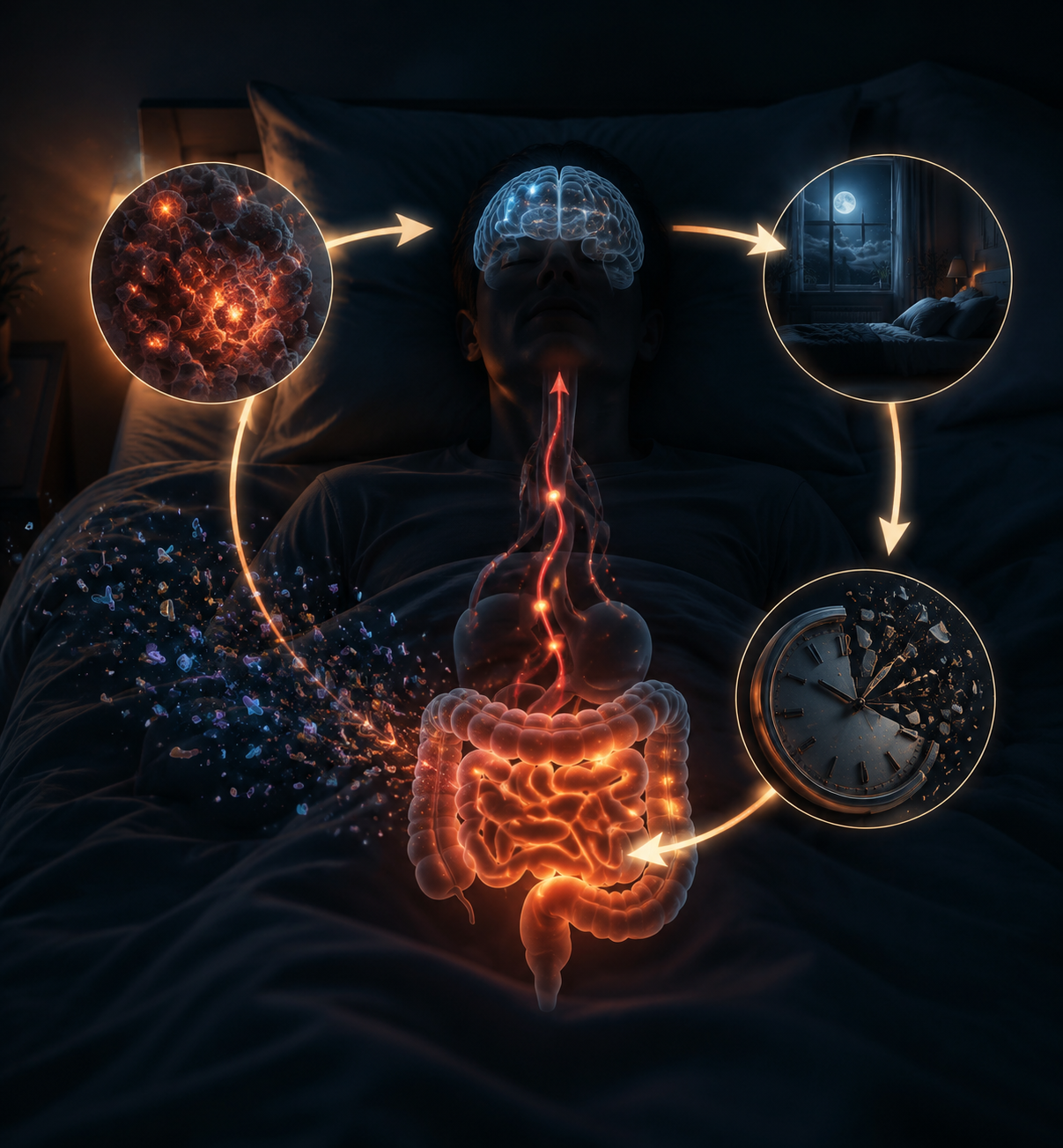
A single night of diarrhea after a stomach virus or a suspicious meal is different from a pattern that keeps recurring. Acute diarrhea usually disturbs sleep for obvious reasons: bathroom trips, fluid loss, abdominal cramping, and anxiety about another episode. If it follows a gastrointestinal infection, the sleep disruption may be short-lived, though some people have lingering symptoms after the infection clears; that pattern is discussed more specifically in norovirus-related sleep disruption and food poisoning insomnia. Chronic or recurrent diarrhea deserves a different level of attention because the original trigger may no longer be the only driver.
The Association Shows Up at Population Scale
Large survey data do not prove that diarrhea causes insomnia, but they do make it harder to dismiss the connection as a personal quirk. In an analysis of 14,696 adults from NHANES, chronic diarrheal symptoms were associated with 20% higher odds of having a sleep disorder and 19% higher odds of self-reported sleep trouble.[1]
The same analysis found an even sharper signal in inflammatory bowel disease. Participants with IBD had 286% higher odds of sleep disorder and slept about half an hour less than those without IBD, with average sleep duration reported as 6.3 hours versus 6.8 hours. Sleep disorder was reported by 23.2% of people with IBD compared with 7.2% of those without IBD.[1]
Those numbers need careful handling. The chronic diarrhea measure in the NHANES analysis used bowel leakage frequency as a proxy, which may miss some people whose diarrhea is frequent but not described as leakage. The IBD subgroup was also small, with 56 participants, so the IBD-specific estimates carry uncertainty. And because the data are cross-sectional, they cannot fully separate cause from consequence.[1]
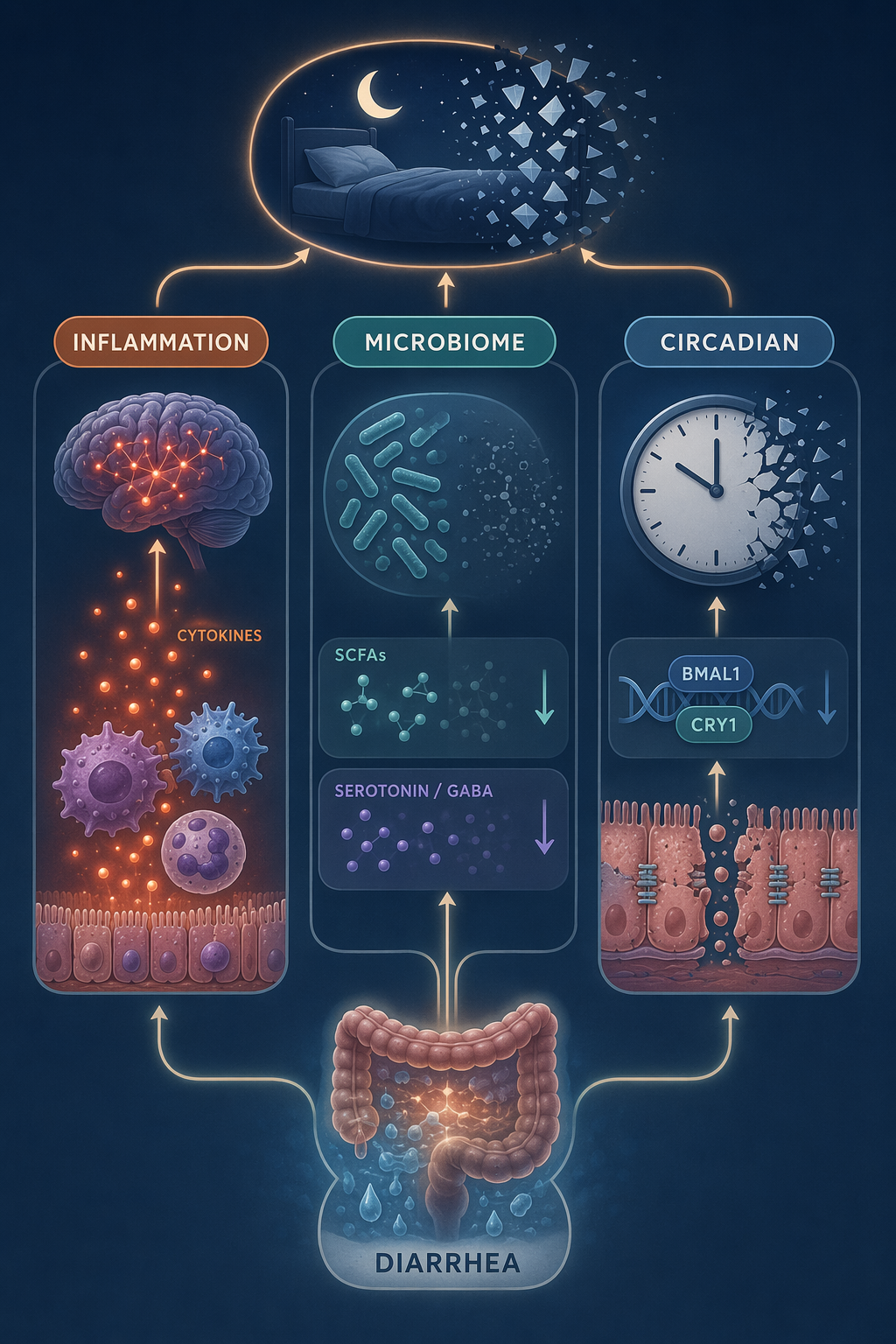
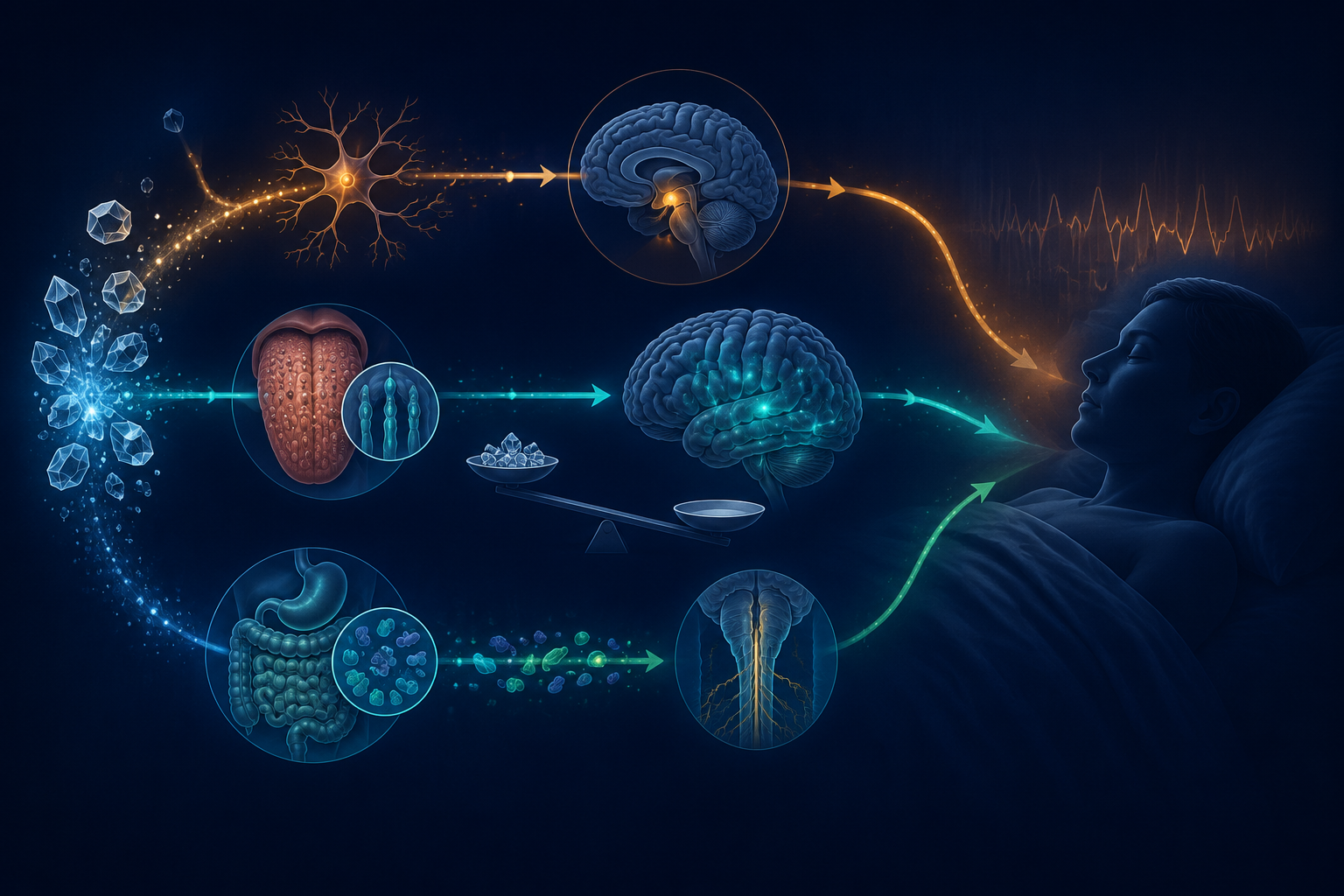
Still, the pattern is biologically plausible. Diarrhea can wake the brain, activate immune pathways, disturb the gut microbiome, and disrupt circadian rhythms. Poor sleep can then increase gut permeability, alter immune tone, and make bowel symptoms harder to settle. It is a loop with several moving parts, not a supplement slogan.
The Night Waking Is Only the Visible Part
Bathroom urgency is the obvious mechanism. Sleep depends on continuity, and diarrhea breaks continuity. Even one urgent awakening can produce lighter sleep afterward because the brain starts monitoring the body: Is there more cramping? Is there another wave coming? Is it safe to relax?
Fluid loss can add another layer. Thirst, dry mouth, headache, dizziness, and muscle discomfort can all make it harder to return to sleep. If diarrhea is accompanied by nausea, fever, or abdominal pain, sleep becomes fragmented not only by bowel movements but by the body’s wider illness response.
That explains the acute night. It does not fully explain why recurrent diarrhea and poor sleep often travel together after the first episode. For that, the more important question is what diarrhea is doing to immune signaling, intestinal barrier function, microbial metabolites, and timing cues.
Inflammation Can Lighten Sleep, and Sleep Loss Can Inflame the Gut
Inflammatory diarrhea is not just faster stool movement. Gut inflammation involves immune signaling, including cytokines such as IL-6 and TNF-alpha and inflammatory markers such as CRP. These signals can affect sleep architecture, making sleep more fragmented and less restorative. Sleep deprivation can then increase intestinal permeability, often described as a leakier gut barrier, which can worsen diarrhea-related inflammation.
This is why IBD is such an important example, even though it is not the same condition as IBS or post-infectious diarrhea. In IBD, intestinal inflammation is part of the disease process, and the sleep association in NHANES was larger than the association seen for chronic diarrheal symptoms overall.[1] That does not mean every person with diarrhea has IBD. It means that when inflammation is part of the bowel problem, sleep is unlikely to remain untouched.
The lived sequence is easy to recognize. Gut inflammation increases urgency or cramping. Urgency and discomfort wake you. Fragmented sleep changes immune regulation. The next day, the gut is more sensitive, and the threshold for another flare may be lower. The loop does not require a dramatic disease flare every night; repeated partial awakenings and low-grade inflammatory signaling can be enough to erode sleep quality.
The Microbiome Link Is More Specific Than “Gut Health”
The microbiome matters here, but only if the claim stays specific. Diarrhea can deplete beneficial bacteria and reduce short-chain fatty acid-producing organisms, including Roseburia and Faecalibacterium. Those microbial shifts are relevant to sleep because short-chain fatty acids and gut-brain signaling pathways interact with serotonin and GABA-related systems that help regulate sleep stability.[2]
Beneficial Lactobacillus and Bifidobacteria are also described as sleep-supportive organisms, and they may be depleted during diarrhea episodes.[2] This is not the same as saying diarrhea automatically causes insomnia through one bacterial species, or that replacing one strain reverses the problem. The narrower conclusion is stronger: recurrent diarrhea can push the gut ecosystem away from metabolite patterns that support stable sleep, while poor sleep can further stress the gut environment.
This is also where diet and additives sometimes enter the conversation. The gut-brain axis is one reason researchers pay attention to how sweeteners, fermentable carbohydrates, alcohol, and other exposures affect sleep in sensitive people. The evidence is not identical for every exposure, but the mechanism overlaps with the pathways described in artificial sweeteners and sleep quality: microbial metabolites, gut permeability, and nervous-system signaling can all matter when the bowel is already unstable.
Circadian Disruption Gives the Loop a Clock
The gut has circadian timing. Motility, secretion, immune activity, barrier function, and microbial activity are not constant across the day and night. When sleep timing becomes irregular, the bowel receives mixed timing signals. When diarrhea repeatedly wakes a person at night, it can turn a gut symptom into a circadian disturbance.
A 2024 Frontiers in Physiology analysis reported that circadian syndrome, defined as having at least four disrupted circadian components, was associated with 42% higher odds of chronic diarrhea.[3] The same research discussion connected poor sleep with changes in clock genes including BMAL1 and CRY1, which may impair intestinal barrier integrity.[3]
Again, the evidence is associative, not a completed causal map. But the direction makes physiological sense. A person with delayed sleep timing, shift work, irregular meals, or repeated nighttime awakenings may be asking the gut to digest, repair, and regulate immune traffic on an unstable schedule. If diarrhea is already present, that instability can keep symptoms and sleep disruption in circulation.
This is why circadian problems such as delayed sleep timing or shift work should not be treated as separate background noise. If the bowel is flaring at night and the sleep schedule is drifting, both clocks may need attention. Regular timing cues give the gut fewer reasons to remain reactive.
Stress Is an Amplifier, Not a Complete Explanation
Stress can accelerate bowel motility through corticotropin-releasing factor receptor pathways, and it can also make sleep lighter and more vigilant. That makes it an obvious amplifier of diarrhea-related sleep loss. It is also a confounder: stress can worsen sleep and bowel symptoms at the same time, making the direction of cause hard to separate.
The mistake is to use stress as a disposal bin for symptoms that need evaluation. If urgency, pain, or loose stools keep recurring, “stress” may be part of the loop without being the original cause. It can turn the volume up on inflammation, motility, and sleep fragmentation, but it should not be used to skip the bowel workup when the pattern is persistent or changing.
Nocturnal Diarrhea Deserves a Different Frame
Waking from sleep to have diarrhea is not just another version of poor sleep. Normal sleep tends to suppress gut motility. When bowel movements repeatedly wake someone from sleep, clinicians often treat that as a red flag rather than ordinary insomnia with an inconvenient symptom attached.
IBS can cause severe discomfort, urgency, and disrupted sleep, but true nocturnal bowel movements are less typical and should prompt evaluation for organic disease, especially if they are new, recurrent, or accompanied by blood, fever, weight loss, anemia, dehydration, severe pain, or persistent symptoms. Conditions that may need to be ruled out include inflammatory bowel disease, microscopic colitis, infection, malabsorption, medication effects, and diabetes-related autonomic neuropathy.
That distinction matters before routines or supplements. If diarrhea is waking you at night, the first task is not to optimize a bedtime ritual. It is to decide whether the bowel symptom itself needs medical assessment.
Where the Cycle Can Be Interrupted
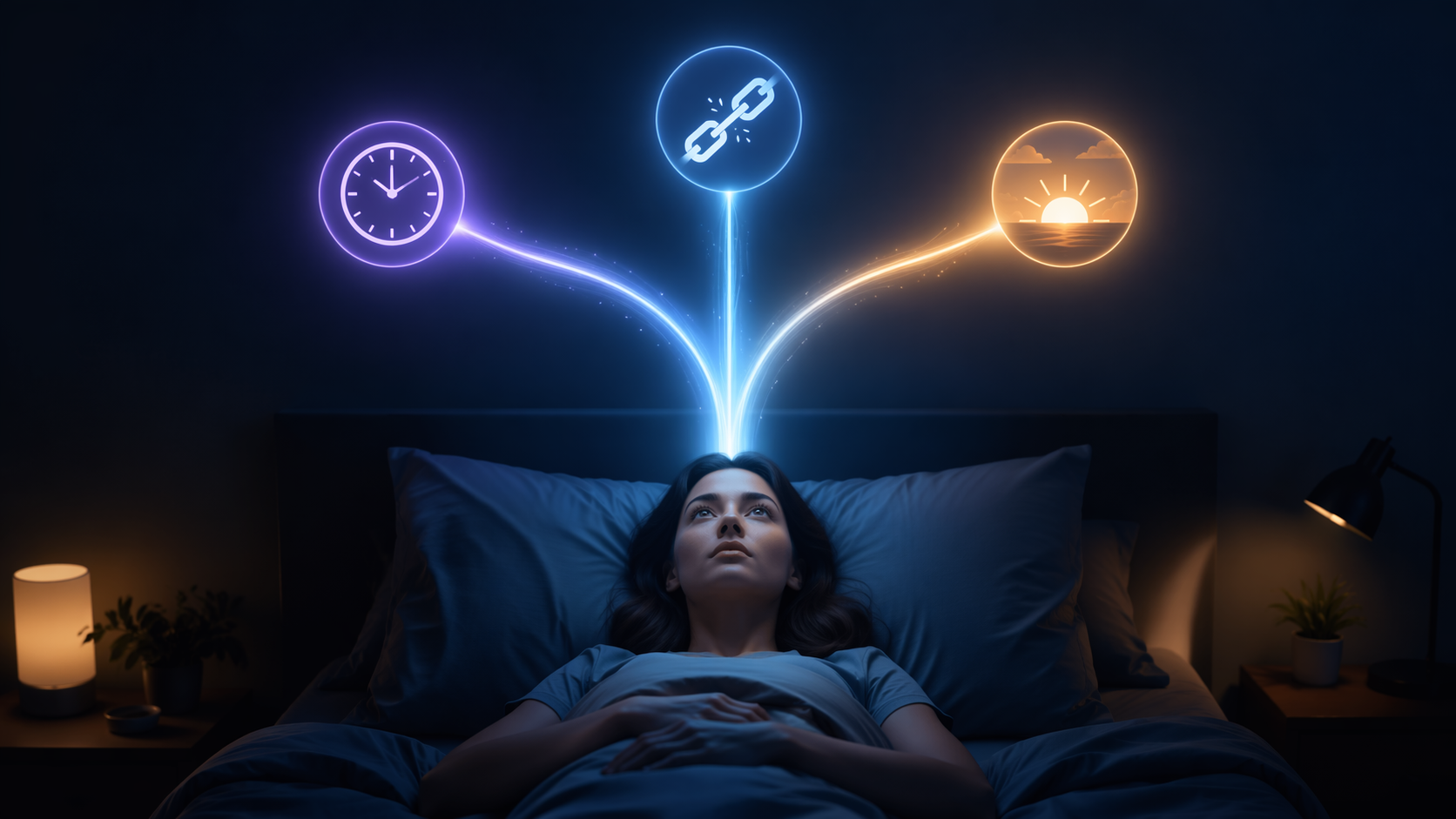
There is no single standardized diarrhea-sleep protocol supported by the current evidence. The useful approach is to target the loop at several points: the underlying gastrointestinal driver, the nighttime disruption, hydration, circadian regularity, and selected microbiome support when appropriate.
| Intervention point | What it is trying to reduce |
|---|---|
| Treat the underlying GI condition | Inflammation, urgency, malabsorption, infection, medication-related diarrhea, or disease activity |
| Protect hydration during flares | Thirst, headache, dizziness, and physiologic stress that can keep sleep light |
| Keep the night boring | Extra arousal from bright light, long phone use, clock-checking, and anxious monitoring |
| Stabilize circadian cues | Irregular sleep timing, irregular meals, and light exposure patterns that disturb gut timing |
| Use microbiome support cautiously | Possible depletion of beneficial bacteria and SCFA-related signaling, without assuming a dramatic sleep effect |
The most important intervention is usually not a sleep trick. It is controlling the bowel condition driving the awakenings. For suspected IBD, microscopic colitis, chronic infection, medication-related diarrhea, bile acid diarrhea, celiac disease, endocrine disease, or persistent post-infectious symptoms, sleep may not improve reliably until the gastrointestinal problem is named and treated.
During a flare, hydration is not glamorous, but it matters. Oral fluids and appropriate electrolyte replacement can reduce the added sleep burden from thirst, headache, and physiologic stress. Alcohol and large late meals can make the night less predictable for some people. So can lying in bed for long periods while monitoring every gut sensation.
A basic nighttime plan is enough: keep the route to the bathroom dim and safe, avoid bright light if you wake, return to bed without turning the episode into a long phone session, and use a consistent wind-down routine when symptoms allow. For a broader evidence-based routine, see sleep hygiene fundamentals. The routine will not cure diarrhea, but it can prevent one awakening from becoming three hours of conditioned wakefulness.
Probiotics: Plausible, Modest, and Often Oversold
Probiotics sit in the uncomfortable middle: biologically plausible, sometimes useful, and much too often marketed as if the evidence were larger than it is. A 2026 meta-analysis of 13 randomized controlled trials with 890 participants found that probiotic supplementation modestly improved Pittsburgh Sleep Quality Index scores, with a mean difference of -0.59 and p<0.001.[4]
That is statistically significant, but it did not reach the minimal clinically important difference threshold of 1.5 to 3.0 points.[4] In plain terms, the average sleep benefit was small. The analysis identified strain-specific evidence for L. gasseri CP2305 and B. adolescentis SBT2786, but that does not mean any probiotic product should be expected to fix diarrhea-related insomnia.[4]
For some people, a clinician-guided probiotic trial may be reasonable, especially after antibiotic exposure or certain post-infectious patterns. For others, probiotics can worsen bloating or be irrelevant to the cause of diarrhea. If supplements are being considered mainly for sleep, they belong in the same evidence-calibrated category as other options in natural sleep remedies graded by scientific evidence: possible tools, not a replacement for diagnosis.
What to Track Before You Blame Sleep Alone
A short symptom log can make the loop visible without turning life into a spreadsheet. The useful details are timing, severity, and pattern: whether diarrhea happens during the day or wakes you from sleep, whether it clusters after certain foods or medications, whether pain or fever is present, and whether poor sleep reliably precedes worse bowel symptoms the next day.
- Record stool timing, especially any episodes that wake you from sleep.
- Note sleep timing, awakenings, and whether you feel restored in the morning.
- Track fever, blood, weight loss, severe pain, dehydration signs, or new symptoms.
- List recent infections, antibiotics, travel, medication changes, alcohol, and major diet shifts.
- Look for bidirectional timing: diarrhea causing awakenings, and poor sleep preceding worse bowel reactivity.
The log is not meant to self-diagnose IBD, IBS, infection, or food intolerance. It is meant to prevent a vague complaint from staying vague. “I sleep badly when my stomach is off” is harder to act on than “loose stools wake me twice a week, and the next day I have more urgency after poor sleep.”
What the Evidence Supports
Diarrhea worsens sleep first by waking you, then by recruiting systems that also regulate sleep: immune signaling, microbial metabolites, stress pathways, and circadian timing. Poor sleep can feed those same systems back into the gut by increasing physiologic stress, altering immune regulation, and weakening intestinal barrier control.
The evidence is strong enough to take the cycle seriously and to target it at multiple points. It is not strong enough to promise that one probiotic, one bedtime routine, or one diet rule will solve diarrhea-related sleep disruption. Recurrent diarrhea that breaks sleep deserves both sleep-aware care and gut-aware evaluation.
References
- Associations of bowel health with sleep disorder and sleep duration: A cross-sectional study in the National Health and Nutrition Examination Survey, 2005–2010. Frontiers in Neurology, 2022.
- Gut microbiota and sleep: A new target for improving sleep quality. PMC, 2024.
- Association between circadian syndrome and chronic diarrhea in adults: a population-based study. Frontiers in Physiology, 2024.
- Effects of probiotics on sleep quality: a systematic review and meta-analysis of randomized controlled trials. PMC, 2026.

Comments
Join the discussion with an anonymous comment.