
The bedroom is already dark. Caffeine ends before noon. The phone is across the room. The bedtime routine is consistent enough to be boring. And still, sleep either will not arrive or disappears at 3 a.m. as if someone flipped a switch.
That is the point where basic sleep hygiene stops being a satisfying explanation. It may still matter, but it is no longer enough of a map. The causes of insomnia can include prescription medications, medical conditions, hormonal transitions, psychiatric comorbidities, and social or environmental pressures. In Sleep Conditions, insomnia is best treated as a symptom pattern that deserves sorting, not as a personal discipline failure.
Prevalence estimates vary because researchers do not always count the same thing: symptom surveys can produce much higher numbers than stricter diagnostic criteria, while chronic insomnia disorder estimates are narrower. Roth’s review notes that about 30% of adults report at least one insomnia symptom, while insomnia with daytime consequences or diagnostic criteria is less common.[1] The practical point is not that every bad night is a disorder. It is that persistent insomnia deserves a wider screen than “try harder to relax.”
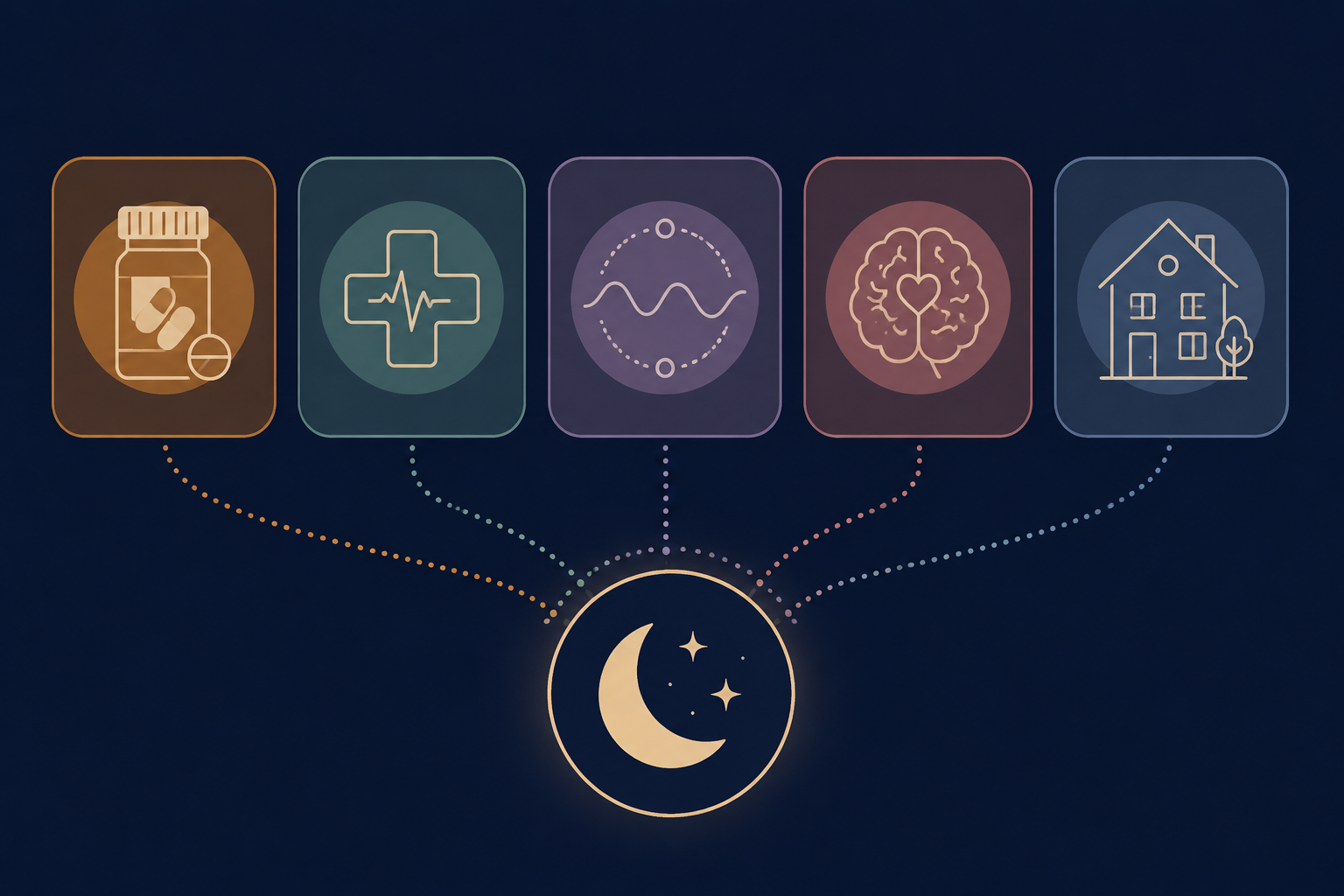
| Possible driver | Clues that make it worth looking closer |
|---|---|
| Prescription medications | Insomnia began or worsened after starting, stopping, increasing, or changing the timing of a medication. |
| Medical conditions | Sleep is interrupted by pain, reflux, breathing pauses, restless legs, urination, heat intolerance, tremor, cognitive changes, or other persistent symptoms. |
| Hormonal transitions | Sleep changes track the menstrual cycle, pregnancy, postpartum changes, perimenopause, or menopause. |
| Psychiatric comorbidities | Anxiety, depression, trauma symptoms, or escalating worry about sleep are part of the pattern. |
| Social-environmental pressures | Noise, light, shift work, crowding, unsafe housing, income insecurity, or caregiving demands make sleep opportunity unstable. |
Medication changes are often the cleanest clue
A medication-related sleep problem is not always subtle. Sometimes the timeline is the giveaway: sleep changed after a new prescription, a dose increase, a switch from evening to morning dosing or the reverse, or the addition of an over-the-counter product.
Mayo Clinic lists several medication categories that can contribute to insomnia, including some antidepressants, medications for blood pressure, asthma medications, allergy and cold products, and stimulants.[2] The NHLBI also identifies certain medicines and substances as possible insomnia contributors.[3] That does not mean these medicines are “bad” or should be stopped. It means the timing and sequence belong in the conversation.
- Antidepressants: some can be activating for some people, especially when the start date or dose change lines up with new insomnia.
- Beta-blockers: sleep disruption is a known concern for some patients, and the prescribing reason matters.
- Asthma drugs such as albuterol: the breathing benefit may be essential, but nighttime use or increased rescue use can point to both medication effects and poorly controlled symptoms.
- Decongestants: “cold medicine” can be easy to forget when giving a medication history, even when it is the most activating thing in the cabinet.
- Stimulants: dose, timing, formulation, and late-day use all matter.
The useful question is specific: Did the insomnia start after a medication change? Bring the medication name, dose, timing, start date, and any recent changes to a clinician or pharmacist. Do not stop prescribed medication on your own, especially medications for mood, blood pressure, asthma, seizures, hormones, or heart conditions.
Medical conditions can keep sleep light, fragmented, or unsafe
Medical causes deserve more attention than they usually get because they can be mistaken for ordinary stress. The person may not feel “sick” at bedtime. They may simply wake repeatedly, dread lying down, or feel unrefreshed after enough hours in bed.
Chronic pain is one of the clearest examples. In a Sleep study by Taylor and colleagues, 50.4% of people with insomnia reported chronic pain, compared with 18.2% of people without insomnia.[4] That number does not prove pain is the only cause of insomnia in those patients, but it does make pain difficult to dismiss. Pain can delay sleep onset, trigger awakenings when a person changes position, and make the bed itself feel like a place of vigilance rather than recovery.
Diabetes is another example, though the evidence needs careful framing. One single-hospital Indian primary care study reported insomnia in about half of diabetic patients.[5] That finding should not be treated as a U.S. prevalence estimate, and it does not mean diabetes automatically causes insomnia. It does, however, point toward a plausible clinical pattern: nighttime urination, neuropathic pain, blood sugar fluctuations, comorbid depression, and other complications can all disturb sleep in people with diabetes.
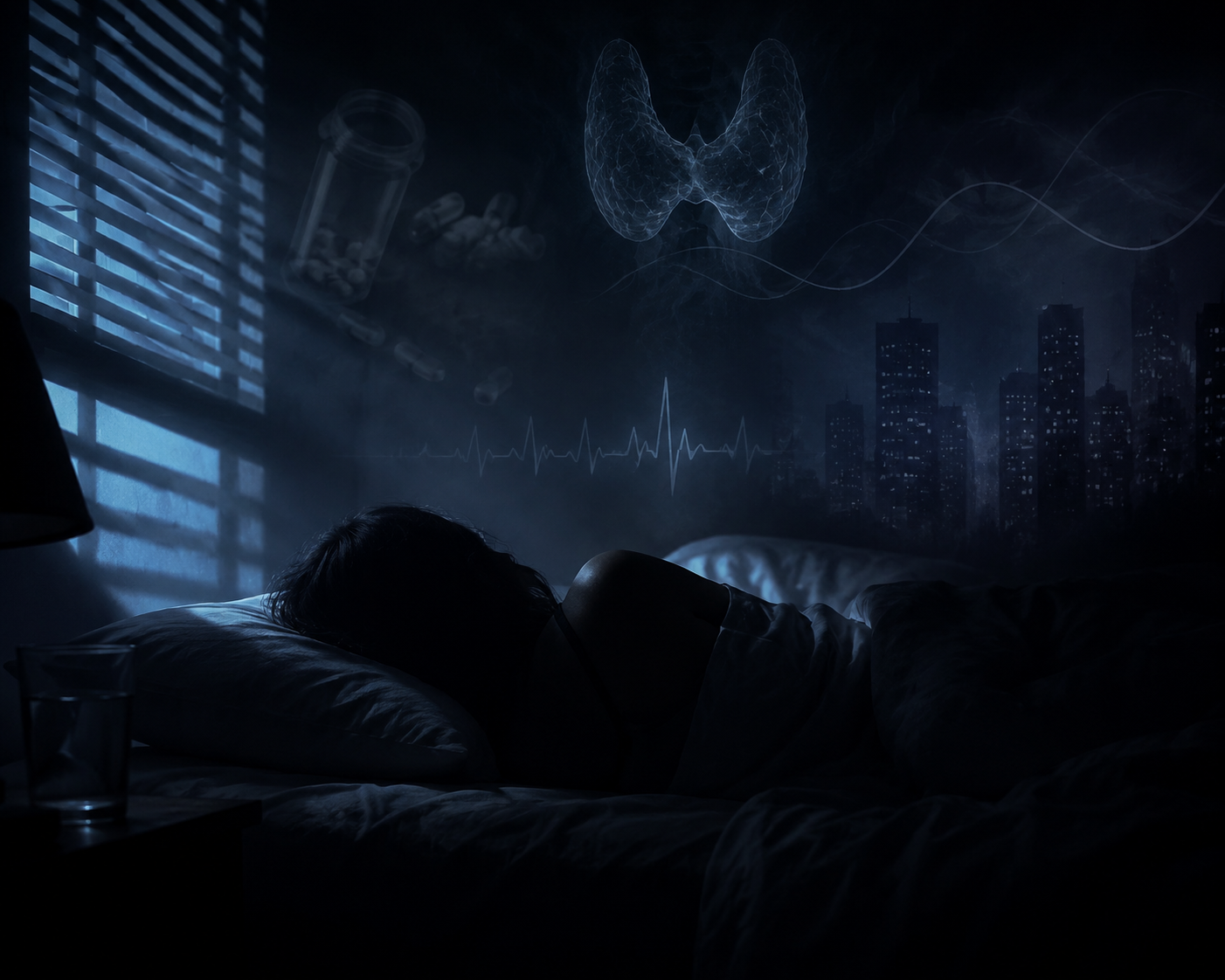
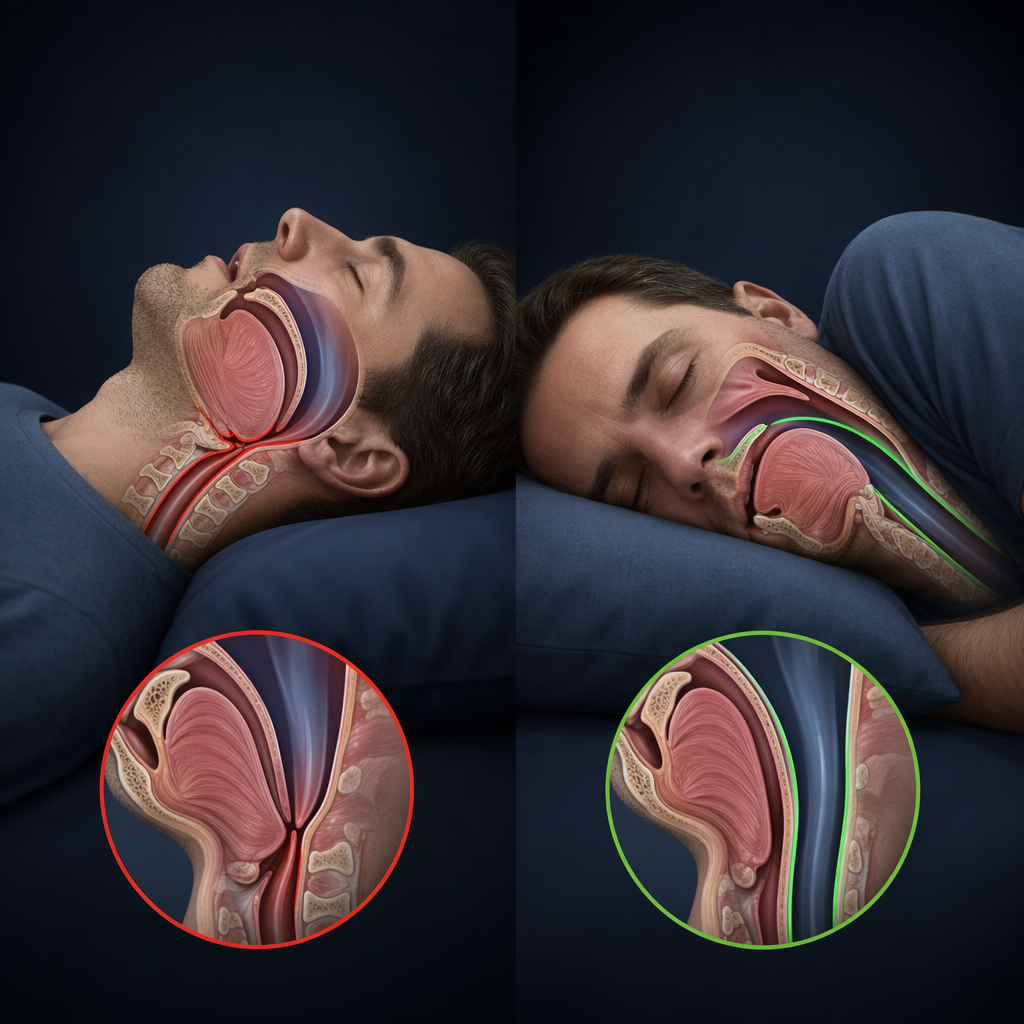
Some conditions do not look like insomnia at first because the main complaint is fatigue. Sleep apnea can produce repeated breathing interruptions and unrefreshing sleep, even when someone thinks they “slept” for enough hours. Restless legs syndrome can make the quiet part of the evening physically intolerable. GERD can wake someone with burning, coughing, sour taste, or chest discomfort. Hyperthyroidism can bring heat intolerance, racing heart, tremor, and a body that feels switched on. Parkinson’s disease and Alzheimer’s disease can also disrupt sleep through movement, neurological changes, medications, nighttime confusion, or altered circadian rhythms.[2][3][6]
The differentiators are often concrete. Does waking come with choking, gasping, or morning headaches? Does the bed partner notice pauses in breathing? Do the legs feel driven to move at night? Does reflux worsen when lying down? Is pain the first thing noticed after each awakening? These details are more useful to a provider than a general statement that sleep is “bad.”
If the pattern points toward breathing problems around midlife hormonal change, the distinction can be confusing; a deeper comparison of perimenopause insomnia versus sleep apnea can help separate hot-flash awakenings from airway-related sleep fragmentation.
Hormonal timing can make the pattern visible
Hormonal insomnia is often recognized by its calendar. The sleep disruption may cluster before a period, during pregnancy, after delivery, during perimenopause, or after menopause. The pattern does not make the insomnia less real. It gives the history a shape.
Across the menstrual cycle, some people notice more trouble sleeping in the days before bleeding begins, especially when cramps, mood symptoms, migraine, breast tenderness, or heavier bleeding are also present. In pregnancy, sleep can be affected by nausea, reflux, frequent urination, hip or back discomfort, fetal movement, anxiety, and later-pregnancy breathing changes. Readers in that stage may need more specific guidance on pregnancy insomnia rather than another generic bedtime checklist.
Perimenopause and menopause are especially important because nighttime awakenings can be driven by hot flashes, night sweats, mood changes, pain, urinary symptoms, and increased risk of sleep-disordered breathing. Published reviews commonly report sleep disturbance or insomnia symptoms in a substantial share of women during the menopausal transition, with estimates often in the 40% to 60% range depending on the population and definitions used.[7]
For this group, the next useful question is not simply “Are you stressed?” but “Are the awakenings tied to heat, sweating, cycle irregularity, mood shifts, new snoring, or changes in body composition?” If the answer is yes, targeted evaluation may matter more than another app-based wind-down routine. Some readers may also benefit from learning how CBT-I for menopause insomnia fits alongside medical evaluation.
Psychiatric comorbidity is common, but it is not a shortcut diagnosis
Mood and anxiety symptoms belong in an insomnia screen. They should not be used as a way to wave away the rest of the history. Chronic insomnia and psychiatric conditions often travel together, and the relationship can run in both directions.
Roth’s review notes that about 40% of people with chronic insomnia have a comorbid psychiatric disorder, most commonly depression or anxiety.[1] Ford and Kamerow’s epidemiologic work also found strong associations between insomnia and psychiatric disorders over time.[8] Those figures are useful because they legitimize screening. They do not mean insomnia is “really” depression or “just anxiety.”
The bidirectional pattern matters clinically. Depression can bring early-morning awakening, hypersensitivity to small disruptions, low activity during the day, and changes in appetite or energy that destabilize sleep. Anxiety can delay sleep onset, keep the mind rehearsing threats, or make normal nighttime awakenings feel dangerous. At the same time, chronic insomnia can worsen emotional regulation, increase worry about sleep, and raise future risk for mood and anxiety problems.[1][8]
A provider will usually want to know whether the insomnia came before or after the mood symptoms, whether either has changed recently, and whether there are safety concerns such as suicidal thoughts, panic attacks, substance use, trauma symptoms, or major functional impairment. If insomnia and a mental health condition are both present, treatment often needs to address both. A deeper guide to CBT-I for comorbid insomnia may be useful when the pattern is becoming clearer.
The environment can be the cause, not the backdrop
Some insomnia advice quietly assumes that the sleeper controls the conditions around sleep. Many people do not. They may share a room, live beside traffic or neighbors with thin walls, work rotating shifts, care for someone overnight, or choose between paying bills and replacing a mattress. A breathing exercise cannot fully compensate for a siren outside the window or a schedule that flips every week.
CDC National Health Interview Survey data from 2020 found that 21.9% of adults with family income below 100% of the federal poverty level reported trouble falling asleep most days or every day in the past 30 days, compared with 12.6% of adults at 200% or more of the federal poverty level. The same data brief reported higher rates in rural and nonmetropolitan areas.[9] Because these data were collected during the COVID-19 pandemic, they should be read with that period in mind. Still, the income and geography gradients are a useful reminder that insomnia is not distributed only by willpower.
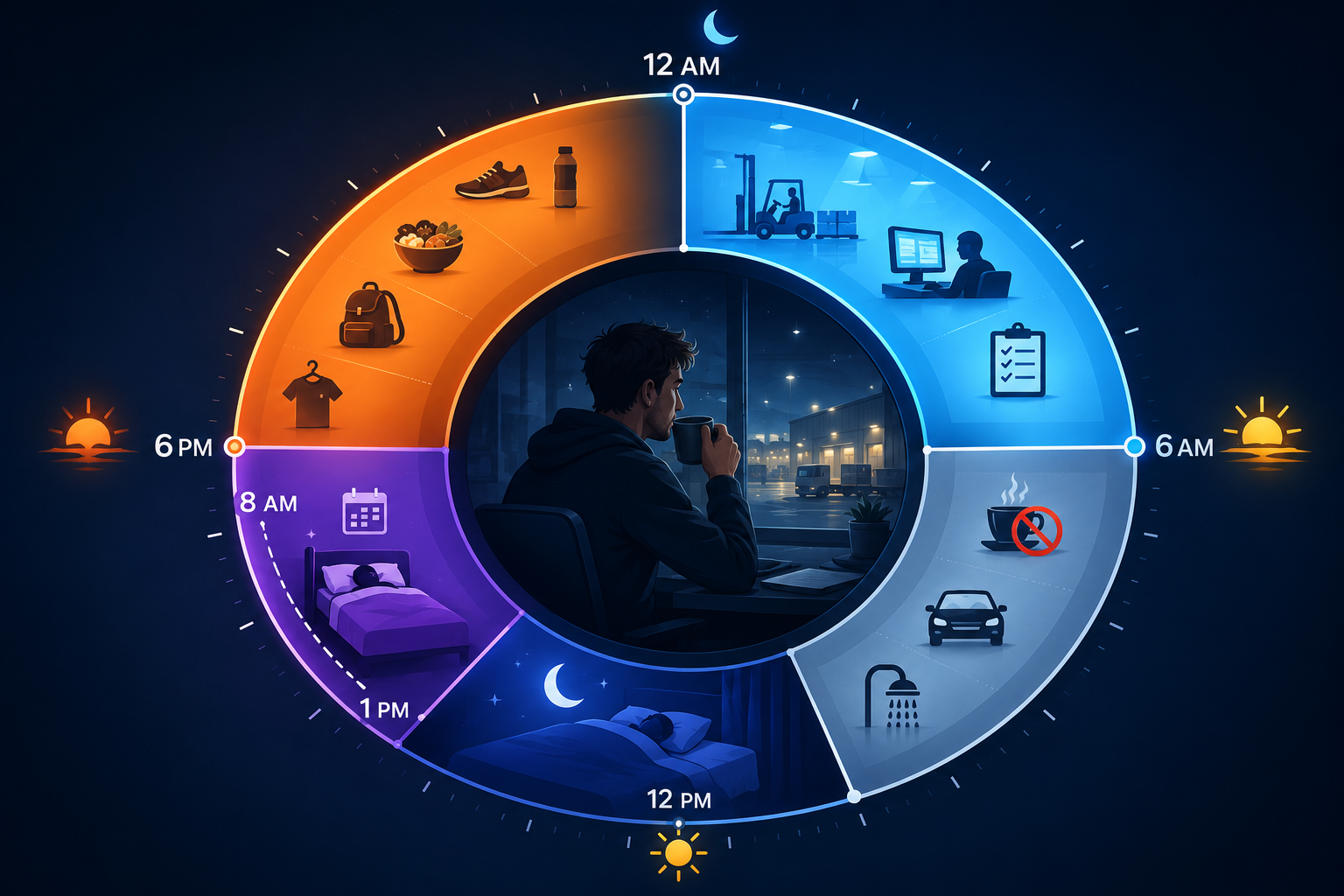
Noise and light pollution can cause repeated micro-awakenings or make the body delay sleep. Shift work can place sleep at odds with circadian timing and household life. Income insecurity can add cognitive and practical load: late bills, unstable housing, unsafe neighborhoods, multiple jobs, inconsistent childcare, or sleeping during daytime hours in a crowded home. These are not “bad habits.” They are constraints.
The realistic screen here is not “Have you optimized your room?” It is “Which parts of your sleep environment are actually under your control, and which are not?” Earplugs, blackout curtains, white noise, light exposure timing, and schedule negotiation may help some people. Others need documentation for work accommodations, treatment for shift work disorder, housing support, or a care plan that acknowledges the environment instead of pretending it is neutral.
What to bring to a provider when insomnia is not improving
A good insomnia visit often depends on the details collected before the appointment. A clinician cannot reliably sort medication effects, pain, apnea, mood symptoms, reflux, hormonal changes, and environmental constraints from “I can’t sleep” alone.
- Medication timeline: prescription drugs, over-the-counter products, supplements, dose changes, timing changes, and recent starts or stops.
- Symptom pattern: trouble falling asleep, waking often, waking too early, unrefreshing sleep, daytime sleepiness, or fear of going to bed.
- Medical clues: pain, reflux, breathing pauses, snoring, gasping, restless legs, nighttime urination, heat intolerance, tremor, or cognitive changes.
- Hormonal timing: menstrual cycle timing, pregnancy, postpartum changes, perimenopause, menopause, hot flashes, or night sweats.
- Mental health context: anxiety, depression, panic, trauma symptoms, grief, substance use, or worsening worry about sleep itself.
- Sleep opportunity: work schedule, caregiving, noise, light, housing instability, neighborhood safety, and whether the sleep window is realistic.
Seek medical guidance when insomnia is chronic, worsening, linked with new or concerning symptoms, associated with breathing problems or severe daytime sleepiness, tied to mood symptoms or safety concerns, or not improving despite reasonable self-management. The next step is not to try harder at the same advice. It is to identify which driver is keeping sleep out of reach.
References
- Insomnia: Definition, Prevalence, Etiology, and Consequences, Journal of Clinical Sleep Medicine, 2007
- Insomnia - Symptoms and causes, Mayo Clinic
- Insomnia - Causes and Risk Factors, National Heart, Lung, and Blood Institute
- Comorbidity of Chronic Insomnia With Medical Problems, Sleep, 2007
- Prevalence of Chronic Insomnia in Adult Patients and Its Correlation with Medical Comorbidities, Journal of Family Medicine and Primary Care, 2016
- What Causes Insomnia?, National Council on Aging
- Sleep Disturbance and Menopause, Seminars in Reproductive Medicine, 2015
- Epidemiologic Study of Sleep Disturbances and Psychiatric Disorders: An Opportunity for Prevention?, JAMA, 1989
- Sleep Difficulties in Adults: United States, 2020, National Center for Health Statistics, 2022


Comments
Join the discussion with an anonymous comment.