
The frustrating part of Legionnaires’ disease fatigue is how ordinary the advice can sound compared with how abnormal the body feels. Keep the same bedtime. Avoid caffeine late in the day. Rest more. Ease back into activity. Many survivors do those things and still wake as if sleep never restored anything: heavy limbs, broken sleep, daytime somnolence, brain fog, a nervous system that seems unable to find either full alertness or true rest.
That mismatch matters. Legionnaires’ disease is usually introduced as a severe pneumonia, which is accurate but incomplete. The infection can involve the nervous system often enough that persistent fatigue and poor sleep quality should not be reduced to poor habits, anxiety, or simple deconditioning. A major review has described neurologic involvement in 38% to 53% of cases, and older clinical data cited in a 2024 case report documented disorientation in 58%, headache in 52.4%, and somnolence in 39.7% of patients with Legionnaires’ disease.[1]
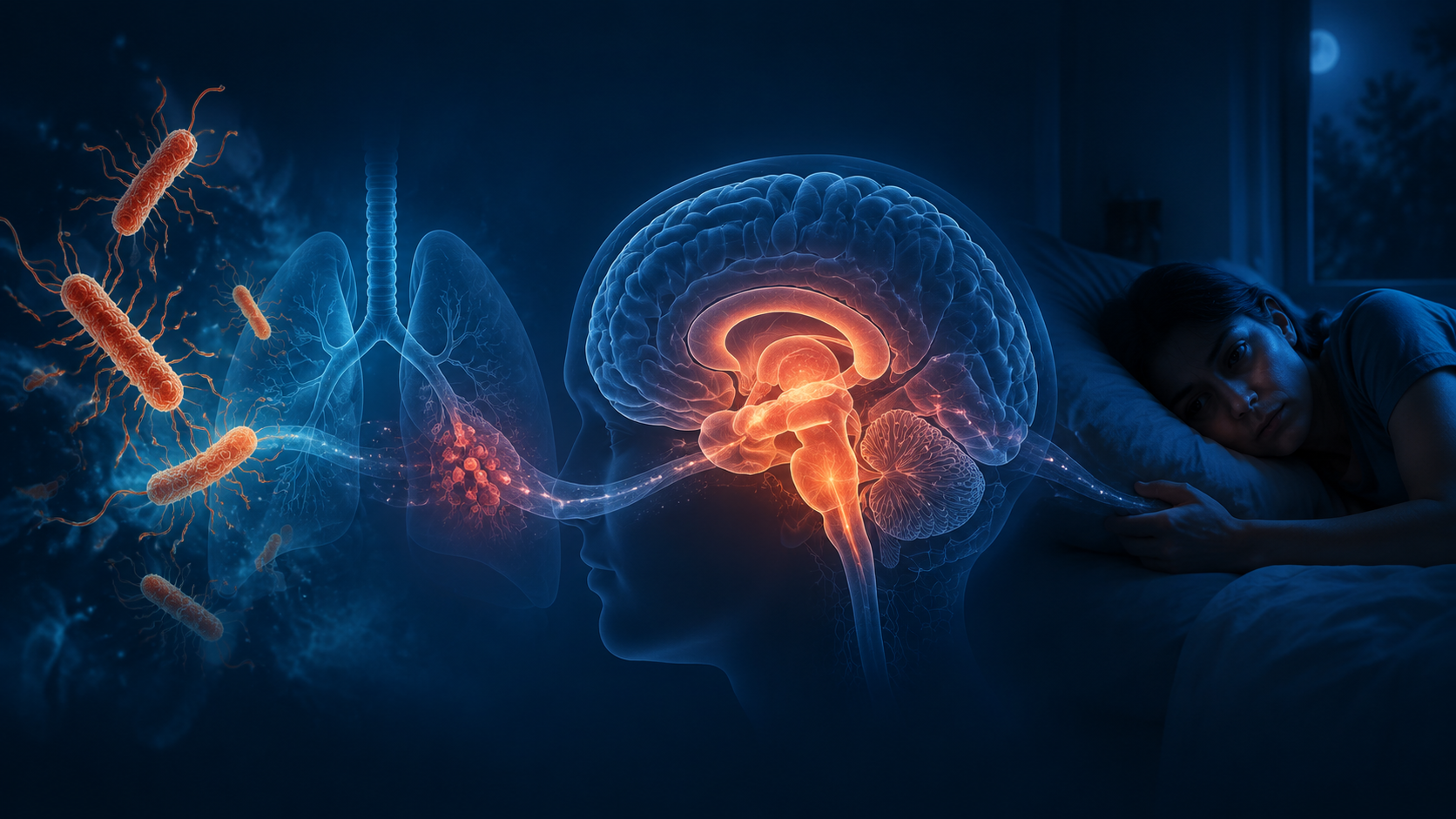
Those symptoms are not sleep complaints in the narrow consumer-health sense. Disorientation and somnolence point toward altered brain function during the acute illness. Headache is nonspecific, but in this setting it belongs to the same clinical picture: an infection severe enough to disturb more than the lungs. Once the brain has been part of the illness, it becomes less convincing to treat later unrefreshing sleep as if the only broken thing is the bedtime routine.
Why fatigue after Legionnaires’ can feel different from being “out of shape”
Deconditioning can be real after severe pneumonia, ICU care, fever, bed rest, and weeks of reduced activity. It is also an incomplete explanation when a person describes mental fog, sleep that fragments without an obvious trigger, daytime sleepiness that does not match the hours spent in bed, or a relapse-like worsening after modest exertion.
The baseline findings from the LongLEGIO study help show the severity of the acute insult. Compared with patients with non-Legionella community-acquired pneumonia, patients with Legionnaires’ disease had more ICU admissions, 13.6% versus 8.3%; more muscle aches, 51.8% versus 25.9%; and higher rates of fever, 89.3% versus 76.3%.[2] Those numbers do not yet tell us what recovery looks like at 12 months, because the longitudinal outcome data are still being collected. They do, however, make it harder to pretend the post-acute state begins from a mild respiratory illness.
A survivor can therefore be dealing with several overlapping sources of exhaustion: muscle loss from hospitalization, lingering inflammation, disrupted autonomic regulation, medication effects, post-ICU sleep fragmentation, and direct or indirect neurologic injury. Some of these improve with graded rebuilding and time. Others require a different frame, because the problem is not simply that the person has forgotten how to sleep.
This is where generic sleep advice often fails the patient. Sleep hygiene can reduce avoidable friction around sleep, but it does not directly repair inflammatory signaling, brainstem arousal instability, post-hospital circadian disruption, or neurologic injury. For people still recovering from critical illness, the pattern can resemble the broader post-emergency sleep disruption described in why sleep stays disrupted after a medical emergency: the body may be technically safe, home, and resting, while the nervous system continues to behave as if recovery is unfinished.
The brain is not a side note in Legionnaires’ disease
The strongest clinical clue is the frequency of neurologic symptoms during acute Legionnaires’ disease. Disorientation, somnolence, and headache do not prove a single mechanism, and they do not prove that every later sleep problem is neurologic. But they do establish that the nervous system is commonly involved during the illness itself.[1]
That distinction is important. If a patient becomes tired after pneumonia, one explanation is mechanical: the lungs were injured, oxygen delivery was strained, muscles weakened, and the body needs rebuilding. If that same illness also produces disorientation and somnolence, another explanation has to stay on the table: the systems that regulate alertness, cognition, and sleep-wake timing may have been affected during the infection.
Sleep is not just a behavior. It is regulated by interacting circuits in the brainstem, hypothalamus, cortex, immune system, and autonomic nervous system. Inflammatory molecules can change sleep pressure, alter REM and non-REM patterns, increase sleepiness, and still leave a person feeling unrestored. That is one reason a patient may sleep longer after infection yet feel worse, or feel wired at night and sedated during the day.
Legionnaires’ disease does not need to cause a dramatic encephalitis diagnosis in every patient for this to matter. A milder or less visible disturbance in arousal regulation can still be disabling. The point is not to upgrade every case of fatigue into a rare neurologic catastrophe. It is to stop treating neurologic-sounding complaints as decorative extras once the pneumonia has cleared.
From Legionella flagellin to neuroinflammation
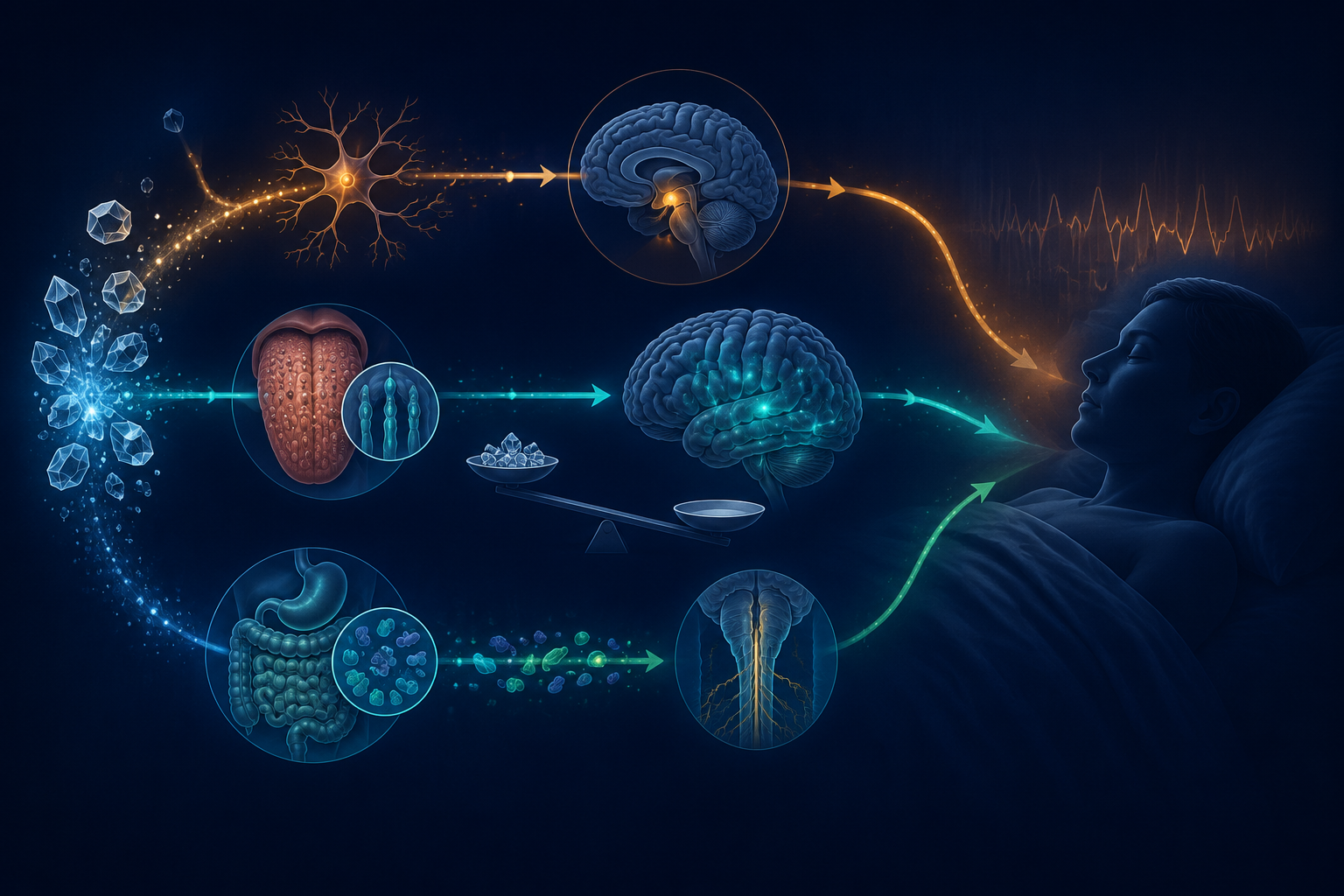
The proposed biological route is not mystical. Legionella bacteria have flagellin, a structural protein associated with bacterial motility. In experimental work discussed in the 2024 case report, Legionella flagellin can be detected by inflammasome pathways in microglia, the immune cells of the central nervous system. That activation involves NLRC4 and NLRP3 inflammasome signaling, followed by release of inflammatory cytokines including IL-1β and IL-18, and can lead to pyroptosis, an inflammatory form of cell death.[1]
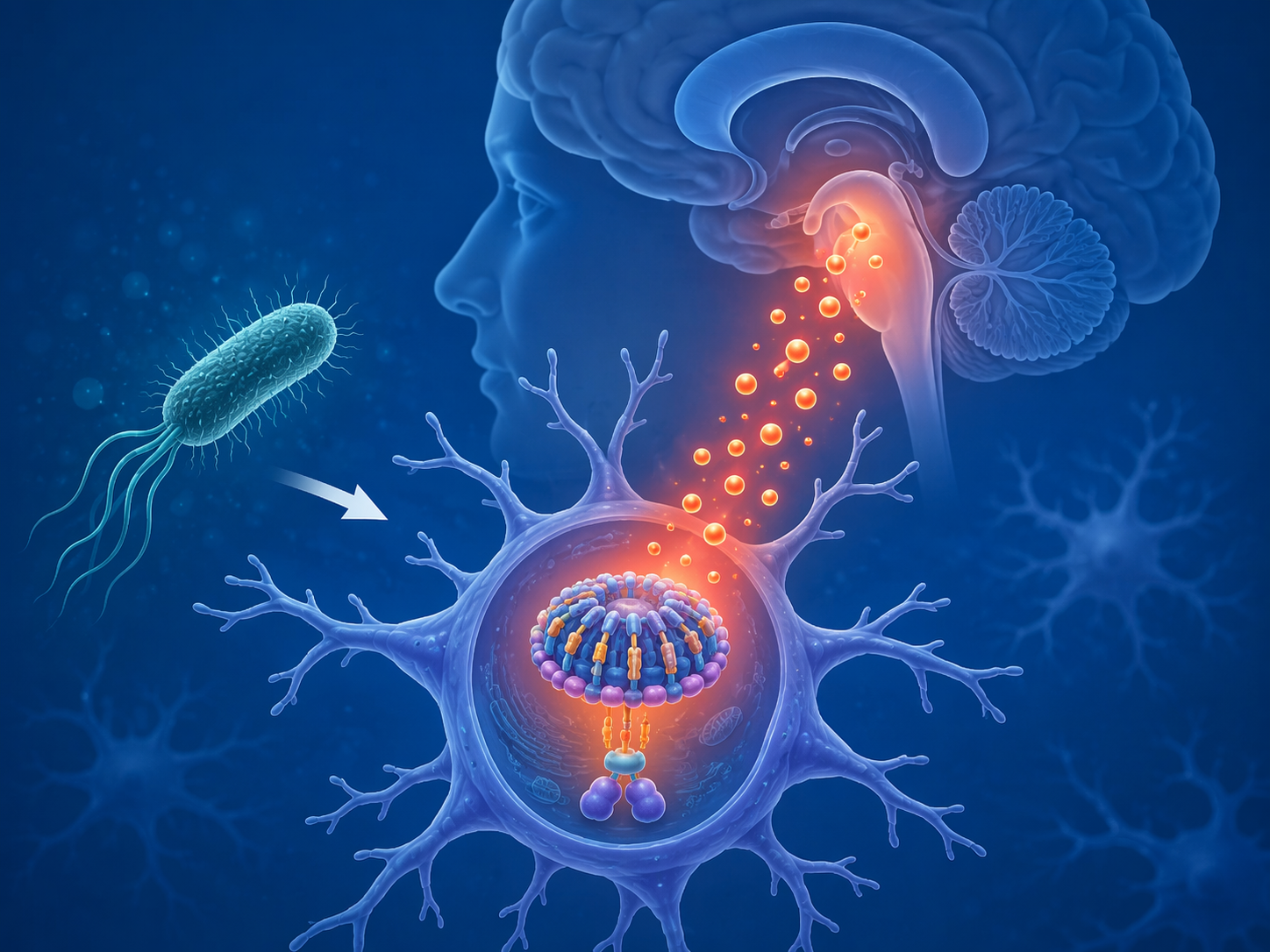
That pathway matters because microglia sit at the boundary between immune response and brain function. When they are activated, they do not simply “cause inflammation” in a vague sense. They release signals that can affect neuronal excitability, synaptic function, cognition, and the circuits that decide whether a person feels awake, sleepy, foggy, or restored.
IL-1β is especially relevant to sleep biology. It is one of the immune signals involved in sickness behavior: sleepiness, reduced motivation, cognitive slowing, pain sensitivity, and the urge to withdraw and rest. In an acute infection, that response can be adaptive. The problem for survivors is what happens when inflammatory signaling persists, reactivates, or leaves downstream systems unstable after the infection has been treated.
Animal evidence supports the plausibility of this route, but it has to be kept in its lane. In a mouse model, L. pneumophila infection impaired learning and memory, and those deficits were reversible with anti-IL-1β antibodies.[1] That does not mean anti-IL-1β treatment is an established therapy for human post-Legionnaires fatigue or insomnia. It means the immune-to-brain pathway is strong enough in experimental conditions to affect cognition, and that IL-1β is not a random bystander.
What the 2024 hippocampal sclerosis case proves—and what it does not
The clearest structural warning sign comes from a 2024 Cureus case report. A 69-year-old man developed mesial temporal lobe epilepsy after Legionnaires’ disease, and imaging showed hippocampal atrophy 10 months after the infection. The authors described it as the first reported case of hippocampal sclerosis following Legionnaires’ disease.[1]
The hippocampus is not a “sleep center” in the simplistic sense, but it is deeply involved in memory, spatial orientation, stress responsivity, and the architecture of experience across sleep and wake. Damage there can make post-infection cognitive complaints harder to dismiss. A patient saying “I am not myself” after severe Legionella infection may be describing more than discouragement.
The case should not be stretched beyond its size. One case report cannot tell us how often hippocampal sclerosis occurs after Legionnaires’ disease. It cannot prove that most survivors with fatigue have epilepsy, hippocampal atrophy, or a visible lesion on MRI. It does something narrower and still important: it demonstrates that lasting structural brain change after Legionnaires’ disease is biologically plausible and clinically documentable.
That is enough to change the tone of the conversation. When persistent fatigue, poor sleep quality, and brain fog are framed only as mood, motivation, or bedtime discipline, the patient is left carrying the burden of a mechanism no one has named. Structural evidence does not have to be common to be a warning against careless dismissal.
Why sleep can remain unrefreshing even when the routine is “right”
Sleep quality depends on more than sleep opportunity. A person can spend enough time in bed and still fail to get consolidated, restorative sleep if arousal systems keep interrupting the night or if inflammatory signaling changes the balance of sleep stages. After severe infection, the complaint is often not simply “I cannot fall asleep.” It may be “I sleep, but it does not work.”
Direct polysomnography studies in Legionnaires’ survivors are not available, so this part of the evidence has to be stated carefully. Sleep disruption mechanisms are inferred from the neurologic involvement seen in Legionnaires’ disease, known neuroimmune pathways, and broader post-infectious sleep literature. Reviews of post-viral conditions after central nervous system infections describe problems such as fragmented sleep-wake cycles and REM sleep without atonia, showing that infections can disturb sleep architecture in ways that are not captured by bedtime questionnaires alone.[3]
That does not prove Legionnaires’ disease produces the same sleep findings. It does make the survivor’s report more coherent. If infection-related neuroinflammation affects brain regions that regulate arousal and sleep continuity, then sleep may become lighter, more interrupted, less restorative, or mistimed. The patient may then compensate by staying in bed longer, napping irregularly, or reducing activity—changes that can sometimes worsen circadian stability even though they began as rational responses to exhaustion.
This is the trap in standard sleep hygiene advice. The advice assumes that the main obstacle is behavior: too much light at night, caffeine too late, inconsistent timing, too much time awake in bed. Those factors can still matter. But if the dominant driver is neuroinflammatory, autonomic, or post-hospital physiology, then perfect sleep hygiene may remove noise without fixing the signal.
What to do with sleep hygiene when it is necessary but insufficient
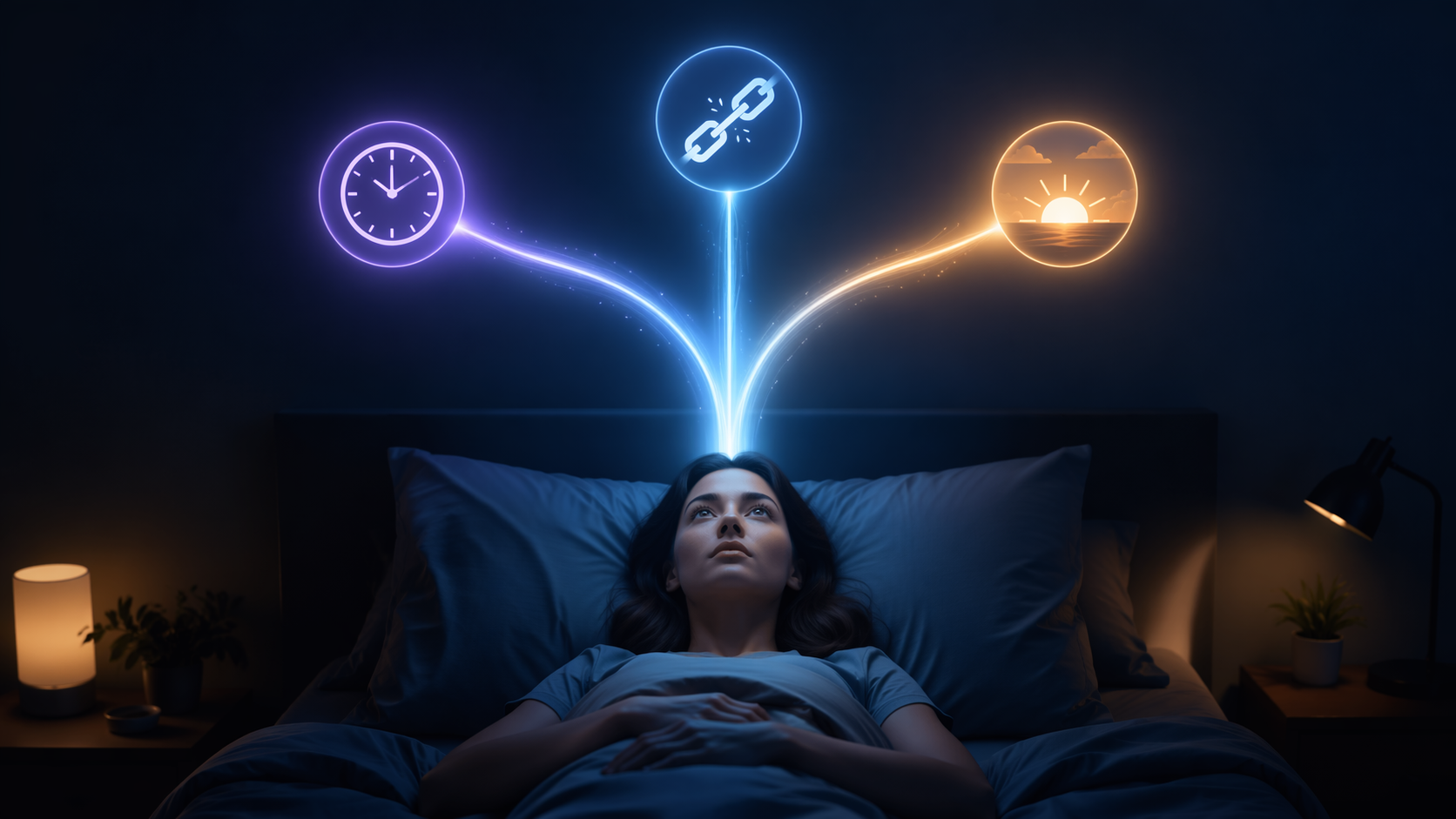
The wrong conclusion is that sleep hygiene is useless. The better conclusion is that sleep hygiene is a baseline, not a diagnosis and not a cure. A regular wake time, morning light, a predictable wind-down period, careful caffeine timing, and a bedroom that supports sleep can protect the recovery process from avoidable disruption. They just should not be used as proof that the patient has done everything medically relevant.
For a survivor of Legionnaires’ disease, an adapted baseline is often more realistic than a rigid wellness routine. The basics in sleep hygiene fundamentals and an evidence-based bedtime routine are most useful when they are treated as supports around a recovering nervous system: stable wake cues, reduced nighttime stimulation, and less circadian drift—not as a moral test of whether the patient is trying hard enough.
If the main problem has become conditioned insomnia—lying awake for long periods, fearing the bed, spending more and more time trying to force sleep—then structured insomnia treatment may be appropriate. Cognitive behavioral therapy for insomnia is different from generic tips because it targets the learned arousal and scheduling patterns that maintain insomnia. The distinction is explained in what actually cures insomnia? CBT-I explained. But even CBT-I should be fitted to the medical context when fatigue, neurologic symptoms, dysautonomia-like symptoms, or post-ICU recovery are present.
The clinical questions worth bringing to a clinician are more specific than “Why am I tired?” They include whether there are ongoing pulmonary limits, anemia or metabolic problems, medication effects, sleep apnea, post-ICU complications, seizures or seizure-like episodes, new headaches, cognitive changes, autonomic symptoms, depression that is secondary to illness rather than the whole explanation, and whether referral to neurology, sleep medicine, pulmonary rehabilitation, or infectious disease follow-up is appropriate.
The broader post-infection pattern
Medicine is becoming more explicit about post-acute infection syndromes: prolonged symptom patterns after infections that may include fatigue, cognitive dysfunction, sleep disturbance, pain, and exertional intolerance. Komaroff’s 2025 discussion in PNAS places these syndromes in a broader biomedical frame rather than treating them as isolated mysteries after each pathogen.[4]
That broader frame is useful, but it should not blur what is specific here. Legionnaires’ disease has a documented acute neurologic burden, a plausible microglial inflammasome pathway, experimental evidence connecting L. pneumophila infection with cognitive impairment through IL-1β, and at least one reported case of later hippocampal sclerosis. Those are not the same kind of evidence, and they do not all prove the same thing. Together, they make persistent fatigue and poor sleep quality after Legionnaires’ disease biologically credible.
Older outbreak follow-up work has also helped validate that fatigue can persist long after the acute illness, although those data cannot cleanly separate Legionella-specific effects from severe pneumonia in general or from the circumstances of an outbreak. That limitation does not erase the symptom. It prevents the evidence from being cleaner than it is.
For now, the honest boundary is this: Legionnaires’-specific sleep studies are still missing, and the LongLEGIO 12-month recovery data are not yet available. The biology is plausible and increasingly supported. The symptoms are real. But the field has not yet mapped exactly which survivors develop which sleep abnormalities, how long they last, or which treatments best match each mechanism.
That uncertainty should make care more careful, not more dismissive. If a survivor follows standard sleep advice and still has crushing fatigue, fragmented sleep, or unrefreshing sleep, the next step is not to assume failure of discipline. It is to ask whether the target is wrong: whether the problem is partly neuroinflammatory, autonomic, post-hospital, pulmonary, neurologic, or some combination that bedtime behavior alone was never designed to solve.
References
- Hippocampal Sclerosis Following Legionnaires’ Disease: A Case Report, Cureus, 2024.
- Long-term sequelae after Legionnaires’ disease: rationale and study design of the LongLEGIO study, Swiss Medical Weekly, 2025.
- Post-viral pain, fatigue and sleep disturbance, 2024.
- Post-acute infection syndromes, PNAS, 2025.
Comments
Join the discussion with an anonymous comment.