
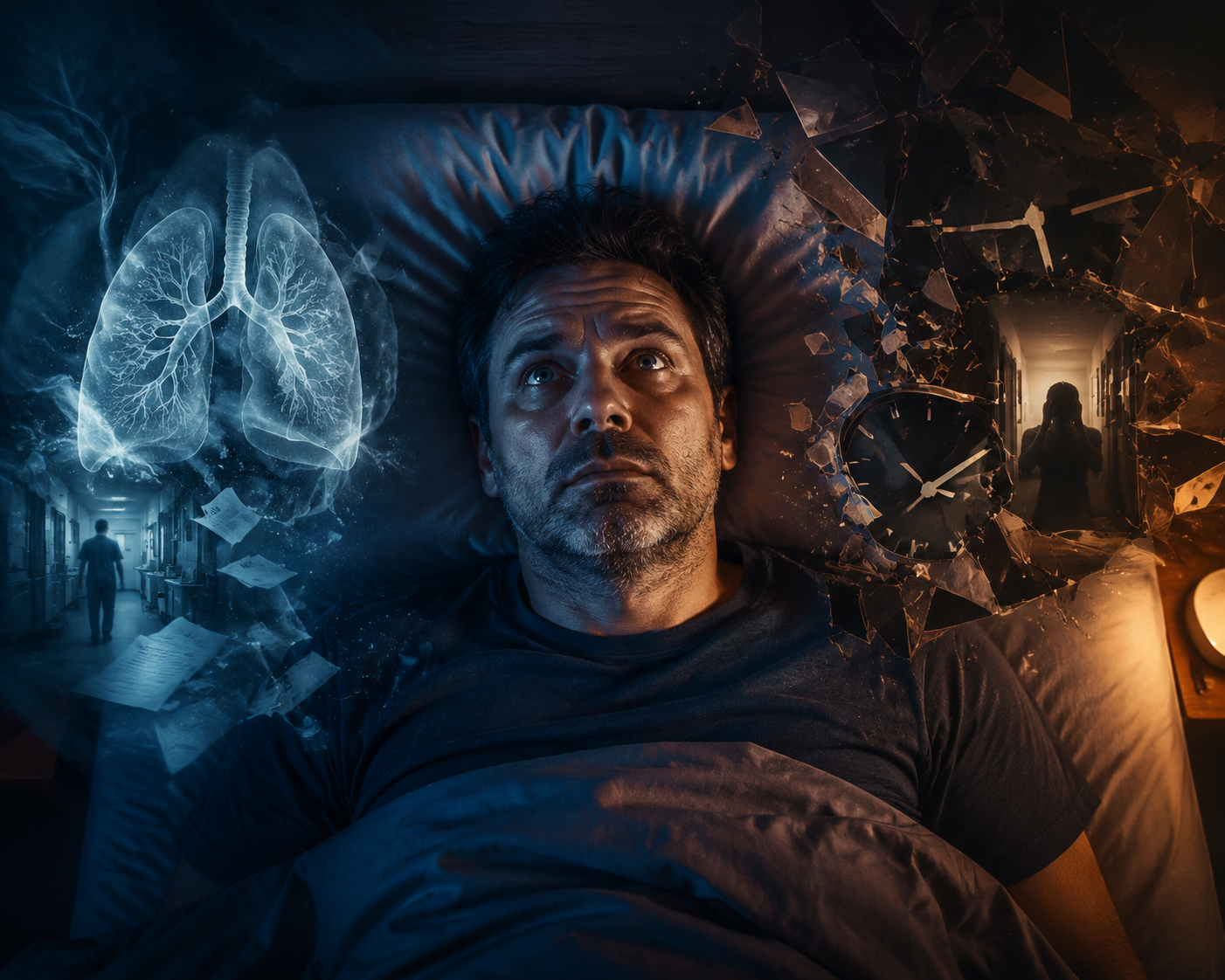
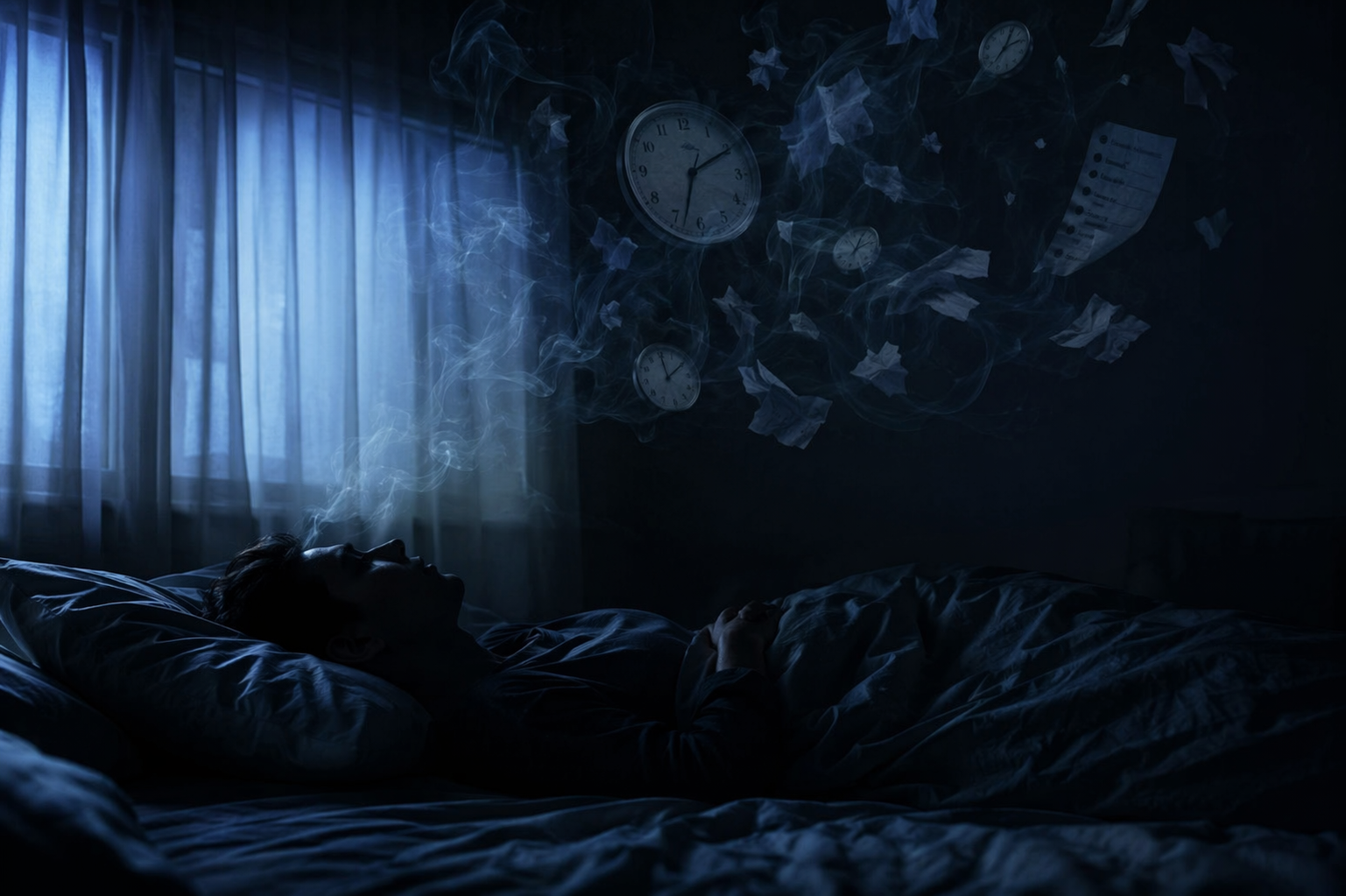
The pneumonia can be gone and the sleep can still be damaged. That is the part of Legionnaires' disease recovery that too often gets treated like a footnote: the fever breaks, the antibiotics are finished, the chest imaging improves, and the person at home is still waking exhausted, wired at 3 a.m., foggy during the day, or frightened by how little it takes to feel unwell again.
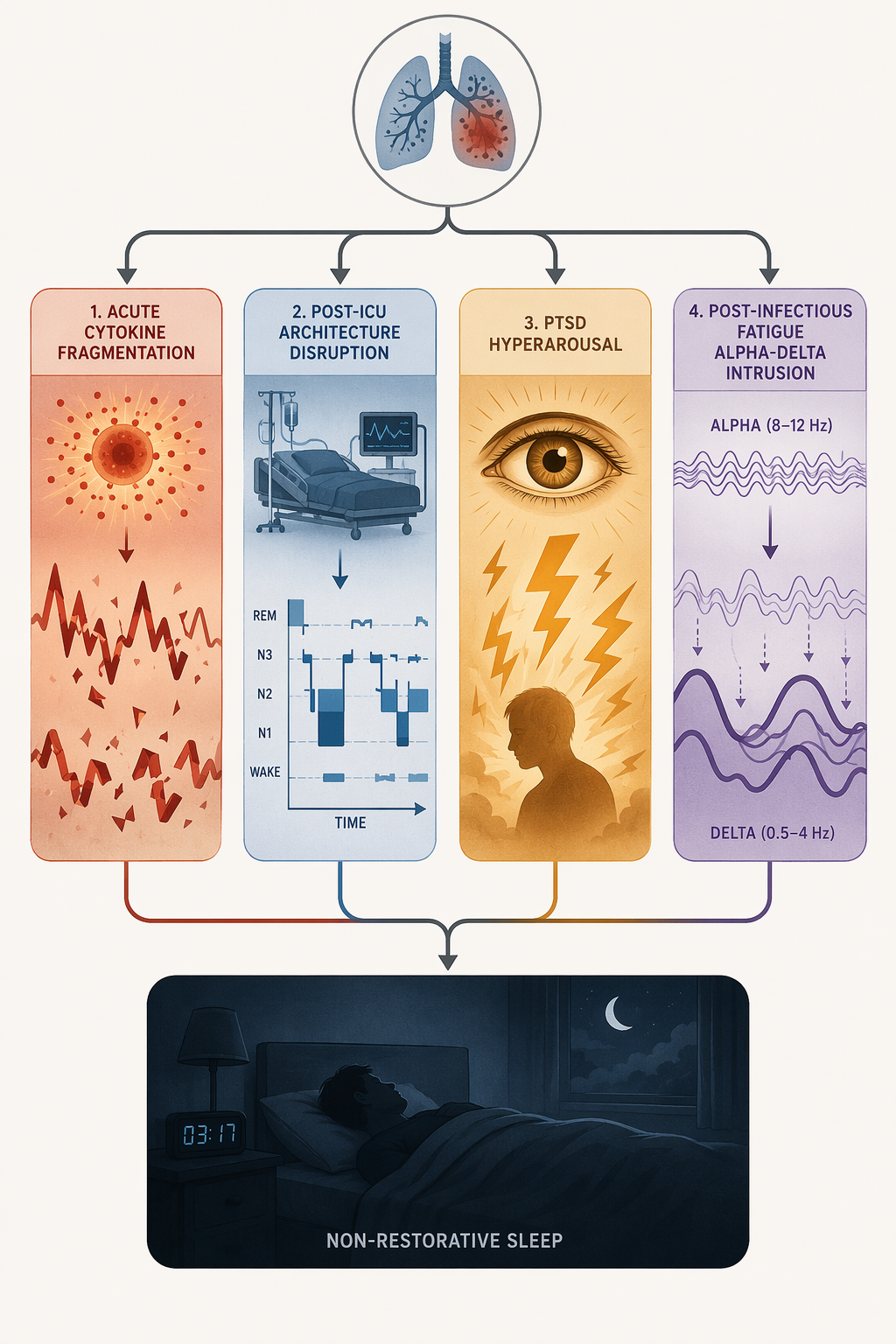
The impact of Legionnaires' disease on sleep quality is not one single problem. It is better understood as a cascade. A severe infection can fragment deep sleep during the acute illness. Intensive care can disrupt sleep architecture for months. A frightening hospital course can leave the nervous system sleeping as if danger is still present. And a post-infectious fatigue pattern may leave sleep long enough but still non-restorative.
The strongest Legionnaires' disease follow-up data do not come from sleep labs. They come from survivor outcomes. In one Netherlands outbreak cohort of 122 survivors, Lettinga and colleagues found that 75% reported persistent fatigue and 66% reported neurologic symptoms at 17 months; by 2 years, 64% had not regained their pre-illness quality of life, and 15% met criteria for post-traumatic stress disorder.[1] Those numbers do not prove a specific sleep mechanism. They do show that for many survivors, recovery does not end when the bacteria are cleared.
The first hit: inflammation fragments deep sleep
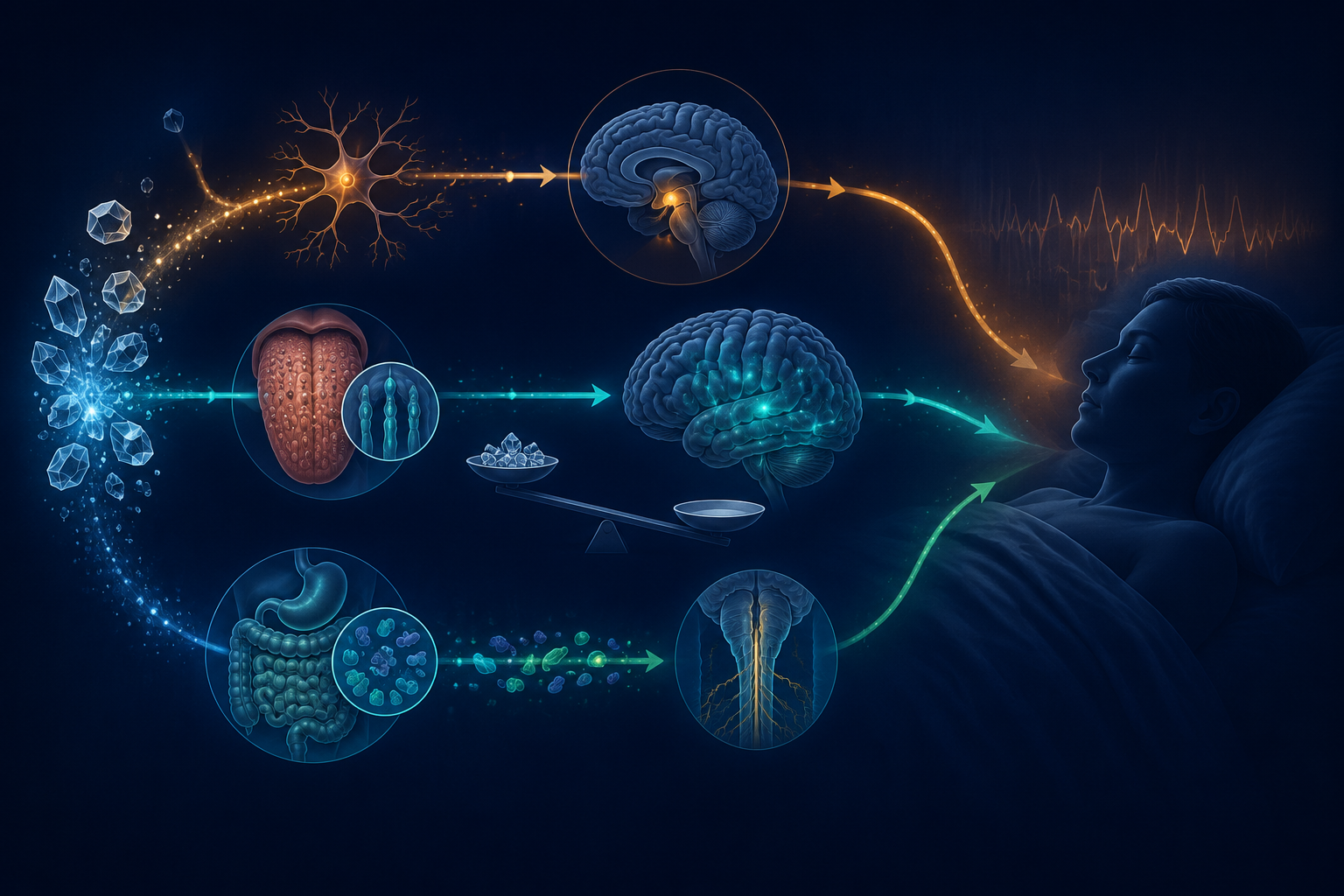
During severe pneumonia, sleep is rarely normal rest. Fever, coughing, oxygen checks, alarms, pain, steroids, bronchodilators, delirium risk, and fear all interrupt it. But the disruption is not only environmental. Severe infection changes immune signaling, and inflammatory mediators such as IL-6 and TNF-alpha are part of the proposed pathway by which acute illness can reduce stable slow-wave sleep and fragment non-REM sleep.
Slow-wave sleep is the heavy, restorative part of non-REM sleep that people usually mean when they say they finally slept deeply. If that stage is repeatedly interrupted, a patient can appear to sleep in pieces across the day and night without getting the physiologic benefit of consolidated sleep. In the hospital, that may look like brief dozing, sudden waking, confusion on awakening, or the sense of never dropping fully into rest.
This early inflammatory phase matters because it can set the body up for a bad sleep trajectory, but it is also the phase most likely to improve as fever, oxygenation, cough, pain, and medication burden improve. In the first weeks after discharge, the practical work is not fancy sleep optimization. It is monitoring whether the basics of recovery are moving in the right direction: breathing is easier, nighttime coughing is decreasing, fever is not returning, hydration and nutrition are adequate, and the patient is not developing delirium-like confusion or worsening shortness of breath.
If sleep is poor in this window, the question is still medical before it is behavioral. A person who is waking gasping, sweating through sheets, newly confused, or unable to lie flat does not need to be told to avoid screens. They need reassessment.
After intensive care, the sleep system may not reset on discharge day
For survivors who needed intensive care or severe respiratory support, the sleep problem often outlives the acute infection by a long margin. A 2025 trajectory-of-sleep study in acute respiratory failure survivors reported an insomnia burden above 60%, with sleep problems persisting across 12 to 24 months of follow-up.[2] That is not a small adjustment period. That is a long recovery lane.
ICU sleep is not just short sleep. It can be biologically scrambled sleep. Patients may lose normal day-night cues. Sedatives can alter REM and non-REM cycling. Mechanical ventilation, alarms, procedures, pain, immobility, and nighttime care can break sleep into fragments. Even after discharge, the body may not immediately return to a clean rhythm of light sleep, deep sleep, REM sleep, and waking.
This is where many survivors get misunderstood. They are home, so everyone assumes the restorative part has begun. But if the sleep architecture is still unstable, more time in bed may not produce more recovery. The person may spend ten hours trying to sleep and still wake with the heavy, poisoned feeling of a night that never became restorative.
The right response depends on what is actually happening at night. Some survivors have classic insomnia: long sleep latency, repeated awakenings, early morning waking, and dread of bedtime. Some have circadian drift after weeks of hospital lighting and daytime naps. Some are exhausted by rehabilitation and sleep at irregular times. Some have medication effects, pain, cough, or breathing instability layered on top.
| Pattern after discharge | What it may point toward | Care direction |
|---|---|---|
| Takes hours to fall asleep despite exhaustion | Insomnia, hyperarousal, circadian disruption | Insomnia-focused care, schedule rebuilding, trauma screening |
| Sleeps in short fragments day and night | Post-ICU rhythm disruption, unresolved symptoms, medication effects | Medication review, symptom control, structured light and activity timing |
| Wakes gasping, choking, or with morning headaches | Possible sleep-disordered breathing | Sleep apnea screening and diagnostic testing |
| Sleeps long hours but wakes unrefreshed | Post-infectious fatigue pattern, alpha-delta-like non-restorative sleep, depression, apnea, or pain | Broader fatigue and sleep evaluation rather than simple sleep hygiene |
Post-ICU insomnia deserves treatment as insomnia, not as a character flaw. Cognitive behavioral therapy for insomnia, careful medication review, management of pain and cough, daytime light exposure, and a gradual return to activity can all be part of care. But the first useful step is naming that post-critical illness sleep disruption exists. Without that, survivors are left thinking they are failing at recovery because they cannot sleep their way out of exhaustion.
PTSD turns the bedroom into a monitoring station
Legionnaires' disease can be abrupt and frightening. Some patients go from ordinary life to severe pneumonia, oxygen support, ICU care, delirium, or fear of dying in a short span. When that experience is encoded as trauma, sleep may remain guarded long after the lungs improve.
In the Lettinga outbreak cohort, 15% of survivors met PTSD criteria at 17 months.[1] That number matters because PTSD sleep is not ordinary light sleeping. It is a nervous system pattern. The person may scan the body for danger, jolt awake with a racing heart, avoid sleep because sleep feels like loss of control, or wake from nightmares back into the same fear that surrounded the illness.
Hyperarousal also makes fatigue harder to interpret. A survivor may be exhausted all day and still unable to sleep at night because the brain is prioritizing threat detection over restoration. Family members may see irritability. Employers may see reduced concentration. Clinicians may hear only "I can't sleep" unless someone asks about panic, intrusive memories, nightmares, avoidance, and the sense that the body no longer feels safe.
The treatment route is different here. Sleep restriction and stimulus control may help insomnia, but trauma-driven sleep disruption also needs trauma-informed care. That can include PTSD screening, therapy directed at traumatic memories and avoidance, nightmare-focused treatment when nightmares are prominent, and careful decisions about medication. The important distinction is that the target is not simply bedtime behavior. It is the alarm system that keeps firing at bedtime.
This is also where reassurance can do harm when it is too tidy. Telling someone that the pneumonia is over may be medically correct and still miss the problem. The body may be reacting to remembered danger, not active infection.
Post-infectious fatigue can make sleep feel useless
The most demoralizing sleep complaint after a severe infection is often not "I cannot sleep." It is "I sleep, but it does nothing." That is the complaint that fits with post-infectious fatigue patterns, where the person may spend enough hours in bed but wake as if deep recovery never happened.
For Legionnaires' disease specifically, this is the place to be careful. There is not yet a polysomnography study showing alpha-delta intrusion in a Legionnaires' disease survivor cohort. Alpha-delta intrusion is a sleep-lab pattern in which faster alpha activity appears during delta-wave deep sleep, a pattern used in post-infectious sleep frameworks to explain why sleep may be present but non-restorative.[3] Applying it to Legionnaires' disease is biologically plausible, not proven.
The reason the hypothesis belongs in the discussion is that the symptom burden is real. Lettinga's cohort found persistent fatigue in 75% of survivors at 17 months, and neurologic symptoms in 66%.[1] Separately, long-term comparisons after Q fever and Legionnaires' disease have been used to understand post-infectious health impairment beyond the acute infection itself.[4] These materials do not give a complete sleep-lab map of post-Legionnaires' fatigue. They do justify taking non-restorative sleep seriously instead of filing it under poor motivation or deconditioning alone.
Care for this pattern usually has to widen beyond sleep hygiene. The clinician needs to ask about post-exertional symptom worsening, cognitive fog, pain, mood, autonomic symptoms, medication effects, and whether sleep is long but unrefreshing. Pushing activity too aggressively can backfire in some post-infectious fatigue states, while doing nothing can worsen conditioning, mood, and confidence. The useful middle ground is paced rehabilitation matched to tolerance, treatment of coexisting insomnia or pain, and follow-up that tracks function rather than pretending one normal lab result closes the case.
This is also the area where better Legionnaires' disease research is overdue. The LongLEGIO prospective matched cohort is designed to investigate whether Legionnaires' disease produces a distinct post-acute infection syndrome beyond general pneumonia sequelae, but its follow-up results are still pending.[5] Until studies include objective sleep measures, the most honest position is that the sleep mechanisms are partly inferred.
Do not miss sleep apnea that was hiding underneath
One more pathway deserves attention because it is treatable and easy to miss: sleep-disordered breathing. A Veterans Affairs outcomes study found that 15.6% of Legionnaires' disease survivors received a new obstructive sleep apnea diagnosis within 5 years.[6] The study population was predominantly older male veterans, so that figure should not be applied casually to every survivor. Still, it is a strong enough signal to change the questions asked in follow-up.
Legionnaires' disease may not "cause" obstructive sleep apnea in a simple way. A more cautious reading is that severe pneumonia, hospitalization, weight change, inflammation, medications, or closer medical follow-up may unmask a breathing disorder that was already present or developing. Obstructive sleep apnea is also associated with respiratory infection risk in broader review literature, which makes the relationship between sleep-disordered breathing and lung infection clinically relevant even when causality is not settled.[7]
Screening is straightforward. Loud snoring, witnessed pauses in breathing, waking gasping or choking, morning headaches, dry mouth, resistant hypertension, and heavy daytime sleepiness should prompt a sleep apnea evaluation. This matters because untreated apnea can mimic or worsen post-infectious fatigue: the person may think they are recovering poorly from Legionnaires' disease when part of the nightly injury is repeated airway collapse.
The useful question months later
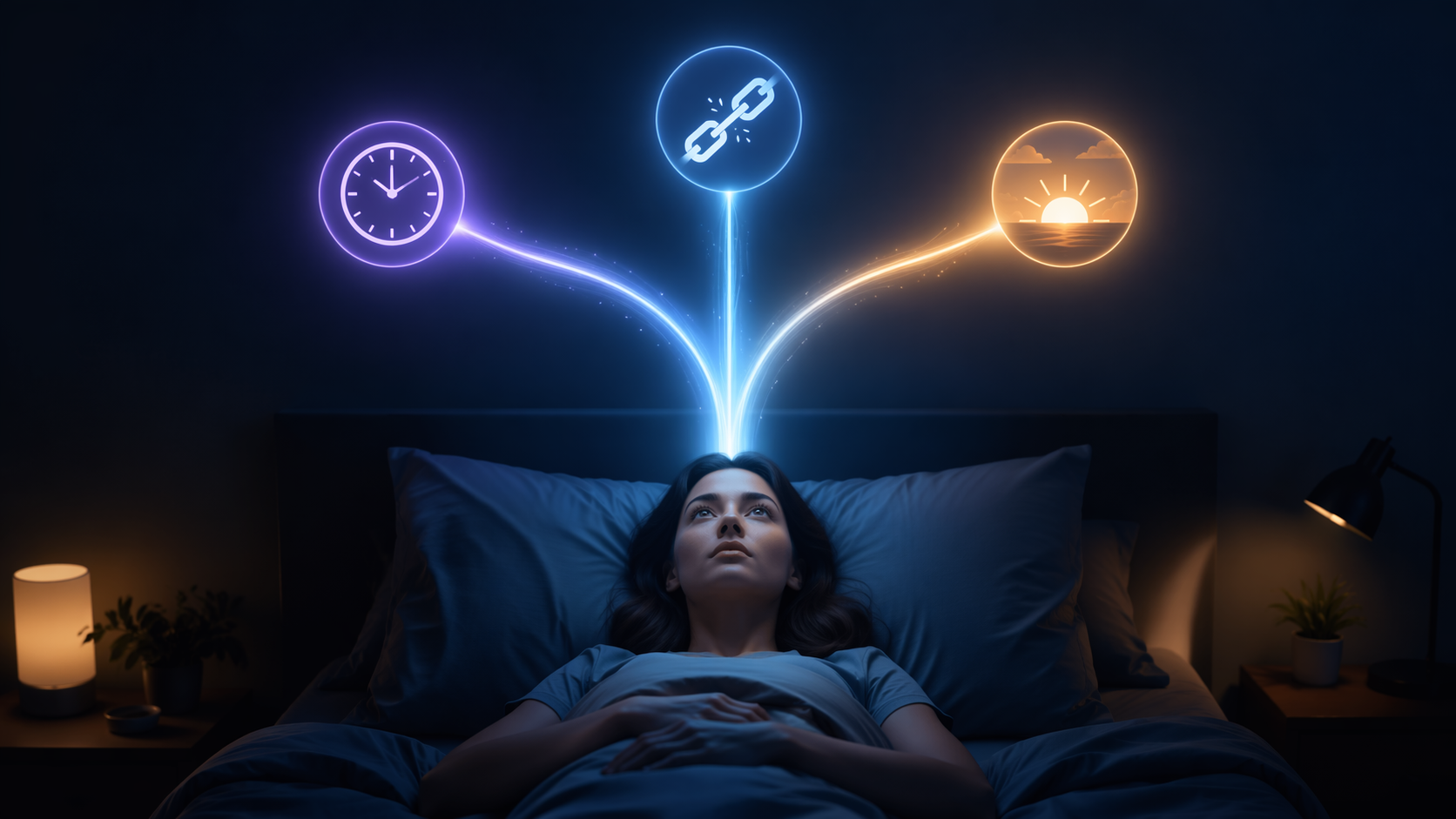
Persistent poor sleep after Legionnaires' disease is clinically believable. It is supported by survivor follow-up data showing prolonged fatigue, neurologic symptoms, PTSD, and reduced quality of life; by post-ICU sleep data showing a heavy insomnia burden after acute respiratory failure; and by plausible post-infectious fatigue and sleep-disordered breathing pathways. It is not yet fully mapped by Legionnaires'-specific polysomnography studies.
That uncertainty should narrow the claim, not silence the patient. If sleep remains broken months after Legionnaires' disease, the most useful question is usually not whether the infection is still there. It is which pathway is still keeping sleep from becoming restorative: unresolved medical recovery, post-ICU insomnia and rhythm disruption, trauma hyperarousal, post-infectious fatigue, obstructive sleep apnea, or more than one at the same time.
References
- Health-related quality of life and posttraumatic stress disorder among survivors of an outbreak of Legionnaires disease. Clinical Infectious Diseases, 2002.
- Trajectories of sleep disturbances in acute respiratory failure survivors. Annals of Intensive Care, 2025.
- Post-Infectious Syndrome Sleep. theiddoc.com, 2018.
- Q fever patients suffer from impaired health status long after the acute phase of the illness: results from a 24-month cohort study. PubMed, 2014.
- Long-term sequelae of Legionnaires' disease: LongLEGIO, a prospective matched cohort study. medRxiv, 2024.
- Health after Legionnaires' disease: A description of hospitalizations up to 5 years after Legionella pneumonia. PLOS ONE, 2021.
- Obstructive Sleep Apnea and Respiratory Infections: A Systematic Review. Antibiotics, 2024.
Comments
Join the discussion with an anonymous comment.