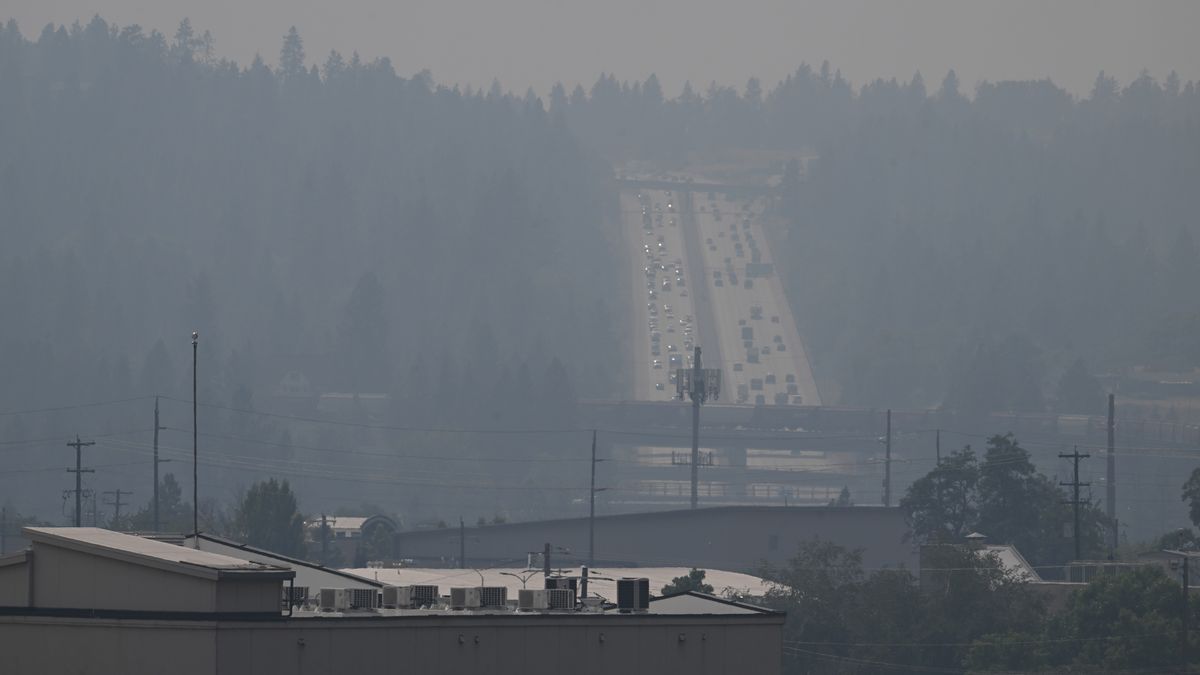
By afternoon, Spokane can look like it is getting away with something. The smoke thins, the sky brightens a little, and an air-quality reading that looked ugly before breakfast drops back into a category that feels easier to live with. Then the next morning arrives with a heavy head, dry throat, and the unpleasant suspicion that the night was worse than the day.
That is not just a mismatch between how the air looks and how sleep feels. During the July 2026 smoke event, Spokane-area reporting described active wildfire smoke affecting the city in real time, with heat also in the mix; the same event produced one of the clearest local examples of why bedtime planning cannot rely on the afternoon sky alone.[1]
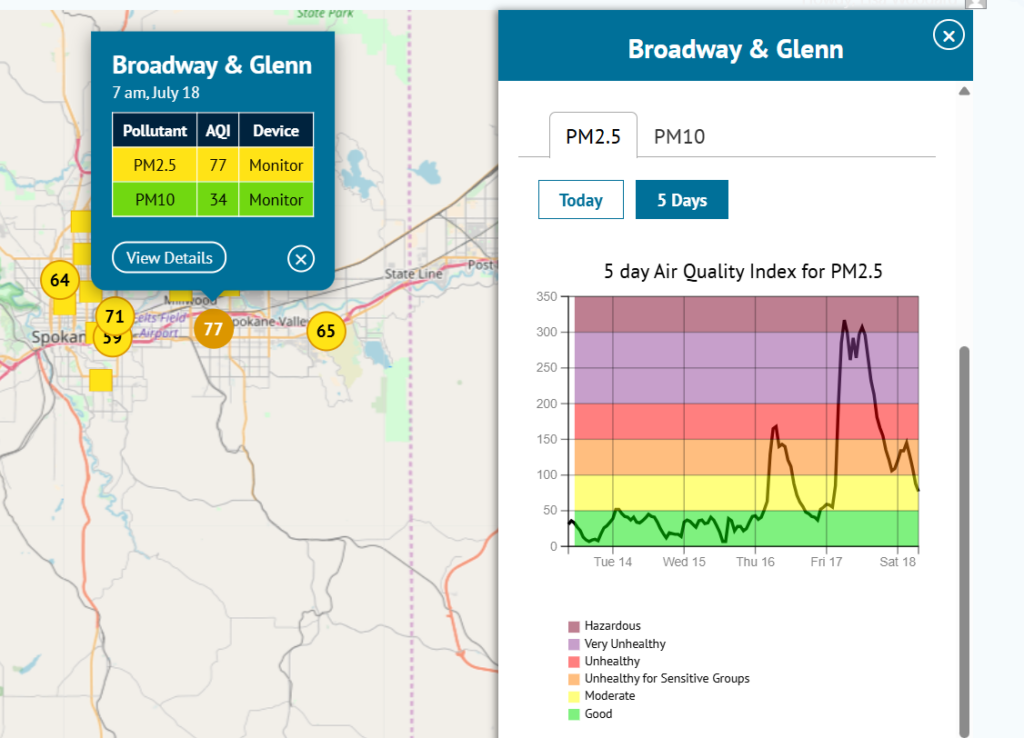
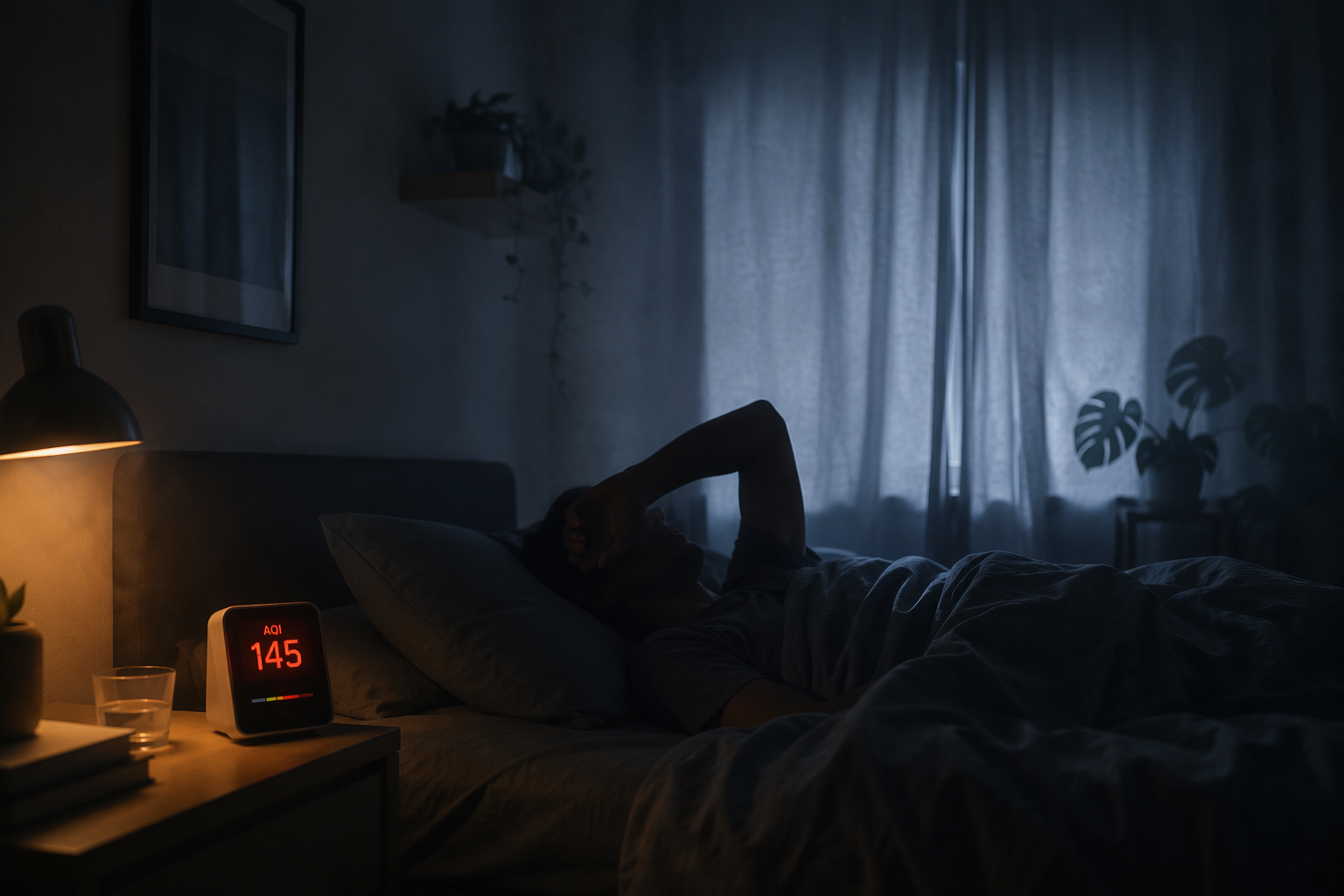
Spokane Clean Air showed the point in numbers: an AQI of 168, in the Unhealthy range, during early morning hours, followed by 62, in the Moderate range, by afternoon.[2] For anyone trying to sleep through the worst part of that curve, the daily average is almost too polite. The body was exposed while the city was still dark.
Why the worst smoke often arrives while Spokane is asleep
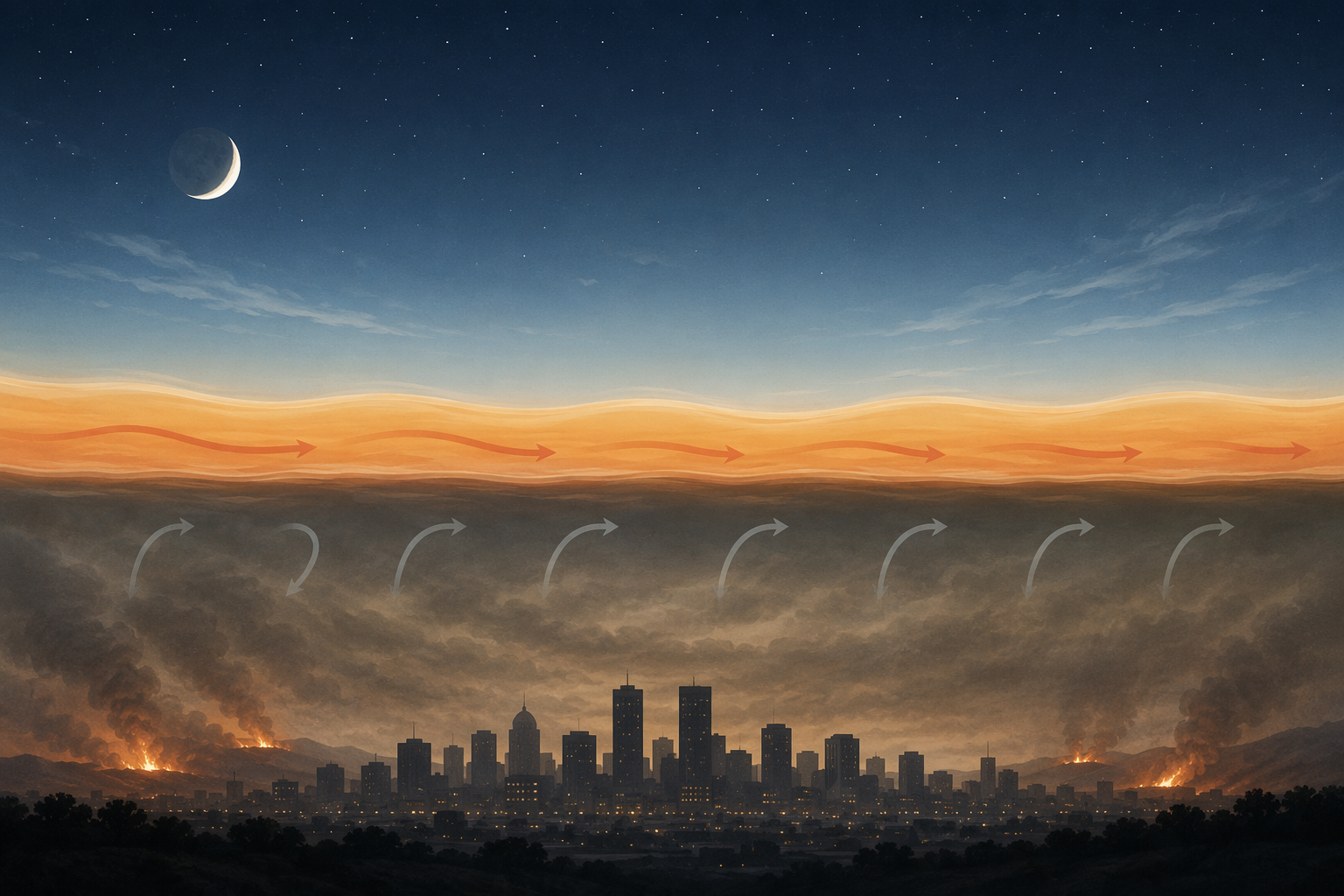
The problem starts with timing. At night, the ground cools. Cooler air settles near the surface. A warmer layer above can act like a lid, keeping the air near streets, yards, and bedroom windows from mixing upward. When wildfire smoke is already in the basin, that setup can hold fine particles close to where people breathe.
By late morning or afternoon, sunlight and surface heating can weaken that lid. Mixing improves, the smoke disperses more, and the AQI may look less alarming. That does not mean the previous night was mild. It means the air changed after the sleep window had already carried the burden.
This is the part that makes the usual advice feel thin. “Close the windows” is not wrong, but it is incomplete if the windows were open during the evening cool-down, if a box fan pulled smoky air inside before bed, or if the cleaner reading everyone noticed happened after the overnight peak had passed.
The practical reading is simple: in Spokane smoke events, the question is not only “What is the AQI now?” It is “What has the AQI been doing since evening, and what usually happens before sunrise?”
What smoke can do to sleep itself
Smoke does not need to wake someone fully to disturb sleep. Irritated airways, low-grade inflammation, coughing, a faster pulse, and a more activated nervous system can all make sleep lighter and more fragmented. The person may remember only a few awakenings, then spend the next morning feeling as if the night never reached its deeper gears.
A 2025 U.S. EPA study by Rentschler and colleagues is useful here because it did not only ask whether smoke feels unpleasant. In a controlled rat model, inhaled eucalyptus wildfire smoke at about 632–904 µg/m³ PM2.5 reduced both REM and NREM sleep and increased heart rate, blood pressure, and sympathetic nervous system markers.[3]
That finding should not be stretched into a finished human sleep trial. Rats are not Spokane sleepers trying to get through a workweek. But the study does give controlled evidence that wildfire smoke exposure can alter sleep architecture directly while also stressing the cardiovascular system. That matters because it fits what many people notice during smoke events: not just annoyance, but sleep that feels mechanically worse.
Human survey evidence points in the same direction, with the usual cautions. In a 2021 survey of adults affected by the 2019–2020 Australian bushfire season, Rodney and colleagues found that more than 37% reported disrupted sleep during bushfire smoke exposure.[4] The survey used self-report and had a 6.4% response rate, so it cannot tell us exactly how often Spokane residents will sleep badly during smoke. It does make one thing harder to dismiss: sleep disruption during smoke events is a common reported experience, not a private failure of relaxation.
How many nights should you expect?
There is no honest way to give Spokane a fixed smoke-sleep calendar. Duration depends on fire activity, wind direction, upper-level weather, and whether overnight inversions keep forming. A fire can send smoke into the region for several nights, clear for a day, then return under a different wind pattern.
The best local baseline is narrower than people often want but more trustworthy than a broad guess: Spokane Clean Air says the metro area averaged about six unhealthy-air days per summer from 2020 through 2025.[5] Those are days that hit unhealthy AQI thresholds. They do not count every smoky evening, every irritating morning, or every night when the air is bad enough to bother a sensitive sleeper but not bad enough to push the full-day category into “Unhealthy.”
| What the number means | What it does not mean for sleep |
|---|---|
| About six unhealthy-air days per summer in Spokane from 2020–2025 | Not the total number of smoky nights, moderate-smoke nights, or mornings with irritated breathing |
| AQI can improve by afternoon during an inversion-driven event | Not proof that the next overnight period will stay clean |
| A multi-day event can include daily ups and downs | Not a clean break between one bad day and one good day |
For sleep planning, it is better to think in nights of risk rather than days of smoke. A single official unhealthy-air day may contain one especially bad pre-dawn period. A moderate day may still include enough nighttime PM2.5 to irritate airways or make a bedroom feel stale. And when the inversion pattern repeats, a person can stack several poor nights before the daytime readings ever look dramatic enough to match how tired they feel.
So the useful answer is not “six nights” or “two weeks.” Expect the sleep disruption to last as long as smoke remains in the region and overnight mixing stays poor. During an active event, assume the next sleep window is at risk until the evening trend, overnight forecast, and local readings show otherwise.
Tonight’s decisions should follow the overnight curve
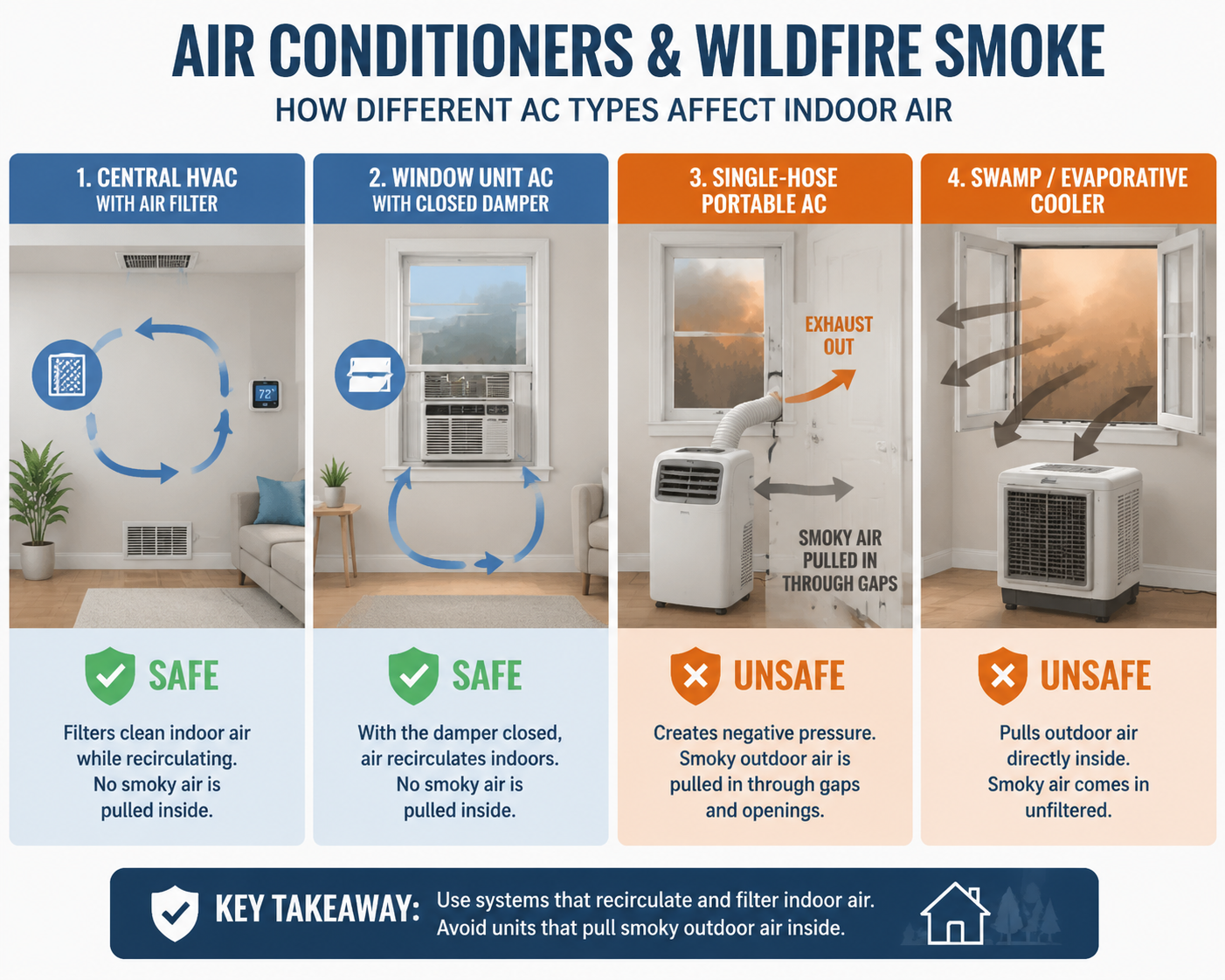
The goal is not to make the whole house perfect. During a smoke event, the most realistic target is one cleaner-air sleeping room. Spokane Clean Air recommends creating a cleaner-air room with HEPA filtration during wildfire smoke events.[5]
- Check the evening trend, not only the afternoon reading. If AQI is rising near bedtime, treat the bedroom as a protected space before the smoke peaks.
- Close windows before the cool nighttime air starts drawing smoke indoors. If you air out the home during a cleaner period, stop before the evening pattern turns.
- Run a HEPA air cleaner in the room where you sleep, with the door closed when possible. The room matters more than the hallway.
- Avoid adding indoor particles: skip candles, incense, smoking, and unnecessary frying or high-heat cooking before bed.
- If using a DIY box-fan filter, follow public-health guidance rather than improvising around overheating, poor fit, or unsafe fan placement.
EPA and CDC guidance both support portable HEPA filtration and properly built DIY air-cleaner approaches as smoke-exposure reduction tools, though that guidance is not the same thing as a controlled sleep-intervention trial.[6][7] In plain terms: filtration is evidence-based for reducing indoor particles; the exact improvement in your REM sleep on a given Spokane night is not something the available research can promise.
That distinction matters because smoke nights invite overconfidence in both directions. It is too much to say a purifier solves the whole problem. It is also wrong to act as if nothing can be changed. If the worst exposure is predictable, the bedroom can be prepared before the worst hours arrive.
When the air improves but sleep does not
Some smoke-related insomnia keeps going after the monitor looks better. That does not mean the original exposure was imagined. Wildfire events can also produce psychological hyperarousal: the body stays watchful after repeated nights of checking air quality, smelling smoke, worrying about evacuation zones, or waking to a changed sky. Eisenman and Galway’s 2022 scoping review describes mental-health and stress pathways as part of wildfire-smoke health impacts, while noting that the reviewed literature extended only through February 2022.[8]
For readers whose sleep stays on alert after the AQI improves, the next problem may be less about tonight’s particles and more about a nervous system that has learned to monitor the night. The piece on why wildfire smoke keeps your brain on high alert at night goes deeper into that pathway.
Heat can make the same nights harder. July 2026 brought smoke alongside 93°F heat in Spokane reporting, and hot bedrooms already push sleep in the wrong direction before smoke is added.[1] If the room is both hot and smoky, prioritize the cleanest sleeping space you can cool safely; the broader heat-smoke overlap is covered in summer heat and wildfire smoke create a triple threat to sleep.
What to watch before bed in Spokane
A Spokane smoke night deserves a different routine from an ordinary summer night. The most useful habits are not complicated; they are timed.
- Look at the last several hours of AQI, not a single reading.
- Treat overnight and early morning as the likely danger window during inversion conditions.
- Set up the cleaner-air room before going to bed, not after waking at 4 a.m.
- Keep bedroom air cleaner even if the afternoon felt tolerable.
- Plan for several nights during active regional smoke, while checking each evening for changes in wind and air-quality trends.
Smoke may not be avoidable, and the exact duration will keep depending on fires and weather. But the overnight risk is predictable enough to plan around. In Spokane, a cleaner afternoon is welcome; it is not a bedtime clearance. The sleeping room should be prepared for the hours when inversions can hold PM2.5 near the ground and the body is trying to recover.
References
- July 16, 2026 reporting on the active Spokane smoke event, The Spokesman-Review, July 16, 2026, link
- July 2026 AQI update and five-day trend chart, Spokane Regional Clean Air Agency, July 2026, link
- Wildfire Smoke and Indoor Air Quality, Particle and Fibre Toxicology, 2025, link
- Physical and Mental Health Effects of Bushfire and Smoke in the Australian Capital Territory 2019–20, Frontiers in Public Health, 2021, link
- Wildfire Smoke, Spokane Regional Clean Air Agency, link
- Create a Clean Room to Protect Indoor Air Quality During a Wildfire, U.S. Environmental Protection Agency, link
- Wildfire Smoke and Your Patients’ Health: Indoor Air Filtration, Centers for Disease Control and Prevention, link
- The mental health and well-being effects of wildfire smoke: a scoping review, BMC Public Health, 2022, link

Comments
Join the discussion with an anonymous comment.