
The frustrating part of fatigue and sleep problems after Legionnaires’ disease is often not the number of hours. A survivor may go to bed early, stay there long enough, avoid alcohol, keep the room cool, and still wake as if the night never became recovery. The body is horizontal, the eyes are closed, the sleep tracker may even report a decent duration, but the morning feels biologically unfinished.
That is what clinicians and researchers usually mean by unrefreshing sleep: sleep that occurs but does not restore. It is different from classic insomnia, where the main complaint is trouble falling asleep, trouble staying asleep, or waking too early. The person with non-restorative sleep may have some of those problems too, but the central injury is deeper. The night fails at its job.
Persistent fatigue after Legionnaires’ disease is not a fringe complaint. In a Netherlands outbreak follow-up study of 122 survivors, 75% reported fatigue at least 17 months after the acute infection, a figure that matters even though it comes from one outbreak and should not be treated as a universal rate for every Legionella exposure or patient group.[1]
The newer LongLEGIO study is trying to bring more precision to this problem. Its baseline publication describes a prospective matched cohort comparing Legionnaires’ disease survivors with other bacterial pneumonia survivors. At baseline, the Legionnaires’ group had higher ICU admission rates than controls, 13.6% versus 8.3%, and more frequent muscle aches, 51.8% versus 25.9%, as well as fever, 89.3% versus 76.3%.[2] Those figures do not prove a sleep-architecture mechanism. They do show that the illness being followed is often a severe systemic insult, not just an ordinary respiratory infection that ends when the antibiotic course does.
Enough sleep can still be the wrong kind of sleep
Sleep is not one uniform state. A normal night moves through lighter non-REM sleep, deeper slow-wave sleep, and REM sleep, with nervous-system and hormone rhythms shifting across the night. Slow-wave sleep is especially relevant when people describe waking physically uncharged. It is the phase most associated with reduced cortical activity, lower sympathetic drive, immune regulation, and the kind of downshifting that makes the next morning feel possible.
A person can therefore sleep for eight or nine hours and still get too little restorative sleep, too much fragmentation, or the wrong timing of morning activation. This is why “just sleep more” can be both inadequate and quietly insulting. It assumes the missing ingredient is time in bed. In post-infectious fatigue states, the missing ingredient may be stable deep sleep.
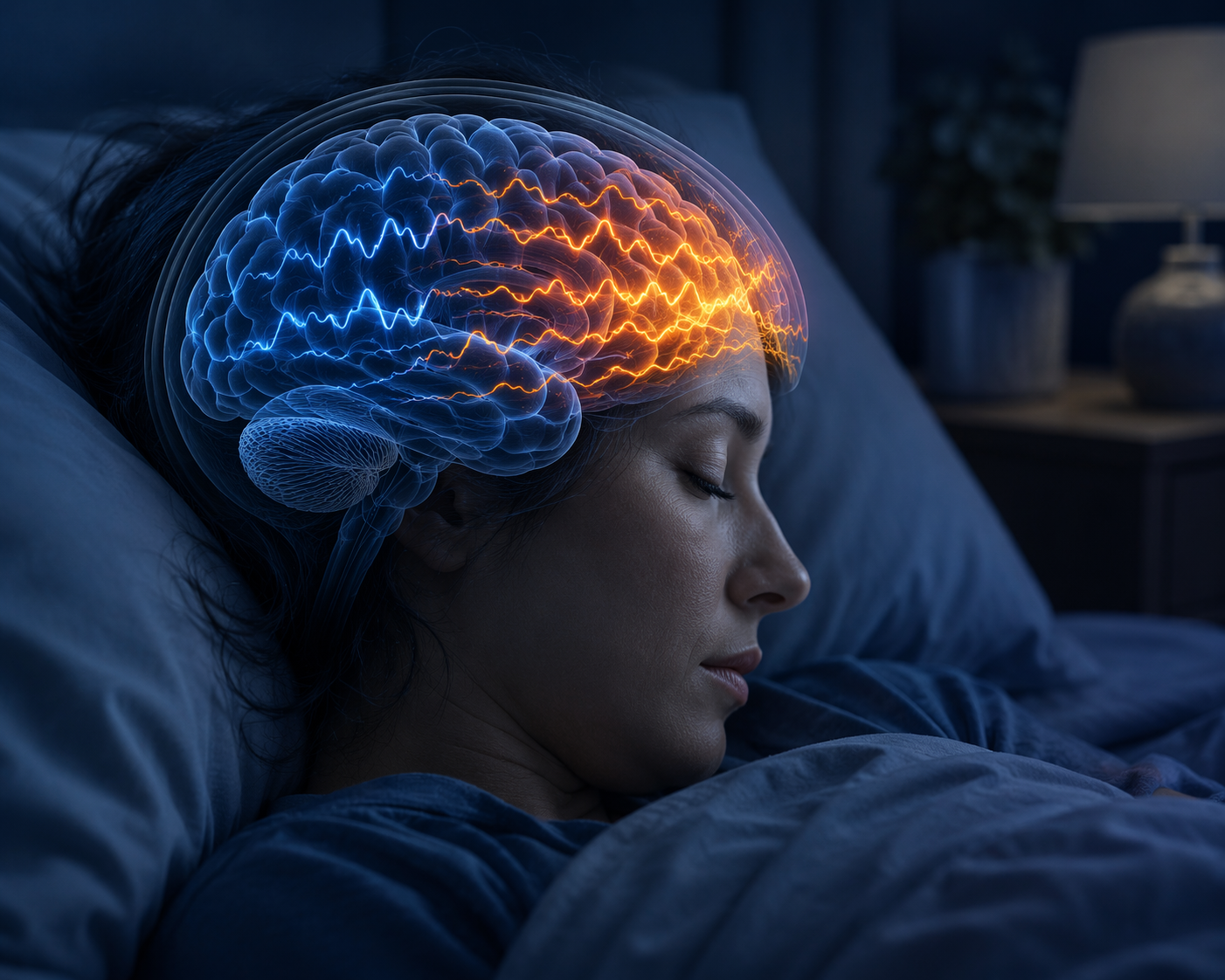
There is an important boundary here: no published polysomnography study has yet shown alpha-delta intrusion specifically in Legionnaires’ disease survivors. LongLEGIO has published rationale and baseline findings, not the longitudinal sleep-architecture results that would answer that question directly.[2] The strongest evidence for the mechanism comes from adjacent post-infectious and chronic fatigue conditions, where non-restorative sleep has been studied more directly.
Alpha-delta intrusion: when the brain stays partly vigilant during deep sleep
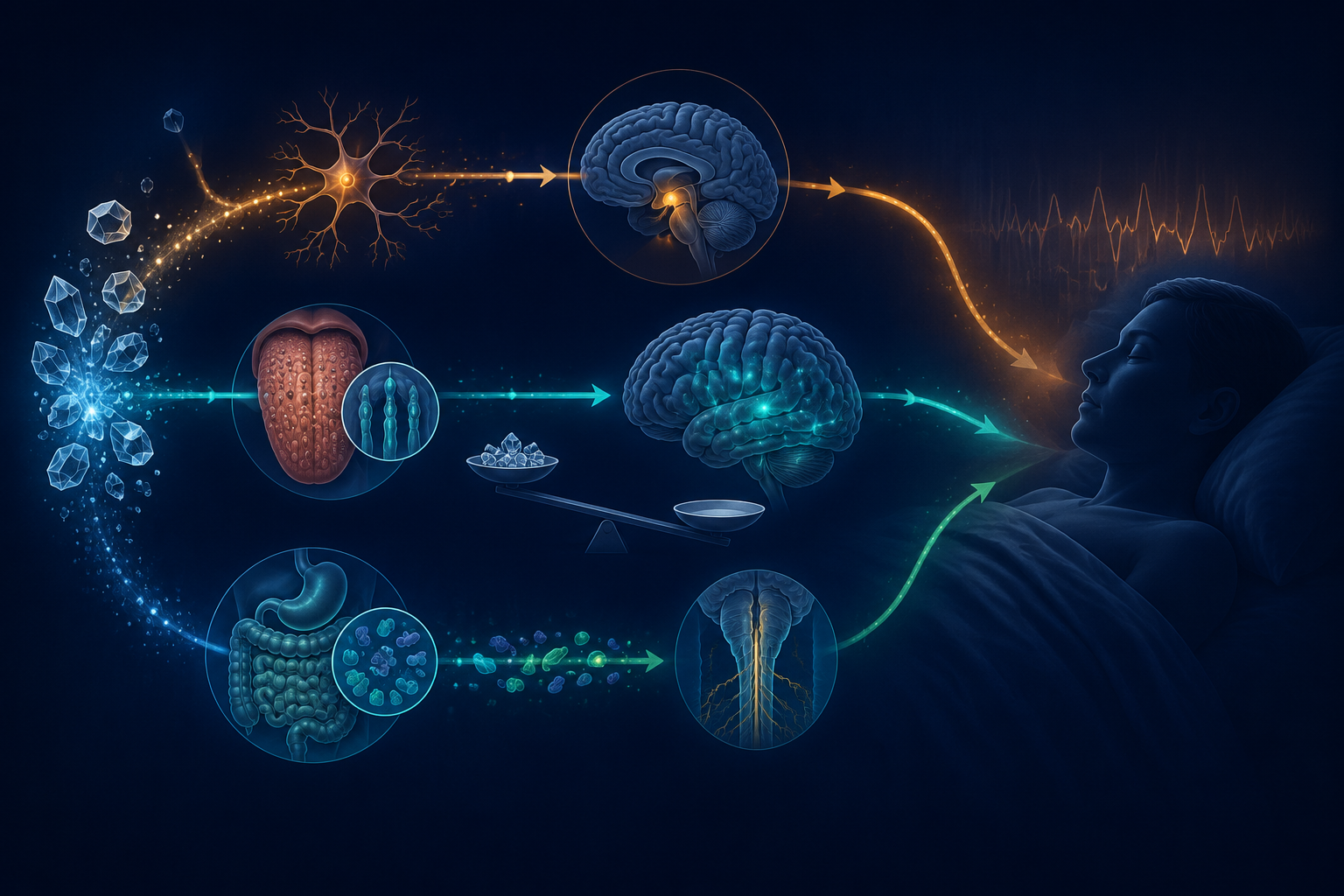
In deep non-REM sleep, delta waves are expected. They are slow, high-amplitude brain waves associated with the most restorative part of sleep. Alpha waves, by contrast, are usually linked with relaxed wakefulness or lighter arousal. Alpha-delta intrusion describes a pattern in which faster alpha-frequency activity breaks into delta sleep. The sleeper may not fully wake, but the brain is no longer in a clean deep-sleep state.
This is one of the better biological explanations for the patient phrase “I slept, but I never went under.” It does not require dramatic awakenings. It does not require the person to remember tossing and turning. The disruption can be visible on a sleep study while the person’s memory of the night remains vague: asleep, technically, but not deeply released from vigilance.
The clearest post-infectious analogy comes from a study of chronic post-SARS syndrome. Moldofsky and Patcai reported abnormal alpha-frequency intrusion into approximately 50% of sleep in post-SARS survivors with chronic widespread pain, fatigue, depression, and disordered sleep.[3] SARS is not Legionnaires’ disease, and a coronavirus study cannot be pasted onto Legionella as proof. But it shows that a severe infection can be followed by measurable disruption of sleep architecture in people whose chief complaint includes fatigue and unrefreshing sleep.
Alpha-delta patterns have also been discussed in chronic fatigue syndrome and fibromyalgia literature as a marker associated with non-restorative sleep.[4] The significance is not that every tired survivor has this pattern, or that alpha-delta intrusion is the only possible cause. It is that unrefreshing sleep can have a measurable electrophysiological signature. The problem may be less about discipline at bedtime than about what the brain is doing after sleep begins.
Autonomic hyperarousal: the tired-but-wired night
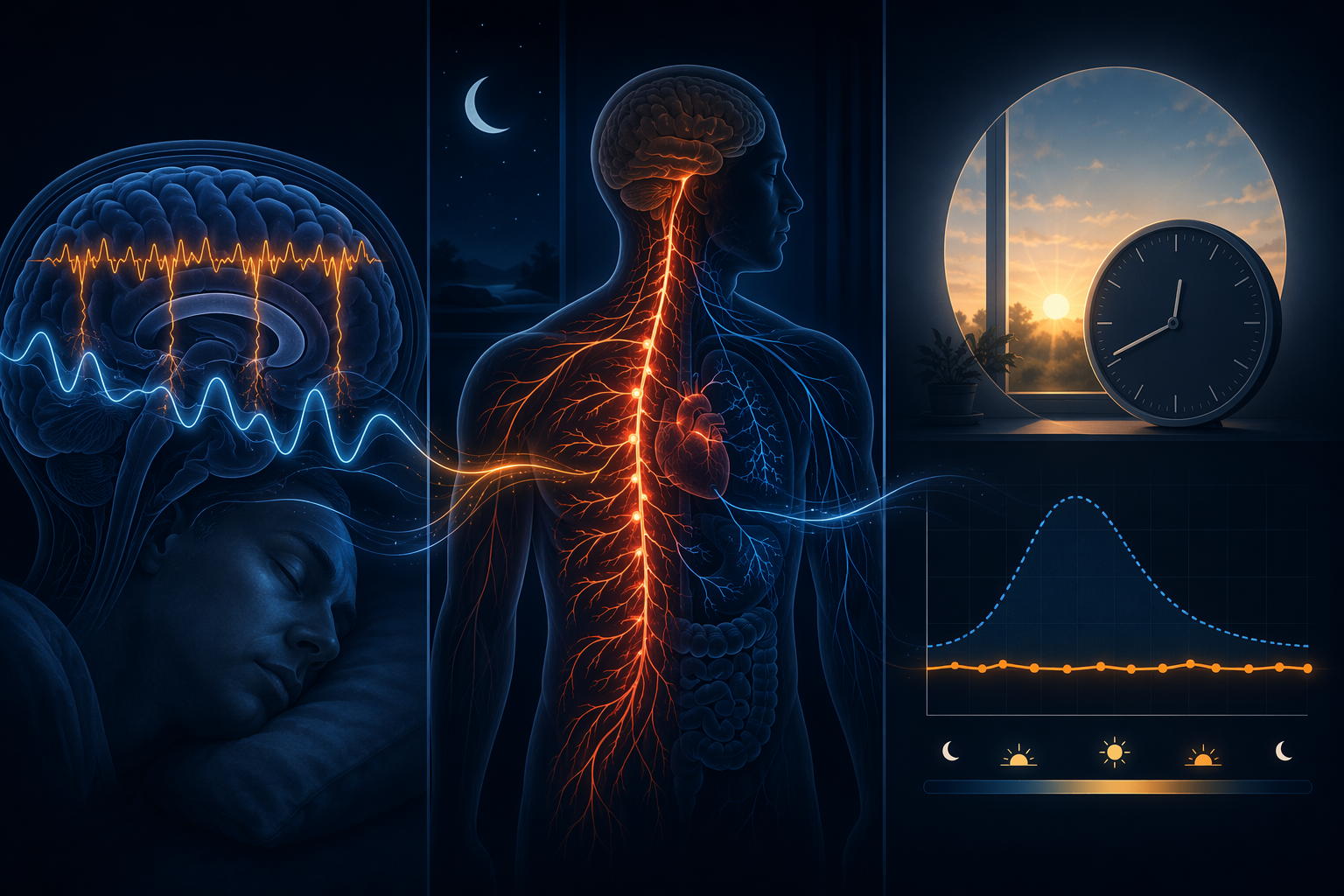
The second mechanism sits in the autonomic nervous system. During healthy sleep, the body should move toward parasympathetic dominance: lower heart rate, calmer respiratory patterns, less threat monitoring, more metabolic repair. In post-infectious fatigue syndromes, that shift can be incomplete. The sympathetic system remains too active for too much of the night.
This can feel strange because it is not always experienced as anxiety. Some people describe a body that feels electrically on, a pulse that seems too present, heat or sweating, startles, shallow sleep, or a sense of being dragged toward wakefulness again and again without clear awakenings. Sleep becomes perforated. The person may not be awake long enough to count the episode, but the nervous system has still been interrupted.
A 2024 review of post-viral pain, fatigue, and sleep disturbance syndromes describes autonomic dysfunction, sleep disturbance, fatigue, and pain as overlapping features across several post-infectious conditions.[4] That does not establish Legionnaires’ disease as identical to ME/CFS, Q fever fatigue syndrome, post-COVID conditions, or post-SARS syndrome. It does, however, make it harder to dismiss post-Legionnaires fatigue as simply deconditioning or worry after hospitalization.
The interaction with alpha-delta intrusion is important. A brain that is repeatedly nudged toward vigilance during deep sleep and a body that does not fully enter parasympathetic dominance are not two separate complaints. They can reinforce each other. Subtle autonomic activation can provoke micro-arousals; micro-arousals can keep the body in a defensive state. The sleeper wakes with the feeling that nothing consolidated.
HPA-axis flattening: when morning arrives without a proper lift
The third mechanism involves the hypothalamic-pituitary-adrenal axis, usually shortened to the HPA axis. This system helps regulate cortisol timing across the day. In a typical rhythm, cortisol is lower overnight and rises around waking, helping the body move from sleep into daytime alertness. The morning lift is not a luxury feature; it is part of the transition from restoration to function.
Post-infectious fatigue literature often points to HPA-axis hypofunction or a flattened cortisol rhythm, especially in ME/CFS discussions, as one reason people can wake without feeling activated.[5] The experience is familiar: the alarm goes off, the mind registers that sleep occurred, but the body does not receive the normal biological signal that the night is over. Getting up feels less like waking and more like being extracted.
This does not mean every Legionnaires’ disease survivor with fatigue has measurable cortisol flattening. It means the symptom pattern has a plausible endocrine pathway already recognized in related post-infectious fatigue states. If deep sleep is unstable, autonomic tone remains high, and the morning cortisol signal is blunted, the person may be caught between states: not properly asleep at night, not properly awake in the morning.
Why ordinary sleep advice can miss the problem
Standard insomnia advice has its place. Regular wake times, light exposure, a cooler bedroom, reduced alcohol, and less time awake in bed can help many people with primary insomnia. But advice built for insomnia can land badly when the main complaint is post-infectious non-restoration. The survivor may already be doing the reasonable things and still waking depleted.
Sleep restriction is a clear example. In behavioral insomnia treatment, restricting time in bed can increase sleep pressure and consolidate sleep. For someone whose post-infectious illness already includes exertional intolerance, autonomic instability, and non-restorative deep sleep, cutting sleep opportunity can feel like another stressor. It may increase pressure to sleep without correcting alpha intrusion, micro-arousals, or a flattened waking signal.
Hypnotic medications can also be mismatched to the complaint if they mainly increase sedation or reduce conscious awakenings. A person may appear to sleep more smoothly yet still report the same uncharged morning if the drug does not normalize slow-wave architecture, autonomic tone, breathing stability, pain signaling, or circadian-endocrine timing. This is not an argument against medication in all cases. It is a reason to ask what problem the medication is actually solving.
The same caution applies to the moral language that often surrounds fatigue. “Be consistent” is useful only up to a point. “Push through” can be actively misleading when a person’s nervous system is still behaving as if the infection has left a long tail. If sleep is fragmented below awareness, the patient’s willpower is not the missing treatment.
Readers looking for practical day-to-day recovery steps may want the companion guide on how to sleep during Legionnaires’ treatment and recovery. This article is narrower: it is about why the sleep can remain non-restorative even after the acute infection has been treated.
The Legionnaires-specific evidence is still catching up
The most honest version of the evidence is two-sided. On one side, long-term fatigue after Legionnaires’ disease has been documented, and LongLEGIO is now studying survivors in a matched cohort rather than treating them as isolated anecdotes.[1][2] On the other side, the specific sleep mechanisms discussed here have not yet been confirmed by published polysomnography in Legionnaires’ disease survivors.
That distinction matters. It is reasonable to say that post-Legionnaires unrefreshing sleep may be driven by mechanisms already seen in other post-infectious fatigue states: alpha-frequency intrusion into deep sleep, autonomic hyperarousal, and HPA-axis rhythm changes. It is not yet reasonable to say that Legionella has been proven to cause one specific sleep-architecture signature in survivors.
For a broader overview of the pathways by which Legionnaires’ disease can affect sleep quality after recovery, see How Legionnaires’ disease disrupts sleep long after recovery. The narrower point here is that “I slept but did not recover” is a clue worth preserving. It gives a clinician a different starting point than “I can’t sleep.”
When to bring this to sleep medicine
Persistent unrefreshing sleep after Legionnaires’ disease deserves evaluation, especially when it lasts beyond the expected recovery period, coexists with heavy daytime fatigue, or comes with snoring, gasping, abnormal movements, heart-rate surges, severe morning headaches, cognitive slowing, or crashes after activity. A sleep-medicine clinician can look for common treatable contributors such as sleep apnea, periodic limb movements, circadian disruption, medication effects, pain, and mood-related sleep fragmentation, while also taking the post-infectious context seriously.
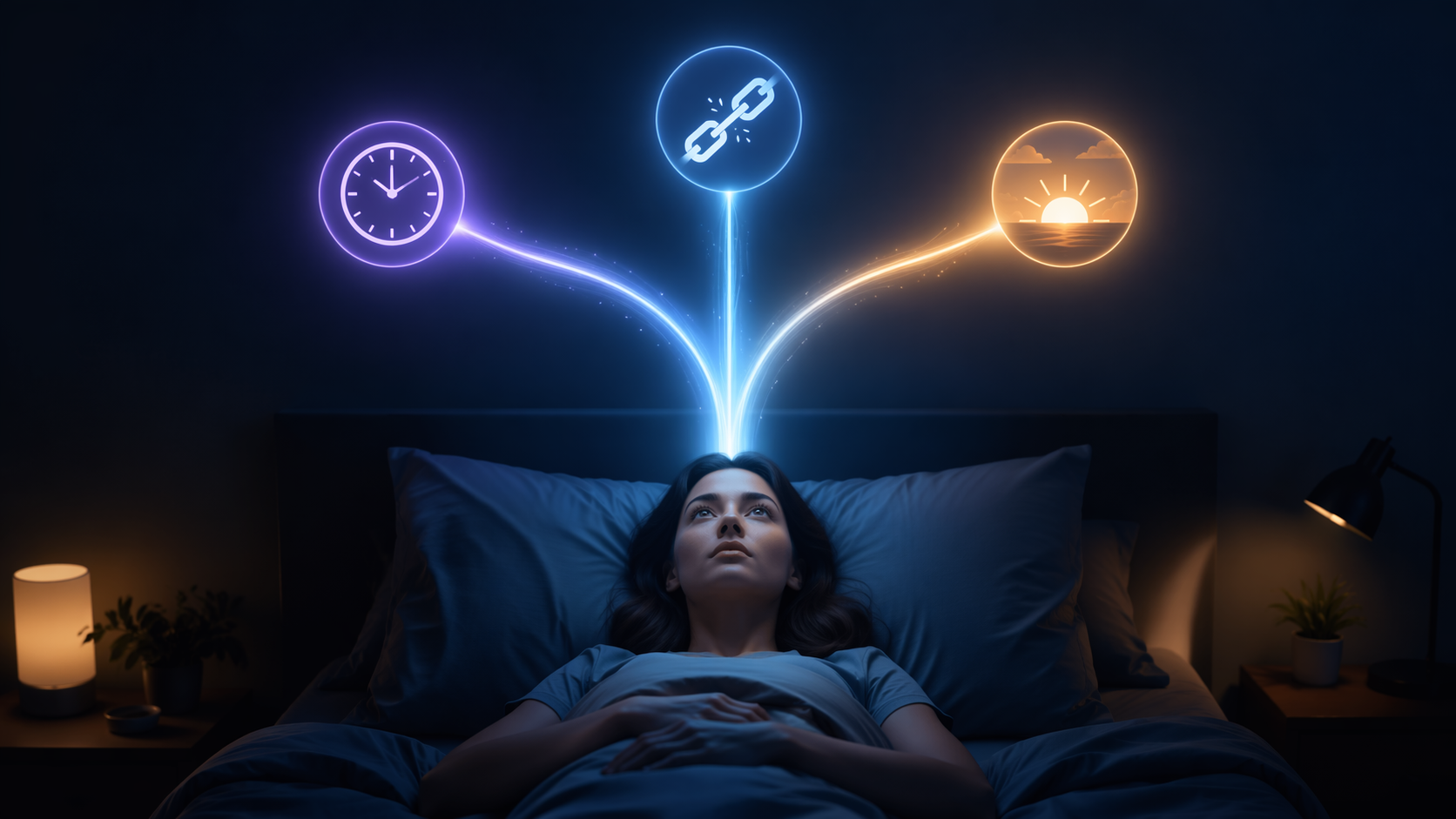
The most useful language is specific: “I am sleeping enough hours, but the sleep is unrefreshing”; “I wake as if I never reached deep sleep”; “my body feels activated at night”; “mornings feel like there is no normal wake-up signal.” Those phrases point toward sleep quality, architecture, autonomic regulation, and sleep-wake timing. They make it harder for the problem to be reduced to poor habits.
Post-Legionnaires unrefreshing sleep is best understood as a plausible nervous-system consequence of severe infection, not as proof of laziness and not yet as a fully mapped Legionella-specific sleep disorder. The evidence is strong enough to validate the symptom and justify proper evaluation. It is not strong enough to promise that one routine, supplement, medication, or behavioral rule will reset the system.
References
- Health-related quality of life and posttraumatic stress disorder among survivors of an outbreak of Legionnaires disease — Clinical Infectious Diseases, 2002
- Long-term impacts of Legionnaires' disease on health and wellbeing: rationale, study design and baseline findings of a matched cohort study (LongLEGIO) — Swiss Medical Weekly, 2025
- Chronic widespread musculoskeletal pain, fatigue, depression and disordered sleep in chronic post-SARS syndrome — BMC Neurology, 2011
- Post-Viral Pain, Fatigue, and Sleep Disturbance Syndromes — PMC, 2024
- Sleep in ME/CFS: Why Unrefreshing Sleep Is a Defining Feature — RTHM, 2026
Comments
Join the discussion with an anonymous comment.