
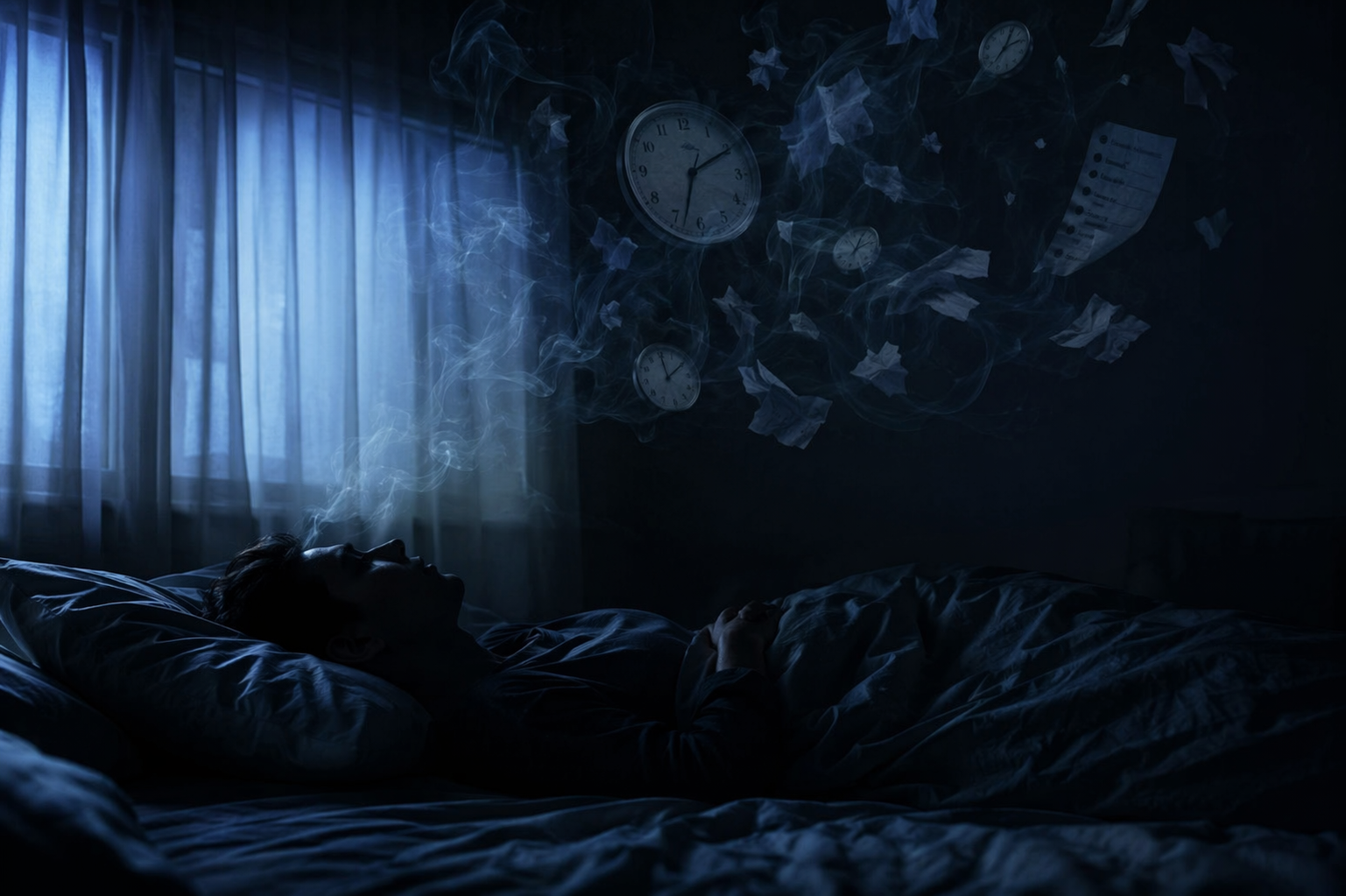
A New York bedroom has its own nightly weather. Some nights the window is the relief valve for a stale apartment; other nights it is the thing letting in truck exhaust, boiler-season grime, or the faint campfire smell that now means smoke has traveled hundreds of miles. The practical question behind “nyc air quality effects on sleep” is not whether the city air feels unpleasant. It is whether that air can change what happens after you turn out the light.
The short answer is yes, with an important caveat: no single controlled study has mapped New Yorkers’ sleep, block by block, against neighborhood pollution exposure. The case is built from two pieces of evidence that fit together: New York City’s own air monitoring shows real local variation in pollutants, and broader sleep research links those pollutants to worse sleep outcomes. That is enough to treat air quality as a sleep variable, especially on nights when the bedroom is pulling in outdoor air.
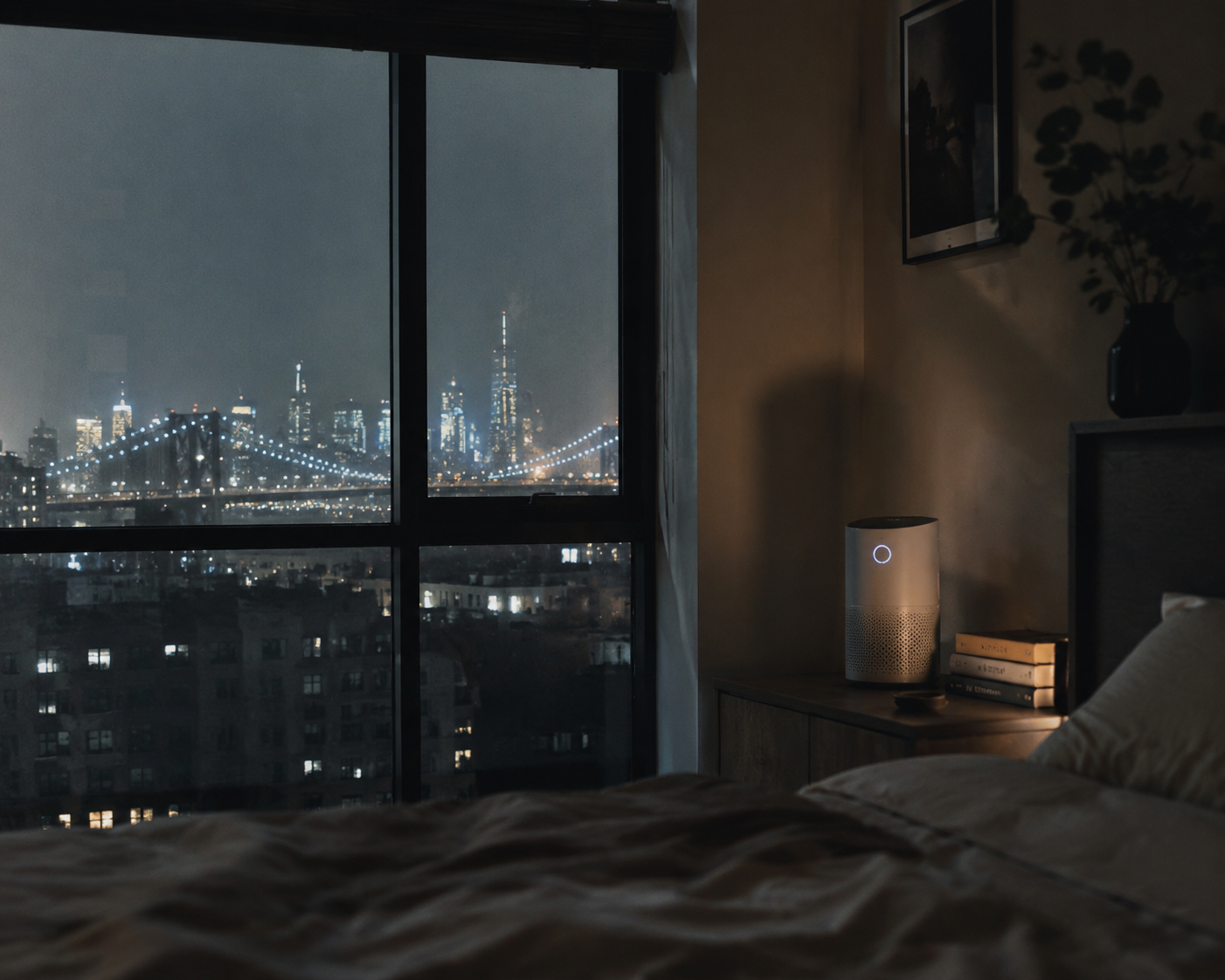
The Citywide Average Hides the Bedroom Problem
New York City’s real-time air quality dashboard has reported an annual PM2.5 value around 5.8 micrograms per cubic meter, a number that can sound almost reassuring until it is paired with the way exposure actually works in apartments: by street, floor, window orientation, season, and hour of day.[1] PM2.5 is fine particulate matter small enough to travel deep into the lungs; it is not the only pollutant that matters, but it is one of the clearest measures for the kind of air that can follow you indoors.
The city’s neighborhood air quality tools show that exposure is not evenly shared.[2] A bedroom near the BQE, the Cross Bronx, or a busy truck route is not living with the same air as a bedroom facing a courtyard or a quieter side street. East Harlem and the South Bronx matter in this conversation not as shorthand for “urban pollution,” but because location, building condition, traffic density, and income often decide who has the fewest easy ways to avoid exposure.
Nitrogen dioxide, or NO2, adds another traffic-shaped layer. NYC’s average NO2 figure is 14.7 parts per billion, and studies cited in the sleep-pollution literature have associated NO2 exposure with higher odds of low sleep efficiency.[3] Sleep efficiency is not a vibe; it is the share of time in bed actually spent asleep. If you are in bed for eight hours but keep surfacing into half-wakefulness, that number falls.
Then there are spikes. During July 15–18, 2026, Canadian wildfire smoke pushed New York City air into “unhealthy” AQI levels and triggered public health advisories from state and city officials.[4] That episode is worth remembering because it made the bedroom decision visible: close the window and trap heat, open it and invite smoke, run the AC if you have it, run a purifier if you own one, or spend the night negotiating bad options.
How Dirty Air Becomes Broken Sleep
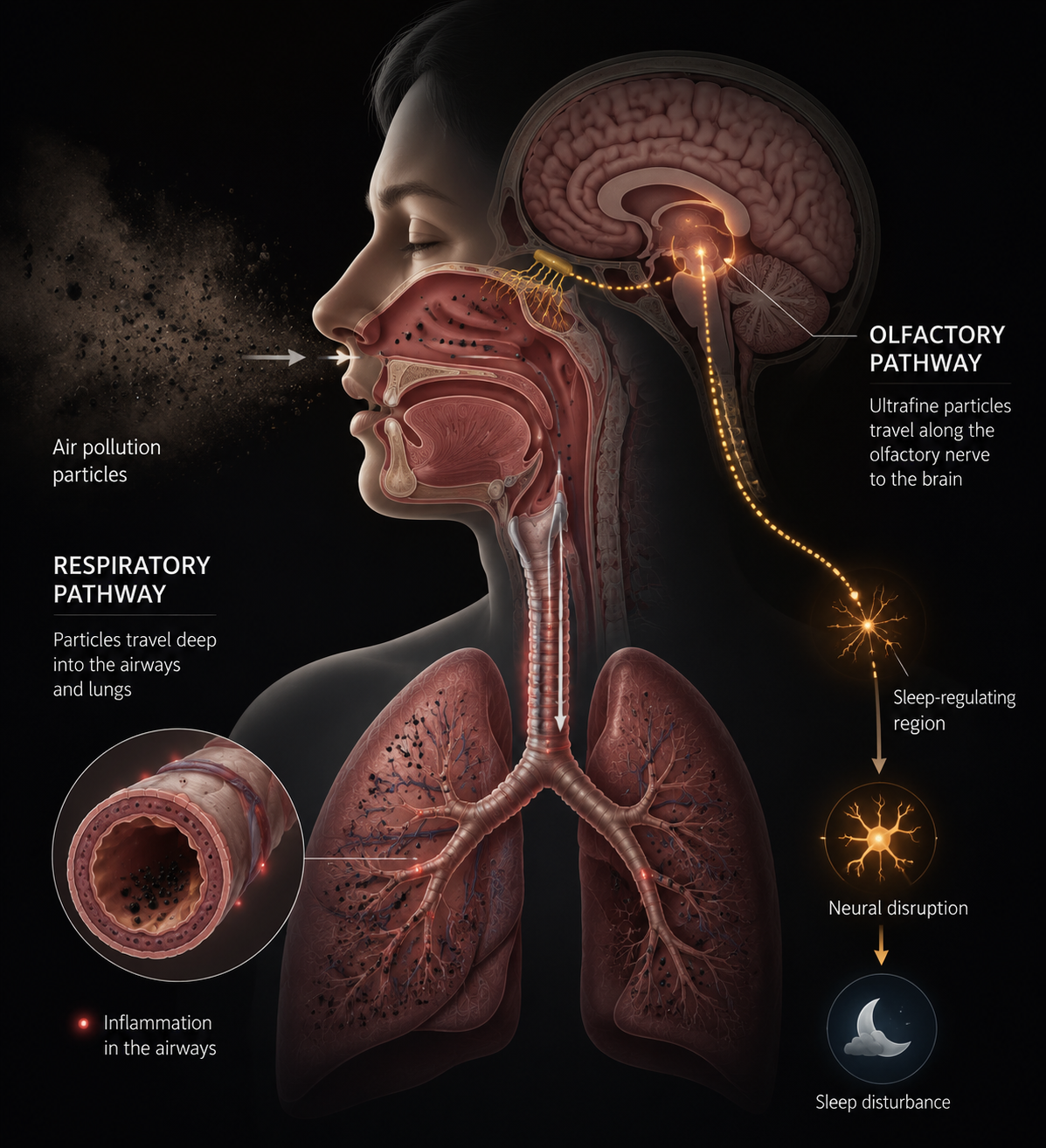
The most believable version of the air-and-sleep link starts in the airway. Fine particles and irritating gases do not need to make you dramatically sick to matter at night. They can inflame nasal passages and lower airways, increase congestion, aggravate asthma or allergy-like symptoms, and make breathing more effortful just when sleep depends on stable, quiet respiration.
That matters because sleep is built out of continuity. When the airway is irritated, the body may shift into lighter sleep, micro-awaken more often, or spend less time in deeper stages. You may not remember each interruption. You may only notice the next morning: dry throat, heavier head, a sense that the night was long but not restorative.
The broader evidence points in the same direction. A 2020 systematic review looked at 22 studies across 17 countries and found that 21 of the 22 reported a positive association between air pollution and poor sleep outcomes.[3] That does not mean every polluted night ruins sleep for every person. It does mean the pattern is too consistent to dismiss as just annoyance or city-dweller folklore.
A 2025 global metastudy sharpened the population-level estimate. Covering about 1.2 million people across six countries, it found that cutting PM2.5 exposure in half could reduce the likelihood of poor sleep by roughly 1 in 10 among middle-aged and older adults.[5] That is not a promise that one person will sleep 10% better after one good air decision. It is a public-health-sized signal: cleaner air appears to move sleep outcomes in the right direction.
A newer bedroom-level study makes the issue harder to keep outside the apartment. In a 2026 Scientific Reports field study of 163 young adults, each unit increase in bedroom PM2.5 was associated with a lower proportion of deep sleep, with a reported beta of -0.19 and p value of 0.03, independent of other measured environmental factors.[6] The sample was not a cross-section of New York renters, and it should not be stretched into a citywide claim. Its value is more specific: the air in the room where people sleep appears to matter, not just the regional pollution reading.
There is also a neurological pathway that helps explain why smoke or fine particles can feel different from ordinary stuffiness. Ultrafine particles may reach the central nervous system through routes that include the olfactory nerve, and pollution-related inflammation may influence neurochemical systems involved in sleep regulation.[7] This is one reason wildfire smoke can disturb sleep even when someone is not coughing all night: the stress on the body is not confined to the nose and lungs.
The EPA explicitly lists sleep disruption among documented mental health effects of smoke exposure.[8] That phrasing matters. Smoke does not need to act through only one channel. It can irritate breathing, raise worry, worsen heat stress when windows stay shut, and make the bedroom feel less safe as a recovery space.
Why the Same AQI Does Not Mean the Same Night
Citywide AQI is useful, but it is blunt. A monitor may describe the regional air; your lungs experience the air that reaches your bed. Street-facing bedrooms, leaky windows, ground-floor apartments, older buildings, nearby idling, and cooking or smoking inside the building can all change the air that is actually in the room.
Winter changes the equation. Building heating, stagnant indoor air, and fewer open-window hours can make an apartment feel stale even when wildfire smoke is not in the picture. Summer can bring the opposite trap: heat makes ventilation tempting, while smoke or ozone-heavy days make outdoor air less helpful. For older adults, people with asthma or COPD, pregnant people, infants, and children, the margin for a bad choice is narrower.
Researchers at Mount Sinai have been examining the intersection of air pollution, stress, and sleep inequities among children in East Harlem, in an ongoing community-engaged project.[9] That kind of work belongs in the conversation because sleep exposure is not only biological. It is also logistical. A parent can know the air is bad and still lack a quiet back-facing room, an effective AC filter, a sealed window, or the money to run another device all night.
The Bedroom Workflow That Actually Helps
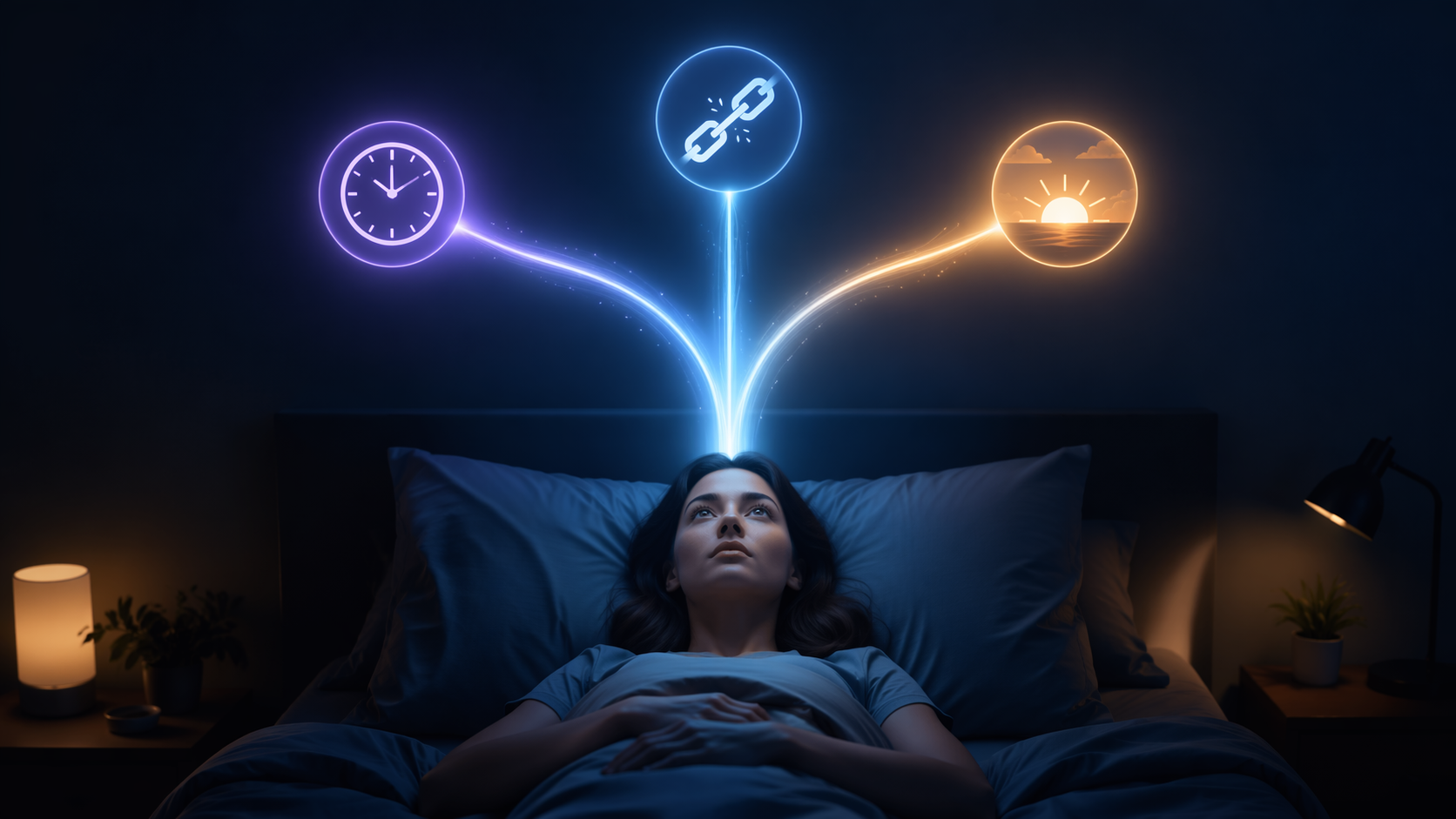
The useful goal is not to make a New York bedroom pure. It is to reduce the number of nights when outdoor pollution, indoor buildup, and poor ventilation stack up around sleep. That starts a few hours before bed, not at 2 a.m. when the room is already hot, smoky, or stale.
| Before bed | What to check | Likely decision |
|---|---|---|
| Normal or good local air | Hyperlocal AQI and whether the window faces traffic | Ventilate earlier in the evening or briefly before sleep if the room is stale |
| Traffic-heavy evening | NO2 or roadway exposure, rush-hour timing, street-facing windows | Use shorter ventilation windows, favor courtyard or rear windows if available, and filter bedroom air |
| Wildfire-smoke day | PM2.5 and smoke advisories | Keep windows closed as much as heat safety allows and run filtration if available |
| Cold heating-season night | Indoor stuffiness, outdoor AQI, boiler or street odors | Ventilate strategically when outdoor air is cleaner, then close up and filter |
Hyperlocal checking matters because the decision is usually window-specific. If citywide air is good and your apartment is stale, ventilation may help sleep by lowering indoor irritants and heat. If PM2.5 is elevated from smoke, opening the window can trade discomfort for exposure. If the issue is traffic, timing matters: airing out a room away from peak roadway activity is different from sleeping next to an open street-facing window through the busiest hours.
For smoke nights, PM2.5 should carry more weight than the desire for “fresh air.” For traffic nights, the calculus is more local: a rear window may be a different tool from a front window, and a short airing-out period may be less costly than leaving the bedroom open all night. For stale winter apartments, the best move may be brief ventilation when outdoor readings are favorable, followed by closed-window filtration while sleeping.
Where HEPA Filtration Fits
A HEPA purifier is most defensible as exposure reduction, not as a guaranteed sleep treatment. That distinction keeps expectations sane. If a purifier lowers bedroom particles, it may reduce one stressor on the airway and nervous system. Whether that turns into noticeably better sleep depends on the person, the room, the pollutant source, the device size, noise tolerance, filter condition, and whether air is leaking in faster than the purifier can clean it.
The sleep-specific purifier evidence is promising but small. The Lamport 2022 randomized crossover trial ran for two weeks with 30 participants and tested portable air filtration in the home; it is useful because it brings the intervention close to real bedrooms, but it is still underpowered for sweeping sleep claims.[10] A more recent consumer-facing report described nightly purifier use in relation to sleep quality and blood pressure, including a modest sleep gain of about 12 minutes per night in one study, but those findings should be read as early evidence rather than proof that a device fixes urban sleep.[11]
- Run the purifier in the bedroom with the door mostly closed before and during sleep, especially on smoke or high-PM2.5 nights.
- Size the unit for the actual room, not the whole apartment, because the bed zone is the intervention target.
- Use a setting you can tolerate all night; a louder high setting that gets turned off at midnight is not the practical winner.
- Replace filters on schedule, because a neglected purifier becomes more of an appliance-shaped wish than a control measure.
For renters, the smaller fixes can be more realistic than whole-apartment upgrades: weatherstripping a leaky window if the lease allows it, moving the bed away from the draft path, using a rear room during smoke episodes, or setting a purifier closer to the sleeping area without blocking airflow. None of that solves the BQE, the Cross Bronx, or an old boiler. It can still change the air a person breathes for seven hours.
When Bad Sleep Is Not Just an Air Problem
Air quality can be a real sleep stressor without being the only explanation. Snoring, witnessed pauses in breathing, nighttime wheezing, chest tightness, morning headaches, severe insomnia, or daytime sleepiness that interferes with life deserve medical attention. Pollution can aggravate breathing and sleep continuity, but it should not become a reason to self-explain symptoms that need evaluation.
The practical takeaway is simple enough to use: NYC air quality can plausibly and measurably affect sleep, especially through fine particles, traffic-related gases, airway inflammation, and possible nervous-system pathways. The best response is targeted management on the nights and in the rooms where exposure is highest. Check the local air before opening the bedroom window. Treat smoke and traffic as different problems. Use HEPA filtration as a way to reduce particles, not as a miracle sleep cure. Aim for fewer high-exposure nights around the bed, then judge whether your own sleep changes.
References
- Real-Time Air Quality Monitoring, NYC Department of Health, link
- Your Neighborhood's Air Quality, NYC Department of Health, link
- The association between air pollution and sleep: A systematic review, PMC, link
- Air Quality Health Advisory Issued for New York City Region, NYC Emergency Management, link
- Air pollution can affect how well we sleep, scientists discover, The Guardian, September 19, 2025, link
- Association between bedroom PM2.5 exposure and sleep architecture in young adults, Scientific Reports, 2026, link
- Wildfire Smoke and Sleep, Sleep Foundation, link
- Symptoms and Mental Health Effects of Smoke Exposure, EPA, link
- Community-engaged project examining air pollution, stress, and sleep inequities in East Harlem children, Mount Sinai Exposomics, link
- Portable air filtration and sleep: Lamport 2022 randomized trial, PubMed, 2022, link
- Nightly Air Purifier Use May Improve Sleep Quality and Blood Pressure, Health.com, link

Comments
Join the discussion with an anonymous comment.