
Most parents do not ask whether their child’s sleep is perfect. They ask a more useful question: is this normal for this age, or is it becoming a problem? A baby who wakes at night, a preschooler who appears at the bedroom door, a school-age child who snores, and a teenager who cannot fall asleep before midnight do not belong in the same category. Each can be ordinary in one setting and concerning in another.
That is why the sleep and pediatric health journey is better understood as a developmental route than as a single bedtime target. Sleep duration, naps, circadian timing, nighttime behaviors, and daytime consequences all shift as the child grows. The map matters because it helps parents decide when to wait, when to adjust the environment, and when to bring the pattern to a clinician.

The Five-Stage Sleep Roadmap
The sleep ranges below are not a grading system. They are a calibration tool. A child slightly outside a range may still be healthy, while a child inside the range may still be struggling if sleep is fragmented, poorly timed, or followed by daytime impairment. The American Academy of Sleep Medicine recommendations, endorsed by the American Academy of Pediatrics and summarized by the American Academy of Family Physicians, give parents a starting point for age-specific expectations.[1]
| Stage | Typical Sleep Range | Main Transition Or Vulnerability | What Parents Usually Notice |
|---|---|---|---|
| Infants, 0-12 months | Newborns commonly need 14-17 hours; infants 4-12 months commonly need 12-16 hours including naps | Sleep architecture matures and sleep consolidates; naps often shift from 3 to 2 around 6 months | Night waking, changing nap rhythm, difficulty separating hunger, comfort, and sleep association |
| Toddlers, 1-3 years | 11-14 hours including naps | Naps often shift from 2 to 1 around 15 months; bedtime resistance becomes more visible | Stalling, repeated requests, separation distress, inconsistent night waking |
| Preschoolers, 3-5 years | 10-13 hours including naps | Many children drop naps between ages 3 and 5; parasomnias and bedtime behavioral insomnia are common concerns | Nap refusal, overtired evenings, night terrors, sleepwalking, parent-child bedtime struggles |
| School-age children, 6-12 years | 9-12 hours | Sleep becomes tied more clearly to school-day alertness, behavior, learning, and breathing concerns | Morning difficulty, attention problems, snoring, restless sleep, bedtime pushed later by activities or screens |
| Teenagers, 13-18 years | 8-10 hours | Circadian timing shifts later while school schedules often remain early | Late sleep onset, short school-night sleep, weekend catch-up sleep, daytime sleepiness |
The same AAFP review places several common pediatric sleep problems in developmental context: bedtime behavioral insomnia affects about 10% to 30% of young children, obstructive sleep apnea affects about 1% to 5% of children and often peaks in the preschool and school-age years, parasomnias may affect up to 50% of children, and delayed sleep phase affects about 7% to 16% of adolescents.[1] These ranges are broad because studies define sleep problems differently. Still, the age pattern is clinically useful.
Infancy: Sleep Is Still Organizing Itself
Infant sleep is often exhausting precisely because it is still developing. Newborn sleep is distributed across day and night, and families gradually watch for longer stretches, more predictable naps, and a clearer day-night rhythm. The recommended range is generous for a reason: early infancy includes rapid neurologic growth, feeding needs, and immature circadian regulation.
The practical anchors are not a perfect schedule but consolidation and nap transitions. Many infants move from about three naps to two around 6 months, then continue toward more predictable daytime sleep across the first year.[1] Some nights improve and then worsen again during illness, travel, separation anxiety, or developmental change. A few disrupted nights are not, by themselves, a diagnosis.
Parents should pay closer attention when sleep difficulty is persistent, when feeding and growth concerns accompany night waking, when breathing sounds labored, or when the child seems unusually hard to arouse or consistently unable to settle. In infancy, the question is often less “Why won’t this baby sleep through the night?” and more “Is the overall pattern becoming more organized, safe, and sustainable?”
Toddlers And Preschoolers: The Noisy Middle Of The Journey
Toddler and preschool sleep can look more dramatic than it is. A child who has words, opinions, mobility, and a growing sense of separation can turn bedtime into a negotiation. The 1-to-3-year range of 11 to 14 hours and the 3-to-5-year range of 10 to 13 hours include naps, which means a late or long nap can shift the whole evening.[1]
This is the stage when bedtime behavioral insomnia often becomes obvious. The child may need a parent present to fall asleep, leave the room repeatedly, delay with requests, or wake at night and require the same conditions that were present at bedtime. The behavior can be miserable for the household without being mysterious. Young children are learning where sleep happens, what happens after lights out, and how consistent the adults are when everyone is tired.
Nap changes also complicate the picture. A toddler may be ready to move from two naps to one around 15 months, while many preschoolers drop naps between ages 3 and 5.[1] During the transition, bedtime may temporarily become worse: a child who naps too late may not be sleepy at bedtime, while a child who drops a nap too soon may become overtired and dysregulated by evening.
Parasomnias add another layer. Night terrors, sleepwalking, and confusional arousals can frighten parents because the child may look awake but remain disoriented and hard to comfort. Parasomnias are reported in up to 50% of children, with night terrors commonly seen in the 4-to-8-year window.[1] Occasional events in an otherwise thriving child are different from frequent, dangerous, injurious, or highly disruptive episodes.
For this age group, first-line help is usually behavioral rather than medication. The AAFP review, citing Choosing Wisely guidance, notes that consistent bedtime routines and behavioral interventions are first-line for childhood insomnia, not hypnotic medications.[1] That does not mean parents should be handed a cheerful routine chart and sent away. It means the intervention should match the pattern: limit-setting problems, sleep-onset associations, fear, nap timing, and family constraints are not the same problem.
School-Age Sleep: Daytime Function Starts Telling The Story
By elementary school, the night increasingly shows up in the day. A 6-to-12-year-old generally needs 9 to 12 hours of sleep, but the number of hours is only one clue.[1] Parents and teachers may notice morning battles, irritability, falling asleep in the car, difficulty focusing, declining school performance, or behavior that looks more like defiance than fatigue.
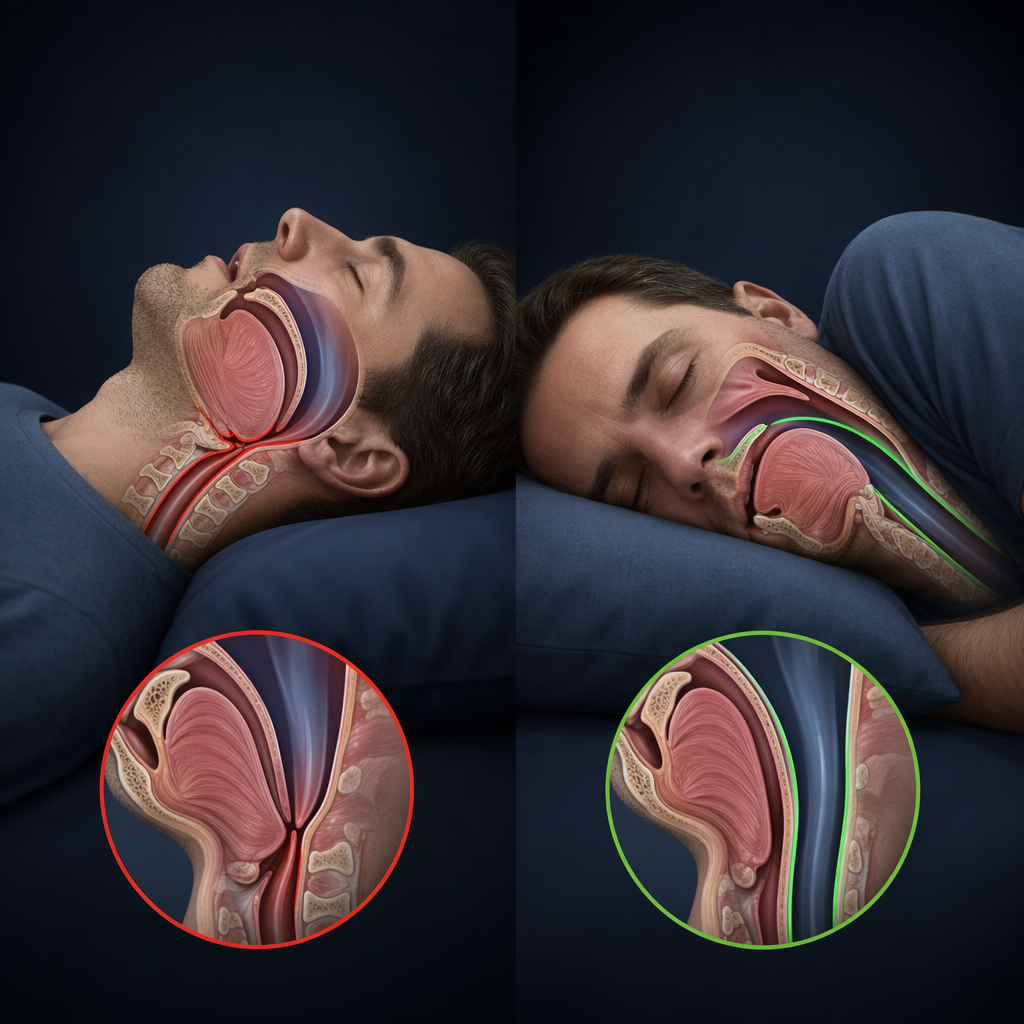
This is also a stage when breathing during sleep deserves specific attention. Pediatric obstructive sleep apnea affects about 1% to 5% of children and is often linked to enlarged tonsils and adenoids in the preschool and school-age years.[1] Snoring is not automatically sleep apnea, but habitual loud snoring, gasping, pauses in breathing, restless sleep, morning headaches, bedwetting after a child had been dry, or significant daytime behavior concerns should prompt a pediatric conversation.
School-age sleep can also be squeezed from the outside. Homework, sports, shared bedrooms, family schedules, neighborhood noise, and evening screens may all push sleep later. The important distinction is whether the child can sleep well when given the opportunity. A child who stays up because the schedule is overloaded needs a different response from a child who has adequate opportunity but cannot fall asleep, wakes repeatedly, snores heavily, or struggles to stay alert.
Teenagers: A Later Clock Meets An Early World
Adolescent sleep is often judged as laziness, but the biology is not that simple. Teenagers still need 8 to 10 hours of sleep, while their circadian timing tends to shift later.[1] That later sleep drive collides with early school start times, homework, extracurriculars, jobs, social life, and phones that make night feel socially active.
The scale of short sleep in high school is large. CDC data cited by the AAFP review found that 68% of U.S. high school students slept 7 hours or less on school nights.[1] That number measures school-night sleep duration, not whether every teen has a sleep disorder. It does show that insufficient sleep is common enough that parents should not treat chronic weekday exhaustion as a quirky personality trait.
Delayed sleep phase is one clinical pattern to watch in adolescence, affecting about 7% to 16% of teens.[1] The hallmark is not simply preferring to stay up late. It is a persistent mismatch: the teen cannot fall asleep until very late, struggles to wake for required morning obligations, and may sleep much later when allowed. When that pattern harms school attendance, mood, safety, or family functioning, it deserves more than another argument about willpower.
Hours Matter, But They Do Not Tell The Whole Story
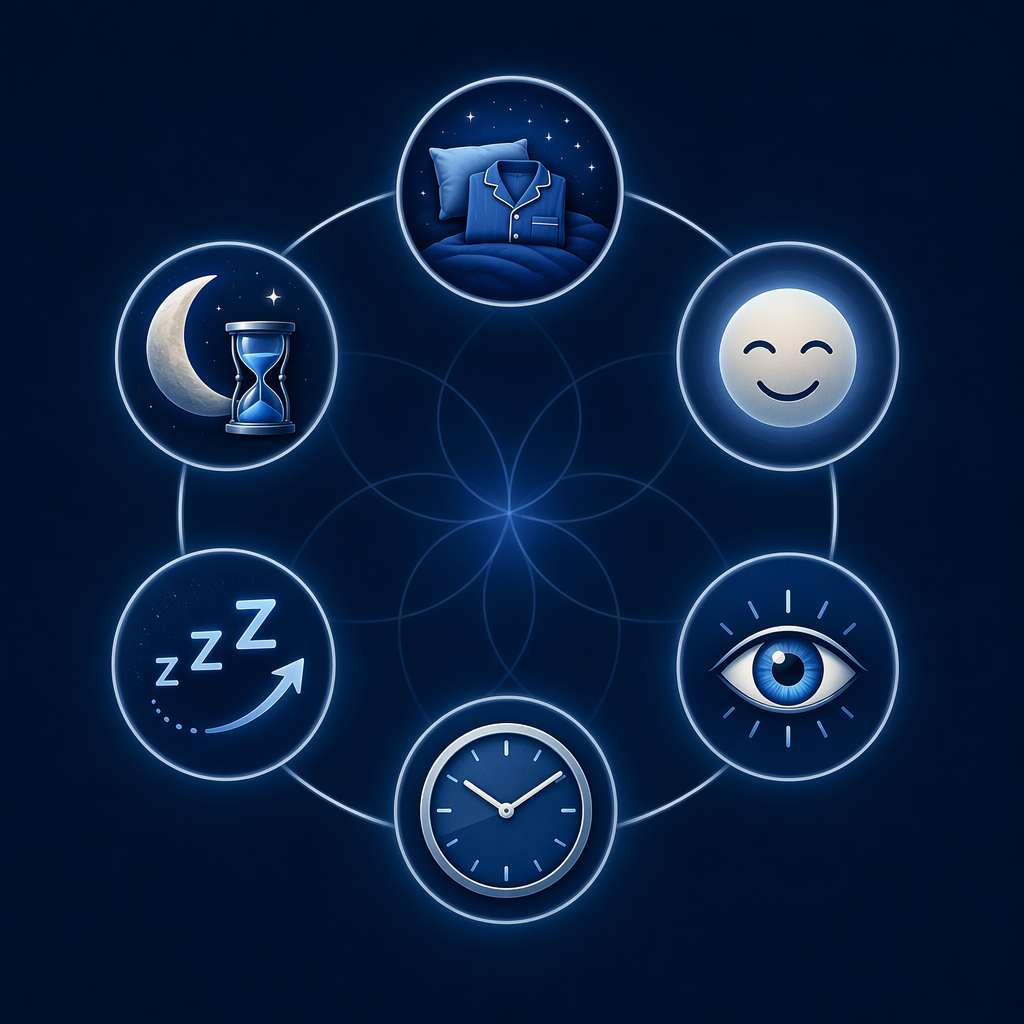
A duration chart is useful, but pediatric sleep health is broader than “Did my child get enough hours?” The Peds B-SATED framework describes six dimensions: Behaviors, Satisfaction, Alertness, Timing, Efficiency, and Duration.[2] That framework is helpful because it fits how sleep problems actually arrive in family life. Parents rarely see a number first. They see a bedtime battle, a cranky morning, a child who looks tired at school, or a weekend sleep pattern that no longer resembles the weekday one.
| Sleep Health Dimension | Parent-Friendly Question |
|---|---|
| Behaviors | What does the child need in order to fall asleep, and is that pattern sustainable for the family? |
| Satisfaction | Does the child or family experience sleep as restful enough, or is everyone distressed by it? |
| Alertness | Can the child stay appropriately awake and regulated during the day? |
| Timing | Is sleep happening at a time that fits the child’s age, school, and family obligations? |
| Efficiency | Is the child spending most of the time in bed asleep, or lying awake for long periods? |
| Duration | Is total sleep broadly consistent with age-based recommendations? |
This broader view prevents two common mistakes. One is ignoring a problem because the child is technically in bed for enough hours. The other is treating a normal developmental disruption as a failure because the child missed a recommended range for a few nights. A preschooler dropping a nap, a school-age child adjusting after travel, and a teenager recovering from a demanding week may all look irregular without having the same meaning.
When Normal Variation Starts Looking Clinical
The line between normal and concerning is rarely one bad night. It is usually persistence, intensity, developmental mismatch, or daytime cost. A toddler resisting bedtime for a week after a new sibling arrives is different from months of nightly battles that leave the child and caregivers impaired. A teen sleeping late on a Saturday is different from chronic inability to wake for school. A child who snores during a cold is different from habitual loud snoring with gasping or daytime behavior changes.
- Watch persistence: sleep difficulty that continues despite age-appropriate routines is more concerning than a short disruption.
- Watch daytime function: sleep that spills into learning, mood, behavior, safety, or family exhaustion deserves attention.
- Watch breathing: habitual snoring, pauses, gasping, labored breathing, or restless sleep should be discussed with a pediatric clinician.
- Watch developmental fit: night waking in infancy, nap changes in preschool, and later sleep timing in adolescence do not carry the same meaning.
- Watch escalation: dangerous sleepwalking, frequent night terrors, severe anxiety around sleep, or worsening school impairment should not be treated as routine.
The evidence connecting sleep with child development is strong enough to take seriously and still imperfect enough to discuss carefully. A 2025 systematic review describes sleep as both a developmental process and a mediator of outcomes including cognition, emotional regulation, and behavior, while noting that pediatric sleep research still relies heavily on cross-sectional designs and parent-report measures.[3] In other words, sleep matters, but not every association proves that sleep alone caused the outcome.
Some findings are especially useful for calibration. In children ages 9 to 10, one study cited in the review found that sleep duration mediated about 20% of screen time’s effect on problem behaviors, in a sample of 11,875 children.[3] Another study cited in the review linked shorter sleep in children with reduced gray matter volume in the prefrontal cortex and lower cognitive scores, in a sample of 11,067 children.[3] These are not instructions to panic over a late night. They are reminders that chronic sleep patterns sit inside a larger developmental system.
A Two-Week Diary Beats Guessing
When parents are tired, memory becomes a poor measurement tool. Was bedtime terrible every night, or three nights? Did the child wake for ten minutes or an hour? Is the teen sleeping five hours on school nights and twelve on weekends? A sleep diary turns a vague concern into a pattern a clinician can actually interpret.
The Canadian Paediatric Society’s 2025 position statement calls a two-week sleep diary the most useful diagnostic tool for sleep concerns in children and youth with neurodevelopmental disabilities, and the basic principle is broadly practical for families trying to clarify sleep patterns.[4] A useful diary does not need to be elaborate. It should capture bedtime, estimated sleep onset, night wakings, wake time, naps, snoring or breathing concerns, screens or caffeine when relevant, and daytime functioning.
| Track For Two Weeks | Why It Helps |
|---|---|
| Bedtime and lights-out time | Shows whether the routine is consistent or drifting |
| Estimated time to fall asleep | Helps separate bedtime resistance from insomnia or circadian delay |
| Night wakings and parent response | Clarifies sleep associations and fragmentation |
| Wake time on school days and free days | Reveals catch-up sleep and schedule mismatch |
| Naps | Shows whether daytime sleep is helping or delaying bedtime |
| Snoring, gasping, restless sleep, or unusual events | Flags patterns that may need clinical evaluation |
| Daytime mood, alertness, behavior, and school impact | Connects the night pattern to the child’s functioning |
Routine still matters, especially for younger children, but it should be used as a tool rather than a moral test. Seattle Children’s practical sleep guidance emphasizes predictable calming steps before bed, a consistent sleep location, and routines that can be repeated night after night.[5] The best routine is not the most elaborate one. It is the one the adults can keep using when the child is testing limits and everyone is already tired.
When To Bring Sleep Up With The Pediatrician
Parents do not need to diagnose a pediatric sleep disorder before asking for help. The job at home is to notice the pattern, consider the child’s developmental stage, and describe the consequences clearly. A pediatrician can then decide whether the concern fits a behavioral sleep problem, circadian rhythm issue, breathing disorder, parasomnia, medical condition, medication effect, mental health concern, or something else.
- Call sooner for breathing concerns, including habitual loud snoring, gasping, pauses in breathing, or labored sleep.
- Ask for help when sleep problems persist and affect mood, learning, attention, safety, school attendance, or family functioning.
- Discuss frequent or dangerous parasomnias, especially if the child leaves the bed, risks injury, or episodes are escalating.
- Bring up severe bedtime anxiety, prolonged sleep onset, or night waking that does not improve with consistent age-appropriate routines.
- For teenagers, seek guidance when late sleep timing repeatedly prevents school attendance, safe driving, emotional stability, or basic daytime alertness.
The useful goal is not to make every child sleep the same way. It is to keep expectations age-specific, judge sleep across more than duration, document the pattern when concern builds, and seek clinical evaluation when sleep problems are persistent, impairing, developmentally out of place, or suggestive of breathing trouble. Understanding the roadmap will not let parents diagnose every problem themselves. It will help them recognize what is ordinary, what is adjustable, and what deserves a pediatric conversation.
References
- Common Sleep Disorders in Children, American Family Physician, 2022
- What Sleep Health Means for Kids in 200 Words, CHOP PolicyLab
- Sleep as a Developmental Process, PMC, 2025
- Sleep matters: Supporting healthy sleep for children and youth with neurodevelopmental disabilities, Canadian Paediatric Society, 2025
- Good Night Sleep Routine, Seattle Children’s



Comments
Join the discussion with an anonymous comment.