
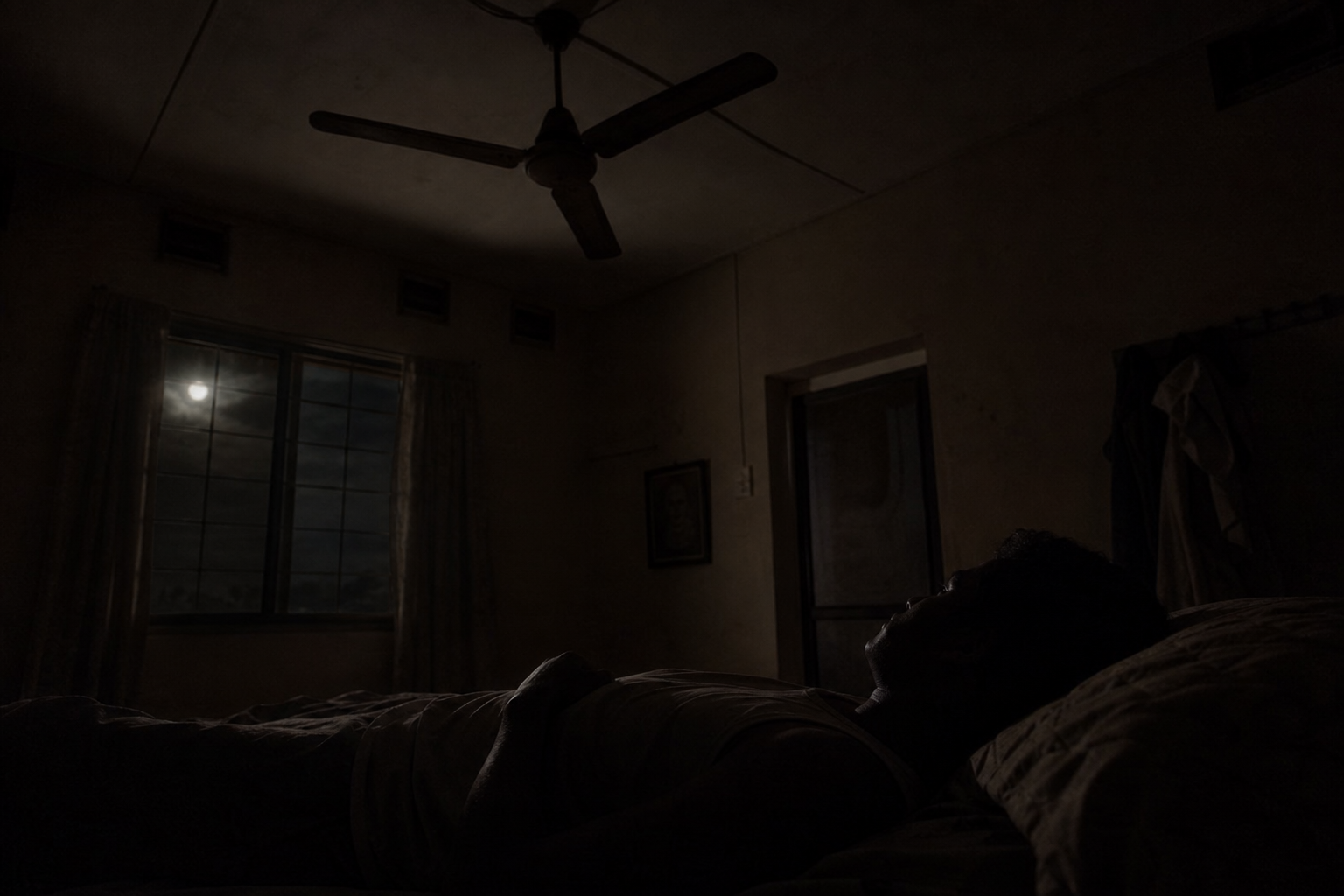
The strange part of a blackout night is that the house can become quieter and darker than usual, and sleep can still move farther away. The ceiling fan stops. The air turns thick. The refrigerator hum disappears. Every small decision starts to matter: whether to open the freezer, whether the phone has enough battery, whether the storm has passed or is only resting.
That is the shortest answer to how power outage affects sleep: it rarely disrupts just one sleep cue. It stacks several pressures at once. Your body is trying to cool down, your light signals are suddenly irregular, and your nervous system is monitoring safety instead of letting go. One bad night can feel wildly out of proportion because multiple sleep systems are being pushed in the wrong direction at the same time.
The outage removes the room your body was counting on
Sleep does not begin only in the brain. It begins in the body, and one of the body’s quiet requirements is a drop in core temperature. The sleep-onset process depends on the body shedding heat; the USC sleep-and-temperature research summarizes this as a need for roughly a 1–2°C decline in core temperature to initiate sleep. [1]
That detail explains why a powerless bedroom can feel so hostile even before panic enters the picture. When air conditioning shuts off, a fan stops moving air, and windows are useless because the outdoor air is still warm, the body loses its usual help in dumping heat. You may be lying still, doing nothing dramatic, and still be asking your physiology to perform a cooling step the room will not support.
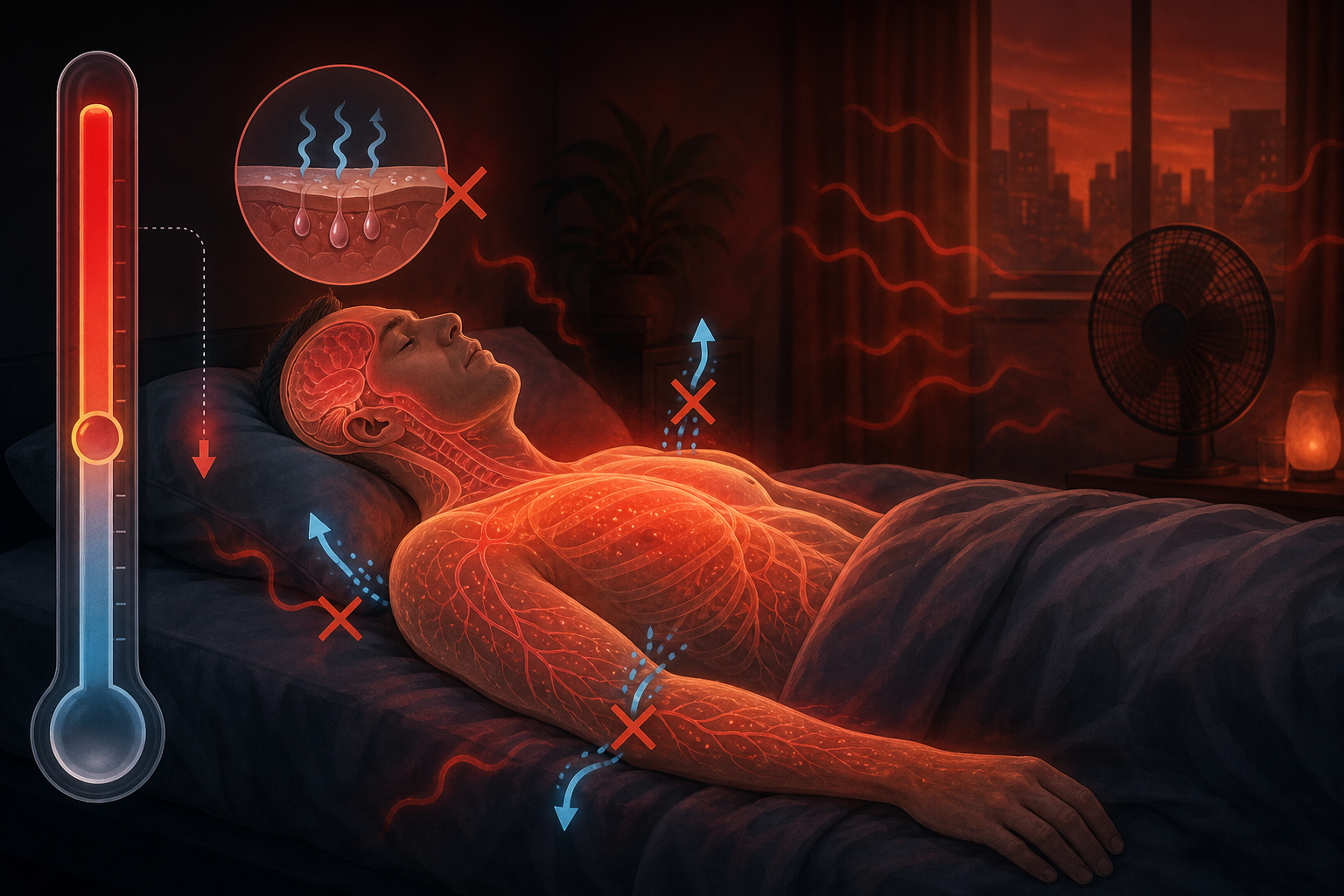
This is where heat research is useful, as long as it is not overstated. The USC study was not a blackout study. It did not measure people lying awake through an outage with dead fans and half-charged phones. It did find that warmer nights erode sleep: 10°C warmer nights were associated with 2.63 fewer minutes of sleep per night, and the researchers projected 8.5 to 24 hours of sleep lost per year by 2099 under warming scenarios. [1]
The number is modest at the nightly scale, but the mechanism matters here. A blackout during summer does not simply make the room unpleasant. It can interfere with one of the body’s entry requirements for sleep. That is why the person who usually falls asleep easily may feel bewildered: the bedtime routine is intact, but the thermal machinery underneath it is not.
This also explains why outage sleep trouble often has a different texture from ordinary restlessness. You may feel tired, heavy, and irritated, yet unable to cross the threshold into sleep. The body is not merely waiting for a calmer thought. It is waiting for conditions that allow heat to leave.
For readers dealing with repeated hot nights rather than one isolated outage, the same temperature pathway is explored more broadly in The Science of Climate Change and Sleep Loss and in Heat Advisory Symptoms That Sabotage Your Sleep. During an active outage, though, the practical point is narrower: heat is not background discomfort. It is one of the main reasons sleep initiation fails.
Storm-season outages make the sleep problem less rare
The reason this question keeps coming back in Q3 2026 is not that everyone has suddenly become fragile about sleep. Weather and outages now overlap often enough that more people are learning what a powerless hot night feels like. Climate Central reported that 83% of major U.S. power outages from 2000 to 2021 were weather-related. [2]
A Columbia Mailman School study in PLOS Climate found that nearly 75% of U.S. counties experienced co-occurrence of severe weather and major power outages between 2018 and 2020. [3] Those figures do not prove that any one person will sleep badly in any one blackout. They do explain why blackout sleep is no longer a niche concern reserved for unusually severe disasters.
The nervous system keeps checking the house
The second mechanism is stress physiology. It is easy to dismiss this as worry, but the body does not treat a blackout as an abstract inconvenience at 2 a.m. It treats it as uncertainty. Is the storm getting worse? Is the food safe? Is someone in the house dependent on powered medical equipment? Is the neighborhood dark because one transformer failed or because a larger system is down?
A sleeping body needs permission to stop monitoring. A blackout often withholds that permission. Cortisol and related arousal systems are built to keep attention available when safety is unclear. That is helpful if something actually requires action. It is miserable when the only available action is lying still in the dark, trying not to waste battery.
The outage-specific evidence here is not as clean as a laboratory sleep study, but it is consistent. The IIS.es Sleep Institute in Madrid reported increased consultations for insomnia and nightmares after the April 28, 2025 Iberian blackout. [4] That is a clinic observation after one event, not a population-wide estimate. Still, it fits the pattern many people recognize: after the lights return, the body may remain on alert.
A broader review of power outages and health found qualitative evidence linking outages with anxiety, stress, and reduced wellbeing, especially around concerns such as food, heat, and healthcare access during and after outages. [5] ABC News has also reported on the physical and mental health effects of outages, including the stress created when medical devices or health needs depend on electricity. [6]
That distinction matters because not every sleepless blackout night is caused by the same fear. For one person, the loudest concern is heat. For another, it is a child’s asthma equipment, refrigerated medication, a freezer full of food, or the possibility that the phone will die before an alert arrives. The sleep effect is similar because the nervous system is doing the same job: keeping watch.
This is why advice to simply maintain a routine can sound hollow during an outage. A routine can help only after the body believes the environment is sufficiently safe and stable. If the mind is repeatedly checking the window, the phone, the hallway, and the weather radar, the sleep system is not failing because it forgot good habits. It is being overruled by a monitoring system with priority access.
For storm-specific anxiety, Why You Can't Sleep During Storms (It's Not the Noise) and Why Hurricane Anxiety Wrecks Your Sleep and What Actually Works go deeper into the hyperarousal side. The important point here is that outage stress is not separate from sleep biology. It is sleep biology under a different command.
The light problem is stranger than just darkness
A blackout can remove artificial light, and that is the one part of the night that could theoretically help some sleepers. Modern evenings are often too bright for too long. A 2019 review explains that short-wavelength blue light in the 2 to 4 hours before bed can suppress melatonin through the melanopsin pathway. [7]
So there is a real paradox: when the grid goes down, some artificial light exposure disappears. A Live Science first-person account from 2011 described a sleep-cycle shift during a power outage, with expert commentary discussing how removal of electric light can bring people closer to natural light-dark timing. [8] That account is interesting, not definitive. It should not be stretched into a claim that blackouts improve sleep in general.
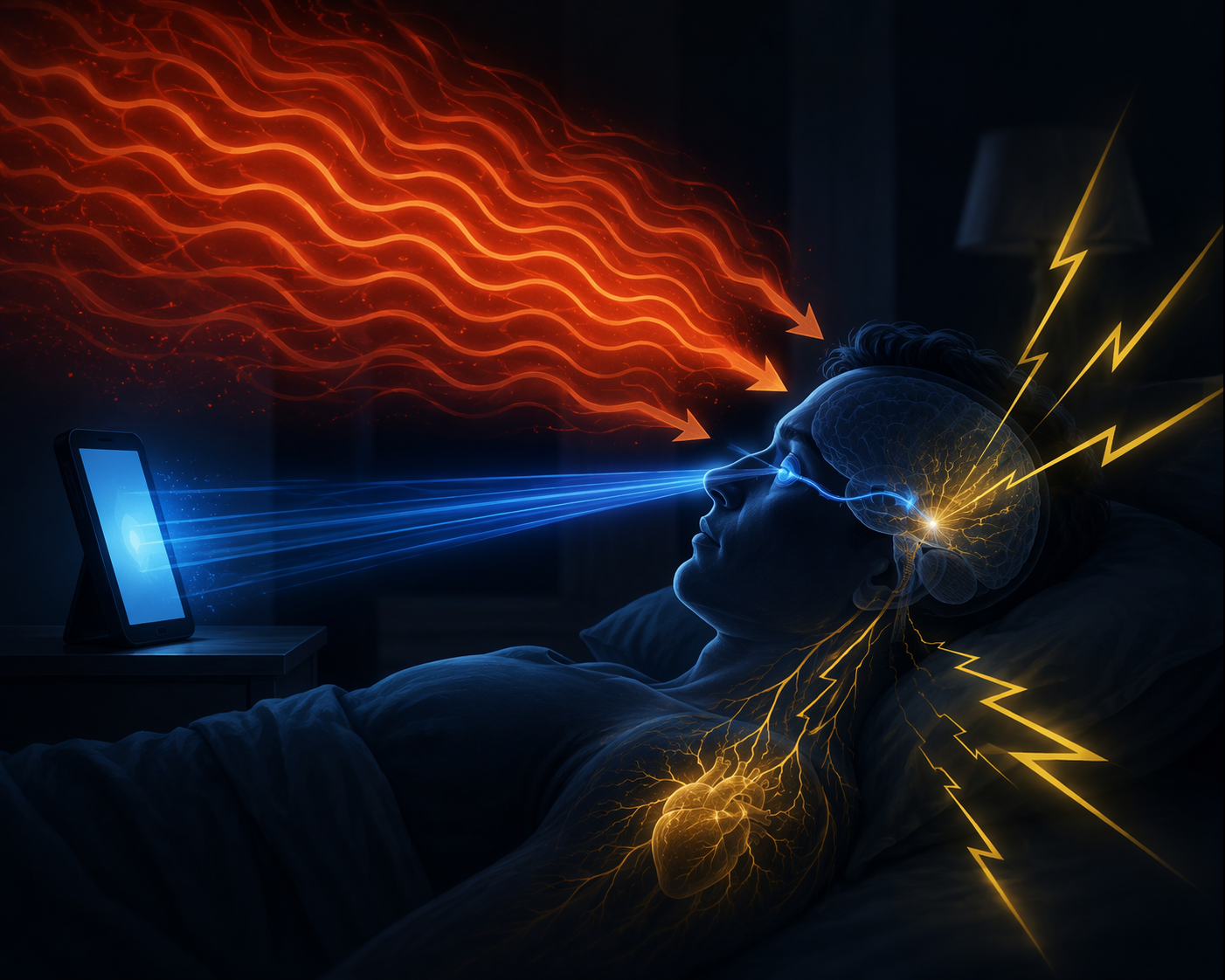
In a real outage, darkness is rarely clean darkness. The phone often becomes the only lamp, the only clock, the only weather report, and the only connection to the utility company. That means the eyes may get concentrated bursts of bright screen light at exactly the part of the evening when the circadian system is most sensitive. The house is dark, but the face is lit.
This is different from ordinary bedtime scrolling. During an outage, the phone is not just entertainment; it feels operational. Checking it can seem necessary. Each check may bring information, but it can also delay the internal signal that night has arrived. The result is a mixed circadian message: less ambient electric light, more urgent close-range screen light, and no confidence that the next alert can wait until morning.
Why one night can feel bigger than one missed bedtime
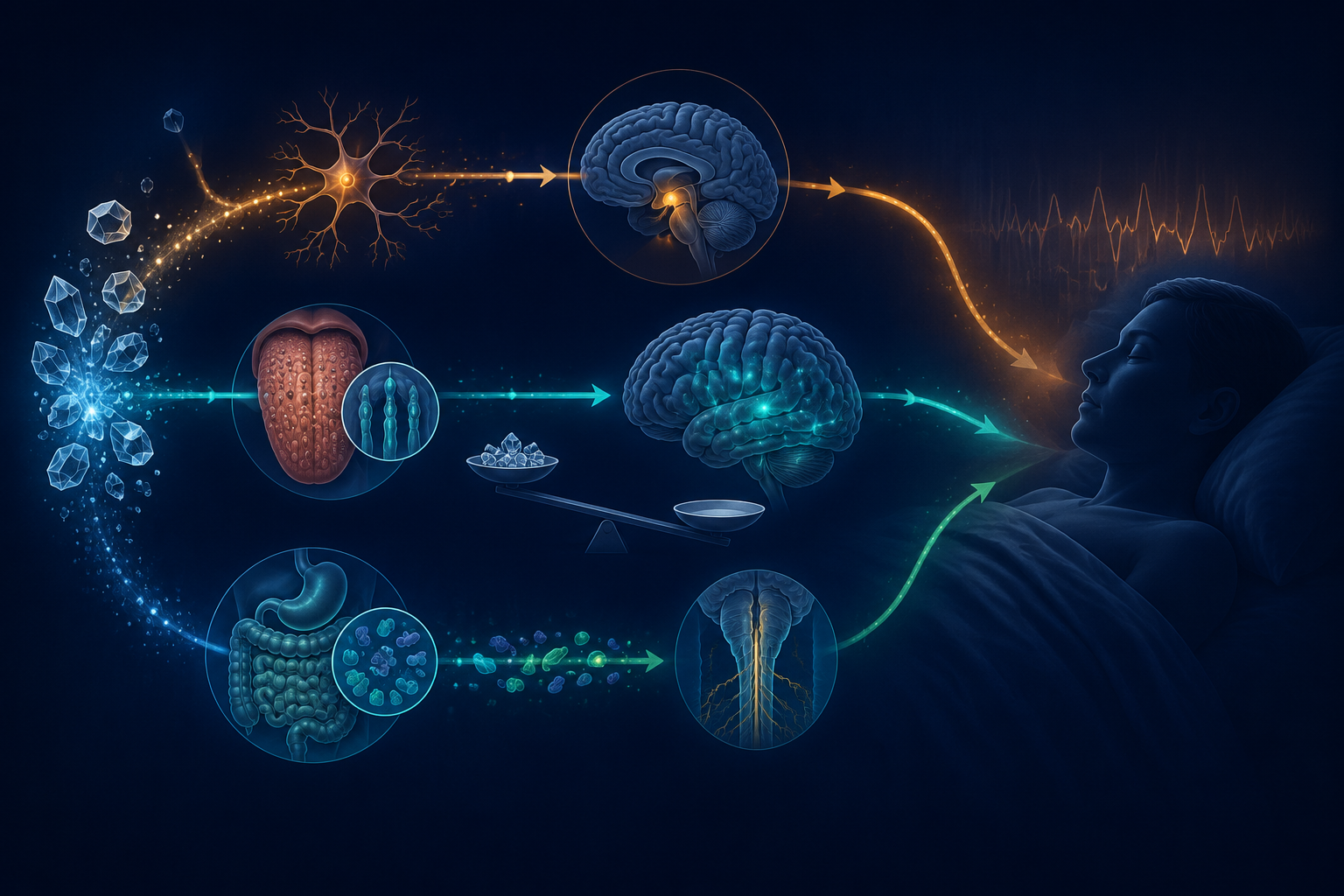
The severity comes from overlap. Heat blocks the body’s cooling process. Stress keeps the nervous system in a surveillance mode. Light signals become inconsistent because the normal evening environment disappears and the phone replaces it. Any one of those can disturb sleep. Together, they can make a normally decent sleeper feel as if their body has abruptly forgotten how to shut down.
| Outage change | Sleep system affected | What it can feel like |
|---|---|---|
| Air conditioning or fans stop | Core temperature regulation | Tired but too hot or physically restless to fall asleep |
| Storm damage, food safety, medical needs, or battery limits become uncertain | Stress and cortisol-linked arousal | Quiet room, active mind, repeated checking |
| House lights disappear but phone use increases | Circadian light signaling | Dark bedroom, bright screen, delayed sleepiness |
There is also a social mismatch afterward. Once power is restored, the event may be described as brief: the lights were out for a night, nothing more. But the body experienced the night as total. It lost climate control, reliable information, ordinary cues, and a sense of environmental control in the same window when sleep requires passivity.
That does not mean a single outage has caused chronic insomnia. Acute situational insomnia can be intense and still resolve when the conditions resolve. The concern rises if sleeplessness persists after power is back, if nightmares or panic continue, or if heat exposure, medical needs, or storm danger remain active. At that point, the problem is no longer just the memory of a bad night.
If power has returned and your body is still running as if the outage is ongoing, move next to How to Sleep After Power Outage Recovery. If another storm is approaching, Hurricane Preparedness Sleep Strategies for Every Phase and How to Sleep Safely During a Tropical Storm Landfall are better places for safety-oriented planning. The explanation here is simpler and more bodily: a blackout night feels so disruptive because sleep is not waiting on one switch to flip back on.
References
- Study links rising temperatures to reduced sleep in U.S. adults, Keck School of Medicine of USC, Dec 2025.
- Surging Power Outages and Climate Change, Climate Central.
- Severe Weather and Major Power Outages Increasingly Coincide Across U.S., Columbia Mailman School of Public Health.
- How the April 28 blackout affected sleep: anxiety, stress and tips to recover, IIS.es Sleep Institute.
- Power Outages and Community Health: a Narrative Review, Current Environmental Health Reports, 2020.
- How power outages can affect physical and mental health, ABC News.
- Effects of light on human circadian rhythms, sleep and mood, Somnologie, 2019.
- Power Outage Created a Sleep Cycle, Live Science.
Comments
Join the discussion with an anonymous comment.