
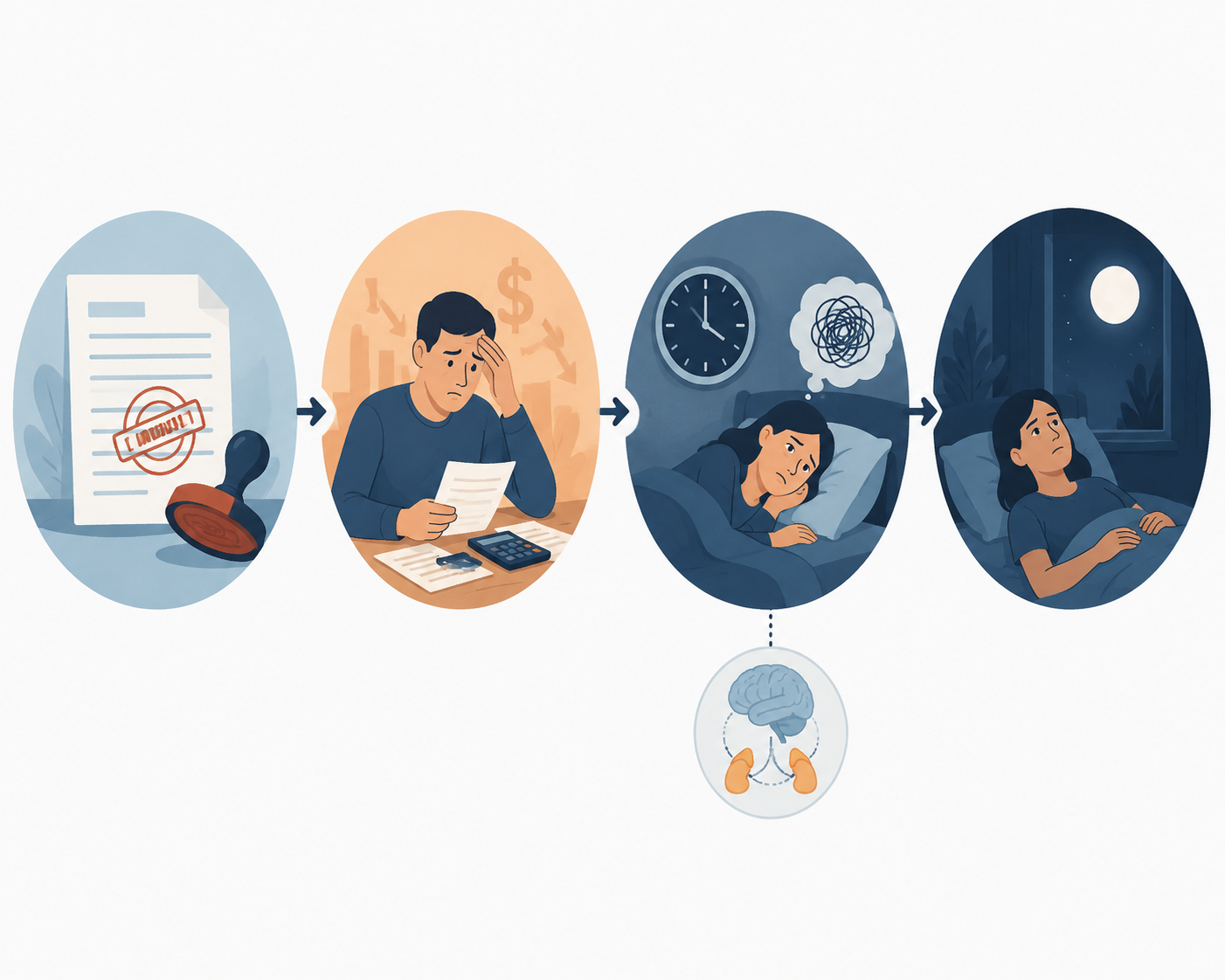
If your PSLF was blocked and you suddenly cannot sleep, that is not a personal failure. It fits a specific stress-to-insomnia cascade: a real financial threat gets carried into bedtime, bedtime worry keeps the body on alert, and sleep starts breaking down.[1]

For teachers, nurses, county workers, nonprofit staff, and other public servants, a blocked forgiveness application is not just another line item. It is the kind of problem that keeps demanding attention after the office is closed: checking the portal again, rereading eligibility rules, replaying whether one missing form just cost years of planning. Public trackers have reported PSLF denial rates in the 90s, including historical estimates as high as 99% and a 2025 estimate still showing 93% denied.[2][3] Protect Borrowers has also collected firsthand accounts from service members denied earned forgiveness, which makes the betrayal feel less like inconvenience and more like a broken promise.[4]
That kind of stress is common enough to show up in sleep surveys. Sleep Foundation reported that 77% of respondents lose sleep to financial worries, the American Academy of Sleep Medicine found 87% up at night over financial and health-related worries, and a 2026 JG Wentworth survey put the share at 94.6%, with respondents losing an average of 2.2 hours of sleep on 2.7 affected nights per week.[5][6][7] The JG Wentworth numbers are directional rather than definitive because the survey came from a debt-relief company, but they still point in the same direction: money stress often reaches the pillow.
Student loan debt already had a sleep problem before PSLF entered the picture. In one CNBC/Acorns report, borrowers rated student loan debt 2.84 out of 5 for sleep disruption, and more than 60% said it hurt their mental health.[9] A blocked forgiveness decision turns that background strain into something sharper, because it removes the expected exit ramp.
How the stress reaches bedtime
The clearest mechanism evidence comes from a Rice University study published in December 2025. In Army and Air National Guard members, economic stress predicted more stress at bedtime, and bedtime stress predicted more insomnia symptoms, lower sleep satisfaction, and greater daytime impairment over nine months.[1] The population is not the same as civilian PSLF borrowers, so the safe reading is not that every teacher or nurse will follow the exact same course. The useful conclusion is narrower and still important: a concrete financial stressor can move through a predictable sequence from daytime pressure to nighttime rumination to measurable sleep loss.
That sequence is what people recognize in themselves when the lights go out. The day may have been survivable, even numb, until the brain starts running the file one more time: Did the employer certification count? Was the appeal complete? What happens if the next review comes back wrong? The problem is not just thought content. It is timing. The mind starts doing threat work right when sleep needs threat detection to shut down.
Sleep Foundation's explanation adds the body piece: chronic financial worry can keep the HPA axis activated, which helps keep cortisol and arousal high enough to interfere with sleep onset and deeper sleep.[8] That is why blocked PSLF can feel bigger at 11:30 p.m. than it did at 2:00 p.m. During the day, there is structure, motion, and distraction. At night, the unresolved debt question becomes the loudest thing in the room.
What helps at the point where the loop starts
This is not the moment for generic sleep advice that could apply to anyone. The useful move is to interrupt the PSLF loop where it restarts, not to pretend the loop is imaginary.
- Give PSLF a daytime container. Pick one window for forms, calls, appeals, and portal checks, then stop there. The point is to keep the administrative threat from spreading into bedtime.
- Write the next action, not the worst-case story. Before bed, put one line on paper: what gets checked tomorrow, what document is missing, or who gets called next. Externalizing the task reduces the brain's need to rehearse it in bed.
- Do not use the bed as the place where you solve the loan problem. If the portal check or appeal draft starts turning into late-night analysis, stop the session before you lie down.
- If you are awake and replaying forms, get out of bed briefly and do something boring until drowsy returns. That is a better fit here than forcing yourself to stay in bed and fight the thoughts.
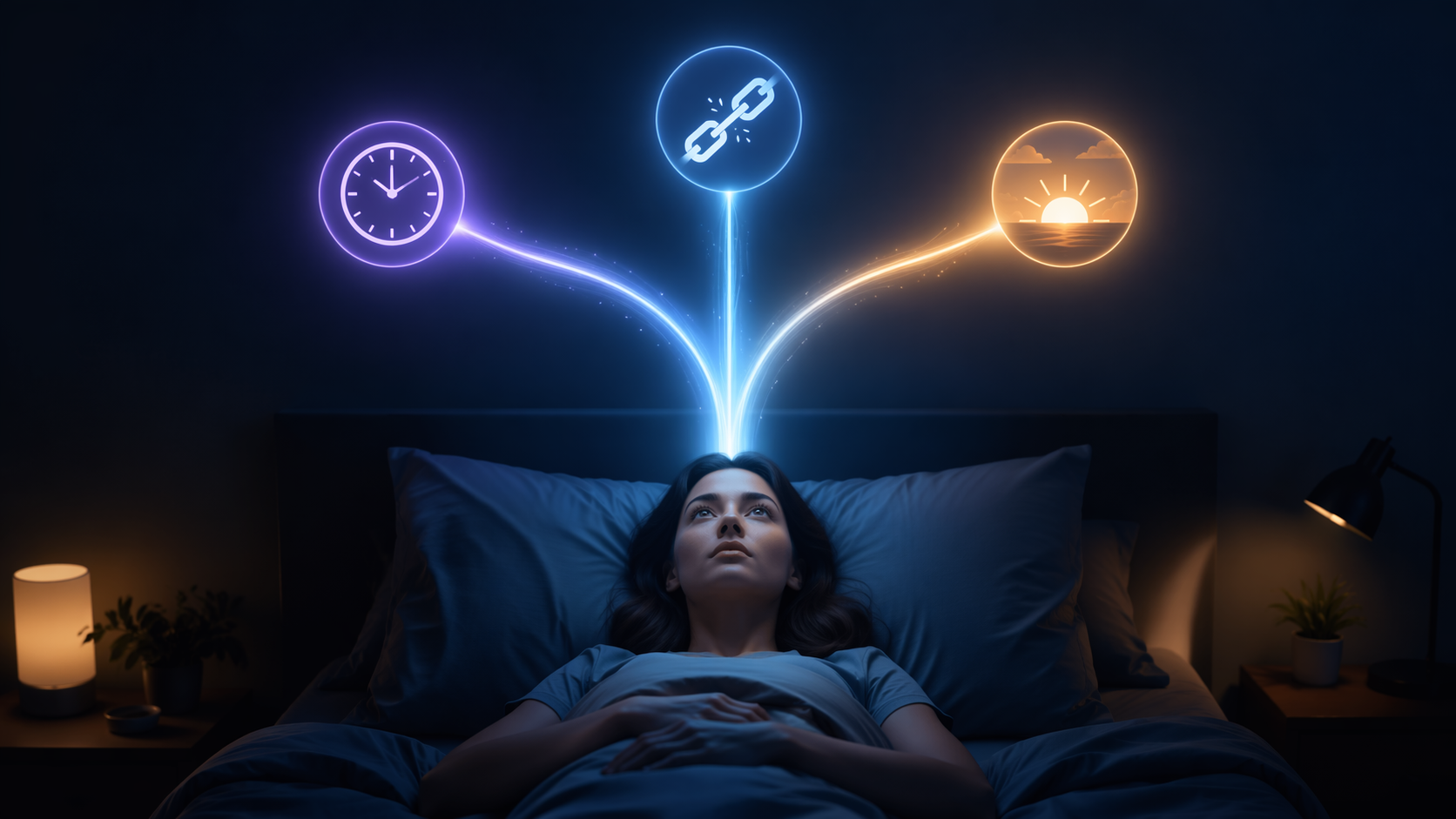
- If the pattern keeps repeating, CBT-I is the sleep treatment that matches this problem best, because it targets the learned bed-equals-rumination link rather than just telling you to relax.
When it deserves clinical help
If insomnia is hanging around most nights for weeks, if you are starting to rely on alcohol or extra sedatives to get through bedtime, or if the repeated checking and rehearsing has become the only way you can settle down, it is worth talking with a clinician or sleep specialist. The goal is not to make the PSLF problem vanish. It is to keep a documented stress response from hardening into a separate sleep disorder.
References
- “Losing sleep over money? Rice study reveals how financial stress follows workers to bed” Rice University, December 2025
- “PSLF Statistics” Student Loan Planner
- “Student Loan Forgiveness Statistics” EducationData.org
- “PSLF Borrower Voices: Spotlighting Servicemembers Denied Earned Loan Forgiveness” Protect Borrowers
- “77 Percent Lose Sleep to Financial Worries” Sleep Foundation
- “Financial and Health-Related Worries Keeping Americans Up at Night, Survey Shows” American Academy of Sleep Medicine
- “Debt & Sleep” JG Wentworth, April 2026
- “Stress and Insomnia” Sleep Foundation
- “Student Loan Debt Hurts the Mental Health of Most Borrowers” CNBC, January 29, 2022




Comments
Join the discussion with an anonymous comment.