
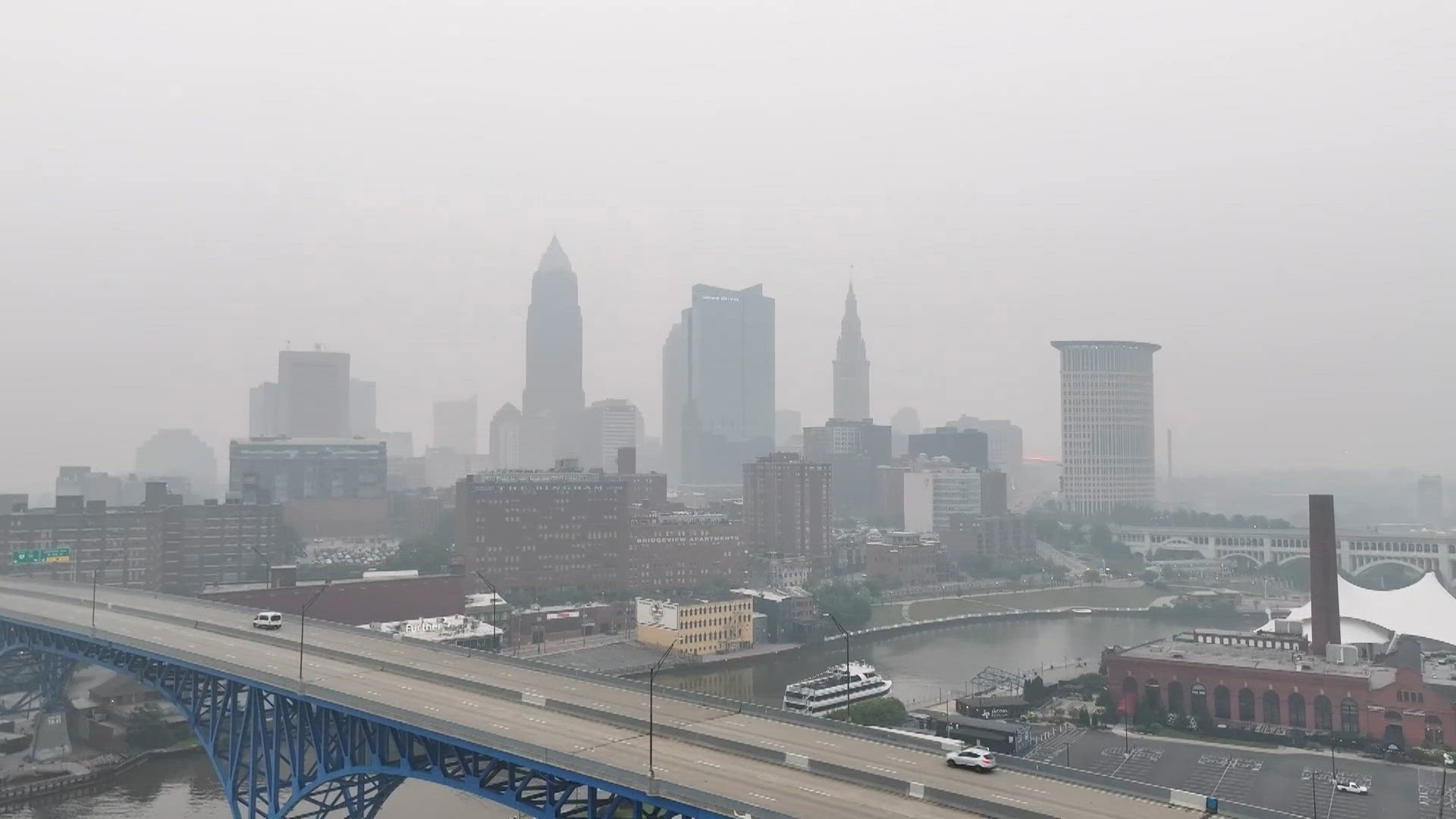
If you left Cedar Point during the July 2026 smoke event and then slept badly that night, the timing is not necessarily a coincidence. Canadian wildfire smoke pushed Sandusky air into a hazardous range, with an Air Quality Index reading of 340 reported at noon on Friday, July 17, 2026; Cedar Point had also closed early on July 16 as smoke affected the area.[1] That single AQI number does not describe every hour of exposure or every monitoring station, but it does make one thing plain: this was not ordinary summer haze.
The sleep impact many Cedar Point visitors are now noticing has a credible biological explanation. Fine particles from wildfire smoke can irritate the nose, throat, and lower airways before bedtime, then continue to disturb breathing after the lights are off. They may also affect the nervous system in ways that make sleep feel lighter, more fragmented, or oddly restless. A long day outside, a disrupted park schedule, and the stress of smoke can all add to the problem, but they are not the whole story.
Why the smoke followed you into bed
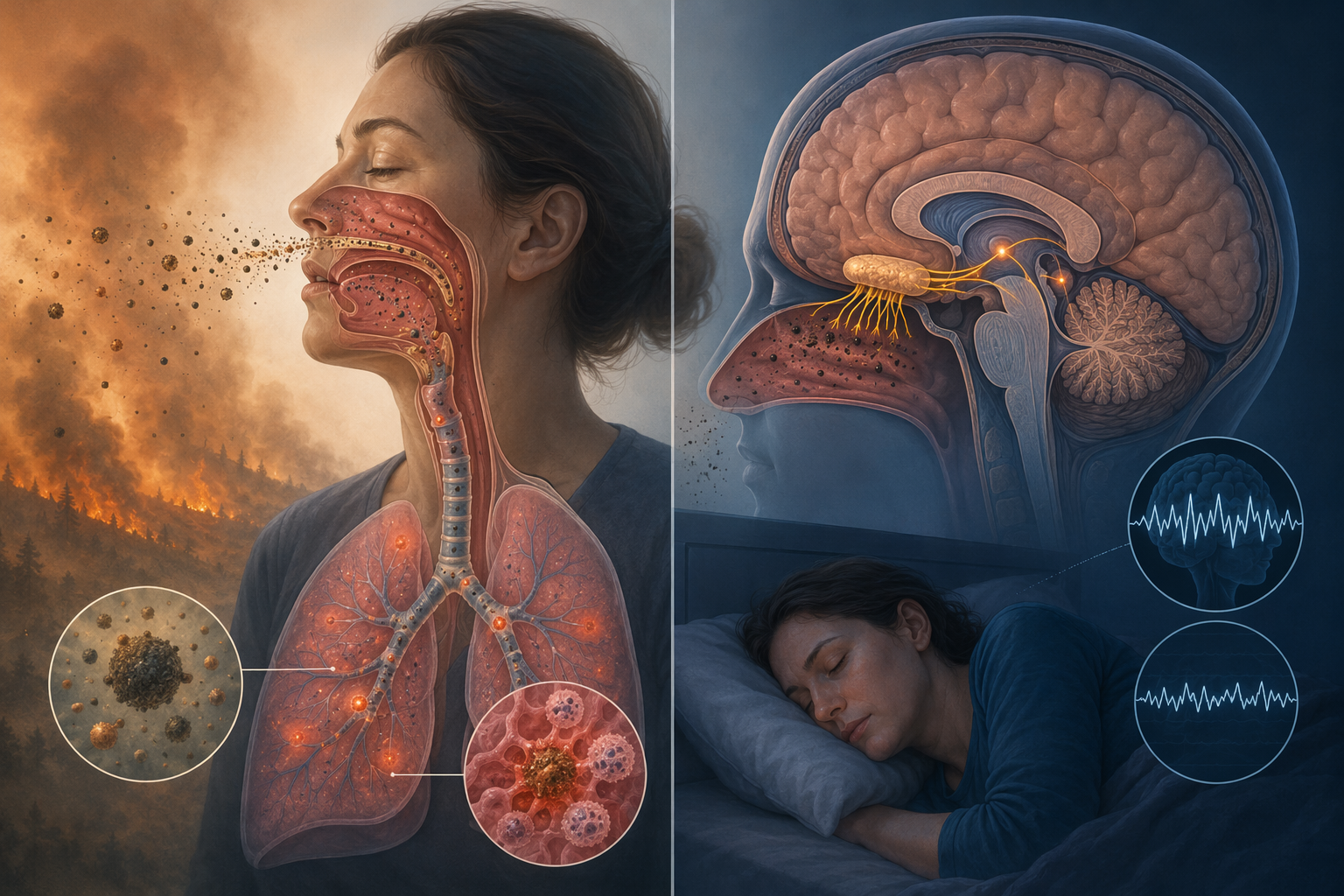
Wildfire smoke is a mixture, but PM2.5 is the part that matters most for sleep after an exposure like this. These particles are small enough to move deep into the respiratory tract. Once there, they can set off inflammation and irritation that do not politely end when you shower, change clothes, or drive away from Sandusky.
At night, even mild airway swelling becomes more consequential. Nasal passages that felt merely stuffy at dinner can narrow further when you lie down. More mouth-breathing can dry the throat. Snoring can increase. If someone already has sleep apnea, asthma, chronic bronchitis, allergic rhinitis, or a tendency toward nighttime congestion, smoke exposure can make the breathing channel more unstable.
That is how a daytime air-quality event becomes a sleep event: the body keeps waking just enough to reopen the airway, shift position, cough, swallow, or breathe through congestion. The person may not remember every awakening. They may only wake in the morning feeling unrefreshed, headachy, dry-mouthed, or surprised that their sleep tracker shows more restlessness than usual.
This pathway is not speculative. A systematic review by Liu and colleagues, published in 2020, reviewed 22 studies on air pollution and sleep; 21 reported positive associations between air pollution exposure and sleep outcomes such as poorer sleep quality, shorter sleep duration, and more sleep-disordered breathing.[2] The review covered studies available through October 2019, so it should not be treated as a Cedar Point-specific study or as proof that every exposed visitor slept badly. It does show that the pattern people are describing after smoke exposure fits a larger body of sleep research.
For a broader explanation of the same pathways, see why wildfire smoke disrupts your sleep. The Cedar Point event is the local trigger; the sleep biology is the same reason smoke nights can feel rough even when a person never develops a dramatic cough.
The airway route: congestion, snoring, and fragmented sleep
The first place many people feel wildfire smoke is the nose. PM2.5 and other irritants can inflame nasal lining and airway tissue, which can lead to congestion, throat irritation, coughing, and heavier breathing during sleep.[3][4] The same exposure can be much more disruptive at night than it seemed in the park because sleep already relaxes the muscles around the upper airway.
A narrowed nose shifts more breathing to the mouth. A drier throat increases the urge to swallow or cough. Swollen airway tissue can make snoring louder or more frequent. In people prone to obstructive sleep apnea, a smoke-irritated airway can raise the chance of breathing interruptions or oxygen dips. The result is not just "bad sleep" as a mood; it is sleep broken into smaller pieces by breathing effort.
This is also why the same smoke event can produce very different nights in the same household. One person may wake once with a dry throat. Another may snore all night. A child may sleep restlessly and wake congested. An older adult or someone with heart or lung disease may have more serious symptoms from a similar outdoor exposure because their reserve is lower.
Children deserve special caution because their airways are still developing and they breathe more air relative to body weight. Pregnant readers, older adults, and people with asthma, COPD, cardiovascular disease, or known sleep apnea should also treat post-smoke breathing changes as more than an annoyance.
The brain route: why you may feel tired and wired
The other part of the story is neurological. Fine particulate matter has been discussed in sleep-health sources as capable of entering the central nervous system through the olfactory pathway, and wildfire-smoke exposure has been associated with neuroinflammation and possible serotonin disruption.[3] That matters because serotonin is involved in sleep-wake regulation, mood, and breathing control during sleep.
This does not mean a single Cedar Point visit caused a lasting neurological injury. The narrower, better-supported point is that smoke exposure can plausibly push the nervous system toward arousal while the airways are also irritated. That combination helps explain the strange complaint many people make after smoke: exhausted, but unable to settle; asleep, but waking often; in bed long enough, but not restored.
Stress can sit on top of that. A park closing early, visibility changing, alerts going off, or a long drive home through haze can keep the brain scanning for threat. If that part feels familiar, why wildfire smoke keeps your brain on high alert at night goes deeper into the arousal side. The important distinction is that anxiety is not required for smoke-related sleep disruption; it can be an amplifier, not the only cause.
What to do the night after exposure
Recovery should target the two problems smoke creates: particle load and irritated breathing. Broad reassurance is less useful than making the bedroom a cleaner-air zone for the next few nights.
| Goal | What to do before bed | Why it helps |
|---|---|---|
| Reduce particles in the sleep space | Keep windows closed, run HVAC on recirculate if available, and use a HEPA air purifier in the bedroom | Less overnight particle exposure gives irritated airways a better chance to calm down |
| Clear the upper airway | Use nasal saline irrigation before bed if congestion or smoke irritation is present | A clearer nose can reduce mouth-breathing, dryness, snoring, and awakenings |
| Avoid adding sleep strain | Keep the room cool and return to a consistent bedtime and wake time | Stable timing helps the sleep system recover without adding circadian disruption |
| Treat lingering congestion carefully | Consider an antihistamine if congestion persists and it is appropriate for you | Congestion control may help breathing, but medication choice depends on health status and side effects |
A portable HEPA unit belongs as close to the sleep problem as possible: in the bedroom, running before bedtime and through the night if the sound is tolerable. Oregon State University Extension reports that HEPA air purifiers can reduce indoor particle concentrations by up to 45% during wildfire smoke events.[5] That figure is not a promise for every room; room size, filter condition, fan setting, leakage, and how often doors open all matter. Still, filtration is one of the few steps that directly reduces the exposure continuing while you sleep.
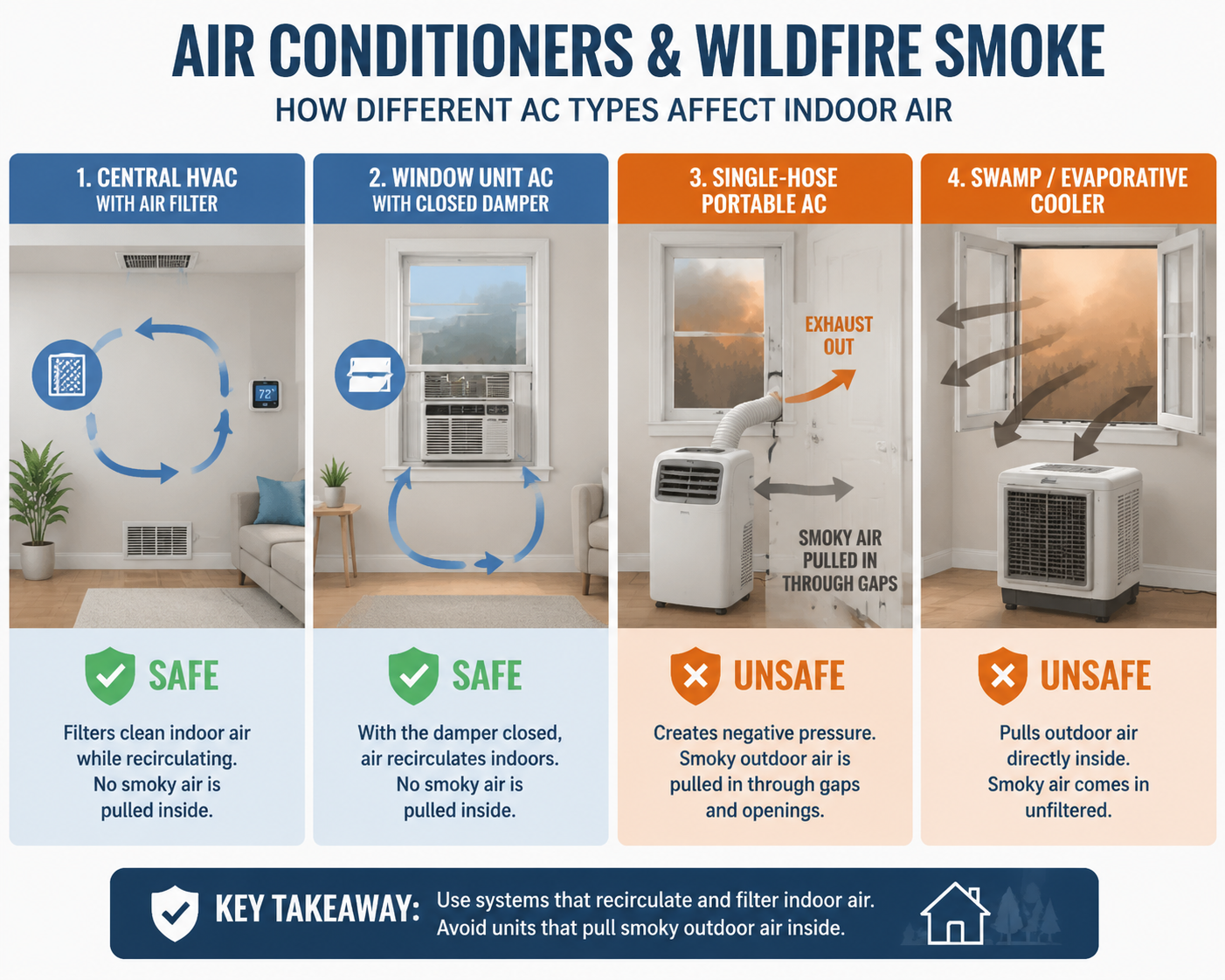
Closed windows matter even if the night air feels cooler. During a smoke episode, outdoor air can still be particle-heavy air. If your HVAC system allows it, recirculation reduces the amount of outdoor air pulled inside. If the home has a good filter, make sure it is seated properly and not overdue for replacement.
Nasal saline irrigation is a practical bridge between the daytime exposure and the nighttime symptom. It will not remove particles already deep in the lungs, but it can rinse irritants and mucus from the nasal passages. For someone whose main complaint is waking congested, snoring more, or mouth-breathing after the Cedar Point smoke, this is often more targeted than adding another generic sleep tip.
Antihistamines require more care. They may help if congestion persists, especially for people whose smoke exposure overlaps with allergic rhinitis, but some can cause next-day grogginess, interact with other medications, or be a poor fit for certain medical conditions. If you are pregnant, older, managing heart rhythm issues, glaucoma, urinary retention, or already taking sedating medications, ask a clinician or pharmacist before using one as a sleep workaround.
Sleep timing still matters, but it should not crowd out the air-quality steps. Keep the room cool, avoid a late alcohol night after smoke exposure, and return to your usual wake time as soon as possible. If the early closure or changed travel plan threw off your schedule, wildfire-smoke event cancellations and sleep may help separate schedule disruption from smoke symptoms. For a fuller routine once the air is cleaner, use sleep hygiene fundamentals and an evidence-based bedtime routine.
How long this should last
For many otherwise healthy adults, the sleep disruption after a short smoke exposure should ease as the airways calm down and the bedroom air improves. The first night can be the worst because irritation, travel fatigue, and schedule disruption arrive together. The next few nights are a test of whether symptoms are fading or becoming something that needs attention.
Do not self-manage breathing difficulty, chest pain, wheezing, or worsening shortness of breath. People with asthma, COPD, heart disease, pregnancy, known sleep apnea, or a child with labored breathing should use a lower threshold for medical advice. If sleep remains markedly disrupted for more than a few days after the smoke exposure, especially with congestion, cough, wheeze, or repeated gasping awakenings, it is time to contact a clinician.
The most calibrated answer is also the most useful one: the hazardous smoke around Cedar Point is a plausible reason your sleep got worse, but the response should be specific rather than dramatic. Reduce particles in the bedroom, clear the irritated upper airway, protect your sleep timing, and escalate when breathing symptoms or prolonged sleep disruption stop looking like a short-term recovery problem.
References
- Cedar Point closes early due to poor air quality - Beacon Journal / cleveland.com - July 2026 - link
- The association between air pollution and sleep: A systematic review and meta-analysis - Liu et al. - 2020 - link
- Wildfire Smoke and Sleep - Sleep Foundation - link
- Air pollution and obstructive sleep apnea: A systematic review and meta-analysis - 2024 - link
- Protecting indoor air quality during wildfire smoke events - Oregon State University Extension - EM 9379 - link


Comments
Join the discussion with an anonymous comment.