
The hard part of cyclospora-related fatigue and sleep disruption often starts when the obvious crisis begins to fade. The diarrhea may be less explosive. You may be eating a little more. Someone may even say you are “getting better.” But if you are still waking at 3 a.m. with bowel urgency, muscle cramps, a racing mind, or the need to check whether symptoms are coming back, that improvement can feel theoretical.
CDC’s own symptom guidance leaves room for this uneven recovery: fatigue can continue after gastrointestinal symptoms have stopped.[1] That matters in 2026, when CDC surveillance has reported more than 1,645 confirmed cyclosporiasis cases, 141 hospitalizations, and cases across 34 states as of July 13, 2026.[2] The outbreak numbers explain why more people are asking about recovery now, but they do not answer the nighttime question: what do you do when the infection is improving and sleep is still not behaving?
There are no peer-reviewed sleep-lab studies that map cyclospora infection onto specific sleep-stage changes. So the safest way to think about sleep recovery is practical rather than overconfident: identify which disruption is most active tonight, then match the response to that phase. A cool room and less screen time may still help at the edges, but they cannot override active diarrhea, electrolyte loss, or post-infectious hypervigilance.
Start By Naming Which Night You Are Having
Cyclospora recovery does not always move cleanly from sick to well. Sleep tends to break for different reasons at different points: first because the gut is still sending alarms, then because the body is replacing fluid and electrolytes, and later because the nervous system may stay watchful even after the parasite is treated.
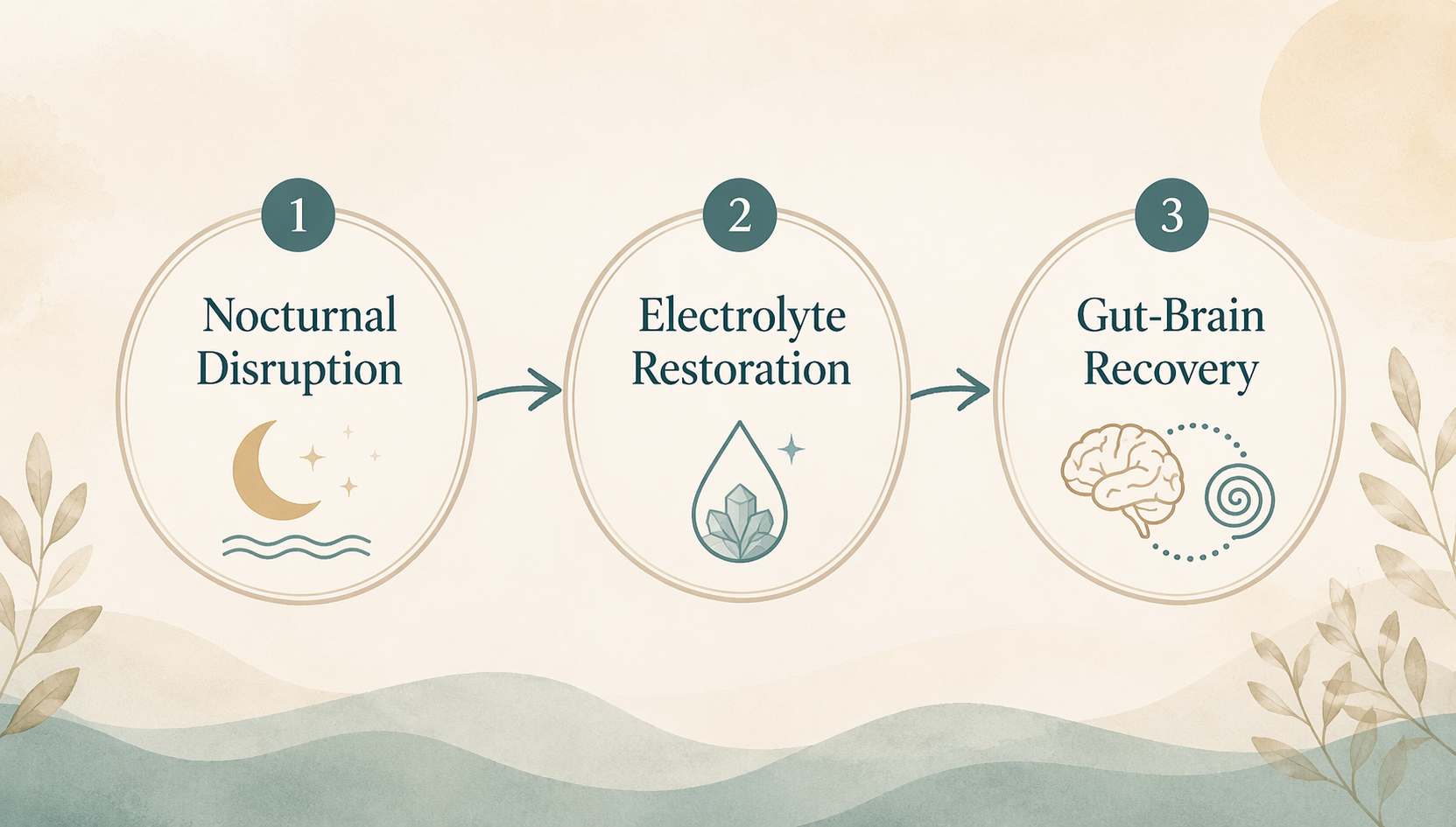
| Recovery phase | What is most likely breaking sleep | Main nighttime job |
|---|---|---|
| Active diarrhea or urgency | Bathroom trips, abdominal cramping, fear of not reaching the bathroom | Reduce avoidable triggers and make wake-ups safer, calmer, and shorter |
| Treatment and rehydration | Fluid loss, potassium or calcium depletion, malabsorption, medication timing issues | Replace electrolytes steadily and follow the antibiotic plan prescribed |
| Post-infection rebuilding | Conditioned wakefulness, gut sensitivity, anxiety about relapse, fatigue after symptoms fade | Rebuild trust in sleep while watching for persistent GI patterns |
This is a practical framework, not a protocol proven in a cyclospora sleep trial. Its value is that it prevents the most common mismatch: treating a bowel-alarm night as if it were ordinary insomnia.
Phase 1: When Nocturnal Diarrhea Is Still Running the Night
During active cyclosporiasis, sleep is often not “light” because of poor habits. It is light because the body has reason to stay interruptible. Watery diarrhea, urgency, gas, abdominal cramps, nausea, and loss of appetite are recognized features of cyclosporiasis, and symptoms can relapse if untreated.[1] If the gut has been unpredictable all day, the brain learns that deep sleep may come with a cost.
This is why the first phase is less about perfect sleep and more about reducing damage from repeated awakenings. A person who wakes four times but returns to bed without panic, bright light, dehydration, or a long cleanup has had a different night from someone who spends every episode fully activated.
- Keep the path to the bathroom clear, dim, and boring. Use a night-light rather than overhead lighting if you can move safely.
- Put oral rehydration solution, prescribed medication, wipes, and a change of underwear or sleepwear where you do not have to search for them.
- Avoid turning each wake-up into a full symptom audit unless something has clearly changed, such as blood, faintness, worsening dehydration, or severe pain.
- If you track stools for your clinician, record only what is useful: approximate time, watery versus formed, fever, vomiting, and whether you could keep fluids down.
Food timing can matter, but this is not the moment for elaborate rules. Heavy, high-fat meals close to bed can add digestive work when the gut is already irritated. A smaller evening meal, earlier in the night, may reduce the chance that digestion and diarrhea peak at the same time. If you have been told to follow a specific diet because of another condition, that advice comes first.
The usual sleep advice can be layered in after the bowel problem is respected. Yes, keep the room cool if that helps. Yes, avoid doom-scrolling through outbreak stories at midnight. But do not blame yourself if meditation does not stop an infectious diarrhea episode. In this phase, the goal is not uninterrupted sleep at any cost; it is fewer avoidable jolts to a body already losing fluid.
Cyclospora also differs from a short viral stomach bug. A 24- to 48-hour stomach virus plan often assumes the worst will pass quickly; cyclosporiasis may last longer, recur, and leave fatigue behind. If you want the shorter-illness contrast, the guide to sleeping when a stomach bug hits is useful, but cyclospora recovery usually needs a longer runway.
Phase 2: Rehydration, Electrolytes, and Treatment Change the Sleep Problem
Once diarrhea frequency starts falling, it is tempting to assume the sleep problem should disappear. Sometimes it does not, because the small intestine may still be recovering from the infection. Cyclospora infects enterocytes in the duodenum and jejunum, and published review literature describes villous blunting and atrophy that reduce the absorptive surface area of the small intestine.[3] In plain terms: the gut may be less efficient at absorbing what you need even when you are spending less time in the bathroom.
That mechanism matters at night because fluid and electrolyte losses do not always announce themselves politely. Cleveland Clinic notes that cyclosporiasis can cause dehydration and electrolyte imbalance, and the fatigue can last days to a month or longer without treatment.[4] Low potassium can contribute to weakness or cramping; low calcium can affect neuromuscular irritability. When cramps, restlessness, or a wired-but-depleted feeling show up at bedtime, plain water may not be enough.
An oral rehydration solution is useful here because it replaces water with the salts and glucose needed for absorption. Commercial products such as Pedialyte or a clinician-approved WHO-style oral rehydration solution are not sleep medicines, and they should not be sold as one. Their role is narrower and more believable: they may reduce one biological reason your body keeps pulling you out of sleep.
- Use oral rehydration earlier in the evening rather than chugging a large amount at lights-out, especially if a full bladder wakes you.
- Sip after each watery stool if diarrhea is still active, unless your clinician has restricted fluids.
- Be cautious with sports drinks as a substitute; some contain high sugar loads that can worsen diarrhea for some people.
- Seek medical help promptly if you have dizziness, confusion, fainting, very low urination, persistent vomiting, severe weakness, or signs of dehydration you cannot correct by drinking.
Treatment can also change the timeline. Trimethoprim-sulfamethoxazole, often abbreviated TMP-SMX, is the standard treatment for many people who can take it. In a placebo-controlled trial in Nepal summarized in the Mathison and Pritt review, oocyst detection at day 7 was 88.2% in the placebo group and 6.3% in the TMP-SMX group.[3] That does not mean everyone sleeps well by day 7. It does show why treating the infection can move recovery from an open-ended cycle toward a clearer next phase.
Follow the timing and dosing instructions from the clinician who prescribed your antibiotic. If a dose seems to worsen nausea or keeps you awake, ask the prescriber or pharmacist before changing the schedule. The sleep priority is not to improvise around antibiotics; it is to make the prescribed plan easier to complete.
Many people feel better after a week or two with TMP-SMX, but fatigue can continue for a few weeks after antibiotics.[5] That lingering fatigue is not proof that you failed at hydration, sleep hygiene, or mindset. It is a reason to keep the night plan simple: replace losses, avoid avoidable triggers, finish treatment as directed, and escalate symptoms that are not staying within a safe recovery pattern.
A Bedtime Fluid Plan That Does Not Create a New Problem
A useful evening pattern is steady, front-loaded rehydration. Take in fluids and oral rehydration solution through the late afternoon and evening, then taper close to bed if urination becomes the thing waking you. Keep a small amount nearby for dry mouth or post-diarrhea sipping. The point is to avoid two extremes: going to bed depleted, or flooding your bladder because you are trying to fix the whole day in one hour.
If you have kidney disease, heart failure, are on diuretics, have been told to restrict fluids or electrolytes, or are caring for an older adult with multiple medications, ask a clinician before using electrolyte products aggressively. Practical advice stops being practical when it ignores the person’s medical context.
Phase 3: When the Parasite Is Treated but the Night Still Feels Unsafe
After the worst GI symptoms improve, some people keep waking as if they are still on call. They scan for abdominal sensations. They avoid sleeping deeply because the last deep sleep ended in urgency. They may feel a normal intestinal gurgle and tense for the next episode. That pattern is not imaginary, but it is also not the same as active infection.
The gut and sleep systems communicate in both directions. GI infection can trigger inflammatory signals, including cytokines such as IL-1 and TNF-alpha, that affect sleep-regulating brain regions; poor sleep can then make immune recovery and symptom tolerance harder.[6] Stanford experts also note that antibiotic treatment can affect the microbiome, adding another reason recovery may feel unsettled rather than instantly complete.[7] For a fuller mechanism discussion, the companion article on why cyclosporiasis causes fatigue and disrupts sleep is the better place to go deep.
In this phase, the night plan shifts. You are no longer only preventing bathroom chaos; you are teaching the body that bed is not an emergency station. That does not mean ignoring symptoms. It means separating monitoring from rumination.
- Do one planned symptom check before bed: hydration status, fever if relevant, medication taken, bathroom access ready.
- After that, avoid repeated body scans unless a symptom clearly wakes you or changes.
- If you wake anxious but do not need the bathroom, use a low-light reset: slow breathing, a brief seated pause, then back to bed.
- Reintroduce daytime activity gradually. A short walk may help restore sleep pressure; hard exercise too soon can backfire if you are still depleted.
This is also where post-infectious bowel sensitivity deserves a careful mention. Broader GI infection literature suggests that about 10% to 20% of patients develop post-infectious IBS after severe gastrointestinal infections, but that figure should not be read as a cyclospora-specific prediction.[8] It is a signal, not a verdict: persistent diarrhea, abdominal pain, bloating, or bowel-pattern changes after the infection clears may need follow-up rather than another round of willpower.
The difference between normal uneven recovery and a pattern worth discussing with a clinician is partly duration and partly direction. A few rough nights while stools are firming and appetite returns can fit recovery. Ongoing watery diarrhea, weight loss, fever, blood in stool, worsening abdominal pain, dehydration, or sleep disruption driven by continuing GI symptoms should not be managed as ordinary insomnia.
If the main remaining problem is the fatigue-sleep loop, it may help to read the broader explanation of how diarrhea, poor sleep, and fatigue reinforce each other. The practical takeaway is modest: protect sleep opportunity, reduce nighttime gut triggers, and use daytime light, food, and gentle movement to give the body clear timing signals again.
What Generic Sleep Hygiene Still Can and Cannot Do
Sleep hygiene is not useless during cyclospora recovery. It is just usually second-line. A dark room will not correct potassium loss. A phone curfew will not stop untreated watery diarrhea. A relaxation recording will not absorb fluid through an irritated small intestine.
Once the infection-specific problems are being handled, ordinary sleep routines become more reasonable. Keep the bedroom easy to return to. Use dim light for necessary wake-ups. Get morning light when you can. Keep naps short enough that they do not erase nighttime sleep pressure, unless your clinician has told you to prioritize rest because you are acutely ill. Eat in a way your recovering gut can tolerate rather than chasing a perfect sleep diet.
The most useful question before bed is not “Am I doing sleep perfectly?” It is “Which problem is most likely to wake me tonight?” If the answer is urgency, prepare the bathroom path and reduce digestive load. If it is cramps or depletion, focus on safe rehydration and electrolytes. If it is fear after symptoms have improved, create one planned check and then stop turning the bed into a monitoring station.
When to Stop Self-Managing the Night
Cyclospora recovery can be uneven, but some nights should trigger help rather than another adjustment. Contact a clinician if diarrhea is persistent or recurring, if you cannot maintain hydration, if fatigue is worsening instead of gradually easing, or if you have risk factors that make dehydration more dangerous. People who are immunocompromised, pregnant, older, or medically fragile should be especially cautious about prolonged fluid loss.
Also ask for follow-up if you completed treatment but still have significant bowel symptoms, or if anxiety around nighttime symptoms has become so strong that you avoid sleep even on relatively calm GI days. The answer may be more testing, medication review, nutrition support, reassurance, or treatment for a post-infectious pattern. It should not be silent endurance.
Sleep usually returns by matching the strategy to the recovery phase. In the early nights, that means respecting the bowel alarms. During treatment, it means replacing what diarrhea and malabsorption have taken and following the antibiotic plan. After the infection quiets, it means rebuilding trust in the body without ignoring symptoms that deserve care.
References
- Symptoms of Cyclosporiasis, CDC.
- Cyclosporiasis Surveillance, CDC.
- Cyclospora cayetanensis: Epidemiology, Diagnosis, and Treatment, PMC, 2021.
- Cyclosporiasis, Cleveland Clinic.
- Does Cyclospora Cause Severe Fatigue?, Inciteful Med.
- Can Cyclospora Disrupt Your Mental Well-Being?, InSynch Health.
- Cyclosporiasis diarrheal outbreak: What experts say, Stanford Medicine, 2026.
- Cyclosporiasis Recovery & Gut Health, Inciteful Med.


Comments
Join the discussion with an anonymous comment.