
If you are trying to sleep during a flood emergency, the goal is not perfect sleep. The goal is enough rest to keep judgment online: hearing an alert, deciding whether to move, helping a child settle, taking medication correctly, or staying awake during your turn to monitor conditions.
That matters because flood conditions fight sleep directly. Rain, sirens, evacuation updates, wet clothing, unfamiliar rooms, fluorescent lights, and the responsibility of watching over other people all tell the body to stay ready. Difficulty sleeping in that state is not a character flaw. In a study of Haiti earthquake survivors, 94% reported insomnia symptoms after the disaster, and 42% had clinically significant PTSD two years later; that study was not flood-specific, but it is useful evidence that disaster-related threat can keep sleep disrupted long after the immediate event is over.[1]
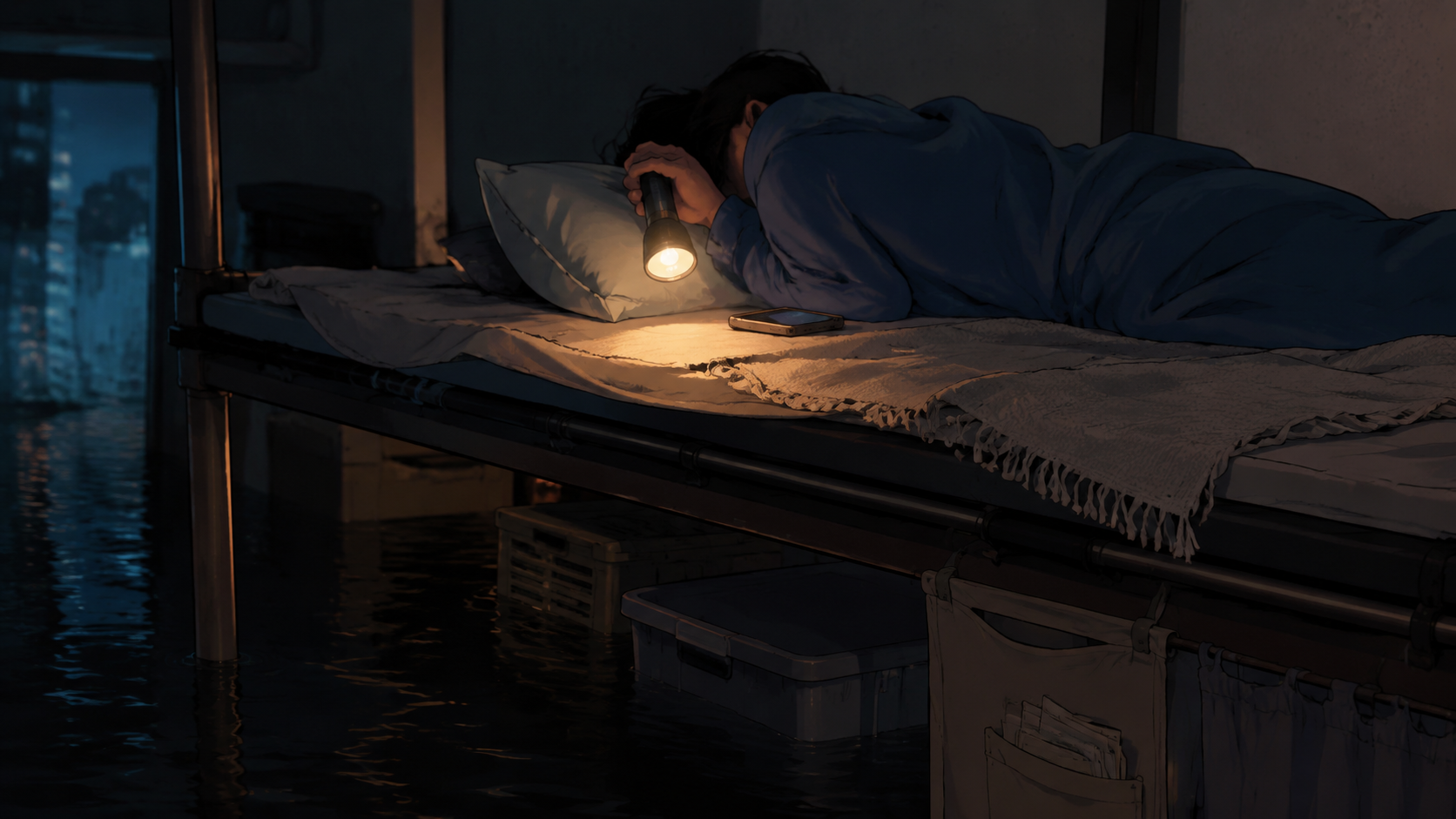
For tonight, aim lower and more practically: a protected block of 4–5 hours, if conditions allow, or two shorter blocks if someone must keep watch. Even partial sleep is different from no sleep. It gives the brain a chance to reduce emotional load, restore some attention, and make the next decision less foggy.
Start With Physical Safety, Not Comfort
Before you try to downshift your body, make the sleep spot as physically safe as possible. A nervous system will not cooperate if part of you knows the cot, mattress, or chair is in the wrong place.
At home, that usually means moving the rest area above any possible water line, away from windows if wind or debris is a concern, and away from outlets, cords, or electronics that could be affected by water. If you have already lost power or expect it to go out, keep a flashlight, shoes, essential medications, phone, charger or battery pack, and any assistive device within reach. Do not arrange sleep so that a half-awake person has to step through standing water to leave.
In an evacuation shelter, the safety decisions may be partly made for you. Your job is smaller: keep your bag where you can reach it, avoid creating a tripping hazard around a cot, and make sure children, older adults, or anyone with mobility needs can get help quickly if conditions change.
| If you have 10 minutes before trying to sleep | Why it helps |
|---|---|
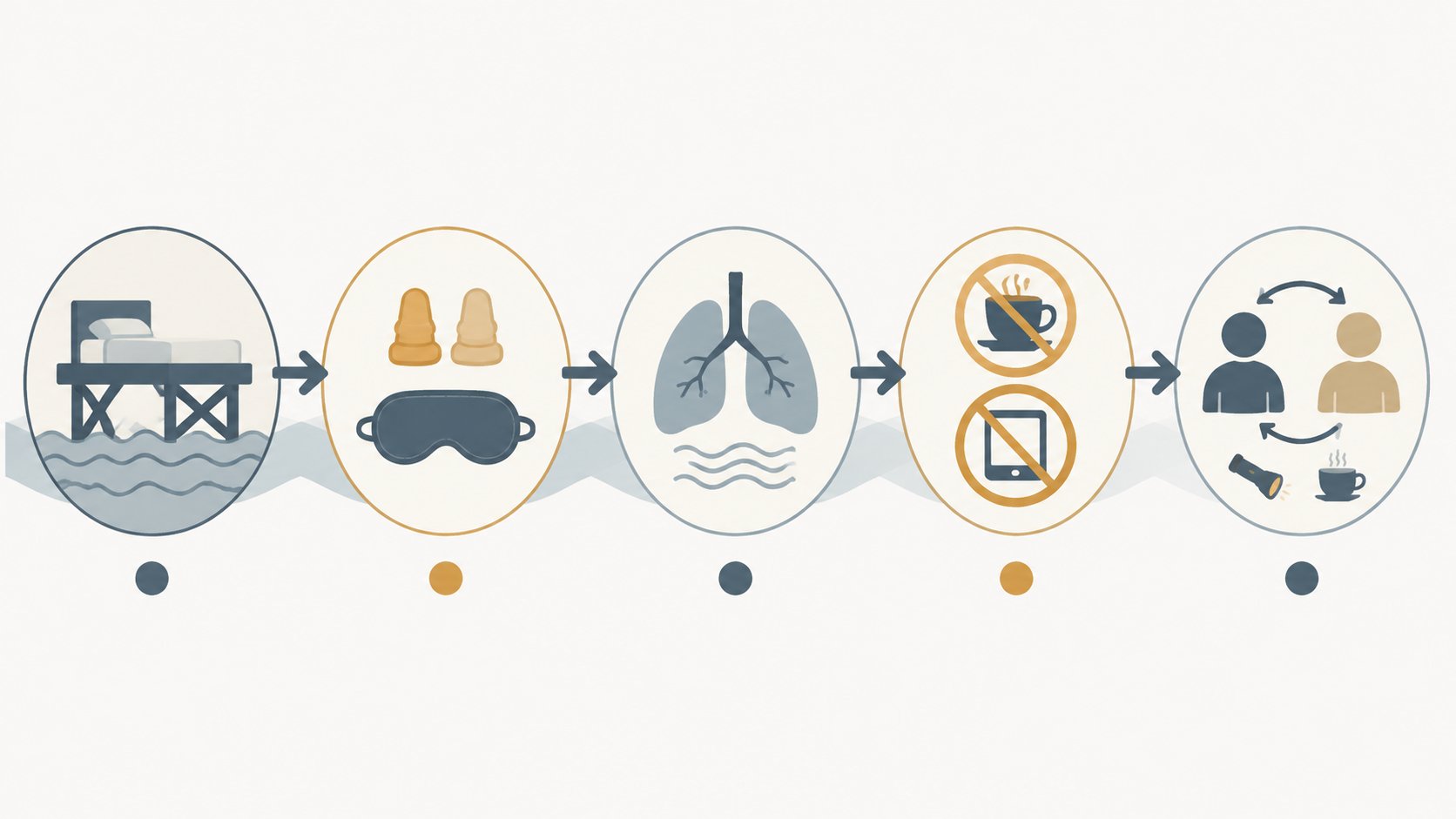
| Move the sleep surface higher, drier, and away from electrical hazards. | The body settles more easily when the immediate escape path is not in doubt. |
| Put shoes, flashlight, phone, medication, and glasses within arm’s reach. | You reduce the number of decisions needed if an alert wakes you. |
| Agree on who is watching conditions and for how long. | Someone is allowed to stop monitoring without feeling careless. |
| Reduce noise and light with earplugs, headphones, an eye mask, or clothing. | Less sensory input gives the nervous system fewer reasons to stay activated. |
| Use two minutes of slow breathing before lying down. | It gives the body a clear signal that this is a rest window, not another planning session. |
Treat Hypervigilance as the Main Sleep Problem
During a flood emergency, the mind is not simply “busy.” It is scanning. It listens for water movement, checks whether the rain has changed, waits for a phone alert, tracks whether a child is warm enough, and notices every unfamiliar sound in a shelter. That scanning is useful for survival in short bursts. It is also incompatible with sleep when no one gives it a boundary.
This is why advice like “just relax” lands badly. The body has a job to do. The intervention is not to pretend nothing is happening; it is to decide which part of the job must continue and which part can pause for a protected rest window.
If there is more than one capable adult or older teen, make a watch plan. Keep it plain: one person monitors alerts, water changes, and official instructions while the other rests. Set a specific handoff time. Write it down if everyone is exhausted. If you are alone, make the phone alert settings deliberate rather than endless: keep emergency alerts active, but avoid refreshing news, maps, and social feeds every few minutes once your rest window starts.
Then give the body a short, repeatable downshift cue. Two options work well because they require no equipment:
- 4-7-8 breathing: inhale through the nose for 4 counts, hold for 7 counts, exhale slowly for 8 counts. Repeat for four rounds, or fewer if holding the breath feels uncomfortable.
- Box breathing: inhale for 4 counts, hold for 4 counts, exhale for 4 counts, hold for 4 counts. Repeat for 1–3 minutes.
Neither method makes a flood less dangerous. That is not the promise. The point is to interrupt the all-night alert loop enough for sleep to begin. The CDC includes calming activities such as deep breathing among its recommendations for better sleep in disaster shelters, along with reducing caffeine, screens, and noise before bed.[2]
Reduce the Sensory Assault
Flood sleep is often lost through small repeated intrusions: a light that stays on, people talking, a generator cycling, phones buzzing, a child shifting on a cot, rain hitting metal, the smell of damp clothes. You may not be able to make the place quiet. You can often make it less sharp.
Use earplugs if you have them. If you are in a shelter, ask staff whether earplugs are available; the CDC specifically recommends earplugs or noise-canceling headphones to help with sleep in disaster shelters.[2] Headphones without audio can still dull unpredictable sound. A folded shirt over the eyes can stand in for an eye mask. A hood, hat, or clean towel can reduce light and make a cot feel less exposed.
At home, a battery-powered fan can help in two ways if it is safe to use: moving air in a damp room and creating a steady sound that masks rain or distant activity. Keep it away from water and do not use any device with a cord near wet areas. If the fan becomes one more thing to monitor, skip it.
For children, familiar cues are not decorative. A blanket from home, the same short phrase before sleep, a stuffed animal that stayed dry, or the usual order of bathroom, medication, story, and lights-down can reduce the amount of novelty their bodies have to process. The routine may be shorter and messier than usual. It still gives the child a pattern to lean on.
If You Are Sheltering at Home
Home can feel safer because it is familiar, but familiarity can be misleading during flooding. Bedrooms, basements, and outlets may no longer be usable. Choose the sleep location based on current risk, not habit.
- Move rest to an upper floor or the highest safe indoor area if lower levels are threatened.
- Keep everyone’s shoes close. A barefoot evacuation through debris or wet flooring is a preventable injury.
- Unplug electronics in or near areas that could become wet, and keep charging equipment off the floor.
- Place essential medications, mobility aids, glasses, hearing aids, and a flashlight where the person who needs them can reach them.
- If multiple adults are present, rotate watch shifts instead of letting everyone half-sleep while secretly monitoring.
A watch shift does not need to be elaborate. One adult rests from 10 p.m. to 2 a.m.; the other keeps the phone, checks official alerts at agreed intervals, and wakes the household only if there is a real change. Then they switch. If the timing has to be shorter because conditions are unstable, make it shorter. The important part is that rest is assigned, not treated as something people may or may not dare to take.
For older adults or anyone using medical equipment, the sleep plan should include the equipment plan. The National Institute on Aging recommends that older adults prepare for disasters with needed medications, medical supplies, important documents, and comfort items such as a pillow or blanket; people who use powered medical devices should plan for backup power or alternatives before an outage if possible.[4]
If You Are Sleeping in an Evacuation Shelter
Shelter sleep asks a lot of the body. You may be lying near strangers, under lights that do not fully turn off, with announcements, coughing, pets, children, and staff movement around you. In that setting, “good sleep hygiene” is too polished a phrase. What helps is reducing the number of things your brain must keep interpreting.
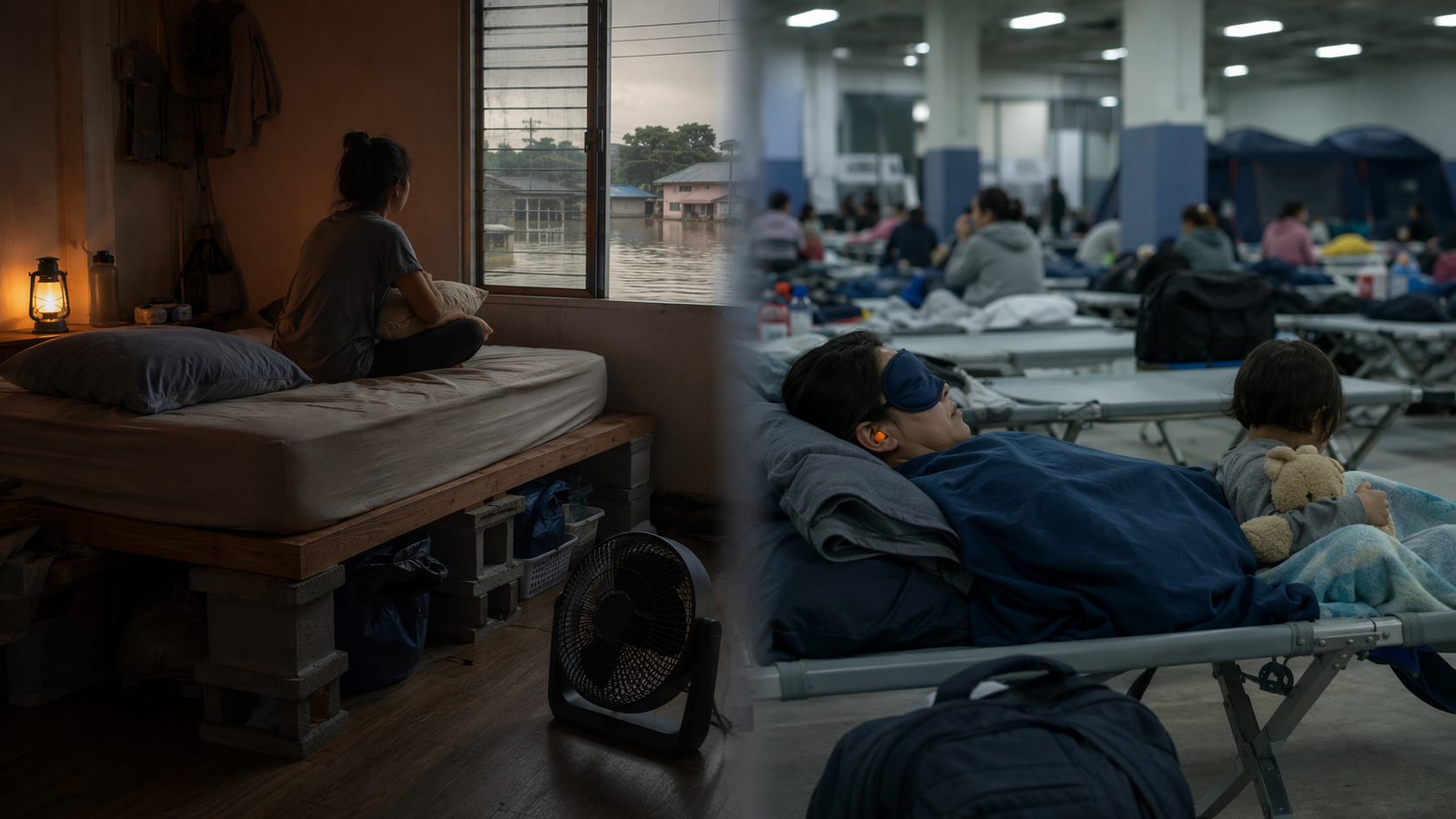
Ask shelter staff what is available before assuming you have to endure the environment as-is: earplugs, quieter cot areas, charging stations for medical devices, or a place for families with young children may be available. The CDC’s shelter guidance specifically names earplugs or noise-canceling headphones, avoiding caffeine and screens before bed, and calming activities such as deep breathing as ways to support sleep in shelters.[2]
If lights are the problem, use an eye mask, a soft shirt, or the edge of a blanket positioned safely. If noise is the problem, use earplugs or headphones, but keep whatever alert system you truly need. If privacy is the problem, turn your cot so your face is not toward the main traffic path if staff allow it. Small changes are not small when the nervous system has been taking in every cue for hours.
Parents often spend shelter nights trying to keep children quiet for everyone else. That is real pressure. Give children the shortest possible version of normal: bathroom, water, medication if needed, one quiet story or song, then the same sleep phrase. If they wake, repeat the cue instead of restarting the whole evening. The aim is not to make shelter sleep look like home; it is to give the child enough predictability to stop fighting every unfamiliar detail.
Use Caffeine and Screens as Tools, Not Compulsions
In an emergency, caffeine can be useful. So can a phone. The problem is when both keep running into the only rest window available.
If you are taking the next watch shift, caffeine may be reasonable. If you are about to try for your 4–5-hour sleep block, stop caffeine at the start of that window. Do not turn this into a moral rule. Just make the choice match the job: alertness when you are responsible for monitoring, lower stimulation when someone else is.
Screens need the same boundary. Keep official alerts available. Set the volume and emergency notification settings intentionally. Then, if it is safe, stop scrolling. Disaster feeds can keep the brain in a loop of almost-new information: another photo, another forecast model, another comment, another rumor. That loop feels responsible, but it may leave you less able to respond when something real happens.
Be Careful With Sleep Medication Shortcuts
A flood emergency is a bad time to experiment with a new sleep aid. Many over-the-counter sleep medications can cause next-day grogginess, slower reaction time, dry mouth, dizziness, or confusion in some people. Those effects are inconvenient on a normal morning; they can be dangerous if you need to wake quickly, drive, climb stairs, understand instructions, or care for someone else.
If you already take a prescribed sleep medication, follow the plan given by your clinician unless emergency conditions make it unsafe. Avoid mixing sleep medication with alcohol. If you are in a shelter and unsure, ask medical staff or shelter staff whether a clinician is available before taking something unfamiliar.
Pack Sleep Support, but Keep It Small
Sleep items belong in a flood go-bag, but they should not crowd out medication, documents, water, food, or safety supplies. The useful items are simple: earplugs, an eye mask, a small familiar blanket or pillow, required medications, chargers, and backup power for essential medical equipment such as CPAP when relevant. For older adults, the National Institute on Aging includes medications, assistive devices, medical information, and comfort items such as a pillow or blanket in disaster preparedness planning.[4]
If the bag is already packed and none of those items made it in, work with substitutes. A rolled jacket can be a pillow. A shirt can block light. Clean tissue can soften sharp noise if proper earplugs are not available, though it should not be pushed deep into the ear. A familiar phrase or sequence can become the bedtime anchor when objects are gone.
After the Flood, Know When Sleep Needs More Help
Some sleep disruption after a flood is expected. The emergency may continue through cleanup, insurance calls, displacement, school closures, and financial strain. The body may keep listening for danger after the water is gone.
Still, there is a point where “normal after stress” deserves support. Seek help if insomnia lasts beyond 2–4 weeks after the immediate danger has passed, if nightmares or flashbacks are repeatedly disrupting sleep, or if fear is making you avoid sleep. Disaster mental health effects are common enough that they should be treated as a public health issue, not a private weakness: one review reports that nearly one-third of disaster-affected people experience negative mental health consequences including PTSD, anxiety, and depression.[5] A separate review found that depression and anxiety can remain elevated for years after disasters.[6]
The American Red Cross tells people preparing for and recovering from floods to eat healthy food and get enough sleep to help deal with stress.[3] In the middle of the emergency, that may mean one imperfect block of rest on a cot, an upper floor, or a relative’s couch while someone else watches the alerts. If sleep remains broken after the crisis phase, contact a healthcare professional, ask about cognitive behavioral therapy for insomnia, or reach out to SAMHSA’s Disaster Distress Helpline at 1-800-985-5990 for disaster-related emotional support.
References
- Disturbed sleep linked to mental health problems among natural disaster survivors, American Academy of Sleep Medicine, https://aasm.org/disturbed-sleep-mental-health-earthquake-survivors/
- Staying Safe at a Disaster Shelter, CDC, https://www.cdc.gov/natural-disasters/safety/staying-safe-at-a-disaster-shelter.html
- Flood Safety, American Red Cross, https://www.redcross.org/get-help/how-to-prepare-for-emergencies/types-of-emergencies/flood.html
- Disaster Preparedness and Recovery for Older Adults, National Institute on Aging, https://www.nia.nih.gov/health/safety/disaster-preparedness-and-recovery-older-adults
- Disasters and Mental Health, NIH/PMC, https://pmc.ncbi.nlm.nih.gov/articles/PMC11430943/
- The mental health effects of disaster and trauma: A review of evidence and recommendations for future research, PubMed, 2022, https://pubmed.ncbi.nlm.nih.gov/36162175/
Comments
Join the discussion with an anonymous comment.