
The hard part of shift work sleep disorder treatment is not finding options. It is knowing which option deserves the next week of effort. A rotating-shift worker who gets home at 8 a.m. does not need the same plan as a permanent night worker trying to protect daytime sleep, and neither person is helped by a flat menu that puts sunglasses, melatonin, CBT-i, caffeine, and modafinil in the same pile.
A practical order looks like this: first move light and sleep timing as far as the roster allows; then use melatonin and caffeine as timing tools, not as generic sleep-and-wake products; then consider adapted CBT-i if insomnia remains; and only then move to prescription wake-promoting medication when sleepiness at work is still unsafe or unmanageable.

| Treatment level | Main target | What it usually includes | When to move up |
|---|---|---|---|
| 1. Circadian alignment and protected sleep | Mismatch between work hours, light exposure, and the body clock | Timed bright light during work, light avoidance after work, anchor sleep, naps, protected bedroom conditions | Sleep is still too short, too fragmented, or poorly timed despite a realistic schedule |
| 2. Timing supports | Sleep onset after work and alertness during the shift | Carefully timed melatonin and caffeine | They help partly, but insomnia or excessive sleepiness persists |
| 3. Adapted CBT-i | Persistent insomnia behaviors and arousal that survive the shift schedule | Modified sleep restriction, stimulus control, cognitive work, and anchor-sleep planning | Insomnia improves but work-shift sleepiness remains impairing or unsafe |
| 4. Prescription wake-promoting medication | Excessive sleepiness during scheduled wake/work time | FDA-approved modafinil or armodafinil under medical supervision | Used when earlier steps are insufficient and safety risks justify escalation |
This is a treatment sequence, not a moral ladder. Medication is not a failure. Light therapy is not a cure-all. CBT-i is not automatically first-line just because it is first-line for ordinary chronic insomnia. Each step solves a different problem, and shift work punishes plans that ignore the actual roster.
Start With The Clock, Not The Pillow
In shift work sleep disorder, the first treatment target is usually circadian timing. The worker is trying to sleep when daylight, family noise, errands, school pickup, deliveries, and the body’s own wake signal are all pushing in the opposite direction. Telling that person to “keep a consistent bedtime” may be tidy on paper and useless by the next roster change.
The useful question is narrower: which sleep episode can be protected, and which light exposures are helping or hurting that episode? That is where treatment starts.
Use light as a timed signal
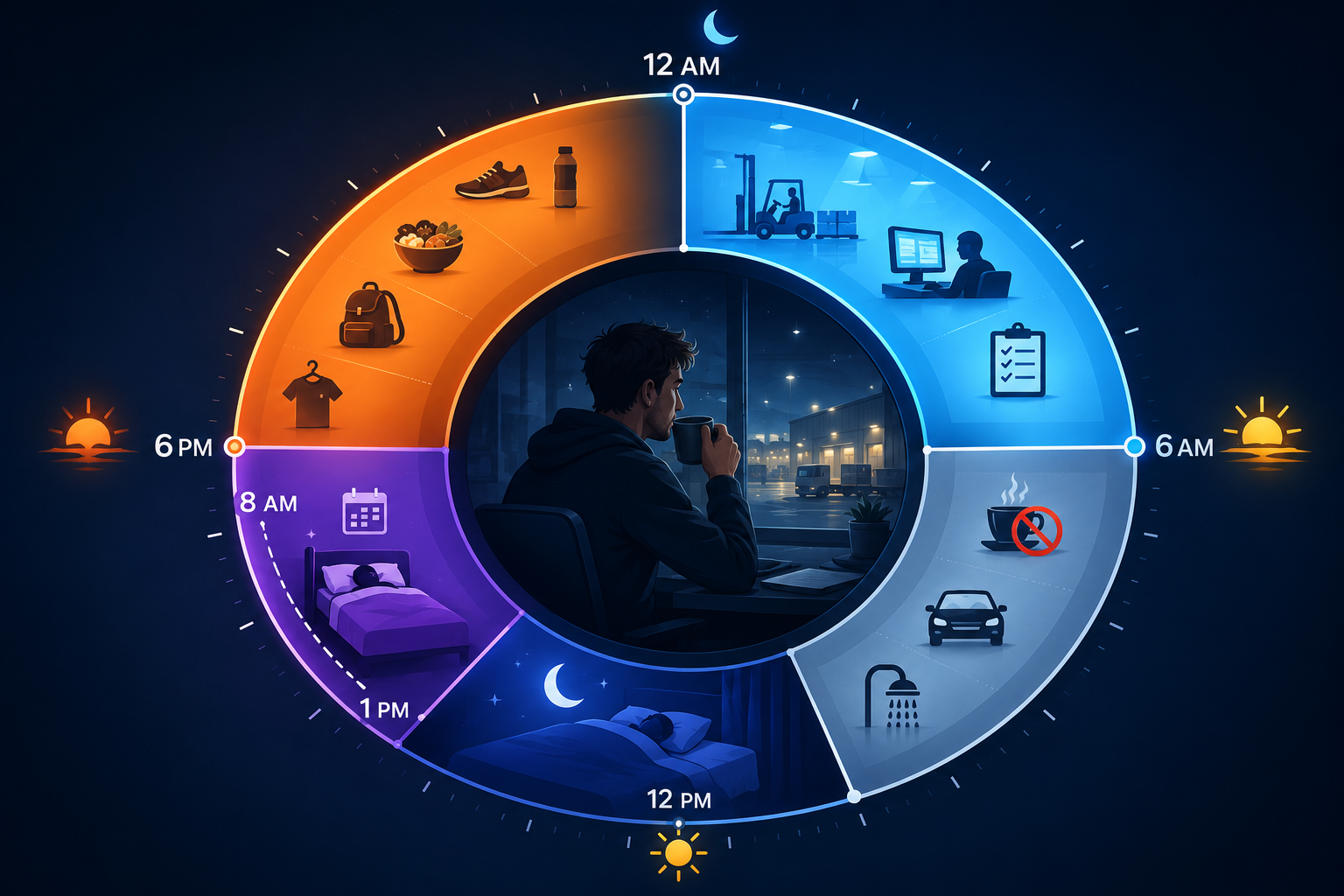
Timed bright light is not just “more light.” It is a signal to the circadian system. For many night workers, bright light during the earlier or middle part of the night shift can help push the body clock later, while light avoidance on the commute home can keep dawn light from pulling the clock back toward a day schedule. The same lamp used at the wrong time can work against the sleep period it was supposed to protect.

The best recent synthesis gives light therapy a real place in the first step, but not a miracle label. A 2025 systematic review and meta-analysis of 11 randomized controlled trials involving 195 shift workers found that light therapy increased total sleep time by 32.54 minutes and improved sleep efficiency by 2.91 percentage points. It also produced a significant circadian phase delay of 1.72 hours, which is exactly the direction many night-shift plans are trying to achieve.[1]
Those gains are meaningful because they act on the right mechanism. They are also modest. A half hour more sleep can matter a lot to someone repeatedly cut short after nights, but it does not turn a hostile schedule into a healthy one. The review’s small evidence base also matters: 11 studies and 195 participants are enough to justify light as an early, mechanism-based step, not enough to promise a reliable fix for every roster.[1]
The most useful detail in that review may be the dose finding. Medium illuminance, in the 900-6000 lux range, showed an inverted U-shaped dose-response relationship, meaning brighter was not automatically better. Cumulative light dose was linearly associated with sleep efficiency, but intensity alone was not the whole story.[1]
That changes the practical decision. A worker does not need to start by buying the strongest light box available and blasting it through the whole shift. The better first experiment is timed exposure that can actually be repeated: bright enough, long enough, and placed where it supports the next sleep episode rather than colliding with it.
Protect the sleep episode that the roster will actually allow
Scheduling advice for shift workers has to begin with a concession: some rosters cannot be made circadian-friendly. Rapid rotations of 2-3 days may not give the body enough time to entrain before the schedule changes again. In that case, treatment is less about fully shifting the body clock and more about limiting damage: preserving sleep opportunity, reducing light mistakes, and preventing sleepiness from becoming dangerous.
For permanent or longer blocks of night shifts, the plan can be more assertive. Many workers do better with an anchor sleep window: a recurring block that stays protected across workdays and off-days when possible. It does not have to solve the whole sleep need by itself. It gives the body and household one non-negotiable period to defend.
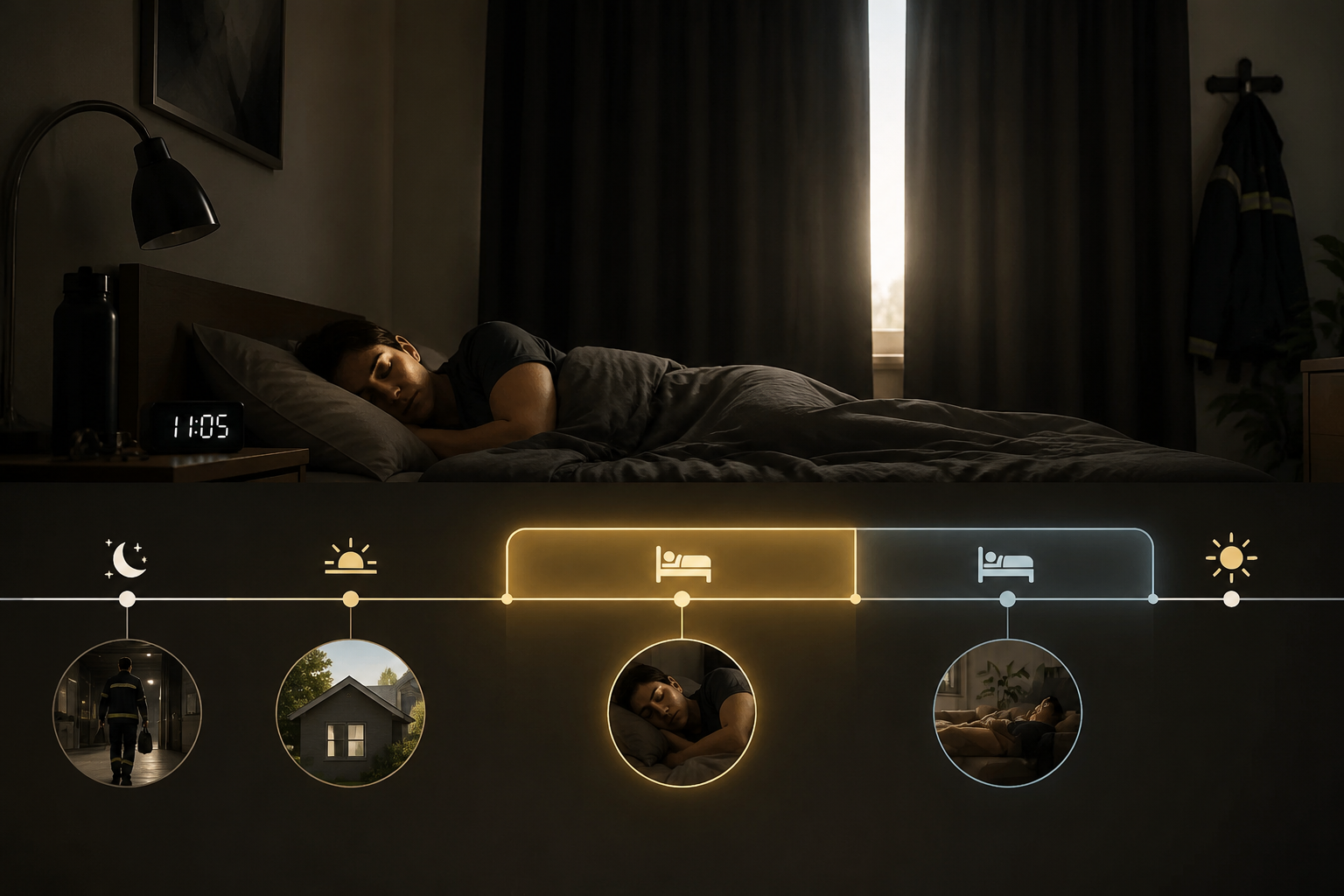
The rest of the sleep plan depends on shift type. A permanent night worker may protect a main daytime sleep after the shift and add a planned nap before work. An early-morning worker may need an earlier evening sleep window and strict evening light control. A rotating-shift worker may have to use a smaller anchor sleep window plus naps, because forcing a full “consistent bedtime” across days and nights can create more conflict than it solves.
This is where generic sleep hygiene often fails night workers. A dark, cool, quiet bedroom helps, but it is not the treatment by itself. The harder work is negotiating the conditions that make daytime sleep possible: phone off, delivery alerts silenced, bedroom protected from household traffic, commute light reduced, and the first sleep block treated as an appointment rather than an optional recovery attempt. For a deeper look at why ordinary advice breaks under night rosters, see why sleep hygiene advice fails night shift workers.
Nap strategically, not apologetically
A nap is not a sign that the plan failed. For some shift workers, it is the part of the plan that keeps the main sleep episode from carrying the entire burden. The timing matters. A pre-shift nap can reduce pressure during the early part of the shift. A brief on-shift nap, where permitted and safe, may be useful in workplaces that allow it. A late nap too close to the main sleep attempt can backfire if it drains sleep pressure.
The treatment marker is not whether naps look normal to a day worker. It is whether total sleep increases, sleepiness during work decreases, and the worker can still fall asleep during the protected sleep window.
Add Melatonin And Caffeine Only After The Timing Problem Is Named
Melatonin and caffeine are often presented as opposites: one for sleep, one for wakefulness. In shift work sleep disorder treatment, that framing is too crude. Both are timing tools. They can help when they are aimed at a specific problem and create new trouble when they are scattered across the roster.
Melatonin is for the intended sleep window
Melatonin makes the most sense when the worker can name the sleep episode it is meant to support. For a night worker, that may be daytime sleep after the commute. For an early-morning worker, it may be an earlier evening bedtime that otherwise feels biologically too soon. It is less useful as a vague nightly add-on taken whenever sleep has been bad.
The response to track is concrete: time to fall asleep, total sleep time, next-shift grogginess, and whether the timing remains compatible with driving, caregiving, or other responsibilities. If melatonin shortens sleep onset but leaves the worker foggy at the wrong time, that is not a clean win. For dosing and safety considerations, use a dedicated guide such as melatonin for adults rather than treating it as harmless because it is sold over the counter.
Caffeine is for the shift, with an exit plan
Caffeine belongs earlier in the wake period, not as a rescue habit that follows the worker to the end of the shift and then into the commute home. The treatment question is not “does caffeine work?” It obviously can increase alertness. The question is whether the timing improves work functioning without stealing from the next protected sleep episode.
A simple caffeine plan is easier to evaluate than a heroic one: use it when alertness predictably dips, stop early enough to protect the next sleep attempt, and change only one variable at a time. If caffeine is still needed late in the shift because the worker is fighting to stay awake during safety-sensitive tasks, that is a sign to reassess the whole treatment level rather than simply adding more.
More detailed schedule examples belong in a routine plan, not in a medication-style escalation decision. The practical pieces of sleep timing, napping, caffeine cutoff, and light management are covered in the best sleep routine for night shift workers.
Use Adapted CBT-i When Insomnia Persists
CBT-i deserves a place in shift work sleep disorder treatment, but it needs adaptation. Standard CBT-i was built around assumptions that fit many day workers: regular sleep timing, a stable sleep window, and a schedule that can support consistent stimulus control. A rotating nurse, warehouse worker, resident physician, police officer, or casino worker may not be able to keep the same sleep period long enough for those assumptions to hold.
Modified CBT-i protocols for shift workers have replaced rigid consistent scheduling with a 4-hour anchor sleep window and have allowed an extra hour in bed when work already restricts sleep duration. Those changes matter because ordinary sleep restriction can be blunt, and sometimes cruel, when the roster is already restricting sleep.[2]
The evidence is promising, but not clean enough to oversell. A 2022 meta-analysis found that CBT-i reduced insomnia severity in shift workers, while the improvements did not reach clinical significance thresholds and attrition rates were high.[2] That is a useful middle-step finding: CBT-i can help insomnia symptoms, but it should not be described as a universal first move for every sleepy shift worker.
The best candidate is the worker whose schedule plan is reasonably built but whose insomnia has taken on its own life: lying awake during the protected sleep period, clock-watching, extending time in bed without sleeping, fearing the next failed sleep attempt, or using the bed as a recovery bunker for hours. In that case, circadian alignment alone may not unwind the learned insomnia pattern.
Digital CBT-i may improve access, especially for workers whose shifts make weekly daytime appointments unrealistic. A 4-week self-guided online CBT-i intervention significantly improved sleep efficiency in shift workers, with outcomes comparable to face-to-face treatment in that study.[3] For insomnia more broadly, a 2025 systematic review of 29 randomized controlled trials involving 9,475 participants found fully automated digital CBT-i effective, though broad insomnia findings should not be treated as shift-worker-specific proof.[4]
The evaluation should stay practical. After several weeks, is insomnia severity lower? Is sleep efficiency better? Is the anchor sleep window more reliable? Is the worker less anxious about the sleep attempt? If the answer is yes but sleepiness during work remains dangerous, the next problem may be wakefulness during scheduled work time rather than insomnia during scheduled sleep time.
If using an app, the main issue is not whether the branding says “CBT-i.” It is whether the program can handle irregular schedules without forcing a day-worker sleep template. The guide to choosing a CBT-i app for chronic insomnia can help with that screening, but shift workers should still look for flexibility around anchor sleep and rotating schedules.
When Wake-Promoting Medication Becomes Reasonable
Prescription wake-promoting medication belongs late in the sequence, not because it is illegitimate, but because it solves a narrower problem. Modafinil and armodafinil are FDA-approved for excessive sleepiness associated with shift work sleep disorder. Modafinil is approved at 200 mg and armodafinil at 150 mg, both taken about 1 hour before the start of the shift.[5]
That can be the right tool when a worker has already protected sleep opportunity, corrected obvious light mistakes, used timing supports thoughtfully, and still cannot stay adequately alert during scheduled work time. It is especially relevant when sleepiness creates safety consequences: driving after nights, operating equipment, monitoring patients, responding to emergencies, or making high-stakes decisions while fighting sleep.
The boundary is important. These medications promote wakefulness; they do not replace sleep, repair a broken schedule, or make an unsafe rotation safe. Trials have largely been short-term, and long-term safety data are limited.[5] Both medications also carry warnings for serious rash, angioedema, and psychiatric adverse reactions.[5]
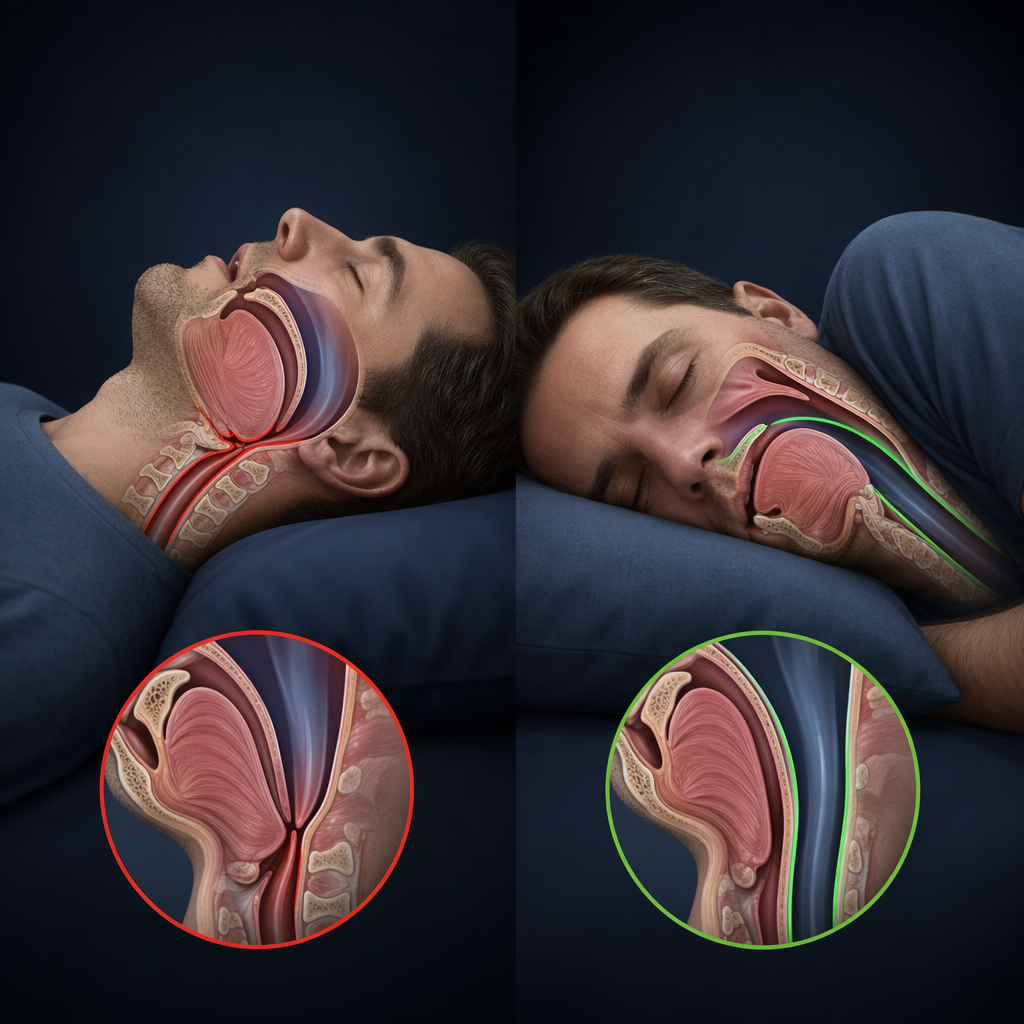
Escalation should therefore be based on observed response rather than frustration alone. Useful markers include persistent excessive sleepiness during the shift, near-misses or safety concerns, inability to maintain alertness despite adequate sleep opportunity, and tolerability of earlier measures. A clinician also has to consider other causes of sleepiness, including insufficient sleep time, untreated sleep apnea, sedating medications, substance use, depression, and other medical conditions.
Workplace Changes Help, But The Evidence Is Not A Personal Treatment Plan
Employers are not bystanders. Shift design, break policy, lighting, nap permissions, commute risk, and staffing levels can decide whether a worker’s treatment plan survives contact with Monday morning. Still, broad workplace prevention programs should not be used as the center of an individual treatment guide when the evidence is thin.
A 2024 narrative mini-review noted a lack of evidence for multicomponent prevention programs for shift work disorder.[6] That does not mean workplace changes are unimportant. It means an individual worker should not be left waiting for a comprehensive employer program before acting on light timing, protected sleep, naps, melatonin timing, caffeine timing, or clinical care.
How To Decide Whether The Current Step Is Working
“Individual response” only helps if it means something observable. Before changing three things at once, track the few outcomes that actually guide treatment.
- Sleep duration: whether the protected sleep period is producing enough total sleep to function.
- Sleep efficiency: whether time in bed is mostly sleep or mostly effort.
- Insomnia persistence: whether falling asleep, staying asleep, or returning to sleep remains the main problem.
- Alertness during work: whether sleepiness is still impairing performance or safety.
- Tolerability: whether the treatment creates next-day grogginess, anxiety, headaches, schedule conflict, or other problems.
A permanent night worker may stay longer in the circadian-alignment step because timed light and light avoidance can gradually support a later rhythm. A rapidly rotating worker may move sooner toward damage control because entrainment may be unrealistic. An early-morning worker may need evening light reduction and sleep advancement rather than the phase-delay strategy used by many night workers. Chronotype matters too: a natural night owl and a strong morning type may not respond the same way to the same roster.
The stepped-care model is a practical framework, not a formally validated protocol. Its value is that it keeps escalation tied to the problem in front of the worker rather than to a generic ranking of treatments.
Shift work sleep disorder treatment is not a search for one perfect intervention. It is a sequence of increasingly intensive choices matched to shift type, chronotype, response, and safety.
References
- Light therapy for sleep disorders in shift workers: a systematic review and meta-analysis. Scientific Reports, 2025.
- Cognitive behavioural therapy for insomnia in shift workers: A systematic review and meta-analysis. Sleep Medicine Reviews, 2022.
- Effectiveness of an online CBT-I intervention and a face-to-face treatment for shift workers with insomnia. International Journal of Environmental Research and Public Health, 2019.
- Fully automated digital cognitive behaviour therapy for insomnia: systematic review and meta-analysis. Nature Digital Medicine, 2025.
- Modafinil in the treatment of excessive sleepiness. PMC.
- Mini review: Shift work disorder: definition, diagnosis and prevention. Frontiers in Sleep, 2024.




Comments
Join the discussion with an anonymous comment.