
If a thunderstorm has already woken you up, the useful question is not how to make the room feel peaceful. It is which part of the storm is getting through: the thunder, the lightning, or the keyed-up feeling in your body after both of them.
That shortcut matters because each problem needs a different fix. Loud thunder calls for controlled sound masking. Lightning calls for blocking or softening sudden light. Physical unease calls for pressure, warmth control, and fewer reasons for your body to stay on alert.
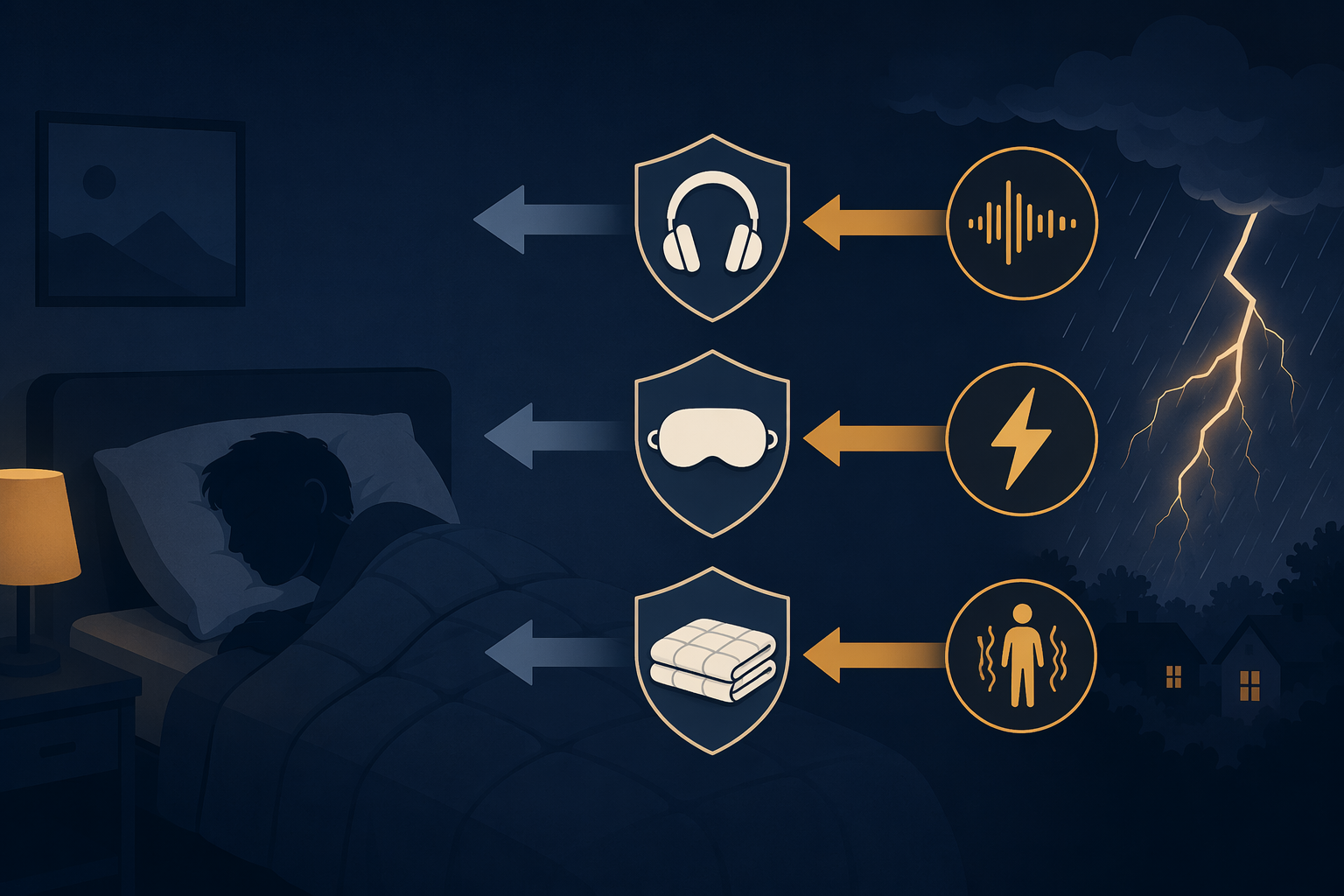
| What is waking you most | Most direct response tonight | What to avoid |
|---|---|---|
| Thunder or sudden rain noise | White noise, pink noise, fan sound, or rain audio on a 30–60 minute timer | Running loud broadband noise all night by default |
| Lightning flashes | Properly fitted sleep mask, blackout curtains, or a dim nightlight to reduce contrast | Leaving light gaps around curtains or relying on a bright lamp |
| Body tension, restlessness, startle response | Weighted blanket if it feels comfortable and safe, plus a cool room | Forcing a blanket weight that feels hot, restrictive, or irritating |
Start With The Part Of The Storm That Reaches You First
A thunderstorm is not one sleep problem. It is a small pileup. The sharp clap wakes you. The lightning flash tells your brain something changed in the room. Then the body stays braced for the next one. Trying to solve all of that with one vague instruction like “relax” is usually too slow for 2:17 a.m.
So use the first awakening as information. If you wake at the sound before you notice anything else, handle noise first. If your eyes snap open with every flash, handle light first. If the room is already quiet enough but your chest, shoulders, or legs feel restless, handle physical settling first.
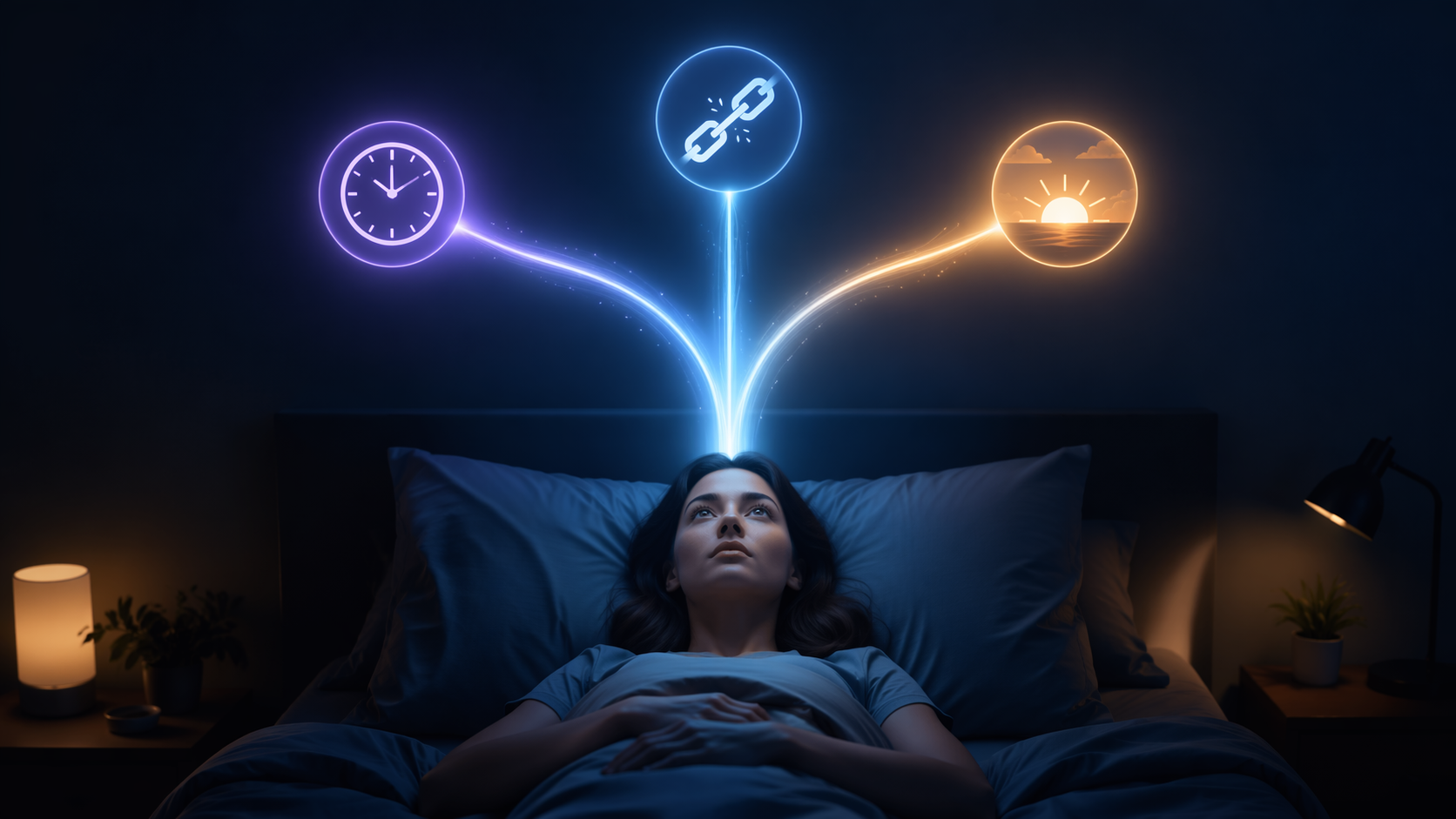
This is also why the best setup is usually layered rather than dramatic: a timed sound source, a real light barrier, and one body-calming cue. None of those needs to turn the bedroom into a storm bunker.
Use Sound Masking, But Put It On A Timer
For thunder, the goal is not to drown out the storm. That usually means making the room too loud. The better goal is to reduce the contrast between a quiet room and a sudden clap so your brain has less of a jump to process.
There is support for that basic idea. A 2021 study reported that background noise reduced nighttime awakenings by up to 38% in high-noise environments, which makes sound masking a reasonable first move when thunder is the main sleep disruptor.[1]
The catch is duration. A 2026 Penn Medicine study covered by NSDR.co found that continuous broadband noise at 50 dB reduced REM sleep by about 19 minutes per night.[2] That does not prove that a rain soundtrack has the same effect; the study tested broadband noise, not storm audio specifically. But it is enough of a warning not to run noise all night just because it helps you fall back asleep.
The practical rule is simple: use white noise, pink noise, a fan sound, or steady rain audio for 30–60 minutes, then let it shut off. That window covers the part where you are most awake and most reactive without turning the whole night into an audio experiment.
- If thunder is sharp and intermittent, choose a steady masking sound rather than a track with dramatic thunder built into it.
- If rain on the roof is already loud, add only enough sound to smooth the peaks; louder is not automatically better.
- If you use earbuds, earplugs, or sleep headphones, keep comfort ahead of maximum blocking because pressure pain will become its own awakening.
- If you need to hear household alarms, children, pets, or emergency alerts, avoid fully isolating yourself from the room.
Earplugs and active-noise-canceling sleep headphones can help some sleepers, but they are tools with tradeoffs. Noise reduction ratings can guide earplug selection, and sleep headphones may reduce low, steady noise better than sudden impact sounds, but fit and awareness still matter during a storm.[3]
Block Lightning, Or At Least Make It Less Startling
Lightning is a different problem from thunder because it can wake you even before you fully understand what happened. A dark room, a sudden white flash, and then the wait for thunder is a reliable recipe for alertness.
The broader sleep case for reducing nighttime light is strong enough to take seriously, though it should not be oversold as a curtain cure. A 2024 NIH-backed study of 47,765 women linked indoor light at night with poor sleep across multiple dimensions.[4] That finding supports reducing light exposure at night; it does not prove that blackout curtains alone will make someone sleep through every storm.
For lightning, blackout curtains only work well when they are installed like they mean it. Light gaps at the top, sides, or center seam can turn every flash into a narrow strobe. If curtains are already in place but flashes still cut through, overlap the center seam, pull the side edges past the window frame, or use clips temporarily during a storm.
A sleep mask is often the faster fix. The important part is fit: it should seal around the nose bridge without pressing on the eyes, stay in place when you turn, and not feel like another thing to manage. A bad mask is just a blackout curtain strapped to your irritation.
There is one counterintuitive option: a very dim nightlight. Not a bedside lamp, not a bright hallway spill, and not a phone screen. A low, warm light placed away from your face can reduce the contrast between total darkness and lightning flashes. That may make the flash less startling, even though the larger sleep-hygiene goal remains less light at night.
Give The Body A Settling Cue
Some storm wake-ups are not mainly about hearing or seeing the storm. The room can be dark enough and quiet enough, and the body still behaves as if it is waiting for the next clap. This is where physical pressure can be useful, provided it feels calming rather than trapping.
Weighted blankets have unusually interesting evidence for a sleep-hygiene tool. In a 2020 randomized controlled study published in the Journal of Clinical Sleep Medicine, participants using weighted blankets had a 26 times greater likelihood of achieving a 50% or greater reduction in insomnia severity compared with the control group; the study used 6 kg and 8 kg blankets.[5][6]
A UCLA Health report also linked weighted blanket use with increased melatonin production, which gives a plausible mechanism for why deep pressure might help some people settle at night.[7] That does not make a weighted blanket a thunderstorm cure. It makes it a reasonable tool when the storm is showing up in the body as bracing, tossing, or restless waiting.
The common starting guideline is about 10% of body weight, but that rule should not outrank comfort. If the blanket makes you hot, pinned, short of breath, or annoyed every time you roll over, it is too much for the job tonight. The point is steady pressure, not a test of tolerance.
- Use the weighted blanket over the torso and legs if full coverage feels comfortable.
- Fold it over the lower body only if chest pressure feels unpleasant.
- Remove it if it increases heat, restriction, or frustration.
- Do not pair it with heavy bedding in a warm room just because the storm makes you want to burrow.
This is also where a small amount of preparation pays off. A weighted blanket is not the thing to unwrap, adjust, and debate for the first time during a loud storm. If you already know it feels good, it can be a clean intervention. If you do not, use lighter pressure first: a tucked blanket, a pillow against the side of the body, or a familiar comforter arranged so it does not twist when you turn.
Keep The Room Cool Enough That It Is Not Adding Friction
Temperature is not a fourth storm vector on the same level as thunder, lightning, and body arousal, but it can make all three harder to recover from. A room that is too warm makes a mask feel stuffy, headphones feel sweaty, and a weighted blanket feel like a mistake.
A target around 65°F, or about 18°C, is commonly used for sleep onset and fits with the site’s broader circadian hygiene guidance on evening wind-down. It is not magic. Storm arousal can overpower a good thermostat setting. But a cooler room removes one avoidable source of restlessness while the other tools do their work.
During a storm, that may mean lowering the thermostat slightly, switching to a breathable top layer, or using the weighted blanket without extra heavy bedding. The adjustment should make the sleep setup easier to stay in, not create another middle-of-the-night task.
A Realistic Storm Setup For Tonight
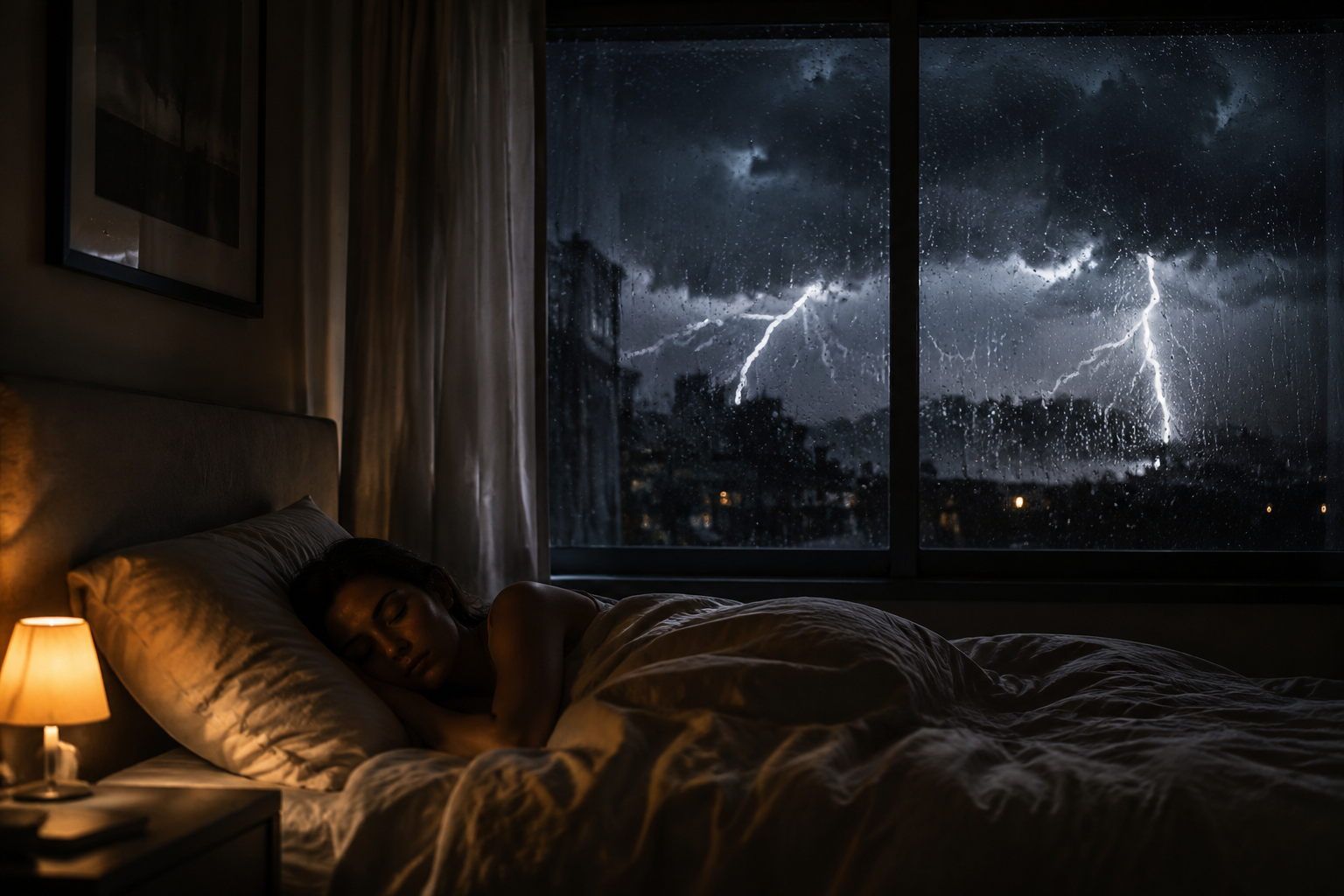
If you are already awake, do the smallest useful sequence first. Start a steady masking sound on a 30–60 minute timer. Put on the mask or close the light gaps. Add pressure only if it feels immediately settling. Make the room cool enough that you are not fighting heat under the covers.
That setup will not guarantee uninterrupted sleep through every thunderstorm. It does something more practical: it reduces the specific pathways by which the storm reaches your sleeping brain and body. Less sound contrast, fewer light shocks, less physical bracing, and fewer environmental irritations are enough to give sleep a fairer chance.
References
- Background noise reduced nighttime awakenings in high-noise environments, NSDR.co
- 2026 Penn Medicine REM study on broadband noise at 50 dB, NSDR.co
- General earplug NRR guidance and ANC sleep headphones, Tom's Guide
- 2024 NIH-backed indoor light at night study, NSDR.co
- Weighted blankets can decrease insomnia severity, American Academy of Sleep Medicine
- A randomized controlled study of weighted chain blankets for insomnia in psychiatric disorders, Journal of Clinical Sleep Medicine
- Weighted blankets and melatonin production, UCLA Health


Comments
Join the discussion with an anonymous comment.