
Can I Sleep Tonight?
Yes, sometimes, but only if sleep is backed by a setup that can wake you fast enough to matter. Nighttime tornadoes deserve that caution: about 27% of tornadoes happen at night, yet they account for 39% to 42% of fatalities, and they are estimated to be 2 to 2.5 times more likely to be fatal.[1] That does not mean staying up all night forever. It means treating the bedroom like part of the warning system.
| Alert layer | What it does for a sleeper | How to treat it |
|---|---|---|
| NOAA Weather Radio + bed shaker | Best chance of waking an indoor sleeper with both sound and vibration.[2][3] | Make this the primary wake-up path. |
| Phone emergency alerts | Useful backup if your device actually breaks through sleep settings. | Verify on your own phone; behavior varies by device and OS. |
| Weather apps | Helpful for tracking the forecast. | Do not rely on them as the thing that wakes you. |
| Outdoor sirens | A community cue, not a bedroom alarm; NWS says they are not designed to wake indoor sleepers.[4] | Treat them as supplemental only. |
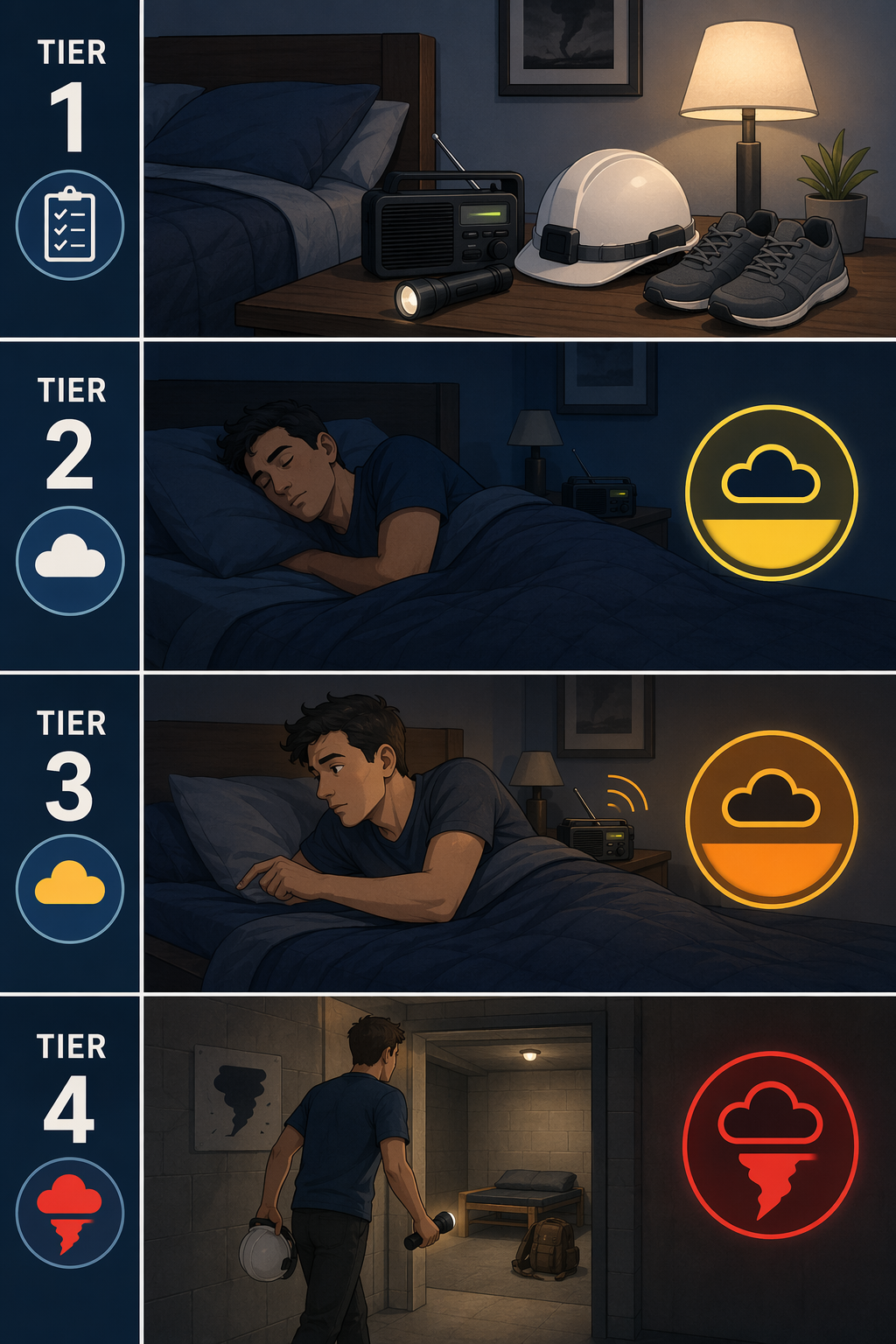
If you have ever trusted a siren to do the waking for you, that is the first thing to fix. The practical hierarchy is simple: NOAA Weather Radio and a bed shaker first, phone alerts second, apps third, and sirens last.[2][3][4] If you already built a structured overnight plan for another hazard, like flash flooding, the same bedroom logic applies here in Your Emergency Sleep Plan for Flash Flood Warnings.
Set Up The Room Before Bed
The point of pre-bed setup is not to make the room more anxious; it is to make the 2 a.m. version of you faster and less confused. A warning can arrive when you are half-asleep, and sleep inertia can blunt vigilance, working memory, and decision-making for anywhere from 1 minute to 3 hours after abrupt awakening.[7] That is exactly why the setup has to do some of the thinking for you.
- Program a NOAA Weather Radio for your counties, keep it on power and battery backup, and pair it with a bed shaker if you can.[2][3]
- Turn on emergency alerts on your phone and verify that your own device breaks through Do Not Disturb or Bedtime Mode the way you expect.
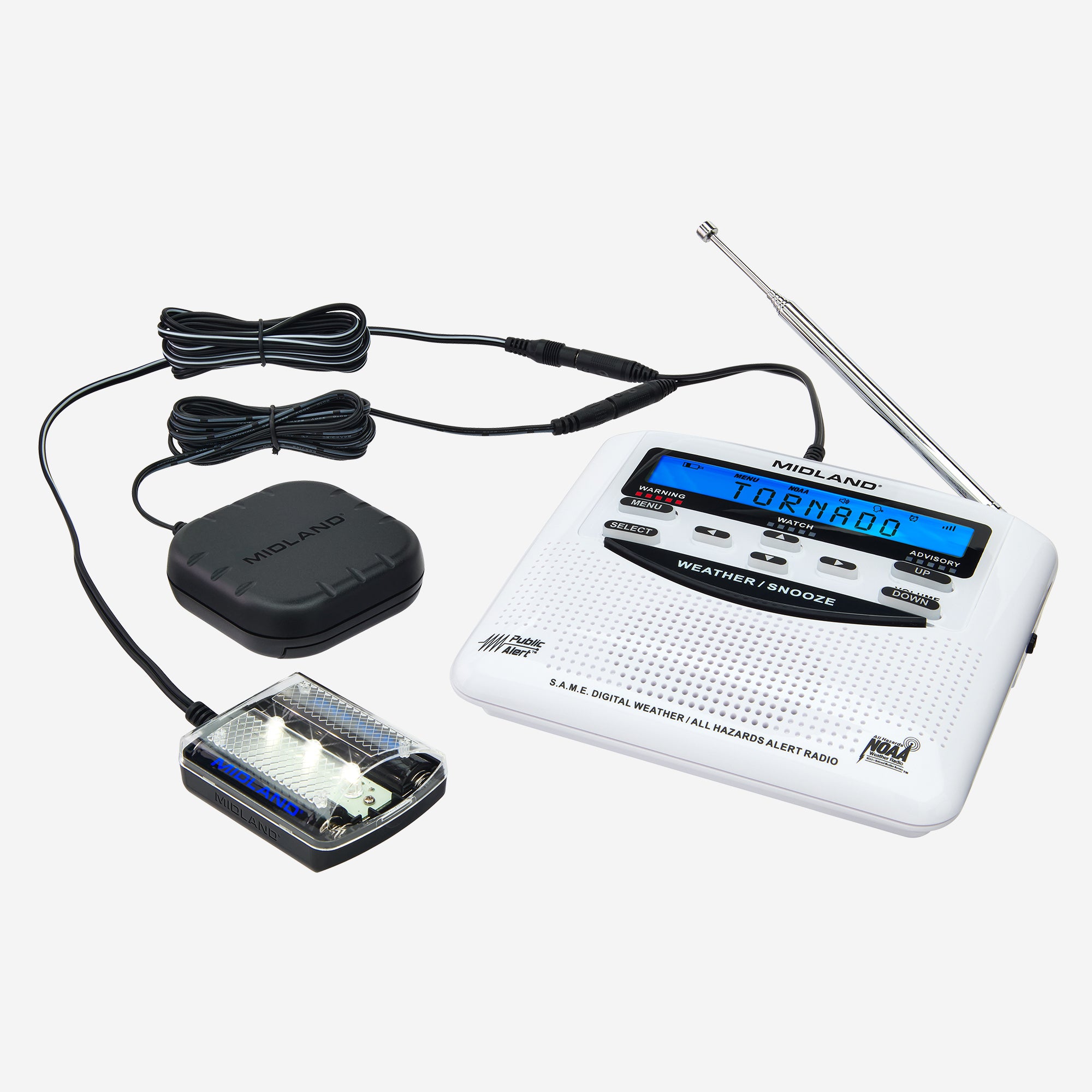
- Put sturdy shoes, a helmet, and a flashlight within arm's reach of the bed.
- Clear the path to shelter so nothing slows you down or trips you when you are groggy.
- Keep the shelter kit where you will actually go, not in the garage, not in the closet you have to dig through, and not in the room you will forget to enter in a hurry.
Watch Nights Need Two Different Rules
A tornado watch is not a verdict against sleep. It is a reason to sleep with a plan. On a low-risk watch night, sleep is reasonable if the alert chain is live and the route to shelter is already clear. On a watch night with elevated SPC risk or PDS wording, the threshold changes: the setup should be tighter, the phone should not be your only wake-up path, and you should assume a faster move if the forecast turns.
- Low-risk watch: sleep normally, but only after the radio, phone alerts, and shelter path are ready.
- Elevated watch: treat the night as conditional sleep, not casual sleep.
- Warning: stop trying to decide whether you should keep sleeping and move instead.
When The Warning Comes In
A warning is the line where sleep stops being the priority. There is no official all-clear siren; the reliable signal is the expiration or geographic revision of the NWS warning polygon, followed by a brief wait to make sure the danger has actually moved on.[5] If you wake up under a warning, do not spend that first minute arguing with the clock, the app, or the silence outside. Move to shelter.
That urgency matters because abrupt awakening is not a tiny inconvenience. It can leave people slower, less vigilant, and worse at working memory and judgment at the exact moment those skills are needed most.[7] The room should already have solved as much of the decision as possible before the alarm ever goes off.
Why The Repeated Wakeups Wear You Down
The tiredness is real, and the cost is not just annoyance. A sleep-disruption review links repeated loss of sleep with increased stress responsivity, somatic pain, and lower quality of life, which is why a season of false starts can leave people feeling worn out even when nothing severe happens.[9] There is also no simple cry-wolf story here: one study found that higher perceived false-alarm rates were associated with more protective action, not less.[6]
A 2024 dawn-simulation study found that a 30-minute gradual light ramp reduced sleep inertia severity, especially for evening chronotypes, but the work was done in a morning lab setting, not in a nocturnal emergency.[8] So it is a useful clue, not a substitute for real alerting. For a deeper look at why nighttime warnings hit harder than daytime ones, see Why Tornado Warnings at Night Trigger a Stronger Stress Response.
The usable rule is plain: if it is a watch and your alert setup is reliable, you can sleep; if it becomes a warning, sleep is over. The point is not perfect alertness, but a bedroom setup that makes rested caution possible instead of forcing a false choice between panic and denial.
References
- Why Tornadoes at Night Are So Deadly — Weather.com — 2026-03-09
- Special Needs — National Weather Service
- Deaf and Hard of Hearing — National Weather Service
- Siren FAQ — National Weather Service
- When Is It Safe to Come Out of a Tornado Shelter? — Survive-A-Storm
- Tornado warning false alarms and protective action — NOAA Repository — 2019
- Sleep inertia: current insights — PMC — 2019
- Gradual dawn simulation and sleep inertia — PMC — 2024
- Sleep disruption and health consequences — PMC
Comments
Join the discussion with an anonymous comment.